Best Salt Spreaders: How to Choose for Driveways, Walkways, and Winter Safety
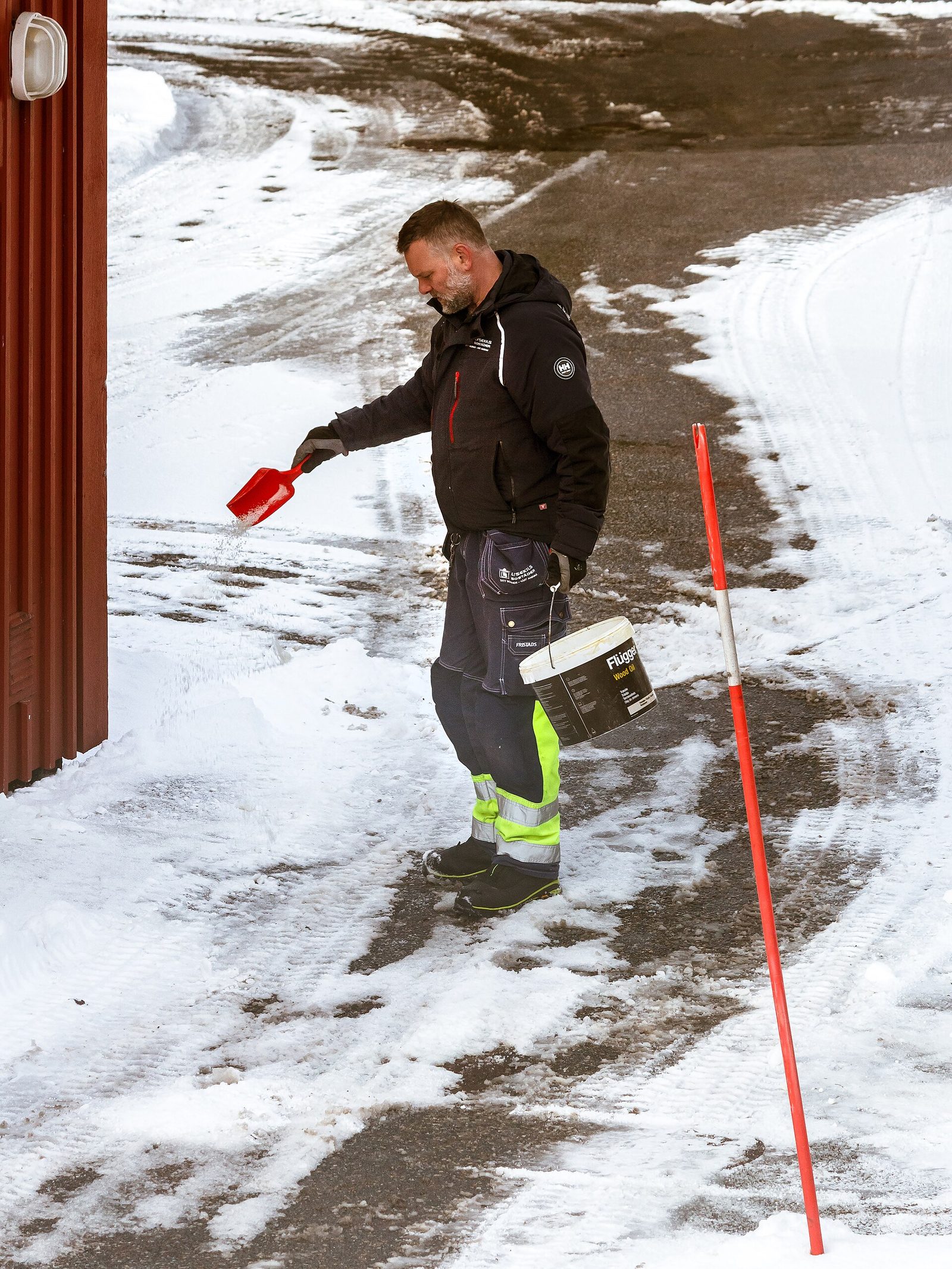
Shaking ice melt out of a bag or a coffee can works for a single icy step, but it is a miserable way to treat a whole driveway before work on a dark, freezing morning. Hand scattering is uneven, wasteful, and hard on your back, and the piles it leaves in one spot do little while the thin patches a few feet away stay slick. A dedicated spreader meters salt or ice melt out at a steady rate while you walk, giving you an even layer that starts working across the whole surface instead of in scattered heaps. The best salt spreaders are built for exactly this job: they resist the corrosion that salt causes, keep damp material flowing instead of clogging, and let you control where the granules land so you are not salting your lawn and flower beds along with your walkway.
This guide explains how to choose a salt spreader without relying on invented rankings or product claims. It covers the decisions that matter most: which type fits your property, why construction materials matter far more for salt than for seed or fertilizer, how to judge capacity and spread control for winter work, and how to calibrate and maintain the tool so it survives season after season of the most corrosive material most homeowners ever put through a spreader.
Disclosure: As an Amazon Associate, Daily Home Decorating earns from qualifying purchases made through links in this article, at no extra cost to you. Product details are based on published manufacturer specifications.
Quick Picks
| Pick | Product | Best For |
|---|---|---|
| Best Overall | Chapin 82088 80 lb Professional SureSpread Salt and Ice Melt Spreader | Homeowners who want a salt-specific walk-behind with baffles |
| Best Professional | SnowEx SP-65 Walk-Behind Broadcast Spreader (100 lb) | Contractor-grade sidewalk and driveway work |
| Best Value Walk-Behind | Agri-Fab 45-0575 85 lb Push Ice Melt Spreader | A dedicated ice melt spreader with deflector and grate included |
| Best for Crews | SaltDogg WB101G Walk-Behind Salt Spreader (Buyers Products) | 100 lb commercial unit from a snow-equipment specialist |
| Best Heavy-Duty | Meyer Hotshot 70 HD Walk-Behind Broadcast Spreader (38170) | 13-inch ice-grip tires and a standard see-through hopper cover |
| Best for Steps and Spot Work | Chapin 8740A 64 oz Hand Shaker Spreader | Steps, porches, and short paths where wheels cannot go |
Our Picks
1. Chapin 82088 80 lb Professional SureSpread Salt and Ice Melt Spreader — Best Overall
The 82088 is built for salt from the start rather than adapted from a fertilizer spreader, which is the guide’s first checkpoint. The 80 lb poly hopper sits on a powder-coated steel frame with an enclosed gearbox to keep brine away from the gears, and adjustable side baffles let you narrow the pattern on sidewalks so melt lands on concrete instead of the lawn edges it would burn. Large pneumatic tires keep a full, heavy load of salt moving over frozen, rutted ground, and the flow linkage is a solid metal connection rather than a stretch-prone cable. It doubles for seed and fertilizer in summer, but winter is where the salt-specific details — baffles, enclosed gears, corrosion-aware materials — earn their keep. For most driveways, this is the walk-behind to buy.
2. SnowEx SP-65 Walk-Behind Broadcast Spreader (100 lb) — Best Professional
SnowEx only makes snow and ice equipment, and the SP-65 shows it: a 100 lb walk-behind broadcast spreader classed as professional duty, spreading bagged rock salt and pelletized material up to 20 feet wide, with a heavy-duty transmission and large pneumatic tires chosen for pushing through snow, slush, and ice rather than across dry pavement. The gate and flow hardware are sized for coarse rock salt particles that choke homeowner spreaders with smaller openings — the clogging failure the guide warns about. It is priced and built for people who clear other people’s sidewalks as well as their own, and SnowEx supports it through a proper dealer network. If a residential unit would be worn out in two winters of your workload, the SP-65 is the correct step up.
3. Agri-Fab 45-0575 85 lb Push Ice Melt Spreader — Best Value Walk-Behind
The 45-0575 is Agri-Fab’s dedicated winter push spreader: an 85 lb hopper covering up to about 14,000 sq. ft. per fill with roughly a 10-foot spread width, direct rod flow control instead of a cable, and two inclusions that matter in salt service — a hopper grate to catch clumps before they reach the gate, and a built-in deflector to keep material off lawns and beds. The enclosed gearbox protects the gears from corrosive salt, the weakness that kills general-purpose spreaders used for winter duty. Feedback on this model is mixed, so treat it as a value pick rather than a buy-it-for-life tool, rinse it after every storm, and store it dry. At its price, it still beats adapting a fertilizer spreader and hoping the gears survive February.
4. SaltDogg WB101G Walk-Behind Salt Spreader (Buyers Products) — Best for Crews
SaltDogg is the spreader line of Buyers Products, a name snow contractors know from truck-mounted equipment, and the WB101G is its 100 lb walk-behind for sidewalks and lot edges. The large hopper means a crew member can treat a full commercial frontage per fill instead of walking back to the truck, and the walk-behind broadcast format suits the bagged salt and ice melt that commercial sites stock by the pallet. Buyers sells primarily through snow-equipment dealers rather than consumer marketplaces, so specification and availability are best confirmed at the link before ordering for a fleet. Choose the WB101G if you are equipping a property-maintenance crew and want the walk-behind to match the SaltDogg gear already on your trucks.
5. Meyer Hotshot 70 HD Walk-Behind Broadcast Spreader (38170) — Best Heavy-Duty
Meyer builds the Hotshot line for commercial snow work, and the 70 HD’s details are aimed at the guide’s checklist: a 70 lb high-density polypropylene hopper, a powder-coated, epoxy-finished frame, and a custom-fitted see-through cover included as standard to keep material dry and clump-free between passes. Its 13-inch pneumatic tires are designed to grip ice, the axle runs on self-lubricating bearings, and the greaseless Nylatron gears remove one maintenance chore from a tool that lives in brine. The T-handle carries a push-button shut-off so you can stop the flow instantly at the end of a walk, and a simple dial sets the rate. Meyer sells mainly through dealers, so confirm current availability at the link. For a heavy-use home or small contractor, it is built to outlast several budget spreaders.
6. Chapin 8740A 64 oz Hand Shaker Spreader — Best for Steps and Spot Work
Steps, porches, and the icy patch by the mailbox do not need a wheeled spreader — they need something you can carry in one gloved hand. The 8740A is a 64-ounce poly shaker with a scoop-to-fill design: dip it straight into the bag, twist the dial to one of three opening sizes to suit pellets or finer particles, and shake. The large grip handle is easy to hold with winter gloves, and because there is no mechanism, there is nothing for salt to corrode and nothing to rinse but the cup itself. Chapin notes rock salt is not recommended in this model, so pair it with bagged ice melt. Keep one by the front door all winter and the highest-risk square footage on your property takes thirty seconds per storm.
What to Look for First
Salt spreading is seasonal, urgent work. You usually do it in the cold, often in the dark, and frequently when a storm is already underway. Features that are minor conveniences in summer become real advantages in January, so start your decision with the conditions you will actually work in.
The Area You Need to Treat
List the surfaces you are responsible for: a front walk, a stoop and steps, a short single driveway, a long or sloped drive, or a shared parking area. The total area sets your capacity needs, and the layout sets your control needs. Long, open pavement rewards a wide pattern and a big hopper. Short walks, steps, and tight entries reward a small, maneuverable spreader you can aim precisely. Slopes deserve special thought, because you will be pushing a loaded machine on the very surface you are treating, often before it is fully cleared. If your property includes both a long driveway and narrow walks, you may honestly need two tools: a walk-behind unit for the drive and a small handheld unit for steps and entries.
The Material You Plan to Spread
Rock salt, calcium chloride, magnesium chloride, and blended ice melts do not behave the same way. They differ in granule size, how quickly they absorb moisture from the air, and how aggressively they corrode metal. Damp, fine, or fast-clumping material needs a hopper and agitator design that keeps it moving, and any spreader you buy for salt duty should be chosen with your usual product in mind. Check the seed and fertilizer habits you may already have at the door: a spreader that handled dry summer granules beautifully can clog or corrode quickly on winter salt if its materials and openings were never meant for it.
Corrosion Resistance Above All
This is the single biggest difference between a salt spreader and a general lawn spreader. Salt destroys untreated steel, cheap fasteners, and exposed mechanisms, sometimes in a single season. Look for hoppers made of salt-tolerant plastic, frames and hardware with serious corrosion protection, and enclosed or shielded gearing where possible. A spreader advertised for year-round use is only a good salt choice if its materials back that up. Plan on rinsing and drying the tool after use as a non-negotiable habit, covered in the maintenance section below.
Working in Cold, Dark, and Gloves
You will operate this machine wearing gloves, on cold pavement, possibly with numb fingers. Controls should be large, simple, and workable with mittens: a positive shutoff you can find by feel, a rate dial that does not demand bare fingertips, and a handle you can grip securely. Wheels need enough size and tread to roll over rough, partly cleared pavement and small ridges of snow without constant jamming. A spreader that is pleasant in a warm showroom can be genuinely frustrating at dawn in a storm, so judge it by winter conditions, not summer ones.
Types of Spreaders Explained
Most salt spreaders are variations on the same few designs used for lawn work, adapted, or not, for corrosive winter material. The adaptation matters as much as the type.
Walk-Behind Broadcast Spreaders
The walk-behind broadcast spreader is the standard choice for driveways. A spinning plate throws material in a wide fan as you push, so a typical residential drive takes only a few passes. For salt work, look for a model with a corrosion-resistant hopper and frame, a deflector or edge control to keep material off lawns and beds, and a cover to keep snow and rain out of the hopper while you work. The wide pattern is a mixed blessing on narrow walks, where much of the throw lands on grass unless you slow down, narrow the setting, or use the deflector. For a property dominated by driveway, it is still the most efficient design.
Handheld and Shaker Spreaders
Handheld spreaders, including simple shaker jugs and small crank or battery units, are the right scale for steps, stoops, short walks, and spot-treating a stubborn icy patch. They hold little, but they are light, precise, easy to store near the door, and quick to grab when a thin glaze forms overnight. Because you control the pattern with your arm and pace, they take a little practice to use evenly, and they are the wrong tool for a long driveway. As a companion to a larger spreader, though, they cover exactly the areas the big machine handles worst.
Tow-Behind Spreaders
Tow-behind units mount behind a lawn tractor, ATV, or utility vehicle and carry far more material than you would want to push. They suit long rural driveways, private lanes, and small shared lots where a walk-behind job would take an hour in dangerous cold. The same winter cautions apply as with lawn towing, plus one more: your tow vehicle needs traction on the surface you are treating, and spreading while you drive demands a steady speed for an even rate. Storage space and corrosion care also scale up with size. For most suburban homes, a tow-behind salt spreader is more machine than the job requires.
Drop Spreaders for Salt
A drop spreader releases material straight down in a strip the width of the hopper, which sounds ideal for neat walks, and some homeowners do use one for precise work along edges and narrow paths. For salt, though, weigh the drawbacks carefully. The row of openings sits close to damp, corrosive material, and any design not built specifically to resist clogging and corrosion can jam or rust quickly. Drop designs also cover ground slowly, which matters when the area is a full driveway. If you choose this route, choose a unit genuinely built for winter material and clean it meticulously after every use.
Features That Matter in Winter
Hopper Cover and Agitator
Precipitation falls while you spread, and ice melt absorbs moisture eagerly. A fitted hopper cover keeps material dry and flowing during the job and is close to essential, not an accessory. Inside, an agitator that keeps granules moving toward the opening prevents the bridging and clogging that damp salt loves to cause. If material stops flowing mid-driveway, you want the cause to be an empty hopper, not a packed arch of damp salt over the gate.
Spread Control and Deflectors
Salt that lands on lawns, beds, and planted strips can damage soil and plants, and granules tracked or washed where they are not needed are simply wasted. Edge deflectors, adjustable patterns, and a responsive shutoff let you treat pavement fully while sparing the edges. On narrow walks, the ability to narrow the throw matters more than maximum width. Judge controls by how precisely they place material, not by how far they can throw it.
Tires, Frame, and Grips
Larger wheels with real tread roll over frozen ruts and snow ridges that stop small hard wheels. A frame that keeps the hopper stable when loaded prevents the tipping that spills corrosive material where you do not want it. Handle grips that stay grippable with gloves, and a push handle at a comfortable height for winter boots and a heavy coat, round out a machine you can control on a slope in the cold.
How to Choose by Use Case
Steps, Stoops, and Short Walks
Choose a handheld or shaker spreader and keep it, loaded and ready, near the door you actually use. At this scale, convenience beats capacity every time, because the best spreader is the one you will bother to use on a thin overnight frost. Small units also let you treat steps precisely, where a broadcast pattern would waste most of its throw on railings and beds.
A Standard Suburban Driveway
A walk-behind broadcast spreader with a corrosion-resistant build, a hopper cover, and an edge deflector is the balanced choice. It covers a typical drive in a few passes, refills are manageable, and it stores against a garage wall. This is the configuration most homeowners should start from and depart from only for a clear reason.
Long, Steep, or Rural Driveways
If your driveway is long, sloped, or exposed, prioritize capacity, wheel traction, and stability, and consider a tow-behind unit if you already own a suitable vehicle with good winter traction. On slopes, treat from the top down as the surface improves, and never let a large, heavy hopper pull you into rushing. A midsize walk-behind used in two trips is safer than an oversized load handled carelessly on ice.
Shared Lots and Sidewalks
For a small business entrance, shared parking area, or a long stretch of public sidewalk you maintain, step up to the largest walk-behind or a tow-behind model, and think in terms of total material per storm rather than per pass. Even coverage matters for liability as much as convenience: a missed strip that refreezes is exactly where someone falls. Consistent calibration and a pre-storm routine matter as much as the machine itself.
Calibration, Care and Maintenance
Setting the Rate Without Over-Salting
More salt is not more safety. Excess material tracks indoors, damages concrete and plants, washes into soil and waterways, and costs money, while adding little melting power once a working layer is down. Calibrate the same way you would for any granular material: weigh what you load, spread over a measured stretch of pavement, and weigh what remains to learn your true rate per area. Follow the application guidance on your ice melt packaging, adjust the dial in small steps, and remember that your walking pace changes the rate. A light, even, repeatable application, reapplied as conditions demand, beats a single heavy dumping every time.
Technique on Pavement
Spread on a cleared surface whenever you can: ice melt works on ice and packed snow, not on top of deep fresh snow that will be shoveled away with the salt in it. Many homeowners apply a light treatment before a storm arrives, which makes clearing easier and reduces bonding, then treat again on the cleared surface where ice persists. Walk at a steady pace, overlap broadcast passes slightly, close the gate at turns and stops, and keep material off lawn edges with your deflector. Treat shaded corners, slopes, and drainage spots where meltwater refreezes with extra attention rather than extra volume everywhere.
Cleaning and Off-Season Storage
Salt spreaders die of neglect, not use. After each outing, empty leftover material back into sealed storage, because ice melt left in a hopper absorbs moisture, cakes hard, and corrodes everything it touches. Rinse the hopper, plate, and hardware with water, work the gate and controls to flush grit out of moving parts, and dry the spreader fully before putting it away. At the end of the season, wash it thoroughly, dry it, check fasteners and moving parts for rust, and store it dry, ideally with the hopper empty and the gate open so no damp residue sits sealed against metal. Ten minutes of care after a storm is the difference between a spreader that lasts for years and one that is seized solid by the second winter.
Common Mistakes to Avoid
The costliest mistake is buying a summer lawn spreader that was never built for salt and watching it corrode or clog through its first winter. Materials come first with this tool. The second mistake is over-applying: dumping heavy piles at the start of each pass because the gate was left open while turning, or running a rate meant for a blizzard on a light frost. A third is spreading onto deep, uncleared snow, which wastes material that gets shoveled away minutes later. Leaving salt sitting in the hopper between storms, skipping the rinse because it is cold and you are tired, and storing the spreader damp in a corner complete the usual list. Finally, many people forget the edges in the wrong way: they either salt the lawn border heavily, harming grass and soil, or skip the last strip of pavement by the garage and steps, which is precisely where careful footing matters most.
Frequently Asked Questions
Can I use my fertilizer spreader for salt in winter?
Only if it is genuinely built for it. Salt is far more corrosive than fertilizer, and it is often damper and more prone to clogging. A spreader with a plastic hopper, protected hardware, and a design that rinses clean may handle both jobs with thorough cleaning after salt use. A basic steel lawn spreader will usually rust quickly on salt duty, so check the construction honestly before risking it.
How much ice melt should I apply?
Apply the lightest even layer that does the job, following the rate guidance on your product packaging. In practice, a scattered, even coverage where you can still see pavement between granules is usually closer to right than a solid white coating. Weighing your output over a measured area, as described above, turns that judgment into a repeatable setting instead of a guess.
Is rock salt or a blended ice melt better for a spreader?
Both can be spread successfully, and the better choice depends on your temperatures, surfaces, and concerns about concrete and plants. From the spreader side of the question, what matters is granule consistency and dryness: uniform, dry material flows evenly, while damp, dusty, or very fine material clogs more readily. Store your product sealed and dry, and choose a spreader whose agitator and openings suit the product you actually buy.
Why does my spreader keep clogging with salt?
Clogging usually comes from moisture. Material that has absorbed damp air cakes together, bridges over the hopper opening, and packs around the gate. Use a hopper cover, store product and spreader dry, break up lumps before loading, and do not leave salt sitting in the hopper between uses. A spreader with an effective agitator also helps keep borderline material moving.
Should I spread salt before or after a storm?
Both have a place. A light application before a storm can reduce how hard ice bonds to pavement and makes shoveling easier, while treatment after clearing addresses the ice and refreeze that remain. Spreading onto deep snow during the storm is the least effective option, since clearing removes the material before it can work.
How do I keep salt off my lawn and plants?
Use an edge deflector or guard along borders, narrow the pattern on walks, close the gate at turns, and keep your pace steady so the throw stays predictable. Sweep or brush stray granules off edges onto the pavement after you finish. A drop or handheld spreader can also handle the narrow strips beside planting beds where a broadcast pattern is hardest to control.
Conclusion
The best salt spreaders are winter tools first: corrosion-resistant in every part the salt touches, covered against falling snow, controllable enough to keep granules on pavement and off plantings, and simple to operate with gloves on in the cold. A handheld unit will serve steps and short walks faithfully, a walk-behind broadcast model covers the typical driveway with the least fuss, and a tow-behind machine earns its space only on genuinely large areas. Whichever you choose, calibrate it lightly and evenly, spread on cleared pavement, and rinse and dry it after every outing. A spreader selected for its materials and maintained with that small discipline will start every storm ready, instead of greeting the first ice of the season as a rusted, clogged reminder of last winter.
Word count (body, excluding front matter): 2,831 words.