Best Salt Spreaders for Trucks: How to Choose for Winter De-Icing Work
A salt spreader turns a pickup or work truck into a winter maintenance vehicle, but only when the spreader matches the truck, the material, and the properties you service. A unit that is too small means constant reloading in the middle of a storm. A unit that is too large can overload the truck, strain the suspension, and make tight parking lots harder to work. The right choice also has to survive its own cargo, because road salt and liquid-treated de-icers are among the most corrosive materials any vehicle equipment will ever carry.
This guide explains how to compare truck salt spreaders on the criteria that matter in real winter work: hopper capacity and payload, mounting style, power and controls, spread pattern, material compatibility, and resistance to rust.It also shortlists specific models below as examples to compare, chosen from published manufacturer specifications rather than hands-on test results. Instead, it gives you a framework for building a short list, checking compatibility with your truck, and understanding the calibration and care that keep a spreader working through the season and for seasons after.
Disclosure: As an Amazon Associate, Daily Home Decorating earns from qualifying purchases made through links in this article, at no extra cost to you. Product details are based on published manufacturer specifications.
Quick Picks
| Pick | Product | Best For |
|---|---|---|
| Best V-Box Hopper Spreader for 3/4 and 1-Ton Trucks | Buyers SaltDogg SHPE1500X Electric Poly Hopper Spreader, 1.5 cu yd | Best V-Box Hopper Spreader for 3/4 and 1-Ton Trucks |
| Best Compact Tailgate Spreader | Buyers SaltDogg TGS02 Tailgate Spreader, 4.0 cu ft | Best Compact Tailgate Spreader |
| Best Receiver-Mount Spreader for Trucks and UTVs | Buyers UTVS16 UTV/Truck Broadcast Spreader, 150 lb | Best Receiver-Mount Spreader for Trucks and UTVs |
| Best High-Capacity Tailgate Spreader | Buyers SaltDogg TGS06 Tailgate Spreader, 10 cu ft | Best High-Capacity Tailgate Spreader |
| Best Tailgate Spreader for Salt and Fine Materials | SnowEx Tailgate Pro SP-575X-1 Spreader, 5.75 cu ft | Best Tailgate Spreader for Salt and Fine Materials |
| Best Tailgate Spreader for Light Trucks and SUVs | Meyer Base Line BL240 Tailgate Spreader (31100) | Best Tailgate Spreader for Light Trucks and SUVs |
Our Picks
1. Buyers SaltDogg SHPE1500X Electric Poly Hopper Spreader, 1.5 cu yd — Best V-Box Hopper Spreader for 3/4 and 1-Ton Trucks
The SHPE1500X is the in-bed step up from tailgate units: a 1.5-cubic-yard double-wall poly hopper that sits in the bed of a 3/4-ton or 1-ton truck with at least a 6.5-foot bed, driven by independent 12V electric motors for the auger and spinner — no hydraulics or gas engine to maintain. The extended chute version suits taller trucks and spreads bulk salt or a salt/sand mix in patterns up to about 30 feet, with in-cab dual variable-speed controls separating feed rate from spread width. Poly construction will not rust or dent, a genuine advantage in salt service. You give up bed space for the season and need payload headroom for a full load. For contractors salting lots route after route, this is the format that replaces bag-by-bag tailgate work.
2. Buyers SaltDogg TGS02 Tailgate Spreader, 4.0 cu ft — Best Compact Tailgate Spreader
The TGS02 is SaltDogg’s compact commercial tailgate unit: a low-profile 4.0-cubic-foot poly hopper holding about 300 pounds of bagged salt or ice melt, mounted on a standard 2-inch receiver so it fits half-ton through one-ton trucks. A horizontal auger feed — rather than gravity alone — keeps material moving to the 9-inch poly spinner, which casts up to about 30 feet, and a 1/3 HP dual-shaft gear motor is run from an included variable-speed in-cab controller. The low profile preserves rear visibility, a real safety point on residential routes. It is sized for bagged material and light commercial or estate work, not bulk loading. For a single-truck operator salting drives and small lots, it is the balanced entry point in this list.
3. Buyers UTVS16 UTV/Truck Broadcast Spreader, 150 lb — Best Receiver-Mount Spreader for Trucks and UTVs
The UTVS16 is the lightest-duty truck option here, and deliberately so: a 15-gallon (150-pound) rustproof poly hopper on a 2-inch receiver mount that swaps between a UTV, SUV, or pickup in minutes, powered by a 12V motor with an adjustable flow gate and a fitted lid. It spreads salt and ice melt in winter and seed, fertilizer, or feed the rest of the year, which makes it the only true four-season tool in this group. Capacity limits it to driveways, small lots, sidewalks with an optional deflector mindset, and spot work — not route salting. For property owners, farms, and facilities teams who need occasional de-icing rather than a dedicated salt truck, it delivers most of the function at a fraction of a tailgate spreader’s cost and weight.
4. Buyers SaltDogg TGS06 Tailgate Spreader, 10 cu ft — Best High-Capacity Tailgate Spreader
The TGS06 is the tailgate format at full commercial scale: a 10-cubic-foot poly hopper for bagged #1 rock salt, a pre-installed 80-pound vibrator to keep material flowing, an adjustable flowgate, and a 1/2 HP motor spreading up to about 30 feet, all hanging on the tailgate of a 3/4-ton or 1-ton truck. It suits contractors whose routes outgrow a 4-cubic-foot unit but who do not want to surrender the bed to a V-box — the truck still hauls a plow, fuel, and sidewalk equipment. In-cab variable-speed control is included. Watch rear axle payload with a full hopper, and rinse the spinner assembly after storms. The button uses a search link with the full model code because we could not verify one ASIN for this model.
5. SnowEx Tailgate Pro SP-575X-1 Spreader, 5.75 cu ft — Best Tailgate Spreader for Salt and Fine Materials
SnowEx’s Tailgate Pro SP-575X-1 holds 5.75 cubic feet — about 460 pounds — of salt or fine material in a corrosion-proof poly hopper, and arrives with a standard 2-inch receiver mount that suits trucks, tractors, and utility vehicles. A three-inch vertical high-flow auger feeds material without belts, pulleys, or chains, a compact digital controller adjusts spinner speed for spread widths up to 40 feet, and the FLEET FLEX electrical system is shared across SnowEx single-stage tailgates, which matters to fleets. The low-profile hopper keeps the rear window clear. It is a bagged-material machine positioned between compact and full commercial tailgates. The button uses a search link with the full model code because we could not verify one ASIN for this model.
6. Meyer Base Line BL240 Tailgate Spreader (31100) — Best Tailgate Spreader for Light Trucks and SUVs
Meyer’s Base Line series is the budget end of professional tailgates, and the BL240 (part 31100) is its smallest: a 3.7-cubic-foot, 240-pound-capacity poly hopper on a carbon-steel frame, mounting to any 2-inch receiver on an SUV, light pickup, tractor, or utility vehicle. A 1/6 HP direct-drive motor with a touch-pad controller offering multiple speeds spreads bagged rock salt up to about 25 feet, and an in-hopper auger brush helps material feed. Meyer backs it with a two-year warranty. It will not keep pace with commercial route work, but for a homeowner with a long drive, a small business lot, or a few rental properties, it mechanizes salting without a dedicated truck. The button uses a search link with part number because we could not verify one ASIN.
What to Look for First
Start with the job, not the catalog. The length of your routes, the width of the surfaces you treat, and the material you spread will narrow the field faster than any feature list.
Match Capacity to Route and Payload
Hopper capacity is useful only if your truck can legally and safely carry it. A full hopper of wet salt weighs far more than the empty spreader alone, and that combined weight counts against the truck’s payload rating along with the plow, fuel, tools, and crew. Before you fall for a large hopper, confirm the gross vehicle weight rating and payload figures in your truck’s door jamb and manual, and leave a sensible margin rather than planning to run at the limit on icy roads.
Then think about route math. Estimate how much material a typical storm requires for your accounts or your own property, and how costly a mid-route reload is in time and distance. Commercial operators who service many lots often value capacity because reloading trips erase profit, while a homeowner with one long driveway may reload once and never think about it again. Bigger is not automatically better: an oversized hopper raises your center of gravity, lengthens the truck, and can block rear visibility.
Decide What Material You Will Spread
Not every spreader handles every material equally well. Dry bulk salt, bagged rock salt, sand and salt mixes, and finer treated products all flow differently. Sand is heavier and more abrasive, and mixes can bridge or clump if they absorb moisture. Check that any spreader you consider is explicitly rated for the material you actually buy, and ask how it handles material that is damp rather than perfectly dry, because real-world salt stored outdoors rarely stays perfect.
If you plan to switch materials during the season, ask how easy the hopper is to empty and clean between loads. A design that traps leftover material in corners will contaminate the next load and accelerate corrosion in exactly the places you cannot see.
Think About When You Spread
Some operators spread before a storm to prevent bonding, others only after plowing, and many do both. Pre-treatment usually calls for lighter, controlled application rates, while post-storm work on packed snow and ice may call for heavier coverage in problem areas such as entrances, ramps, and shaded corners. A spreader with a wide, easily adjusted range of application rates serves both approaches better than one that is essentially on or off.
Types of Truck Salt Spreaders Explained
Truck spreaders fall into a few broad mounting families. Each changes how the truck handles, how you load material, and what else you can use the bed for during winter.
Tailgate Spreaders
Tailgate spreaders mount at the rear of the truck, attaching to the tailgate area or to a rear hitch-style mount, and they hold a relatively modest amount of material. They are popular with homeowners and small operators because they are comparatively simple to install and remove, leave most of the bed free, and suit bagged material that one person can lift and pour.
Their limits follow from their size. Smaller capacity means more frequent refilling, and loading bags at tailgate height in a storm is physical work. Visibility and rear access also change once a unit is mounted, so confirm how the design handles your backup camera, lights, and license plate if those matter for your work and local rules.
In-Bed and V-Box Spreaders
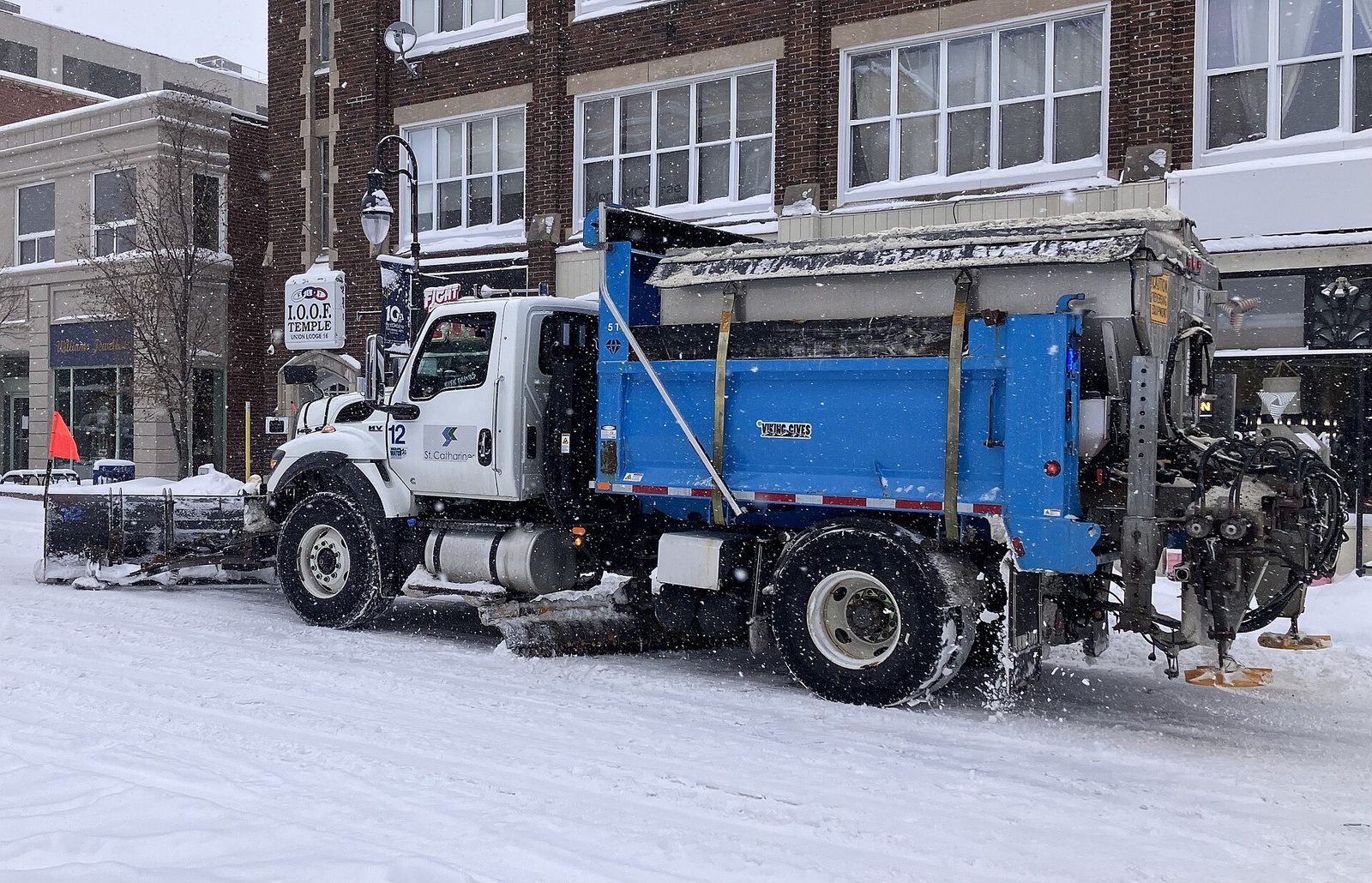
In-bed spreaders, often called V-box spreaders, sit inside the truck bed and carry substantially more material. This is the common choice for commercial snow work because the larger hopper supports longer routes with fewer reloads, and the load can be filled with bulk material using a loader. The trade-offs are that the bed is occupied all season, the combined weight demands careful payload checking, and installation is a bigger commitment involving tie-downs, wiring, and sometimes bed protection.
Because these units live in the bed, think about how you will load them safely, how you will see behind you, and whether you need the bed for other winter tasks. Also consider storage in the off-season: a large spreader needs dry, level space and a safe way to lift it in and out without damaging the hopper or the truck.
Under-Tailgate and Dump-Body Spreaders
Trucks with dump bodies have another option that mounts beneath the tailgate and spreads as material is fed from the body. This approach suits larger municipal and heavy commercial work where the truck already carries bulk material. For a typical pickup owner it is rarely the relevant category, but it is useful to recognize the term so you do not compare equipment designed for entirely different trucks.
Tow-Behind Options
A small number of operators use tow-behind spreaders, but for truck-based de-icing they introduce backing and maneuvering challenges on icy lots and are less integrated with the truck’s power and controls. For most truck buyers, a mounted unit that travels as part of the vehicle is the more practical and predictable choice in winter conditions.
Key Features That Actually Matter
Once the mounting type and capacity range are set, these are the details that separate a spreader you trust at 3 a.m. from one you fight with all winter.
Power Source and Controls
Truck spreaders may be powered by the truck’s electrical system, by a dedicated engine, or by hydraulics on larger vehicles. Electric drive is common on pickup-sized equipment because it is quiet, simple to wire, and avoids maintaining a separate engine. Whatever the source, look for controls you can operate with gloves on, from the cab, without taking your eyes off an icy lot for long. Separate control of the feed mechanism and the spinner, where offered, gives you more precise command of both application rate and spread width.
An in-cab controller with clear settings also helps different drivers produce consistent results. If more than one person will run the truck, write the agreed settings down rather than relying on memory.
Feed System: Auger, Conveyor, and Vibration
Material has to move from the hopper to the spinner evenly, or the spread pattern will pulse and leave stripes of untreated pavement. Auger and conveyor systems each handle flow differently, and features that help break up clumps and keep damp salt moving can matter more in February than any headline specification. Ask how the system behaves when material sits in the hopper between events, and whether guards or covers help keep chunks and foreign objects out of the feed path.
Spinner and Spread Pattern
The spinner throws material behind and to the sides of the truck. What matters is not a maximum width claim but an even, adjustable pattern at the width your lots and drives require. Too wide wastes salt on grass and landscaping, where it damages plants and soil. Too narrow leaves untreated bands that refreeze. Look for deflectors or adjustments that let you protect sensitive edges and favor one side when working along buildings or parked cars.
Hopper Material and Corrosion Resistance
Salt destroys mild steel over time, which is why hopper construction deserves real attention. Polyethylene hoppers do not rust and tend to shed material well, while stainless steel offers strength with strong corrosion resistance at a higher cost. Painted or powder-coated steel can be serviceable but depends entirely on the coating staying intact. Whichever material you choose, inspect seams, fasteners, frames, and the spinner assembly, because mixed metals and chipped coatings are where corrosion usually starts.
Covers, Screens, and Lights
A fitted cover keeps precipitation out of the hopper, and dry material flows better, spreads more evenly, and weighs less than material soaked by rain or snow. A top screen helps break up bagged chunks and keeps debris out. Work lights and visibility markers are practical safety features for night work in active parking lots, and a design that protects wiring connectors from spray will save troubleshooting time later.
How to Choose by Use Case
A Single Home Driveway and Small Business Lot
If you maintain your own property, prioritize simplicity, easy mounting and removal, and capacity that covers your lot with at most one refill. A tailgate-style unit often fits this pattern well, especially when the truck must return to normal family or work duty between storms.
Commercial Snow Routes
Contractors should start with payload and route math, then choose the largest practical in-bed capacity the truck can carry safely, with controls and feed reliability that support consistent application across many sites. Downtime is the real cost in commercial work, so dealer support, available replacement parts, and the ability to service the unit quickly can outweigh small price differences. Standardizing on one style of spreader across a fleet also simplifies training and spare parts.
Mixed Plowing and Salting Work
If the same truck plows and salts, consider the whole setup together. Front plow weight and rear spreader weight change axle loads and traction, sometimes helpfully, since weight over the rear wheels can improve grip, but only within the truck’s ratings. Check electrical demand as well, because plow controls, lights, and a spreader all draw on the same charging system during long, cold shifts.
Environmentally Sensitive Sites
Properties near wells, waterways, planting beds, or sensitive paving may require restrained application and tight pattern control. In these settings, precise low-rate settings, good deflectors, and disciplined calibration matter more than raw capacity. Applying the right amount in the right place is both an environmental and a budget decision, since excess salt is money literally washed away.
Calibration, Care and Maintenance
A spreader is only as good as its calibration, and only as durable as the cleaning routine behind it. Salt work punishes neglected equipment faster than almost any other vehicle task.
How to Calibrate Application Rate
Calibration means knowing how much material you actually lay down at a given setting and speed, rather than trusting a dial number. A simple approach is to spread over a measured area or collect output over a timed interval with the truck stationary where the design allows, weigh the material, and record the result for each setting you use. Repeat the check for each material type, because bagged salt, bulk salt, and mixes flow at different rates through the same opening.
Record your findings in a small chart kept with the truck: setting, ground speed, material, and resulting coverage. Ground speed matters because the same feed setting lays down more material per area when you drive slowly. Consistent speed on each type of site is part of calibration, not an afterthought.
Cleaning and Corrosion Prevention
Rinse the hopper, feed system, spinner, and the rear of the truck after use, and always empty leftover material rather than storing salt in the hopper between storms. Salt left sitting absorbs moisture, hardens into clumps, and corrodes every surface it touches for days at a time. Pay attention to hidden areas: under the hopper, around mounting points, inside frame rails near the rear, and at electrical connectors.
Dry the unit before storage, touch up damaged coatings promptly on steel components, and follow the manufacturer’s guidance on lubricating bearings, chains, and moving parts, noting that some modern designs use sealed components that need inspection rather than grease. A freshwater wash is worthwhile even when the spreader looks clean, because salt residue is often nearly invisible once dry.
In-Season Checks
Before each storm, spin the system briefly, confirm the controls respond, check that the spinner is undamaged and unobstructed, and inspect tires, lights, and tie-downs. Carry basic spares and tools appropriate to your unit, and keep the manual’s troubleshooting steps accessible. Small problems found in the yard are quick fixes; the same problems found in an unplowed lot at night are not.
Off-Season Storage
At the end of winter, wash the spreader thoroughly, let it dry completely, address rust spots, and store it under cover on a level surface where it will not collect standing water. Disconnect or maintain electrical connections as directed, protect exposed metal, and note any worn parts so replacements can be ordered before the first forecast of the next season creates a rush.
Common Mistakes to Avoid
Overloading is the most serious buying mistake. Exceeding payload with a full hopper compromises braking, steering, and tire safety on the exact surfaces where you need them most. A close second is choosing capacity by hopper volume alone without asking what the intended material weighs when full and damp.
Other common errors are operational. Spreading at inconsistent speeds produces alternating bare and over-salted stripes. Leaving salt in the hopper between storms invites clumping and corrosion. Skipping calibration means either wasting material or under-treating surfaces that then refreeze, creating liability for a business and danger for anyone walking to their car. Finally, many buyers forget total cost: covers, wiring, installation, a possible suspension or lighting upgrade within safe limits, spare parts, and the salt supply itself all belong in the budget from the start.
Frequently Asked Questions
Do I need a special truck to run a salt spreader?
Most pickup-sized spreaders are designed for standard work trucks, but you must confirm payload, bed dimensions, and electrical capacity for the specific combination. The spreader, a full load of material, a plow, and occupants all count together, so check the ratings rather than assuming a heavy-duty badge settles the question.
Is a tailgate spreader enough for commercial work?
It can be for a small route with modest material needs, but frequent refilling costs time on larger routes. Commercial operators who service many properties usually move to an in-bed unit for capacity and faster bulk loading, while keeping expectations realistic about payload.
Can one spreader handle both salt and sand?
Some designs are rated for mixes or sand, but many salt-focused units are not, because sand is heavier, more abrasive, and flows differently. Only use materials the manufacturer lists for the unit, and recalibrate whenever you change material.
How do I keep a spreader from rusting out?
Empty it after every use, wash salt residue off the hopper, frame, spinner, and truck, dry it before storage, and repair coating damage early. Choosing a polyethylene or stainless hopper reduces one major risk, but frames, fasteners, and wiring still need the same discipline.
Why does my spreader leave uneven stripes?
Uneven patterns usually come from inconsistent driving speed, clumped or damp material, a partially obstructed feed opening, or a damaged spinner. Calibrate at your real working speed, keep material dry and screened, and inspect the feed and spinner before blaming the settings.
Should I spread before or after plowing?
Both approaches have a place. A light application before a storm can prevent snow bonding to pavement and make plowing cleaner, while spreading after plowing treats the cleared surface and remaining ice. Many operators do both, adjusting rates to conditions rather than following a single fixed habit.
Conclusion
The best salt spreaders for trucks are the ones that fit your payload, your routes, and your material, with controls precise enough to lay down only what the surface needs and construction tough enough to resist the salt it carries. Decide on mounting style and capacity first, verify the truck can carry the full load safely, and then compare feed systems, pattern control, and corrosion protection in that order. Budget for installation, covers, and maintenance alongside the spreader itself. A spreader chosen and calibrated that way, and washed after every storm, will treat lots evenly, waste less salt, and still be working when lesser-cared-for equipment has rusted into an expensive lesson.
Word count (body, excluding front matter): 2,812 words.