Where to buy
Check the latest price, availability and delivery on Amazon. Orders are placed on Amazon. We may earn a commission from qualifying purchases.
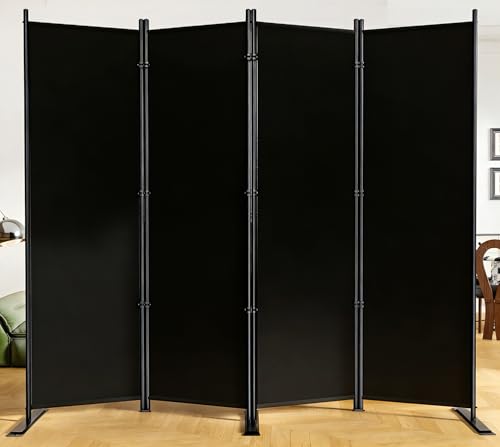
- Best overall for small apartments: SUNALLY 4-Panel Fabric Room Divider, Black — Check on Amazon
- NICETOWN Room Divider Curtain Panel, Grey, 100 x 84 in — Check on Amazon
- Goovilla Tension Rod Room Divider, Black, 28–70 in — Check on Amazon
- HORSE SECRET Tension Rod Room Divider, Black, 28–70 in — Check on Amazon
- VEVOR 4-Panel Fabric Room Divider, Grey — prose-only pick, see the review below for why
- Giantex Single Panel Room Divider with Wheels, Beige — prose-only pick, see the review below for why
Read the full guide ↓
Disclosure: As an Amazon Associate, dailyhomedecorating.com earns from qualifying purchases. Links to Amazon on this page are affiliate links; they cost you nothing extra. Listing details such as price and availability change often, so check the current Amazon listing before you buy.
The best room divider for small apartments under $50 has to pass tests that dividers in houses never face. It must divide a studio without eating the floor space it just created. It must go up without a single screw, because the deposit is real money and the lease is explicit. It must store in a closet, under a bed or behind a door, because a small apartment has no spare corner for a divider that is not currently dividing. And it must move house easily, because small apartments are rarely long-term and a divider that cannot survive a Sunday move in a hatchback will be abandoned at the first lease end. This guide applies those four tests — footprint, no-drill, storage, portability — to every pick, on top of the budget honesty this series always starts with: a solid wooden screen does not exist at an everyday price under $50, so the apartment tier is built from fabric screens that fold flat, curtain panels that slide away, and tension frames that brace without holes. In a small apartment that lightness is not a compromise. It is the entire point.
The jobs are the familiar studio jobs, and each gets a matched pick below. The sleeping alcove that needs to stop being the living room at night. The desk that needs a background for calls and a boundary for the brain. The entry that needs the bed to not be the first thing a guest sees. The roommate divide in a shared one-bedroom that two incomes turned into two homes. For most small apartments we would begin with the SUNALLY four-panel fabric screen, because it folds to a single panel’s width, stands anywhere without permission, and gives a studio a real wall for the hours it is needed. Where the apartment’s divide is permanent — the alcove that is always the bedroom — the NICETOWN curtain on a tension frame is the apartment native: full height, zero floor footprint, gone in a slide when the room must be whole. Read on for the quick picks, the renter-first reviews, and the small-space mistakes that cost deposits and sanity.
In this guide
Quick Picks
Short on time, or comparing several options at once? Each row below names an apartment situation and the product that suits it, with a link to the listing where one is verified for this tier.
| Apartment situation | Pick | Why it stands out | Link |
|---|---|---|---|
| Best overall for small apartments | SUNALLY 4-Panel Fabric Room Divider, Black | Folds flat, stands anywhere, no permission needed — check price on Amazon | Check on Amazon |
| Best permanent alcove divide | NICETOWN Room Divider Curtain Panel, Grey | Zero floor footprint and blackout darkness for a sleeping alcove — check price on Amazon | Check on Amazon |
| Best no-drill frame | Goovilla Tension Rod Room Divider, Black | The sturdier tension frame for a season-long curtain wall — check price on Amazon | Check on Amazon |
| Best budget frame | HORSE SECRET Tension Rod Room Divider, Black | Lowest-cost full-height frame for a first studio — check price on Amazon | Check on Amazon |
| Widest screen | VEVOR 4-Panel Fabric Room Divider, Grey | Maximum width for a shared one-bedroom — prose-only, see review | See review |
| Best rolling backdrop | Giantex Single Panel Room Divider with Wheels, Beige | One panel that parks against any wall — prose-only, see review | See review |
How These Picks Were Chosen
The budget filter is the series standard: every linked product is a real Amazon listing with a recorded price sighting at or under $50 for the exact configuration named; the two picks whose exact-variant pricing could not be confirmed in-tier are prose-only, without links; and you should check the current price on Amazon before buying, because prices move. Both tension frames need a curtain that is not included — the reviews say so first, and the pairings still fit this budget.
The apartment filter added four tests. Footprint: what floor does the divider consume while working — a folding screen’s zigzag depth, a rolling panel’s base, or a curtain’s nothing. Storage: what does it become at midnight, at guest time, at move-out — folded width, parked profile, or a slid-aside stack. Permission: does installation need anything a standard lease forbids — drilling, adhesive on paint, pressure on a fragile ceiling. Portability: can one person carry it down stairs and into a car without a strategy meeting. We did not use these dividers ourselves; we worked from maker listings, specifications and independent measurements, and reasoned about studio life from verified dimensions. Where a listing was vague, the review says so. The general guide, Best Room Divider Under $50, covers the same products for houses; this one exists because an apartment’s constraints reorder the winners.
A note on ceilings, because it decides two picks: tension frames brace floor-to-ceiling and need a solid ceiling inside their 4-to-10-foot range. Most apartments qualify; suspended ceilings, fragile tiles and very high loft ceilings do not. Measure before you fall for the curtain-wall idea, and keep the freestanding screen as the universal fallback — it has never once asked an apartment for anything.
Best Room Divider for Small Apartments Under $50: The 6 Picks in Detail
SUNALLY 4-Panel Fabric Room Divider, Black
Who it suits: Studio renters who need a wall some of the time — a sleeping corner at night, a call backdrop by day — and a divider that folds away to almost nothing between jobs.
The SUNALLY is four fabric panels on a powder-coated steel frame with widened feet, unfolding to about 88 inches wide and standing 6 feet tall, in a coated polyester the listing describes as non-see-through. Its apartment virtues are logistical. It stands anywhere the moment it is unfolded — no ceiling to qualify, no landlord to consult, no tools beyond the half-hour of tube-and-connector assembly it needs once. It folds back to one panel’s width and leans in a closet, slides behind a sofa or lies under a bed, which in a studio is the difference between a divider you own and a divider that owns you. And its zigzag, often described as a limitation, is an apartment asset: a shallow L around a bed corner or a desk creates a nook with genuine psychological walls while consuming a strip of floor barely deeper than a bookshelf.
The honest costs are the format’s own. Six feet of height blocks sightlines for anyone sitting or lying down but leaves a light gap above in a high-ceilinged studio, so a sleeping corner under it is private, not dark — the curtain pairing below solves darkness properly. The screen blocks sight, not sound, which matters in roommate divides and is stated here rather than discovered at midnight. And while it folds slim, it does not fold small: a four-panel screen is still a tall object that needs its leaning slot planned. For the classic studio jobs, though — bed nook, desk backdrop, entry screen — this is the most apartment-shaped divider in the guide, and the first one we would carry up the stairs.
- Folds to one panel wide: closet, under-bed or behind-sofa storage in any studio.
- Stands anywhere with zero permission — no ceiling, track or landlord involved.
- Coated opaque fabric makes a bed nook or desk corner genuinely private.
Honest limitation: Six-foot height leaves a light gap above in tall studios, and it blocks sight, not roommate sound.
Choose it if your divide changes by the hour and storage is tight. Skip it if your alcove needs darkness as well as privacy — the curtain pairing below is built for that.
NICETOWN Room Divider Curtain Panel, Grey, 100 x 84 in
Who it suits: Apartments with a true alcove or a permanent sleeping zone — the divide that stays up all season and must cost the room zero floor space.
The NICETOWN is a single blackout curtain panel, 100 inches wide by 84 inches long, in triple-weave polyester with grommets. In a small apartment its genius is subtraction: hung across an alcove mouth or a studio’s sleeping end, it divides at full height, darkens like a bedroom door left closed, and consumes no floor at all — the only pick here that gives space instead of spending it. Slide it open and the studio is one room again for guests, cleaning or sanity. The grey suits rental palettes, the fabric can be washed when apartment life marks it, and one panel covers openings — sliding doors, wide alcove mouths — that no folding screen in this budget can span.
It is the curtain only, so the apartment question is the hanging. A ceiling track is the cleanest solution where a lease allows screws in the ceiling; where it does not, the tension frames below are the apartment answer, and the NICETOWN plus either frame still fits this budget. Measure the drop to just clear the floor — a pooling curtain eats visual space and collects dust, a short one leaks light at the exact height a sleeping person notices. Hung well, this panel turns a studio’s end wall into a bedroom with a soft door, and it is the pick long-term studio dwellers most often wish they had bought first.
- Zero floor footprint: the only divider that adds a room without taking space.
- Blackout weave gives an alcove real bedroom darkness, not just privacy.
- Slides completely open — the studio returns to one room in seconds.
Honest limitation: Curtain only — it needs a track or tension frame — and a short or pooling drop wastes its elegance and its darkness.
Choose it if your divide is permanent and your floor space is precious. Skip it if your ceiling cannot take a track or a tension brace — the freestanding SUNALLY needs nothing overhead.
Goovilla Tension Rod Room Divider, Black, 28–70 in
Who it suits: Renters whose lease forbids drilling but whose studio needs a real, season-long curtain wall — the frame that makes the NICETOWN possible without a single hole.
The Goovilla is a tension frame: two vertical iron poles brace floor-to-ceiling, adjustable from 4 to 10 feet, with a cross rod spanning 28 to 70 inches in the version linked here and a wider sibling in the same family. For apartment life its virtues compound. It installs in minutes with no tools and no permission. It holds a blackout curtain at full height, so an alcove gains darkness as well as division. And at move-out it unscrews by hand, packs into a bundle one person can carry, and leaves the ceiling exactly as the landlord photographed it — provided you pad the contact points, because rental coverage of tension systems notes that textured popcorn ceilings can be marked by pressure ends, and a pad is cheaper than a deposit deduction. Curtains are not included; this frame plus the NICETOWN panel is the intended pairing, and together they fit this budget.
Apartment setup discipline decides whether this frame delights or disappoints. Measure your ceiling first — it must be solid and inside the 4-to-10-foot range — and keep the rod’s span in its comfortable middle rather than at maximum stretch under a heavy curtain. Tension firmly, then re-check after the first week, when small apartments’ daily bumps have had their say. Placed across an alcove mouth or a studio’s sleeping end, the Goovilla gives a renter the one thing small apartments are designed to deny: a wall that behaves like it belongs to the home, and leaves like it never did. Roommate households dividing for two people’s schedules should also read Best Room Divider For Families Under $50, where this frame is judged on daily traffic rather than deposits.
- No holes, no adhesive, no deposit risk — tension does all the holding.
- Full-height division: pairs with a blackout curtain to make an alcove a bedroom.
- Packs down to a one-person bundle at move-out; the ceiling keeps its innocence.
Honest limitation: Frame only, and it needs a solid ceiling in range — suspended or fragile ceilings rule it out.
Choose it if you rent, your ceiling is solid, and the divide is staying up all season. Skip it if your ceiling is suspended or your divide moves daily — a folding screen asks nothing overhead.
HORSE SECRET Tension Rod Room Divider, Black, 28–70 in
Who it suits: First-apartment renters and students in studios who need a full-height curtain wall at the lowest possible complete cost.
The HORSE SECRET is the same no-drill idea as the Goovilla — floor-to-ceiling tension poles, 4 to 10 feet high, 28 to 70 inches wide in this version, curtains not included — at the lowest verified price for this kind of system, with coverage noting it can hold up to 40 pounds of curtain. For a small apartment, that price gap is not trivia: the money it saves against the sturdier frame is most of the curtain itself, which means the complete wall — frame plus the NICETOWN panel or a curtain from a thrift run — fits a first-apartment budget that is also buying a mattress and a kettle in the same month. It installs by hand, divides at full height, and comes down at lease end without evidence.
The apartment cautions mirror its price. Keep it inside its comfortable range — mid-width, a curtain it carries without strain — and re-tighten after the first week, because studio traffic brushes a curtain wall daily. Pad the ceiling contacts, especially on the popcorn ceilings of older rental stock. In a small apartment the frame’s best placement is across a defined mouth — alcove, closet opening, the studio’s sleeping end — where its span is modest and its line stays true. Asked to stretch across a wide open-plan gap at full extension under the heaviest blackout you own, it will sag where the Goovilla stands; matched to an apartment-sized opening, it is the smartest cheap wall in this guide.
- The complete curtain wall — frame plus curtain — at the lowest total cost here.
- Hand-installed, hand-removed: built for lease-length commitments.
- Full-height division that makes a studio’s sleeping end feel like a room.
Honest limitation: Less span margin than the Goovilla — happiest across apartment-sized openings, not wide ones.
Choose it if budget leads and your opening is modest. Skip it if your span is wide or your curtain is heavy — the Goovilla’s reserve is worth its price there.
VEVOR 4-Panel Fabric Room Divider, Grey
Who it suits: Shared one-bedroom apartments and larger studios where two lives need the widest freestanding divide this budget can describe.
The VEVOR is the wide, substantial fabric screen: independently measured at about 89.8 inches wide and 67.9 inches tall, roughly 17.4 lb, with 180 g coated polyester on a steel frame. In apartment terms, width is its argument — a shared one-bedroom being lived in as two homes needs every inch of divide it can get, and this screen’s span closes gaps the standard screens leave open. Its coated fabric wipes clean, which suits the kitchen-adjacent reality of studio living, where the divider stands near everything.
It is prose-only because its listings and specifications are verified but no current price at or under $50 could be confirmed for the exact grey four-panel variant at research time — no link, and you should verify variant and live price on the listing itself. The apartment cautions are about bulk: this is the heaviest, widest thing here, the least suited to daily folding in a tight studio and the most demanding of a storage slot. In a larger shared apartment where the divide is semi-permanent, those costs fade and the width wins; in a true micro-studio, the SUNALLY’s lighter logistics win instead. If its live price sits above this tier, it competes in Best Room Divider Under $100.
- Widest freestanding span here — built for the shared one-bedroom divide.
- Substantial, planted stance that suits a semi-permanent apartment layout.
- Wipe-clean coated fabric for kitchen-adjacent studio duty.
Honest limitation: No verified in-tier price for the exact variant, hence no link — and its bulk punishes daily folding in tight studios.
Choose it if your apartment is larger, your divide is semi-permanent, and the live price fits. Skip it if you fold and store daily — the SUNALLY is the lighter citizen.
Prose-only pick — no Amazon link, for the pricing reason stated above.
Giantex Single Panel Room Divider with Wheels, Beige, 73 x 73 in
Who it suits: Studio dwellers whose one room is also an office, a studio and a backdrop — anyone who needs a screen that parks flat against a wall and rolls out for calls.
The Giantex is a single fabric panel, about 73 inches square, in beige on a wheeled base with lockable casters. Its apartment logic is parking: a folding screen stores as a tall folded slab, but a flat panel stores as a picture — flush against a wall, behind a sofa, beside a wardrobe — and in a small apartment that flush profile is precious. Rolled out, its full flat width is usable width with no zigzag tax, and as a call backdrop or a dressing screen it is the most professional-looking square in this guide. It is prose-only here because deal coverage has shown a Giantex single-panel divider at an in-budget price, but the brand’s several single-panel variants could not be separated with certainty — the sighted price may belong to a sibling — so it carries no link, and you should verify size, wheeled base and live price on the listing itself.
The studio cautions are practical. Wheels want level floors; on the sloping boards of older apartments a parked panel can creep, so locks engaged is a habit, not an option. One panel covers about six feet — enough for a desk backdrop or a bed’s head end, not enough to split a wide studio alone. And beige shows the marks of small-space living, where everything is within reach of everything else. Matched to a studio that needs a backdrop with a parking place, it is a genuinely clever object; asked to be a whole apartment’s only wall, it is a panel doing a curtain’s job.
- Parks flush like a picture — the best storage profile in this guide.
- Full flat width with no zigzag tax; the most professional backdrop here.
- Rolls out in seconds for calls, dressing and guest nights.
Honest limitation: Prose-only on pricing certainty — and six feet of panel will not split a wide studio alone.
Choose it if you need a backdrop that parks invisibly. Skip it if it would be your only divide across a wide room — pair up with a curtain system instead.
Prose-only pick — no Amazon link, for the pricing reason stated above.
Comparison Table
| Product | Type | Best apartment use | Link |
|---|---|---|---|
| SUNALLY 4-Panel Fabric Divider | Freestanding fabric screen, 88 in x 6 ft | Flexible studio wall that folds away | Check on Amazon |
| NICETOWN Curtain Panel, 100 x 84 in | Hanging blackout curtain | Permanent alcove divide with zero footprint | Check on Amazon |
| Goovilla Tension Rod Divider | No-drill tension frame, curtain not included | Season-long renter curtain wall | Check on Amazon |
| HORSE SECRET Tension Rod Divider | No-drill tension frame, curtain not included | Lowest-cost full-height studio wall | Check on Amazon |
| VEVOR 4-Panel Fabric Divider | Freestanding fabric screen, ~90 in wide | Wide shared-apartment divide — verify live price | See review |
| Giantex Single Panel with Wheels | Rolling single panel, 73 x 73 in | Backdrop that parks flush — verify live price | See review |
How to Choose a Room Divider for a Small Apartment
- Audit your lease before your cart. If drilling is banned, your shortlist is freestanding screens and tension frames. Knowing this first saves a return and a deposit argument.
- Measure the ceiling before loving the curtain wall. Tension frames need a solid ceiling inside their 4-to-10-foot range. Suspended tiles and fragile ceilings route you to a folding screen.
- Count floor space as money. A curtain costs zero floor; a screen’s zigzag costs a strip; a rolling panel costs its parking place. In a studio, choose the currency you can afford.
- Plan storage before the divider arrives. Folded screens need a leaning slot, panels need a wall, curtains need a stack side. The best apartment divider is the one whose midnight form you have already solved.
- Cost frame plus curtain as one purchase. Tension systems exclude curtains. Compare complete walls against complete screens, or the budget comparison lies.
- Match height to the job. Six-foot screens privatize sitting and sleeping sightlines; full-height curtains also darken. Alcove sleepers need the curtain; desk workers do not.
- Pad every contact a tension frame makes. Popcorn ceilings and painted surfaces mark under pressure. Pads cost almost nothing; deposit deductions do not.
- Think about move-out day now. One-person carry, car-sized bundles, nothing glued or screwed — the divider that leaves easily is the one you will still own in your next apartment.
- Keep the packaging for a week. Studio fit — width, darkness, the parking test — is only provable in the room. The box makes the verdict reversible.
Studio Layouts That Actually Work
Three layouts recur in small apartments that divide well. The first is the alcove bedroom: curtain across the mouth, bed behind it, living room in front — the NICETOWN on a tension frame is this layout’s native equipment, and its blackout weave is what makes the bedroom half sleep like one. The second is the perpendicular desk nook: a folding screen set at right angles to a wall, desk inside the L, backdrop behind the chair — the SUNALLY’s home ground, because the nook appears for work hours and folds away for evenings, returning the studio its full social size. The third is the entry veil: any opaque pick placed to break the sightline from the front door to the bed, the single cheapest dignity upgrade a studio can buy, achievable with the screen you already own for another job simply by parking it on the door’s axis at guest time.
What does not work is the diagonal compromise — a screen stretched straight across a studio’s middle, at full width, in nobody’s storage plan. It eats the room’s only open floor, stands at its tippiest, and divides the apartment into two halves neither of which fits a life. Small apartments divide best at their edges: alcoves, ends, corners and nooks, leaving one honest open space in the middle. Households whose small apartment is also a family home should continue to the family guide linked above; households dividing a single tight room several ways should read Best Room Divider For Small Spaces Under $50, where footprint discipline is stricter still, and style-led renters will find the same picks judged on finish in Best Room Divider For Modern Homes Under $50.
The Roommate Edition: One Bedroom, Two Homes
The hardest small-apartment divide is the shared one-bedroom, where two adults with different schedules, guests and sleep needs must manufacture two homes from one set of rooms. It deserves its own section because its rules differ from the studio’s. The living room usually becomes the second bedroom, which means the divide must work in both directions at different hours: private for the person sleeping at midnight, invisible for the household using the kitchen at seven. A curtain wall across the living room’s sleeping end — NICETOWN panel on the Goovilla frame — is the strongest answer this budget offers, because it darkens for the sleeper, opens fully for the day, and gives both roommates the one thing that makes shared living survivable: a boundary that closes completely and obviously, so nobody has to negotiate what half-open means.
Where the shared apartment’s divide is a corner rather than an end — one roommate’s desk and bed occupying a living-room L — the folding screen is the fairer tool, because it belongs to a person rather than to the architecture: the SUNALLY can be angled for privacy at night, folded to a panel for a shared evening, and taken entirely by its owner at move-out without a negotiation about holes or hardware. Two practical agreements matter more than either product. The first is the sound agreement: every divider here blocks sight only, so roommates should settle quiet hours alongside the purchase rather than discovering the limit during exam week. The second is the guest agreement: whose divider moves, whose corner hosts, and how the shared room returns to whole — agreed in advance, a screen makes hosting easy; unagreed, the same screen becomes the border dispute. Small apartments run on such agreements, and the divider is best understood as the furniture that makes them physical.
Finally, the move-out test, which shared apartments face more often than any other home: every pick in this guide can be owned by one person, carried by one person and installed in the next place by one person, without leaving the shared apartment damaged or diminished. That portability is a roommate-ethics feature as much as a convenience. Buy the divider you can take with you, install it without a trace, and the shared apartment stays what it should be — a place two people improved together and can each leave whole.
What Landlords Actually Care About — and How These Picks Respect It
Renters often overestimate and underestimate their leases at the same time, so it is worth being precise about what a divider asks of an apartment. Landlords care about three things: holes, marks and alterations that outstay the tenant. A freestanding screen asks for none of them — it is furniture, legally and practically, and no lease in ordinary use has an opinion about it. A tension frame asks for pressure rather than penetration: no holes, but contact points that can mark soft or textured finishes, which is why this guide repeats the padding advice until it becomes reflex — a felt or rubber pad at each ceiling and floor contact converts the frame from a small risk into no risk at all, and photographing the ceiling before and after installation is a thirty-second habit that ends any possible dispute before it begins.
The ceiling track is the one system in this guide that crosses into alteration, because it screws into the ceiling. Some leases allow small fixings with making-good at move-out; many do not; the renter’s correct move is to read the clause or ask, in writing, rather than to discover the answer at inspection. Where the answer is no, the tension frame delivers the same curtain wall by other means, which is precisely why two of the six picks here are frames. A final, underrated renter consideration is the move itself: everything in this guide can be out of the apartment in one trip, in one person’s arms, leaving the inspection walk-through with nothing to discuss. In small-apartment life, where the next home is usually a year or two away, that exit quality is not a footnote to the purchase — for many renters it is the purchase, and it is why this tier’s light, flat, traceless formats will still be serving their owners several apartments from now.
Seasonal Reconfiguration: One Apartment, Four Rooms a Year
Small apartments ask their furniture to change jobs with the calendar, and a divider that reconfigures is worth more than a divider that merely fits. In work-from-home season, the screen stands at the desk and the apartment has an office. In guest season, the same screen — or the curtain wall drawn across the living room’s end — manufactures a guest room from nothing, and the apartment hosts without apology. In summer, when light and air matter more than zoning, everything folds, slides or rolls to its parking place and the apartment breathes at full size. In winter, the curtain wall earns a second salary: a blackout panel across an alcove or a draughty opening is also insulation, softening the cold edge of a sleeping corner in a way no folding screen attempts. One purchase, four seasonal rooms — that arithmetic is the small apartment’s real economy, and it is why this guide keeps scoring portability and storage as heavily as coverage.
Planning for reconfiguration is simple but must be done once, deliberately: choose parking places for both the open and closed states of your divider, keep its assembly tools with it rather than in a junk drawer across the home, and photograph your two or three working layouts so re-setting them is a memory task rather than a fresh design problem. Apartments that do this treat their divider as infrastructure. Apartments that do not end up treating it as clutter that occasionally divides something — the difference is an hour of planning in the first week, repaid every season the home changes its mind about what it needs to be.
Common Buying Mistakes
- Ordering a ceiling-track curtain in a lease that bans screws, then improvising an unsafe hanging.
- Skipping the ceiling check and buying a tension frame for a suspended or fragile ceiling.
- Forgetting the curtain is not in the tension frame’s box — and blowing the budget on frame alone.
- Stretching a folding screen straight across a studio’s middle, at its widest and tippiest.
- Buying a divider with no storage plan and living with it as permanent visual clutter.
- Leaving tension marks on a popcorn ceiling that a simple pad would have prevented.
- Expecting a six-foot screen to darken a sleeping alcove under a high ceiling’s light spill.
- Choosing the widest, heaviest screen for a walk-up studio you will leave in a year.
- Judging the divider in the shop’s photographs instead of against your own alcove’s measured width.
Final Recommendation
- Most small apartments: SUNALLY 4-Panel Fabric Room Divider — folds flat, stands anywhere.
- Permanent alcove bedrooms: NICETOWN Curtain Panel on a track or tension frame.
- Renters, season-long wall: Goovilla Tension Rod Room Divider plus the NICETOWN panel.
- First apartments, tightest budgets: HORSE SECRET Tension Rod Room Divider plus a curtain.
- Shared one-bedrooms: VEVOR 4-Panel Fabric Room Divider — only if the live price fits this tier.
- Backdrop with parking: Giantex Single Panel with Wheels — verify size and price on the listing.
Our top two for small apartments are the SUNALLY for any divide that changes by the day and the NICETOWN-plus-tension-frame pairing for the alcove that is always a bedroom, because between them they answer the renter’s two questions: can it leave no trace, and can it make one room live as two. If your apartment is a studio you love and the divide is permanent architecture you are planning for years, the wooden screens in Best Room Divider Under $100 are the honest next step. For lease-length life, nothing up there will serve you better than a divider that folds, slides or rolls away the day the lease does.
Frequently Asked Questions
Will a room divider damage my rental or my deposit?
Not if you choose from this guide’s formats. Freestanding screens touch nothing; tension frames brace by pressure and leave no holes — pad their ceiling contacts to protect textured finishes, and re-check tension rather than over-tightening. Ceiling tracks are the only system here that drills, so use them only where your lease clearly allows it.
What is the best divider for a studio sleeping alcove?
A blackout curtain at full height — the NICETOWN panel on a tension frame if you cannot drill, or on a track if you can. It is the only option that darkens the alcove like a bedroom while costing zero floor space, and it slides completely away when the studio needs to be one room.
How do I store a folding screen in a small apartment?
Folded to one panel’s width, a four-panel screen leans in a closet, slides behind a sofa or wardrobe, or lies under a bed — plan which of those is yours before ordering. If none exists, choose the curtain system instead: its storage is a fabric stack at the side of its own opening.
Can one divider work for both a desk backdrop and a bed screen?
Yes — that is the folding screen’s home ground, and the rolling panel’s. The SUNALLY stands behind a desk by day and around a bed corner by night in under a minute. Fixed curtain walls cannot commute, so multi-job studios should start with a mobile pick.
Do dividers help with roommate noise in a shared apartment?
No — every pick here blocks sight, not sound, and voices carry through fabric clearly. Dividers solve the visual half of roommate life: dressing privacy, sleep darkness with a blackout curtain, and the feeling of a door. Pair one with agreed quiet hours for the other half.
Can a divider make a small apartment feel bigger?
Counterintuitively, yes — when it removes visual clutter from the room’s main sightlines. A studio with the bed, the laundry and the desk all visible at once reads as one crowded space; the same studio with a screen hiding the bed corner reads as a living room with somewhere else attached. The divider spends a little floor to buy back a lot of calm, which the eye experiences as space. The effect reverses if the divider itself becomes cluttered or blocks the room’s light path, so keep its face empty and its placement at the room’s edges.
When is a small apartment better off spending above $50?
When the divide is permanent and the apartment is long-term — a owned condo’s fixed work nook, for instance — where a wooden screen’s presence earns its price over years. For lease-length living, this tier’s traceless flexibility is usually the smarter money.


