Where to buy
Check the latest price, availability and delivery on Amazon. Orders are placed on Amazon. We may earn a commission from qualifying purchases.
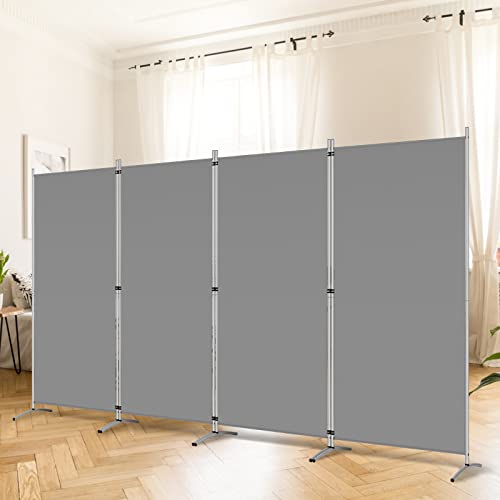
- Best overall fabric divider: RANTILA 4 Panel Room Divider, Grey Fabric — Check on Amazon
- Best with storage shelves: FDW Room Divider with Removable Storage Shelves, Brown, 4 Panel — Check on Amazon
- Best natural wood look: Wooden Folding Room Divider, 4 Panel, Natural — Check on Amazon
- Best for stability on its feet: Kecreque Portable Room Divider, 4 Panel, Grey — Check on Amazon
See 2 more options
- GOFLAME Japanese Style 4 Panel Shoji Screen with Plum Blossom Design — reviewed in prose below (no verified in-budget listing at check time)
- Bonnlo Wood Room Divider Privacy Screen, 6 Panel, Natural Paulownia — reviewed in prose below (no verified in-budget listing at check time)
Read the full guide ↓
Disclosure: As an Amazon Associate, dailyhomedecorating.com earns from qualifying purchases. Links to Amazon on this page are affiliate links; they cost you nothing extra. Listing details such as price and availability change often, so check the current Amazon listing before you buy.
Finding the best room divider for modern homes under $150 means sorting honest, full-height screens from the flimsy panels that crowd this category — and doing it without paying furniture-store money. A divider has one job, to turn one room into two useful places, and at this budget you can buy real wood, opaque fabric and even shelf-equipped designs that do that job properly.
Modern interiors are unforgiving of clutter and compromise. The open-plan spaces, pale walls and low, clean-lined furniture that define a modern home leave a room divider nowhere to hide: it becomes one of the largest objects in the room, and if its finish, colour or silhouette is wrong, it will annoy you every single day. The good news is that the best room divider for modern homes under $150 does not need to be a statement piece with a designer price. It needs discipline — a neutral colour, an honest material, clean geometry — and the sense to divide the space without decorating it to death.
This modern-homes edition re-ranks the under-$150 field on design coherence as much as function. Grey fabric that disappears against a wall is a virtue here, not a compromise. A shoji screen’s grid geometry — the original minimalist divider, centuries before minimalism had a name — scores highly for looks even though we could not verify its current price and review it in prose. Natural wood earns its place only where its tone works as a deliberate warm accent against cooler modern palettes; brown woven traditionalism, by contrast, is flagged honestly where it will fight a contemporary scheme.
The short version: the RANTILA in grey is the invisible divider modern rooms usually need, the GOFLAME shoji is the beautiful one to hunt down in budget, and the Kecreque’s architectural straight run suits loft-style spaces that divide along a line rather than around a corner. Read the design notes in each review — in this edition, they matter as much as the specs.
In this guide
Quick Picks: The Best Room Divider for Modern Homes Under $150 Shortlist
Short on time? Each row names a buyer type and the divider that suits it. Linked picks were verified inside the budget at research time — check price on Amazon for the current figure. Two picks are prose-only, for reasons stated openly in their reviews.
| Buyer type | Pick | Why it stands out | Link |
|---|---|---|---|
| Best overall fabric divider | RANTILA 4 Panel Room Divider, Grey Fabric | Four fabric panels on a metal frame, about 71 inches tall, freestanding with wide feet, folds for storage, grey finish. | Check on Amazon |
| Best with storage shelves | FDW Room Divider with Removable Storage Shelves, Brown, 4 Panel | Four wooden panels, about 70.9 inches tall, wood frame with metal hinges, two removable display/storage shelves, brown finish, roughly 17 pounds. | Check on Amazon |
| Best natural wood look | Wooden Folding Room Divider, 4 Panel, Natural | Four wooden panels, 72 inches high, each panel about 17.7 inches wide, freestanding folding design, natural finish. | Check on Amazon |
| Best for stability on its feet | Kecreque Portable Room Divider, 4 Panel, Grey | Four fabric panels, 6 feet tall, eight curved metal feet, freestanding temporary-wall design, grey finish. | Check on Amazon |
| Best shoji style (prose-only) | GOFLAME Japanese Style 4 Panel Shoji Screen with Plum Blossom Design | Four panels, solid wood frame, unfolded about 72 x 71 inches, folded about 18 x 3 x 71 inches, shoji-style panels with plum blossom design. | Prose-only — see review |
| Widest coverage (prose-only) | Bonnlo Wood Room Divider Privacy Screen, 6 Panel, Natural Paulownia | Six panels, solid paulownia wood with water-based paint finish, about 108 x 71 inches overall, no assembly required. | Prose-only — see review |
How the picks were chosen
Selection started with the usual functional filters — freestanding, around six feet tall, storable — and then applied a design audit. Each pick was judged on silhouette (does it read as one calm plane or as visual noise?), colour discipline (neutrals and natural tones that sit with modern palettes), and material honesty (real wood, plain fabric and clean metal scored; faux-rustic distressing and busy patterns were marked down). Privacy performance was still tested and reported plainly, because a beautiful screen that leaks sightlines fails its job.
Four picks verified inside the under-$150 budget at research time and are linked. The GOFLAME shoji screen and the six-panel Bonnlo wooden screen showed no featured offer when checked, so their live prices could not be confirmed within budget; both appear in prose only. That is a particular frustration with the shoji, which is arguably the strongest design object here — if you find it listed in budget, the review tells you exactly what you are getting.
One rule governed everything: no invented numbers. Specifications come from manufacturer and retailer listings, prices were sighted at research time and are never printed as static figures in this guide — the budget in the title is the ceiling we checked against, and the listing you open is the price that counts. Where verification failed, the pick lost its link rather than gaining a guess.
Detailed reviews: every best room divider for modern homes under $150 contender
RANTILA 4 Panel Room Divider, Grey Fabric
Best for: Best overall fabric divider. Key specs: Four fabric panels on a metal frame, about 71 inches tall, freestanding with wide feet, folds for storage, grey finish.
The RANTILA is the divider most households should look at first, because it solves the actual problem — a see-through gap in a room — without asking you to assemble furniture or drill into anything. The panels are opaque fabric stretched over a metal frame, so unlike woven wood screens it does not leak sightlines through a mesh. You cannot see shapes through it in normal room light, which is the whole point when the zone behind the screen is a bed, a desk on a video call, or a changing corner. The wide feet matter more than the marketing suggests: fabric panels act like sails, and a narrow-footed fabric screen rocks every time a door closes. This one stands planted, and the panels fold together so the whole thing leans in a closet when guests arrive.
Setup is genuinely close to zero. The frame sections connect, the fabric is already fitted, and most people have it standing within minutes of opening the box. Because it is fabric and metal rather than solid wood, one person can carry it between rooms without planning the trip, and that portability changes how you use it — it becomes a tool you deploy for a work call, a nap, or a visiting relative, rather than a permanent piece you arrange the room around. The grey reads neutral against most wall colours and does not fight patterned rugs or upholstery for attention.
The honest limitation is texture and light. Fabric gives you privacy but no sound dampening worth mentioning, and a bright window directly behind it can silhouette shapes at night with a lamp close to the panel. It is also a plain, functional object — it will not be mistaken for a piece of crafted furniture, and in a formal living room it can look temporary. Treat it as the reliable workhorse of this price tier: not the prettiest screen here, but the one whose privacy claim you can take at face value.
Pros
- Fully opaque fabric — real visual privacy, not a mesh suggestion of it
- Wide feet keep a tall fabric screen steady when doors slam
- Folds flat and light enough for one person to move room to room
- No tools and almost no assembly
Honest limitation
- Plain, utilitarian look next to wood screens
- No meaningful sound reduction
- Strong backlight can silhouette shapes at night
Choose it if its strengths match your room as described above; skip it if its limitation hits your main use case — another pick in this guide will fit better. Check on Amazon
FDW Room Divider with Removable Storage Shelves, Brown, 4 Panel
Best for: Best with storage shelves. Key specs: Four wooden panels, about 70.9 inches tall, wood frame with metal hinges, two removable display/storage shelves, brown finish, roughly 17 pounds.
Most dividers only subtract — they take floor space and give back a wall. The FDW is the rare budget screen that gives something back, because two removable shelves ride on its wooden panels and turn dead partition surface into display and storage. A plant, a router, a stack of paperbacks, the remotes that otherwise colonise the sofa: the shelves swallow the small clutter that makes a divided room still feel chaotic. The frame is wood with a woven panel design, so it reads as furniture rather than equipment, and the brown finish sits comfortably in traditional and transitional rooms where a grey fabric panel would look like office surplus.
Structurally it follows the classic folding-screen pattern: four equal panels on metal hinges, arranged in a zigzag so the screen stands on its own, then folded completely flat for storage. At roughly seventeen pounds it is movable by one adult without drama, though the shelves should come off before you carry it any distance. The woven panels filter light rather than blocking it entirely, which keeps a divided living room from developing a dark, dead corner — the zone behind the screen stays usable for reading and working in daylight.
That woven openness is also the honest limitation: this is a visual softener, not a blackout privacy wall. Held against bright light you can make out movement behind it, so it is the wrong choice for a changing area in a shared room. The shelves, useful as they are, hold light objects only — treat them as display ledges, not bookcase shelving, and keep heavy items and anything a toddler can pull down off them. Within those limits, it is the most furniture-like value in this guide.
Pros
- Removable shelves turn a partition into useful display storage
- Wood frame and woven panels read as furniture, not equipment
- Folds completely flat; one person can move it
- Lets filtered light through so divided rooms stay bright
Honest limitation
- Woven panels are semi-private — movement shows against bright light
- Shelves suit light display items only
- Shelves should be removed before moving the screen
Choose it if its strengths match your room as described above; skip it if its limitation hits your main use case — another pick in this guide will fit better. Check on Amazon
Wooden Folding Room Divider, 4 Panel, Natural
Best for: Best natural wood look. Key specs: Four wooden panels, 72 inches high, each panel about 17.7 inches wide, freestanding folding design, natural finish.
If the fabric and woven options feel too soft for your room, this wooden four-panel screen is the straightforward traditional answer: solid-feeling wooden panels, a natural finish, and a full 72 inches of height — the tallest stance in this guide alongside the shoji pick. That extra height is not a spec-sheet vanity. Privacy is a geometry problem, and a screen that clears standing eye level when you are seated, and most sightlines when you are not, simply works in more situations than a shorter one. The natural wood tone warms up rooms that have drifted too grey, and it pairs naturally with oak floors, rattan, linen and the other textures most homes already own.
Each panel is about 17.7 inches wide, so the screen spans roughly six feet fully opened — though, like every folding screen, it should live in a gentle zigzag rather than stretched ruler-straight, which is what keeps it stable. Folded, it stacks into a slim slab that slides behind a door or into the gap beside a wardrobe. There is no assembly to speak of; you stand it up and arrange the folds. The wooden construction shrugs off the bumps that dent fabric frames, and a damp cloth handles dust and fingerprints.
The trade-offs are weight and light. Wood panels make this one of the heavier picks to reposition, and solid panels block light completely, so the corner behind it will be noticeably dimmer — plan a lamp for a desk or reading chair placed behind it. The natural finish also shows variation between panels, which reads as character to most eyes but will bother buyers who want a perfectly uniform manufactured look. For a durable, good-looking, genuinely private screen, it earns its place.
Pros
- Full 72-inch height clears most seated and standing sightlines
- Solid wood panels give complete visual privacy
- Natural finish suits most existing furniture
- No assembly; folds flat for storage
Honest limitation
- Heavier to move than fabric options
- Solid panels darken the zone behind the screen
- Natural wood tone varies slightly panel to panel
Choose it if its strengths match your room as described above; skip it if its limitation hits your main use case — another pick in this guide will fit better. Check on Amazon
Kecreque Portable Room Divider, 4 Panel, Grey
Best for: Best for stability on its feet. Key specs: Four fabric panels, 6 feet tall, eight curved metal feet, freestanding temporary-wall design, grey finish.
The Kecreque attacks the weakest point of every cheap fabric divider: the feet. Instead of asking a zigzag fold to do all the stabilising, it stands its four fabric panels on eight curved metal feet, which spreads the footprint and keeps the screen upright on hard floors where folding screens like to skate. If your divider will live on laminate, tile or polished wood — and if it will be brushed past daily by people, laundry baskets and the family dog — that grounded stance is worth more than any decorative pattern. The fabric is opaque in normal use, so the privacy is real, and the grey finish is the same easy neutral as the RANTILA.
Because the panels do not depend on a deep zigzag to stand, you can run the Kecreque in a shallower curve or a near-straight line across a room, which makes it better than hinged wood screens at dividing a space along a planned line — across the end of a studio, for example, rather than around a corner. It is sold as a temporary wall, and that is the right mental model: a straight, stable, movable partition for as long as you need it, then unbolted from its feet and stored when you do not. Assembly is more involved than the unfold-and-done wood screens, but it is still basic frame-and-feet work with no wall fixings.
The limitations follow from the design. The feet are functional metal, and they look it — this is the most obviously temporary-looking pick here alongside the RANTILA, and the feet project far enough that you will catch a toe on one in the first week if you place it in a walkway. Breaking it down for storage is a small project rather than a ten-second fold. Buy it when stability and a straight run matter more than looks or instant folding.
Pros
- Eight curved metal feet — the steadiest stance here on hard floors
- Can run near-straight, unlike screens that need a deep zigzag
- Opaque fabric gives genuine privacy
- Designed as a temporary wall for studios and shared rooms
Honest limitation
- Feet project into walkways and can catch toes
- Breakdown for storage takes longer than a folding screen
- Industrial look will not suit formal rooms
Choose it if its strengths match your room as described above; skip it if its limitation hits your main use case — another pick in this guide will fit better. Check on Amazon
GOFLAME Japanese Style 4 Panel Shoji Screen with Plum Blossom Design
Best for: Best shoji style (prose-only). Key specs: Four panels, solid wood frame, unfolded about 72 x 71 inches, folded about 18 x 3 x 71 inches, shoji-style panels with plum blossom design.
The GOFLAME is the pick for people who want the divider itself to be a decorative object. It is a Japanese-style shoji screen: a solid wood frame holding translucent panels, finished with a plum blossom design that turns a plain partition into the thing guests ask about. Unfolded it spans about 72 inches at 71 inches tall, and it folds down to a slab roughly 18 inches wide, so it stores as neatly as anything here. Shoji panels do something none of the opaque picks can — they pass soft, diffused light. A room divided by a shoji screen keeps its daylight and its sense of air; the separated zone glows rather than going dark, which is why this style has survived for centuries in small Japanese homes.
We are presenting this pick in prose only, without a purchase link, for an honest reason: at the time of checking, its Amazon listing showed no featured offer, so we could not verify a current selling price inside the under-$150 budget. The model, dimensions and construction are verified; the live price is not, and this guide does not print prices it cannot stand behind. If you find it listed within budget when you shop, judge it on the criteria in this guide like any other pick — and if it is listed well above budget, the wooden Dopinmin pick above gives you the same folding format in a plainer, verified package.
Even at the right price, know what shoji is and is not. The translucent panels give visual separation and privacy for dressing or sleeping in ordinary light, but they are not opaque: a lamp close behind the screen will silhouette the person behind it, and the panel material is more delicate than wood or fabric — it wants a home without flying toys or boisterous large dogs. It also offers no sound privacy at all. As a light-sharing, beautiful divider for a calm room, though, nothing else in this guide does its particular job.
Pros
- Translucent shoji panels share daylight instead of blocking it
- Plum blossom design makes the divider a decorative feature
- Solid wood frame; folds to about 18 inches wide
- Full standing height at 71 inches
Honest limitation
- Translucent — silhouettes show with a lamp close behind it
- Panel material is more delicate than wood or fabric
- Listed here without a link because its current price could not be verified within budget
Choose it if you find it listed within the under-$150 budget and its strengths match your room; skip it if the listing price has moved above budget — the linked picks above cover the same ground with verified pricing.
Bonnlo Wood Room Divider Privacy Screen, 6 Panel, Natural Paulownia
Best for: Widest coverage (prose-only). Key specs: Six panels, solid paulownia wood with water-based paint finish, about 108 x 71 inches overall, no assembly required.
Every other pick here has four panels; the Bonnlo has six, and that changes the maths of a big room. At roughly 108 inches wide and 71 inches tall, it can cross a wide living room, wrap a corner in an L, or curve around a bed in a shared space without leaving the awkward uncovered gap that four-panel screens leave in larger floor plans. It is built from solid paulownia wood — a notably light timber — finished with water-based paint, so despite the extra panels it stays movable, and it arrives needing no assembly: unfold it and arrange the shape. The slatted wooden construction gives real visual privacy while still feeling like a piece of furniture rather than a temporary fix.
Like the shoji pick, we are keeping the Bonnlo prose-only: when we checked, its Amazon listing showed no featured offer, so we could not verify a current price inside the under-$150 budget, and this guide will not guess. The product itself — panel count, paulownia construction, dimensions and no-assembly design — is verified from the listing and independent coverage. Six-panel wooden screens in this class commonly sell around this budget, but commonly is not verified, so treat the listing price you find as the deciding fact and measure it against the same criteria used throughout this guide.
If the price you find fits, the limitations are these. Six panels need six panels’ worth of storage: folded, it is a thicker, heavier slab than the four-panel picks, and in a small flat that folded footprint matters. Paulownia is light because it is relatively soft, so it dents more readily than denser woods if it is knocked against door frames while being moved. And its width is wasted in a small room — a six-panel screen forced into a tight zigzag eats floor space. In a large, open room, though, it is the only pick here sized for the job.
Pros
- Six panels span about 108 inches — the widest coverage here
- Solid paulownia wood is light for its size
- No assembly required
- Can run straight, L-shaped or curved around a zone
Honest limitation
- Bulkiest folded footprint of the six picks
- Paulownia is soft and dents if knocked while moving
- Oversized for small rooms; listed without a link because its current price could not be verified within budget
Choose it if you find it listed within the under-$150 budget and its strengths match your room; skip it if the listing price has moved above budget — the linked picks above cover the same ground with verified pricing.
Dividing modern spaces: four placements that work
The open-plan living-dining room is the modern divider’s home ground. The placement that works is rarely across the middle; it is a partial run — a screen covering half to two-thirds of the room’s width, aligned with a rug edge or a change of flooring — that suggests two rooms while keeping one light, one air and one conversation. A solid grey fabric plane does this with the least visual argument. Run it perpendicular to the main window wall so daylight rakes along it rather than dying against it, and leave a genuine walkway gap: a divider you must squeeze past reads as an obstacle, while one with a clear opening reads as architecture.
The bedroom-studio combination is the second modern case, common in city apartments. Here the divider’s job is psychological as much as visual: the bed should disappear during the working day. An opaque screen achieves the full effect; a shoji achieves something subtler, marking the boundary while letting the sleeping zone glow softly rather than loom. Modern rooms tolerate — even welcome — that glow, because it keeps the whole space feeling like one designed room. What modern rooms do not tolerate is a screen whose style belongs to another decade: this is where traditional brown weaves and rustic distressing fail the audit, however well they divide.
The entryway that does not exist is the third case. Many modern apartments open their front door directly into the living space, and a single screen placed to break the sightline from door to sofa creates the hall the architect omitted. It gives arrivals a pause, coats and bags a hidden landing zone, and the room a threshold. A single four-panel screen in a shallow L does this job; choose the calmest finish you own nothing else in, because the screen will be the first object every visitor sees at close range.
The fourth case is the backdrop. Modern rooms are photographed constantly — calls, listings, social posts — and a plain divider behind a desk or a reading chair is a controlled background that hides the unphotogenic machinery of life. Fabric wins again: it photographs flat and neutral, where wood grain and woven texture can moiré or glare under ring lights. It is an unglamorous job, but for many modern households it is the one the divider performs daily.
Keeping a modern room modern: light, line and restraint
Light is the currency of modern interiors, and every divider spends it. A solid screen spends the most and should be placed like a wall you chose: where a wall would improve the plan. A woven screen spends less, trading a softer boundary for a brighter room. A shoji screen is the only pick that can be said to invest light — diffusing a harsh window into a glow that flatters everything near it — which is why, despite its unverified price, it anchors the design end of this guide. Before buying, stand a large sheet of cardboard where the screen will go for one full day. It is an unbeautiful experiment that answers the only question that matters: can this room afford the shadow this object casts?
Line matters as much. Modern furniture is low and horizontal; a divider is tall and vertical, and the contrast is welcome if the screen’s own lines are clean — straight edges, regular panels, no applied decoration competing with the room’s calm. This is the deeper reason the plum-blossom shoji survives the modern audit while fussier traditional screens do not: its decoration is geometry, and geometry is the native language of the modern room. The same test acquits the plain fabric picks and the straight-run Kecreque, whose industrial feet read as deliberate in a loft and merely functional elsewhere — context is everything, and this guide scores for the modern context it promises.
Restraint, finally, is a buying discipline. One divider, one finish, matched to one dominant tone. The temptation to solve a second zone with a second, different screen should be resisted until the first has lived in the room for a month; most rooms need less division than their owners imagine on the day they order. Buy the calmest screen that does the job, live with the boundary, and let the room — not the divider — be the interesting thing.
Budget, honestly assessed for design-led rooms
Design-led buyers often assume a divider that respects a modern interior must cost modern-interior money. This guide exists to disagree — carefully. What $150 cannot buy is provenance: no designer names, no solid oak, no hand-finished joinery. What it can buy is everything that actually reads at room distance: a calm plane, a disciplined colour, regular geometry, an honest material. Rooms are experienced from six feet away, not from six inches, and from six feet the grey RANTILA and a screen costing four times as much perform the same visual job. The difference lives in the hand, not the eye — in weight, in hinge feel, in the sound a panel makes when it is bumped.
Spend the budget where the eye goes. In a modern room that means finish consistency across all panels — check any wooden pick in daylight on arrival, because tone variation that reads as character in a rustic room reads as a defect in a minimal one — and it means hardware you cannot see doing its job quietly. It does not mean ornament. The plum-blossom shoji is the exception that proves the rule: its motif survives the modern audit because it is restrained, regular and inseparable from the screen’s structure, rather than applied decoration competing with the room.
If, after living with a budget screen, you find the divider has become permanent — many do — that is the moment the expensive version earns its hearing, bought with knowledge of exactly which size, material and position your room wants. The under-$150 screen is then not a failed purchase but the prototype that made the final one right, and it retires to the guest corner or the home office with its dignity intact. Buying in this order — prototype first, investment second — is how design-led rooms avoid their most expensive mistake: the beautiful object in the wrong size, bought first and regretted at leisure.
Comparison table
| Pick | Panels | Material | Privacy | Light | Link |
|---|---|---|---|---|---|
| RANTILA 4 Panel | 4 | Fabric / metal | Full | Blocks | Check on Amazon |
| FDW with Shelves | 4 | Wood, woven | Partial | Filters | Check on Amazon |
| Wooden Folding, Natural | 4 | Wood | Full | Blocks | Check on Amazon |
| Kecreque Portable | 4 | Fabric / metal feet | Full | Blocks | Check on Amazon |
| GOFLAME Shoji | 4 | Wood / shoji panel | Partial | Shares | Prose-only |
| Bonnlo 6 Panel | 6 | Paulownia wood | Full | Blocks | Prose-only |
How to choose the best room divider for modern homes under $150 for your room
In a modern room, choose the divider’s visual weight before its material. A solid plane — fabric or wood — reads as architecture: calm, deliberate, almost like a wall that happens to move. A woven or translucent plane reads as a screen: lighter, more decorative, more present as an object. Open-plan modern spaces usually want the first; a shoji’s glowing grid is the honourable exception, because its regularity suits modern geometry and it borrows light instead of stealing it. Colour discipline follows: match the divider to the room’s dominant neutral — wall white, sofa grey, floor oak — rather than introducing a fourth tone.
Then handle the practicalities with the same restraint. Measure the gap and remember the zigzag tax: a screen covers about 80 percent of its flat width standing stably. Prefer the shallowest configuration that stands safely, because deep zigzags look fussy and eat the floor area modern rooms are trying to free. Finally, consider repetition: two identical four-panel screens in a long run look intentional; two different screens look like a compromise. If your span is wide, the six-panel prose pick or a matched pair beats a single stretched screen.
A final design note concerns what stands near the screen. Modern rooms are compositions, and a divider changes the composition’s balance: a tall plane on one side asks for visual weight on the other — a plant, a floor lamp, a piece of art at a comparable scale — or the room tilts. You do not need to buy the counterweight with the screen, but you should picture it before choosing the screen’s finish, because the counterweight and the screen will be read as a pair. This is also why the guide favours finishes already present in the room: a divider that repeats the floor’s oak or the sofa’s grey arrives pre-composed, while a new tone demands the room reorganise around it. In modern interiors the cheapest design move is repetition, and a well-matched divider is repetition at architectural scale — the room’s existing idea, stated once more, as a wall.
Common mistakes
Introducing a fourth colour
A divider is huge. In a disciplined modern palette it must match a dominant tone — wall, floor or upholstery — or it becomes an accidental feature you never chose.
Choosing rustic finishes for a contemporary room
Distressed barnwood and heavy traditional weaves fight clean-lined furniture. They are fine objects in the wrong room; this guide flags them rather than pretending style is universal.
Stretching a screen flat for maximum span
A flat screen is an unstable screen, and a wobbling divider destroys the calm a modern room is built on. Buy width for a gentle fold, not a straight line — or choose a footed design built to run straight.
Forgetting light direction
A solid divider between a window and a seating zone creates a permanent shadow corner. Translucent or woven panels, or repositioning the run, keep modern rooms bright.
Before you order: the design audit in five questions
One: what is the room’s dominant neutral, and does this screen match it in the light your room actually has — not the light in the product photograph? Two: does the screen’s silhouette read as one calm plane from the doorway, the seat you use most, and the camera angle your calls use? Three: can the room afford its shadow, proven with the cardboard test rather than assumed? Four: is the configuration the shallowest stable one, so the screen reads as architecture rather than as a folded object parked in the room? Five: if a second screen is ever needed, is this model still buyable, so the pair can match?
Five yeses mean the screen will disappear into the room’s design, which is the highest compliment a modern interior pays any object. Anything less, and the honest move is to change the pick, not the room. The shortlist above was ranked to make those yeses easy: calm finishes, regular geometry, honest materials. Choose the one that answers your five questions best, and the divider will look less like a purchase and more like a decision the architect should have made.
Final recommendation
For a modern home, the RANTILA in grey is the divider that understands the assignment: a calm, opaque plane that divides the room and then visually disappears. Hunt the GOFLAME shoji if you want the divider to be the room’s quiet artwork and you can find it in budget — its light-sharing grid is the most modern object here despite being the oldest idea. Choose the Kecreque for straight architectural runs, the natural wood screen as a warm accent, and let the FDW’s traditional brown weave go to a home whose style it actually matches.
A word about returns, because colour and light cannot be judged from a listing. Live with the screen through a full day’s light cycle before deciding: morning glare, afternoon shadow and evening lamplight will each give you a different room, and the screen must succeed in all three. Photograph it from the doorway if it helps — modern rooms are unforgiving in photographs precisely because they are honest in person. If the tone is wrong, exchange rather than endure; a divider is too large an object to be almost right. The picks above were chosen in the finishes most likely to pass that test first time, but your walls, your floor and your light cast the deciding vote.
FAQ
What colour room divider suits a modern home?
The room’s dominant neutral — usually soft grey, white or natural wood. The divider should disappear into the scheme, not introduce a new accent colour at wall scale.
Are shoji screens a good fit for modern interiors?
Yes — their grid geometry and diffused light are natural minimalism. They offer visual separation rather than full opacity, so use them where silhouettes are acceptable.
Fabric or wood for a contemporary living room?
Fabric reads as a calm architectural plane and is lighter to move; wood reads warmer and more permanent. Choose fabric for flexibility, wood where the room needs a warm accent.
How do I divide an open-plan space without closing it in?
Use the shallowest stable configuration, keep the divider at or below about six feet, and favour light-sharing materials — shoji or woven panels — along window walls.
Can two dividers look intentional in one room?
Yes, if they are identical. A matched pair in a long run reads as a design decision; mismatched screens read as improvisation.
Related guides
Keep planning your room with these guides from our living-room furniture series: Best Bookshelf For Modern Homes Under $150 Best Room Divider Under $100 Best Accent Chair For Modern Homes Under $150 Best Decorative Wall Mirror Under $200 Best Arc Floor Lamp For Modern Homes Under $200


