Where to buy
Check the latest price, availability and delivery on Amazon. Orders are placed on Amazon. We may earn a commission from qualifying purchases.
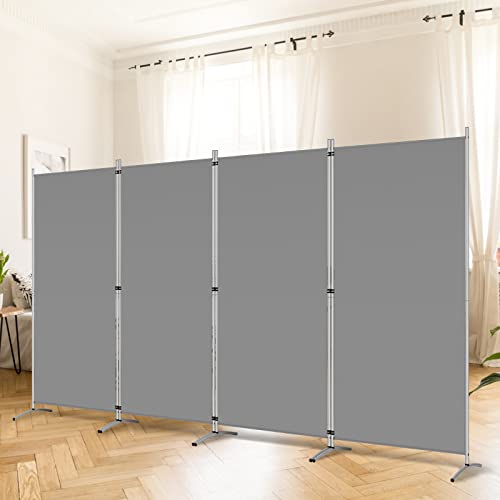
- Best overall fabric divider: RANTILA 4 Panel Room Divider, Grey Fabric — Check on Amazon
- Best with storage shelves: FDW Room Divider with Removable Storage Shelves, Brown, 4 Panel — Check on Amazon
- Best natural wood look: Wooden Folding Room Divider, 4 Panel, Natural — Check on Amazon
- Best for stability on its feet: Kecreque Portable Room Divider, 4 Panel, Grey — Check on Amazon
See 2 more options
- GOFLAME Japanese Style 4 Panel Shoji Screen with Plum Blossom Design — reviewed in prose below (no verified in-budget listing at check time)
- Bonnlo Wood Room Divider Privacy Screen, 6 Panel, Natural Paulownia — reviewed in prose below (no verified in-budget listing at check time)
Read the full guide ↓
Disclosure: As an Amazon Associate, dailyhomedecorating.com earns from qualifying purchases. Links to Amazon on this page are affiliate links; they cost you nothing extra. Listing details such as price and availability change often, so check the current Amazon listing before you buy.
Finding the best room divider for families under $150 means sorting honest, full-height screens from the flimsy panels that crowd this category — and doing it without paying furniture-store money. A divider has one job, to turn one room into two useful places, and at this budget you can buy real wood, opaque fabric and even shelf-equipped designs that do that job properly.
Family life creates rooms that have to be two things at once: a living room that is also a playroom, a bedroom shared by siblings at different bedtimes, a dining corner that becomes homework headquarters at four o’clock. A room divider is how you draw those borders without a building project — but a divider in a family home lives a harder life than one in a quiet studio. It gets bumped by ride-on toys, leaned on by teenagers, used as a fort wall, and moved every time the room’s job changes. The best room divider for families under $150 is not simply the prettiest screen; it is the one that stands steady, survives contact, and has no sharp edges, pinch traps or tip-over habits.
So this family edition of the guide re-ranks the same under-$150 field through a parent’s checklist. Stability comes first: wide feet and sensible weight beat elegance every time. Materials come second: surfaces that wipe clean, fabrics that forgive sticky hands, and panel materials that will not splinter or tear the first time a toy car arrives at speed. Privacy still matters — a parent changing behind a screen, an older child who needs a corner of their own — but it is privacy that has to coexist with supervision, which is why we are honest about which picks are fully opaque and which merely soften a view.
Our headline advice: the RANTILA’s wide feet and opaque fabric make it the family default, the FDW’s shelves are genuinely useful for toy and book overflow if you respect their light load limit, and the footed Kecreque is the pick for hard floors in high-traffic rooms. Two further picks — a shoji screen and a wide six-panel wooden screen — are covered in prose, with a clear-eyed note on where each does and does not belong in a house with small children.
In this guide
Quick Picks: The Best Room Divider for Families Under $150 Shortlist
Short on time? Each row names a buyer type and the divider that suits it. Linked picks were verified inside the budget at research time — check price on Amazon for the current figure. Two picks are prose-only, for reasons stated openly in their reviews.
| Buyer type | Pick | Why it stands out | Link |
|---|---|---|---|
| Best overall fabric divider | RANTILA 4 Panel Room Divider, Grey Fabric | Four fabric panels on a metal frame, about 71 inches tall, freestanding with wide feet, folds for storage, grey finish. | Check on Amazon |
| Best with storage shelves | FDW Room Divider with Removable Storage Shelves, Brown, 4 Panel | Four wooden panels, about 70.9 inches tall, wood frame with metal hinges, two removable display/storage shelves, brown finish, roughly 17 pounds. | Check on Amazon |
| Best natural wood look | Wooden Folding Room Divider, 4 Panel, Natural | Four wooden panels, 72 inches high, each panel about 17.7 inches wide, freestanding folding design, natural finish. | Check on Amazon |
| Best for stability on its feet | Kecreque Portable Room Divider, 4 Panel, Grey | Four fabric panels, 6 feet tall, eight curved metal feet, freestanding temporary-wall design, grey finish. | Check on Amazon |
| Best shoji style (prose-only) | GOFLAME Japanese Style 4 Panel Shoji Screen with Plum Blossom Design | Four panels, solid wood frame, unfolded about 72 x 71 inches, folded about 18 x 3 x 71 inches, shoji-style panels with plum blossom design. | Prose-only — see review |
| Widest coverage (prose-only) | Bonnlo Wood Room Divider Privacy Screen, 6 Panel, Natural Paulownia | Six panels, solid paulownia wood with water-based paint finish, about 108 x 71 inches overall, no assembly required. | Prose-only — see review |
How the picks were chosen
For the family ranking we applied the general filters — freestanding, roughly six feet tall, folds or stores away — and then added three family tests. First, tip resistance: we favoured dividers with wide feet, a low centre of gravity or a deep zigzag stance, and we flag every pick that a determined toddler should not be left alone with. Second, surface forgiveness: wipe-clean fabric and smooth wood scored over delicate panel materials. Third, hinge behaviour: family dividers get folded and unfolded constantly, so hinges must move without finger-pinch drama and hold their angle once set.
Price verification worked the same way as in our general guide. Four picks verified inside the under-$150 budget at research time and carry purchase links. The GOFLAME shoji screen and the six-panel Bonnlo showed no featured offer when checked, so we could not confirm their live prices within budget; both are reviewed in prose only, and in the shoji’s case the family verdict is mostly a caution — beautiful, but its delicate panels are the wrong match for rough-and-tumble rooms.
One rule governed everything: no invented numbers. Specifications come from manufacturer and retailer listings, prices were sighted at research time and are never printed as static figures in this guide — the budget in the title is the ceiling we checked against, and the listing you open is the price that counts. Where verification failed, the pick lost its link rather than gaining a guess.
Detailed reviews: every best room divider for families under $150 contender
RANTILA 4 Panel Room Divider, Grey Fabric
Best for: Best overall fabric divider. Key specs: Four fabric panels on a metal frame, about 71 inches tall, freestanding with wide feet, folds for storage, grey finish.
The RANTILA is the divider most households should look at first, because it solves the actual problem — a see-through gap in a room — without asking you to assemble furniture or drill into anything. The panels are opaque fabric stretched over a metal frame, so unlike woven wood screens it does not leak sightlines through a mesh. You cannot see shapes through it in normal room light, which is the whole point when the zone behind the screen is a bed, a desk on a video call, or a changing corner. The wide feet matter more than the marketing suggests: fabric panels act like sails, and a narrow-footed fabric screen rocks every time a door closes. This one stands planted, and the panels fold together so the whole thing leans in a closet when guests arrive.
Setup is genuinely close to zero. The frame sections connect, the fabric is already fitted, and most people have it standing within minutes of opening the box. Because it is fabric and metal rather than solid wood, one person can carry it between rooms without planning the trip, and that portability changes how you use it — it becomes a tool you deploy for a work call, a nap, or a visiting relative, rather than a permanent piece you arrange the room around. The grey reads neutral against most wall colours and does not fight patterned rugs or upholstery for attention.
The honest limitation is texture and light. Fabric gives you privacy but no sound dampening worth mentioning, and a bright window directly behind it can silhouette shapes at night with a lamp close to the panel. It is also a plain, functional object — it will not be mistaken for a piece of crafted furniture, and in a formal living room it can look temporary. Treat it as the reliable workhorse of this price tier: not the prettiest screen here, but the one whose privacy claim you can take at face value.
Pros
- Fully opaque fabric — real visual privacy, not a mesh suggestion of it
- Wide feet keep a tall fabric screen steady when doors slam
- Folds flat and light enough for one person to move room to room
- No tools and almost no assembly
Honest limitation
- Plain, utilitarian look next to wood screens
- No meaningful sound reduction
- Strong backlight can silhouette shapes at night
Choose it if its strengths match your room as described above; skip it if its limitation hits your main use case — another pick in this guide will fit better. Check on Amazon
FDW Room Divider with Removable Storage Shelves, Brown, 4 Panel
Best for: Best with storage shelves. Key specs: Four wooden panels, about 70.9 inches tall, wood frame with metal hinges, two removable display/storage shelves, brown finish, roughly 17 pounds.
Most dividers only subtract — they take floor space and give back a wall. The FDW is the rare budget screen that gives something back, because two removable shelves ride on its wooden panels and turn dead partition surface into display and storage. A plant, a router, a stack of paperbacks, the remotes that otherwise colonise the sofa: the shelves swallow the small clutter that makes a divided room still feel chaotic. The frame is wood with a woven panel design, so it reads as furniture rather than equipment, and the brown finish sits comfortably in traditional and transitional rooms where a grey fabric panel would look like office surplus.
Structurally it follows the classic folding-screen pattern: four equal panels on metal hinges, arranged in a zigzag so the screen stands on its own, then folded completely flat for storage. At roughly seventeen pounds it is movable by one adult without drama, though the shelves should come off before you carry it any distance. The woven panels filter light rather than blocking it entirely, which keeps a divided living room from developing a dark, dead corner — the zone behind the screen stays usable for reading and working in daylight.
That woven openness is also the honest limitation: this is a visual softener, not a blackout privacy wall. Held against bright light you can make out movement behind it, so it is the wrong choice for a changing area in a shared room. The shelves, useful as they are, hold light objects only — treat them as display ledges, not bookcase shelving, and keep heavy items and anything a toddler can pull down off them. Within those limits, it is the most furniture-like value in this guide.
Pros
- Removable shelves turn a partition into useful display storage
- Wood frame and woven panels read as furniture, not equipment
- Folds completely flat; one person can move it
- Lets filtered light through so divided rooms stay bright
Honest limitation
- Woven panels are semi-private — movement shows against bright light
- Shelves suit light display items only
- Shelves should be removed before moving the screen
Choose it if its strengths match your room as described above; skip it if its limitation hits your main use case — another pick in this guide will fit better. Check on Amazon
Wooden Folding Room Divider, 4 Panel, Natural
Best for: Best natural wood look. Key specs: Four wooden panels, 72 inches high, each panel about 17.7 inches wide, freestanding folding design, natural finish.
If the fabric and woven options feel too soft for your room, this wooden four-panel screen is the straightforward traditional answer: solid-feeling wooden panels, a natural finish, and a full 72 inches of height — the tallest stance in this guide alongside the shoji pick. That extra height is not a spec-sheet vanity. Privacy is a geometry problem, and a screen that clears standing eye level when you are seated, and most sightlines when you are not, simply works in more situations than a shorter one. The natural wood tone warms up rooms that have drifted too grey, and it pairs naturally with oak floors, rattan, linen and the other textures most homes already own.
Each panel is about 17.7 inches wide, so the screen spans roughly six feet fully opened — though, like every folding screen, it should live in a gentle zigzag rather than stretched ruler-straight, which is what keeps it stable. Folded, it stacks into a slim slab that slides behind a door or into the gap beside a wardrobe. There is no assembly to speak of; you stand it up and arrange the folds. The wooden construction shrugs off the bumps that dent fabric frames, and a damp cloth handles dust and fingerprints.
The trade-offs are weight and light. Wood panels make this one of the heavier picks to reposition, and solid panels block light completely, so the corner behind it will be noticeably dimmer — plan a lamp for a desk or reading chair placed behind it. The natural finish also shows variation between panels, which reads as character to most eyes but will bother buyers who want a perfectly uniform manufactured look. For a durable, good-looking, genuinely private screen, it earns its place.
Pros
- Full 72-inch height clears most seated and standing sightlines
- Solid wood panels give complete visual privacy
- Natural finish suits most existing furniture
- No assembly; folds flat for storage
Honest limitation
- Heavier to move than fabric options
- Solid panels darken the zone behind the screen
- Natural wood tone varies slightly panel to panel
Choose it if its strengths match your room as described above; skip it if its limitation hits your main use case — another pick in this guide will fit better. Check on Amazon
Kecreque Portable Room Divider, 4 Panel, Grey
Best for: Best for stability on its feet. Key specs: Four fabric panels, 6 feet tall, eight curved metal feet, freestanding temporary-wall design, grey finish.
The Kecreque attacks the weakest point of every cheap fabric divider: the feet. Instead of asking a zigzag fold to do all the stabilising, it stands its four fabric panels on eight curved metal feet, which spreads the footprint and keeps the screen upright on hard floors where folding screens like to skate. If your divider will live on laminate, tile or polished wood — and if it will be brushed past daily by people, laundry baskets and the family dog — that grounded stance is worth more than any decorative pattern. The fabric is opaque in normal use, so the privacy is real, and the grey finish is the same easy neutral as the RANTILA.
Because the panels do not depend on a deep zigzag to stand, you can run the Kecreque in a shallower curve or a near-straight line across a room, which makes it better than hinged wood screens at dividing a space along a planned line — across the end of a studio, for example, rather than around a corner. It is sold as a temporary wall, and that is the right mental model: a straight, stable, movable partition for as long as you need it, then unbolted from its feet and stored when you do not. Assembly is more involved than the unfold-and-done wood screens, but it is still basic frame-and-feet work with no wall fixings.
The limitations follow from the design. The feet are functional metal, and they look it — this is the most obviously temporary-looking pick here alongside the RANTILA, and the feet project far enough that you will catch a toe on one in the first week if you place it in a walkway. Breaking it down for storage is a small project rather than a ten-second fold. Buy it when stability and a straight run matter more than looks or instant folding.
Pros
- Eight curved metal feet — the steadiest stance here on hard floors
- Can run near-straight, unlike screens that need a deep zigzag
- Opaque fabric gives genuine privacy
- Designed as a temporary wall for studios and shared rooms
Honest limitation
- Feet project into walkways and can catch toes
- Breakdown for storage takes longer than a folding screen
- Industrial look will not suit formal rooms
Choose it if its strengths match your room as described above; skip it if its limitation hits your main use case — another pick in this guide will fit better. Check on Amazon
GOFLAME Japanese Style 4 Panel Shoji Screen with Plum Blossom Design
Best for: Best shoji style (prose-only). Key specs: Four panels, solid wood frame, unfolded about 72 x 71 inches, folded about 18 x 3 x 71 inches, shoji-style panels with plum blossom design.
The GOFLAME is the pick for people who want the divider itself to be a decorative object. It is a Japanese-style shoji screen: a solid wood frame holding translucent panels, finished with a plum blossom design that turns a plain partition into the thing guests ask about. Unfolded it spans about 72 inches at 71 inches tall, and it folds down to a slab roughly 18 inches wide, so it stores as neatly as anything here. Shoji panels do something none of the opaque picks can — they pass soft, diffused light. A room divided by a shoji screen keeps its daylight and its sense of air; the separated zone glows rather than going dark, which is why this style has survived for centuries in small Japanese homes.
We are presenting this pick in prose only, without a purchase link, for an honest reason: at the time of checking, its Amazon listing showed no featured offer, so we could not verify a current selling price inside the under-$150 budget. The model, dimensions and construction are verified; the live price is not, and this guide does not print prices it cannot stand behind. If you find it listed within budget when you shop, judge it on the criteria in this guide like any other pick — and if it is listed well above budget, the wooden Dopinmin pick above gives you the same folding format in a plainer, verified package.
Even at the right price, know what shoji is and is not. The translucent panels give visual separation and privacy for dressing or sleeping in ordinary light, but they are not opaque: a lamp close behind the screen will silhouette the person behind it, and the panel material is more delicate than wood or fabric — it wants a home without flying toys or boisterous large dogs. It also offers no sound privacy at all. As a light-sharing, beautiful divider for a calm room, though, nothing else in this guide does its particular job.
Pros
- Translucent shoji panels share daylight instead of blocking it
- Plum blossom design makes the divider a decorative feature
- Solid wood frame; folds to about 18 inches wide
- Full standing height at 71 inches
Honest limitation
- Translucent — silhouettes show with a lamp close behind it
- Panel material is more delicate than wood or fabric
- Listed here without a link because its current price could not be verified within budget
Choose it if you find it listed within the under-$150 budget and its strengths match your room; skip it if the listing price has moved above budget — the linked picks above cover the same ground with verified pricing.
Bonnlo Wood Room Divider Privacy Screen, 6 Panel, Natural Paulownia
Best for: Widest coverage (prose-only). Key specs: Six panels, solid paulownia wood with water-based paint finish, about 108 x 71 inches overall, no assembly required.
Every other pick here has four panels; the Bonnlo has six, and that changes the maths of a big room. At roughly 108 inches wide and 71 inches tall, it can cross a wide living room, wrap a corner in an L, or curve around a bed in a shared space without leaving the awkward uncovered gap that four-panel screens leave in larger floor plans. It is built from solid paulownia wood — a notably light timber — finished with water-based paint, so despite the extra panels it stays movable, and it arrives needing no assembly: unfold it and arrange the shape. The slatted wooden construction gives real visual privacy while still feeling like a piece of furniture rather than a temporary fix.
Like the shoji pick, we are keeping the Bonnlo prose-only: when we checked, its Amazon listing showed no featured offer, so we could not verify a current price inside the under-$150 budget, and this guide will not guess. The product itself — panel count, paulownia construction, dimensions and no-assembly design — is verified from the listing and independent coverage. Six-panel wooden screens in this class commonly sell around this budget, but commonly is not verified, so treat the listing price you find as the deciding fact and measure it against the same criteria used throughout this guide.
If the price you find fits, the limitations are these. Six panels need six panels’ worth of storage: folded, it is a thicker, heavier slab than the four-panel picks, and in a small flat that folded footprint matters. Paulownia is light because it is relatively soft, so it dents more readily than denser woods if it is knocked against door frames while being moved. And its width is wasted in a small room — a six-panel screen forced into a tight zigzag eats floor space. In a large, open room, though, it is the only pick here sized for the job.
Pros
- Six panels span about 108 inches — the widest coverage here
- Solid paulownia wood is light for its size
- No assembly required
- Can run straight, L-shaped or curved around a zone
Honest limitation
- Bulkiest folded footprint of the six picks
- Paulownia is soft and dents if knocked while moving
- Oversized for small rooms; listed without a link because its current price could not be verified within budget
Choose it if you find it listed within the under-$150 budget and its strengths match your room; skip it if the listing price has moved above budget — the linked picks above cover the same ground with verified pricing.
Family jobs a divider actually gets hired for
The sibling bedroom is the defining family case. Two children, one room, bedtimes an hour apart and a growing need for a corner that is one’s own: an opaque screen around the older child’s bed creates a territory that feels real to both of them. The younger child still sleeps in the same supervised room; the older one gets to read under a lamp without negotiating. Fabric picks suit this best — soft if bumped in the dark, quiet if brushed past, and wipeable when toothpaste happens. Set the house rule on day one: the screen is a wall, not a toy, and nobody climbs, hangs or hides behind it hard enough to pull it over.
The playroom partition is the second job. A divider between the play zone and the rest of a family room does not contain the mess — nothing contains the mess — but it contains the sight of it, which changes how the evening feels for the adults. It also creates the psychological boundary young children genuinely respect more often than parents expect: toys live on that side. A woven screen like the FDW works well here precisely because it is not a total wall; you can hear everything and glimpse movement, while the room still reads as divided. Its shelves, loaded with soft toys and picture books at child height, turn the boundary into storage the children use themselves.
The third job is the parents’ corner: a screen that gives adults a dressing area in a shared bedroom, a reading chair separated from the television’s glare, or a work nook that closes when the working day ends. In family homes this corner is usually carved from the largest room and defended against constant encroachment, and the divider is what makes the defence polite — a visible, movable line everyone understands. Choose opacity here, because the corner’s whole value is that it is genuinely private, and choose a screen you can fold in seconds, because family corners get reclaimed for forts, dens and homework emergencies without notice.
Grandparents and guests are the fourth job, and the one that justifies the purchase to many families. A screen turns a family room into a guest room with actual privacy, sparing everyone the hotel bill and the air-bed-in-the-middle-of-everything experience. Keep the guest scenario in mind when choosing height: a screen that is fine between siblings can feel exposing to an adult dressing behind it, which is another reason the full-height picks lead this ranking.
Safety and durability in a house with children
Placement is the whole safety game. A divider should stand where its falling arc — roughly its own height in every direction it can tip — contains no cot, no play mat, no pet bed and no chair where a baby is fed. In practice that means screens belong against the logic of the room: dividing zones on the floor, not looming over the places small children lie. Anchor the habit, too: children copy what they see, and a screen that adults move carefully and never lean on is a screen children treat as furniture rather than apparatus. During the toddler years, many families simply fold the screen away for floor-play hours and bring it out for evenings — a thirty-second job with the lighter picks, and the honest answer for the most boisterous stage.
Durability in a family home is about surviving contact gracefully. Fabric stretches a little and forgives; smooth wood dents honestly and can be touched up; woven panels can snag if a toy with Velcro or a zip is dragged across them daily. Hinges take the real punishment in family use, because family screens are folded and unfolded more in a month than a studio screen is in a year. Metal hinges, like those on the FDW and the frame joints of the fabric picks, tolerate that cycle well; if a hinge begins to squeak or sag, a drop of household oil and a screwdriver session restores it. Build a five-minute check into the seasonal routine — hinges, feet, panel edges — and a budget screen will outlast several childhoods’ worth of room plans.
Cleaning is the third family test, and it eliminates delicate picks faster than any other. Sticky handprints at exactly panel height, the occasional felt-tip incident, dust that accumulates where small hands push: fabric and smooth wood both surrender these to a damp cloth, while shoji panel material records them permanently. That is the practical core of this guide’s caution about the GOFLAME in family rooms — not that it is a bad screen, but that it is a screen for a house stage you may not be in yet. Buy for the household you have this year; the beautiful fragile things can have their turn later.
Spending $150 the family way
Family budgets are triage budgets, so it is worth saying plainly what the money buys here. It does not buy the heaviest, most immovable screen — in a family home that would be a mixed blessing anyway — and it does not buy heirloom joinery. It buys stability that has been thought about, surfaces that clean, and hinges that survive the folding cycle of real family life. The premium features of expensive screens — carved wood, designer fabrics — add nothing a child will appreciate and several things a parent will worry about. This is a category where the mid-priced, honestly built option is not a compromise but the correct tool.
Allocate by risk. The room where the screen stands among toddlers deserves the steadiest pick you can buy in budget, which here means feet and fabric; the room where it stands among teenagers can prioritise looks, because teenagers bump into things but rarely pull them over. If one screen must serve both worlds across the years — and in most families it will, migrating from nursery division to sibling territory to guest duty — buy the all-rounder first and let the beautiful fragile things wait for the house stage that can keep them beautiful.
And keep the receipt logic straight: a divider that prevents one hotel stay for visiting grandparents, or makes one shared bedroom work for one more year instead of forcing a house move conversation, has repaid its cost in a single use. Family purchases should be judged on the problems they retire, and by that measure a well-chosen screen under $150 is among the hardest-working objects a household can buy.
Comparison table
| Pick | Panels | Material | Privacy | Light | Link |
|---|---|---|---|---|---|
| RANTILA 4 Panel | 4 | Fabric / metal | Full | Blocks | Check on Amazon |
| FDW with Shelves | 4 | Wood, woven | Partial | Filters | Check on Amazon |
| Wooden Folding, Natural | 4 | Wood | Full | Blocks | Check on Amazon |
| Kecreque Portable | 4 | Fabric / metal feet | Full | Blocks | Check on Amazon |
| GOFLAME Shoji | 4 | Wood / shoji panel | Partial | Shares | Prose-only |
| Bonnlo 6 Panel | 6 | Paulownia wood | Full | Blocks | Prose-only |
How to choose the best room divider for families under $150 for your room
For a family room, start with traffic, not looks. Stand where the divider will live and watch how people actually move: if the screen sits in a walkway, choose feet or a shallow fold that will not be clipped daily, and never place any divider where a falling screen could reach a cot or a play mat. Height still matters — around 71 inches separates a parents’ corner from a play zone properly — but in children’s own rooms many families prefer the divider as a visual boundary rather than a full wall, so a light-filtering woven screen can be a feature: it marks territory while keeping the room feeling shared and supervised.
Match the material to the mess. Fabric panels wipe down and forgive bumps; smooth wood survives knocks but should be checked for splinter-free edges; anything with display shelves needs a house rule about what goes on them — soft toys and picture books yes, heavy ornaments and anything climbable no. And plan the folded home for the screen on day one: a divider that stores behind the sofa gets used; one that needs a garage trip becomes permanent whether you want it or not.
Consider, too, the screen’s career across childhood. The divider that splits a nursery corner this year will split siblings’ territories in five years and host grandparents in ten, and the families who buy once are the ones who choose the all-rounder over the specialist at the start. That argues for the steady, opaque, wipeable middle of this shortlist — screens without a fragile feature to outgrow or a delicate surface to protect from the next stage of childhood. It also argues for keeping the box and instructions until the first move is done, because family screens travel between rooms and sometimes between houses, and a screen that arrives at its second home with its feet, shelves and hardware intact starts its second career at full strength. Buy for the family you are becoming, place for the family you are today, and the same modest screen will quietly serve both.
Common mistakes
Placing a tall screen beside a cot or play mat
Any freestanding divider can be pulled or pushed over. Keep screens out of falling range of sleeping babies and climbing toddlers, and never let a child treat one as a climbing frame.
Loading divider shelves like a bookcase
The FDW’s shelves are display ledges for light items. Heavy books, glass and anything a child can pull down belong on real furniture, low and anchored.
Choosing delicate panels for a playroom
Shoji-style panel material and rough play do not mix. Save delicate screens for calm adult rooms and choose fabric or wood where toys fly.
Assuming a divider is a safety gate
A screen marks a boundary visually; it does not stop a determined toddler, a pet or noise. Boundaries that protect — stairs, kitchens, exits — need proper gates and doors.
Before you order: the family checklist
Measure the gap, then walk the room the way your children do — at their height, on their routes, with their energy in mind. Check that the screen’s standing place keeps its falling arc clear of cots, mats and favourite floor spots. Check the folded home is somewhere a child cannot pull the folded screen down on themselves. Check the surface against the household’s real cleaning supplies, and check the shelves, if any, against the house rule you are actually prepared to enforce about what sits on them.
Then set the screen up together, show the children what it is for, and state the rule once, clearly: it is a wall, not a toy. Families who introduce the divider as furniture keep it as furniture; families who let the first fort happen spend years re-litigating it. With placement, cleaning and the rule settled, any of the linked picks in this guide will serve a family well — and the room on the other side of the screen, quiet and adult for an hour in the evening, will repay the discipline many times over.
Final recommendation
For families, buy stability first and beauty second. The RANTILA is the default we would hand to most parents: steady, opaque, wipeable and easy to fold away when the room needs to be whole again. The FDW earns its place where shelf space for the daily overflow of family life is worth more than total opacity. Keep the shoji for a calm parents’ retreat, check the Bonnlo’s live price if you need width, and wherever the screen stands, place it like furniture in a house with children — out of falling range, never climbed on, and folded away when the fort-building starts.
A word about returns, because family suitability can only be proven at home. Set the screen up, watch it through one ordinary chaotic day — meals, arrivals, the evening wind-down — and observe where small hands actually touch it and which routes actually pass it. If the placement survives that day, it will survive the year; if it does not, adjust the position before judging the product, because in family homes position is usually the variable that was wrong. Keep the packaging until that test is done, and involve the children in the verdict where their territory is concerned: a boundary they helped choose is a boundary they respect, and respect is what makes a simple folding screen work as family infrastructure.
FAQ
What is the safest type of room divider for a family home?
A wide-footed fabric divider or a sturdy wood screen in a zigzag, placed out of falling range of cots and play areas. Stability and placement matter more than the material itself.
Can a room divider give siblings privacy in a shared bedroom?
Yes — an opaque screen around 71 inches tall gives each child a genuine visual corner for reading, dressing and downtime, while the room stays one supervised space.
Are room dividers safe around toddlers?
Only with placement and supervision. No folding screen is a barrier or a toy; keep them out of climbing reach and falling range, and fold them away during rough play.
Which divider handles family mess best?
Fabric panels wipe clean and wood wipes down; both forgive daily life. Delicate shoji panels and anything with fragile inserts should live in adult-only rooms.
Do dividers help with noise between family zones?
Very little. They block sight, not sound. Soft furnishings, rugs and closed doors do the acoustic work; a divider does the visual work.
Related guides
Keep planning your room with these guides from our living-room furniture series: Best Bookshelf For Families Under $150 Best Room Divider Under $100 Best Accent Chair For Families Under $150 Best Storage Bench For Families Under $150 Best Area Rug For Bedrooms Under $200


