Where to buy
Check the latest price, availability and delivery on Amazon. Orders are placed on Amazon. We may earn a commission from qualifying purchases.
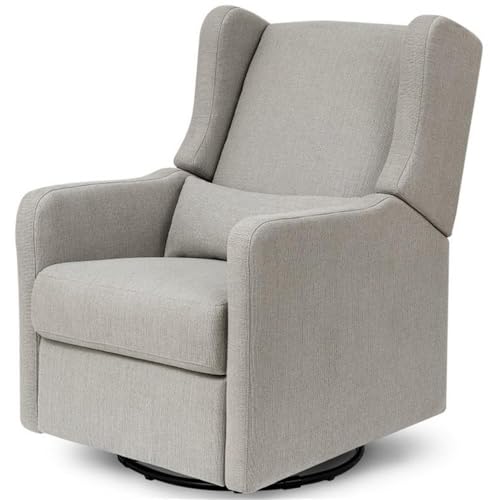
- best modern all-rounder: Carter’s by DaVinci Arlo Recliner and Swivel Glider, Performance Grey Linen — Check on Amazon
- best for boucle texture: Yaheetech Upholstered Rocking Chair, Boucle, Ivory — Check on Amazon
- best mid-century silhouette: Christopher Knight Home Harvey Mid-Century Modern Fabric Rocking Chair, Grey / Light Walnut — Check on Amazon
- best soft-sculptural look: Giantex Rocking Chair Nursery, Teddy Upholstered, Beige — Check on Amazon
See 2 more options
- best low-profile linen look: HOMCOM Upholstered Rocking Armchair, Grey — Check on Amazon
- minimalist hardwood design: Amazon Brand – Stone & Beam Modern Hardwood Rocking Chair, Light Grey — prose-only pick, see the review below for why
Read the full guide ↓
Disclosure: As an Amazon Associate, dailyhomedecorating.com earns from qualifying purchases. Links to Amazon on this page are affiliate links; they cost you nothing extra. Listing details such as price and availability change often, so check the current Amazon listing before you buy.
The best rocking chair for modern homes under $700 has to do something the traditional rocker never attempted: disappear into a room designed around clean lines, low profiles and honest materials — and then move. Modern interiors punish visual clutter, which is why the bulky recliner silhouette and the white-painted nursery glider both fail this brief even when they are excellent chairs. What works instead is what this guide is built from: sculptural boucle and teddy textures, a mid-century birch frame with a walnut finish, tailored performance linen in grey, and low, quiet profiles that read as lounge chairs first and rockers second.
Every pick below was verified the same way — real manufacturer specifications, published dimensions and capacities, confirmed materials — and then judged on design terms: silhouette, texture, colour discipline and how the chair sits alongside modern sofas, arc lamps and low media units. Five of the six are linked to Amazon listings. The sixth, a minimalist hardwood design we like very much, is covered as a prose-only pick because its Amazon listing carried no current tracked offer when we researched this guide; we would rather tell you that plainly than send you to a dead page.
A note on honesty in a design-led category: modern-look chairs attract more vague marketplace copies than any other furniture niche, with rendered photographs standing in for products. We excluded anything without a stable manufacturer and a published specification sheet. If your room leans traditional instead, the classic wooden end of the spectrum is covered in Best Rocking Chair Under $700, and the matching stationary chairs are in Best Accent Chair For Modern Homes Under $700.
In this guide
Quick Picks: best rocking chair for modern homes under $700
| Pick | Best for | Motion | Size (D x W x H) | Capacity | Link |
|---|---|---|---|---|---|
| 1. Carter’s by DaVinci Arlo | Modern all-rounder with recline | Glide + 270° swivel + recline | 38″ x 29″ x 41.5″ | See listing | Check on Amazon |
| 2. Yaheetech Boucle Rocking Chair | Boucle texture statement | Rocking rails | 39″ x 28″ x 40.5″ | 300 lb | Check on Amazon |
| 3. Christopher Knight Home Harvey | Mid-century silhouette | Rocking rails | 37.3″ x 25.07″ x 35.43″ | 250 lb | Check on Amazon |
| 4. Giantex Teddy Rocking Chair | Soft-sculptural sherpa look | Rocking rails | 36″ x 26.5″ x 36″ | 330 lb | Check on Amazon |
| 5. HOMCOM Upholstered Rocking Armchair | Low-profile linen minimalism | Rocking rails | 33.75″ x 25.25″ x 31.5″ | 330 lb | Check on Amazon |
| 6. Stone & Beam Modern Hardwood Rocking Chair | Minimalist hardwood design | Rocking rails | 33.75″ x 24.5″ x 31.13″ | See notes | Prose-only — no live listing verified |
How we chose these modern rocking chairs
Design came first, but never alone. Each chair had to pass the same verification bar as our general guide — a real manufacturer, published dimensions, a stated capacity or an honestly noted absence, and named materials — and we screened the wider category against CPSC recall records, which is why no powered recliner-glider appears anywhere in this guide. Within that bar, we judged the chairs as modern furniture: does the silhouette hold up next to a low modern sofa? Is the texture doing design work, or is it decoration? Does the colour palette — ivory boucle, beige teddy, grey linen, walnut-stained birch — sit inside a contemporary scheme without shouting?
We also weighted how each chair achieves its look. The two texture chairs (Yaheetech’s boucle, Giantex’s teddy) use fabric as the design event and keep the frame simple. The Harvey does the opposite: plain grey upholstery, and the design lives in the birch frame and its proportions. The Arlo hides its mechanism entirely — the recline lever is concealed and the base is enclosed — which is why it can be the most capable chair here and still pass in a styled room. The HOMCOM and the Stone & Beam take the low-profile route, keeping the back below typical media-unit sightlines.
One pick is prose-only, and the reason is availability, not quality. The Stone & Beam chair’s specification is fully verified, but price trackers showed no current Amazon offer for it at research time, so we describe it honestly, tell you what it sold for historically in our sources file, and link nothing. If it returns to stock it is a strong buy; until then, the five linked chairs are the actionable shortlist.
Design claims got the same scepticism as specifications. “Mid-century” is printed on chairs that are nothing of the kind, and “boucle” is used for any looped polyester regardless of quality. We treated design language as a claim to be verified against the object: the Harvey’s mid-century credentials are in its proportions, materials and manual, not its title; the Yaheetech’s boucle is a real looped weave over a specified foam, on a frame with a stated capacity; the Giantex’s teddy is named in its listing with its fill and frame materials published. Where a chair’s look could not be tied to verifiable construction, it did not matter how well it photographed — it was excluded. A modern room is an argument about honesty in materials; the furniture in it should be able to make the same argument.
The six modern rocking chairs in detail
1. Carter’s by DaVinci Arlo Recliner and Swivel Glider — tailored, hidden mechanics
The Carter’s by DaVinci Arlo Recliner and Swivel Glider is the rare fully featured chair that does not look like one. The recline lever is hidden inside the seat, the glide and 270-degree swivel hardware is enclosed, and what the room sees is a clean, tailored armchair in performance grey linen with a solid back and straight arms. Under the tailoring it is the most capable chair in this guide: glide, swivel and manual recline, a 21.5-inch-wide, 21-inch-deep seat, a 27.5-inch back, and a certification set — GREENGUARD Gold, FSC-certified wood, CertiPUR-US foam — that designer brands twice the price like to advertise.
Who it suits: modern living rooms that need one chair to do everything without looking mechanical. The grey linen sits naturally with the charcoal-and-oak palette most contemporary rooms run on, the performance fabric is water-repellent and stain-resistant (the practical member of this design-led list), and the swivel lets a single chair serve a sofa conversation and a screen in the same evening.
Pros:
- Mechanism fully concealed — reads as a tailored lounge chair, not a recliner
- Performance linen in a disciplined grey; water-repellent and stain-resistant
- Glide, 270° swivel and manual recline in one enclosed base
- GREENGUARD Gold, FSC and CertiPUR-US certifications
Honest limitation: at 38 inches deep, 29 inches wide and 105.6 pounds, it is the biggest visual and physical presence here, and fully reclined it stretches to about 64 inches. In a tightly composed small room it can dominate the plan rather than join it. It is also the most expensive pick — inside the $700 frame, but at its upper end — so the design has to earn it in your room, not in the photograph.
Choose it if you want modern looks with nothing given up in function. Skip it if your room is small or your aesthetic is strictly minimal — the Harvey or HOMCOM will sit quieter. Check on Amazon
2. Yaheetech Boucle Rocking Chair — texture as the design event
The Yaheetech Upholstered Rocking Chair in ivory boucle is the chair that photographs like a boutique piece: a tall, softly padded form on curved rubberwood rails, with the looped boucle doing all the visual work. The substance matches the styling more than most texture chairs — a 21.7-inch-wide, 21-inch-deep seat, a 26.2-inch backrest, a 21-inch seat height and a stated 300-pound capacity, plus anti-tip stoppers on the rails and a side pocket that disappears into the silhouette.
Who it suits: rooms built on the current modern formula — low sofa, pale palette, texture instead of pattern. The ivory boucle is a ready-made focal point for a reading corner and pairs with the arc-lamp-over-chair arrangement modern rooms favour; the guidance in Best Arc Floor Lamp For Modern Homes Under $100 covers the lighting half of that corner. It also suits taller sitters better than most design chairs, thanks to the high seat and tall back.
Pros:
- Boucle upholstery delivers the boutique texture look at a value-tier price — check price on Amazon
- Roomy, honestly specified seat: 21.7 inches wide, 300-pound stated capacity
- Rubberwood rails with anti-tip stoppers; side pocket for the book
- High 21-inch seat and 26.2-inch back suit taller frames
Honest limitation: boucle is a commitment. The loops trap dust and crumbs, the ivory colour shows marks, and cleaning is spot-only — in a household with pets or toddlers this is the wrong kind of beautiful. The chair is also deep (39 inches plus rocking clearance), so the “light, airy” look needs a not-so-light amount of floor.
Choose it if texture is your room’s missing layer and your household is past the sticky-fingers stage. Skip it if you need wipe-clean practicality — take the Arlo’s performance linen instead. Check on Amazon
3. Christopher Knight Home Harvey — the mid-century proportion play
The Christopher Knight Home Harvey Mid-Century Modern Fabric Rocking Chair gets its modern credentials from proportion rather than texture: a birch frame in a light walnut finish, wooden armrests, tapered lines and a low 35.43-inch back, upholstered in plain grey polyester. At just over 25 inches wide and 39.2 pounds, it is the easiest chair here to place and to move, and the manufacturer’s manual rates it to 250 pounds with wipe-clean care.
Who it suits: mid-century and Scandinavian schemes, and anyone whose modern room runs on wood tones rather than pale fabrics. The Harvey is the natural partner to a walnut media unit or a teak sideboard, and its upright, tailored seat suits readers and laptop-on-knee workers better than the slump-friendly texture chairs. In a home office it reads as a designed guest chair that happens to rock.
Pros:
- Authentic mid-century silhouette in birch with a light walnut finish
- Compact and light: 25-inch width, 39.2 pounds
- Wooden armrests and a tailored, upright seat
- Wipe-clean polyester — the low-maintenance member of the style picks
Honest limitation: the 250-pound capacity is the joint-lowest in this guide, and the tailored seat is firm — this is mid-century authenticity, which means sit-up comfort, not sink-in comfort. Taller users get back support, not head support, from the 35.43-inch frame. If your modern room is about lounging rather than lines, the Giantex below is your chair.
Choose it if your modern means mid-century. Skip it if you want plush or a higher capacity rating. Check on Amazon
4. Giantex Teddy Rocking Chair — the soft-sculptural one
The Giantex Rocking Chair Nursery, Teddy Upholstered takes the other modern route: a rounded, fully upholstered form in beige teddy fabric, on tapered rubberwood feet, with nothing hard-edged anywhere. The specification is quietly excellent for a soft-looking chair — a stated capacity of 330 pounds, the highest in this guide, in a frame just 36 inches deep, 26.5 inches wide and 36 inches high, weighing only 23.5 pounds. The fill is sponge, the seat depth is 19 inches, and the high back wraps the shoulders.
Who it suits: the soft-modern and Japandi end of contemporary design, where furniture is low, rounded and tactile. The beige teddy works as the warm note in a cool grey room, and the chair’s light weight makes it the easiest pick here to reposition for guests, cleaning or a change of light. It is marketed partly as a nursery chair, but the styling is grown-up enough for a bedroom or living-room corner.
Pros:
- Rounded, sculptural teddy form — the softest silhouette in the guide
- Highest stated capacity here: 330 pounds, in the lightest chair (23.5 lb)
- Compact 26.5-inch width suits modern apartments and bedroom corners
- Rubberwood feet and a high, wrapping back
Honest limitation: at 36 inches overall, this is a low chair: the back supports shoulders, not heads, and taller users will feel the top rail early. The light build that makes it easy to move also means it can scoot slightly on hard floors when you sit down with enthusiasm — a rug fixes it. And teddy fabric, like boucle, prefers a household without jam on its hands.
Choose it if your modern is soft, warm and rounded. Skip it if you are tall or want head support. Check on Amazon
5. HOMCOM Upholstered Rocking Armchair — low-profile linen minimalism
The HOMCOM Upholstered Rocking Armchair is the minimalist’s budget route: a low, clean-lined form in grey linen-look fabric over foam, on a curved rubberwood rocking base. The numbers suit the brief — 33.75 inches deep, 25.25 inches wide and only 31.5 inches high, so the back stays below the sightlines of a modern media wall — and the manufacturer rates the frame to a sturdy 330 pounds. There is no ornament anywhere on it, which in a modern room is the ornament.
Who it suits: smaller modern rooms and renters building a look on a budget. The low back keeps a compact living room feeling open, the grey linen-look fabric pairs with almost any modern palette, and the chair’s modest price band — check price on Amazon — leaves budget for the lamp and table that complete the corner. It also works as the quiet second chair opposite a statement sofa.
Pros:
- Lowest profile here: a 31.5-inch back that keeps sightlines open
- 330-pound stated capacity in a compact 25.25-inch-wide frame
- Neutral grey linen-look fabric that pairs with any modern palette
- Curved solid rubberwood base; simple, ornament-free form
Honest limitation: the low back is the design and the compromise in one: there is no head or neck support, and long reading sessions happen against a cushion you add yourself. HOMCOM is a value brand, so fit and finish are good rather than luxurious — seams and fabric are honest, not boutique. If the chair is your room’s centrepiece rather than its supporting act, step up to the Yaheetech or the Arlo.
Choose it if you want the modern look at the gentlest price in this guide. Skip it if you want a tall back or a statement texture. Check on Amazon
6. Stone & Beam Modern Hardwood Rocking Chair — the minimalist we could not link
The Amazon Brand – Stone & Beam Modern Hardwood Rocking Chair is, on specification, exactly what a modern room asks for: a hardwood frame, light grey upholstery, and the lowest, narrowest profile in this guide at 33.75 inches deep, 24.5 inches wide and 31.13 inches high. It is the kind of plain, well-proportioned piece that sits quietly beside a modern sofa for a decade. We are covering it as a prose-only pick for one stated reason: when we researched this guide, price trackers showed no current Amazon offer for its listing — the chair’s tracked history sits in the budget-to-mid band, but a link we cannot stand behind today would not help you.
Who it suits: strict minimalists and small modern rooms, if you can find it in stock. The 24.5-inch width is the narrowest here, the low back disappears against a media wall, and the hardwood-and-grey formula matches the palette modern rooms already run. Treat it as a watch-list chair: if the listing is live when you shop, its specification earns it a place on this page; if it is not, the HOMCOM above is the closest available equivalent in size and spirit.
Pros (on specification):
- Narrowest, lowest profile in the guide: 24.5 inches wide, 31.13 inches high
- Hardwood frame with light grey upholstery — a neutral modern formula
- Simple rail-rocker mechanics with nothing to maintain
Honest limitation: availability is the limitation — we could not verify a live offer, so there is no Amazon link for this pick, and we will not guess at a price. The low 31.13-inch back also means no head support, the same trade-off as the HOMCOM.
Choose it if you find it in stock and minimalism is the brief. Skip it — for now — if you need to order today; the HOMCOM covers the same ground with a live listing.
Side-by-side comparison
| Chair | Design language | Motion | Profile (H) | Capacity | Palette |
|---|---|---|---|---|---|
| Carter’s by DaVinci Arlo | Tailored contemporary | Glide + swivel + recline | 41.5″ | See listing | Performance grey linen |
| Yaheetech Boucle | Texture-led modern | Rocking rails | 40.5″ | 300 lb | Ivory boucle, rubberwood |
| Christopher Knight Home Harvey | Mid-century modern | Rocking rails | 35.43″ | 250 lb | Grey polyester, walnut-finish birch |
| Giantex Teddy | Soft-sculptural / Japandi | Rocking rails | 36″ | 330 lb | Beige teddy, rubberwood |
| HOMCOM Rocking Armchair | Low-profile minimalism | Rocking rails | 31.5″ | 330 lb | Grey linen-look, rubberwood |
| Stone & Beam Hardwood | Minimalist hardwood | Rocking rails | 31.13″ | See notes | Light grey, hardwood |
How to choose a rocking chair for a modern home
Pick your design language first. “Modern” covers at least four different rooms: tailored contemporary (Arlo), texture-led (Yaheetech, Giantex), mid-century (Harvey) and strict minimalism (HOMCOM, Stone & Beam). A chair from the wrong language looks wrong even when it is beautiful. Walk your room before you shop: if the sofa is low and pale, texture chairs belong; if the room runs on walnut and brass, the Harvey is speaking your language already.
Watch the back height against your sightlines. Modern rooms are composed in horizontal bands — media unit, sofa back, shelf lines. A 45-inch traditional rocker back breaks every band; the 31-to-35-inch backs of the HOMCOM, Stone & Beam and Harvey sit inside them. Tall backs are not banned — the Arlo and Yaheetech earn theirs as deliberate focal points — but one tall chair per room is the composition rule that keeps the space calm.
Let one texture lead. Boucle and teddy are both doing the same job — softness you can see. Choose one, in one chair, and keep the surrounding textiles quieter (flat-weave cushions, a plain throw). Two looped fabrics competing in one corner reads as clutter, which is the one thing a modern room cannot absorb. The lighting matters here too: an arc lamp raking across boucle shows the texture at its best, and Best Arc Floor Lamp For Modern Homes Under $100 covers the low-cost end of that pairing.
Hide the mechanics, or celebrate the rails. Gliders with enclosed bases (Arlo) suit rooms where machinery should be invisible. Rail rockers show their motion honestly, and in mid-century and minimalist schemes the curved rail is part of the design — the Harvey’s walnut-finish rails are a feature, not an apology. Decide which camp your room is in before comparing prices.
Keep the practical floor. Modern rooms often have pale rugs and hard floors. Rail rockers need a rug or pads to avoid marking and wandering; pale boucle needs a household that can keep it pale. The Arlo’s performance linen is the one fabric here engineered for a design-led room that also has a life in it. And as with every guide in this series, the category’s powered recliner-gliders were excluded after recall screening — modern should never mean a motor you cannot inspect. More on the wider shortlist is in Best Rocking Chair Under $700.
Styling the modern rocking corner, chair by chair
With the Arlo: build the tailored corner. The Arlo’s grey performance linen wants restraint around it — a flat-weave rug in a tonal grey or warm white, a metal or stone side table, and light that comes from above or behind rather than a competing table lamp. Because the chair swivels, it can sit at a conversational angle to the sofa instead of in a rigid row; that slight angle is what makes a modern room feel arranged rather than aligned. Keep cushions to one, in a texture flatter than the linen, and let the chair’s clean back be the largest uninterrupted surface in the corner.
With the Yaheetech: build the texture corner. Boucle is a lighting material — it needs a raking light source to show its loops, which is why the arc lamp pairing matters more for this chair than any other here. Place the lamp so light falls across the chair, not onto it, add a smooth contrast beside it (a lacquered or wooden table, never another looped fabric), and keep the floor treatment simple: a low, flat rug that will not fight the texture for attention. In a pale room, the Yaheetech is the corner; everything else should quiet down.
With the Harvey: build the mid-century corner. The Harvey asks for its period’s grammar: walnut or teak beside it, a floor lamp with a drum or cone shade, and one graphic element — a print, a patterned cushion in a period palette — to keep the grey-and-wood pairing from going flat. Its low back lets it sit in front of shelving or a low credenza without covering either, which is the classic mid-century arrangement. Because the seat is upright, this corner suits a small desk or record player nearby; it is the working corner of the five.
With the Giantex: build the soft corner. Teddy upholstery belongs to the warm end of modern — Japandi and soft-minimal rooms where everything is rounded and nothing is glossy. Pair it with matte ceramics, light wood and one plant with real height, and avoid chrome or black metal right beside it, which reads cold against the fabric. The chair’s light weight is a styling tool here: it can turn toward winter sun or away from summer glare in seconds, and a soft corner should be allowed to migrate with the light.
With the HOMCOM: build the quiet corner. A low, plain chair is a background instrument, and the styling job is to keep it that way while the room’s statement happens elsewhere. The HOMCOM earns its place under artwork, beside a bookshelf, or as the second seat in a pair flanking nothing in particular. Add the interest at ankle and eye level — a textured rug below, a picture above — and let the chair’s grey linen-look fabric be the calm between them. In a rented modern room, this is also the corner that assembles fastest and leaves least trace.
A note on the prose-only chair’s corner. If the Stone & Beam returns to stock, its hardwood-and-grey formula slots into the quiet corner above with even less visual weight — 24.5 inches wide and 31.13 inches tall is close to invisible in a composed room. Until then, the HOMCOM covers the same ground, and the styling advice is identical: let the room speak, let the chair listen.
Common mistakes when styling a modern rocking chair
Buying the render, not the chair. Marketplace listings for modern chairs lean heavily on rendered room scenes. If a chair has no named manufacturer, no published dimensions and no stated capacity, the photograph is the product. Every pick in this guide has a verifiable specification sheet behind it.
Matching the chair to the sofa exactly. A rocker in the identical fabric and tone as the sofa disappears into a showroom set. Modern rooms work on contrast with discipline: one texture (boucle against flat weave), one wood tone repeated twice (Harvey’s walnut against a walnut table), or one silhouette echoed (a low chair against a low sofa).
Forgetting the rocking clearance in a composed room. A rail rocker needs its arc — several inches behind the chair’s static depth. Placing it flush to a styled wall guarantees scuffs on both. Pull modern rockers off the wall, angle them into the corner, and let the negative space do the styling.
Choosing white-on-white without a cleanability plan. Ivory boucle in a sunlit modern room is a look worth having — if the household can maintain it. Otherwise take the same silhouette discipline in grey performance linen and keep the calm without the anxiety.
Ignoring scale against low furniture. Modern sofas sit low. A tall, deep rocker beside one can look like it wandered in from another house. Compare overall heights before ordering: this guide spans 31.13 to 41.5 inches, and the right answer is the one within a few inches of your sofa’s visual weight.
The modern materials palette, honestly assessed
Boucle is the texture that defines this design moment, and its honest profile is: beautiful in raking light, warm to the hand, and the highest-maintenance fabric in this guide. The loops that catch light also catch everything else, and ivory boucle in particular is a record of the room’s life. Buy it — the Yaheetech is a genuinely good chair — with a vacuum routine and a household that can support it, and it will look expensive for years. Buy it as a busy family’s daily seat and it will look tired in one. The design press rarely prints that second sentence; it is the one that decides whether you love the chair in year two.
Teddy and sherpa weaves (the Giantex) are boucle’s softer, more forgiving cousins: the pile is denser and less loopy, so it traps less and brushes back more easily, and in beige it hides the everyday dust that ivory announces. What it shares with boucle is a dislike of friction and heat — do not park a teddy chair against a radiator or in punishing direct sun, and rotate a cushion onto the seat if one side takes all the sitting. In return you get the warmest visual texture available at this budget, in a chair that weighs almost nothing.
Performance linen (the Arlo) is the palette’s grown-up: a woven, matte, tailored surface engineered to repel water and resist stains, in a grey that was chosen to disappear into contemporary schemes. Its honesty test is different — not maintenance but feel. Performance weaves are firmer and less plush than the texture fabrics, and the Arlo compensates with the deepest mechanical comfort here (glide, swivel, recline) rather than with softness at the surface. If your modern room is about how things work as much as how they look, this is the correct flagship.
Birch and walnut-finish wood (the Harvey) is the palette’s memory: the material mid-century design actually used, warm against grey upholstery and honest about its construction — you can see the frame, the armrests and the rails doing their work. Wood’s maintenance is the lightest here (wipe, tighten, done) and its ageing is the most graceful; a walnut finish deepens rather than shabbying. Its limit is comfort style, not durability: a tailored wooden-framed chair sits upright, and no styling will make it a slouching chair.
Linen-look polyester (the HOMCOM) is the palette’s pragmatist: it photographs as natural fibre, behaves as polyester — wipeable, colour-fast, unbothered — and costs the least. The honest gap is in the hand: it does not feel like linen, and in a room full of genuine materials it is the one surface that is performing rather than being. At its price and profile that is a fair trade, and in a rented or first modern room it is often the right one. Judge it as what it is — the look, democratised — and it will not disappoint you.
Putting the palette together follows one rule across all five materials: one texture leads, one wood repeats, everything else quiets down. Boucle leads with flat-weave support; teddy leads with matte ceramics; performance linen leads by disappearing and letting the room’s art work; birch leads by being echoed in a table or frame across the room. The chairs in this guide were chosen so that each can lead a corner without competition — your job is only to resist giving them any.
Colour discipline is the palette’s second half. Every chair in this guide sits in the modern neutral band — ivory, beige, grey, walnut — and that is not timidity; it is how a moving chair survives a composed room. A rocking chair is the one seat that is never still, and a loud colour on a moving object draws the eye every time it rocks. Neutrals let the motion read as calm rather than busy. If your room needs a colour event, put it in the cushion, the throw or the art — things that stay still — and let the chair’s texture and line do its talking. The one exception is a deliberately maximalist room, and if that is your room, you already know the rules do not apply to you.
Reading a modern chair’s listing like a designer
Modern furniture listings reward a particular kind of reading, because the gap between a designed chair and a rendered one is widest in this style. Start with the specification block, not the photographs: a designed chair publishes its dimensions to the fraction, names its frame material, and states a capacity. The five linked picks here all do; the marketplace copies that imitate them usually offer a lifestyle image, a vague “premium fabric,” and dimensions that change between the title and the details. Second, look at the chair from behind. Designers finish the back, because a modern chair in an open room is seen from every side; copies are photographed from the front because the back is where the economy lives. The Harvey’s and Arlo’s backs are composed surfaces; that is not a small thing.
Third, interrogate the mechanism’s manners. In a modern room, how a chair moves is part of its design: an enclosed glide base (Arlo) moves invisibly, a walnut-finish rail (Harvey) moves honestly, and an exposed, squeaking mechanism moves embarrassingly. If a listing cannot tell you what the base is made of or how the motion works, the design process stopped at the silhouette. Fourth, check the colour story: designed chairs offer a disciplined palette — a few neutrals that belong to one scheme — while copies offer fourteen colours because the fabric is bought by the roll. None of this requires design training; it requires reading the listing as evidence about the object, which is the same skill this whole guide is built on.
Fifth and last: plan the return before you need it. Design-led chairs are the most returned furniture in this category, not because they are bad but because rooms are honest critics — the colour is cooler in your light, the scale is larger against your sofa. Buy from the listing with the clearest dimensions, keep the packaging until the chair has survived a week of evenings, and judge it at the hour you will actually use it, under your lamps rather than the delivery daylight. The five linked chairs here were chosen to minimise that risk with verified measurements, but no specification sheet can see your room. Give the chair its week; a modern room is edited, and editing is allowed to include sending one piece back.
That same week is when the chair finds its real angle. Modern rooms are composed, but they are composed by living in them: you will turn the swivel chair a few degrees toward the evening light, pull the rocker off the wall by the width of its arc, and discover that the corner you measured is not quite the corner you use. Every pick in this guide was chosen to survive that editing — light enough or swivel-based enough to be re-angled without a furniture move, neutral enough to sit beside whatever the room becomes next. Buy the chair whose measurements you trust, then let the room finish the design.
Final recommendation
For most modern homes, the Carter’s by DaVinci Arlo Recliner and Swivel Glider is the complete answer: tailored grey linen, hidden mechanics, and glide-swivel-recline function that no visitor will guess from looking at it. If your room’s language is texture, the Yaheetech boucle is the statement to build the corner around; if it is mid-century, the Harvey is the honest period piece; and if it is minimal and budget-aware, the HOMCOM does the job quietly. The Stone & Beam remains our watch-list favourite — check whether its listing has returned before you settle. Whichever language your room speaks, measure the corner, mind the back height, and then check the current price on Amazon. A calmer starting point for the whole scheme is the modern-homes shortlist in Best Rocking Chair For Modern Homes Under $300.
FAQ
What makes a rocking chair look modern? Clean lines, a disciplined palette and one clear design idea — texture, proportion or minimalism — instead of ornament. Enclosed or honestly expressed mechanics help: hidden bases read contemporary, curved wooden rails read mid-century, and both beat exposed hardware and fussy trim.
Does boucle work in a modern living room? It is practically the defining modern texture right now, and the Yaheetech shows why: the loops catch light and soften a hard-edged room. The trade-off is maintenance — boucle spot-cleans only and pale boucle shows marks, so it suits households past the toddler-and-pet chaos stage.
Will a glider look too much like nursery furniture? Some do — white hoop frames announce themselves. The modern answer is an enclosed-base glider in a tailored fabric, like the Arlo: no visible mechanism, straight arms, performance linen. From across the room it reads as a lounge chair; the glide only reveals itself when you sit.
How do I stop a modern rocker marking pale floors? Put a low-pile rug under the rails — it protects the floor, stops the chair wandering, and in a modern scheme it also defines the reading corner. Felt rail pads are the minimal alternative if a rug breaks your composition.
Why is one pick in this guide not linked? Because we could not verify a live Amazon offer for the Stone & Beam chair at research time, and we do not send readers to listings we cannot stand behind. Its specification is verified and it is described honestly as a prose-only pick; if it returns to stock, it competes directly with the HOMCOM.
Can a modern rocking chair work in a traditional room too? The mid-century Harvey is the bridge piece — walnut-finish wood and tailored grey fabric sit comfortably in transitional rooms. The texture chairs and the minimalist pair are more committed; place them where the room’s language already leans contemporary.
How do I care for boucle and teddy upholstery? Gently and often. Vacuum with an upholstery tool on low suction so grit does not work down into the loops, blot spills immediately without rubbing — rubbing felts the texture — and keep a fabric brush for lifting the pile where arms and cushions compress it. Both fabrics reward the household that treats them like a good sweater: no harsh cleaners, no scrubbing, quick attention.
Are modern rocking chairs comfortable, or just photogenic? The honest answer is that it depends which modern you buy. The texture chairs (Yaheetech, Giantex) are genuinely plush; the tailored Arlo is a full recliner in disguise; the minimalist pair (HOMCOM, Stone & Beam) trade long-session softness for profile, and the mid-century Harvey is firm by period design. Read each review’s limitation paragraph — in this guide, the comfort trade-offs are stated per chair rather than averaged away.


