Where to buy
Check the latest price, availability and delivery on Amazon. Orders are placed on Amazon. We may earn a commission from qualifying purchases.
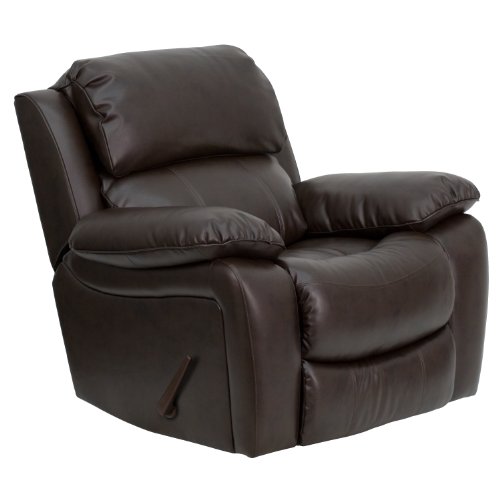
- Best recliner for families under $400 — best overall: Flash Furniture Kyle Brown LeatherSoft Rocker Recliner — Check on Amazon
- Homall Recliner Chair with Lumbar Support, Beige — Check on Amazon
- CANMOV Manual Fabric Recliner, Blue Grey — Check on Amazon
- Homall PU Leather Recliner Chair, Black — Check on Amazon
See 2 more Amazon options
- MCombo Recliner with Ottoman 9068, Dark Brown — Check on Amazon
- BestMassage Recliner Chair, Wingback — Check on Amazon
Read the full guide ↓
Disclosure: As an Amazon Associate, dailyhomedecorating.com earns from qualifying purchases. Links to Amazon on this page are affiliate links; they cost you nothing extra. Listing details such as price and availability change often, so check the current Amazon listing before you buy.
The best recliner for families under $400 is not the most comfortable recliner, the prettiest recliner or the recliner with the longest feature list — it is the recliner that survives family life. Family life means juice pouches opened at altitude, a toddler who treats the footrest as a climbing wall, a dog who has never once respected a furniture boundary, story time with two children and a picture book balanced across one armrest, and a parent who finally sits down at 9 p.m. wanting the chair to simply work. Every pick in this guide was judged against that reality first: upholstery that wipes clean or forgives, a mechanism that behaves predictably, a base that stays planted when the chair is used as a jungle gym despite all instructions, and a seat wide enough for a child to curl into beside you, because that is where children actually sit.
Six chairs made the cut, and they cover the family shapes we hear about most. There is a wipe-clean rocker recliner that doubles as a nursery chair in its early years. There is a beige leather-look recliner with lumbar support for the parent whose back files a complaint every evening. There is an overstuffed fabric chair for the family movie pile, a black PU workhorse for the playroom end of the house, a swivel set with an ottoman that becomes a footstool, a spare seat and occasionally a pretend boat, and a wingback push-back chair for the household that wants one recliner to look like grown-up furniture. If the recliner is one piece of a bigger family-room plan, Best Loveseat For Families Under $400 covers the two-seat partner piece, and Best Recliner Under $400 is our general guide without the family filter.
One honest note before the picks: no recliner is a toy, and every recliner has moving metal parts. The family sections below include the safety habits that matter — where small fingers should never be, why the footrest is not a step, and how to check a mechanism — because a family buying guide that skips them is not finished. None of that should scare you off; millions of households run recliners and children in the same room without incident. It should simply shape which chair you choose and how you set it up on day one.
In this guide
Quick picks: the best recliner for families under $400 at a glance
| Pick | Best for | Type | Upholstery |
|---|---|---|---|
| Flash Furniture Kyle Rocker Recliner, Brown | Best overall for families | Rocker recliner | LeatherSoft |
| Homall Recliner Chair with Lumbar Support, Beige | Best for tired parental backs | Manual recliner | Leather-look |
| CANMOV Manual Fabric Recliner, Blue Grey | Best for movie-night piles | Manual recliner | Fabric |
| Homall PU Leather Recliner Chair, Black | Best playroom workhorse | Manual lever recliner | PU leather |
| MCombo Recliner with Ottoman 9068, Dark Brown | Best for parents’ downtime | Swivel recliner + ottoman | Faux leather |
| BestMassage Recliner Chair, Wingback | Best reading-and-stories chair | Push-back recliner | Upholstered |
The short version: start with the Kyle if you want one chair that handles the nursery years and the school years in the same footprint. Take the Homall beige if a parent’s back is the deciding vote. Take the CANMOV fabric chair if your family’s recliner use is mostly horizontal, plural and covered in blankets.
How we chose the best recliner for families under $400
The verification pass was the same as our other guides: a real, current Amazon listing with a confirmed ASIN, an identifiable mechanism, and honest positioning under the $400 ceiling. On top of that, the family filter added four tests. Cleanability came first — upholstery that wipes down, or fabric in a forgiving mid-tone, outranked anything pale, delicate or dry-clean in spirit. Predictability came second: mechanisms that open and close in a controlled way, without sudden drops or spring-loaded surprises, because small hands explore exactly the parts adults operate without thinking.
Stability came third. A family recliner gets leaned on, climbed toward and occasionally launched from; a chair that rocks deliberately on a designed base is a different proposition from a chair that tips because it is light and narrow. Seat generosity came fourth — a family recliner’s real capacity is one adult plus a child plus a book plus, on the ambitious days, a cat, and seat width is the specification that decides whether that arithmetic works. Finally, we read each design for pinch points and gaps the way a parent would: where does the footrest fold, where does the linkage pass, and can the moving parts be kept away from curious fingers with ordinary supervision and a couple of house rules.
What we left out matters too. Pale bouclé and light linen-look recliners were cut regardless of their other virtues — they are lovely chairs for other households. Power recliners were treated cautiously: a motor removes the manual pinch-and-effort questions but adds a cord, a remote that will be lost, and a mechanism children find fascinating for the wrong reasons; the manual chairs here ask less supervision, not more. And any chair from a line with an open safety recall was excluded outright, full stop — that screen runs before style, price or comfort in every guide we write.
Detailed reviews
1. Flash Furniture Kyle Brown LeatherSoft Rocker Recliner — best overall for families
Who it suits. The Kyle is the pick for the household that wants one recliner to do the whole family arc: rocking a baby at 3 a.m., hosting a wiggly preschooler and a board book at 7 p.m., and giving a parent a proper recline after bedtime. The rocker base is the deciding feature — it makes the chair useful years before a child can say “recliner,” and it keeps being pleasant long after.
What it is. A generously padded rocker recliner in brown LeatherSoft upholstery (model MEN-DA3439-91-BRN-GG), with bustle-back cushions and plump arms. LeatherSoft is Flash Furniture’s leather-and-polyurethane blend: soft to sit on, and — the family-relevant part — a smooth, wipeable surface rather than an absorbent one. The chair rocks in its upright position and reclines through its manual mechanism when you want the full lounge.
Pros. The wipe-clean surface is the headline for family use: milk, juice and the mysterious stickiness of childhood come off with a damp cloth instead of soaking in. The brown tone hides the evidence of daily life better than any light finish. The rocking motion earns its keep in the baby and toddler years and settles restless kids at story time in a way a static chair cannot. The padding is generous without being swallow-you deep, so adults can still get up one-handed while holding a baby — a real-world test many overstuffed chairs fail.
Honest limitation. A rocker base needs floor room to move and should not be placed where its travel meets tiny toes or a pet’s tail; give it clear space on a rug and teach the household that the base zone is not a play zone. LeatherSoft, like all leather-look materials at this budget, is a coated surface — kind to spills, less kind to cat claws and abrasive scrubbing, so clean it gently.
Choose it if your family spans the rocking years or you want the easiest-clean full-size recliner here. Skip it if your floor space is so tight that a rocking base cannot travel safely. Check on Amazon — check price on Amazon, and confirm the current listing’s dimensions before ordering.
2. Homall Recliner Chair with Lumbar Support, Beige — best for tired parental backs
Who it suits. This Homall is for the parent who does the physical shift all day — lifting children, carrying laundry, bending over bath and bed — and then sits down to a chair that pushes back in the wrong places. The lumbar support in the backrest is the point of the design, and it makes this the evening-recovery chair of the group.
What it is. A single manual recliner with a lumbar-supporting back profile, upholstered in a beige leather-look finish, sold for living-room and home-theater seating. The recline works in the standard manual way; the back is shaped to meet the lower back rather than leaving the gap that flat-backed budget chairs are known for.
Pros. Shaped lumbar support is rare at this budget and genuinely felt on long sits — film-length, whole-evening sits. The leather-look surface wipes clean like the other Homall in this guide, and the beige finish brightens rooms where a black or brown chair would land heavily, while still being a practical mid-tone rather than a brave white. The chair’s footprint is standard single-recliner size, so it slots into a family room without a rearrangement project.
Honest limitation. Beige is the lightest finish among our family picks and will show denim dye transfer and marker incidents more honestly than the brown and black chairs; if your household’s art projects are ambitious and unsupervised, the black Homall below is the safer hide. Lumbar shaping is also personal — it suits most backs, but a sitter who prefers a flat back with their own cushion should choose accordingly.
Choose it if back comfort after long days is the deciding factor. Skip it if you need the darkest, most forgiving finish. Check on Amazon — check price on Amazon before you buy.
3. CANMOV Manual Fabric Recliner, Blue Grey — best for movie-night piles
Who it suits. The CANMOV fabric chair suits the family whose recliner is really a shared nest: one adult, one or two children, a blanket with opinions, and a film nobody will remember because everyone fell asleep in the good part. The overstuffed build and soft fabric are made for exactly that pile.
What it is. A manual recliner in soft blue-grey fabric with overstuffed cushioning and a heavy-duty reclining mechanism as described by its maker. The silhouette is relaxed rather than tailored — deep seat, plump arms, a back that invites slouching — and the blue-grey is a calm, forgiving mid-tone that sits happily with grey sofas and family-room rugs that already have a pattern doing camouflage work.
Pros. Fabric is the warm, non-sticky surface for bare legs, pajamas and summer evenings, and it does not creak or squeak against clothing the way coated surfaces can during a film. The deep padding swallows the bony elbows of family cuddling better than firmer chairs. The mechanism’s heavy-duty description matches the use case: this chair will be opened and closed more times in a year than a reading chair sees in five, and it is built with that cycling in mind.
Honest limitation. Fabric drinks spills that PU sheds, so this chair needs a house rule — drinks in lidded cups — or a washable throw living permanently over the seat. The deep, soft sit is also harder for grandparents to rise from; if the chair doubles as the grandparents’ seat when they visit, the firmer Kyle or Homall beige will treat them better.
Choose it if your recliner’s main job is shared, horizontal family time. Skip it if spill risk is high and unmanaged, or easy rising matters most. Check on Amazon — check price on Amazon, and look at the seat height on the listing if older family members will use it daily.
4. Homall PU Leather Recliner Chair, Black — best playroom workhorse
Who it suits. Every family has a room where furniture goes to be loved hard: the playroom, the den, the basement corner with the games console. This Homall is that room’s recliner — inexpensive-feeling in the best way, unbothered by daily abuse, and comfortable enough that adults happily claim it for film night after the kids are in bed.
What it is. A single-seat manual recliner with a side handle, padded seat and back, in black PU leather, sold as home theater seating. It is the classic mechanism in the classic finish, sized as a standard club-style recliner rather than an oversized lounger.
Pros. Black PU is the most forgiving combination in this guide: spills wipe off, marks disappear into the color, and the whole chair shrugs at the playroom’s terms and conditions. The handle mechanism is simple enough that older children can operate it properly — which matters, because a mechanism kids can use correctly is safer than one they improvise around. Its moderate size leaves floor for the play that the room is actually for.
Honest limitation. The side handle and linkage are exactly where supervision matters: teach children that hands stay out of the mechanism’s path, that the footrest is never a step or a seat, and that the chair is not operated with anyone — or any pet — underneath the footrest. PU at this level also ages by its surface; years of playroom service will show on it before they show on fabric.
Choose it if the chair will live where the action is. Skip it if it is destined for a formal room — the wingback below wears that better. Check on Amazon — check price on Amazon before ordering.
5. MCombo Recliner with Ottoman 9068, Dark Brown — best for parents’ downtime
Who it suits. The MCombo is the parents’ chair rather than the children’s: the one in the corner of the living room or the primary bedroom where an adult goes to decompress after bedtime, with the vibration massage on and a book or a show. Children will of course colonize it — the ottoman alone guarantees that — but its design center is adult downtime.
What it is. A faux-leather swivel recliner with a matching ottoman on a wood base (model 6151-9068), in dark brown. It swivels 360 degrees, reclines to about 140 degrees, carries a manufacturer-stated capacity of 330 pounds, and adds vibration massage in the back and seat plus a removable lumbar pillow.
Pros. The swivel lets a parent turn from the TV to the room — supervising without standing — and the ottoman is genuinely multi-use family furniture: footrest, spare seat for a small guest, side surface in a pinch. The stated capacity gives headroom for an adult plus a child in a lap, which is how these chairs are actually loaded during story time. Dark brown faux leather wipes clean and hides the week.
Honest limitation. The massage is vibration only — pleasant, not therapeutic — and the chair’s recline stops at a lounge angle rather than a flat nap. The two-piece format also means the ottoman will wander; in a family room it will be found under children, forts and laundry. If your household needs every piece of furniture to stay where it was put, a one-piece recliner will frustrate you less.
Choose it if you want a parents’ retreat chair that still flexes for family use. Skip it if you want a deep-recline nap chair or zero loose pieces. Check on Amazon — check price on Amazon, and confirm the current listing details.
6. BestMassage Recliner Chair, Wingback — best reading-and-stories chair
Who it suits. The wingback is for the reading household: the chair by the lamp where stories happen nightly and grown-up novels happen after. Its upright posture, winged back and push-back recline suit a chair that is sat in properly more often than it is sprawled across.
What it is. A wing-back push-back recliner whose back adjusts through three family-useful positions described in its manual — an upright angle around 95 degrees for reading, a middle angle around 120 degrees for television and conversation, and a full recline around 160 degrees for resting. There is no side handle; you recline by leaning back, and the footrest rises with the motion.
Pros. The three natural positions map beautifully onto family rhythms — upright for stories, middle for shows, deep for the parent who falls asleep in the chair and pretends otherwise. The wingback shape gives a child’s head a place to lean during a long book, and the push-back design means no handle at toddler height inviting experimentation. Upright, it looks like a proper armchair, which lets it live in a front room without apologizing.
Honest limitation. Push-back recline is held by body weight, so a light adult or an older child may find the chair easing back upright when they shift; it is a feel you either like or you do not, and lever-chair loyalists usually do not. The upright reading posture is also firmer than the plush CANMOV — story time is supported here, not sunk into.
Choose it if reading and stories are the chair’s main job. Skip it if you want a locking mechanism or a sink-in seat. Check on Amazon — check price on Amazon before you buy.
Comparison table
| Chair | Cleanability | Motion | Seat feel | Best family job |
|---|---|---|---|---|
| Flash Furniture Kyle | Wipe-clean | Rocks + reclines | Supportive plush | Nursery to school years |
| Homall Beige Lumbar | Wipe-clean | Manual recline | Shaped back support | Evening back recovery |
| CANMOV Fabric Blue Grey | Fabric — use a throw | Manual recline | Deep and soft | Movie-night pile |
| Homall Black PU | Wipe-clean | Lever recline | Classic padded | Playroom and den |
| MCombo 9068 + Ottoman | Wipe-clean | Swivels + reclines | Cushioned, lumbar pillow | Parents’ corner |
| BestMassage Wingback | Spot-clean | Push-back | Upright, supportive | Reading and stories |
For families, read this table by your worst day, not your best one. The chair that handles a spilled drink, a climbing toddler and an exhausted parent in the same evening is the right chair; the one that only shines in a quiet, adult moment will spend its life being protected instead of used, and protected furniture is furniture a family cannot relax around.
How to choose a recliner for a family
Put cleanability at the top and be honest about your household. If drinks travel, snacks migrate and art supplies roam, wipe-clean leather-look upholstery is not a compromise — it is the correct engineering choice, and the brown and black finishes here will look new long after a pale fabric chair has a biography written on it. If your household is past the spill years, fabric’s warmth and breathability become available again, and a mid-tone like blue-grey with a washable throw over the seat is a genuinely comfortable way to live.
Decide who the chair is really for. A chair bought for a nursing parent should rock or glide and sit at a height that makes standing up while holding a baby manageable. A chair bought for family films should be wide and soft. A chair bought as a grandparent’s seat should be firm enough to rise from without a strategy meeting. These are different chairs wearing the same category name, and naming the primary user out loud is the fastest way to the right pick. If the room itself is being planned around the chair, Best Coffee Table For Families Under $400 covers the other piece that takes family punishment daily.
Set the safety rules before the chair arrives. Recliners and children coexist safely in millions of homes, and the coexistence runs on a few boring rules: nobody operates the mechanism with a child or pet under or behind the footrest; the footrest is never stood on, sat on or used as a step; hands stay out of the linkage’s path; and the space behind the chair — where the back travels — is not a hiding place, ever. Walk the rules once, enforce them calmly, and then relax. Also check the chair over when it arrives and every few months after: run the mechanism through its full travel, confirm nothing has loosened, and keep the area under the chair clear, because small toys migrate into mechanisms with real determination.
Measure for the pile, not the person. Family sitting is plural. Check the seat width on the listing with your real use in mind — an adult reading alone needs less than an adult plus a six-year-old plus a book held where both can see it. Check seat height against the shortest regular adult: feet flat on the floor when upright is the posture that makes a chair feel secure rather than perching. And measure the reclined depth against your wall with the same honesty as any recliner purchase; family rooms collect furniture, and the chair’s travel space is the first casualty.
Think in years, not in this season. The rocker that soothes a baby becomes the chair a teenager claims for gaming; the playroom workhorse becomes the basement chair. A family recliner under $400 is not a lifetime purchase, but a well-chosen one serves several chapters. Simple mechanisms, replaceable-nothing designs and wipe-clean surfaces age through chapters best — which is why this guide favors them over novelty features that impress for a month. For the wider room picture, Best Accent Chair For Families Under $400 covers the companion seat that guests and older children graduate to.
Common mistakes when buying a family recliner
Choosing the pale, pretty chair. It will not stay pale, and the stress of protecting it will quietly ban children from the best seat in the room. Choose the finish your household can relax on.
Treating the footrest as furniture. It is a moving mechanism rated for legs, not for standing children, sitting toddlers or laundry baskets. The rule costs nothing and prevents the one genuinely dangerous misuse these chairs have.
Forgetting the back of the chair. The space a recliner’s back swings into is invisible in showroom thinking and obvious in a family room, where it becomes a den, a hiding spot and a toy depot. Keep it clear, and check it before reclining as a habit — the same glance you give a car mirror.
Buying deep and soft for every generation. The chair a teenager flops into is a chair a grandparent may not exit gracefully. If the chair serves elders regularly, seat height and firmness are kindness, not compromise.
Ignoring the noise. In a house with sleeping children, a mechanism’s sound matters: a loud click-clunk at full recline will end more evenings than any comfort shortfall. Manual mechanisms vary; if the chair is destined for a nursery-adjacent room, favor the smoother, quieter designs — the rocker and push-back picks here — and operate any chair gently during the learning weeks.
The family recliner through the ages of childhood
A family recliner is bought once and used by a household that keeps changing, and it is worth picturing the chair at each stage before you choose. In the baby year, the recliner is parental equipment: a place to feed, rock and doze in twenty-minute installments at hours no furniture designer admits exist. This is the stage the Kyle’s rocker base was born for, and it is why seat height and arm height — the unglamorous numbers that decide whether you can stand up holding a sleeping infant — matter more in year one than any styling question. A chair that serves this year well has already repaid a family’s trust.
In the toddler years the chair becomes terrain. It will be climbed toward, cruised along, hidden behind and napped in at angles that void the concept of posture. This is the stage where the house rules from the how-to section stop being theory: the footrest is not a step, the mechanism is not operated with anyone beneath it, and the space behind the chair is not a fort. It is also the stage where wipe-clean upholstery stops being a preference and reveals itself as the difference between a chair that gets cleaned and a chair that gets apologized for. The black Homall and the brown Kyle were picked with this exact year in mind.
The school years turn the recliner into shared infrastructure: story time with longer books and longer children, film nights with a seating negotiation that would shame a parliament, homework read aloud, a sick day spent camped in the good chair with a blanket and a thermometer. Seat width becomes the governing specification now — the CANMOV fabric chair’s generous, pile-friendly sit is designed for this stage — and the chair that survives it has usually become the household’s emotional furniture, the seat everyone claims and nobody surrenders.
Then come the years nobody warns you about, when the recliner’s heaviest user is a teenager who treats it as a gaming throne, a phone booth and a snack station in rotation, and its second-heaviest user is a parent reclaiming it at midnight. Mechanisms earn their keep here in pure cycle count, and this is where the heavy-duty intentions behind the CANMOV’s build and the simple, repairable logic of manual mechanisms justify themselves. A family that buys with all four stages in peripheral vision — rocker early, wipe-clean throughout, width in the middle years, mechanism honesty late — ends up with one chair that was right four times. That is the real family buying strategy, and every pick in this guide was scored against it.
Setting up the chair on day one: a family’s checklist
Where the recliner lands in the room decides how safe and how loved it will be. Place it so the reclined back does not travel into a walkway, a doorway swing or the household’s toy highway; give the footrest’s arc a clear floor; and if the chair rocks or swivels, walk its full motion yourself before any child is invited aboard. Anchor the geography with a rug — it defines the chair’s territory, protects the floor from the base, and gives small feet a boundary they can understand: inside the rug is the chair’s space, and the mechanism’s rules apply there.
Do the first recline together, as a demonstration rather than a warning lecture. Show how the handle or push-back works, show where hands go and where they never go, and let older children operate it properly under your eye — competence is safer than mystery, because a mechanism a child understands is a mechanism they do not need to investigate. Set the two non-negotiables in the same calm tone as the household’s other furniture rules: nobody under the footrest, nobody behind the chair while it moves. Then put a small basket beside the chair for the remote-free essentials — a cloth for spills, the current book, a coaster that makes the drink rule easy to keep — and the setup is done. Families do not need a recliner wrapped in caution; they need one placed thoughtfully, explained once, and then simply lived in, which is exactly what the six chairs above were chosen to allow.
Teaching the household: how a family actually lives with a recliner
The families who love their recliners for a decade share a few unglamorous habits, and they are worth copying deliberately. The first is the landing-strip habit: a small table or basket within arm’s reach that receives drinks, remotes and books, so the chair’s arms and mechanism never become the household’s shelving. Spills happen at the moment a cup is balanced on an armrest; a coaster within reach is a safety device disguised as furniture. The second habit is the weekly once-over — thirty seconds while tidying to run the recline through its travel, glance underneath for migrated toys, and confirm nothing rattles that did not rattle before. Mechanisms announce their needs quietly and early; the family that listens spends nothing on repairs, and the family that does not eventually owns a chair that reclines in one direction only.
The third habit is rotation of affection. A family recliner dies from the top down and the favorite side first — one armrest polished by one person’s elbow, one cushion compressed by one person’s evenings. Where the design allows it, flip and rotate cushions on a schedule tied to something you already do monthly, and if the household has a second good seat, let the recliner rest some evenings. The fourth habit is the honest house rule about guests: children visiting yours will treat your recliner as an amusement ride unless an adult narrates the rules in the first minute, kindly and without drama — feet on the footrest only when it is up and you are sitting properly, hands away from the moving parts, no standing, ever. Said once, with a smile, it protects the chair and the child in the same sentence.
And the last habit is knowing when affection becomes denial. A recliner that no longer holds its angle, a frame that has developed a lean, a mechanism that grabs or drops — these are retirements, not quirks, in a house with children. The chairs in this guide are built to give a family years of service, and part of serving a family well is recognizing the season when the kindest purchase is the next chair, chosen with everything the first one taught you. Most families find the second purchase takes five minutes: they know their mechanism, their finish and their seat width by heart, because the first chair was a member of the household long enough to teach them.
Grandparents, guests and the borrowed chair
A family recliner’s final examination is administered by people who did not choose it. Grandparents arrive with knees and hips that have their own opinions, and the chair that delights a household of thirty-somethings can be a genuine obstacle to a visiting seventy-year-old if it sits low, deep and soft. This is why this guide keeps returning to the firmer, higher end of its own shortlist — the Kyle’s supportive sit, the Homall beige’s shaped back — for homes where elders are regulars rather than rare guests. If your household hosts grandparents weekly, choose the family chair by their exit from it as much as by your evenings in it; kindness and good furniture judgment are, here, the same calculation. Keep a sturdy side table at the chair’s elbow for the hand that steadies, keep the path to the chair free of the toy drift that accumulates in family rooms, and the borrowed chair will be borrowed happily.
Guests administer the other half of the exam. A guest offered the recliner should be able to operate it without a tutorial and without fear of breaking it — a point in favor of the simple manual mechanisms throughout this guide, and against any chair whose recline requires instructions, remotes or courage. The push-back wingback passes the guest test by invisibility, the lever chairs by familiarity. What no guest should ever have to negotiate is a chair surrounded by house rules delivered anxiously; the calm version — “it’s a recliner, lean back, feet up, make yourself at home” — is the sound of a family that chose its furniture well. The recliner that passes both examinations, the grandparent’s exit and the guest’s first evening, is not merely a good family purchase. It is the chair the household’s stories will be set in for years, which is the most any piece of furniture under $400 has ever been asked to be.
Two-chair families: pairing the recliner with a second seat
Many family rooms eventually face the arithmetic of two adults and one best chair, and the second seat deserves a sentence of planning rather than a season of negotiation. The harmonious solutions pair by mechanism, not by appearance: two manual recliners age at the same rhythm and ask the same supervision, while a recliner beside a fixed accent chair divides the room into the lounging zone and the sitting-up zone, which suits households where one person reclines through films and the other knits, works or hosts the cat. What rarely works is the mismatched pair bought at different times in different logics — the plush recliner beside the formal chair makes both look like mistakes. If a second seat is in your near future, the accent-chair and loveseat guides linked from this article’s introduction apply the same family tests — cleanability, stability, seat generosity — to the companion pieces, so the pair can be planned as a pair even if it is purchased as a procession. A family room that seats its adults as thoughtfully as its children is a room the whole household chooses, every evening, over every screen in the house — and that choice, repeated nightly, is the entire return on the furniture.
Final recommendation
Start with the Flash Furniture Kyle: it rocks through the early years, wipes clean through all of them, and reclines properly at the end of every day — Check on Amazon. If a parent’s back casts the deciding vote, the Homall beige brings shaped lumbar support to the same easy-clean brief. For the shared movie pile, the CANMOV fabric chair is the soft place the whole family will aim at. Put the black Homall where life is roughest, keep the MCombo as the parents’ corner reward, and let the wingback host the stories. A family recliner is not really furniture; it is infrastructure — choose the one your household can use without thinking, and it will be used every day.
Frequently asked questions
Are recliners safe around small children? With ordinary supervision and a few firm rules, yes — recliners are standard furniture in family homes. The rules that matter: never operate the mechanism with a child or pet under the footrest or behind the chair, never let children stand or sit on the footrest, keep hands out of the linkage, and check periodically that fasteners are tight and the mechanism travels smoothly. Choose manual mechanisms and wipe-clean designs and the chair asks no more vigilance than a kitchen stool does.
What is the easiest recliner upholstery to clean? Smooth leather-look surfaces — PU and blends like LeatherSoft — clean fastest: most spills wipe off with a damp cloth before they become events. Fabric needs a blot-quickly approach and benefits from a washable throw. In both cases, mild soap and water are the tools; harsh solvents damage coated finishes and should stay away from any chair in this guide.
Rocker, glider or standard base for a nursery corner? A rocker recliner like the Kyle gives you soothing motion plus a real recline in one chair, which is why it leads this guide. Whatever base you choose, place it on a rug with clear travel space, keep the base zone free of toes, tails and toys, and confirm the chair cannot rock or recline into a wall, a crib or a bookshelf.
How wide should a family recliner’s seat be? Wide enough for your real sitting pattern. An adult alone is comfortable in a standard single seat; an adult reading with a child beside them needs the generous end of the single-recliner range. Check the listing’s seat width against a chair you already own and like — your dining chairs and sofa give you honest reference numbers.
Can a recliner under $400 survive a dog? Mostly, yes — with the right finish. Smooth wipe-clean upholstery shrugs off muddy paws and hair releases easily; tightly woven fabric handles claws better than loose weaves. What no sub-$400 chair survives gracefully is being a designated scratching or chewing outlet, so give the dog its own approved spot and keep nails trimmed; the chair will handle the rest of dog life fine.
When should a family replace a recliner? When the mechanism no longer travels smoothly or holds position, when the frame develops movement it did not have, or when cushioning has compressed to the frame — those are functional ends, not cosmetic ones. Surface wear alone is a slipcover conversation. A chair that is maintained, kept clear underneath and operated gently will usually give a family several good years per chapter of childhood.


