Where to buy
Check the latest price, availability and delivery on Amazon. Orders are placed on Amazon. We may earn a commission from qualifying purchases.
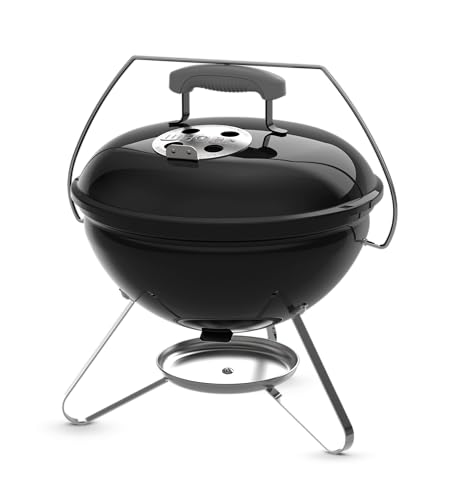
- Best anchor grill: Weber Smokey Joe 14-Inch Portable Charcoal Grill — Check on Amazon
- Char-Broil Portable Convective 1-Burner Propane Gas Grill — Check on Amazon
- GasOne 15-Inch Portable Charcoal Grill CG-15F — Check on Amazon
- Cuisinart 14-Inch Portable Charcoal Grill CCG-190 — Check on Amazon
- Fire Sense Notebook Charcoal Grill 60508 — Check on Amazon
One benchmark with no purchase link
- Royal Gourmet GT1001 Portable Gas Grill — covered below as a prose-only benchmark, because its current price sightings sit well above this guide’s $75 ceiling.
Read the full guide ↓
Disclosure: As an Amazon Associate, dailyhomedecorating.com earns from qualifying purchases. Links to Amazon on this page are affiliate links; they cost you nothing extra. Listing details such as price and availability change often, so check the current Amazon listing before you buy.
Choosing the best portable grill for outdoor entertaining under $75 starts with admitting an arithmetic problem and then discovering it is actually an opportunity. The arithmetic: a portable grill’s grate holds one round of food for two to four people, and a party is eight, twelve, twenty. The opportunity: at this price, you are not limited to one grill. Two or three small grills, run as stations, cost less than one large mid-range grill, cook more kinds of food at once than any single grate can, turn the cooking into part of the entertainment, and store afterwards in the space one big grill’s cover would occupy. Entertaining is the one job where a portable grill’s smallness stops being a limitation and becomes the strategy.
This guide is built around that strategy. Every linked pick was verified the same way as the rest of this batch — model identity confirmed through the Amazon Creators API, current price sightings held against the $75 ceiling, CPSC recall screening with recalled models excluded outright — and then re-judged through a host’s eyes: How does this grill behave as one of several fires? How fast does it light, cook and hand over its station to the next course? How does it look and feel as part of a gathering rather than hidden at the yard’s edge? One larger tabletop gas model that hosts often ask about failed the price test by a wide margin and appears as a labelled prose-only benchmark, so you can see exactly what the step up buys and decide whether your guest list justifies it.
The short version: anchor the party on the Weber Smokey Joe, the best-cooking small kettle here; add the Char-Broil gas pick as the instant, controllable second station; use the folding charcoal picks as skewer, sides and fireside stations that appear when guests arrive and vanish when they leave. Run them with the sequencing in the hosting sections below, and a sub-$75 portable setup will feed a crowd with more variety — and more theatre — than a single big grill at twice the money.
In this guide
Quick Picks
Short on time, or comparing several options at once? Each row below names a host’s job and the product that suits it, with a link to the listing.
| Host’s job | Pick | Why it stands out | Link |
|---|---|---|---|
| Best anchor grill | Weber Smokey Joe 14-Inch Portable Charcoal Grill | The best-cooking kettle here; the fire your mains deserve — check price on Amazon | Check on Amazon |
| Best second station | Char-Broil Portable Convective 1-Burner Propane Gas Grill | Instant gas heat, 190 sq in — the controllable station for vegetables, buns and delicate food | Check on Amazon |
| Best skewer and fireside station | GasOne 15-Inch Portable Charcoal Grill CG-15F | Open folding box built for skewers; becomes the fire bowl after dinner | Check on Amazon |
| Best budget pair grill | Cuisinart 14-Inch Portable Charcoal Grill CCG-190 | Cheap enough to buy as a matched second charcoal fire; featherweight to position | Check on Amazon |
| Best pop-up micro station | Fire Sense Notebook Charcoal Grill 60508 | Folds to about an inch; a dessert or appetiser station that appears in seconds | Check on Amazon |
| Benchmark (prose-only) | Royal Gourmet GT1001 Portable Gas Grill | The largest tabletop grate in the conversation — but sightings far above this tier, so no link | Prose-only |
How These Picks Were Chosen
The verification pipeline matches the rest of this batch: Amazon Creators API confirmation of each model’s listing identity, current price sightings tested against the $75 ceiling, a CPSC recall screen that excludes any recalled model entirely and without naming it, and specifications checked against maker data. The Royal Gourmet benchmark failed the price test clearly — its sightings sit in the next tier up — so it is covered in prose, with its size advantage stated fairly and its price problem stated plainly.
The entertaining lens then applied three tests a general guide would not. Station value: does this grill do a party job distinctly well — anchor, second station, skewer fire, pop-up — rather than merely being a smaller version of the same job? Tempo: entertaining is a sequence, so lighting speed, batch turnaround and shutdown all counted; a grill that takes forty minutes to be ready for a ten-minute course is a scheduling error with a lid. Presence: at a party the grill is furniture and theatre, so how a pick looks, where it can safely sit, and whether guests can gather near it without crowding the cook all mattered. What deliberately did not decide the ranking was solo cooking area: in a multi-grill setup, total area is a sum you design, and the benchmark entry exists precisely for hosts whose parties have outgrown that design.
Best Portable Grill for Outdoor Entertaining Under $75: The 6 Picks, Reviewed
Weber Smokey Joe 14-Inch Portable Charcoal Grill
Who it suits. The host whose reputation rides on the main course. In a multi-grill party, one fire should be the best fire — the one trusted with the steaks, the good chicken, the food people will remember — and in this guide that fire is the Smokey Joe.
Its qualifications are the kettle virtues, read through a host’s eyes. The porcelain-enamelled bowl and lid hold heat steadily through a long evening of successive rounds, which matters when the anchor grill cooks in waves: a first round for the early arrivals, a second for the main sitting, a third for the stragglers who always appear when the coals are perfect. The dampers give the cook a two-zone fire — sear over the coals, hold at the edge — that functions as the party’s quality-control system, letting finished food rest warm without overcooking while the next batch takes the heat. The Tuck-N-Carry lid lock makes it the grill that travels to the party if the party is elsewhere, and Weber’s ten-year limited warranty on bowl and lid means the anchor of your entertaining setup is not a seasonal purchase.
Capacity is the honest constraint, and the hosting sections below are built around it: 147 square inches is a round, not a crowd. But hosts consistently misjudge this in the Smokey Joe’s disfavour — a party does not eat simultaneously like a restaurant seating; it grazes, gathers and returns, and a kettle producing a fresh round every fifteen minutes feeds that rhythm better than a vast grill producing one enormous batch that sits. Anchor on this grill, sequence honestly, and the constraint disappears into the format.
Pros. Best cooking quality and heat steadiness here; two-zone fire for holding and searing; built and warranted for years of parties; travels sealed to off-site gatherings. Honest limitation. One round feeds two to four; it anchors a system, it is not the whole system.
Choose it if you host for flavour first. Skip it as a solo purchase if your parties are twelve people eating at once — read the benchmark, or build the multi-grill setup this guide describes.
Char-Broil Portable Convective 1-Burner Propane Gas Grill
Who it suits. The host who wants a control station: the grill for everything that should not wait for charcoal’s moods. Vegetables that need a gentler, adjustable heat; buns and breads that need ninety seconds of warmth; the vegetarian’s food, kept entirely separate; the late guest’s burger, cooked on demand without relighting anything.
Gas earns its place at a party through tempo and obedience. This Char-Broil’s single 11,000 BTU burner under 190 square inches of porcelain-coated grate — the largest grate among the linked picks — lights instantly at any point in the evening and shuts off the moment its course is done, which makes it the natural home for the party’s asynchronous food: the courses and guests that arrive on their own schedule. Its grate is also the easiest to keep presentable between rounds, and the legs that fold over the lid to lock it mean the whole station packs away the same night, onto a shelf, rather than colonising the patio until morning.
Its single heat zone is the known trade, and at a party it matters less than anywhere: zoning is what the other grills are for. Set this station’s one zone to a medium, forgiving heat and let it do the steady work while the charcoal fires do the drama.
Pros. Instant on/off for on-demand courses; largest linked grate; ideal separate station for vegetables and special diets; packs away locked the same night. Honest limitation. One heat zone and modest peak fierceness; it supports the charcoal anchor rather than replacing it.
Choose it if your parties run on grazing and late arrivals. Skip it if you entertain with one seated course and want a single fire to do it all.
GasOne 15-Inch Portable Charcoal Grill CG-15F
Who it suits. The host whose parties have a fireside phase. The CG-15F is the station grill for skewers, sausages and corn over open coals — and when the cooking ends, its contained firebox becomes the fire bowl the evening gathers around, which is a second entertainment product hiding inside the first.
The design supports the role: a heavy-duty folding metal firebox listed at about 15.7 by 11.5 by 8.2 inches, a cooking surface in the 14-inch, roughly 150-square-inch class, tool-free setup and a listed weight around seven pounds, so the station can be positioned where the party actually is — on a heat-proof, non-combustible surface, clear of seating and anything combustible — rather than where a fixed grill happens to live. Open-box cooking is inherently social: guests can see the food, turn their own skewers, and treat the station as an activity rather than a service, which is the difference between catering a party and hosting one.
After dinner, the transition needs discipline, not effort: cooking coals settle, the grate comes off, and the box becomes a small contained fire, attended, with the same clearance rules as any open flame and a hard rule that it is dead cold before the host sleeps. There is no lid for covered cooking, and wind will push its heat around, so site it in the sheltered spot and let the kettle handle anything that needs an oven.
Pros. Superb skewer and open-fire station; doubles as the evening’s fire bowl; sturdy folding build; stores flat between parties. Honest limitation. No lid, wind-sensitive, and the fire-bowl phase demands full fire discipline to the end of the night.
Choose it if your entertaining is interactive and ends around a fire. Skip it if your parties are seated dinners with covered courses.
Cuisinart 14-Inch Portable Charcoal Grill CCG-190
Who it suits. The host building a multi-grill setup on a budget — because the CCG-190’s low price changes the maths of the whole strategy. When a competent second charcoal fire costs this little, the question stops being “can I justify two grills?” and becomes “why would I queue food on one?”
As a station, it brings the full basic charcoal toolkit: a 14-inch chrome-plated grate, dual vents for basic control, an ash catcher, and three lid locks that seal it for moving. At roughly four pounds by the maker’s specification, it is the station you can reposition mid-party — from the prep area to the serving end of the yard — without a second pair of hands, which turns out to be a real hosting feature: parties migrate, and a featherweight grill migrates with them. Paired with the Smokey Joe, it forms the classic two-kettle system: the Weber takes the food that matters most, the Cuisinart takes volume — sausages, wings, corn, the second wave of burgers — and neither fire is ever the bottleneck.
Its thin steel is the known trade, softened by the role: a station grill works shorter, hotter sessions than a main grill, and it stores indoors between parties, which apartment and garage shelves make easy. The three-year warranty covers the bet. What it should not be asked to do is anchor a party alone — that is the Weber’s job, and the price difference between them is exactly the price of that difference.
Pros. Low enough to buy as a deliberate second fire; featherweight repositioning; complete basic toolkit with locking lid; three-year warranty. Honest limitation. Thin steel and small rounds; a supporting actor, not the lead.
Choose it if you are building the two-grill setup. Skip it if you will only ever own one grill — consolidate the budget into the anchor.
Fire Sense Notebook Charcoal Grill 60508
Who it suits. The improvising host: the one whose parties grow extra courses. The Notebook is the pop-up station — a grill that lives folded to about an inch on a shelf and becomes a working fire in seconds when the party invents a need: a dessert round of grilled fruit and s’mores, an appetiser skewer course, a separate small fire for the one guest whose food must not share a grate.
Its party virtues are speed and disappearance. Setup is unfold-and-light; the 3.5mm cooking bars are sturdy enough for a loaded grate of skewers or fruit; and when the course ends, the grill folds away and the yard is a yard again. Hosts who entertain in small spaces will recognise the deeper value: this is a station that costs no storage between parties, which is what makes owning a third fire reasonable. It is also the natural travel station for parties that happen elsewhere — a beach gathering, a park pavilion — where its book-size fold rides in any car.
Keep its repertoire narrow and it shines: quick, direct, small-batch cooking in short sessions. There is no lid and no real airflow control, its light-gauge steel ages in seasons, and a full dinner service would expose both. As the party’s improvisation tool, neither matters.
Pros. Appears in seconds, vanishes to an inch; ideal dessert and appetiser station; sturdy bars; trivial storage and price. Honest limitation. Short-session, direct-heat cooking only; finite life.
Choose it if your parties improvise. Skip it if your entertaining is a single formal course — it will sit folded, which, to be fair, it does very compactly.
Royal Gourmet GT1001 Portable Gas Grill — Benchmark (Prose-Only)
Who it suits. The host whose parties have genuinely outgrown the station strategy: twelve-plus guests, one course, one grill, no queue. The GT1001 is the tabletop gas grill those hosts picture — and it is here, unlinked, because its current price sightings sit far above this guide’s ceiling, in the range covered by our Best Portable Grill Under $100 guide and beyond.
What the step up buys is real. The GT1001 offers 285 square inches in total — a main grate of about 214 square inches plus a warming rack — over a 10,000 BTU U-shaped stainless burner, in a stainless body of about 17.8 pounds with folding legs, a lockable lid and a lid thermometer. That warming rack is the entertaining feature: it is a holding zone built into the grill, the thing every small-grill host improvises with pan-and-oven tricks. If your parties are large, seated and single-course, this class of grill is the honest answer, and this guide would rather point you at it plainly than pretend a 14-inch kettle is its equal.
What the step up does not buy is a reason to break a budget that is actually firm. The station strategy in this guide feeds the same twelve guests with more variety, using grills that each cost a fraction of this one’s street price — and the GT1001’s single burner still gives you one heat zone, merely a larger one. Choose it if headcount and format demand one big grate. Skip it if your parties graze — the linked setup below will serve them better for less.
Comparison Table
| Pick | Fuel | Cooking area | Party role | Watch out for |
|---|---|---|---|---|
| Weber Smokey Joe 14-Inch | Charcoal | 147 sq in | Anchor: mains and quality | Rounds, not crowds, per batch |
| Char-Broil Portable 1-Burner | Propane | 190 sq in | Control station: vegetables, buns, on-demand | Single heat zone |
| GasOne CG-15F | Charcoal | About 150 sq in class | Skewer station; fire bowl after dinner | No lid; fire discipline |
| Cuisinart CCG-190 | Charcoal | 14-inch grate | Budget second fire; volume station | Thin steel |
| Fire Sense Notebook 60508 | Charcoal | Notebook-class grate | Pop-up dessert and appetiser station | Short sessions only |
| Royal Gourmet GT1001 (benchmark) | Propane | 285 sq in total | The one-big-grate step up | Sightings above $75 — prose-only |
The Multi-Grill Party Strategy
Running several small grills is a technique, and like most techniques it is mostly sequencing. The principles below convert the picks above into a system that feeds a crowd without a queue, a panic or a host who never leaves the fires.
Assign every grill a course, not a food group alone. Parties flow in time: something to eat in the first twenty minutes, mains in the middle, something sweet or fireside at the end. Map the grills to that flow — the pop-up or gas station takes the early skewers and snacks, the anchor kettle takes the mains, the folding box takes the late fireside round — and no grill is ever asked to be in two courses at once. Stagger the fires. Light the anchor first, a full chimney ahead of the guests. Light the second fire when the first food lands, not before; charcoal lit too early is heat spent on nobody. The gas station needs no schedule at all, which is precisely its job. Zone the yard, not just the grates. Put the fires on stable, heat-proof, non-combustible surfaces with working room around each, keep the serving table between them and the guests, and keep the cook’s path clear — most party grilling accidents are traffic accidents. Shade from Best Patio Umbrella Under $75 belongs over the guests and the serving table, never over a lit grill, and the glow of Best Outdoor String Lights Under $75 should light the yard without a cord anywhere near a fire.
Recruit the guests. A skewer station guests can turn themselves is entertainment, not labour shortage; a dessert fire with s’mores is a course that runs itself. The host’s real jobs shrink to three: keep the anchor fire fed, keep raw and cooked food separated with religious discipline — separate tongs, separate plates, no exceptions at any level of festivity — and keep an eye on the clock of the coals. Do those, and a party on small grills feels abundant rather than improvised, because it is: abundance at a cookout is a flow of fresh rounds, and flow is exactly what several small fires produce.
Menu Engineering for Small Grates
A party menu for portable grills is designed backwards from the grate: every dish must cook in a round, hold gracefully, and eat without a knife wherever possible. Hosts who plan this way find that a small-grate menu is not a reduced menu — it is a better party menu, because everything on it was chosen to be cooked fresh in front of people.
Build the menu in waves. Wave one, the arrival wave, is food that cooks in under ten minutes and forgives distraction: skewers of halloumi and peppers, sausages in their skins, flatbreads blistered directly on the grate. This wave belongs on the fastest station — the gas pick or a pre-lit folding grill — because its job is to put food in hands before the first drink is finished. Wave two, the main wave, is the anchor kettle’s: burgers in sequenced rounds, chicken pieces that started early over the two-zone fire, corn that has been soaking up smoke at the grate’s edge since the first wave. Serve it as it lands rather than holding out for a grand simultaneous reveal; a cookout’s luxury is food at its peak, repeatedly. Wave three, the fireside wave, is sweet and slow: grilled stone fruit, s’mores over the folding box’s settled coals, bananas in their skins at the fire’s edge. It costs almost nothing, uses heat that would otherwise be wasted, and gives the evening its ending.
Two planning rules keep the waves honest. First, one protein per grill per wave — a fire asked to cook burgers and delicate fish simultaneously will compromise both, and stations exist precisely to prevent that negotiation. Second, prep is the real capacity: a small grate fed by a well-organised prep table — skewers assembled, burgers portioned, vegetables cut to even sizes — outproduces a large grate fed by chaos. The hosts who feed twenty from portable grills are not braver than other hosts; they are simply the ones whose chopping boards did the work before the guests arrived.
Staffing the Fires: Roles for a Smooth Party
Multi-grill entertaining runs on three roles, and naming them — even silently, even when one person holds two of them — is what separates a system from a scramble. The fire keeper owns the charcoal: lighting chimneys on the stagger, judging when a fire is ready, adding coals before a wave rather than during it. The anchor cook owns the main grill and the clock: what goes on, in what order, and when each round lands. The runner owns everything that is not fire: raw food out, cooked food in, tongs and plates kept in their raw and cooked lanes, drinks for the cooks, and the steady traffic control that keeps guests flowing past the stations rather than pooling around them.
In practice, a household of hosts usually fields two people: one takes fire and anchor together — they are the same skill at different moments — and one runs. Guests who want to help are given the runner’s overflow jobs and the skewer-turning at the supervised station, which channels goodwill into usefulness. What nobody should be is the fourth role, the improviser, who lights an extra fire mid-party “to help” without a station plan: unplanned fires create unplanned cool-downs at midnight and a second set of everything to clean. Keep the roles, stagger the fires, and the system in this guide will make a party of sixteen feel like a party of six that simply lasted longer.
How to Choose a Portable Grill for Outdoor Entertaining
Count your real party, then choose your format. Six or fewer, eating together: one anchor kettle plus batching is enough, and the Smokey Joe alone is a rational purchase. Eight to fourteen, grazing: the station strategy — anchor plus one or two of the linked stations — is the sweet spot of this entire guide, and it is where the CCG-190’s price and the Notebook’s pop-up act earn their keep. Beyond that, or for seated single-course service, be honest that you have left the portable category’s home turf: either run three or four stations with a recruited co-cook, or step up to the benchmark class and beyond.
Mix fuels deliberately. An all-charcoal setup maximises flavour and minimises cost, but every fire needs lighting and tending on the same clock. Adding one gas station buys the party an instant, obedient fire for the food that cannot wait — and buys the host a shutdown at the end of the night that takes one second per grill rather than an hour of cooling coals across three fireboxes. Plan the ending when you plan the beginning. Every charcoal station lit is a cool-down owed later: know where each grill will sit, attended or safely isolated, until it is cold, and where its ash goes the next day — fully cold, into a lidded metal container, never a bin of party rubbish. For the courses beyond the grill, a kettle-top pizza setup from Best Outdoor Pizza Oven Under $75 is the party trick that costs the least applause per dollar, and seating from Best Adirondack Chair Under $75 gives the fireside phase its furniture.
The Party Around the Grills: Flow, Seating and Light
A multi-grill party succeeds or fails on geography more than on cooking. Guests move in a loop — arrival, first drink, first food, conversation, return for more — and the grills should sit on that loop’s edge, close enough to be theatre, far enough to be safe, with the serving table acting as the border between the audience and the fires. Place the stations so the cooks work with their backs to a wall or fence and their faces to the party: a host cooking toward the guests hosts twice the party of a host cooking away from them, and supervision of both food and fires comes free with the sightline.
Seating follows the food’s rhythm rather than a dining table’s formality. A grazing party wants scattered perches — chairs at the yard’s edges, a bench near the dessert station, standing room at the serving table — so that each wave of food finds people already distributed where the next station will fire. Keep one clear lane, wide and unglamorous, from the prep area to every grill: the runner’s lane is the party’s circulatory system, and a chair that migrates into it mid-evening is a spill looking for a time. Light the loop for the hours after sunset, because portable-grill parties reliably outlast daylight: the goal is enough light to see food’s colour at the serving table and faces at the fires, without a cable run anywhere near a grill or a footpath. And plan the party’s geography for its end as well as its middle — a clear, known place where each grill will sit cooling, out of the traffic’s way, while the fireside hour happens around the one contained fire you have chosen for it. Geography is hospitality at the level of the floor plan, and on a portable-grill budget it is also free: the same grills, the same yard, arranged by someone who thought in loops instead of rows.
Fire Safety Rules for Entertaining
More grills means more fire to govern, and a party adds the two ingredients accidents love: crowds and distraction. Set every grill on a stable, level, heat-resistant, non-combustible surface, outdoors, with clear space from siding, fences, dry grass, decorations and anything combustible — and keep that clearance when the party migrates, because chairs and guests drift toward warmth all evening. Never use any grill in a garage, tent or enclosed porch, and never move a charcoal grill indoors to cool: charcoal produces carbon monoxide while burning and while smouldering, and enclosed air turns it lethal without smell or warning.
Assign the fires an owner. A grill at a party should always have one named person who knows its state — lit, cooking, cooling, cold — and children and pets stay outside a wide, enforced margin around every station, however charming the skewer-turning photo opportunity looks. Keep raw and cooked food separated, keep a lid within reach of every charcoal fire as its smothering tool, and clean grates with a bristle-free brush only: wire-bristle brushes shed bristles that end up in food and have been subject to major recalls, so they have no place at a party or anywhere else in this guide. Ash from every station cools completely — a full day is the safe assumption — before it goes into a lidded metal container outdoors. The party that ends with every fire accounted for is the party that gets to happen again.
The Host’s Kit Beyond the Grills
A station system runs on small equipment, and hosts new to multi-grill parties consistently under-buy the same five things. Tongs, plural and colour-coded: one pair lives with raw food, one with cooked, and they never swap — at a party this is not fussiness, it is the entire food-safety system, and it fails the moment a single pair has to commute. A second chimney starter: the stagger that powers the whole strategy depends on lighting the next fire while the current one cooks, and a single chimney serialises what should overlap. An instant-read thermometer: batch cooking means held food, and held food means verification; the thermometer converts the host’s most anxious guess into a number. A metal ash can with a lid, sized for a party: several grills produce several grills’ worth of ash, all of it owed a full cool-down and a metal destination, and party rubbish bins are neither. Side tables at grill height: every station needs a landing zone for raw trays, cooked trays and tools, on a heat-tolerant surface that is not the ground and not a chair.
None of this is expensive, and all of it together still leaves a full multi-grill entertaining system — two or three verified grills plus the kit — at a total that a single benchmark-class grill would envy. That is the economic heart of this guide: at the portable tier, money spent on system beats money spent on size, because parties are systems. Buy the grills for the courses, the kit for the seams between them, and the setup will feel — to guests who never see the planning — like effortless abundance.
Common Buying Mistakes
Buying one grill for a crowd and calling it portable. A single small grate feeding fourteen people in one sitting is a queue with a host trapped behind it; either build stations or step up a class. Lighting everything at once. Simultaneous fires peak together and die together; staggered fires give the party a continuous supply of fresh food and the host a continuous supply of sanity. Letting the benchmark’s size seduce you past your format. A big single grate serves seated parties; grazing parties are better served by variety, and variety is cheaper. Forgetting the shutdown. Three charcoal grills lit in joy are three cool-downs owed at midnight; if you cannot staff the ending, light fewer fires and lean on the gas station. Placing grills where the party looks good rather than where fire is safe — under the umbrella, beside the decorations, on the wooden deck without protection. And skimping on the unglamorous kit: spare tongs so raw and cooked never share, a thermometer so held food is verified food, and a metal ash can sized for a party’s worth of coals.
Final Recommendation
Build the setup in the order the parties will teach you anyway. Start with the anchor: the Weber Smokey Joe, because every entertaining system needs one fire that cooks beautifully. Add the Char-Broil Portable 1-Burner as the instant second station, and your parties gain the asynchronous course — vegetables, buns, late arrivals — that makes hosting feel easy. Add the folding stations as your guest list and your storage allow: the GasOne for skewers and the fireside hour, the CCG-190 as the budget second charcoal fire, the Notebook for the courses nobody planned. Keep the GT1001 benchmark in mind for the day your parties turn seated and large, and step up then with a clear head. Within this budget, the hosts who feed crowds best are not the ones with the biggest grill — they are the ones with the best-sequenced small ones, and every piece of that system is on this page, verified and honestly priced.
Frequently Asked Questions
How many portable grills do I need for a party of twelve?
Two to three, run as stations. An anchor kettle for mains, a second fire — gas or charcoal — for vegetables, sides and second waves, and optionally a pop-up for appetisers or dessert. Twelve grazing guests eat in flow, not in one sitting, and two staggered fires produce fresh rounds faster than twelve people can eat them.
Is it cheaper to buy several small grills or one big one?
At this tier, several small ones — often by a wide margin, because each linked pick here sits well under the ceiling and the benchmark-class single grill sits well above it. The small-grill system also stores smaller, travels, and replaces piece by piece. What it costs you is management: more fires to light, tend and cool, which the sequencing in this guide is designed to minimise.
What food works best on small grills at a party?
Food that cooks in rounds and eats standing up: skewers, sausages, wings, burgers, corn, vegetable packets, flatbreads, and grilled fruit for dessert. Large roasts and whole birds are the awkward fit — they monopolise a small grate for an hour — so either give them the anchor grill as their sole job or move them to a different cooking method and let the grills do what they do best.
How do I keep food safe when it is cooked in batches?
Hold cooked food warm and covered, verify held items with a thermometer rather than guessing, and never let cooked food share a plate or tongs with raw. Cook in rounds sized to be eaten promptly instead of mountains that sit; the station format helps here, because fresh small batches are its natural output.
Can guests grill their own food at a station?
Yes — it is one of the format’s pleasures, especially at a skewer or dessert station. Set it up like a host, not a free-for-all: the station’s owner keeps the fire, guests handle only their own skewers with their own tongs, children are supervised or spectating, and raw food stays on its own tray at a distance from the cooked output.
What should I do with the grills the morning after a party?
Let everything finish cooling outdoors overnight if needed, then work through the stations in daylight: ash — checked cold, and wetted if there is any doubt — into the lidded metal container, grates brushed bristle-free and wiped, fireboxes emptied and dried, and each grill back into its storage shape. Ten unhurried minutes per grill, done before the next party is even planned, is what keeps a multi-grill system feeling like an asset rather than a chore — and it is when you will notice the loose leg, the stiff damper or the empty propane cylinder while there is still a week to fix it.
How far in advance should I light the grills before guests arrive?
Light the anchor grill a full chimney ahead of the first guest — roughly twenty minutes — so its fire is settled and its first round can land within minutes of arrival. Hold the second fire until the first food is served; its coals lit on the hour will peak as the main wave begins. The gas station needs no advance at all, and the pop-up dessert fire should be lit when the mains clear, so its short, fierce life is spent on dessert rather than on waiting.
What is the warming rack on the benchmark grill actually worth?
More than any other single feature for a host, because holding finished food warm without overcooking it is the small-grill party’s central problem. The linked grills solve it with technique — cooler grate edges, covered pans, sequencing — while the benchmark builds the solution in. Whether that is worth stepping above the tier depends entirely on whether your parties are seated and simultaneous or grazing and flowing.


