Where to buy
Check the latest price, availability and delivery on Amazon. Orders are placed on Amazon. We may earn a commission from qualifying purchases.
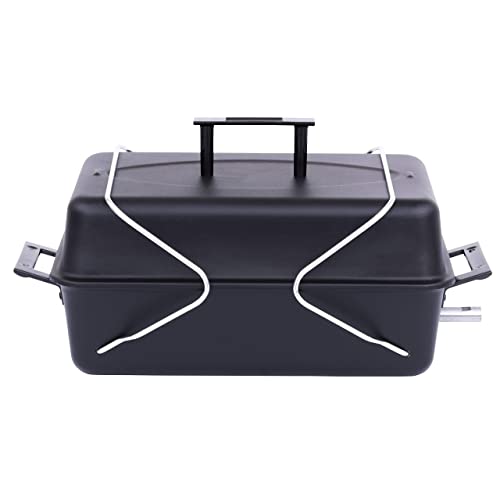
- Best gas for a permitted patio: Char-Broil Portable Convective 1-Burner Propane Gas Grill — Check on Amazon
- Weber Smokey Joe 14-Inch Portable Charcoal Grill — Check on Amazon
- Cuisinart 14-Inch Portable Charcoal Grill CCG-190 — Check on Amazon
- Fire Sense Notebook Charcoal Grill 60508 — Check on Amazon
- GasOne 15-Inch Portable Charcoal Grill CG-15F — Check on Amazon
One benchmark with no purchase link
- George Foreman Indoor/Outdoor Electric Grill — covered first below as a prose-only pick, because it is the compliant route for most apartment balconies and its current pricing sits above this guide’s ceiling.
Read the full guide ↓
Disclosure: As an Amazon Associate, dailyhomedecorating.com earns from qualifying purchases. Links to Amazon on this page are affiliate links; they cost you nothing extra. Listing details such as price and availability change often, so check the current Amazon listing before you buy.
The search for the best portable grill for apartments under $75 has to start with a sentence most grill guides bury or skip entirely: in a great many apartment buildings, you may not legally grill on your balcony at all. Open-flame cooking devices — charcoal grills, propane grills, anything with a real flame — are commonly prohibited on apartment balconies by the lease, by the building’s insurance, and by fire code. The International Fire Code, at §308.1.4, provides that open-flame cooking devices shall not be operated on combustible balconies or within ten feet of combustible construction, subject to narrow exceptions such as sprinkler-protected balconies and certain small propane arrangements that many jurisdictions and landlords restrict further anyway. If your balcony is wood or composite, if your lease has a grilling clause — and most modern leases do — the honest answer for that balcony is not a smaller flame. It is no flame.
This guide is written around that reality rather than around it being inconvenient. It is organised in three layers. First, the compliant route most apartment dwellers can actually use at home: an electric grill, covered as a prose-only pick because the good ones sit above this budget’s ceiling, with an explanation of what it does well and what it will never do. Second, the flame grills in this guide — each verified under $75 the same way as in our general roundup — framed honestly for the apartment situations where flame is permitted: a ground-floor patio on a non-combustible surface with the building’s blessing, a detached or townhouse-style rental with a yard, and the shared grilling area that many complexes provide near the pool or courtyard, which is where apartment grilling most often legitimately happens. Third, the rules themselves, in plain language, so you can check your own situation in five minutes before spending anything.
Nothing in this guide encourages bending a lease or a fire code, and you should read any guide that does as a liability with a headline. A grill that gets you a lease violation, a fine or a cancelled insurance policy is the most expensive grill in the world at any sticker price. The good news is that apartment grilling, done within the rules, is genuinely workable: an electric grill for the balcony where it is allowed, a small verified flame grill for the shared area or the permitted patio, and storage-friendly designs that disappear into apartment closets are all real, affordable answers. Here is how to pick the right one for the building you actually live in.
In this guide
Quick Picks
Short on time, or comparing several options at once? Each row below names a buyer type and the product that suits it, with a link to the listing where one is offered.
| Buyer type | Pick | Why it stands out | Link |
|---|---|---|---|
| Best for most balconies (prose-only) | George Foreman Indoor/Outdoor Electric Grill | No flame, no fuel storage — the route most leases and fire codes allow; priced above this tier, so no link | Prose-only |
| Best gas for a permitted patio | Char-Broil Portable Convective 1-Burner Propane Gas Grill | 11,000 BTU, 190 sq in, instant off — check price on Amazon | Check on Amazon |
| Best for the shared grilling area | Weber Smokey Joe 14-Inch Portable Charcoal Grill | Lid locks shut for the walk down; porcelain-enamelled kettle cooks like a full-size grill | Check on Amazon |
| Best budget for permitted use | Cuisinart 14-Inch Portable Charcoal Grill CCG-190 | Roughly four pounds and the lowest price here — easy to carry to wherever grilling is allowed | Check on Amazon |
| Best closet storage | Fire Sense Notebook Charcoal Grill 60508 | Folds to about an inch flat; stores on a shelf or against a closet wall | Check on Amazon |
| Best folding box for a ground patio | GasOne 15-Inch Portable Charcoal Grill CG-15F | Sturdier folding charcoal box, about seven pounds, for permitted ground-level spaces | Check on Amazon |
The Rules Come First: Leases, Balconies and the Fire Code
Before any product talk, spend five minutes on the three documents that govern your balcony. The first is your lease. Apartment leases commonly contain an explicit clause prohibiting grills, open flames or fuel storage on balconies and patios, and property managers enforce those clauses because their insurers require it. The second is your local fire code, which in most US jurisdictions adopts some version of the International Fire Code. IFC §308.1.4 addresses exactly this situation: open-flame cooking devices are not to be operated on combustible balconies or within ten feet of combustible construction. The code carries limited exceptions — balconies protected by an automatic sprinkler system are the headline one, and some editions treat very small propane cylinders differently — but a local amendment or a stricter lease can close those exceptions entirely, and the stricter document wins in practice. The third document is the one nobody reads: your renter’s insurance policy, which may not respond kindly to a fire that started with a prohibited grill.
What does that mean in plain terms for the typical renter? If your balcony has a wood or composite deck or railing, treat flame grilling there as prohibited unless your landlord confirms otherwise in writing and your local code allows it. If your building provides a shared grilling area — and a great many do, precisely because balcony grilling is restricted — that area is your flame-grilling home, and the right grill for it is small, sealed for carrying, and quick to cool or easy to empty safely. If you have a ground-floor patio of concrete, set well away from the building’s siding, flame may be permitted, but “may” is doing heavy lifting: ask. A two-line email to your property manager — “Is a small charcoal or propane grill permitted on my ground-floor concrete patio?” — creates a paper trail that protects you, and the answer organises your entire purchase.
Two related rules catch apartment grillers by surprise. Fuel storage is regulated too: propane cylinders are not meant to be stored inside a living space, and many leases and codes limit how much fuel of any kind you may keep, so a grill plan that involves a shelf of propane canisters in a hall closet is a problem wearing a solution’s clothes. And the carbon monoxide rule has no exceptions at all: a charcoal grill must never be used — or left to cool — in an enclosed or semi-enclosed space such as a garage, a screened porch or a stairwell. Apartment living puts neighbours on the other side of every wall, which makes these rules a matter of other people’s safety, not just your own lease. The picks below are organised so that every reader, in every building type, has a compliant way to cook.
How These Picks Were Chosen
The product filters match our general portable grill guide: every linked model was confirmed by brand and model through the Amazon Creators API, checked against current price sightings under the $75 ceiling, screened against CPSC recalls — any recalled model excluded outright, unnamed — and required to be a real grill with published specifications from an identifiable maker. On top of those filters, this apartment variant applied three more.
The first is a compliance filter: is there a version of apartment life where this product is the right answer? The electric benchmark passes for balconies where flame is banned. The flame grills pass for shared grilling areas, permitted ground patios and yard-style rentals — and are framed for those places, never marketed here as balcony loopholes. The second filter is storage: apartment grills live in closets, under beds and on balcony storage boxes between uses, so folded size and carry weight were weighted far more heavily than in the general guide, which is why two folding designs make this list. The third filter is neighbourliness: smoke output, cool-down time and ash handling all matter more when other households are ten feet away, so quick-shutdown gas and lid-locked kettles that travel to a shared area scored ahead of open designs that smoulder for hours. One more honesty note: the electric pick is prose-only because its verified pricing sits above $75, not because it failed any quality test — for many readers it is the single most useful entry in this guide, and pretending a flame grill is a balcony answer instead would be the real disservice.
Best Portable Grill for Apartments Under $75: The 6 Picks, Reviewed
George Foreman Indoor/Outdoor Electric Grill — The Compliant Balcony Route (Prose-Only)
Who it suits. The majority of apartment dwellers, if we are being honest: anyone whose balcony is combustible, whose lease bans open flame, or who simply does not want a fuel-storage problem in a small home. If the rules say no flame — and for most balconies they do — this style of grill is not the consolation prize. It is the answer.
The George Foreman indoor/outdoor design is the category’s long-running template: a large round electric grill plate with a sloped, non-stick cooking surface and a fat-channelled drip tray, mounted on a removable pedestal stand so it can live on a balcony as a standing grill or come inside as a countertop appliance. It plugs into an ordinary outlet, heats with a thermostat control, and produces no flame, no combustion and no carbon monoxide — which is precisely why leases and fire codes that ban charcoal and propane on balconies generally have nothing to say about it. There is no fuel to store, nothing to light, and nothing still smouldering an hour after dinner; when you switch it off, it is off, which your neighbours’ open windows will quietly appreciate.
Set expectations accurately and it satisfies. Electric elements sear respectably on a preheated plate, and the sloped surface handles burgers, chicken and vegetables with the easy cleanup the brand is known for — the plate and tray are designed to come off and wash. What it will not give you is smoke: there is no charcoal flavour, because there is no charcoal, and thick steaks will steam-sear rather than crust the way a fierce coal bed crusts them. It also needs an outlet within cord reach, and it is a sizeable object to store even with the stand removed. It is prose-only in this guide for one reason only: its verified pricing lives above this tier, in the range our Best Portable Grill Under $100 and Best Portable Grill Under $200 guides cover. If your balcony bans flame, that step up is not an upsell — it is the cost of grilling at home at all, and it buys you the only pick in this article you can use without asking anyone’s permission first.
Pros (at its real tier). No open flame, so it clears the rule that stops every other pick here; no fuel storage; instant off; works indoors as well as out; easy-clean removable plate and drip tray. Honest limitation. No smoke flavour, needs an outlet, bulky to store, and priced above this guide’s ceiling — hence prose-only, with no purchase link.
Choose it if your balcony is where you will actually grill. Skip it if your building offers a shared grilling area you will genuinely use, in which case a linked flame pick below costs less and tastes like a cookout.
Char-Broil Portable Convective 1-Burner Propane Gas Grill
Who it suits. Apartment dwellers with a permitted place to use it: a ground-floor concrete patio the landlord has approved, a townhouse rental with a small yard, or a complex whose rules allow residents to use their own gas grill in the shared area. Among flame options, gas is the most apartment-compatible fuel — and this is the one gas grill honestly priced in tier.
The apartment case for propane is about control and endings. This Char-Broil’s single 11,000 BTU burner under 190 square inches of porcelain-coated grate lights instantly and, more importantly for shared spaces, stops instantly: close the valve and the fire is out, the grill begins cooling, and there is no bed of coals to guard, douse or dispose of in a building with communal bins. The legs fold over the lid and lock it, so the eleven-pound unit carries from a closet to the courtyard as one sealed piece, and the small disposable propane cylinders it uses are the format shared-area rules most often contemplate — though storing spares still belongs outside your living space, in line with your lease and local code.
On a permitted patio, sit it on a stable, heat-proof, non-combustible surface with clear space from the building’s siding and any railing, and it behaves like a small home grill: burgers for a few people, chicken pieces with the lid down, vegetables at the grate’s cooler edge. The single burner means a single heat zone, so batch cooking and food-shuffling are part of the deal.
Pros. Instant on and, crucially, instant off; no ash and no charcoal storage; lid locks for the carry to a shared area; largest grate of the linked picks; porcelain-coated grate cleans easily with a bristle-free brush. Honest limitation. It is still an open-flame device: it does not become balcony-legal by being small, and on a combustible balcony it is exactly what IFC §308.1.4 and most leases prohibit. One heat zone, and cylinders need compliant storage.
Choose it if you have a permitted patio or shared-area access and value a clean shutdown. Skip it if your only outdoor space is a combustible balcony — that is the electric pick’s job.
Weber Smokey Joe 14-Inch Portable Charcoal Grill
Who it suits. The apartment cook whose building provides a shared grilling area, or who has a genuinely permitted ground-level space — and who wants the charcoal experience done properly rather than apologetically.
The Smokey Joe is the pick that makes the walk to the shared area worth it. Its Tuck-N-Carry lid lock seals the grill for carrying, so you can load it at home, walk it down, and open a clean, intact kettle at the grilling station; at roughly nine and a half pounds the trip is trivial. The porcelain-enamelled bowl and lid, 147 square inches of grate and working lid-and-bowl dampers deliver real kettle cooking — a two-zone fire banked to one side, lid down, chicken cooking through while burgers sear at the edge — in a way that makes shared-area cooking feel like your own backyard rather than a compromise. Weber’s ten-year limited warranty on bowl and lid matters in apartment life too: a grill that lives in a closet and travels weekly needs to survive handling, and this is the best-built object in this guide.
The apartment-specific homework is ash and cool-down. In a shared area, your coals are your responsibility until they are cold: plan to let the kettle cool with the lid on and vents closed at the grilling station, and dispose of ash only when fully cold, into a metal container — never warm ash into a communal plastic bin, which is how shared-area grilling privileges get revoked for entire buildings. If your complex provides an ash can, use it and leave the station cleaner than you found it; shared amenities survive on exactly that etiquette.
Pros. Sealed, one-hand carry to shared areas; real kettle cooking with damper control; best build and warranty here; compact closet footprint for a kettle. Honest limitation. Charcoal means smoke, lighting time and a long, supervised cool-down — in a dense complex, pick your hour and your wind direction with neighbours in mind, and never bring a cooling charcoal grill indoors or into a garage, where its carbon monoxide output is dangerous.
Choose it if you have a shared area or permitted patio and want charcoal done right. Skip it if your building has neither — no grill is worth a lease fight.
Cuisinart 14-Inch Portable Charcoal Grill CCG-190
Who it suits. The renter whose grilling happens wherever it is allowed this week: a friend’s yard, a park’s designated grills area, the shared courtyard — and whose storage is a hall closet shelf. At roughly four pounds by the maker’s specification and the lowest price in this guide, it is the grill you can always bring and never resent storing.
The CCG-190’s apartment virtues are its weight, its price and its three lid locks, which clamp the lid into a sealed unit for the trip downstairs or across town. The 14-inch chrome-plated grate, dual air vents and included ash catcher give it the full basic charcoal toolkit: light a modest bed of coals, cook a round for two or three people, close it down. Its thin enamelled steel is the honest trade — it heats fast, cools fast, flexes a little and wants to be stored indoors, which apartment life conveniently enforces anyway. Assembly is a small project of legs, vents and handles; do it once, carefully, on a table, and the grill is stable for its working life.
In a shared area, its speed is a social feature: it lights, cooks and cools faster than a heavy kettle, so your session at a communal station is short and the space turns over for the next household. The same ash discipline applies — fully cold, metal container, never a plastic bin — but the small coal load this grill uses makes the discipline easy.
Pros. Lightest and cheapest linked pick; three lid locks make a genuinely sealed carry; quick to light and quick to cool for shared-area sessions; three-year warranty. Honest limitation. Thin steel loses heat in wind and will not age like the Weber; the grate serves two or three people per round, and it is a flame grill — permitted spaces only, never a combustible balcony.
Choose it if your grilling is mobile and your budget is firm. Skip it if you want a long-life fixture for a permitted patio — the Smokey Joe earns that role.
Fire Sense Notebook Charcoal Grill 60508
Who it suits. The small-apartment dweller for whom storage is the whole problem: if the choice is between a grill that folds to about an inch and lives on a closet shelf, and no grill at all, this is the grill. It is also the natural second grill for renters who mostly use a building’s built-in shared grills but want their own for parks and trips.
The Notebook’s design is a single idea executed completely: high-heat painted steel panels that stand about 13 inches tall in use and fold to roughly an inch flat in seconds, with 3.5mm cooking bars sturdy enough to hold a loaded grate without sagging. There is nothing to assemble, nothing to lose, and nowhere it cannot be stored — a shelf, a storage box, the gap beside a bookcase. For apartment life, that storage profile is not a gimmick; it is the difference between owning a grill and owning a problem.
Use it where flame is permitted — a shared area, a park, a permitted ground patio on a heat-proof surface — and use it for what it cooks: quick direct food. Burgers, sausages, skewers and vegetables over a shallow, fierce little fire, in short sessions. It has no lid and minimal airflow control, and its light-gauge steel is a seasons-long material, not a decades-long one; priced as it is, that trade is fair, and it is stated here rather than discovered by you in year two.
Pros. Unmatched storage: folds to about an inch; instant setup with no parts; sturdy cooking bars; very low price; easy to carry anywhere grilling is allowed. Honest limitation. No lid, no real heat control, light-gauge steel with a finite life — and, like every flame pick here, permitted spaces only.
Choose it if storage decides. Skip it if you will grill weekly for years in one permitted spot; a kettle will outlast it many times over.
GasOne 15-Inch Portable Charcoal Grill CG-15F
Who it suits. Renters with a permitted ground-level space — a concrete patio, a townhouse yard — who want a folding grill with more substance than the thinnest flat-packs, and who entertain in the space they have rather than the space they wish they had.
The CG-15F folds flat for the closet but is built a gauge heavier than the notebook style: a metal firebox listed at about 15.7 by 11.5 by 8.2 inches, a cooking surface the maker describes in the 14-inch, roughly 150-square-inch class, tool-free setup and a listed weight of about seven pounds. On a permitted patio it sits on a heat-proof, non-combustible surface and cooks direct-heat food with real conviction — skewers, burgers, sausages, corn — and after dinner the contained firebox serves as a small fire bowl for the rest of the evening, subject to the same rules as any open flame in your building.
There is no lid, so covered cooking is off the menu, and wind will push its heat around; site it in the patio’s sheltered corner, well clear of siding, railings and anything combustible, with the clearance the fire code’s ten-foot guidance suggests wherever your space allows. Ash follows the standing rule: fully cold, lidded metal container, outdoors.
Pros. Sturdier folding box that still stores flat; tool-free setup; doubles as a contained fire bowl where permitted; low price. Honest limitation. Lidless direct heat only; open design is wind-sensitive; flame rules apply in full — a ground patio is not automatically a permitted patio, so confirm before you light.
Choose it if you have a permitted ground space and entertain there. Skip it if your only space is a balcony; reread the rules section and the electric pick.
Comparison Table
| Pick | Fuel | Apartment role | Storage profile | Watch out for |
|---|---|---|---|---|
| George Foreman Indoor/Outdoor Electric (prose-only) | Electric | The balcony answer where flame is banned | Pedestal stand; bulky | Priced above tier; no smoke flavour |
| Char-Broil Portable 1-Burner | Propane | Permitted patios; clean instant shutdown | About 11 lb, lid locks shut | Still open flame — not a balcony loophole |
| Weber Smokey Joe 14-Inch | Charcoal | Shared grilling areas; best cooking quality | Kettle footprint in a closet | Smoke and long cool-down; ash etiquette |
| Cuisinart CCG-190 | Charcoal | Mobile grilling wherever permitted | About 4 lb, sealed by 3 lid locks | Thin steel; small rounds |
| Fire Sense Notebook 60508 | Charcoal | Permitted spaces; storage above all | Folds to about 1 inch flat | No lid; light-gauge steel |
| GasOne CG-15F | Charcoal | Permitted ground patios; small gatherings | Folds flat, about 7 lb | Lidless; wind-sensitive |
How to Choose a Portable Grill for an Apartment
Step one is not a product decision at all: establish where you may grill. Read your lease’s grill and balcony clauses, ask your property manager the direct question, and know whether your balcony is combustible construction. That five-minute check sorts you into one of three lanes — balcony-electric, shared-area flame, or permitted-patio flame — and every product decision after it is easy. Buying first and checking later is how grills end up resold unused, or worse, used once at the cost of a lease violation.
In the electric lane, judge by plate size, whether the cooking surface removes for washing, and whether the stand detaches for countertop use and storage. Accept the flavour trade with open eyes and buy the best plate you can; this is a step-up-tier purchase, and our higher-tier guides cover it. In the shared-area lane, the deciding specs are a lid that locks for carrying, a weight you will happily carry downstairs, and a cool-down you can manage responsibly — the Smokey Joe for cooking quality, the CCG-190 for featherweight budget, the Char-Broil for an instant, ash-free shutdown. In the permitted-patio lane, add footprint and storage to the list: folding designs like the Notebook and the GasOne exist for homes where the grill shares space with everything else you own, and a heat-proof, non-combustible surface under the grill is part of the purchase, not an accessory.
Whichever lane you are in, complete the kit with the apartment-appropriate extras from Best Grill Accessories Under $75: a bristle-free cleaning brush (wire bristles are a recall-prone hazard and unwelcome anywhere food is cooked), heat-resistant gloves, and a small lidded metal ash container if charcoal is in your life. Dress the permitted patio, if you have one, with the shade and surface ideas in Best Patio Umbrella Under $75 and Best Outdoor Rug Under $75 — keeping in mind that anything fabric or synthetic lives well away from the grill itself, outside its clearance zone, every time it is lit.
Fire Safety Rules for Apartment Grilling
Every grill here belongs outdoors, on a stable, heat-resistant, non-combustible surface, with clear space from combustible construction — the fire code’s ten-foot guidance is the right mental model even in spaces where a specific exception applies. Never grill in a garage, stairwell, screened porch or any enclosed or semi-enclosed space, and never bring a charcoal grill indoors to finish cooling: charcoal emits carbon monoxide while it burns and while it smoulders, and CO in enclosed air can kill without smell or warning. Keep the grill attended while lit, keep children and pets back, and know how you will close the lid and vents — or shut the valve, on gas — before you need to.
Ash and fuel are the two apartment-specific disciplines. Ash must cool completely — longer than looks necessary — and go into a lidded metal container stored outdoors, never into a communal plastic bin while there is any doubt. Propane cylinders belong outside living spaces, stored upright and in line with your lease and local code; charcoal belongs in a dry, sealed container away from heat sources. Clean with a bristle-free brush only. And leave any shared grilling station cleaner than you found it: in apartment buildings, one careless griller can end the amenity for everyone, and the rules sections of leases get stricter every time that happens.
Smoke, Neighbours and Timing: The Social Layer of Apartment Grilling
Even where grilling is fully permitted — a shared courtyard, a ground-floor patio — apartment grilling happens inside other people’s lives in a way backyard grilling does not. Smoke rises, and the balcony directly above a permitted grilling spot receives it all; cooking smells that read as appetising at ground level read as intrusion through a neighbour’s open window at dinner time. None of this is a reason not to grill. It is a reason to grill like someone who intends to keep the privilege, and a few habits separate the residents whose grilling is welcomed from the ones whose grilling generates meetings.
Choose your fuel and your fire size with the building in mind. A charcoal fire’s smoke is front-loaded: the lighting phase, especially with a chimney of fresh briquettes, produces most of the smoke of the entire session in about fifteen minutes, after which a settled fire burns comparatively clean. Lighting a modest chimney — sized to the meal rather than filled by habit — shortens the smoky phase and reduces the total smoke the building breathes. Gas produces the least smoke of any flame option, which is one more reason the Char-Broil suits dense living: its smoke is only ever the food’s, and it ends the second the valve closes. Fatty food is the other smoke source nobody budgets for; trimming excess fat and keeping a cooler zone to move flaring food into keeps both smoke and drama down.
Time and wind are free courtesy. A light breeze carries smoke horizontally into windows that a still evening would let it rise past, so the windy evening is the evening to use the electric grill indoors or postpone the shared-area session. Mid-evening sessions on weekends trouble nobody; the same smoke at seven on a weekday morning, under bedrooms, is a complaint with a date on it. If you know the neighbours whose windows sit above the grilling area, a word in advance — “we’ll be grilling Saturday around six” — converts you from a nuisance into a neighbour, and occasionally into a host.
Leave the shared station better than you found it. Wipe the surface, take every scrap of packaging home, let your coals cool under supervision and into the metal ash container, and brush the grate — with a bristle-free brush — while it is still warm, so the next resident meets a clean grill rather than your dinner’s residue. Shared amenities are governed by accumulated goodwill, and property managers respond to complaints by restricting the amenity, not the individual. Every careful session you run is, quite literally, what keeps flame grilling available in your building — which makes good etiquette the most practical section of this entire guide.
Shared Rooftops, Courtyards and HOA Rules: The Grey Areas, Resolved
Three apartment situations sit between the clear cases. The first is the shared rooftop deck, increasingly common in newer buildings: treat it exactly like a shared grilling area, because that is what it is — flame only if the building provides for it or permits it in writing, never on a combustible deck surface, and with the wind question doubled, because rooftop wind makes both smoke and fire behaviour less predictable. The second is the townhouse or condo patio governed by an HOA rather than a lease: the documents differ but the logic is identical, and HOA rules on open flame are typically at least as strict as fire code, with fines that arrive faster than a landlord’s warning. Read the covenants before the product pages. The third is the ground-floor unit with a small yard: this is the apartment situation most likely to permit a flame grill outright, and it is where the folding and kettle picks in this guide genuinely shine — but “most likely” is still a question to ask, not an assumption to grill on. In all three cases the pattern is the same: the permission check takes five minutes, costs nothing, and converts a risky purchase into a settled one.
Common Buying Mistakes
Assuming small means permitted. A miniature charcoal grill is still an open-flame cooking device under IFC §308.1.4 and under your lease; size is not an exception category. Buying flame for a balcony and planning to be discreet. Smoke announces a grill to every balcony above you; discretion is not a strategy, and the violation is documented by the smell alone. Ignoring fuel storage. A grill you may use but whose fuel you may not store is a purchase with a hole in it — check cylinder and charcoal storage against your lease before buying. Forgetting the walk. If your grilling happens in a shared area two floors down, carry weight and a locking lid matter more than grate size; the grill you dread carrying is the grill that stays in the closet. Leaving ash to chance. Warm ash in a communal bin is the classic apartment grilling incident; the metal ash can is not optional equipment. And skipping the electric option out of pride: a balcony electric grill used weekly beats a charcoal kettle used never, and it is not close.
Final Recommendation
Match the grill to the building, in this order. If your balcony is your grilling spot and flame is banned there — the common case — save toward the electric route: the George Foreman-style pedestal electric grill, prose-only here because it lives above this tier, is the one pick you can use at home without permission slips, and our Best Portable Grill Under $75 general guide explains the tier logic behind that. If your complex has a shared grilling area, buy the Weber Smokey Joe for cooking quality or the Cuisinart CCG-190 for budget and carry weight, and be the neighbour whose ash discipline keeps the amenity alive. If you have a permitted ground patio, the Char-Broil Portable 1-Burner gives you the cleanest start-stop routine, and the folding charcoal picks give you storage your closet can survive. What no apartment dweller should buy is a flame grill for a prohibited balcony on the theory that nobody will mind. Somebody always minds, the code is not ambiguous, and dinner is not worth your lease.
Frequently Asked Questions
Can I use a charcoal or propane grill on my apartment balcony?
Usually not. IFC §308.1.4 prohibits open-flame cooking devices on combustible balconies and within ten feet of combustible construction, with narrow exceptions, and most leases prohibit balcony grills outright regardless. Unless your balcony is non-combustible, your local code allows it, and your landlord confirms in writing, treat the answer as no — and use an electric grill or your building’s shared grilling area instead.
Are electric grills allowed where flame grills are banned?
Generally yes, because the prohibitions target open flame and fuel, and an electric grill has neither — but “generally” is not “always,” so check your lease’s exact wording for any appliance or cooking-device clause. An electric grill still belongs on a stable, heat-safe surface away from combustibles, attended while hot, like any cooking appliance.
What if my building has a shared grilling area?
Then a small flame grill is a great buy, and portability becomes the deciding spec: a locking lid, a carry-friendly weight, and a cool-down plan. Use the area’s rules as your own — clean the station, dispose of ash only fully cold into a metal container, and never assume the building’s built-in grills are the only option; many complexes allow residents to bring their own portable to the area.
Where do I store propane cylinders and charcoal in an apartment?
Not in your living space. Propane cylinders should be stored upright, outdoors or in a ventilated exterior storage area where your lease and local code allow, never in a hall closet or beside a heat source. Charcoal keeps in a dry, sealed container away from heat. If your building offers no compliant fuel storage at all, that is a strong argument for the electric route.
Does an electric grill taste like real grilling?
It tastes like good pan-and-griddle cooking with grill marks, not like charcoal — there is no smoke because there is no combustion. Preheat the plate fully, dry your food’s surface, and do not crowd it, and burgers, chicken and vegetables come out genuinely well. A few technique choices close much of the gap: a dry rub instead of a wet marinade gives the surface something to caramelise, a minute of rest on a warm plate carries the cooking through, and finishing vegetables at the plate’s hottest zone adds the charred edges people associate with a cookout. What you give up in smoke you gain in permission: it is the grill you can actually use on most balconies, on any evening, without a rule check, a fuel run or a cool-down plan — and for apartment life that reliability is a flavour of its own.
My lease says nothing about grills. Am I fine to use one on the balcony?
Not necessarily. A silent lease does not override the fire code, and IFC §308.1.4’s balcony rule applies to the building whether or not your lease repeats it; your landlord’s insurance conditions may also bind you through general lease clauses about hazardous activity. Ask the property manager directly and get the answer in writing before you light anything.


