Where to buy
Check the latest price, availability and delivery on Amazon. Orders are placed on Amazon. We may earn a commission from qualifying purchases.
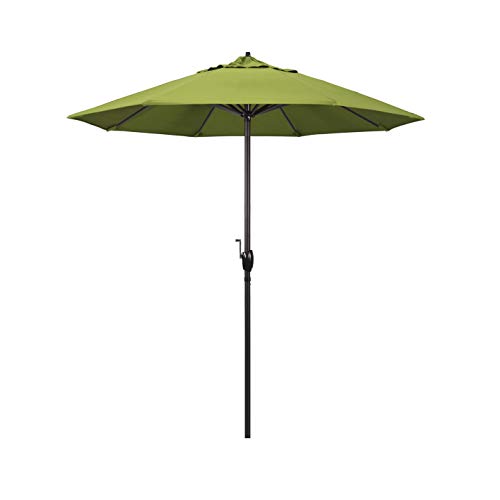
- Best overall for small patios: California Umbrella 7.5′ Round Sunbrella Aluminum Patio Umbrella, Crank Lift, Auto Tilt, Bronze Pole, Macaw — Check on Amazon
- Best premium 9-foot: Galtech Deluxe Auto Tilt Market Umbrella, 9ft, Bronze Frame & Sunbrella Fabric — Check on Amazon
- Best for breezy corners: California Umbrella 9′ Round Aluminum Pole Fiberglass Rib Market Umbrella, Collar Tilt — Check on Amazon
- Best against a wall: C-Hopetree 9 ft Half Round Outdoor Patio Market Wall Umbrella with Tilt — Check on Amazon
- Best classic wood look: TropiShade 9 ft Wood Market Umbrella with Beige Polyester Cover — Check on Amazon
- Best budget compact: Sunnyglade 7.5′ Patio Umbrella, Outdoor Table Umbrella with Tilt and Crank — Check on Amazon
Read the full guide ↓
Disclosure: As an Amazon Associate, dailyhomedecorating.com earns from qualifying purchases. Links to Amazon on this page are affiliate links; they cost you nothing extra. Listing details such as price and availability change often, so check the current Amazon listing before you buy.
Shopping for the best patio umbrella for small patios under $1500 requires saying the quiet part first: a small patio cannot use most of this budget, and it should not try. The premium end of the umbrella market is a size game — 11-, 12- and 13-foot cantilevers with rotating arms and bases the size of a coffee table — and on a patio that measures ten feet across, those products are not upgrades. They are obstructions. A big cantilever’s base alone can eat a ninth of your floor, its rotation arc sweeps the canopy through the space where a railing, a wall or a neighbour’s balcony sits, and its canopy, opened over a two-person bistro set, looks and behaves like a sail hoisted over a rowboat. The honest headline of this guide is that the right umbrella for a small patio costs a fraction of the ceiling, fits the footprint like it was measured for it — because it should be — and leaves most of the money for the base, the furniture and the evenings themselves.
What “small” changes is the order of the questions. On a big deck you ask how much shade you can get; on a small patio you ask what the umbrella costs you in space when it is doing nothing. A market umbrella’s pole passes through the table and asks for almost no floor of its own — on a compact patio, that is not a compromise, it is the correct engineering. A half umbrella goes further and gives up half its canopy to sit flat against a wall, shading a bench or a pair of chairs in a strip of space where no round umbrella fits at all. Even the base is a spatial decision: a heavy round base under a table is invisible, while the same weight in a cantilever’s cross-base is a tripping frame laid across your walking line. Every pick below was chosen by footprint first and prestige last, and the largest canopy in the guide is nine feet — deliberately, because nine feet is where small patios stop gaining shade and start losing room.
None of that makes this a budget guide in disguise. Within the sizes that fit, quality still separates the umbrellas you keep from the ones you replace: solution-dyed acrylic fabric that does not fade to chalk in two summers, an auto-tilt mechanism that still holds its angle in year three, ribs that flex instead of snapping in the gusts that funnel between buildings. Two of the picks below carry Sunbrella canopies and premium frames, and they earn their place on any patio where they fit. The guide simply refuses to pretend that spending more on size is spending better. If your space is genuinely tiny — a balcony or a stoop — the apartment-focused research in our wider programme starts from even smaller footprints, and the principles below about measuring first apply there word for word.
In this guide
Quick Picks: the best patio umbrella for small patios under $1500
| Pick | Size and type | Best for | Canopy fabric |
|---|---|---|---|
| California Umbrella 7.5′ Sunbrella | 7.5′ round, centre pole, auto tilt | Bistro sets and two-to-four-seat tables | Sunbrella solution-dyed acrylic |
| Galtech 9′ Deluxe Auto Tilt | 9′ round, centre pole, auto tilt | The largest small patios, premium build | Sunbrella solution-dyed acrylic |
| California Umbrella 9′ Fiberglass Rib | 9′ round, centre pole, collar tilt | Windy corners and exposed balconies | Olefin |
| C-Hopetree 9′ Half Round | 9′ half-round, wall-side | Benches and chairs against a wall or railing | Polyester |
| TropiShade 9′ Wood Market | 9′ round, wood pole | Traditional looks on a modest footprint | Polyester |
| Sunnyglade 7.5′ Patio Umbrella | 7.5′ round, centre pole, crank and tilt | Tight budgets and first patios | Polyester |
The one-sentence version: measure your patio, buy the umbrella whose canopy overhangs your seating by about two feet and no more, put the heaviest compact base you can fit under the table, and spend what is left of the budget on anything except a bigger umbrella.
How the picks were chosen
Every product here was verified against a live Amazon listing through the Amazon Creators API on the day of writing — brand, model, size and configuration in the listing title had to match the product described, and the listing had to be a current retail offer. Anything we could not confirm that way was excluded or left unlinked, and the verification notes for each pick are kept with this guide’s research file. Prices are not printed in this guide because they move; what matters for the small-patio question is that every pick sits far below the ceiling, most of them by an enormous margin.
Footprint was the first filter and the harshest. We set the ceiling at a nine-foot canopy, required every pick to work through a table or against a wall rather than demanding its own floor territory, and checked the base each one needs against the reality of a compact patio — a base that lives under a table, not one that annexes the walking line. Tilt mechanisms were judged on a small-patio truth: on a patio hemmed in by walls, the sun’s usable window is short and steep, and a canopy that cannot lean into a low sun loses the last, best hour of the day. Auto-tilt and collar-tilt models therefore rank above fixed canopies of similar size.
Fabric and frame were judged for the conditions small patios actually impose. Patios between buildings get funnelled gusts, so flexible fiberglass ribs earn a pick of their own. South-facing walled patios are sun traps that fade cheap polyester in a couple of seasons, so solution-dyed acrylic earns two. And we screened the category against the U.S. Consumer Product Safety Commission recall record before finalising the list: patio umbrellas have been recalled for overheating solar batteries, failing cantilever arms and tip-over hazards, so no recalled product line appears here, none of the picks is a solar-battery model, and the base-weight advice below is written with that record in mind. On a small patio you are never more than a step from the umbrella — all the more reason it should be a sound one.
Detailed reviews
California Umbrella 7.5′ Round Sunbrella Aluminum Umbrella — best overall for small patios
Who it suits: The classic small-patio setup — a bistro table or a four-seat dining set on a patio roughly eight to twelve feet across — where the umbrella must shade the seats without annexing the space.
Seven and a half feet is the size small patios keep arriving at, and this is the best version of it we verified. The canopy is Sunbrella solution-dyed acrylic, the fabric class that defines the premium end of this market: colour carried through the fibre, so the fading that turns polyester canopies chalky is pushed years out. The frame is aluminium with a bronze finish, the lift is a crank — no hauling on a pulley rope with a coffee in hand — and the auto tilt is the feature that quietly matters most in a walled space. When the sun drops behind the roofline gap and rakes in low, the canopy leans to meet it, and the table keeps its shade for the evening hour instead of losing it. Through a table, the pole costs the patio essentially nothing in floor space, and the whole installation reads as furniture rather than equipment.
Pros:
- Sunbrella canopy — premium fade resistance in a small-patio size
- Auto tilt catches the low sun that walled patios live by
- Crank lift and an aluminium frame that shrugs off weather
- 7.5-foot canopy shades a small table without looming over it
Honest limitation: The 7.5-foot canopy is a four-person answer. Spread a six-seat table under it and the end chairs sit outside the shade at midday angles — that is a sizing fact, not a flaw, and it is why the 9-foot picks follow. The base is also a separate purchase, and this umbrella deserves a properly weighted one rather than the lightest stand on the shelf.
Choose it if your table seats two to four and you want the buy-once version of the standard small-patio umbrella. Skip it if you regularly seat six — step up to a 9-foot pick and accept the tighter clearances. Check on Amazon
Galtech 9′ Deluxe Auto Tilt Market Umbrella — best premium 9-foot
Who it suits: Owners of the largest small patios — twelve feet or so of usable width — who want one umbrella, built to a commercial standard of solidity, to shade a four-to-six-seat table for years.
Galtech builds for the café and resort trade as much as for gardens, and it shows in the priorities: a heavy-duty aluminium frame, a crank lift with auto tilt that engages smoothly and holds its angle, and a Sunbrella canopy in a nine-foot octagon. Nine feet is the ceiling of sensible on a small patio, and this pick exists for the patios that can take it — where the canopy’s edge still clears walls and the tilt arc does not clip a railing. Within that envelope it is simply the most substantial umbrella in this guide: the frame feels over-built next to consumer-grade rivals, the mechanism is the one least likely to be sloppy in year three, and the fabric matches the best available anywhere in the category. If the small-patio brief has a flagship, this is it — the pick that spends the budget on build rather than on size.
Pros:
- Commercial-grade frame and the most solid feel in this guide
- Sunbrella canopy with matching premium longevity
- Auto tilt with a crank lift — easy, repeatable adjustment
- Nine feet of shade for the biggest small-patio tables
Honest limitation: Nine feet is a commitment in a confined space. The open canopy will dominate a patio under eleven feet wide, the tilt sweep needs clearance on the sun side, and the umbrella’s own weight makes it the least casual pick here to move or store. Measure twice; on a genuinely tiny patio the 7.5-foot picks are the honest answer and this one is a beautiful mistake.
Choose it if your patio is at the large end of small and you want the longest-lived umbrella that fits. Skip it if your width is under eleven feet or the canopy would open against a wall. Check on Amazon
California Umbrella 9′ Fiberglass Rib Market Umbrella — best for breezy corners
Who it suits: Small patios in the wind lanes — corner units, gaps between buildings, hilltop and coastal spots — where gusts arrive funnelled and sudden, and rigid umbrellas die young.
The defining feature here is invisible until the weather turns: fiberglass ribs. Where steel or aluminium ribs meet a gust as a rigid lever and eventually snap or bend at the joint, fiberglass flexes, lets the canopy spill the gust, and springs back. On an exposed small patio — where the umbrella is also close to walls that bounce turbulence around — that flex is the difference between an umbrella that survives its third season and one that folds itself inside out in its first storm. The rest of the specification is sensible rather than luxurious: a nine-foot canopy for four-to-six seats, crank lift, a collar tilt that adjusts at the height of the pole rather than from a ladder, and an olefin canopy fabric that handles sun and weather respectably without pretending to be acrylic.
Pros:
- Fiberglass ribs flex through gusts that damage rigid frames
- Nine-foot coverage for mid-size small-patio tables
- Collar tilt is reachable and simple to set
- Olefin canopy shrugs off weather at a fair price point
Honest limitation: Flex is not invincibility — this umbrella still has to be closed in real wind, and its olefin canopy will fade sooner than the Sunbrella picks in hard sun. The collar tilt also asks you to reach up the pole to adjust, a small ergonomic tax the auto-tilt picks do not charge.
Choose it if your patio’s problem is wind rather than sun hours. Skip it if your space is sheltered and south-facing — there, fabric longevity matters more and the Sunbrella picks serve you better. Check on Amazon
C-Hopetree 9 ft Half Round Wall Umbrella — best against a wall
Who it suits: Patios with a dead strip along a wall, fence or railing — a bench, two chairs and a side table — where a round umbrella cannot open at all.
The half umbrella is the small-patio specialist nobody thinks of first and everybody with a wall strip should think of second. Its canopy is a semicircle: the flat side sits against the wall, the curved side throws shade out over the seating, and the nine-foot width covers a bench or a pair of lounge chairs along that wall. It opens in spaces where a conventional umbrella physically cannot — the canopy needs no clearance behind it — and it turns the most wasted run of a small patio, the edge nobody uses because the sun owns it, into the seat everybody wants. A tilt function leans the shade as the sun moves along the wall. The format pairs naturally with wall-side seating layouts, and on narrow patios it can be the only shade that fits at all.
Pros:
- Shades the wall strip that no round umbrella can serve
- Needs zero clearance behind the canopy
- Nine feet of width covers a bench or two loungers
- Costs a tiny fraction of the budget — the leftover funds the rest of the patio
Honest limitation: It shades a strip, not a table: the coverage depth from the wall is roughly half the canopy’s width, so it suits seating arranged along the wall and nothing else. The build and polyester canopy are budget-grade, the mounting needs thought — a half base against the wall, or a suitable stand — and it will not survive being treated like the premium picks in wind.
Choose it if your seating hugs a wall or railing and has never had shade. Skip it if your table sits in the middle of the patio — that is a centre-pole umbrella’s job. Check on Amazon
TropiShade 9 ft Wood Market Umbrella — best classic wood look
Who it suits: Small patios styled around wood — teak-look furniture, a cottage garden, a café-style corner — where an aluminium pole would look like office equipment at a picnic.
Some patios are an aesthetic argument, and this is the umbrella that wins it: a nine-foot market canopy on a genuine wood pole, in the proportions of the classic café umbrella. The wood pole is thicker and warmer in the hand and the eye than metal, the beige polyester canopy keeps the palette soft, and the whole thing sits over a four-person table looking like it belongs to a garden rather than a product catalogue. Function is simpler than the crank-and-tilt picks — this is the traditional market format, opened and set rather than constantly adjusted — and on a small patio whose sun window is a predictable few hours, that simplicity is a legitimate choice rather than a deprivation. It is also the gentlest pick here on the budget after the half umbrella, which matters if the patio project includes furniture still to buy.
Pros:
- Real wood pole — the warm, classic market look
- Nine-foot canopy covers a four-seat table properly
- Simple mechanism with little to go wrong
- Leaves most of the budget for furniture and planting
Honest limitation: Wood asks for care that aluminium does not: it weathers grey if left untreated, dislikes being stored wet, and the polyester canopy fades faster than acrylic in strong sun. There is no crank convenience or tilt finesse here — if your sun window moves all day, the auto-tilt picks will serve you better than this one’s looks serve your photographs.
Choose it if the patio’s style is the point and your shade hours are predictable. Skip it if you need tilt adjustment or leave umbrellas out in all weathers without maintenance. Check on Amazon
Sunnyglade 7.5′ Patio Umbrella — best budget compact
Who it suits: First patios, rental patios, and anyone whose table seats two to four and whose priority is working shade this weekend at the lowest sensible cost.
Sunnyglade’s 7.5-foot umbrella is the volume seller of the compact class, and the specification explains why: an aluminium pole, a crank to open it, a push-button tilt to lean it, and a polyester canopy in the size that fits the most small tables. Nothing here is premium and nothing here is missing, either — for a bistro set on a rental patio, where the umbrella may move house twice in three years, that balance is exactly right. It is also the sensible way to test a layout: live with a 7.5-foot canopy for a season, learn where your sun actually falls, and upgrade with knowledge if the patio becomes permanent. Our Best Patio Umbrella For Small Patios Under $500 guide covers this pick’s competitive set in more depth for buyers working to a mid-range ceiling.
Pros:
- Crank and tilt at a genuinely low cost
- 7.5-foot size fits the widest range of small tables
- Light and easy to move or store between homes
- The risk-free way to learn a patio’s sun pattern
Honest limitation: The polyester canopy is the fastest-fading in this guide, the push-button tilt is a simpler mechanism than the auto-tilt picks, and the frame is built for seasons rather than decades. None of that is hidden — it is the trade the price describes — but buyers wanting a five-year umbrella should step up to the California Umbrella Sunbrella pick.
Choose it if you are furnishing a first or temporary patio. Skip it if this patio is a long-term home and the buy-once picks are within reach — they are, comfortably, at this budget. Check on Amazon
Comparison table
| Umbrella | Coverage | Tilt | Fabric class | Standout strength |
|---|---|---|---|---|
| California Umbrella 7.5′ Sunbrella | 7.5′ round, 2–4 seats | Auto tilt | Sunbrella acrylic | Premium fabric in the right size |
| Galtech 9′ Deluxe | 9′ round, 4–6 seats | Auto tilt | Sunbrella acrylic | Commercial-grade build |
| California Umbrella 9′ Fiberglass | 9′ round, 4–6 seats | Collar tilt | Olefin | Ribs that flex in gusts |
| C-Hopetree 9′ Half Round | 9′ half-round, wall strip | Tilt | Polyester | Shades space nothing else can |
| TropiShade 9′ Wood | 9′ round, 4 seats | Fixed market style | Polyester | Classic wood-pole looks |
| Sunnyglade 7.5′ | 7.5′ round, 2–4 seats | Push-button tilt | Polyester | Lowest-cost working shade |
How to choose a patio umbrella for a small patio
Measure three things before you look at a single product. First, the patio’s usable width — wall to railing, not wall to wall if planters and storage live along the edges. Second, the seating footprint: table plus chairs pulled out to sitting position. Third, the clearances: the arc a tilting canopy sweeps, the door swing, and the path you walk with a tray. The canopy you want overhangs the seating footprint by about two feet on each side and still opens without touching anything. For most small patios that arithmetic lands on 7.5 feet; for the largest, on 9. If it lands on 11, the honest conclusion is that the seating, not the umbrella, needs rearranging — a truth the Best Patio Umbrella Under $1500 guide states for patios of every size.
Put the base under the table and buy it heavy. On a small patio the base decision is really a furniture decision: a round base of around fifty pounds, tucked under the table where the pole passes through it, disappears from your floor entirely, while the same security from a freestanding stand costs you visible space. Through-table support also shares the work — the table itself steadies the pole — but it does not replace ballast, and freestanding use without a table wants more weight, not less. What a small patio must never do is borrow the cantilever solution: a cross-base frame spread across the floor is a tripping hazard in a space where every step is close, and it exists to solve a problem — offsetting a huge canopy — that a small patio should not have.
Think about the closed umbrella, too. Buying advice fixates on the open canopy, but a small-patio umbrella spends most of its life closed, and closed it should be unobtrusive: a slim bundle at the table’s centre or flat against the wall, not a sail of loose fabric bellied out over the chairs. Check that the pick has a strap or tie to bind the canopy — all six here do or pair with a cover that serves the purpose — and picture where the bundle stands in February. If the honest answer is “in the way,” the patio is telling you to choose the lighter, lift-out picks and store the umbrella indoors, which is a perfectly good system and the one most small-patio owners end up happiest with.
Match the mechanism to your sun window. Walled patios get their sun in a slot: a few bright hours, often at a steep angle, with a low raking finish. A canopy that tilts — auto tilt if you adjust often, collar or push-button if you set it once — converts that last low hour from glare to shade, and on a small patio that hour is frequently the only one you are home for. Fixed canopies are for patios whose shade problem is purely overhead at midday. And whatever you choose, keep the closing habit absolute: a small patio’s umbrella lives close to walls and windows, and a canopy left open in a night gust has nowhere harmless to go. The category’s recall history — tip-overs and failed arms on umbrellas far bigger than these — is the standing reminder that ballast and closing discipline are the product, as much as fabric and frame.
Running a small umbrella well: wind, walls and weather
Small patios have their own weather. Walls and fences do not simply block wind; they redirect it, and the gap between two buildings can deliver gusts noticeably stronger than the open garden next door. The practical consequences are three. First, the vent at the top of a canopy is not decoration — it lets the gust’s pressure escape instead of lifting the whole umbrella, and every pick in this guide has one. Second, the flexible-rib pick exists because funnelled gusts arrive sideways and suddenly, and a frame that can bow and recover outlives one that can only resist. Third, the closing rule has no small-patio exception: if anything, it is stricter, because a loose umbrella in a confined space meets a wall, a window or a railing within its first metre of travel. Close it when you go in. The habit costs ten seconds and is the entire insurance policy.
Walls shape the sun as much as the wind. A south-facing walled patio is a heat trap where canopy fabric ages at double speed — the argument for the acrylic picks — while a north-facing one may see direct sun for only two hours a day, making an expensive fade-proof canopy a poor use of money and a simple polyester pick entirely rational. This is why the guide refuses to rank fabric above fit: the right question is not “what is the best canopy material” but “how many hours of direct sun will this specific patio pour onto it.” Watch your patio for one sunny day before ordering, note when the sun arrives and leaves your seating, and you will know which fabric class you are actually buying for — and whether tilt, which rescues the slanted first and last hours, matters more to you than midday coverage.
Rain deserves one paragraph because small patios double as drainage. An umbrella canopy is a water collector with a slope; tilted after rain, it pours its load off one edge, and on a small patio that edge is over something — a cushion, a doormat, the neighbour’s side of the fence. Tip the water off away from seating before opening fully, let a soaked canopy dry open rather than closing it wet (mildew is the quiet killer of patio fabrics), and never use the umbrella as a rain shelter structure it is not: these are shade products, and their fabrics shed a shower rather than seal against a storm.
What to do with the rest of the $1500
Because every pick in this guide leaves most of the ceiling unspent, the useful question is where the remainder earns its keep. First, the base and a fitted cover: the unglamorous purchases that decide whether the umbrella is still good in year four. Second, the seating the shade exists for — a compact Best Outdoor Sectional For Small Patios Under $1500 turns a shaded strip into a room, and it is a far better use of this budget than a larger canopy. Third, the evening: once the sun problem is solved, small patios live by light, and the Best Outdoor String Lights For Small Patios Under $1500 guide covers the warm, low-glare options sized for compact spaces. Fourth, for patios with a genuinely dead corner, a small Best Gazebo For Small Patios Under $300 can roof a storage-and-seating nook that no umbrella geometry reaches. Spent this way, the $1500 builds a whole small outdoor room — shade, seat, light and shelter — instead of one oversized object and a patio that still feels unfinished. Readers whose “small patio” is really a balcony should also see the Best Patio Umbrella For Apartments Under $1500 research, where the same footprint logic is pushed to its limit.
Three small-patio layouts, and the umbrella each one wants
The dining patio. A rectangular or square patio, a table for four, chairs that need pulling out, and a door that opens onto all of it. This is the layout the 7.5-foot centre-pole picks were born for: the pole goes through the table, the base hides beneath it, and the only floor the shade system owns is the floor the table already had. The measurement that decides between the 7.5- and 9-foot picks is chair clearance — pull the chairs out, sit in them mentally, and check that the canopy’s edge, at its lowest tilt, is not at head height over the walkway behind the chairs. If guests must duck past the canopy to reach their seats, the umbrella is a size too big or tilted a notch too far, and on a dining patio that small daily friction is what turns a good purchase into a resented one.
The lounge strip. A long, narrow patio — five or six feet deep, twelve or more long — with seating arranged along the wall because there is nowhere else for it to go. Round umbrellas fail here completely: opened against the wall they waste half their canopy inside the room’s airspace over the wall itself, and centred on the strip they block the walk. This is the half umbrella’s home turf, and it is also where a small rectangular market umbrella, if you find one, earns consideration. Shade the strip, keep the walking line along the railing clear, and accept the geometry for what it is — a shaded bench is a destination, and on narrow patios the wall run is usually the only destination there is.
The corner patio. An L-shape or a square with one corner cut by a door swing, a storage box or a grill. Corners collect the furniture that does not fit elsewhere, which makes them the hardest layout to shade with one canopy. The working answer is usually the 9-foot pick placed over the main seating in the corner’s long arm, with the short arm left to plants and storage — or, if both arms seat people, the two-umbrella answer from our FAQ: one centre-pole umbrella for the table and a half umbrella for the wall bench. What never works is the oversized canopy bought to “cover both arms at once”; it covers the corner’s empty middle beautifully and both seating areas partially, which is to say it shades the one spot nobody sits.
Storage, neighbours and the small print of small patios
A small patio has no spare corner, so where the umbrella lives when it is closed is a real design question. A 7.5- or 9-foot market umbrella closes to a slim bundle that stands in a corner or lies along a wall, and the lighter picks here can be lifted out of their base and carried indoors in a minute — a genuine advantage in storm season and one the big fixed formats cannot match. If the umbrella will overwinter indoors, measure the storage route before buying the premium 9-foot picks: a one-piece pole near eight feet long needs a garage wall, a tall closet or a hallway corner, and discovering that in October is a small but memorable misery.
Neighbours are the other small print. On patios that share a fence line or stack as balconies, a tilting canopy can lean its shade — and its dripline after rain — over the boundary, and an umbrella that blows over lands in somebody else’s space, not in empty garden. The courtesies are mechanical: tilt within your own airspace, close the canopy when you go in, and treat ballast as a neighbourly duty as much as a personal one. Renters should add one more check — many leases and building rules restrict drilling and permanent fixings, which is another quiet argument for the through-table base: the whole installation in this guide is freestanding, removable, and leaves the patio exactly as it was found.
Common buying mistakes
Buying the biggest canopy the budget allows. The defining small-patio error. An 11-foot canopy over a four-person table does not shade it better; it shades the neighbours, catches more wind, and makes the space feel like the inside of a tent. Size to the seating footprint plus overhang, and stop.
Ordering a cantilever for a patio under twelve feet. The base frame, the rotation arc and the arm’s swing all demand floor and air that a compact patio does not have. Centre-pole and half umbrellas exist precisely for this geometry.
Skimping on the base because the umbrella was cheap. Ballast requirements do not shrink with price. A light umbrella on a light base is the most mobile combination of all in a gust, and on a small patio everything it can hit is close.
Forgetting the tilt. A fixed canopy on a walled patio shades the table at noon and abandons it by five. If your patio time is evenings, tilt is not a feature — it is the product.
Measuring the patio but not the door. Large one-piece poles and wide bases have to arrive somehow. Check the route from street to patio — door widths, stair turns, balcony access — before ordering the premium 9-foot picks.
Final recommendation
For the typical small patio, buy the California Umbrella 7.5′ with Sunbrella fabric: the right size, the best fabric, a tilt that rescues the evening hour, and a frame that will outlast the furniture under it. If your patio is at the wide end of small and seats six, the Galtech 9′ Deluxe is the one premium upgrade that genuinely fits. Windy corners take the fiberglass-rib California Umbrella, wall strips take the C-Hopetree half umbrella, traditionalists take the TropiShade, and first patios take the Sunnyglade without a moment’s guilt. Then stop shopping for umbrellas. The rest of this budget belongs to the room the shade makes possible — and a small patio, shaded exactly right, is not a compromise space at all.
Frequently asked questions
What size umbrella is right for a small patio?
For most small patios, 7.5 feet over a two-to-four-seat table; 9 feet is the ceiling, and only for patios around twelve feet wide seating up to six. The rule is overhang, not diameter: about two feet of canopy beyond the seating on each side, with clearance for the tilt arc. Anything larger costs space and catches wind without shading anyone extra.
Why not just buy a big cantilever since the budget allows it?
Because the constraint on a small patio is space, not money. A 10- to 13-foot cantilever brings a base frame that covers a large share of a compact floor, a rotation arc that needs a clear circle wider than most small patios, and a canopy whose leverage demands hundreds of pounds of ballast. The format is excellent on big decks and genuinely obstructive on small ones.
How heavy a base does a 7.5- or 9-foot umbrella need?
Through a table, a base around fifty pounds is the sensible starting point for these sizes; freestanding, without the table’s support, go heavier. Follow the maker’s guidance where given, keep the base under the table where it costs no floor space, and never run a light umbrella on a light stand in a gusty corner — ballast is what the recall record keeps pointing at.
Is a half umbrella a real solution or a gimmick?
A real one, for a specific geometry: seating arranged along a wall, fence or railing. The flat side needs no clearance, so it shades strips where a round canopy cannot even open. It will not shade a centre table, and its depth of shade is roughly half its width — within those limits, it solves a problem no other format touches.
Should I spend the leftover budget on a second umbrella?
Only if the patio has two genuinely separate seats zones — a table plus a wall bench, for instance — and in that case a half umbrella for the wall is usually the smarter second purchase. Otherwise the leftover serves you better as a heavy base, a cover, seating and lighting. One right-sized umbrella, properly ballasted, beats two competing for the same small floor.
Does a small patio umbrella need a table to stand in?
No — every pick here can stand in a weighted base alone, which suits a pair of chairs with no table. The table simply helps: it steadies the pole and hides the base. Freestanding, choose the heavier end of base weights, place the setup out of the walking line, and be stricter about closing the canopy in wind, because the umbrella no longer has the table sharing the load.
My patio is rented. Is any of this a problem?
Generally no, and that is one of the format’s strengths: through-table and freestanding bases need no drilling, anchors or permanent fixings, and the whole setup leaves with you. Check your lease for balcony and railing rules, avoid any wall-mounted hardware the half umbrella might tempt you toward without permission, and you are within the standard terms of most rentals.
Can I leave a small umbrella out all year?
You can, with a fitted cover and a sheltered corner, but it will age faster: UV works on a closed canopy too, and moisture sits in mechanisms. In cold climates, draining any water-filled base before freezing weather is essential. Storing the umbrella under shelter for winter is the single easiest way to double its good-looking life.


