Where to buy
Check the latest price, availability and delivery on Amazon. Orders are placed on Amazon. We may earn a commission from qualifying purchases.
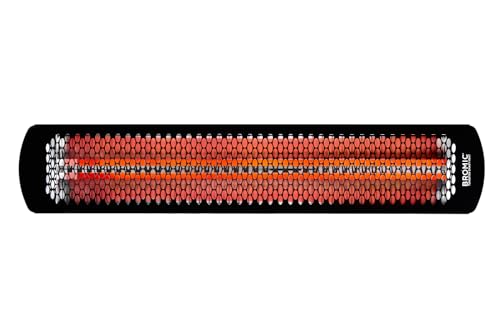
- Best for a fixed backyard lounge zone: Bromic Tungsten Smart-Heat 4000W Electric Patio Heater — Check on Amazon
- Best backyard centerpiece: AZ Patio Pyramid Glass Tube Propane Patio Heater, Stainless Steel — Check on Amazon
- Best for big yards, full power: Pamapic 89-Inch Pyramid Patio Heater, Hammered Bronze — Check on Amazon
- Best second heater in a pair: Hykolity 48,000 BTU Pyramid Patio Heater, Bronze — Check on Amazon
- Best for backyard dining: Golden Flame XL-Series Outdoor Propane Patio Heater, 46,000 BTU — Check on Amazon
- Best for backyard parties: DWVO 48,000 BTU Pyramid Patio Heater with Wraparound Table — Check on Amazon
Read the full guide ↓
Disclosure: As an Amazon Associate, dailyhomedecorating.com earns from qualifying purchases. Links to Amazon on this page are affiliate links; they cost you nothing extra. Listing details such as price and availability change often, so check the current Amazon listing before you buy.
Choosing the best patio heater for backyards under $700 starts with a truth that distinguishes a backyard from every other space in this series: a backyard is not one place. It is a dining patio by the house, a fire-side corner at the fence, a pool deck, a patch of lawn where the games happen — and heat, unlike light, does not travel between those places for free. A single heater, however premium, warms a circle roughly fifteen feet across in calm air. Everything beyond that circle is scenery. So the backyard question at this budget is rarely “which one heater?” and almost always “which zones, in which order, heated by what?” A $700 ceiling is genuinely useful here precisely because it does not have to buy one flagship: it can buy one excellent heater for the zone you use nightly and leave room for a second unit later, or it can buy the permanent electric installation over the main lounge that no portable heater can match for convenience. This guide reviews the six verified premium heaters from our main Best Patio Heater Under $700 roundup with backyard eyes — zoning, wind, ground surfaces, anchoring, storage and the long distances between the house and the far fence.
Backyards also change the physics in your favor and against you at once. In your favor: open sky means overhead clearance is rarely the binding constraint it is on porches and balconies, hard patio surfaces give tall heaters the level footing they demand, and there is usually a wall or fence to shelter a flame from the prevailing wind. Against you: exposure. A backyard heater at the far end of the yard takes the full weather — wind that leans flames and strips heat, rain that ages finishes, and sun that bakes covers — and the distance from the house means a tank that dies mid-evening is a long walk in the dark. Backyard heaters also live near things patios keep at a distance: dry leaves in autumn, lawn furniture with synthetic cushions, pool towels, children’s play equipment, and the occasional curious dog. The safety section of this guide is written for that reality, and the picks were judged on how they handle it: ballast and anchoring options, covers included or not, finishes that survive weather, and parts support for the day a tube meets a stray soccer ball.
Our short answer, by zone. For the main lounge or dining zone against the house — the seating that never moves — the hardwired Bromic Tungsten 4000W is the backyard’s best premium buy: mount it once, aim it at the furniture, and heat becomes a switch rather than a ritual. For the social center of the yard, the AZ Patio pyramid brings the certified flame column, and the Pamapic brings the same idea at a full 48,000 BTU for bigger gatherings. The Hykolity is the pair-builder: matched output, cover included, ready to be the second tower when the yard’s second zone earns one. The Golden Flame XL mushroom is the dining specialist, pushing its 46,000 BTU down onto seated people, and the DWVO’s wraparound table makes it the party unit for the lawn-side gathering point. Read the reviews with your own yard’s map in mind — the right answer is the one whose circle covers the chairs your family actually sits in after dark.
A final framing note, because backyard budgets wander: at this tier it is easy to spend the whole $700 making one corner magnificent while the rest of the yard stays cold and the furniture stays ordinary. The households that report the most satisfaction with a premium heater purchase tend to have done the opposite — heated the main zone properly, kept a reserve for a second zone or for the seating itself, and let the yard grow into the budget over two seasons rather than one. The final recommendation returns to that sequencing, and the related guides at the end cover the fire, furniture and shade pieces of the same backyard at the same tier.
In this guide
Quick Picks for Backyards
| Pick | Type | Output | Backyard job |
|---|---|---|---|
| Bromic Tungsten Smart-Heat 4000W | Electric infrared, mounted | 4,000 W, ~130 sq ft rated | Permanent heat for the main fixed lounge/dining zone |
| AZ Patio Pyramid | Propane pyramid, stainless | 40,000 BTU | Certified flame centerpiece near the house |
| Pamapic 89-Inch Pyramid | Propane pyramid, bronze | 48,000 BTU | Full-power gathering point for larger yards |
| Hykolity Pyramid | Propane pyramid, bronze | 48,000 BTU | Second-zone tower; cover included for outdoor storage |
| Golden Flame XL-Series | Propane mushroom | 46,000 BTU | Dining table warmth, heat pushed downward |
| DWVO Pyramid with Table | Propane pyramid + table | 48,000 BTU | Standing party hub at the yard’s social center |
Every propane pick runs on a standard 20 lb tank, includes tip-over or anti-tilt shut-off, and — important in a yard — can be rolled to a new zone as the evening migrates, provided it is shut down and cooled first. Never move a lit heater, and never park one on grass, mulch or leaf litter while running; the reviews and safety section explain the ground rules in detail.
How We Chose These Heaters for Backyard Use
The pool is the verified premium set from our main roundup: manufacturer manuals and certification listings for specifications, every linked model cross-checked against Amazon’s catalog data for this site, and every brand screened against current CPSC recall notices, with recalled products excluded entirely and not named among the picks. Backyard judging then applied five filters of its own.
Zone value. Each pick had to be the best tool for a recognizable backyard zone — fixed lounge, dining table, gathering point, party hub, second zone — rather than a generic “good heater.” A yard is a system; the guide treats it as one.
Weather survival. Finishes, covers and construction were weighed heavily: stainless or bronze finishes that tolerate seasons outdoors, a fitted cover included or available, and in the Bromic’s case an IPX4 rating and stainless body designed for permanent outdoor mounting. A backyard heater lives outside in a way a porch heater does not.
Stability on real ground. Tall towers on exposed sites need ballast options, wheel kits for repositioning on hard surfaces, and anti-tilt shut-offs that work when a gust or a golden retriever tests them. We favored designs whose manuals address anchoring and stability rather than ignoring wind.
Output matched to open air. In a yard there is no ceiling to hold warmth and often no wall to reflect it, so rated output matters more here than in any other variant of this guide: the propane picks run 40,000 to 48,000 BTU, and the electric pick’s rated 130-square-foot area assumes the mounting height Bromic specifies.
Neighbor and noise realism. A backyard heater is a social appliance pointed at other people’s evenings as well as your own. Propane towers are mercifully quiet — a soft burner hiss at most — but their light and their gatherings carry. We favored picks whose flame and output can be turned down as the evening winds down, and we note placement that keeps a tower’s glow and a party’s center away from a neighbor’s bedroom window as part of backyard suitability, because the best heater is the one nobody ever complains about.
Parts and serviceability. Yards are where heaters meet accidents — balls, bikes, storm-blown branches. The Hiland-pattern pyramid’s widely stocked replacement tubes and burner modules scored accordingly, as did every maker’s willingness to publish a manual with clearances and a parts list.
The Best Patio Heater for Backyards Under $700, Reviewed in Detail
1. Bromic Tungsten Smart-Heat 4000W — the main zone, solved permanently
Who it suits: Backyard owners whose primary seating is a fixed lounge or dining set against the house, under a pergola or along a covered edge — and who are tired of the tank ritual. If your yard’s social center has not moved in two years, it is not going to; heat it permanently.
The Bromic is a 44-inch stainless infrared panel, wall- or ceiling-mounted, hardwired to a 220–240V circuit at 16.6 amps, with two separately controllable elements and a manufacturer-rated heat area of about 130 square feet. In a backyard it solves the two problems portable heaters cannot: wind, which its directional infrared largely ignores, and readiness — heat is a switch, at full output in moments, with no flame to shelter and no tank to check before guests arrive. Mounted over the main zone it also keeps the floor completely clear for traffic between house and yard, and its IPX4 rating and stainless construction are specified for exactly this permanent outdoor exposure. Bromic requires a minimum 3-foot side clearance from combustibles and specified floor clearances for its mounts; a pergola with a low beam or a vinyl-sided wall needs the installer’s tape measure before anyone orders.
Pros:
- Wind-resistant directional heat for the yard’s most-used zone, on a switch.
- No fuel, no flame, no CO at point of use; nothing to refill before a party.
- Dual elements allow half-power for shoulder-season evenings.
- Commercial stainless build, ETL/cETL certified, designed to live outdoors permanently.
Honest limitation: It heats one zone — the one it is aimed at — and the far corners of the yard stay cold. Installation needs a licensed electrician and a circuit, and the total project cost can exceed the heater’s price if the panel is far away. It is also the least flexible purchase in this guide: rearrange the yard’s layout and the heater does not follow.
Choose this if your main zone is fixed and near the house. Skip it if your gatherings migrate around the yard or the seating is far from any wall or structure. Bromic Tungsten Smart-Heat 4000W — Check on Amazon
2. AZ Patio Pyramid Glass Tube — the certified centerpiece
Who it suits: Yards where the heater is also the fire feature: a visible flame column at the patio’s center that draws people the way a fire pit does, with the certification and parts support to keep it running for years.
From the Hiland family, this CSA-certified stainless pyramid runs a rated 40,000 BTU through a single-piece quartz tube about 49.5 inches long, standing roughly 91 inches tall. In a backyard its height is an asset — the flame reads across the whole yard — and its compact square base fits the patio corners where people naturally cluster. Maker-family guidance asks for about 24 inches of clearance above and 36 inches to the sides; in open sky the overhead number is easy, and the side number is your reminder to keep it out of the cushion storage corner and away from the dry hedge. Replacement tubes for this pattern are the most widely stocked in the category, which in a yard — with its balls, bikes and branches — is a practical superpower.
Pros:
- CSA-certified, with the deepest replacement-parts ecosystem of any pick here.
- The flame column doubles as the yard’s evening landmark and gathering cue.
- Stainless construction for full outdoor living; anti-tilt shut-off fitted.
- 40,000 BTU honestly matched to the format — no overdriven tube.
Honest limitation: Pyramid heat is ambient heat: guests standing close feel the glow, guests at the circle’s edge feel a suggestion. It is also a tall glass object in a space where things get thrown and kicked; site it out of the games corridor, ballast it as directed, and expect assembly to take an unhurried hour with help.
Choose this if the patio near the house is your yard’s living room and you want its hearth. Skip it if the yard’s action is spread across multiple distant zones — one centerpiece cannot follow. AZ Patio Pyramid Glass Tube Heater — Check on Amazon
3. Pamapic 89-Inch Pyramid — full power for the big yard
Who it suits: Larger backyards where the gathering point sits well away from the house — a pool deck, a lower terrace, a fire-side lawn edge with a hard pad — and where a 40,000 BTU unit would be asked to work at the edge of its circle all night.
Pamapic’s tower is rated at 48,000 BTU, stands 89 inches on a 23-by-23-inch footprint at roughly 61.7 pounds, and its manual documents tip-over shut-off beyond 45 degrees and flameout protection. Wheels and a fitted cover are included — in a big yard, the cover matters doubly, because the heater that lives at the far zone will not be carried to the garage between uses; it will be rolled to the fence, covered, and expected to survive. The hammered bronze finish hides the dust and pollen film that outdoor storage guarantees. Around its circle, expect the inner ten feet to be properly warm on a calm night and the outer band to take the edge off; place seating inside the inner band and let the flame’s light, not its heat, do the work beyond it.
Pros:
- 48,000 BTU — the strongest propane output class in this guide.
- Documented tip-over and flameout protection; wheels and cover in the box.
- Bronze finish and covered storage suit permanent far-zone placement.
Honest limitation: Output cannot defeat wind, and a far-zone tower in an exposed yard will have breezy evenings when its circle shrinks to the chairs beside it. It is also the heaviest class of pick here; the wheels help on pavers and concrete, not across lawn, so its “mobility” ends at the patio edge.
Choose this if one distant zone hosts your biggest gatherings. Skip it if your yard is small enough that its circle would wash the fence and the house at once — that yard needs placement thought, not power. Pamapic 89-Inch Pyramid Patio Heater — Check on Amazon
4. Hykolity 48,000 BTU Pyramid — the second-zone specialist
Who it suits: Yards in phase two: the main zone is handled — by a Bromic, a fire pit or an existing heater — and a second seating area across the yard earns its own tower. Also the pragmatic single purchase for a mid-size yard that values the complete kit.
The Hykolity (WHC-0206) matches the class’s 48,000 BTU rating at about 90 inches, with a manual stating conformity to CSA/ANSI Z83.26-2020/CSA 2.37-2020, anti-tilt shut-off past 45 degrees, variable output, detachable wheels and a waterproof cover in the box. Expect roughly eight to ten hours per full tank at high output. As a second heater it has a quiet virtue: matched-class output means your two zones feel consistent, and its included cover means the far unit — the one you will inevitably maintain least — is the one that came protected. The side access door simplifies tank swaps in the dark, a detail anyone who has changed a tank by phone-light will appreciate.
Pros:
- Full output with standards-conforming documentation.
- Cover and wheels included — built for the far zone’s outdoor storage reality.
- Variable control stretches tank life on mild nights.
Honest limitation: Two heaters means two tanks, two covers, two assemblies and twice the autumn maintenance; a two-zone plan is a commitment, not just a purchase. Assembly quality also matters — panels and guards seated exactly per the manual’s sequence — and a rushed build in a busy yard season will rattle its way into your awareness.
Choose this if you are completing a two-zone yard or want the complete kit in one box. Skip it if one zone genuinely covers your yard — spend the difference on seating. Hykolity 48,000 BTU Pyramid Patio Heater — Check on Amazon
5. Golden Flame XL-Series 46,000 BTU — backyard dining’s workhorse
Who it suits: Households whose backyard ritual is dinner: a table, six chairs, food that should stay warm and people who should too. The mushroom format exists for exactly this geometry.
Golden Flame’s XL-Series is rated at 46,000 BTU with anti-tilt safety shut-off, variable control and wheels, in a matte finish. Its wide reflector intercepts heat that a pyramid lets rise and redirects it down and out at head height, which is why restaurants line their terraces with mushrooms rather than towers. Around a backyard dining table, that translates to the most even seated warmth of any propane pick here, with no glass tube to guard from passing elbows and serving platters. Place it at the table’s open side — never centered over the table itself, and always with the manual’s clearances — so its circle’s useful half covers the diners instead of the lawn behind it.
Pros:
- 46,000 BTU delivered downward where seated diners feel it most.
- No fragile tube; simpler assembly; sturdy in daily yard life.
- Anti-tilt shut-off and wheels fitted.
Honest limitation: No flame to watch — the ambiance is a warm glow under a reflector, and the yard’s far zones get nothing from it. The wide reflector also catches wind like a sail; in exposed yards, ballast and placement against the prevailing breeze are obligations, not options.
Choose this if backyard dining is the main event. Skip it if you want a visual centerpiece or your gatherings stand and circulate. Golden Flame XL-Series Patio Heater — Check on Amazon
6. DWVO 48,000 BTU Pyramid with Wraparound Table — the party hub
Who it suits: Backyards that host standing events — birthdays, game nights, holiday gatherings — where guests circulate with drinks and the heater should be a destination, not an obstacle at the patio’s edge.
DWVO’s 89-inch pyramid is rated at 48,000 BTU with a quartz flame tube, adjustable flame, wheels, a PVC cover and maker-specified triple safety protection, ringed by a wraparound table at standing height. In a backyard the format shines: the table gathers people into the warm inner circle voluntarily, gives drinks and plates a surface that is not the ground, and turns the far lawn pad into a staffed bar’s worth of social gravity. For pool decks it offers a warming station for swimmers — placed, needless to say, well back from the water’s edge and splash zone, on the dry deck, with towels kept at the manual’s clearance distance rather than draped anywhere near the tower.
Pros:
- 48,000 BTU plus the only format that organizes a standing crowd around the heat.
- Triple safety protection specified; wheels and cover included.
- Doubles as furniture — one less table to store in the shed.
Honest limitation: The table invites proximity: sleeves, napkins and excited children all drift toward it, so this pick demands the most active hosting discipline in the guide. The PVC cover is also light-duty for a heater that will winter outdoors; budget for a heavier cover in harsh climates.
Choose this if your backyard hosts standing crowds. Skip it if your yard’s life is seated and quiet, where the table is furniture without a job. DWVO 48,000 BTU Pyramid Patio Heater — Check on Amazon
Comparison Table
| Heater | Fuel | Output | Form | Backyard strength |
|---|---|---|---|---|
| Bromic Tungsten 4000W | Electric 240V | 4,000 W, ~130 sq ft | Mounted panel | Fixed main zone, wind-proof |
| AZ Patio Pyramid | Propane | 40,000 BTU | ~91 in tower | Certified centerpiece, parts support |
| Pamapic Pyramid | Propane | 48,000 BTU | 89 in tower | Big-zone power, cover included |
| Hykolity Pyramid | Propane | 48,000 BTU | ~90 in tower | Second zone, complete kit |
| Golden Flame XL | Propane | 46,000 BTU | Mushroom | Dining warmth downward |
| DWVO Pyramid + Table | Propane | 48,000 BTU | 89 in tower + table | Standing party hub |
How to Choose a Backyard Heater: Zones First
Draw the yard’s evening map. Stand at the back door after dark and mark where people actually are at 9 p.m.: the dining set, the two chairs by the fence, the pool steps. Each cluster is a zone, and each zone needs its own heat source or a deliberate decision to leave it cold. Most backyards have two real zones, which is why this guide keeps returning to pairs: a Bromic over the fixed lounge plus a pyramid at the gathering point covers the typical yard better than any single purchase.
Sequence the spending. Heat the nightly zone first — the one used three evenings a week beats the party zone used six times a year. Add the second heater when the first has proven the yard’s habits. The Best Patio Heater Under $500 guide covers the same zoning logic at the tier below for the second unit, and many yards sensibly pair one premium heater with one mid-tier unit rather than two flagships.
Respect the ground. Freestanding heaters belong on level, hard, non-combustible surfaces: concrete, pavers, stone, a proper deck in good condition. Not on grass, not on mulch, not on a slope, and not on leaf-covered anything in autumn. If your gathering zone is lawn, build or place a hard pad first — it is part of the heater purchase, and it doubles as the spot the Best Fire Pit For Backyards Under $700 options will want as well.
Plan for wind by zone. Note the prevailing evening breeze. The zone in the lee of the house can host a pyramid happily; the exposed far corner wants the mushroom’s lower profile, the Bromic’s indifference, or a windbreak hedge given a season to grow. Never solve wind by moving a lit heater — shut down, cool, roll, relight.
Storage is a yard decision. Decide now where each unit winters: rolled against a sheltered wall under its cover is the designed answer for the towers; a shed is better where one exists, with tanks stored upright outdoors per code — never in a closed shed or garage space where leaking gas can accumulate contrary to local rules. Covers are included with the Pamapic, Hykolity and DWVO precisely because backyard storage is outdoor storage.
Complete the zone, not just the heater. A heated zone still needs somewhere to sit and something underfoot. The companion guides to the Best Patio Furniture Set For Backyards Under $700, the Best Gazebo For Backyards Under $700 for shade structures that also break wind, and the Best Outdoor String Lights For Backyards Under $700 for the light that makes a warm zone feel finished, are written at this same tier for exactly that reason.
Three Backyard Layouts, Worked Through
The suburban rectangle: house, patio, lawn, fence. The commonest American backyard and the easiest to heat well. The dining set lives on the patio against the house; the lawn hosts games; two chairs sit at the fence for sunset. Heat the patio zone permanently if you can — a Bromic over the dining set if there is a pergola or wall to take it, otherwise a pyramid at the patio’s sheltered corner — and treat the fence chairs as a shoulder-season bonus served by rolling the tower down on calm evenings, or by accepting a blanket. Do not buy a second heater for two chairs used twice a month; buy it when a real second seating group — a sectional, a fire-side bench — exists to justify the zone.
The pool yard. Zones multiply: the shallow-end deck, the deep-end lounge, the outdoor kitchen. The rules tighten around water in specific ways. Heaters belong on the dry deck, set back from the pool edge and entirely outside the splash and drip zone — swimmers emerging wet should meet warm air at a chair, not a hot appliance at arm’s length. Towels live on a rack at clearance distance, never on the heater, and the path from water to warmth should not cross the heater’s base. Electric mounting over a lounge zone is especially valuable here because it removes fuel and flame from a barefoot, wet environment entirely; propane towers serve the kitchen and dining zones, where people are dry, dressed and seated.
The sloped or wooded yard. Terrain is the specification. A tower needs a level pad, so the first purchase is masonry, not machinery: a small paver terrace at the flat spot with the view. Wooded yards add the overhead question — open sky above the pad, branches trimmed back beyond the manual’s clearance, and a leaf-clearing habit in autumn that is genuinely part of operating the heater. In these yards the mushroom’s lower, sturdier profile often outlives the pyramid’s elegance, and a heater that rolls between a dining terrace and a fire-side pad — cooled between moves — can serve two zones that a fixed budget would otherwise leave half-served.
A note on rental backyards. Everything above assumes you can build a pad and drill a wall. Renters in houses usually can do neither without permission — but a freestanding propane heater on an existing patio, with clearances kept and the landlord’s written blessing where the lease requires it, is the most portable warmth there is, and it leaves with you. That portability is worth real money in the decision: a renter should weight the towers over the hardwired panel even when the panel is the better appliance in the abstract, because an appliance you cannot take with you is a gift to your landlord. Our apartment companion guide works through the permission questions in the depth they deserve.
Safety: Fire, Carbon Monoxide, Clearances and Tip-Over in the Yard
Outdoor-only means the open yard — not the garage, not the tent, not the screened porch. Propane heaters produce carbon monoxide and consume oxygen. The open backyard is their designed environment; any roofed or enclosed structure changes the calculation and requires the manufacturer’s explicit rating for that installation. Never wheel a running heater into a garage or event tent “for a minute,” and never use one to warm a greenhouse, workshop or pool house.
Clearances in a yard full of fuel. Keep every heater at least the manual’s distance — plan on roughly three feet at the sides as a working minimum and the specified clearance above — from fences, hedges, siding, stored cushions, pool covers and towels, firewood stacks and play equipment. Autumn deserves special respect: dry leaves accumulate exactly where a tower stands, so clear the pad before every lighting in leaf season, and never leave a lit heater where falling leaves can reach it.
Ground and stability. Level hard ground only. Fill ballast bases where fitted, use the maker’s anchoring provisions on exposed sites, and treat a rocking heater as a shut-down-now fault. Every gas pick here includes anti-tilt or tip-over shut-off; verify yours works by reading the manual’s test procedure, and never defeat it. Keep the heater out of play corridors — a tower at the edge of a lawn games area will eventually be tackled by the game.
Children, pets and guests. Glass tubes and reflectors reach temperatures that burn on contact and stay hot after shutdown. Brief children, tether the dog’s run away from the heater, and give the tower a visible “hot zone” — furniture placement works — rather than relying on warnings. The host who lights the heater owns it for the evening: supervision is a safety feature no manufacturer can install.
Fuel and recall discipline. Inspect hoses and connections each season, leak-test with soapy water, store tanks upright outdoors away from ignition sources and never indoors, and keep the spare tank away from the running heater. Check every model you own against cpsc.gov recalls — this guide’s picks were screened against current CPSC notices and recalled products excluded entirely — and remedy any recalled unit exactly as its notice directs.
Weather rules. No freestanding gas heater in rain or strong wind. If gusts begin rocking flames sideways or the tower itself, shut down and let the party move to the lee of the house. A heater that has been rained on should be dry and inspected before its next lighting.
Running a Backyard Heater: Tanks, Time and Attention
The ownership rhythm of a propane tower is simple but unforgiving of neglect. A full 20 lb tank carries roughly 430,000 BTU of fuel: at a 48,000 BTU setting that is about nine hours — three long evenings — and at 40,000 BTU about ten to eleven. Exchange tanks are frequently filled below the full 20 lb, which quietly shortens every one of those numbers, and a backyard with two heaters drinks from the same logistics: two in service, one spare filled, and a refill habit tied to the calendar rather than to a flame dying in front of guests. Mark each tank with its fill date in chalk, rotate oldest-first, and keep the spare outdoors, upright, in the shaded storage spot you chose when you planned the yard — never beside a running heater, never in the closed garage.
Attention is the other running cost. Before each lighting: a glance at the pad (clear, dry, leaves gone), a glance at the clearances (nothing has migrated toward the tower since last time — in a working yard, things migrate), a sniff and a look at the hose connection if anything seems off. During the evening: one named adult knows the heater is theirs. After shutdown: valve closed at the tank, the unit left to cool untouched, the cover on only once it is cold. Once a season: the deeper pass — leak test, igniter check, tube or reflector cleaning per the manual, bracket and ballast inspection, and a recall search for your model. None of this is burdensome; all of it is the difference between a ten-year appliance and a two-year story. The Bromic trades nearly all of this rhythm for an annual glance at its bracket and fascia — which, for the fixed main zone, is precisely the premium the backyard tier exists to buy.
Common Backyard Mistakes
One heater, three zones. The classic backyard error. Radiant heat does not commute; zone the yard or accept cold corners knowingly.
Parking the tower on the lawn. Soft, sloped, combustible-adjacent — grass fails every requirement at once. Build the pad.
Forgetting the far zone’s storage. A heater 60 feet from the house lives outside all year. If the pick lacks a cover, the purchase is not finished.
Lighting under the tree. Overhead clearance includes branches, and autumn’s dry canopy is not a ceiling to test. Towers go in open sky.
The mid-party tank swap in the dark. Keep the spare filled, keep a light by the storage spot, and swap before the guests arrive when the gauge says the evening is in doubt.
Anchoring nothing in a windy yard. Ballast, stakes and lee placement are the difference between a heater and a 90-inch sail with a flame in it.
Final Recommendation
For the typical backyard, our advice is a sequence, not a SKU. First, fix the main zone: if it is a permanent lounge by the house, install the Bromic Tungsten 4000W and never think about heat again; if it is a social patio, the certified AZ Patio pyramid is the centerpiece to build around. Then, when the yard’s second zone has proven it deserves heat, add the Hykolity or the dining-focused Golden Flame XL to cover it, and let party households substitute the DWVO where crowds stand. A yard heated zone by zone, on hard pads, with covers on and clearances kept, will still be giving warm evenings a decade from now — which is the entire point of shopping at this tier. For the fire-based alternative at the same budget, see the propane fire pit roundup at the same tier.
FAQ
How many heaters does a backyard actually need?
One per seating zone you intend to use simultaneously. A dining patio and a separate lounge corner are two zones and, beyond about twenty feet apart, two heaters. Zones used at different times of the evening can share one wheeled heater — shut down, cooled and rolled between uses.
Can I run a patio heater on grass?
No. Freestanding heaters require level, hard, non-combustible surfaces for stability and fire safety. Grass is uneven, compressible and surrounded by dry material in autumn. Use a concrete, paver or stone pad, or a sound deck, and keep the manual’s clearances on every side.
Where should a backyard heater live in winter?
Under its cover, rolled against a sheltered wall or in a shed — with the propane tank removed and stored upright outdoors where local code allows, never in an enclosed indoor space. Before storage, let the heater cool fully, wipe down the tube and burner area per the manual, and inspect for the season’s wear.
Is a pyramid or a mushroom better for a large yard?
For seated warmth, the mushroom’s reflector delivers more felt heat at head height. For a gathering point people stand around and navigate by, the pyramid’s visible flame organizes the space. Large yards often end up with one of each in different zones, which is a feature of the zoning approach, not indecision.
How far from the house can a propane heater be?
Distance from the house is limited by practicality, not by the heater: it needs level hard ground, its clearances from fences, hedges and structures, shelter from the worst wind if possible, and a host willing to supervise it. The tank, the cover and the lighting walk all get longer with distance — plan the pad, the storage spot and the path lighting together.
How close can a backyard heater be to a fence?
At least the manufacturer’s stated side clearance — plan on roughly three feet as a working minimum for the heaters in this guide, and more where the manual demands it — measured from the heater’s widest hot part to the fence, and farther still if the fence is dry wood, the hedge is autumn-brown, or the wind pushes the flame toward it. When in doubt, add distance: a fence line is exactly where clearances get negotiated away, and exactly where they matter.
Does a backyard heater scare or attract wildlife?
The flame and warmth themselves are rarely the issue — animals give a lit heater the same respect they give a fire pit. The real wildlife questions are storage and shelter: an idle tower with a cover is a tempting dry cavity for wasps and birds in spring, so inspect inside the housing and around the burner before the season’s first lighting, and clear any nesting material you find rather than lighting through it. At night, moths and insects gather at any bright flame; positioning the tower a few feet from the dining table rather than beside it keeps that congregation out of the food.
Can I leave a propane heater outside all summer?
Yes, that is what the covers in this guide are for — but “outside” means covered, on its pad or against a sheltered wall, tank valve closed, and ideally with the tank removed to its storage spot for long idle stretches. What shortens a heater’s life is not being outdoors; it is being outdoors uncovered, with water standing in the reflector and dust caking the burner. A covered tower, inspected at season’s start, shrugs off summers for years.
What should I check before the first backyard lighting of the season?
Hose and connection integrity with a soapy-water leak test, igniter function, tube or reflector condition, anti-tilt shut-off per the manual, a clear pad with full clearances, a filled tank plus a spare — and a fresh look at cpsc.gov to confirm no recall has been issued for your model since last season.


