Where to buy
Check the latest price, availability and delivery on Amazon. Orders are placed on Amazon. We may earn a commission from qualifying purchases.
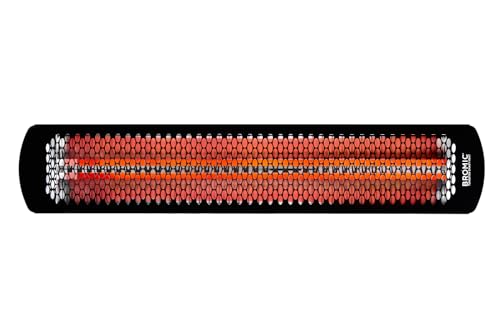
- Only pick with no flame or fuel: Bromic Tungsten Smart-Heat 4000W Electric Patio Heater — Check on Amazon (permanent install only — see the honesty box below)
- For a private ground-floor patio where code and lease allow propane: AZ Patio Pyramid Glass Tube Propane Patio Heater, Stainless Steel — Check on Amazon
- Compact-footprint pyramid for an allowed private patio: Pamapic 89-Inch Pyramid Patio Heater, Hammered Bronze — Check on Amazon
- Pyramid with cover for storage-limited homes: Hykolity 48,000 BTU Pyramid Patio Heater, Bronze — Check on Amazon
- Classic mushroom for an allowed private patio: Golden Flame XL-Series Outdoor Propane Patio Heater, 46,000 BTU — Check on Amazon
- Standing-gathering pyramid for an allowed shared courtyard: DWVO 48,000 BTU Pyramid Patio Heater with Wraparound Table — Check on Amazon
Read the full guide ↓
Disclosure: As an Amazon Associate, dailyhomedecorating.com earns from qualifying purchases. Links to Amazon on this page are affiliate links; they cost you nothing extra. Listing details such as price and availability change often, so check the current Amazon listing before you buy.
The search for the best patio heater for apartments under $700 has to start with an answer most shopping guides will not give you: if “apartment” means a balcony on a multi-family building, the correct purchase is usually no combustion heater at all — at any price. Fire codes in most US jurisdictions prohibit operating open-flame, fuel-burning appliances on apartment balconies, and storing the propane tank for one is restricted in the same breath. A $700 budget does not buy an exception to the fire code, and no heater in this guide — however premium, however many safety shut-offs it carries — changes what your building’s construction and your lease allow. So this guide does two honest jobs. First, it explains the rules as they actually read, so you can determine in ten minutes whether any heater belongs on your balcony or patio. Second, for the apartment situations where heating is legitimate — a ground-floor private patio, a townhouse terrace, a condo you own with a sprinklered balcony and written HOA approval, a shared courtyard you manage — it reviews the same premium heaters as our main Best Patio Heater Under $700 roundup through the apartment lens: footprint, storage, neighbor smoke and noise, and what happens on moving day.
Here is the rule that decides most cases. The International Fire Code, Section 308.1.4, prohibits open-flame devices on combustible balconies and within ten feet of combustible construction in multi-family settings, with narrow exceptions — notably balconies protected by an automatic sprinkler system and detached one- and two-family dwellings. NFPA 1, the Fire Code adopted in many states, carries parallel restrictions, and both codes separately limit how much LP-gas you may store in or near a multi-family residence, which is why the spare tank in the corner is a violation even when the heater is cold. Layered on top of the code is your lease or HOA rules, which are frequently stricter: many leases ban grills and heaters on balconies outright, regardless of fuel. Local amendments vary — some cities ban all balcony flames, a few regulate only charcoal — which is why the only reliable answer for your unit comes from your lease plus a call to your local fire marshal’s office, not from a product listing. What we can say without qualification is this: never operate a propane heater on a typical apartment balcony, never store its tank indoors or on that balcony where codes prohibit it, and never let a salesperson’s “apartment friendly” label talk you past either rule.
What, then, can an apartment dweller actually do? Work through the situations in order. If you have a balcony on a multi-family building: combustion is out, and the realistic legal options are an electric heater if your lease permits electric appliances on the balcony and the unit is used with its full clearances — or no heater, with the budget redirected to wind screening, an outdoor rug and warm textiles, which change perceived comfort more than renters expect. If you own your unit and the balcony is sprinklered, get the HOA’s written position before shopping; paperwork first, product second. If you have a ground-floor patio or a townhouse terrace on grade, you are in the fact pattern the codes treat most leniently — open ground, distance from the building, no balcony above trapping heat and exhaust — and a freestanding propane heater used with full clearances may be entirely legitimate, subject still to your lease or HOA. And if you are a landlord or manager heating a shared courtyard, you are effectively a commercial operator: buy certified equipment, keep documented clearances, and assign a named adult to lighting and shutdown.
The picks below are therefore labeled without decoration. The Bromic electric panel is the only flame-free, fuel-free design here — and it is a hardwired, permanently mounted appliance, which makes it a condo-owner or landlord product, not a renter product. The five propane heaters are reviewed honestly as what they are: excellent machines for a permitted private patio, and prohibited machines for a typical balcony. Each review ends with a choose/skip verdict written for apartment reality. If your situation is the typical balcony, the skip verdicts are the guide’s real content, and the final recommendation will point your $700 somewhere it can legally make you warmer.
In this guide
Quick Picks: Apartment Reality Check
| Pick | Type | Typical balcony? | Where it can make sense |
|---|---|---|---|
| Bromic Tungsten Smart-Heat 4000W | Electric infrared, hardwired mount | Only if lease allows and install is approved — renters effectively no | Owned condo terrace, landlord-installed courtyard heating |
| AZ Patio Pyramid Glass Tube | Propane pyramid, 40,000 BTU | No — combustion appliance | Private ground-floor patio where code + lease allow |
| Pamapic 89-Inch Pyramid | Propane pyramid, 48,000 BTU | No — combustion appliance | Larger private patio on grade, permitted use |
| Hykolity 48,000 BTU Pyramid | Propane pyramid, 48,000 BTU | No — combustion appliance | Permitted private patio; cover helps storage-poor homes |
| Golden Flame XL-Series | Propane mushroom, 46,000 BTU | No — combustion appliance | Permitted private patio, seated dinners |
| DWVO Pyramid with Table | Propane pyramid, 48,000 BTU | No — combustion appliance | Managed shared courtyard, standing events |
That table is the most important one in this article. Everything after it is detail for readers whose situation lands in the right-hand column — and a fuller explanation, for everyone else, of why the honest answer protects your deposit, your insurance and your neighbors.
How We Chose — and Re-Labeled — These Heaters for Apartments
The six heaters here are the verified premium picks from our main under-$700 roundup: every linked model was cross-checked against Amazon’s catalog data for this site, its specifications taken from manufacturer manuals and certification listings, and its brand screened against current CPSC recall notices, with recalled products excluded entirely and not named as picks. What changed for this guide is the judging. An apartment adds four filters that a house never applies.
Legality first. Each pick is classified by whether its fuel and form can ever be legitimate in multi-family living. Combustion appliances fail the typical balcony outright under IFC 308.1.4-style rules; that verdict appears before any discussion of heat output, because a heater you may not light has no output that matters.
Footprint and vertical demand. Pyramids stand 89 to 91 inches and need overhead clearance beyond that — on a balcony with a ceiling, a floor above and a railing, the geometry fails twice: once for the code, once for the tape measure. We note each unit’s footprint and height so permitted ground-patio readers can check their own space honestly.
Storage and the second tank problem. Apartments punish stored objects. A tower that must live in a corner of the patio year-round, and a spare tank that codes restrict you from storing, are real costs; picks with included covers scored better, and we flag where the tank-storage rule alone disqualifies the plan.
Neighbor externalities. Propane heaters are quiet, but their exhaust rises — straight into the balcony above. Even where a ground patio makes use legal, a heater under a neighbor’s open window is a grievance in the making. Placement, wind direction and simple courtesy are part of apartment suitability, and we judge them.
Exit cost. Renters move. A hardwired panel cannot move with you at all; a 60-pound tower can, if you have the vehicle and the next lease allows it. We weigh what each purchase is worth on moving day.
The Best Patio Heater for Apartments Under $700, Judged Honestly
1. Bromic Tungsten Smart-Heat 4000W Electric — the only flame-free pick, with a catch
Who it suits: Condo owners with a terrace they control, landlords heating a shared outdoor amenity space, and the rare renter whose landlord agrees — in writing — to install it. Everyone else should read this review as a description of what to ask a landlord for, not what to buy.
The Bromic is a 44-inch stainless infrared panel that mounts to a wall or ceiling and hardwires to a 220–240V circuit drawing 16.6 amps. Its dual elements are separately controllable, Bromic rates its heat area at about 130 square feet, and it carries an IPX4 weather rating and ETL/cETL certification. There is no flame, no fuel, no exhaust and no carbon monoxide at the point of use — the entire list of things fire codes restrict on balconies is absent. Mounted overhead, it also consumes none of the floor space a small terrace cannot spare, and its 3-foot side clearance requirement from combustibles is achievable on more balconies than a freestanding tower’s full clearance circle.
Pros:
- No combustion: the only technology in this guide that can even be discussed for a balcony, subject to lease and clearances.
- Zero floor footprint; cannot be tipped, bumped or stolen off a patio.
- Instant, silent, directional heat that wind does not strip away.
- Commercial build with published clearances and certification.
Honest limitation: Hardwired means permanent, and permanent means permission. A renter cannot install this heater, full stop — drilling, wiring and a new 240V circuit are the landlord’s decision and a licensed electrician’s job, and the unit stays with the property when you leave. Even for owners, HOA architectural rules may govern anything mounted to an exterior wall, and a lease that bans “heaters” without distinguishing fuel will ban this one too. Get approvals in writing before ordering.
Choose this if you own the unit, approvals are documented, and an electrician confirms the circuit and clearances. Skip it if you rent without written landlord approval — which is most renters, and the guide will not pretend otherwise. Bromic Tungsten Smart-Heat 4000W — Check on Amazon
2. AZ Patio Pyramid Glass Tube Propane Heater — for the permitted ground patio
Who it suits: Apartment and townhouse residents whose outdoor space is a private patio on grade — ground level, open sky, distance from the building’s combustible surfaces — and whose lease or HOA permits propane appliances there. That is a real and common situation; it is simply not a balcony.
This CSA-certified stainless pyramid from the Hiland family runs a rated 40,000 BTU through a single-piece quartz tube, stands about 91 inches tall on a compact square base, and includes an anti-tilt shut-off. Its virtues for a permitted patio are durability and support: replacement tubes and burner parts for this pattern are widely stocked, which matters when storage space is tight and a broken heater cannot be banished to a garage corner. The flame column also earns its footprint socially — on a small patio it is the fire feature and the heater in one object.
Pros:
- CSA-certified design with published clearances and a deep parts ecosystem.
- Compact square footprint for a full-size heater; the base houses the tank.
- Stainless finish tolerates being stored outdoors under a cover better than painted steel.
Honest limitation: It is a combustion appliance with a 20 lb propane tank, so every balcony prohibition and tank-storage restriction in the introduction applies in full. It is also roughly 65 pounds and 91 inches of glass-tubed tower: if your next home cannot take it, its resale market is local and seasonal. Measure your patio’s overhead — a ground patio under a balcony above still fails the clearance geometry, code or no code.
Choose this if your private ground patio is permitted, open above, and big enough for full clearances. Skip it for any balcony, any enclosed or screened space, and any lease with a blanket heater ban. AZ Patio Pyramid Glass Tube Heater — Check on Amazon
3. Pamapic 89-Inch Pyramid — full power, same rules
Who it suits: Residents with a larger permitted patio on grade who host groups and want the strongest rated propane output in a pyramid body, in a hammered bronze finish that suits furnished terraces.
Pamapic’s tower is rated at 48,000 BTU, stands 89 inches on a 23-by-23-inch footprint at about 61.7 pounds, and its manual documents tip-over shut-off beyond 45 degrees plus flameout protection. Wheels and a fitted cover are included — genuinely useful when the heater’s storage spot is the patio itself. Around a permitted patio table it will hold a circle of six to eight people in calm weather better than any other propane pick here.
Pros:
- 48,000 BTU top-tier output with documented tip-over and flameout protection.
- Cover and wheels included — designed to live outdoors and be rolled to shelter.
- Bronze finish forgives the dust that outdoor storage guarantees.
Honest limitation: Size is the apartment problem in concentrated form: 89 inches tall, over 60 pounds, and a heat plume that rises directly toward whatever is above it. On anything but an open, permitted ground patio it is the wrong object, and even there, a neighbor’s balcony directly overhead is a reason to place it at the far edge or choose another evening plan.
Choose this if your permitted patio is genuinely large and open above. Skip it if “patio” is a generous word for a balcony with furniture on it. Pamapic 89-Inch Pyramid Patio Heater — Check on Amazon
4. Hykolity 48,000 BTU Pyramid — the storage-realistic tower
Who it suits: Permitted-patio households with the least storage slack: the included waterproof cover and detachable wheels are not accessories here, they are the plan.
The Hykolity (model WHC-0206) matches the Pamapic’s 48,000 BTU rating at about 90 inches tall, with a manual stating conformity to CSA/ANSI Z83.26-2020/CSA 2.37-2020, anti-tilt shut-off past 45 degrees, a variable control valve and roughly eight to ten hours per full tank at high output. For an apartment household, the practical details dominate: the cover keeps a stored tower from becoming an eyesore the HOA writes letters about, and the side access door makes the tank swap a one-person job in a tight space.
Pros:
- Full 48,000 BTU output with a standards-conforming manual.
- Waterproof cover and wheels included — the complete storage story in one box.
- Variable output stretches a tank across several mild evenings.
Honest limitation: The same disqualifications as every propane pick: no balconies, no enclosed spaces, tank storage restricted, and a tall glass tube to protect in a home with no spare room. Assembly is also a genuine project to do in a small living room — clear a floor and an afternoon.
Choose this if your permitted ground patio doubles as the storage space and you want the paperwork in order. Skip it if any part of your plan involves a balcony railing and optimism. Hykolity 48,000 BTU Pyramid Patio Heater — Check on Amazon
5. Golden Flame XL-Series 46,000 BTU — the seated-dinner mushroom
Who it suits: Permitted private patios where the ritual is dinner at a table rather than standing around a flame — the mushroom reflector pushes heat down onto seated people more effectively than any pyramid.
Golden Flame rates the XL-Series at 46,000 BTU with anti-tilt safety shut-off, variable control and wheels, in a matte finish that suits apartment terraces styled like rooms. It assembles more simply than a glass-tube tower and has no fragile tube — a real advantage when the heater shares a small patio with daily life, bicycles and planters.
Pros:
- 46,000 BTU delivered downward where seated people actually are.
- No glass tube to crack in a crowded small space; simpler assembly.
- Anti-tilt shut-off fitted; wheels for repositioning.
Honest limitation: The wide reflector needs the same overhead and side clearances as any gas heater, and its heat circle centered on a small patio will wash the building wall — place it so the circle’s useful half covers the table, not the siding. And the standing rule bears repeating: combustion, tank, balcony prohibition.
Choose this if your permitted patio hosts seated dinners and you value warmth over flame theater. Skip it if your space is a balcony or your lease bans gas appliances anywhere on the premises. Golden Flame XL-Series Patio Heater — Check on Amazon
6. DWVO 48,000 BTU Pyramid with Wraparound Table — the courtyard candidate
Who it suits: Not a private balcony under any reading — this pick is for the reader managing a shared courtyard, roof terrace where the building’s own rules and construction permit it, or a permitted ground patio that hosts standing gatherings.
DWVO’s 89-inch pyramid runs 48,000 BTU through a quartz tube with adjustable flame, wheels, a PVC cover and maker-specified triple safety protection, and rings the tower with a standing-height table. In a managed common space, that table is a genuine asset: residents gather at the heat, drinks have a home, and the appliance reads as furniture rather than equipment. A manager can also anchor expectations — and the heater — in one fixed, clearance-checked location.
Pros:
- 48,000 BTU with a social format designed for standing groups.
- Triple safety protection specified; wheels and cover included.
- Works as a permanent, supervised courtyard fixture.
Honest limitation: Common areas multiply every obligation: the building’s insurer, the HOA’s rules and the local fire code all get a vote, and “the residents wanted one” is not an approval. The table also invites people and belongings close to a hot appliance, so a managed setting needs house rules, not just hardware.
Choose this if you manage a permitted common space and will document clearances and supervision. Skip it for every private balcony scenario in this guide. DWVO 48,000 BTU Pyramid Patio Heater — Check on Amazon
Comparison Table: Apartment Suitability at a Glance
| Heater | Fuel | Output | Footprint / height | Apartment verdict |
|---|---|---|---|---|
| Bromic Tungsten 4000W | Electric, hardwired | 4,000 W, ~130 sq ft | 44 in panel, zero floor space | Owners/landlords with written approval only |
| AZ Patio Pyramid | Propane | 40,000 BTU | Compact square base, ~91 in | Permitted ground patio only |
| Pamapic Pyramid | Propane | 48,000 BTU | 23 x 23 in, 89 in | Large permitted ground patio only |
| Hykolity Pyramid | Propane | 48,000 BTU | Tower, ~90 in, cover included | Permitted patio with outdoor storage |
| Golden Flame XL | Propane | 46,000 BTU | Mushroom, wide reflector | Permitted patio, seated use |
| DWVO Pyramid + Table | Propane | 48,000 BTU | 89 in + table ring | Managed common space only |
How to Choose — Starting With Whether You May
Step one is documents, not products. Read your lease or HOA rules for “heater,” “grill,” “open flame” and “propane.” Then check your city or state fire code position — many adopt IFC 308.1.4 or NFPA 1 language restricting open-flame devices on multi-family balconies and limiting LP-gas storage. If anything is ambiguous, email the fire marshal’s office and your landlord or HOA and keep the replies. A written “no” is valuable information; it costs nothing and arrives before the $700 does.
Classify your space honestly. Balcony above the ground floor of a multi-family building: combustion is out, and even electric needs lease permission and clearances. Ground-floor private patio on grade, open above: the strongest case for a permitted propane heater. Townhouse or duplex terrace: often treated like a house by code, still governed by any HOA. Shared courtyard: a management decision with insurance implications, not a personal purchase.
If propane is permitted, size to the patio you have. A small permitted patio is served by one heater placed for its clearances — the AZ Patio’s compact base or the Golden Flame’s downward heat — not by the tallest tower. Our Best Patio Heater For Small Patios Under $700 guide works through the small-space geometry in detail, and the Best Patio Heater Under $500 roundup covers the same permitted situations at a lower tier for renters who may move within a year or two.
Plan storage before the box arrives. Where will the heater stand in July? Where will the tank live, legally? If the answers are “in the living room” and “in a closet,” the plan fails on both counts — tanks belong outdoors, upright, where code allows, and a tower with no home becomes a lease-renewal argument.
Spend the balcony budget differently. If your balcony cannot have a heater, the comfort-per-dollar ranking is unglamorous and effective: block the wind (a permitted privacy screen), insulate the seat (cushions, throws rated for outdoor storage), warm the floor (the Best Outdoor Rug For Apartments Under $700 guide exists for exactly this), and light it well — the Best Outdoor String Lights For Apartments Under $700 roundup covers the ambiance half of what a flame provides. A smaller footprint helps everything fit; see the Best Patio Furniture Set For Apartments Under $700 guide for balcony-scale furniture, and add a balcony-sized deck box for the storage that keeps it legal and tidy.
Five Apartment Scenarios, Worked Honestly
Scenario one: a fifth-floor balcony, wood railing, unit above. This is the fact pattern the fire code was written about. No combustion heater, no tank storage, and — unless the lease says otherwise in writing — the only appliance conversation available is a modest plug-in electric unit used to its clearances. Most households in this scenario should buy the wind screen, the rug and the throws, and keep the rest of the budget. Any guide that sells this reader a propane tower has failed them.
Scenario two: a ground-floor patio in a garden-style complex, concrete slab, no balcony directly overhead. The strongest renter case. The slab is non-combustible, the sky is open, and distance from the building can satisfy clearances. With written landlord approval, a compact certified pyramid like the AZ Patio or a mushroom like the Golden Flame XL is a legitimate purchase. Keep the approval email, register the appliance if the office asks, and store the tank exactly where the approval says.
Scenario three: a townhouse with a private terrace and an HOA. Code often treats the dwelling like a house; the HOA is the real regulator. Expect architectural and amenity rules rather than fire-code bans, and expect them to care about appearance and storage. The Hykolity’s included cover and the AZ Patio’s stainless finish are HOA diplomacy as much as product features. Get the committee’s answer in writing before the delivery truck is scheduled.
Scenario four: a condo you own, sprinklered balcony, high-rise. Ownership changes the wiring question — you can hire the electrician — but not the governance question: the HOA’s declaration and the building’s insurer still govern exterior mounting and any appliance on the balcony. The Bromic becomes a real option here, and only here, among balcony cases: documented HOA approval, an electrician who verifies clearances and circuit capacity, and a mounting that the building’s rules allow. Combustion remains out, sprinkler exception or not, unless every authority with a vote says yes in writing.
Scenario five: you manage the building. Your scenario is procurement, not shopping. Choose certified equipment — the Bromic for a fixed terrace installation, a managed propane unit for an open courtyard — document its location and clearances, assign responsibility for each use, store fuel per code, and put the arrangement in front of your insurer before the first event, not after the first incident. The residents will enjoy it more, and so will your loss history.
Safety: Fire, Carbon Monoxide, Clearances and Tip-Over
The code rules, restated plainly. IFC Section 308.1.4 bars open-flame devices on combustible balconies of multi-family buildings and within ten feet of combustible construction, with narrow exceptions such as sprinkler-protected balconies and detached one- and two-family homes; NFPA 1 carries similar restrictions, and both frameworks limit LP-gas storage in residential occupancies. Local rules can be stricter. This guide does not encourage bending any of them: if your situation falls under a prohibition, the compliant choice is not to operate a combustion heater there, whatever a listing claims.
Carbon monoxide. Propane heaters produce CO and consume oxygen. Outdoors on open ground, exhaust disperses; on a balcony — three walls, a ceiling, a neighbor’s window above — it can accumulate and migrate indoors through open doors and vents. That physics is why the codes are written the way they are. Never run a gas heater in an enclosed, screened or roofed space, and treat headache, dizziness or nausea near any combustion appliance as an emergency signal.
Clearances protect the building, not just the furniture. Maker guidance for these heaters runs to roughly three feet at the sides and specified clearance above — on a balcony, the “above” is another home’s floor. Vinyl siding, wood railings and stored items are all combustible construction in the code’s sense. If you cannot achieve the manual’s clearances with the tape measure you own, the installation does not exist.
Tip-over and tanks. Every propane pick here includes anti-tilt or tip-over shut-off, and on a small patio that hardware matters more, not less: towers get bumped in tight spaces. Set any permitted heater on level ground, ballast it as the maker directs, and never move it lit. Store tanks upright and outdoors where code permits — never in a living space, stairwell or enclosed balcony cabinet.
Recalls apply to renters too. Check any heater — owned, inherited with a furnished rental, or supplied by a landlord — against cpsc.gov by brand and model. A recalled unit in a common area is the manager’s problem to remedy, and reporting it is a service, not a complaint. We screened this guide’s picks against current CPSC notices and excluded recalled products entirely.
Getting Permission in Writing: A Practical Walkthrough
Because so many apartment cases turn on documents, here is the sequence that experienced property managers wish residents would follow. Start with your own paperwork: search the lease PDF for “flame,” “propane,” “grill,” “heater” and “balcony.” Note that a clause banning “grills” may or may not capture a heater — ambiguity is exactly what the next step resolves. Then write one short email, to the landlord or HOA manager, that a busy person can answer: identify your unit and outdoor space (floor, construction, whether a balcony above overhangs it), name the exact appliance type you propose (fuel, freestanding or mounted, model class), state the clearances you can achieve in feet, and ask whether it is permitted and under what conditions. Attach nothing, promise nothing, and keep the thread. If the answer is yes with conditions — a minimum distance from the railing, a ban on spare tanks, a requirement to register the appliance — those conditions become part of your setup, and keeping the email is keeping your deposit safe.
If the answer is no, ask one follow-up that often changes the outcome productively: “Would an electric heater be treated differently?” Many managers who ban combustion reflexively have never considered the distinction, and a plug-in electric unit used to its manual — not a hardwired installation — is a request some will approve with conditions about cords and timers. If the answer remains no, you have spent an email instead of $700, and the alternatives section below is your plan. Landlords reading this guide should recognize the same email as the good kind of request: specific, clearance-aware and code-literate. Approving a documented electric installation, or a permitted ground-patio propane setup with conditions in writing, is almost always better property management than driving the appliance underground, where it operates with no conditions at all.
One more document matters: your renter’s or homeowner’s insurance. Policies can treat an undisclosed, code-violating appliance harshly after an incident, and an incident involving a prohibited heater can also expose you to liability for damage to neighboring units. This is the unglamorous core of the whole topic — the heater is cheap compared with the building — and it is why this guide’s verdicts are written the way they are.
Electric Alternatives and Their Real Limits
Suppose permission for electric exists. What should an apartment household actually expect? Plug-in infrared and radiant panels in the consumer class typically draw up to about 1,500 watts on a standard circuit — a fraction of the Bromic’s hardwired output — and warm a tight radius of one to three people rather than a circle of eight. That is not a failure; matched to a two-chair balcony, a small panel aimed at the seating, used only while occupied, is a rational appliance. Judge any such unit by the same standards as the picks in this guide: a published manual with clearances, a tip-over switch if freestanding, a weather rating appropriate to its placement, and a cord arrangement that never crosses a walkway or runs under a rug. We have not linked plug-in models in this roundup because this lot’s verified premium pool is the six heaters above; treat this section as the criteria list for shopping that category, and verify any candidate’s listing and recall status the same way we did.
Set expectations physically. Electric radiant heat warms surfaces in its line of sight — you, the chair, the table — and does almost nothing for the air at the balcony’s far corner. Wind still steals comfort, which is why the cheapest “heater upgrade” for a balcony remains blocking the wind at railing height with a permitted screen. Combine a modest electric panel, a wind break, a rug underfoot and seating that does not conduct cold, and a small balcony becomes genuinely usable on evenings when a prohibited propane tower — sitting unlit in a storage unit across town — does nothing for anyone.
Common Mistakes Apartment Shoppers Make
Believing “apartment friendly” marketing. That phrase has no legal meaning. The code, your lease and your fire marshal have meanings. Check those.
Buying first and asking the landlord later. The sequence that protects your deposit is documents, permission, purchase — in that order, in writing.
Forgetting the tank is also regulated. Even a heater you never light can violate storage rules. The tank in the closet is the most common apartment propane violation of all.
Assuming a small heater is a legal heater. Tabletop propane units are still combustion appliances. Size does not change the fuel’s legal category.
Heating the neighbor’s balcony. Exhaust and heat rise. A permitted ground patio under open windows above still calls for placement thought and a conversation — courtesy prevents the complaint that ends the permission.
Ignoring moving day. A hardwired panel stays. A 90-inch tower needs a vehicle and a next lease that allows it. Renters with a move on the horizon should weight portability — or wait.
Final Recommendation
If you take one sentence from this guide, take this one: match the heater to the permission, not the other way around. Owners with documented approval and a fixed terrace should buy the Bromic Tungsten 4000W and have it installed properly — it is the only pick that adds heat without adding fuel, flame or a storage problem. Residents with a permitted ground-floor patio should choose between the certified, compact AZ Patio pyramid and the dinner-focused Golden Flame XL-Series, and keep the paperwork that makes their setup legitimate. And balcony renters in multi-family buildings should keep their $700: spend a fraction of it on wind screening, textiles and light, bank the rest, and be warmer than the neighbor who bought a tower they are not allowed to light.
A Note on Sources and Verification for This Guide
Because this article’s central claims are legal and technical rather than matters of taste, a word about how it was built. The product specifications come from manufacturer manuals and certification listings — the Pamapic and Hykolity manuals’ safety sections, Bromic’s published clearance and electrical data, and the AZ Patio listing’s CSA certification among them — and every linked model was cross-checked against Amazon’s catalog data for this site before receiving a link; models that could not be confirmed cleanly were left unlinked rather than guessed at. The fire-code discussion summarizes the widely adopted IFC Section 308.1.4 and NFPA 1 positions in plain language; it is a starting point for your own verification with local authorities, not legal advice, because local amendments and building-specific rules are exactly where these questions are decided. Recall screening used current CPSC notices, and recalled products were excluded from the picks entirely rather than reviewed with a warning attached. If any authority over your home — landlord, HOA, fire marshal, insurer — tells you something stricter than this guide, the stricter answer governs your home, and this guide’s role was only to make sure you asked.
FAQ
Are propane patio heaters allowed on apartment balconies?
Generally no in multi-family buildings. IFC Section 308.1.4 prohibits open-flame devices on combustible balconies and within ten feet of combustible construction, with narrow exceptions (such as sprinkler-protected balconies and detached one- and two-family dwellings), and NFPA 1 has similar rules. Many leases and HOAs ban them outright. Confirm your specific situation with your lease and local fire marshal.
What about a small tabletop propane heater — is that different?
Legally, no. It is still an open-flame combustion appliance with an LP-gas supply, and the same code sections and lease clauses apply. Smaller output reduces some risks; it does not change the category.
Can I store a propane tank on my balcony or in my apartment?
Fire codes limit LP-gas storage in and around multi-family residences, and indoor storage in living spaces is broadly prohibited. Many buildings ban balcony tank storage as well. Store tanks only where your code and building rules explicitly allow — typically outdoors, upright, away from ignition sources — or do not keep a tank at all.
Is an electric patio heater allowed where propane is not?
Sometimes — electric heaters are not open-flame devices, so the IFC balcony clause does not capture them the same way. But leases often ban “heaters” generically, HOAs may regulate anything mounted or plugged in outdoors, and the heater’s own clearances still apply. A plug-in unit used per its manual, with written landlord permission, is the usual compliant path; a hardwired unit like the Bromic requires owner-level approval and a licensed electrician.
My ground-floor patio is private and open above. Which pick fits?
That is the strongest case for a permitted propane heater. Choose the AZ Patio pyramid for compact footprint and parts support, the Golden Flame XL if your evenings are seated dinners, and verify clearances and your HOA’s position first. Keep the tank stored legally and the heater at the patio’s open edge, away from the building wall.
My landlord said yes verbally. Is that enough?
It is a start, not a finish. Verbal permission evaporates at lease renewal, at a change of property manager, and in any dispute about a deposit or an incident. Send the follow-up email the walkthrough section describes — “confirming our conversation, you approved X under Y conditions” — and keep the reply. If the landlord will not confirm in writing, treat that reluctance as information about how solid the permission is, and weigh a several-hundred-dollar appliance accordingly.
The building provides a shared courtyard. Who decides on a heater there?
The property owner or HOA, with the building’s insurer and local fire code in the room. Treat it as a commercial installation: certified equipment, documented clearances, a fixed location, and a named person responsible for lighting, supervision and shutdown — the DWVO review above is written for that reader.


