Where to buy
Check the latest price, availability and delivery on Amazon. Orders are placed on Amazon. We may earn a commission from qualifying purchases.
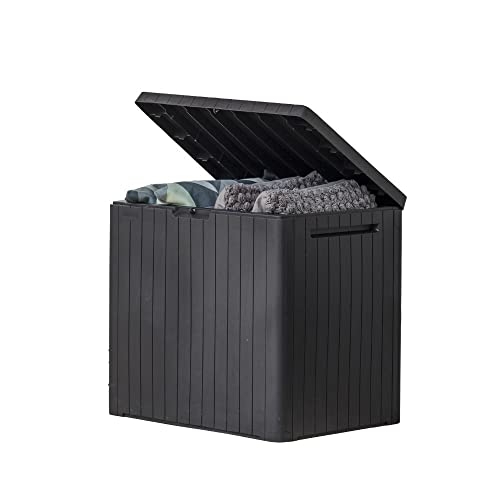
- Keter City 30 Gallon Storage Box and Side Table, Grey — Check on Amazon
- Suncast 22 Gallon Small Deck Box with Seat, Java — Check on Amazon
- Keter Marvel Plus 71 Gallon Deck Box, Dark Grey — Check on Amazon
- Suncast 73 Gallon Medium Deck Box, Mocha Brown — Check on Amazon
See 2 more Amazon options
- EAST OAK 120 Gallon Outdoor Storage Box, Grey — Check on Amazon
- Keter Borneo 110 Gallon Deck Box, Grey — Check on Amazon
Read the full guide ↓
Disclosure: As an Amazon Associate, dailyhomedecorating.com earns from qualifying purchases. Links to Amazon on this page are affiliate links; they cost you nothing extra. Listing details such as price and availability change often, so check the current Amazon listing before you buy.
Choosing the best outdoor storage box for small patios under $300 is an exercise in honesty about space. On a small patio, every object is in competition: the box versus the second chair, the box versus the plant stand, the box versus the patch of sun you actually bought the patio for. The winners in this guide are not simply the smallest boxes — they are the boxes that pay rent. A side table that stores. A seat that stores. A bench that seats two and stores the cushions those two people were sitting on. On a small patio, a single-purpose object is a luxury, and this guide is ruthless about it.
The six picks run from a 22-gallon footprint champion to a 120-gallon box that earns its larger footprint with family capacity, because small patios vary — some are balconies in all but name, others are compact terraces behind townhouses with a real dining set to serve. What they share is discipline: footprints that fit measured gaps, heights that stay below sightlines, lids that earn their keep as tables or seats. The budget is the same honest under $300 as the rest of this series — check price on Amazon for the current figure on each pick — but on a small patio you will rarely need to spend it all, and the money saved is better spent on the cushions the box will protect. Measure your gap before you fall for any pick, including ours: on a small patio, five centimetres is the difference between perfect and returned.
In this guide
Quick Picks: Best Outdoor Storage Box for Small Patios Under $300
Short on time? Each row names a buyer type and the box that suits it, with a link to the listing. Every pick below was verified on Amazon while this guide was researched, and each sits inside the under $300 budget — check price on Amazon for the current figure.
| Buyer type | Pick | Why it stands out | Link |
|---|---|---|---|
| Best overall for small patios | Keter City 30 Gallon Storage Box and Side Table, Grey | 30 gallons of weather-resistant storage — check price on Amazon | Check on Amazon |
| Best smallest footprint | Suncast 22 Gallon Small Deck Box with Seat, Java | 22 gallons of weather-resistant storage — check price on Amazon | Check on Amazon |
| Best mid-size compact | Keter Marvel Plus 71 Gallon Deck Box, Dark Grey | 71 gallons of weather-resistant storage — check price on Amazon | Check on Amazon |
| Best with seat and storage | Suncast 73 Gallon Medium Deck Box, Mocha Brown | 73 gallons of weather-resistant storage — check price on Amazon | Check on Amazon |
| Best big capacity, slim budget | EAST OAK 120 Gallon Outdoor Storage Box, Grey | 120 gallons of weather-resistant storage — check price on Amazon | Check on Amazon |
| Best bench for tiny patios | Keter Borneo 110 Gallon Deck Box, Grey | 110 gallons of weather-resistant storage — check price on Amazon | Check on Amazon |
How These Picks Were Chosen
Small-patio suitability set every filter. Footprint came first, measured as the rectangle the box actually occupies including lid overhang, and picks were favoured that fit the gaps small patios really have: beside a door, along a fence line, at the end of a bench. Second was the second job — table, seat or bench — because dual-purpose design is the only way storage grows on a small patio without the patio shrinking. Third was height: boxes that stay below railing and sightline height keep a small space feeling open, and every pick here respects that.
Capacity was judged against small-patio loads rather than maximised: a pair of lounge cushions, a dining set for four, the hose and the tool caddy. Weather behaviour still mattered — small patios are often exposed on three sides — as did assembly in confined space and the ability to move the box single-handed when the patio needs reconfiguring. The budget test was the standard one for this site: real Amazon listings verified in research, positioned within the under $300 ceiling — confirm on the listing, as prices move seasonally. Recalled products were excluded, as everywhere in this series, and the final six span the realistic size range so that each small patio finds its measured answer rather than a shrug.
Detailed Reviews
Six boxes, six different answers to the same problem. Read the limitation in each review as carefully as the strengths — with outdoor storage, the right box is usually the one whose weakness you will never personally meet.
Keter City 30 Gallon Storage Box and Side Table, Grey — Best overall for small patios
Who it suits: Tiny patios where the box must be a side table first and storage second, beside one or two lounge chairs.
The City box is Keter’s compact dual-purpose design: a 30-gallon resin storage box that doubles as a patio side table, with a lockable lid and a footprint small enough for balconies and beside a single lounge chair. It stores the small clutter of outdoor life — sunscreen, bug spray, a folded throw, pool toys, hand tools — rather than full cushion sets.
Pros: For small spaces this is the most useful shape in the guide: it earns its floor area twice, as table and as storage, and its height matches typical lounge seating so a drink sits naturally on the lid. It assembles in minutes, moves easily even when loaded, and the lockable lid keeps balcony clutter and cleaning chemicals tidier than an open basket would.
Honest limitation: Thirty gallons is a hard ceiling — two standard seat cushions will not fit, and buyers who really need cushion storage will outgrow it immediately. The lid is a side table, not a seat, and standing water can sit on the flat top after rain, so give it a wipe before setting down a book or phone.
Living with it: The City box disappears into a balcony’s routine within a week: morning coffee on its lid, sunscreen and the watering can inside it, the throw folded on top of the pool towels. It is the pick most likely to be bought twice — once for the balcony, once for beside the front door — because its size matches the small, specific clutter that otherwise lives on the floor. It will not pretend to be cushion storage, and households that respect that boundary love it; those who needed 70 gallons should buy the Marvel Plus instead.
Sizing and fit notes: On size: the City’s footprint is roughly a generous side table’s, and that is the right mental model — if a side table fits the spot, this fits, with the lid needing only its own height of clearance to open. It suits the end of a lounger, between two balcony chairs, or beside the door as the household’s outdoor pocket. Load it with the small and the daily: it rewards being the home for ten specific things rather than the overflow for everything. Because it is light, keep it loaded or latched in exposed positions; a full City box is a settled one.
Choose it if the profile above matches your space and the way you actually use your outdoor area week to week. Skip it if the limitation described here hits your exact situation — a neighbouring pick in this guide will cover you better. Either way, check the current listing for dimensions against your measured space before ordering. Check on Amazon
Suncast 22 Gallon Small Deck Box with Seat, Java — Best smallest footprint
Who it suits: Measured gaps — beside the door, at the end of a bench — where only the smallest honest box fits.
Suncast’s 22-gallon box is the smallest pick in this guide: a made-in-USA all-weather resin box with a reinforced lid the maker rates as a seat for loads up to 200 pounds. It is sized for a pair of chair cushions, a coiled hose, pool towels or a bag of charcoal — the single-category clutter that otherwise lives on the floor.
Pros: It is the footprint champion: it tucks beside a door, under a window or at the end of a balcony where nothing larger fits, and the seat-rated lid means it still earns its place as a perch or footstool. Suncast’s resin and US parts support give it a longer expected service life than the disposable-feeling small boxes sold at seasonal discount.
Honest limitation: The limitation is obvious and worth stating plainly: 22 gallons fills fast. Buy it for one defined job, not as general storage, because a family that tries to make it their only outdoor box will be shopping again within a season. The lid seat is for one person sitting, not for standing on to reach gutters.
Living with it: Twenty-two gallons sounds like a compromise until the box is assigned one job and does it for years: the hose and nozzle, the charcoal, the pool towels, the dog’s outdoor toys. Its seat lid makes it the perch by the door where shoes get changed, and its US-made resin shrugs off seasons that crack thinner small boxes. Owners consistently describe the same satisfaction — not that it holds everything, but that the one messy category it owns has simply stopped existing as a problem.
Sizing and fit notes: On size: this is the tape-measure pick — 22 gallons in the smallest rectangle here, designed for the gap you have actually measured rather than the space you vaguely have. It fits under most windowsills and beside most doors without entering the walkway. Assign it one category before it arrives — hose, charcoal, towels, dog kit — and it will feel twice its size, because a dedicated box is always half empty when you need it. The seat lid takes one adult comfortably; in a household it becomes the step-free perch for lacing boots and setting down a watering can.
Choose it if the profile above matches your space and the way you actually use your outdoor area week to week. Skip it if the limitation described here hits your exact situation — a neighbouring pick in this guide will cover you better. Either way, check the current listing for dimensions against your measured space before ordering. Check on Amazon
Keter Marvel Plus 71 Gallon Deck Box, Dark Grey — Best mid-size compact
Who it suits: Small patios with a real cushion pair or two to store, where 30 gallons is not enough and 110 is impossible.
The Marvel Plus is Keter’s compact-to-mid-size resin box at 71 gallons, in a dark grey finish with a lockable lid. It covers the gap between side-table boxes and full cushion chests: a couple of seat-and-back cushion pairs, a folded patio umbrella, garden hand tools and a watering can, or the toys of one toddler.
Pros: It is the right-size pick for households that found 30 gallons too small and 110 too bulky. The dark grey panels hide dust, assembly is among the quickest here, and the footprint fits along a fence line or balcony wall without blocking a walkway. For renters, it is also light enough to take along at the next move.
Honest limitation: There are no lid pistons at this size and price, so the lid is a hold-it-open affair, and the capacity still will not take a full deep-seating cushion set. The flat lid can pool rainwater; store it very slightly tilted or wipe before opening if contents must stay bone dry.
Living with it: The Marvel Plus is the box households graduate to: the first box was too small, the patio cannot take a 150, and this is the size that fits both the space and the pile. Assembly is a short job, the dark grey disappears against fences and balcony walls, and the interior takes two cushion pairs standing on edge with room for the umbrella between them. It is also the renter’s friend in this guide — light enough to carry out of a van alone, substantial enough to still be wanted at the next address.
Sizing and fit notes: On size: 71 gallons in a compact rectangle that threads the needle most renters and small patios actually face — it stands along a balcony wall or fence without entering the conversation area, and its height stays below most railing lines. Two cushion pairs stand on edge inside with the umbrella between them, which is the load to picture when judging the fit. Assembly is among the quickest here, and the finished box carries easily by one person when empty. If your pile grows past it, it demotes gracefully to tool-and-toy duty rather than to the resale pile.
Choose it if the profile above matches your space and the way you actually use your outdoor area week to week. Skip it if the limitation described here hits your exact situation — a neighbouring pick in this guide will cover you better. Either way, check the current listing for dimensions against your measured space before ordering. Check on Amazon
Suncast 73 Gallon Medium Deck Box, Mocha Brown — Best with seat and storage
Who it suits: Patios that host a small dining set and need its cushions stored in a box guests can also sit on.
Suncast’s 73-gallon medium box is a made-in-USA all-weather resin chest in mocha brown with a lockable lid, positioned by Suncast for furniture cushions, garden supplies, pool gear and even firewood. It is the middle child of the range: real capacity without the patio-filling presence of the 130-gallon-plus boxes.
Pros: This is the balanced footprint pick — enough room for a small dining set’s cushions and a bag of charcoal or a stack of firewood, in a box one person can assemble and shift. The mocha finish is warm beside timber decking and hides dust well, and Suncast’s US support stands behind it.
Honest limitation: Medium means compromise both ways: too big to be a balcony box for most apartments, too small for a large sectional’s cushions. The lid has no stay-open pistons, and the interior is a single open volume, so add your own crate for small tools.
Living with it: The 73-gallon Suncast is the Goldilocks entry in its maker’s range, and owners use it exactly that way: the dining set’s cushions plus the charcoal, or the pool gear plus the towels, in a box that never dominates the patio. The mocha finish is warm against timber and brick, assembly is a one-person job, and the single open interior takes a crate for small items without complaint. It is rarely the box anyone boasts about; it is very often the box still quietly working when boasted-about purchases have been replaced.
Sizing and fit notes: On size: the 73-gallon Suncast is the medium rectangle that fits the gap between ‘too small to matter’ and ‘too big for the patio’ — along a wall it stores a small dining set’s cushions with the charcoal or firewood sharing honestly. Its height keeps it below most sightlines from seated positions, which is why it disappears into patios so well. One person assembles and positions it; loaded, it stays. Picture the load as two zones — fabrics one side, fuel and tools in a crate the other — and the single open interior stops feeling like a compromise and starts feeling like a system.
Choose it if the profile above matches your space and the way you actually use your outdoor area week to week. Skip it if the limitation described here hits your exact situation — a neighbouring pick in this guide will cover you better. Either way, check the current listing for dimensions against your measured space before ordering. Check on Amazon
EAST OAK 120 Gallon Outdoor Storage Box, Grey — Best big capacity, slim budget
Who it suits: Small-but-tall storage needs: a family cushion load in a box whose footprint stays patio-manageable.
EAST OAK’s 120-gallon box is a large resin deck box reinforced with stainless steel support rods, described by the maker as waterproof and UV-resistant, in a neutral grey. The metal reinforcement addresses the most common big-box complaint — lid and panel flex — at a price that undercuts the biggest brands.
Pros: The reinforced frame is the differentiator: long panels stay straighter, the lid feels less tinny, and the capacity matches boxes costing noticeably more. Grey is a forgiving colour for dust, and the size covers a family cushion set while the footprint stays patio-manageable.
Honest limitation: EAST OAK is a younger brand than Keter, Suncast or Lifetime, so decade-long parts support is a promise rather than a track record, and the lid has no soft-close or piston assistance. Assembly instructions are functional rather than polished — lay all panels out first and identify them before starting.
Living with it: The EAST OAK’s steel reinforcement is felt rather than seen: panels that do not oil-can in the sun, a lid line that stays straight, a box that still looks square after a season of being loaded by teenagers. The grey finish is the dust-forgiving kind, and the interior volume is honestly family-size. Its ownership question is the brand’s youth — support today is responsive, the decade test is still being written — and buyers who accept that trade for the reinforced build and the price tend to report themselves well served.
Sizing and fit notes: On size: 120 gallons in a patio-manageable rectangle, with the steel reinforcement keeping the long panels true — which matters for fit, because a box that stays square keeps its lid line clean against a wall. It suits the standard family slot beside the dining set, and its grey finish sits quietly against both timber and paving. Load the cushion set flat in two stacks and the lid closes without leaning; keep the heaviest items low so the frame works as designed. Assembly goes best with all panels identified first — the instructions reward ten minutes of layout before the first connection.
Choose it if the profile above matches your space and the way you actually use your outdoor area week to week. Skip it if the limitation described here hits your exact situation — a neighbouring pick in this guide will cover you better. Either way, check the current listing for dimensions against your measured space before ordering. Check on Amazon
Keter Borneo 110 Gallon Deck Box, Grey — Best bench for tiny patios
Who it suits: Patios where seating is the scarcest resource: storage below, two seats on top, zero extra floor used.
The Borneo is Keter’s rattan-look bench box: 110 gallons of resin storage with a lockable, waterproof lid that doubles as seating for two. It has been in Keter’s range for years, which makes it one of the most thoroughly owner-tested designs in this guide, and its mid-size footprint suits patios where a 150-gallon box would dominate.
Pros: The dual role is the appeal — it stores a four-seat cushion set and then seats two guests on top, which is exactly the trick small and mid-size patios need. The rattan texture disguises dust between cleanings, the panels assemble without specialist tools, and the size is big enough to be useful yet small enough to reposition empty without help.
Honest limitation: Mid-size is also the compromise: a full six-seat deep-cushion set will not fit, and the seat lid, while sturdy for sitting, is not a step or a standing platform. Like other rattan-textured boxes, the grooves collect grime in spring pollen season and need a soft brush rather than a rinse alone.
Living with it: The Borneo’s party trick never gets old: cushions out, guests on. As a bench it sits at a comfortable height for most adults, and as a box it keeps a four-seat set genuinely dry through normal rain. The rattan panels forgive the knocks of being repositioned for gatherings, and its mid-size footprint means it migrates around the patio across the season — by the dining set in summer, by the back door in winter — without needing two people to move it when empty.
Sizing and fit notes: On size: the Borneo’s 110 gallons sit in a bench’s rectangle, so the fit question is really a furniture question — place it where a bench would go and it will look inevitable. Seat height suits most adults, and the lid’s slight crown sheds water away from sitters’ side of the box. Load the four-seat cushion set with backs along one long side and seats along the other, and the geometry closes cleanly. Empty, one person can walk it to a new spot; that portability is why so many owners describe it migrating around the patio with the seasons and the sun.
Choose it if the profile above matches your space and the way you actually use your outdoor area week to week. Skip it if the limitation described here hits your exact situation — a neighbouring pick in this guide will cover you better. Either way, check the current listing for dimensions against your measured space before ordering. Check on Amazon
Comparison Table
Capacity is the maker’s stated figure; treat it as a guide to class rather than a laboratory measurement, because interior shapes differ. What matters is matching the class to your cushion set or gear pile, which the how-to-choose section below walks through.
| Pick | Stated capacity | Best for | Link |
|---|---|---|---|
| Keter City 30 Gallon Storage Box and Side Table, Grey | 30 gallons | Best overall for small patios | Check on Amazon |
| Suncast 22 Gallon Small Deck Box with Seat, Java | 22 gallons | Best smallest footprint | Check on Amazon |
| Keter Marvel Plus 71 Gallon Deck Box, Dark Grey | 71 gallons | Best mid-size compact | Check on Amazon |
| Suncast 73 Gallon Medium Deck Box, Mocha Brown | 73 gallons | Best with seat and storage | Check on Amazon |
| EAST OAK 120 Gallon Outdoor Storage Box, Grey | 120 gallons | Best big capacity, slim budget | Check on Amazon |
| Keter Borneo 110 Gallon Deck Box, Grey | 110 gallons | Best bench for tiny patios | Check on Amazon |
How to Choose the Right Outdoor Storage Box
Measure the gap, not the patio. Small-patio storage lives in specific rectangles: the 60 centimetres beside the door, the fence-line strip behind the chairs. Measure your intended rectangle exactly, including skirting, pipes and the door’s swing, and compare it with the exterior dimensions on the listing — not the interior ones. Leave two or three centimetres of breathing room so the lid opens without scraping a wall.
Make the box pay rent. Before buying any pick, name its second job out loud: side table, extra seat, bench, plant stand base. If it has none, it must be storing something so essential that it justifies pure footprint — and on a small patio, very little qualifies. Four of the six picks here were chosen precisely because their lids work for a living.
Store vertically in your head. Small patios run out of floor long before they run out of air, but tall boxes block light and sightlines. The compromise in this guide is low and long over tall and square: boxes that slide along a wall keep the space feeling open while still swallowing a cushion set laid flat or stood on edge.
Match capacity to the real pile. Tip everything you plan to store onto the patio and look at it. Two lounge cushions and a throw: 22 to 30 gallons. A four-seat dining set’s cushions: 71 to 110. Add a hose, tools and games and you are at the EAST OAK’s class. Buying beyond the pile wastes the scarcest thing you own — floor.
Keep it movable. Small patios get reconfigured: for a party, for winter, for the sun’s angle. Choose a box one person can empty and shift, site it so it is not trapped behind furniture, and you keep the flexibility that makes a small space feel generous rather than fixed.
Protect the floor and the drainage. Patios shed water by design; a box parked across the fall can pond water against the house wall. Keep drainage paths clear, and on delicate surfaces — decking boards, stone — a thin mat under the box prevents scuffs when it shifts.
Small Patio, Full Life: Fitting Storage Into a Few Square Metres
Small patios reward a particular kind of thinking, and it starts with admitting that the patio’s scarcest resource is not money or even space — it is uncommitted space, the patch that can become whatever the moment needs. A storage box that occupies that patch permanently must therefore be judged against everything it displaces: the morning coffee spot, the second sun lounger, the herb pots, the room for a child to play. The picks in this guide survive that judgement because each one returns its footprint in another currency — a table surface, a seat, a bench — so the patio’s total function grows even as its open floor shrinks.
There is a sizing paradox worth naming: small patios often need proportionally better storage than large ones, because there is no ‘elsewhere’. A house can absorb overflow in a garage; a small patio’s overflow is visible from the sofa. That is why this guide includes a genuinely capacious pick alongside the compacts — the household with a four-seat dining set on a townhouse terrace has a real 110-gallon problem in a six-square-metre space, and pretending a 30-gallon side table solves it helps nobody. The discipline is not ‘buy small’; it is ‘buy exactly the class your pile needs, in the shape your gap allows, with a lid that works for a living’.
The last small-patio truth is about change. These spaces get rearranged more than any other — seasonally, for guests, for a new plant obsession — and fixed, heavy, single-purpose storage fossilises them. Every pick here can be emptied and moved by one person, and that mobility is a feature as real as capacity. A small patio stays loved when it can still surprise its owner; storage that moves with the plan, rather than vetoing it, is what makes that possible.
Common Mistakes to Avoid
Buying the biggest box the budget allows. On a small patio the budget is not the constraint — the floor is. A 200-gallon triumph that eats the sunbathing spot is a failure with a lid. Let the measured gap and the real storage pile set the size.
Blocking the door swing or the view. A box that the patio door clips, or that fills the sightline from your favourite chair, will irritate you every single day. Tape the footprint on the ground and live with the tape for a day before ordering.
Choosing capacity by gallons without checking shape. A tall narrow box and a long low box with identical gallon counts store different things. Your largest cushion is the template: confirm it fits the interior dimensions, laid the way you will actually lay it.
Forgetting the box will be sat on and set upon. On a small patio, guests use every surface. If the lid is not seat-rated, expect it to be sat on anyway and plan placement accordingly; if drinks will land on it, favour flatter lids over deep textures that wobble a glass.
Storing damp cushions in a sealed box. Small boxes concentrate moisture faster than big ones. Dry cushions before closing the lid, and air the box on dry mornings. Mildew on a small patio is not just damage — it is damage three feet from where you drink your coffee.
Letting the box become the junk drawer. Small-patio storage must stay curated: outdoor items only, reviewed each season. The moment indoor overflow moves in, the cushions have nowhere to go and the box has failed at its one job.
Final Recommendation
For most small patios, the Keter City 30 Gallon is the correct first answer — a side table that quietly stores the clutter, at a footprint almost any patio can spare. Tighter gaps point to the Suncast 22 Gallon; real cushion loads to the Keter Marvel Plus or the seat-and-store Suncast 73; seating-starved patios to the Keter Borneo, the hardest-working square metre in this guide; and small patios with family-size loads to the EAST OAK 120 Gallon. Tape your footprint on the ground, live with it for a day, confirm the pick is in budget on the current listing — check price on Amazon — and your small patio gains storage without losing itself.
Small-Patio Storage, Season by Season
Spring is the edit. A small patio cannot carry last year’s decisions by default, so empty the box completely, wash and dry it, and let back in only what this season’s patio life requires. Re-run the tape test if anything about the layout has changed — a new chair, a bigger plant, a different sun angle — because small patios drift out of true faster than large ones. Cushions return from indoor storage only when they can stay dry, and the box’s second job gets reassigned consciously: table for the morning-coffee era, bench for the summer of guests.
Summer is when the small patio is lived on hardest and the box is touched most. The habits that protect it are thirty-second ones: cushions in dry or not at all, lid wiped before it becomes the drinks table, the interior aired on a dry morning each week because small volumes stale faster than big ones. Keep the top clear — on a small patio a cluttered box top reads as a cluttered patio — and keep the curation ruthless. Every object in the box should be able to answer the question: when did I last serve the patio?
Autumn asks the small patio its hardest question: what winters out, and what winters in? The honest answer for most small patios is that fabrics winter indoors where the air is dry, and the box keeps the hardy core — tools, hose, covers — with room to spare rather than packed to the lid. Clear the drainage path as leaves fall; on a small patio the box is always near the door, and a leaf dam is a threshold problem, not an abstract one. Photograph the tidy patio before winter; it is next spring’s target and this autumn’s small satisfaction.
Winter is simple and strict: lid latched, box loaded enough to sit settled, nothing inside that freezing can ruin. If the patio hosts winter mornings — coffee in a coat is a legitimate lifestyle — the box’s table and seat duties continue, and keeping its top wiped and clear keeps the small space feeling kept rather than stored. When spring comes, the patio that wintered this way reopens in an afternoon: box audited, cushions back, tape test passed. Small spaces reward exactly this kind of rhythm, and punish its absence faster than any other outdoor room.
Before You Buy: The Small-Patio Checklist
Small patios forgive nothing, so this checklist is deliberately strict. First, the tape test — non-negotiable: the footprint is taped on the ground, the door is swung through its arc, chairs are placed, and the household lives with the tape for a full day before ordering. Second, the rent test: the box’s second job is named — table, seat, bench — or the storage need is so specific that pure footprint is justified in writing, at least mentally. Third, the pile test: the actual items are gathered and matched to the class, resisting both the envy that buys too big and the optimism that buys too small.
Fourth, the surface test: the lid suits how the patio is used — flat for drinks, rated for sitting, textured only where neither matters. Fifth, the movement test: one person can empty and shift the box, so the patio can still be rearranged for a party, a season or a whim. Sixth, the drainage and floor test: the box sits clear of the patio’s water path and, on delicate surfaces, on a mat that prevents scuffs. Last, the listing check at purchase: exterior dimensions confirmed against the taped rectangle — interior figures are for the load, not the gap — and the price inside the under $300 budget, so check price on Amazon as the final act. Six passes on a small patio is not caution; it is how the space stays loved.
Frequently Asked Questions
What is the best size storage box for a small patio?
Most small patios land between 22 and 71 gallons: enough for the cushion pairs and clutter the patio actually generates. Patios serving a four-seat dining set may justify 99 to 120 gallons if the footprint fits a measured gap along a wall.
How do I stop a storage box making my small patio feel smaller?
Choose low, long boxes in finishes that match your furniture, keep the top clear, and prefer dual-purpose designs — a bench box or side-table box adds function without adding a visible extra object.
Can a small patio box hold a full cushion set?
A four-seat set, yes, in the 99-to-120-gallon picks, laid flat or stood on edge. A two-seat lounge set fits the mid-size picks. Six deep seats will overwhelm a small patio’s storage as surely as they overwhelm the patio — store part of that set indoors.
Where is the best spot for a storage box on a small patio?
Along a wall or fence line, out of the door swing and off the drainage path, within a step or two of the furniture it serves. Beside the seating beats behind it: you will use a box you can reach without standing up far more faithfully.
Are small deck boxes secure enough for tools and chemicals?
The lockable picks here take a padlock, which is the right level for keeping children out of chemicals and tools. For high-value power tools, indoor or shed storage with a real lock remains the better answer.
What colour box suits a small patio best?
The finish that matches your existing furniture, because on a small patio the box is always in the composition. Greys recede against paving and aluminium, warm browns sit with timber and brick, and a contrasting box should be a deliberate accent rather than an accident — small spaces amplify every visual decision, including this one.
Will a storage box crowd my small patio’s drainage or door?
Only if it is placed carelessly: keep the box out of the door’s swing and off the patio’s drainage path, and even the largest pick here coexists with both. The tape test in the checklist exists precisely to catch these conflicts before the box arrives, when they are still free to fix.
Do I need to bring a small patio box indoors in winter?
No — these are all-weather resin and polyethylene designs. Keep the lid latched, contents dry, and the box out of standing water, and it will winter outside happily while protecting your cushions from the season.
Related Guides
Planning the rest of the outdoor space? These guides on the same site cover the neighbouring decisions:


