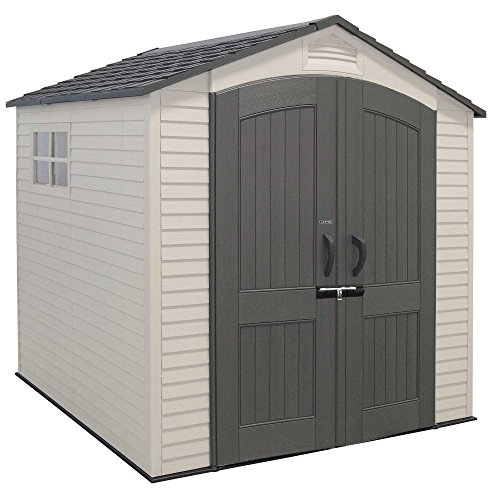
Where to buy
Check the latest price, availability and delivery on Amazon. Orders are placed on Amazon. We may earn a commission from qualifying purchases.
- Best overall backyard shed: Lifetime 7′ x 7′ Outdoor Storage Shed, Steel-Reinforced HDPE — Check on Amazon
- Rubbermaid Large Resin Outdoor Storage Shed with Floor, 7 x 7 Ft — Check on Amazon
- Suncast 7′ x 4′ Vista Vertical Storage Shed — Check on Amazon
- Suncast Extra Large Vertical Outdoor Shed, 106 Cu. Ft. — Check on Amazon
See 2 more Amazon options
- EAST OAK Outdoor Storage Box, 180 Gallon Deck Box — Check on Amazon
- Lifetime 60012 Extra Large Deck Box, 130 Gallon — Check on Amazon
Read the full guide ↓
Disclosure: As an Amazon Associate, dailyhomedecorating.com earns from qualifying purchases. Links to Amazon on this page are affiliate links; they cost you nothing extra. Listing details such as price and availability change often, so check the current Amazon listing before you buy.
Choosing the best outdoor storage box for backyards under $1500 is really choosing how a yard gets organized for the next decade, because at this budget the answer is a building. A backyard is the one place outdoor storage can be everything at once — the mower and the bikes, the ladder and the long tools, the cushion mountain and the pool gear — and $1,500 is the first budget that honestly covers all of it: a floored, walk-in resin shed as the anchor, a vertical store for the tall gear along the fence, and a serious deck box at the patio where the daily traffic lives. This guide is built as that system. We verified every pick against Amazon’s own catalog data through the Amazon Creators API while researching, matched each model to its confirmed listing before it earned a link, and screened the category against CPSC recall records in the same pass.
Two full 7 x 7 sheds lead the guide, and they are not duplicates: the Lifetime builds its case on steel-reinforced dual-wall polyethylene and a high-pitched roof, the Rubbermaid on doors that swing a full 180 degrees and a roof rated for snow country. Behind them, two vertical Suncasts split the tall-gear problem by size — 187 cubic feet in the Vista for the fence-line strip, 106 in the Extra Large Vertical for the slimmer corner. And because a backyard system’s weakest point is always the last ten feet between storage and use, two deck boxes close the guide: a 180-gallon partitioned box for the patio end, and Lifetime’s 130-gallon HDPE box, the deck box built like its sheds. Mixed to your yard’s shape, these six pieces are the whole answer; bought carelessly, the same budget buys one oversized shed and a yard that still leaks clutter from every corner.
Most backyard readers should start with the Lifetime 7 x 7 — it is the balanced anchor, strong in structure and sensible in price position — unless snow load or mower width dominates, in which case the Rubbermaid’s roof rating and door swing argue first. Yards without a square to spare should start with the Vista and spend the difference on the deck boxes. Below you will find the quick picks, how the picks were chosen, detailed notes on all six, a comparison table, a backyard planning guide covering siting, bases and access, the mistakes that waste a four-figure yard budget, and the questions this tier always raises.
In this guide
Quick Picks
Short on time, or comparing several options at once? Each row below names a buyer type and the product that suits it, with a link to the listing.
| Buyer type | Pick | Why it stands out | Link |
|---|---|---|---|
| Best overall backyard shed | Lifetime 7′ x 7′ Outdoor Storage Shed | Steel-reinforced dual-wall HDPE, high-pitched roof, lockable steel-reinforced doors | Check on Amazon |
| Best for mowers and snow | Rubbermaid Large Resin Outdoor Storage Shed with Floor, 7 x 7 Ft | 180-degree doors and a roof rated for snow load up to 15 lb per sq. ft. | Check on Amazon |
| Best fence-line shed | Suncast 7′ x 4′ Vista Vertical Storage Shed | 187 cu. ft. of tall storage on a strip footprint, with ventilating light | Check on Amazon |
| Best slim vertical store | Suncast Extra Large Vertical Outdoor Shed, 106 Cu. Ft. | Just under 4 ft deep, with a doorway over 5 ft wide for easy loading | Check on Amazon |
| Best patio-end deck box | EAST OAK Outdoor Storage Box, 180 Gallon Deck Box | 180 gallons with a divider, hydraulic lid and a seat-or-table top | Check on Amazon |
| Best heavy-duty deck box | Lifetime 60012 Extra Large Deck Box, 130 Gallon | HDPE with powder-coated steel hinges and a spring-assisted gentle close | Check on Amazon |
How These Picks Were Chosen
Backyard storage is judged by winters, not by unboxings, so the filters favored structure over styling. Every shed pick had to include its floor — a floorless shed on grass is a humidity chamber with doors — and had to offer lockable doors with real width, because backyard equipment is wide and valuable. Roof design mattered: pitched roofs that shed rain and snow quickly outrank flat ones that pool and sag. Wall construction mattered more: dual-wall panels and steel reinforcement are the difference between a ten-year building and a three-year one, so single-wall budget sheds were excluded even where their prices were tempting. For the deck boxes, the filters were capacity at the point of use, lid mechanisms that survive daily cycles, and materials from the same heavy-duty families as the sheds.
Verification was mechanical. Each product was cross-checked through the Amazon Creators API — the catalog data Amazon itself serves — and the brand, model and specifications in this article are those the API returned for that exact listing; anything whose record did not match the product we set out to research was dropped. The category was screened against CPSC recall records, and no pick in this guide is a recalled product. Prices in this category swing hard with the seasons, so the guide prints no static product prices: positions are given in words — the anchor band, the middle of the budget — and the live number is the one you see when you check the current price on Amazon. It is also worth stating what this budget is not for: the largest resin sheds in Amazon’s catalog step over $1,500 entirely, and this guide does not stretch the definition to include them. Everything below genuinely fits the budget as a system.
We did not build these sheds in a test yard. We worked from maker listings and specification data and compared the numbers that decide backyard outcomes: interior volume, door opening and swing, floor construction, roof design and load claims, panel construction and reinforcement, and footprint against the shapes real yards offer — the square by the garage, the strip along the fence, the corner behind the patio. Where two picks solve the same problem, we kept both only when they solve it differently, which is why two 7 x 7 sheds with genuinely different strengths both appear below.
Best Outdoor Storage Box for Backyards Under $1500: The 6 Picks in Detail
Lifetime 7′ x 7′ Outdoor Storage Shed, Desert Sand
Who it suits: The typical equipment-owning backyard household — mower, bikes, tools, seasonal everything — that wants one strong, balanced anchor shed and a system budget left over.
Lifetime builds sheds the way it builds its deck boxes and tables: dual-wall high-density polyethylene, steel where the structure needs it, and a design brief that assumes weather is the enemy and maintenance is the tax nobody wants to pay. In this 7 x 7 that means steel-reinforced wall panels with steel supports, a high-pitched roof on steel trusses that sheds rain and snow quickly instead of ponding it, and a dual-wall polyethylene floor that is oil-, stain- and slip-resistant and shrugs off the drips and drags of mower life. The doors are steel-reinforced, open to an extra-large entry, and carry an exterior padlock loop; the panels are UV-protected and stain-resistant, so the Desert Sand finish never needs painting and cleans with a hose. Inside, it is a genuine walk-around interior — the phrase the maker uses and the quality that separates a shed from a cupboard: you step in, turn around, and take the tool off the wall instead of reaching into a dark pile from the doorway.
Its budget position is the sensible middle of the anchor band — check the current price on Amazon — typically leaving more of the $1,500 for the rest of the system than the Rubbermaid below, which is a real argument for households building the full three-piece layout. Against that rival, the honest trade is this: the Lifetime’s structure story is stronger (steel in the walls, trusses in the roof), while the Rubbermaid’s access story is stronger (the 180-degree door swing, the explicit snow-load roof rating). Snow-belt households with wide mowers will feel the Rubbermaid’s advantages weekly; everyone else will feel the Lifetime’s structure yearly, every time a storm tests the roof. Assembly is the standard big-shed commitment — a level base, two people, a full day, and no shortcuts on the foundation step, because every resin shed ever returned was first assembled on unlevel ground. Readers whose yards are small in the other direction should pair this guide with Best Outdoor Storage Shed For Small Yards Under $1500.
- Dual-wall HDPE with steel wall supports and steel roof trusses — structure first.
- High-pitched roof sheds weather fast; dual-wall floor resists oil, stains and slips.
- Steel-reinforced doors with padlock loop and an extra-large opening.
Honest limitation: The doors do not swing the full 180 degrees of the Rubbermaid, the assembly is a genuine two-person day on a prepared base, and Desert Sand is the color you are getting.
Choose it if you want the balanced anchor — strongest structure story, sensible budget position. Skip it if door swing and a rated snow roof are your deciding factors; that is the Rubbermaid’s brief.
Rubbermaid Large Resin Outdoor Storage Shed with Floor, 7 x 7 Ft
Who it suits: Backyards in snow country and households whose equipment is wide — riding mowers above all — where door swing and roof strength are not features but requirements.
Everything about this shed is aimed at the two moments sheds fail: getting the big thing in, and surviving the big winter. The doors open a full 180 degrees, folding back against the walls so the opening is the opening — no door edge waiting to catch a mower deck, no half-open leaf narrowing the pass for the snow blower. The roof is the reinforced design the maker rates to withstand snow loads up to 15 pounds per square foot, positioned as substantially stronger than its earlier 7 x 7 roofs, and an integrated rain gutter handles the melt and the storms by moving water deliberately instead of letting it sheet over the door seam. Ventilation is increased over the earlier models, which in a backyard shed is a fuel-and-battery issue as much as a comfort one: a sealed 49-square-foot resin box in July sun is an oven, and airflow is what keeps stored chemicals, batteries and foam from cooking. The floor is included — the line item buyers forget until a floorless rival quotes it separately — and the maker’s stated inventory matches the backyard reality: riding and push mowers, patio and garden equipment, large trash cans.
It is the premium position in this guide — check price on Amazon — and in the base version of this guide, Best Outdoor Storage Box Under $1500, we build the headline system on it for exactly the households described above. Here the honest accounting is that it and the Lifetime are the same footprint and near the same idea, separated by emphasis: this one spends its money on access and roof, that one on wall structure, and both leave room in a $1,500 budget for a deck box if you plan the base costs first. If your yard’s deciding fact is a wide mower or a heavy snow load, this is your anchor and the decision is easy. If neither applies, the Lifetime’s structure and position make it the default, and this becomes the excellent alternative rather than the pick.
- Doors open a full 180 degrees — the widest, easiest equipment access in this guide.
- Roof rated by the maker for snow loads up to 15 lb per sq. ft., with integrated rain gutter.
- Floor included; ventilation increased over earlier models for safer equipment storage.
Honest limitation: The premium position in the guide, a two-person assembly day on a level prepared base, and capacity that tempts households to skip the base budget — do not.
Choose it if snow load or mower width decides your shed. Skip it if neither does — the Lifetime gives you the same footprint with more system budget left.
Suncast 7′ x 4′ Vista Vertical Storage Shed, with Floor
Who it suits: Backyards that are long rather than square — the fence-line household whose open ground is a strip, and whose gear is tall: ladders, long-handled tools, planters and everything that leans.
The Vista’s 187 cubic feet stand behind full-height double doors on a 7-by-4 footprint, and the shape is the argument: vertical volume is usable volume, because tall things store standing up, in rows, reachable — where in a low wide shed they lie in a leaning tangle that must be excavated for every use. The construction is metal-reinforced multi-wall resin with a reinforced resin floor, water resistance and UV protection, and a pad-lockable metal hasp guarding the doors. The detail that elevates it is Suncast’s IllumiVent system, which circulates air to hold down the humidity and heat that vertical resin stores concentrate, while bringing natural light inside — anyone who has searched a dark shed’s back row with a phone torch understands that this is a daily-use feature, not a garnish. The shingle-style roof panels and architectural trim also make it the shed least likely to start an argument with the neighbors or the HOA: it reads as a garden structure that was planned, not a container that escaped.
Positioned in the upper band of the budget — check the current price on Amazon — the Vista pairs with a deck box better than any pick here: Vista for the tall and dirty along the fence, box for the soft and daily at the patio, and the system covers a backyard without a single square of open lawn surrendered to a 7 x 7. Its limits are the shape’s own: four feet of depth excludes riding mowers and flat-stored bike fleets, and wide equipment belongs in the two anchors above. Households whose yards are small in every direction, not just narrow, will find the vertical logic continued at smaller scale in the next pick.
- 187 cu. ft. of tall, reachable storage on a 7 x 4 fence-line footprint, floor included.
- Metal-reinforced multi-wall resin; pad-lockable metal hasp on double doors.
- IllumiVent airflow and light — less humidity, no torch-lit excavation.
Honest limitation: Depth excludes riding mowers and flat bike storage; it is a store for things that stand, lean and hang.
Choose it if your yard’s spare ground is a strip and your gear is tall. Skip it if wheeled machinery is the main load — anchors above.
Suncast Extra Large Vertical Outdoor Shed, 106 Cu. Ft., Gray
Who it suits: Smaller backyards and side-yard corners that still need a real, lockable store with a floor — the household graduating from a deck box to a building, one size at a time.
At just under four feet deep, this vertical shed is the wall-hugger of the guide: 106 cubic feet behind double doors that open to a doorway about 5 feet 4 inches wide and 5 feet 11.5 high, with interior height around 6 feet 2.75 inches — dimensions that mean an adult loads it standing up, long tools stand upright, and the wide doorway takes the awkward items (a folded patio umbrella, a planter stack, a pressure washer) that narrow cabinets refuse. The construction is multi-wall resin with all-weather water resistance and UV protection, the floor is included and built to take heavy loads, and the doors are pad-lockable with upper and lower metal latches keeping both leaves seated — the detail that stops the classic vertical-shed failure of a door that warps a quarter-inch and never quite closes again. Assembly needs minimal tools by the maker’s account, and the resin wipes clean, which in a working backyard store is a spring ritual of five minutes rather than a project.
Its position is the middle band of the budget — check price on Amazon — and its role in the system is the second building: main shed for the machinery, this for the garden’s own inventory by the beds; or, in smaller yards, the only building, with the deck boxes carrying the patio end. It is the natural partner to everything else in this guide and the pick most likely to be bought twice by the same household at two addresses. Where it cedes ground is pure scale: the Vista holds roughly three-quarters more, and households with the fence line for the Vista should take the volume. Households choosing between this and a giant deck box should note what the extra money buys — doors, height, a floor and a lock — and that for tools, that trade is usually right. The deck-box side of that comparison is mapped in Best Deck Box For Backyards Under $1500.
- 106 cu. ft. in a footprint just under 4 ft deep — a real store for slim corners.
- Doorway about 5 ft 4 in. wide with 6 ft-plus interior height; floor included.
- Pad-lockable doors with upper and lower metal latches that keep leaves seated.
Honest limitation: A corner store, not a machinery shed — mowers and bike fleets need the anchors — and the gray is unapologetically utilitarian.
Choose it if you need a lockable, floored store and your ground is a corner or a side strip. Skip it if you have the fence line for the Vista’s extra volume.
EAST OAK Outdoor Storage Box, 180 Gallon Deck Box
Who it suits: The patio end of the backyard — households whose shed handles the machinery but whose cushions, sports gear and pool supplies need a home within steps of where they are used.
A backyard system fails at the last ten feet: the shed is perfect, and the cushions still live in the garage because nobody walks forty feet in the rain for a throw pillow. The EAST OAK 180 exists to close that gap. Its roughly 61-by-28-by-29-inch body holds 180 gallons — a deep-seating sofa’s full cushion set, the sports equipment, the pool supplies — and a detachable partition zones the interior so dry soft goods and damp pool gear stop sharing one tangled stratum. The lid runs on a hydraulic lever, opening without snatch and closing without the pinch-and-slam that is this category’s signature injury, and four built-in reinforcing rods keep the structure true under load, so the flat top can serve as a seat or table when the yard fills with people. Handles at both ends make it a two-person carry to wherever the season wants it, and the lid locks for households whose backyard is also a neighborhood thoroughfare.
In the budget it sits in the upper-middle band — check the current price on Amazon — which makes it the standard second purchase behind either anchor shed, and the first purchase for patio-dominant yards. Its resin is waterproof and fade-resistant, and assembly follows the brand’s snap-together approach, the lowest-friction setup in this guide. Against the Lifetime box below, the trade is character: the EAST OAK is bigger, zoned and more furniture-like; the Lifetime is heavier-duty in material and hinge. Backyards that entertain heavily will find this box’s seat-and-serve top developed across a full guide in our entertaining roundup, and households still deciding their tier will find the same system logic at a smaller allowance in Best Outdoor Storage Box For Backyards Under $500.
- 180 gallons with a detachable partition — cushions and pool gear, zoned.
- Hydraulic lid, four reinforcing rods, flat top that seats or serves.
- Handles both ends and a lockable lid — movable, securable, patio-placed.
Honest limitation: Needs a five-foot run of patio or deck edge, the partition divides rather than seals wet from dry, and no deck box stores anything that must stand tall.
Choose it if your shed is solved and your patio is not. Skip it if your remaining problem is tools — vertical storage, above, is the answer.
Lifetime 60012 Extra Large Deck Box, 130 Gallon, Desert Sand/Brown
Who it suits: Buyers who want their deck box built like their shed — HDPE, steel hinges, weatherproof for a decade — and whose load is the standard 130 gallons of cushions, tools and pool gear.
The 60012 is what happens when a shed company makes a box. The body is high-density polyethylene — the same dual-purpose material family as Lifetime’s sheds — with powder-coated steel hinges, where the commodity end of this category uses plastic pivots that are the first thing to fail. The lid is lockable and spring-hinged for a gentle close, the interior measures about 57 inches long, 20.75 wide and 23.75 high — long enough for the tools and pool poles that shorter boxes refuse — and the two-tone Desert Sand and brown finish matches the Lifetime shed above it, which matters more than it should: a backyard system that looks like a system reads as landscaping, and one that does not reads as storage that escaped. At 130 gallons it is the smallest box in this guide and still, for most households, enough box — the honest capacity for a four-seat patio set’s cushions plus the daily layer of toys, tools and towels.
Its price position is the accessible end of this guide — check price on Amazon — and that makes it the classic finishing purchase: anchor shed, vertical store, and this, with the budget’s work done and something left. It is also the deck box we would hand to the roughest use — the pool deck with its chlorine and dragging, the tool corner with its metal edges — because HDPE and steel hinges are the materials that forgive. Its limits are capacity and subtlety: 130 gallons will not take a deep sectional’s full set plus pool gear in one swallow, and the two-tone utility look is honest rather than elegant — entertainers wanting furniture-grade boxes should look at the EAST OAK above or the Westwood in the base guide. For pure backyard duty, though, this is the box that will still be working when the second-cheapest has been replaced twice.
- HDPE body with powder-coated steel hinges — shed materials in a box.
- Interior about 57 in. long: takes long tools and pool poles flat.
- Lockable, spring-hinged lid with a gentle close; matches the Lifetime shed.
Honest limitation: The smallest capacity here, and a utilitarian two-tone look that prioritizes durability over furniture elegance.
Choose it if your deck box will be worked hard and expected to last. Skip it if capacity or looks lead — the EAST OAK 180 wins both.
Comparison Table
| Product | Type | Best use | Link |
|---|---|---|---|
| Lifetime 7 x 7 Shed | Walk-in shed, steel-reinforced HDPE | The balanced backyard anchor | Check on Amazon |
| Rubbermaid 7 x 7 Shed | Walk-in shed with floor, 180° doors | Wide mowers and snow country | Check on Amazon |
| Suncast Vista 7 x 4 | Vertical shed, 187 cu. ft. | Tall gear along the fence line | Check on Amazon |
| Suncast XL Vertical 106 | Vertical shed, slim footprint | A floored, lockable corner store | Check on Amazon |
| EAST OAK 180 Gallon | Deck box with divider | Patio-end cushions, sports and pool gear | Check on Amazon |
| Lifetime 60012, 130 Gallon | HDPE deck box, steel hinges | Hard-use daily box that matches the shed | Check on Amazon |
How to Choose: Siting, Bases and Access in a Real Backyard
Site the anchor first, and site it by access, not by leftover space. A shed belongs where the mower’s weekly path already goes — against the garage, at the top of the driveway run, on the fence line the gate opens to — because a shed that requires a special journey gets bypassed, and bypassed sheds produce yards where the mower lives under a tarp next to a very expensive empty building. Check the swing and the approach: doors need their arc, mowers need a straight run at the opening, and you need to stand in front of the doors without standing in a flower bed. Then check the rules — setbacks from property lines, HOA structure clauses, and the neighbor sightline politics that no regulation captures but every backyard has.
The base is not optional and it is not a detail. Every shed in this guide includes a floor panel, and every floor panel assumes level, stable ground beneath it: a gravel pad, pavers or a platform, leveled properly, slightly larger than the footprint. Budget it as a line item alongside padlocks and shelving, because a $1,500 system that skips the base has bought a building and declined its foundation. While the base cures, plan the interior: wall shelving for the smalls, a hanging rail for the long tools, and the discipline that the floor stays a walkway rather than becoming the storage — the walk-around quality of the 7 x 7s is their whole advantage, and it is surrendered one floor-pile at a time.
Then place the rest of the system by frequency. Daily things — cushions, pool gear, the hose, the toys — live at the patio in the deck boxes, steps from use. Weekly things — mower, trimmer, tools — live in the anchor. Seasonal things — the patio set in winter, the holiday inventory — live in the vertical store or the anchor’s back wall. A backyard organized by frequency never feels far from anything, and the same square footage organized by category always does. Finally, buy in the system’s order: anchor, base, vertical, boxes, accessories — because the reverse order is how households end up with three deck boxes and no shed, which is the most common expensive mistake in this category.
Common Mistakes With a Backyard Storage Budget
First, the giant-shed-only build: one 7 x 7, nothing else, and a yard whose daily clutter still has nowhere to go — the system needs its patio end. Second, the reverse: a fleet of deck boxes substituting for a building, at a combined cost approaching the shed and a combined capability nowhere near it. Third, siting by leftover space — the far corner behind the trees, where no mower path goes — which converts the shed into a seasonal museum within a month. Fourth, skipping the base and blaming the doors, the most reviewed complaint in this category and the most preventable.
Fifth, ignoring drainage: a shed placed in the yard’s low spot becomes a boat in the first serious rain, floor or no floor; site high or grade the pad. Sixth, forgetting the gate and the path — panels must travel from driveway to site, and a fence gate four inches too narrow has stranded more than one shed kit in a driveway for a winter. Seventh, filling the anchor with the seasonal and exiling the weekly: organize by frequency, or the shed’s door becomes the most resented object in the yard.
Final Recommendation
For most backyards, the build is the Lifetime 7 x 7 as anchor, the Suncast XL Vertical as the garden’s own store, and the Lifetime 60012 at the patio — one maker-family for the buildings and the box, a system that looks deliberate and lands inside the budget with the base funded. Snow-country and wide-mower households should swap the anchor to the Rubbermaid and keep the rest. Yards without a square to spare should build on the Vista along the fence and put the EAST OAK 180 at the patio, which covers the same inventory in a strip instead of a square. What every version shares is the order: building first, base always, boxes at the point of use — the rest is taste.
The Second Year: Maintenance, Weather and What Actually Wears
Backyard storage is bought for years, so it is worth saying plainly what years do to it. Resin’s enemies are not the ones shoppers fear: the panels in this guide do not rust, rot or need paint, and UV protection is built into the material rather than coated on. What actually wears is everything attached to the resin — hinges, latches, lid mechanisms, door alignment — and the ground beneath it. Door alignment is the big one: a shed whose pad settles unevenly over two winters will announce it in doors that drift out of square, and the fix is the unglamorous one of re-leveling the base, which is why the base advice in this guide is repeated until it bores. Build the pad slightly proud of the surrounding grade, keep mulch and soil from migrating against the walls, and the building stays true. Latches and hasps want a drop of lubricant a year; piston and spring lids want their tracks hosed free of the grit that yards generate; and the interiors want the dry-storage discipline — nothing goes in wet that you expect to find dry and sweet-smelling in spring.
Weather loads deserve the same honesty. The pitched and rated roofs in this guide shed ordinary rain and snow by design, and snow country should still clear exceptional accumulations from any resin roof rather than testing a rating that was written as a limit, not a challenge. Wind is the vertical sheds’ specific concern: a tall, light, empty store is a sail until it is loaded, so site it against the fence or wall it was designed for and load the bottom early. None of this amounts to a maintenance regime — an hour a year covers a whole system — but it is the difference between the ten-year outcome this budget buys and the four-year outcome of the same products ignored. The makers in this guide all run real parts and support operations, and a photographed inventory of your shed’s panels and hardware, taken at assembly, is the cheapest insurance in the entire project: the replacement hinge exists, and the household that can name its model gets it.
Finally, a word on the system’s evolution, because backyards change. The layout this guide recommends — anchor, vertical, patio box — is deliberately modular: the vertical store can be added the year the garden grows, the second deck box the year the patio set does, and nothing in the architecture strands an earlier purchase. That is the quiet advantage of building from established makers’ standard lines over chasing a single season’s novelty: the pieces remain available, the finishes remain matchable, and the system grows by addition rather than by replacement. A $1,500 backyard budget spent this way is not consumed in the first spring. It is a platform the next several springs build on.
Security and Contents: Locks, Placement and Honest Expectations
A backyard system concentrates value — mowers, tools, bikes, equipment — in structures that are, by design, light enough to assemble by hand, so security deserves a clear-eyed paragraph. Every shed and store in this guide is pad-lockable, and a padlock is the correct baseline: it defeats the opportunist, the curious and the neighborhood teenager, which is most of the realistic threat model for a suburban backyard. It does not defeat a determined thief with time and tools, and no resin structure at any price does — that is a fact about the material category, not a flaw in these picks. The sensible upgrades are placement and habit rather than hardware: site the anchor where the house overlooks it rather than in the yard’s blind corner, keep the highest-value small items (the battery tools, the electronics-adjacent gear) in the house or garage where they also prefer the climate, and let the shed carry the bulky, the dirty and the hard-to-carry, which is what it is for. Motion light over the doors costs little and changes the nighttime equation more than a second lock does.
Contents have their own safety logic, and a system this size invites storing things that should be stored thoughtfully. Fuel belongs in its approved container, on the floor, in the ventilated part of the shed — one more reason the ventilation features in these picks are functional rather than decorative. Pool chemicals and garden chemicals want the lockable vertical store, high, dry and separated, especially in households with children — a padlocked door on the Suncast verticals is doing child-safety work, not just theft work. Batteries dislike the heat a sealed resin box can reach in summer sun, which is the practical case for the vented designs and for keeping the most sensitive items in the house’s milder climate. None of this is complicated, but a $1,500 system holds enough, and holds it for long enough, that the ten minutes of thought are part of the purchase.
Delivery Day: Getting a Shed Kit From Curb to Pad
One logistical paragraph, because it decides real weekends: a 7 x 7 shed arrives as a freight delivery of large, flat, heavy cartons, and the journey from the curb to the pad is part of the purchase. Confirm the delivery arrangements when you order, have the path walked and measured in advance — gate width, the turn at the side of the house, the step the cartons cannot climb — and have the second person present for the delivery window rather than the assembly day alone, because the panels that are awkward on Saturday are just as awkward on the truck’s schedule. Store the cartons flat, dry and off the ground if assembly waits, and inventory the hardware against the manual before the build begins; every maker in this guide replaces a missing fitting cheerfully, and none of them can do it at the speed of a Saturday morning already committed. The households that enjoy their shed build are, without exception, the ones that treated delivery as the first step of the build rather than as someone else’s problem.
FAQ
Lifetime or Rubbermaid for the 7 x 7 anchor? Structure versus access. The Lifetime reinforces its walls with steel and trusses its high-pitched roof; the Rubbermaid swings its doors a full 180 degrees and rates its roof for snow load. Wide mowers and heavy snow argue Rubbermaid; general durability and budget position argue Lifetime. Both include floors and both fit this budget as part of a system.
Do I need a permit for a resin shed? It depends on your municipality — many places exempt small accessory structures under a size threshold, and many HOAs regulate regardless of permits. A 7 x 7 typically falls in the commonly exempt range, but check your local rules and covenants before the pallet arrives, not after.
What base should a resin shed sit on? A level, stable pad — compacted gravel, pavers or a simple platform — slightly larger than the footprint. The included floor panel is not a foundation; it assumes level ground. Skipping or skimping the base is the leading cause of doors that will not align.
Can a riding mower really fit through these doors? Through the 7 x 7s, yes — that is their stated purpose, and the Rubbermaid’s 180-degree doors make the pass easiest. Measure your mower’s deck width against the door opening before ordering, and remember the ramp or pad edge the mower must climb to enter.
Why include deck boxes in a shed guide? Because access distance decides whether storage gets used. The shed holds the weekly and seasonal; the deck box at the patio holds the daily — cushions, pool gear, toys — within steps of use. Systems with only a shed leak clutter at the patio end, every time.
How long do resin sheds last? Dual-wall, steel-reinforced models from the makers in this guide are built for a decade-plus of outdoor life with no painting or rust care — UV protection is in the panels. Single-wall budget sheds are the ones with short lives; the construction difference is what this budget is for.


