Where to buy
Check the latest price, availability and delivery on Amazon. Orders are placed on Amazon. We may earn a commission from qualifying purchases.
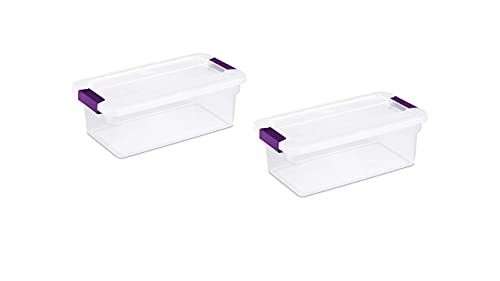
- Best small hard box: Sterilite 6 Quart ClearView Latch Box, Pack of 2 — Check on Amazon
- ArtBin Essentials Lift-Out Tray Craft Box with Handle — Check on Amazon
- HEETA Dry Bag Waterproof Backpack, 5L — Check on Amazon
- Superio Clear Plastic Storage Bin with Lid, 3.5 Quart — Check on Amazon
- EocuSun Large Mesh Beach Bag Tote — Check on Amazon
One honest note before the picks: an apartment balcony cannot take a deck box even if the budget could, and at this price a true deck box does not exist anyway. Every linked pick is a small box, caddy or bag that stores vertically, hangs, or stacks — and the one real deck box appears prose-only so you can see what you are sensibly not buying.
Read the full guide ↓
Disclosure: As an Amazon Associate, dailyhomedecorating.com earns from qualifying purchases. Links to Amazon on this page are affiliate links; they cost you nothing extra. Listing details such as price and availability change often, so check the current Amazon listing before you buy.
The search for the best outdoor storage box for apartments under $20 runs into two walls at once: the budget wall, which rules out every genuine deck box on the market, and the balcony wall, which would rule most of them out anyway. Apartment outdoor space is measured in square feet you can count on one hand, it is usually governed by a lease, and everything on it has to coexist with a chair, a plant and the neighbour’s sightline. A storage solution that eats floor space is not a solution at all — which is why this guide is built from storage that hangs, stacks, carries and flattens.
The good news is that apartment outdoor clutter is small by nature. Balcony gardeners own hand tools, not ride-on mowers. Apartment hosts store string lights, candles and a grill brush, not a cushion wardrobe. The load is accessories, and accessories are exactly what twenty dollars stores well: a latching box for the bits, a handled caddy for the jobs, a waterproof pouch for the things rain would kill, and a mesh tote for the wet and bulky leftovers. Each pick below is labelled by its true format, because on a balcony the difference between a box, a bag and a caddy is the difference between fitting and not fitting.
Renters get two extra filters in this guide. Nothing here needs screws, anchors or a landlord’s permission, and everything here can leave with you on moving day — most of it inside one of the other picks. If your lease ends before your storage wears out, that portability is worth more than another gallon of capacity.
In this guide
Quick Picks
Six picks chosen for balconies and small apartment patios: five linked, all small-format and renter-friendly, plus the genuine deck box as a prose-only reality check on what this budget — and most balconies — cannot hold.
| Pick | What it actually is | Best for | Amazon |
|---|---|---|---|
| Sterilite 6 Quart ClearView Latch Box, Pack of 2 | Small latching box (not a deck box) | Best small hard box | Check on Amazon |
| ArtBin Essentials Lift-Out Tray Craft Box with Handle | Handled accessory box (not a deck box) | Best carry-to-the-job box | Check on Amazon |
| HEETA Dry Bag Waterproof Backpack, 5L | Waterproof dry bag (soft storage, not a box) | Best waterproof pick for small gear | Check on Amazon |
| Superio Clear Plastic Storage Bin with Lid, 3.5 Quart | Extra-small clear bin (not a deck box) | Best tiny-space bin | Check on Amazon |
| EocuSun Large Mesh Beach Bag Tote | Mesh tote bag (not a box) | Best grab-and-go mesh tote | Check on Amazon |
| Keter City 30 Gallon Outdoor Storage Box | Real resin deck box — above this budget | The honest step-up | Prose-only — see review below |
How These Picks Were Chosen
We shortlisted for apartment life specifically, which changed the criteria before it changed the products. Floor footprint was scored as a cost, not a neutral fact: any pick that could hang from a rail, hook onto a door-side hook, stack on a shelf or flatten when empty ranked above a marginally bigger pick that could only sit on the ground. Lease-friendliness was a hard filter — no fixings, no adhesives that mark, nothing a tenancy agreement could object to. And moving-day portability mattered: every linked pick can be carried down stairs in one trip, most in one hand.
Verification worked the same way as in our other outdoor storage guides. Each linked pick’s brand, model, size and format were cross-checked against its Amazon listing data, and only confirmed products earned links. Apartment marketing is full of photographs that make a four-quart bin look like balcony furniture, so capacities in this guide come from listing data, not from pictures, and each pick is labelled with what it actually is — box, caddy, dry bag or mesh tote.
The budget reality is stated rather than hidden. The smallest genuine resin deck boxes sit above this price cap, so the one true deck box here is prose-only with no purchase link, included because some readers will measure their balcony, do the maths and decide to save toward it for a house someday. Everything else was checked against recall listings for its category before inclusion, and the sourcing notes document that check.
Best Outdoor Storage Box for Apartments Under $20: The 6 Picks in Detail
Each review leads with what the product actually is and how it behaves in apartment space — where it lives, what it hangs from, how it moves. Judge them against your balcony’s one scarce resource, which is not money. It is floor.
1. Sterilite 6 Quart ClearView Latch Box, Pack of 2
What it actually is: Small latching box (not a deck box). Best for: Best small hard box.
This is the closest thing to a traditional storage box that honestly fits this budget: a rigid, clear plastic box with a proper lid that latches shut at both ends. You get two 6-quart boxes in the pack, and the clear walls matter more outdoors than you would expect, because you can see at a glance whether the box holds the furniture-touch-up kit, the string-light clips or the spare hose washers without popping the lid in the rain. The latches give it a real, positive close rather than a friction-fit lid that lifts off in the first gust of wind, and the boxes stack neatly on a shelf, in a closet corner or under a bench. Treat it as what it is — a small latching box for accessories and small gear — and it is genuinely useful. Expect it to swallow gloves, trowels, seed packets, citronella refills, a coiled extension lead and similar small clutter, not cushions or a folded lounger.
On a balcony, the two-pack format is the quiet genius: one box lives outside with the plant food, ties and spare saucers, and its twin lives just inside the door with the barbecue tools and light clips, so nothing migrates across the threshold and gets lost in a kitchen drawer. The boxes stack if your balcony has a storage bench, and slide under most outdoor chairs if it does not. This is the apartment default: buy it first, and let what does not fit define which second pick you need.
Who it suits: anyone whose outdoor clutter is small, varied and currently homeless — the glove-and-trowel-and-spare-parts crowd.
Pros:
- A real latching lid, not a friction-fit cover that lifts in wind
- Clear walls make contents visible without opening it
- Two boxes in the pack, so one can live in two different spots
- Stacks neatly with other boxes on a shelf or in a cupboard
Honest limitation: Six quarts is small. It will not take a cushion, a folded chair or a family-size anything, and the plastic is splash-resistant rather than gasket-sealed, so it belongs under cover, not out in open rain.
Choose it if your clutter is small accessories and you want a rigid box with a lid that genuinely closes. Skip it if you need weatherproof, cushion-scale storage — that product does not exist at this budget.
| Format | Rigid latching box, sold as a pack of 2 |
|---|---|
| Capacity | 6 quarts per box |
| Body | Clear plastic with contrasting latch handles |
| Closure | Two end latches |
| Best for | Small accessories, tools and refills |
2. ArtBin Essentials Lift-Out Tray Craft Box with Handle
What it actually is: Handled accessory box (not a deck box). Best for: Best carry-to-the-job box.
The ArtBin Essentials box solves a different problem from everything else here: carrying small things to where you are working. It is a clear, handled caddy, roughly thirteen inches long, with a lift-out tray that keeps small pieces — screws, wall plugs, plant ties, spare bulbs, touch-up paint pens — above a deeper well for bulkier bits. Originally designed for craft supplies, it turns out to be an excellent patio accessory box, because outdoor maintenance is mostly small-parts work: re-hanging a light string, swapping a hose washer, tightening a chair glide. The handle makes it a grab-and-go kit rather than a box that lives in one place, and the clear body and tray mean you open it once, not three times. It is splash-resistant at best, not a sealed outdoor box, so it should live indoors or under deep cover and travel out when you need it.
Apartment maintenance is a parade of small jobs in a small space — re-hanging the light string, tightening the chair, repotting the herb — and the ArtBin turns them into one trip instead of four. Load it once with the household’s small-parts kit and it lives in a cupboard, then works on the balcony, the bathroom and the bike corner without being re-packed. For renters, that indoor-outdoor double life is the point: nothing about it has to survive the weather, because nothing about it has to live in the weather.
Who it suits: anyone who does small outdoor jobs — hanging lights, fixing furniture, repotting — and wants the small parts to travel with them.
Pros:
- Lift-out tray separates small parts from bulkier bits
- Carry handle makes it a true grab-and-go kit
- Clear body shows what is inside before you open it
- Latched lid stays shut in transit
Honest limitation: It is an accessory caddy, not outdoor storage furniture: it is not sealed against weather and should live indoors or under deep cover between jobs.
Choose it if your storage problem is really a small-parts organisation problem. Skip it if you want a box that lives outside permanently in the rain.
| Format | Handled caddy with lift-out tray |
|---|---|
| Size | About 13 x 6 x 5.6 inches |
| Body | Clear durable plastic, aqua accents |
| Closure | Latched lid with carry handle |
| Best for | Small-parts kits you carry to the task |
3. HEETA Dry Bag Waterproof Backpack, 5L
What it actually is: Waterproof dry bag (soft storage, not a box). Best for: Best waterproof pick for small gear.
A dry bag is not a box, and this guide will not call it one — but if the thing you actually need to protect is small and hates water, a 5-litre roll-top dry bag protects it better than any rigid box at this price. The HEETA 5L is a lightweight roll-top bag with backpack-style straps and a bonus waterproof phone case, in a transparent blue that makes contents easy to spot. Roll the top down, clip it shut, and rain, splashes and damp ground stop being a threat to torches, batteries, matches, a first-aid pouch, remotes for outdoor lights and anything else small and water-sensitive. It hangs from a hook, a rail or a chair back, taking up zero floor space, and it flattens empty. What it cannot do is protect anything crushable or hold rigid, awkward shapes — soft storage is a specialist, and this is the small-gear specialist.
Balconies get wetter than gardens do — wind drives rain sideways under roofs that would protect a patio — so the apartment’s most vulnerable small gear deserves the one genuinely waterproof pick. The HEETA hangs from the balcony rail or a door hook, holds the light remotes, the torch, the matches and the speaker cables, and asks for no floor and no shelf. In a studio or one-bed, a storage solution that occupies a hook is not a compromise; it is the ideal form.
Who it suits: anyone with small, water-sensitive gear — torches, batteries, remotes, a first-aid pouch — and a hook to hang it on.
Pros:
- Genuinely waterproof when rolled and clipped correctly
- Hangs from a hook or rail, using zero floor space
- Includes a separate waterproof phone case
- Flattens to nothing when empty
Honest limitation: Five litres is a pouch, not a cupboard: soft, small loads only. There is no crush protection, so fragile or rigid items need a hard box instead.
Choose it if keeping small things dry matters more than keeping them filed. Skip it if your gear is rigid, fragile or bigger than a rolled hand towel.
| Format | Roll-top dry bag with straps |
|---|---|
| Capacity | 5 litres |
| Body | Lightweight waterproof fabric, transparent blue |
| Extras | Waterproof phone case included |
| Best for | Small items that must stay truly dry |
4. Superio Clear Plastic Storage Bin with Lid, 3.5 Quart
What it actually is: Extra-small clear bin (not a deck box). Best for: Best tiny-space bin.
At three and a half quarts, this is the smallest hard box in the guide, and that is exactly its job. The Superio 3.5-quart bin is made from BPA-free, odour-free clear plastic with a fitted lid, and it is sized for the handful of things that get lost first: deck screws, furniture-foot pads, lighter and matches in a dry corner, spare sprinkler heads, plant clips. In a small space, one tiny box you can see into beats a big box you have to excavate. It stacks with its larger 4.5-quart sibling, so a short stack of two or three builds a miniature storage wall on a shelf, a windowsill-side cabinet or the floor of a storage bench you already own. It is not weatherproof in the gasket sense and it will not survive being left full of water, but under a lid, under cover, it keeps small gear clean, dry-ish and findable.
This is the pick for the apartment with a storage bench, a deep windowsill or one precious shelf. Three and a half quarts sounds like nothing until you list what actually needs a home: the spare plant clips, the furniture pads, the deck screws, the lighter. One tiny clear bin ends the era of those things living in a mug. Buy it as part of a stack with its larger sibling if you have the shelf height; a two-bin stack is a balcony storage system in miniature.
Who it suits: anyone with a very small storage footprint and a very specific handful of small, losable things to protect.
Pros:
- Smallest footprint of any hard box in this guide
- Clear BPA-free plastic — contents visible at a glance
- Stacks with the larger Superio bin for a matched set
- Cheap enough to dedicate one bin to one job
Honest limitation: Three and a half quarts fills up fast — a couple of tools and it is done. The lid is not sealed, so this is dust protection, not weatherproofing.
Choose it if your storage spot is tiny and your clutter is tinier. Skip it if you have more than a handful of items, or need any real rain protection.
| Format | Rigid clear bin with fitted lid |
|---|---|
| Capacity | 3.5 quarts |
| Body | BPA-free clear plastic |
| Closure | Snap-on lid (not gasket-sealed) |
| Best for | The smallest, most-losable accessories |
5. EocuSun Large Mesh Beach Bag Tote
What it actually is: Mesh tote bag (not a box). Best for: Best grab-and-go mesh tote.
The EocuSun is the simplest idea in this guide and one of the most used: a large mesh tote that doubles as a drawstring backpack, built so sand and water fall straight through instead of coming home with you. As storage, it corrals the awkward light stuff — pool toys, beach toys, balls, water guns, spare flip-flops — into one breathable bundle that can hang on a hook by the door or the fence. Mesh means nothing marinates: wet toys dry in the bag instead of mildewing in a sealed box, which is a genuine storage advantage for anything that lives wet. It is the cheapest pick here by a wide margin, and the limits match: no structure, no weather protection beyond drainage, no security, and sharp-edged tools will poke through. Used for what it is — a breathable corral for light, wet, bulky things — it earns its place in every version of this guide.
Apartments generate a specific category of clutter: things that come home wet. Swim kit, gym-to-balcony yoga gear, the dog’s towel, market flowers. The EocuSun hangs on the back of the balcony door or a rail hook, swallows the wet load, and lets it dry instead of mildewing in a sealed box or festering in a plastic bag. It is also the moving-day hero of this list — every other small pick in this guide can be carried out inside it.
Who it suits: anyone corralling wet, light, bulky toys and beach gear that needs to drain and dry, not be sealed away.
Pros:
- Mesh drains and breathes, so wet gear dries in storage
- Works as a tote and a drawstring backpack for carrying
- Hangs on a single hook by the door or fence
- Lowest-cost pick in this guide by a wide margin
Honest limitation: No structure, no weather sealing, no security, and sharp edges will poke through mesh. It corrals; it does not protect.
Choose it if your gear is wet, light and bulky, and mildew is a bigger enemy than rain. Skip it if you need protection, structure or theft resistance of any kind.
| Format | Mesh tote / drawstring backpack |
|---|---|
| Body | Sand-away breathable mesh |
| Closure | Drawstring top |
| Colour | Blue |
| Best for | Wet toys and light bulky gear that must breathe |
6. Keter City 30 Gallon Outdoor Storage Box
What it actually is: Real resin deck box — above this budget. Best for: The honest step-up.
Every version of this guide ends with the same honest paragraph, because every reader deserves to see what the real thing costs. The Keter City is a genuine small deck box: roughly thirty gallons of lockable resin storage that doubles as a patio side table, weather-resistant, wipe-clean and big enough for a couple of cushions, a hose reel or a modest stack of outdoor gear. It is the smallest, cheapest format that deserves the name deck box — and it sits above this guide’s twenty-dollar cap, which is why it appears here as a prose-only recommendation with no purchase link in the picks above. If your storage problem is genuinely cushion-sized, this is the class of product to save toward, and our higher-budget guides cover it properly. If your problem is accessory-sized, the picks above solve it today, honestly, for less.
Measure before you dream: a thirty-gallon box is roughly a side table, and on many balconies that is the whole seating area. Some larger apartment patios could host it, and for a ground-floor terrace it is a legitimate save-up target. But for the typical balcony it fails the apartment test even before the budget test, which is why it sits here as information rather than temptation. Your twenty dollars, spent on the picks above, will store more of what you actually own.
Who it suits: readers who came looking for a true deck box and would rather hear the truth now than buy the wrong thing twice.
Pros:
- A genuine deck box: rigid, lockable and weather-resistant
- Doubles as a side table, so it earns its footprint
- Capacity is in a different league from every other pick here
- Resin wipes clean and will not rust or rot
Honest limitation: It costs more than this guide’s entire budget cap — that is precisely the point of including it. Assembly is required, and thirty gallons still will not swallow a full set of large cushions.
Choose it if you can stretch the budget and truly need cushion-scale, lockable storage. Skip it if your budget is firm — in that case, pick the alternative above that matches your actual load.
| Format | Resin deck box / side table |
|---|---|
| Capacity | About 30 gallons |
| Body | Weather-resistant resin |
| Closure | Lockable lid (lock not included) |
| Best for | Readers who truly need cushion-scale storage |
Prose-only pick: this one sits above the budget cap for this guide, so there is no purchase link — it is here so you can judge the honest step-up for yourself.
Comparison Table
For apartments, read the last column first: floor space is the currency. Every linked pick scores zero or near-zero on it, which is not an accident — it was the first filter applied.
| Pick | Format | Rain protection | Crush protection | Floor space used |
|---|---|---|---|---|
| Sterilite 6 Quart ClearView Latch Box, Pack of 2 | Rigid latching box | Splash-resistant under cover | Yes — rigid walls | None if shelved; small footprint on the ground |
| ArtBin Essentials Lift-Out Tray Craft Box with Handle | Handled caddy | Splash only — store under cover | Yes — rigid walls | None; lives indoors or on a shelf |
| HEETA Dry Bag Waterproof Backpack, 5L | Roll-top dry bag | Fully waterproof when rolled and clipped | No — soft walls | None; hangs from a hook |
| Superio Clear Plastic Storage Bin with Lid, 3.5 Quart | Rigid clear bin | Dust and splash only | Yes — rigid walls | None if shelved; tiny footprint |
| EocuSun Large Mesh Beach Bag Tote | Mesh tote | None — drains by design | No — soft mesh | None; hangs on a hook |
| Keter City 30 Gallon Outdoor Storage Box | Resin deck box | Weather-resistant | Yes — rigid resin | Yes — a side-table-sized footprint |
Notice the pattern in the rain column. Balconies expose storage to sideways weather, so the guide splits its picks into two honest camps: hard boxes that live in the balcony’s sheltered zone, and the dry bag that can live anywhere. Place each pick according to its row, not your hopes, and all five will do their jobs well.
The caddy is the only pick with no fixed address, and that is a feature in rented space. Storage that travels between rooms earns its keep twelve months a year, while a balcony-only product earns nothing all winter. When two picks tie on capacity, the one with an indoor second life should win in an apartment.
Apartment Storage, Audited: Where Every Pick Actually Lives
The threshold system: inside, outside, and the door between
Apartments have a storage location that houses do not: the threshold. The metre of floor just inside the balcony door is the most contested space in a small home, and it is where apartment outdoor storage quietly succeeds or fails. The system in this guide is designed around it. The caddy lives just inside, loaded and ready. The small boxes split their duty — one in the balcony’s sheltered corner, one permitted just inside if the corner is too exposed. The bags hang at the threshold itself, on the rail end or the door hook, where they serve both zones and belong fully to neither. Nothing in the system requires the balcony to store what the balcony does not use weekly, and that principle — outdoor space stores outdoor-frequency items only — is what keeps a small balcony feeling like a room rather than a warehouse with a view.
Apply the frequency test ruthlessly. If an item has not been touched outdoors in a month, it does not earn outdoor storage; it earns a cupboard, a hallway box, or an honest exit from the home. Balconies fill with monthly items stored at daily-item prices in space, and the result is a balcony used for storage instead of for mornings. The picks here are deliberately sized for the weekly layer only.
Vertical leases: rails, hooks and the politics of hanging
Hanging storage deserves a fuller treatment in rented homes, because it is both the best and the most regulated option. The best, because a hook converts air into shelving at zero floor cost and zero installation. The most regulated, because buildings reasonably care about objects overhanging rails, marks on render, and the street view. The safe pattern, which every hanging pick in this guide supports, is: hang inside the rail line, not over it; hang from existing structures — rail, door, furniture — rather than new fixings; keep hung items below the rail top; and choose colours that read as part of the furniture, not as laundry. Follow that pattern and hanging storage is invisible to landlords, neighbours and building managers alike.
There is a physics footnote worth knowing. Hung bags swing, and swinging bags chafe — against render, against plants, against the rail itself. Hang them where the swing arc is empty, keep the heaviest item (the dry bag, when loaded) on the shortest strap, and check the hook’s grip after the first windy night. Apartment storage fails more often from chafe and swing than from rain, and both are solved by placement rather than purchase.
Care and Courtesy: Keeping Balcony Storage Welcome
Apartment storage has a second owner: the building. Keeping balcony storage welcome means keeping it clean in a way house storage never has to be — a box that would be unremarkable in a garage can read as neglect from the street if it is algae-streaked and overflowing. The routine is light: wipe the hard boxes down when you water the plants, shake the mesh out monthly so it never becomes a leaf trap, and air the dry bag open on its hook after wet duty so it never perfumes the balcony. Storage that looks cared for is storage nobody complains about, and in a rented home, un-complained-about is a specification as real as capacity.
Seasonal courtesy matters too. In storm season, bring the light picks in or weight the stack: a balcony three floors up is a wind tunnel with a view, and an empty three-quart bin in a gale is a message to the neighbours below. In winter, the whole system should be able to retreat indoors in one trip — that was a selection criterion in this guide, and it doubles as the winter routine. A balcony that clears in ten minutes before a storm, and restores in ten minutes after, is a balcony whose storage will never become a dispute, a deposit deduction or a flying object. That is the apartment standard, and every pick here was chosen to meet it.
One Basket, Whole Balcony: The Starter Combination
If decision fatigue is the real enemy, buy the apartment system in one basket and stop thinking: the latching two-pack for the sheltered corner and the cupboard, the five-litre dry bag for the rail, and the mesh tote for the door hook. Those three purchases cover the balcony’s three zones and its three load types, they can all arrive in one delivery, and they can all leave in one trip at the end of the lease. Live with them for a month before adding anything; apartment storage mistakes are almost always additions, and a month of use will tell you whether the missing piece is the caddy, the tiny bin, or — most often — nothing at all.
What not to put in the basket matters as much. Skip anything that needs a fixing, anything whose photograph shows it holding cushions, and anything sold as a balcony deck box at this price, because that product does not exist and the listing is hoping you will not check the dimensions. The apartment test is portable, reversible and honest — and a basket that passes it will still be passing it, flat-packed in a removal box, in your next home and the one after that.
A Note on Sizes, Photographs and Trust
Apartment shoppers face the scale trick in its purest form, because a small bin photographed on an empty balcony reads as furniture. The defence is the one this guide has applied throughout: dimensions from listing data, printed beside every pick, and a tape measure against your own balcony before anything is ordered. Measure the sheltered corner with the door open, not closed — door swing eats more balcony storage plans than rain ever will — and measure the rail’s usable length between plants and furniture. If a pick’s printed size does not fit those two measurements, it does not fit your home, whatever the photograph promised. Trust the tape; it is the only reviewer who has visited your balcony.
How to Choose Apartment Outdoor Storage Under $20
Spend floor space last
Rank your balcony’s storage locations in this order: hooks and rails first, then wall-adjacent vertical space, then shelves and bench interiors, then — only then — floor. The picks in this guide map onto that ranking in order of preference: the dry bag and mesh tote hang, the caddy lives indoors, the small boxes stack or slide under furniture. A purchase that lands on the first two levels will never make the balcony feel smaller, which is the true test of apartment storage.
Measure the sheltered zone while you are at it. Every balcony has one — the strip under the overhang above, the corner behind the door swing — and it is smaller than the balcony. Hard boxes must fit inside that zone, not just on the balcony, because their lids shed splashes rather than sealing. If your balcony has no sheltered zone at all, weight your picks toward the dry bag and treat boxes as indoor storage with outdoor jobs.
Read the lease before the listings
Most tenancy agreements restrict fixings, and many buildings restrict what can hang over a rail or be visible from the street. Everything in this guide avoids screws and permanent marks, but check your building’s rules on rail-hung items before choosing a hanging pick, and keep storage below rail height if the rules are strict. A storage box that breaches the lease is a deposit problem wearing a lid.
Weight limits matter on older balconies, too. Nothing here is heavy — that is one advantage of small-format storage — but a stack of filled boxes in one corner concentrates load exactly where balcony structures like it least. Spread storage along the wall line rather than piling it at the rail, and keep the heaviest box at the bottom of any stack, indoors or out.
Buy for moving day, not just for today
The average renter moves far more often than the average deck box wears out, so portability is a specification, not a bonus. Every linked pick here can be carried in one trip and most nest, flatten or double as a carrying bag for the others. When you compare two similar picks, choose the one you can picture on a staircase.
Finally, keep the system small enough to stay honest. Apartment storage fails by accumulation — a second box for the overflow of the first, a bag for the overflow of the box. One box, one caddy, one hanging pick is a complete apartment system at this budget; if a fourth container seems necessary, the problem is usually the clutter, not the containers.
Common Buying Mistakes
Buying furniture-sized storage for a balcony. A small deck box looks modest in a listing and enormous on a five-foot balcony, where it displaces a chair to store things a shoebox could hold. Measure the balcony, then measure it again after picturing a person sitting in it. Apartment storage should disappear; if you can see it from the sofa, it is too big.
Drilling for storage you could hang. Screws and anchors in a rented balcony wall are a deposit deduction waiting for a date. Hooks over rails, over-door hooks and freestanding stacks solve the same problems reversibly. If a storage product needs a drill, it was designed for a house, and so was its returns process.
Leaving a snap-lid box in driven rain. Balcony weather arrives sideways, and it finds lid seams that patio weather never tests. Hard boxes belong in the sheltered strip; anything that must live in the open needs a roll-top seal. The first storm of autumn will otherwise distribute your light clips across the balcony floor.
Storing wet swim and gym kit in a sealed box. Apartment ventilation is limited and mildew is fast. Wet kit belongs in the mesh tote, on a hook, in moving air. Sealed boxes are for dry things; the moment a box smells, everything in it does, and in a small flat everything in the flat does.
Forgetting the neighbours’ view. Storage visible over a rail is part of the building’s face, and some leases say so. Keep balcony storage low, neutral and below the rail line, and prefer closed boxes over open piles. Tidy storage is not just aesthetics in an apartment — it is compliance.
Final Recommendation
Start with the Sterilite two-pack and the HEETA dry bag. Between them they cover the apartment’s two storage zones — the sheltered corner and the open rail — and the two load types, hard small things and small things that must stay dry. Add the ArtBin if you do your own small repairs, or the mesh tote if wet kit is your balcony’s main export. That is a complete apartment system, and it leaves with you when the lease does.
Skip the deck box without regret. On a typical balcony it would store less of your actual clutter than these picks do, at more than the budget, while taking the chair’s place. If a future home gives you a real patio, the step-up will be waiting — and our wider outdoor storage guides will help you choose it then.
Frequently Asked Questions
What is the best outdoor storage for a small apartment balcony?
Storage that uses no floor: a hanging waterproof dry bag for small gear that must stay dry, a mesh tote for wet items, and one small latching box in the sheltered corner for hard accessories. That combination covers nearly all apartment outdoor clutter for under this budget, without touching the floor plan.
Will my landlord allow a storage box on the balcony?
A small freestanding box almost always complies, because it needs no fixings and leaves no marks. Problems arise with screwed fittings, rail-hung items in strict buildings, and anything visible above the rail. Check your building’s balcony rules, keep storage low and freestanding, and you stay on the safe side.
Can a balcony really not fit a small deck box?
Some large balconies and ground-floor terraces can. A typical apartment balcony cannot — a thirty-gallon box occupies roughly a side table’s footprint, which is usually the seating. Measure your sheltered floor area honestly; if the box leaves no room for the chair, the box is the wrong purchase at any price.
How do I keep balcony storage dry without a roof?
Use format, not hope. Roll-top dry bags are genuinely waterproof and hang anywhere; hard boxes are only splash-resistant and belong in the sheltered strip under the overhang. If your balcony is fully exposed, make the dry bag your primary storage and keep boxes indoors.
What should I store on the balcony versus inside?
Outside: tools, plant supplies, and anything in the dry bag. Inside: the caddy of small parts, spare soft furnishings, and anything paper, electronic or rust-prone. Apartment storage works best as a partnership between the balcony and one cupboard shelf — neither has to do the whole job.
Will these picks survive a move?
That is what they were chosen for. The bags flatten or carry, the boxes nest and stack in a car boot, and the caddy is its own packing case. Nothing here needs wrapping, a van, or a second person — which is more than can be said for any deck box.
Related Guides
If your apartment outdoor space has a particular shape, or your budget stretches a little further, these companion guides stay in the same honest format:


