Where to buy
Check the latest price, availability and delivery on Amazon. Orders are placed on Amazon. We may earn a commission from qualifying purchases.
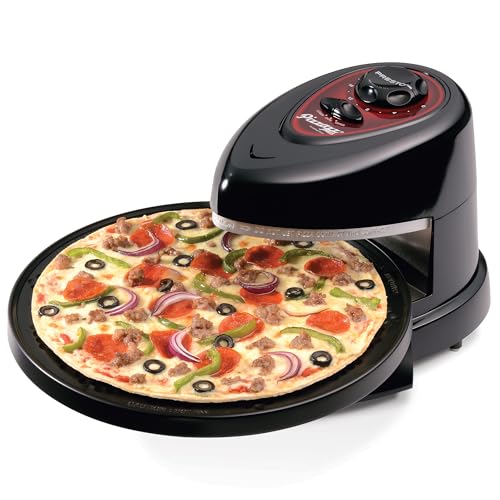
- Best overall: Presto 03430 Pizzazz Plus Rotating Oven — Check on Amazon
- Granitestone Piezano 12-Inch Crispy Crust Pizza Oven — Check on Amazon
- BakerStone Pizza Oven Box, Original Series — covered below as a prose-only pick; check price on Amazon
- Courant Pizza Maker 12-Inch Pizza Cooker and Calzone Maker CPM1240R — Check on Amazon
See 2 more options
- Betty Crocker Pizza Maker Plus BC-2958CR — Check on Amazon
- Giantex 4-in-1 Outdoor Pizza Oven (GT-NP10734) — covered below as a prose-only pick; check price on Amazon
Read the full guide ↓
Disclosure: As an Amazon Associate, dailyhomedecorating.com earns from qualifying purchases. Links to Amazon on this page are affiliate links; they cost you nothing extra. Listing details such as price and availability change often, so check the current Amazon listing before you buy.
Finding the best outdoor pizza oven under $100 starts with an honest admission that this guide will repeat until it sinks in: at this budget, there is no miniature version of the expensive dedicated ovens that dominate pizza advertising. What $100 actually buys is a choice between four different compromises, each of them legitimate, each of them wrong for somebody. You can have an electric countertop oven with a real stone and the highest indoor heat in the class. You can have a rotating electric oven that never needs preheating and forgives almost any pizza you put on it. You can have a hinged pizza maker that costs the least, stores in a cupboard, and doubles as a sandwich and quesadilla grill. Or you can leave the kitchen entirely, with a compact wood-fired outdoor oven that doubles as a fire pit, or a grill-top box that borrows the burners of a gas grill you already own and reaches temperatures nothing else here can touch, at a price that currently sits just over the line this guide is sworn to respect.
That spread is not a failure of the budget. It is the budget working exactly as budgets should, forcing the real question into the open: what kind of pizza do you actually make, where do you actually cook it, and what will you tolerate tending, cleaning, and storing between pizza nights? A household that bakes two frozen pizzas a week needs a different machine from a household that stretches fresh dough on Saturdays, and both need something different from the camper who wants smoke and a fire to sit around afterwards. This guide is organized to answer that question once, properly. The quick picks table names a winner for each buyer type, the detailed reviews explain what each cooker really is beneath its marketing name, and the comparison table puts fuel, size, and heat side by side so the trade-offs are visible rather than buried.
One promise before we start. Every purchase link in this guide was verified against a real listing with a price sighting inside the budget, and the two picks we could not verify that way, including the best pure crust in the whole roundup, are presented without links and with the reason stated plainly. We would rather sell you nothing than sell you the wrong thing confidently. Read the safety section before your first cook whichever pick you choose, because everything here gets hot enough to demand respect, and then enjoy the fact that for under $100, pizza night at home is genuinely, repeatably good.
In this guide
Quick Picks
Short on time, or comparing several options at once? Each row below names a buyer type and the product that suits it, with a link to the listing where one is verified for this budget.
| Buyer type | Pick | Why it stands out | Link |
|---|---|---|---|
| Best overall | Presto 03430 Pizzazz Plus Rotating Oven | No preheat, a rotating pan, and separately controlled elements make it the most forgiving all-rounder here | Check on Amazon |
| Best crust | Granitestone Piezano 12-Inch Crispy Crust Pizza Oven | A real ceramic stone and the highest heat of any indoor pick in this budget | Check on Amazon |
| Best grill-top heat, above this budget | BakerStone Pizza Oven Box, Original Series | The best crust in the guide if you own a strong gas grill, but priced above this budget at current listings | Prose-only pick — check price on Amazon |
| Best with timer and temperature control | Courant Pizza Maker 12-Inch Pizza Cooker and Calzone Maker CPM1240R | Clamshell convenience plus the timer and temperature control basic makers lack | Check on Amazon |
| Best budget | Betty Crocker Pizza Maker Plus BC-2958CR | The lowest-cost route to a dedicated pizza appliance, and a useful indoor grill besides | Check on Amazon |
| Best real outdoor fire | Giantex 4-in-1 Outdoor Pizza Oven (GT-NP10734) | Real wood fire and a fire pit and grill in one unit, for cooks who want to be outdoors | Prose-only pick — check price on Amazon |
How These Picks Were Chosen
The first filter was the budget itself, applied the way a buyer experiences it: a pick belongs in a best outdoor pizza oven under $100 guide only if a real buyer could plausibly pay under $100 for it, which in practice means a verified listing with a price sighting inside the tier. That single rule reshaped the list. It kept the strong electric ovens and makers that genuinely live at this price, and it pushed the most famous grill-top box in the category into prose-only honesty, because its current pricing sits above the ceiling no matter how good its crust is.
The second filter was honesty about type. Sellers use the words pizza oven for at least four different machines at this price: enclosed ovens with a stone, open rotating ovens, hinged clamshell makers, and outdoor fire boxes, plus attachments that are not ovens at all. We kept one strong example of each honest type rather than six near-identical listings, and every review below names its type in the first paragraph so you can eliminate whole categories quickly. The third filter was verifiability. A pick only carries a purchase link in this guide when we could verify both its Amazon listing identifier and a price sighting inside the budget from a web source; where we could not, the pick is presented prose-only with the reason stated in its review, because a missing link is a small inconvenience and a wrong link is a real harm.
The fourth filter was safety and recall screening. We checked US Consumer Product Safety Commission recall coverage for pizza ovens and related countertop ovens before finalizing this list, and no pick in this guide is subject to a CPSC recall we could find. Products under recall were excluded entirely and are not named in the body of this guide. We also read the fine print that roundups usually skip: burner-count requirements on grill-top boxes, state sales restrictions on one nonstick model, ceiling temperatures stated by makers rather than repeated from other roundups, and included accessories, because a cheap oven that needs a peel, a stone, and a cover bought separately is not as cheap as its headline suggests.
Finally, we weighted the things owners feel every week over the things that photograph well. Preheat time, cleanup, storage footprint, cord length and outlet demands on the electrics, fuel cost and fire-tending on the outdoor pick, and the simple question of whether the appliance earns its space between pizza nights all counted for more than a headline temperature. Where a maker’s claim and independent coverage disagree, for example on sustained stone temperature, the review says so and tells you which number to plan around. Prices at this tier move constantly with coupons and seasonal sales, which is why this guide prints no product prices at all: the budget in the title is the filter, and the listing is the price check.
Detailed Reviews
Six picks, four honest types of cooker, one firm budget. Each review follows the same pattern: who it suits, what it actually is, its genuine strengths, its honest limitation, and a plain choose-or-skip verdict, so you can compare like with like.
Presto 03430 Pizzazz Plus Rotating Oven
Who it suits. The Presto Pizzazz Plus suits the widest range of buyers in this guide: households that mostly bake frozen, take-and-bake, and simple homemade pizzas up to 12 inches, and that value a forgiving, no-preheat routine over pizzeria theatre. It is the pick for weeknight pizza, game-day snacks, dorm-adjacent and first-apartment kitchens, and anyone who has burned the far side of a pizza in a conventional oven and would like the machine to handle the turning instead.
What it is. This is an open, rotating countertop oven rather than an enclosed box. A removable nonstick pan about 13 inches across turns continuously while separately controlled top and bottom heating elements bake from both sides. You choose top, bottom, or both elements, set the timer, and the elements switch off when the timer ends. There is no preheating step, which is why owners reach for it for frozen pizza, pizza rolls, wings, quesadillas, and other snacks as much as for fresh dough. At 1,235 watts it runs on an ordinary kitchen outlet, and the whole unit is light enough to move on and off the counter without a plan.
Pros. The rotating pan genuinely evens out baking, so the side facing the back of a normal oven does not scorch while the front stays pale. Separate element control is a real cooking tool: bottom-only heat crisps a soggy crust without darkening cheese, and top-only heat finishes toppings on a crust that is already done. No preheat means a frozen pizza goes from freezer to eating faster than a conventional oven can manage, using less energy than heating a full-size oven cavity for one pie. The removable pan washes easily, and the open design stores in less vertical space than a deep countertop oven.
Honest limitation. This is not a high-heat pizza oven and does not pretend to be one in its own documentation. It bakes at moderate countertop-oven temperatures, so a wet, fresh Neapolitan-style dough will come out cooked and pleasant rather than blistered and leopard-spotted, and cook times for fresh dough run noticeably longer than the two-minute bakes of a dedicated outdoor oven. The open design also means the top of the unit and the pan are exposed hot surfaces, so it needs clear counter space around it and the same respect you would give a hot skillet.
Choose it if most of your pizzas start frozen or par-baked, you want the simplest routine in this guide, and you would rather have even, predictable results than maximum heat. Skip it if your goal is fresh-dough, high-heat crust with charred edges, because no setting on this machine will get you there; look at the stone-based electric pick or save toward a hotter outdoor oven instead.
For the general buyer, the Pizzazz Plus is the recommendation we would hand to a friend with no further questions asked, because it fails the fewest households. It asks for no preheat, no stone to season, no fire to tend, and no grill to own, and it turns the most common pizza in America, the frozen supermarket pie, into a reliably even bake. In a general guide, that breadth is the whole point.
Check on Amazon — see the current listing for price, availability and delivery.
Granitestone Piezano 12-Inch Crispy Crust Pizza Oven
Who it suits. The Piezano suits fresh-dough bakers who cook indoors: people who stretch their own dough, care about a crisp, stone-baked base and browned edges, and want the closest thing to dedicated-oven heat that this budget allows without going outside. It is also the natural step up for a Pizzazz-style owner who likes countertop pizza but wants a real stone and real top heat.
What it is. The Piezano is a compact enclosed electric oven built around a 12-inch ceramic pizza stone, with heating elements above and below and separate controls so you can balance crust heat against topping heat. The maker rates it to heats up to 800 degrees F, and independent hands-on coverage generally finds sustained stone temperatures below that ceiling but well above what a clamshell maker or a rotating oven reaches, which is exactly the gap that matters for fresh dough. A viewing window and an interior light let you watch the bake without opening the lid and dumping heat, and the maker includes peels sized to the stone for launching and retrieving pizzas.
Pros. The stone is the headline: it stores heat, wicks moisture from the underside of the dough, and produces the crisp, spotted base that nonstick plates cannot. Separate top and bottom controls let you correct a bake in progress, adding top heat for pale cheese or cutting it when edges run ahead of the center. Cook times on fresh pizza are a matter of minutes once the stone is properly preheated, so two or three personal pizzas in a row are realistic on a weeknight. For an enclosed high-heat oven it is compact, and it lives indoors, so weather, fuel, and patio rules never enter the decision.
Honest limitation. The space between the stone and the upper element is tight, roughly two inches, so a tall, heavily topped pizza can touch the element, and grease or cheese that spills onto a very hot stone will smoke and can flare briefly. This oven rewards a lighter hand with toppings, a well-floured peel, and staying nearby during the short bake rather than wandering off. It also sits at the very top of this budget when it is in the budget at all, so check price on Amazon before planning around it, and expect the stone to need a full, patient preheat to deliver its best crust.
Choose it if fresh dough and crust quality are the point of the purchase and you cook indoors. Skip it if you mostly bake thick, heavily loaded pizzas, or if you want an outdoor cooker for the patio, because this is a countertop appliance and belongs in the kitchen.
For the general buyer, treat the Piezano as the enthusiast’s fork in the road. If the phrase fresh dough describes your weekends, this is your pick and the rest of the list is context. If it does not, its tight chamber and patient preheat are overhead you will pay for heat you never use, and the simpler machines below will make you happier.
Check on Amazon — see the current listing for price, availability and delivery.
BakerStone Pizza Oven Box, Original Series
Who it suits. The BakerStone Pizza Oven Box suits one specific buyer extremely well: someone who already owns a capable gas grill, ideally with three or more burners, and wants genuine pizza-oven heat without buying, storing, or fueling a second appliance. If that is you, read this section carefully, because it contains both the best crust in this guide and the reason this pick carries no link.
What it is. The BakerStone is not an oven. It is a porcelain-enameled steel box with a five-sided stone baking chamber that sits directly on your grill grates and converts the grill’s burners into a pizza oven, using a combination of conductive heat from the stone floor, convection, and radiant heat reflected down onto the toppings. The interior chamber is roughly fifteen by thirteen and three-quarter inches, the box weighs around twenty-seven pounds, and the maker rates the setup at temperatures in the 600 to 800 degree F range on a suitable grill, with pizzas baking in a few minutes once the stone is fully heated after a preheat of about twenty minutes.
Pros. On crust quality alone, this is the strongest cooking system in the guide: a thick stone at real pizza temperatures, top heat reflected onto the cheese, and results that independent testers have praised since the product first appeared. There is no new fuel, no new burner to maintain, and nothing to store beyond the box itself, which lifts off the grates when you are done and returns your grill to normal duty. For a household that grills weekly anyway, the cost per pizza night is the lowest of any high-heat route, because the expensive part, the heat source, is already sitting on your patio.
Honest limitation. Price is the problem, and we will not pretend otherwise. Current maker and retailer pricing for the BakerStone range sits above this guide’s $100 ceiling, with the entry Basics series and the Original series both listed above it in the sources we checked, so we present this pick prose-only, with no purchase link, rather than dress an over-budget product up as a budget pick. It also demands the right grill: a small two-burner or a tired grill that cannot hold high heat will not deliver the rated temperatures, the chamber runs hotter toward the back so turning the pizza during the short bake matters, and the box is a heavy, very hot object to move and store after cooking.
Choose it if you find it on a genuine sale that brings it within your budget, or if you are willing to stretch past $100 for the best grill-based crust, having confirmed your grill is large and strong enough. Skip it if your budget is firm at $100, you do not own a gas grill, or you rent and cannot rely on grill access, because within a firm budget the electric stone pick delivers most of the fresh-dough satisfaction with none of the prerequisites.
For the general buyer, the BakerStone is the guide’s standing lesson in reading roundups critically, including this one. It appears here because excluding the category’s benchmark would be its own kind of dishonesty, but it appears without a link and with its price problem stated in its first lines, because a best-under guide that quietly includes over-budget products is advertising, not advice.
Prose-only pick: no verified in-budget Amazon link for this guide — check price on Amazon by product name before buying.
Courant Pizza Maker 12-Inch Pizza Cooker and Calzone Maker CPM1240R
Who it suits. The Courant Pizza Maker suits cooks who like the clamshell format but want more control than a simple on-and-hot appliance gives: households that bake both pizza and calzones, reheat slices properly, and appreciate a timer that minds the cook while they do something else. It is a sensible middle step between the most basic maker and a stone oven.
What it is. Like the other clamshell in this guide, the Courant cooks between two heated nonstick plates that fit a 12-inch pizza, at 1,440 watts. Where it earns its separate place is control: this red CPM1240R version adds adjustable temperature control and a timer, so you can run a gentler bake for a stuffed calzone or a reheated slice and a hotter one for a thin frozen pizza, instead of accepting one fixed heat for everything. A cool-touch handle addresses the most obvious clamshell annoyance, reaching over a hot lid to open it, and the maker also positions the appliance as an indoor grill and griddle for eggs, pancakes, and sandwiches.
Pros. Temperature control and a timer are exactly the two features basic pizza makers lack, and they show up in the results: fewer scorched bottoms on sugary frozen crusts, better reheats, and calzones cooked through without cremated seams. The plates are nonstick and wipe clean, the footprint is cupboard-friendly, and the price positioning is firmly in the lower half of this budget based on the retail sightings we recorded, leaving room in a $100 plan for a peel, a cutter, and ingredients. For a small household that cooks pizza weekly rather than daily, that balance of control and cost is hard to argue with.
Honest limitation. Control does not change physics: this is still a contact-plate cooker with no stone and no high-heat ceiling, so fresh artisan dough will bake through and taste fine without developing a blistered, airy rim. The temperature range is a pizza-maker range, suited to frozen and par-baked products and flatbreads, not a route to pizzeria temperatures. As with any clamshell, thick toppings and very thick crusts are constrained by the lid, and the listing’s temperature figures are stated in the maker’s own terms, so judge it by the foods it is built for rather than by oven numbers.
Choose it if you want clamshell convenience with a timer and a temperature dial, especially for mixed use across pizza, calzones, and reheating. Skip it if you want stone-baked fresh dough, because the Piezano’s stone is the better spend, or if you want the absolute lowest price, because the simpler Betty Crocker usually undercuts it.
For the general buyer, the Courant is the quiet value pick: less famous than the other clamshell, better controlled, and priced in the lower half of the budget in the sightings we recorded. Households that reheat pizza often will feel its timer and temperature dial working for them every single week.
Check on Amazon — see the current listing for price, availability and delivery.
Betty Crocker Pizza Maker Plus BC-2958CR
Who it suits. The Betty Crocker Pizza Maker Plus suits beginners, small households, students, and snack-driven cooks who want pizza plus a small indoor grill in one inexpensive appliance. If your realistic menu is frozen personal pizzas, tortillas, quesadillas, panini, pancakes, and the occasional giant cookie, this little clamshell covers more of your actual week than a specialized oven would.
What it is. This is a hinged clamshell cooker, not an enclosed oven. Two nonstick plates, top and bottom, close over a pizza up to 12 inches and cook it by direct contact and trapped heat, drawing 1,440 watts. A self-regulating thermostat cycles the heat, indicator lights show power and readiness, and the cord wraps for storage. At about five and a half pounds and roughly the footprint of a large dinner plate squared off, it stores in a cupboard or on a shelf, which is a genuine advantage in a small kitchen where a countertop oven would live permanently on the counter whether you wanted it there or not.
Pros. It is the simplest cooker in this guide to learn: open, place, close, wait, eat. Contact heat from both sides cooks thin pizzas and flatbreads evenly without any turning, and the same plates handle quesadillas and sandwiches that an open rotating oven manages awkwardly. Cleanup is a wipe of two nonstick surfaces once they cool. It is also the easiest pick in this guide on the budget, regularly the lowest-priced route to a dedicated pizza appliance from a long-established kitchen brand, which makes it a low-regret first purchase for a household still deciding how much pizza it really makes.
Honest limitation. There is no stone and no high heat here, and the shallow plates suit thin and regular crusts rather than thick, risen, deep-dish dough, which can press against the top plate and cook unevenly. The listing names no precise temperature control, so you cook by time and by checking, not by dialing a number. One further quirk to check before ordering: the maker notes this model is not sold in some US states under rules covering nonstick coatings, so confirm your delivery state on the listing if that might apply to you.
Choose it if you want the cheapest, smallest, most versatile snack-and-pizza cooker in the guide. Skip it if crust craft is your hobby, because contact plates will never give you a stone-baked base, or if you regularly cook thick pan pizzas that need vertical room.
For the general buyer, the Betty Crocker is the hedge against uncertainty. If you are not sure pizza night will stick, spend the least, store it in a cupboard, and let it grill sandwiches in the meantime. Plenty of households discover that this modest appliance, used weekly, beats a serious oven used monthly.
Check on Amazon — see the current listing for price, availability and delivery.
Giantex 4-in-1 Outdoor Pizza Oven (GT-NP10734)
Who it suits. The Giantex 4-in-1 suits backyard and camping cooks who specifically want real fire: wood smoke, a visible flame, and a cooker that keeps earning its space on nights when nobody is making pizza. If you already enjoy tending a small fire and your household grills and gathers outdoors often, this is the only pick in the guide that behaves like a small outdoor hearth as well as an oven.
What it is. This is a standalone, two-layer outdoor unit in iron and stainless steel. The upper layer is a pizza oven holding a 12-inch stone; the lower layer is the firebox, and the assembly separates so the base also works as a fire pit or a grill with the included grid. It burns wood, wood pellets, or lump charcoal, and the box includes a pizza peel or shovel, a grill grid, an ash tray, and a waterproof cover. At roughly twenty-three and a half pounds it is genuinely portable for camping and tailgating in a way that a wheeled cart oven is not.
Pros. It is a true outdoor oven at a budget where most rivals are kitchen appliances, and the multi-use design is honest value: pizza oven on Friday, grill on Saturday, fire pit after dinner, all from one compact unit that stores under its own cover. Solid fuels are cheap, available everywhere, and need no outlet or gas bottle, which suits campsites and garden corners far from the house. The stone gives fresh dough a proper base, and cooking over real fire produces smoke flavor that no electric element can imitate.
Honest limitation. The maker rates this oven to 572 degrees F, which is hot enough for good pizza with a longer bake, but it is well short of the temperatures dedicated outdoor ovens advertise, so expect a crisper, more thoroughly baked crust rather than a ninety-second Neapolitan. Fire management is manual: heat rises and falls with your fuel, there is no dial, and your first few bakes are practice. It is also unambiguously an outdoor-only, open-flame appliance, which rules it out for balconies and any space where fires are restricted, and we list it prose-only in this guide because we verified its budget pricing through retailer coverage but could not verify a current US Amazon listing identifier for it, so search the model number and check price on Amazon or with the retailer before buying.
Choose it if real fire, portability, and multi-use outdoor cooking matter more to you than maximum temperature. Skip it if you need predictable, dial-set heat, cook on a balcony, or want a cooker you can use indoors in winter.
For the general buyer, the Giantex is the lifestyle pick, bought as much for the evenings around it as for the pizza on it. Judge it as outdoor equipment rather than as a kitchen appliance and its compromises, the modest ceiling temperature and the manual fire, read as character instead of flaws.
Prose-only pick: no verified in-budget Amazon link for this guide — check price on Amazon by product name before buying.
Comparison Table
The table below puts the six picks side by side on the facts that decide most purchases at this budget: what kind of cooker it really is, what fuels it, what size of pizza it takes, and how it makes its heat. Read the type column first. At under $100 the single biggest source of disappointment is buying one kind of cooker while expecting another.
| Pick | Type | Fuel / power | Pizza size | Heat |
|---|---|---|---|---|
| Presto 03430 Pizzazz Plus Rotating Oven | Electric rotating countertop oven | Electric, 1,235 watts | 12-inch pizzas (7 to 12 inches) | Separately controlled top and bottom elements; no preheat needed |
| Granitestone Piezano 12-Inch Crispy Crust Pizza Oven | Electric countertop oven with ceramic stone | Electric | 12-inch pizzas | Heats up to 800 degrees F per the maker, with top and bottom controls |
| BakerStone Pizza Oven Box, Original Series | Grill-top oven box attachment (not a standalone oven) | Uses your gas grill burners | About 12-inch pizzas on a rectangular stone chamber | Maker rates the chamber at roughly 600 to 800 degrees F on a suitable grill |
| Courant Pizza Maker 12-Inch Pizza Cooker and Calzone Maker CPM1240R | Electric clamshell pizza maker and indoor grill | Electric, 1,440 watts | 12-inch pizzas and calzones | Adjustable temperature control and timer, nonstick plates |
| Betty Crocker Pizza Maker Plus BC-2958CR | Electric clamshell pizza maker and indoor grill | Electric, 1,440 watts | 12-inch pizzas | Heated nonstick top and bottom plates, self-regulating thermostat |
| Giantex 4-in-1 Outdoor Pizza Oven (GT-NP10734) | Standalone outdoor oven, fire pit and grill in one | Wood, wood pellets or lump charcoal | 12-inch stone | Rated to 572 degrees F per the maker |
Two honest patterns stand out. First, every electric pick here tops out at 12 inches, so this budget is a personal-pizza and small-family budget, not a party-size budget. Second, the two outdoor picks ask more of you: one needs a live fire managed by hand, and the other needs a gas grill you already own. Neither is a flaw, but both belong in the decision before money changes hands.
How to Choose the Best Outdoor Pizza Oven Under $100 for Your Home
Start with type, not with temperature. Decide whether you are buying an enclosed stone oven, a rotating oven, a clamshell maker, a fire oven, or a grill attachment, because that decision determines your crust, your routine, and your storage problem all at once. Shoppers who start from a headline temperature end up comparing numbers across machines that cook in fundamentally different ways, and then feel cheated by a purchase that did exactly what its type always does. Write down the pizza you make most often, frozen, take-and-bake, fresh dough, or reheated slices, and let that single answer eliminate at least half this list before you read another word.
Match the cooker to the space you truly have. Measure the counter, the cupboard, or the patio corner before ordering, and include working room, not just footprint: an enclosed oven needs clearance for heat and steam, a clamshell needs room to open, a rotating oven needs a landing zone for its hot pan, and any fire cooker needs the three-foot clear zone described in the safety section. A cooker that fits only by displacing something you use daily will quietly stop being used, which is the most expensive outcome of all at any budget.
Count the whole cost. At this tier the sticker is only part of the spend. Check what is in the box: a stone, a peel, and a cover included are worth real money, while a bargain oven that needs all three bought separately can cost more than the pick above it. Add fuel honestly too. Electric picks cost pennies per bake and need nothing else; the fire oven needs a steady supply of wood, pellets, or charcoal; the grill-top box needs a grill, propane, and a grill in good enough health to hold high heat.
Be realistic about heat. Higher heat buys faster bakes and more blistered fresh-dough crusts, and it costs money, preheat time, and attention. If your pizzas are frozen or par-baked, moderate heat applied evenly beats high heat applied unevenly every time, which is why the rotating oven outsells hotter rivals. If your pizzas are fresh and lean, heat and a stone are the product, and you should buy the hottest honest option your space allows rather than a versatile maker you will outgrow by the third Saturday.
Plan the second year, not just the first pizza. Ask how the cooker cleans, where it lives in winter, whether its stone or plates can be replaced, and whether the maker sells parts and answers the phone. A budget appliance with a replaceable stone and a real warranty routinely outlasts a flashier one without either, and at under $100, longevity is where the value in this entire category is won or lost.
Fire and Heat Safety at This Budget
Every cooker in this guide gets hot enough to burn skin, scorch a deck board, or ignite nearby material, and the budget end of the market gives you fewer automatic protections, not more. Work through this section before the first cook, whichever pick you choose. Place any outdoor oven or grill-top box only on a stable, level, heat-resistant surface such as concrete, stone pavers, or a purpose-made grill mat rated for high heat. Never set a hot oven box, fire oven, or electric pizza maker directly on a wooden or composite deck, a plastic table, dry grass, or leaf litter, and never use a fuel-burning oven on a covered porch, in a garage, or indoors, where carbon monoxide and smoke build up with no safe way out.
Keep clear space on every side. As a working rule, keep at least three feet between a hot cooker and anything that can burn: siding, railings, fences, outdoor cushions, umbrellas, paper goods, and the fuel pile itself. Keep children and pets out of that zone while the cooker is hot and while it cools, which takes far longer than most people expect; a pizza stone and a steel box hold burn-level heat long after the cooking ends. Use long-handled peels and heat-resistant gloves for launching and turning, keep a clear path between the cooker and the table so you are never carrying a hot stone or a finished pizza across a crowded patio, and never leave a live fire or a heating element unattended.
For the electric picks, the rules are simpler but just as firm. Use them on a dry, heat-resistant counter with the cord kept clear of the hot body of the appliance, never under a low cabinet that traps heat and steam, and never outdoors in rain or where a cord crosses wet ground. Let stones cool completely before moving or washing them, because a sudden splash of cold water on a hot stone can crack it and throw steam. Keep a working fire extinguisher rated for kitchen and grease fires within reach of any outdoor cooking setup, know where it is before you light anything, and if a fire ever looks like more than a brief flare-up inside the cooker, close the grill lid or the oven door if you can do it without reaching over flame, move people back, and call for help rather than fighting it.
Common Mistakes When Buying a Pizza Oven Under $100
Believing the category name. The most common mistake is assuming that everything called a pizza oven cooks like one. A clamshell maker, a rotating oven, and a stone oven produce three different pizzas from the same dough, and none of them is broken. Read the type line in each review, look at how the heat reaches the food, and buy the mechanism, not the label.
Chasing the biggest temperature number. A ceiling temperature is a claim about the hottest point a cooker can reach, not a promise about your crust. Sustained stone temperature, preheat discipline, and dough hydration decide real results, and several cookers in this guide cook better pizza at moderate temperatures than a poorly managed hotter box. Treat any single number, including the ones quoted here from makers, as the start of a question rather than the end of one.
Forgetting the prerequisites. Grill-top boxes need a suitable grill. Fire ovens need legal, safe outdoor space and fuel. Electric ovens need an outlet, counter clearance, and a circuit that is not already running the microwave and the kettle. Every disappointed review in this category traces back to a prerequisite discovered after delivery, so walk your own space with the review open before you order.
Loading a small oven like a large one. Twelve-inch cookers punish heavy toppings: moisture pools, centers stay gummy, cheese slides, and in a tight high-heat chamber, toppings can reach the element. Use less sauce, drier cheese, and pre-cooked wet vegetables, and make two lighter pizzas instead of one overloaded one. The second pizza is not a compromise; in this format it is usually the better meal.
Skipping the cool-down. Stones crack from thermal shock, decks scorch from ovens stored hot, and burns happen in the twenty minutes after cooking when everyone relaxes. Let everything cool where it sits, keep the clear zone until surfaces are safe to touch, and never splash water on a hot stone to speed things up. Patience at the end of the cook is part of the recipe.
Final Recommendation
For most households, buy the Presto Pizzazz Plus. It is the most forgiving, most versatile, and most honestly priced route to weekly pizza in this guide, and its rotating, dual-element design solves the problem most home bakers actually have, which is uneven baking, rather than the problem advertising says they have. If you bake fresh dough and care about crust above all else, buy the Granitestone Piezano instead and accept its tighter chamber and top-of-budget positioning as the price of a real stone indoors. If money is tightest or space is smallest, the Betty Crocker and Courant makers will serve you well within their honest limits, and if your heart is outdoors, the Giantex fire oven and the over-budget BakerStone box mark the two ends of that road, one affordable and manual, one superb and currently beyond this guide’s ceiling. Whichever you choose, choose by type, verify the current listing, and respect the safety section, and under $100 will feel like plenty.
FAQ
Can you really buy a good outdoor pizza oven for under $100?
You can buy a good pizza cooker under $100, with the honest caveat that the true standalone outdoor ovens at this price are compact solid-fuel models with moderate temperature ceilings, while most of the budget goes to electric countertop ovens and makers. Dedicated gas outdoor ovens start well above this budget in the sources we checked, so decide whether outdoor cooking itself, or simply great home pizza, is your real goal.
What is the difference between a pizza oven and a pizza maker?
An oven surrounds the pizza with hot air and radiant heat, usually over a stone, and can reach high temperatures for fresh dough. A maker cooks between two heated plates by contact, at moderate temperatures, and suits frozen pizza, flatbreads, and snacks. Both are useful; they are different tools that share a name.
How hot does a pizza oven need to be?
Frozen and par-baked pizzas bake well at ordinary oven temperatures applied evenly. Fresh Neapolitan-style dough wants the highest heat you can get, ideally on a thoroughly preheated stone. In this guide, plan around sustained cooking temperature and preheat time rather than a maker’s ceiling claim.
Can I use a grill-top pizza oven box on any grill?
No. Grill-top boxes need a grill large enough to hold the box and strong enough to hold high heat, which in practice usually means a gas grill with three or more burners in good condition. Check the maker’s fit guidance against your exact grill before buying, and always run it with the grill set up as the instructions direct.
Are electric pizza ovens safe to use on a balcony?
Electric appliances avoid the open-flame and fuel rules that restrict many balconies, but they are still hot appliances that need a dry, stable, heat-resistant surface, clearance from combustibles, and protection from rain. Your building’s own rules govern what you may use, so check your lease and house rules first; this guide never advises using any cooker where your building prohibits it.
What else should I budget for besides the oven?
Depending on the pick: a peel if one is not included, a cutter, a storage cover for outdoor models, fuel for fire and grill models, and basic ingredients. Several picks here include a stone and peel in the box, which is worth real money in a $100 plan, so compare box contents, not just appliance prices.
Related Guides
- Best Outdoor Pizza Oven For Apartments Under $100 — our apartment-focused edition of this guide, which works through balcony rules and indoor alternatives in detail
- Best Outdoor Pizza Oven For Small Patios Under $100 — the small-patio edition, for tight footprints and storage-first buying
- Best Outdoor Pizza Oven Under $75 — the under-$75 guide, if you want to trim the budget further and accept a maker-first shortlist
- Best Outdoor Pizza Oven Under $200 — the under-$200 guide, where dedicated outdoor ovens begin to appear
- Best Adirondack Chair Under $100 — our guide to the best adirondack chair under $100, for seating that matches the pizza night setup


