Where to buy
Check the latest price, availability and delivery on Amazon. Orders are placed on Amazon. We may earn a commission from qualifying purchases.
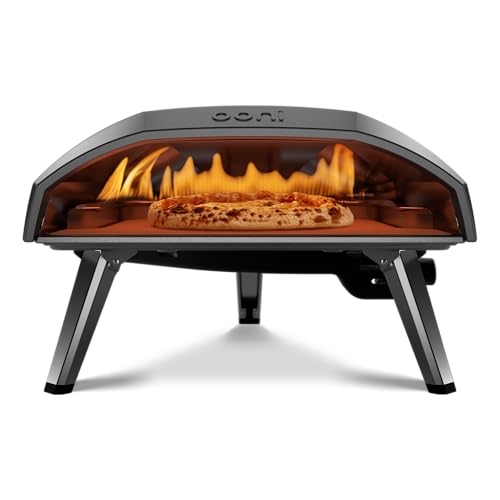
- Best overall for backyards: Ooni Koda 16 Gas Pizza Oven — Check on Amazon
- Best build and insulation: Gozney Roccbox Outdoor Pizza Oven — Check on Amazon
- Best wood-fired: Ooni Karu 2 Multi-Fuel Pizza Oven — Check on Amazon
- Easiest first gas oven: Solo Stove Pi Prime Pizza Oven — Check on Amazon
- Best for covered patios: Ooni Volt 2 Electric Pizza Oven — Check on Amazon
- Best value electric: Ninja Artisan Outdoor Pizza Oven MO201 — Check on Amazon
Read the full guide ↓
Disclosure: As an Amazon Associate, dailyhomedecorating.com earns from qualifying purchases. Links to Amazon on this page are affiliate links; they cost you nothing extra. Listing details such as price and availability change often, so check the current Amazon listing before you buy.
A backyard changes the pizza oven question completely. There is room for a proper station, a cart that lives outside all season, a wood pile or a propane tank stored sensibly, and guests who expect to be fed in waves — so the best outdoor pizza oven for backyards under $700 is judged on throughput, recovery and permanence as much as on any single pizza. In a guide to the best outdoor pizza oven for backyards under $700, the winning ovens are the ones that can anchor an outdoor cooking corner for years: big enough for family-size pies or fast enough at turning out personal ones, built to live under a cover between weekends, and honest about the setup they need. Every pick below earned its place against backyard criteria first, with the apartment and small-patio compromises left to their own guides.
The backyard is also where fuel choice becomes a lifestyle choice rather than a constraint. Gas — the Ooni Koda 16 and Solo Stove Pi Prime — turns pizza into infrastructure: always ready, always repeatable, the oven you fire while the grill rests. Wood and charcoal — the Ooni Karu 2, and the Gozney Roccbox with its optional wood burner — turn pizza into an event, with a fire to build, a flame to watch and a flavor no burner fully imitates. The two electrics, the Ooni Volt 2 and Ninja Artisan, earn backyard places too: on covered patios, beside pools where propane storage feels unwelcome, in households with small children orbiting the cooking zone, and as second ovens that keep a party moving when the main oven is committed. Readers comparing the whole tier should start with our general roundup of the Best Outdoor Pizza Oven Under $700; this guide re-ranks the same field for space, permanence and hosting.
Backyard ownership has a long tail that showroom shopping ignores. The oven will sit through rain, pollen, frost and the occasional storm that rearranges the garden; it will be moved for mowing, parties and winter; its stone will absorb a season of flour and cheese; its burner will meet spiders, and its cover will be tested by February. So the reviews below talk about storage, covers, carts and cleaning as first-class features, and the how-to-choose section treats the station — a level, non-combustible, heat-resistant base with working room and safe clearance from fences, siding and overhangs — as part of the purchase. A backyard also raises the safety stakes in one specific way: more space invites more people, including children and dogs, closer to a 950°F appliance. The safety section is written for that reality. If you are building the full outdoor room, our guides to the Best Fire Pit For Backyards Under $700 and the Best Adirondack Chair For Backyards Under $700 complete the picture at the same tier.
In this guide
Quick Picks: Best Outdoor Pizza Oven for Backyards Under $700
| Pick | Best for | Fuel | Size | Backyard strength |
|---|---|---|---|---|
| Ooni Koda 16 | Best overall for backyards | Propane | 16 in | Family size + party throughput |
| Gozney Roccbox | Best build and insulation | Propane (+ opt. wood) | 12 in | Fastest recovery, decade-grade build |
| Ooni Karu 2 | Best wood-fired | Wood / charcoal (+ opt. gas) | 12 in | Real fire flavor, still portable |
| Solo Stove Pi Prime | Easiest first gas oven | Propane | 12 in | Front controls, gentle learning curve |
| Ooni Volt 2 | Best for covered patios | Electric 120V | 12 in | 850°F with no flame near the house |
| Ninja Artisan MO201 | Best value electric | Electric | 12 in | Versatile second oven / starter oven |
Short version: the Koda 16 anchors most backyards, the Roccbox out-builds everything, the Karu 2 owns wood fire, and the electrics cover the patios and households where flame is the wrong tool.
How These Picks Were Chosen
Each oven here had to pass the tier’s verification gate before backyard judging began: an established maker with warranty and parts support; an exactly verified Amazon listing and model identity; a current price sighting at or under the $700 ceiling at research time; specifications confirmable from the maker’s own documentation; and a clean CPSC recall check — we searched recall records for this category before writing, and any recalled grill-and-oven combination was excluded entirely, unnamed and unlinked. Backyard ranking then weighted what a yard actually rewards: cooking capacity and recovery between pizzas, build and insulation quality for outdoor life, how the oven sits in a semi-permanent station, storage and cover options, and total setup cost once the cart, peels, thermometer, cover and fuel are counted. Famous names that failed the tier on price — the discontinued 16-inch multi-fuel flagship and its above-ceiling successor, and the first-generation electric flagship — are handled in prose in the comparison section, and readers whose budgets stretch can follow the Best Outdoor Pizza Oven Under $1500 guide instead of pretending those ovens fit this one.
The 6 Best Outdoor Pizza Ovens for Backyards Under $700, Reviewed
1. Ooni Koda 16 — Best Overall for Backyards
Who it suits: Families and hosts with a patio or deck station who want one oven that handles weeknight dinners and Saturday parties with the same push-button ease.
The Koda 16 is what a backyard is for. Its 16-inch cordierite stone swallows family-size pizzas whole and gives the cook a wide, forgiving stage for launching and turning, while the L-shaped propane burner wraps flame along the back and side so browning evens out instead of concentrating in one scorching lane. At full heat — the 950°F class, per the maker — pizzas finish in about a minute, and the rhythm of a party becomes launch, turn, cut, repeat. There is no chimney to assemble, no fire to build, no ash to manage on Sunday morning; the legs fold if it must travel, but in a backyard it earns a permanent cart, a cover, and a place in the household’s weekly rotation. Paired with a grill, it turns an ordinary patio into a two-station outdoor kitchen where pizzas appetize while mains cook.
Pros:
- 16-inch capacity: family pizzas, fewer batches, calmer hosting.
- L-shaped burner gives the most even browning of any gas pick here.
- Zero fire management — the oven most likely to be used on a Tuesday.
- Folding legs and included hose/regulator; sits happily on a sturdy outdoor cart.
Honest limitation: It is propane-only — no wood flavor path — and it has no built-in thermometer, so an infrared thermometer is a required companion, not an accessory. Its size cuts both ways: it needs a generously sized heat-resistant table and a storage corner to match, and previous-generation status means listings and stock move around, so buy from the verified listing rather than a lookalike.
Choose it if your backyard hosts four-plus people regularly. Skip it if wood fire is the point (Karu 2), or your cooking spot is a small patio (see our small-patios guide).
Check on Amazon — check price on Amazon before you buy.
2. Gozney Roccbox — Best Build and Insulation
Who it suits: Buyers building a long-term outdoor kitchen who cook pizza in runs — pizza nights where eight, ten, twelve pies come off the stone in sequence.
Throughput is a stone-temperature story, and the Roccbox tells it best. Its heavily insulated body and dense cordierite stone hold heat through back-to-back bakes with the shortest recovery pauses in this roundup, while the rolling gas flame browns rims the way restaurant decks do. The silicone SafeTouch jacket keeps the exterior markedly more touch-tolerant than bare steel — welcome in a backyard where guests drift past the station — and the built-in thermometer, retractable legs and included placement peel make the box feel complete in a way rivals do not. An optional wood burner extends it toward the Karu’s territory. This is the oven for the household that has already decided pizza night is permanent and wants equipment, not a starter kit.
Pros:
- Best heat retention and recovery here: party-proof stone temperatures.
- Restaurant-grade build and insulation; cooler-touch jacket around a family space.
- Built-in thermometer and a quality peel in the box.
- Optional wood burner adds a second personality later.
Honest limitation: It cooks 12-inch pizzas only, and at roughly forty-four pounds it is the heavyweight of its class — fine on a backyard cart, less fine if your “backyard” involves stairs. The wood burner is a separate purchase, and buyers who regularly cook 16-inch pies should take the Koda 16’s capacity over the Roccbox’s refinement.
Choose it if you cook in runs and keep gear for years. Skip it if you need 16-inch pies or the lightest oven to move.
Check on Amazon — check price on Amazon; this is the black finish listing.
3. Ooni Karu 2 — Best Wood-Fired
Who it suits: Backyard cooks who want the full wood-fire ritual — building the fire, watching it roll across the oven’s ceiling, feeding guests pizza with genuine fire flavor — without giving up portability.
The Karu 2 (the renamed Karu 12G) burns wood or charcoal in an enlarged fuel tray behind a borosilicate glass door, reaching the 950°F class in roughly a quarter of an hour, with an integrated thermometer that turns fire management from folklore into feedback. In a backyard it offers something the gas ovens cannot: a reason to gather. The fire is lit before guests arrive, the first pizzas are the cook’s warm-up act, and by the third pie the stone, the flame and the cook are in rhythm. At under thirty-four pounds it still folds away to a shed or garage and travels to campsites — a backyard anchor that has not surrendered its freedom. Ooni’s gas burner for the line, sold separately, converts it for nights when the ritual is too much and dinner is the point.
Pros:
- Authentic wood and charcoal flavor with a glass door to cook by eye.
- Integrated thermometer; powder-coated shell shrugs off outdoor life.
- Lightest serious oven here — backyard anchor and travel oven in one.
- Optional gas burner (separate) future-proofs the purchase.
Honest limitation: Fire is a job. You will source and store dry hardwood or charcoal, manage ash once fully cold, and accept stone temperatures that move with your fire craft. Smoke is part of the package too — position the oven so the chimney’s output does not drift straight into seating or a neighbor’s windows, and check any local rules on wood burning before assuming a backyard makes it unconditional.
Choose it if the fire is half the fun. Skip it if you want dinner without duties — the Koda 16 and Pi Prime are the gas answers.
Check on Amazon — check price on Amazon, and price the optional gas burner separately if you plan to add it.
4. Solo Stove Pi Prime — Easiest First Gas Oven
Who it suits: First-time owners — especially households that already run a Solo Stove fire pit — who want a gentle on-ramp to backyard pizza nights.
The Pi Prime’s demi-dome shell and panoramic opening make it the least intimidating oven in the roundup to stand in front of, and its front-mounted temperature dial is a small design decision with outsized backyard value: adjustments happen without reaching over a hot oven while holding a peel and a conversation. It runs on propane into the 950°F class per the maker, cooks 12-inch pizzas on a cordierite stone, and its clean stainless look sits comfortably beside the fire pit many patios already own — pizza first, fire after, one brand’s aesthetic across the evening. For a household testing whether pizza night deserves a permanent station, it is the lowest-friction way to find out.
Pros:
- Front controls and the widest, friendliest opening in the 12-inch gas class.
- Simple propane workflow; minimal learning curve for first-time owners.
- Compact footprint leaves room in the station for prep and landing space.
- Established maker with an easy-to-find accessory range.
Honest limitation: Gas-only, with no wood path, and the demi-dome rewards learning its hotter zone toward the back of the stone — expect the first sessions to teach you your oven. High-volume entertainers cooking for a dozen may find the 12-inch format and recovery rhythm a ceiling the Roccbox or Koda 16 lifts.
Choose it if this is your household’s first pizza oven. Skip it if you already know you want wood fire or 16-inch capacity.
Check on Amazon — check price on Amazon; choose the oven-only listing if you already own peels and tools.
5. Ooni Volt 2 — Best for Covered Patios
Who it suits: Backyard households whose best cooking spot sits under a covered patio, near the house, or poolside — places where an open-flame appliance is unwelcome — and cooks who want pizza in every season.
The Volt 2 brings 850°F to a standard 120V outlet with no flame, no propane and no smoke, which redraws the backyard map: the covered patio corner that gas rules and common sense fence off becomes the pizza station, steps from the kitchen door. Ooni’s adaptive presets hold temperature through consecutive 12-inch bakes — about ninety seconds each at full heat, per the maker — and a dough-proofing mode turns the same box into prep equipment. It is indoor-rated, so its backyard life is a fair-weather, covered one: it comes out to the patio table, cooks, and goes home to the kitchen, which also makes it the only pick that keeps working through winter without anyone standing in the cold.
Pros:
- Flame-free 850°F: legal and sensible under covers and near the house where burners are not.
- Presets make party service repeatable for a non-expert cook.
- Doubles as a winter/indoor oven — the highest annual usage of any pick here.
- Compact footprint for a patio table station.
Honest limitation: It cannot live outdoors and should not cook in open rain; its backyard role is covered and temporary by design. Its 850°F ceiling sits a step below the flame ovens’ class, and it sits at the top of this tier’s budget, leaving less for the station around it.
Choose it if your patio is covered or your household bans flame near the house. Skip it if you want a permanent uncovered outdoor installation — that is gas and steel territory.
Check on Amazon — check price on Amazon; a sale is what brings this tier-ceiling model comfortably in.
6. Ninja Artisan MO201 — Best Value Electric
Who it suits: Backyard households that want a low-cost second oven, a starter oven for teenagers and guests to run, or an electric option for pool decks and covered corners.
The Artisan plugs in, reaches 700°F, and turns out 12-inch pizzas in about three minutes across presets for the styles families actually request, then keeps earning its cart space as a small outdoor oven — baking, broiling, proofing, warming — on nights when pizza is not the plan. In a backyard already anchored by a grill or a flame pizza oven, it plays the perfect second instrument: garlic bread and desserts while the main oven cycles, a safe training oven for younger cooks, a flame-free option when fire restrictions bite in dry weather. As a household’s only pizza oven it is a value pick with a known ceiling, and it leaves most of the $700 tier unspent for the rest of the outdoor room — our Best Outdoor Pizza Oven Under $500 guide shows how far that remainder stretches.
Pros:
- Outdoor-rated electric: no flame near pools, covers or play areas.
- Style presets produce consistent results for non-expert cooks.
- Multi-function versatility beyond pizza night.
- The lowest cost of entry in this roundup by a wide margin.
Honest limitation: The 700°F ceiling caps crust drama and stretches bakes to minutes; as a party’s only oven it will pace the evening. It is a 12-inch appliance with a countertop oven’s soul — hosts feeding a crowd should anchor on the Koda 16 or Roccbox and let the Ninja support.
Choose it if you want electric flexibility at a value price. Skip it if it must be your only oven and Neapolitan crust is the dream.
Check on Amazon — check price on Amazon; the linked listing is the blue finish.
Comparison Table
| Oven | Fuel | Size | Peak heat (maker) | Best backyard role | Watch out for |
|---|---|---|---|---|---|
| Ooni Koda 16 | Propane | 16 in | 950°F class | The anchor oven | No thermometer included; gas only |
| Gozney Roccbox | Propane (+ opt. wood) | 12 in | 950°F class | High-volume pizza nights | Heavy; 12-in ceiling |
| Ooni Karu 2 | Wood / charcoal (+ opt. gas) | 12 in | 950°F class | The event oven | Fire work; gas burner extra |
| Solo Stove Pi Prime | Propane | 12 in | 950°F class | The first oven | Gas only; learn its hot zone |
| Ooni Volt 2 | Electric 120V | 12 in | 850°F | Covered patio / winter oven | Indoor-rated; top of tier |
| Ninja Artisan MO201 | Electric | 12 in | 700°F | Second oven / value pick | Lowest ceiling temperature |
Above the tier, in prose only: Ooni’s discontinued Karu 16 and its successor the Karu 2 Pro, and Gozney’s Dome, are the ovens backyard dreamers ask about most — and all sit above this budget as verified at research time, so none is linked here. They are the natural step-up class covered in our $1500 guide; within $700, the Koda 16 and Roccbox deliver the great majority of their real-world performance.
How to Choose an Outdoor Pizza Oven for Your Backyard
Design the station first. Pick the spot before the oven: level ground or deck, a non-combustible heat-resistant surface or cart rated for the oven’s weight, the manufacturer’s clearances from siding, fences, railings and overhangs, shelter from prevailing wind (wind steals heat and pushes flame), and a working triangle of oven, prep surface and landing board. Gas ovens want open sky rather than low covers; wood ovens want their smoke path thought through; electrics want a weather-protected outlet within honest reach.
Size for your hosting pattern. Households that host in waves should think in pizzas per hour: a 16-inch oven serves slices to a crowd from fewer bakes, while a well-insulated 12-inch oven like the Roccbox serves whole personal pizzas at a relentless pace. Couples and small families get faster preheats and easier storage from the 12-inch class and lose nothing on ordinary nights.
Choose fuel as a household policy. Gas if pizza should behave like the grill — ready when you are. Wood if the fire is part of the hospitality. Electric if the cooking spot is covered, near the house, near the pool, or under seasonal fire restrictions. Many mature backyard setups end with two fuels — a flame anchor plus an electric for covers and winters — and this tier can fund exactly that pairing if you start with the Ninja or Pi Prime price points.
Budget the whole installation. Oven plus cart or table, cover, launch and turning peels, infrared thermometer, fuel (a propane tank and ideally a spare; a dry hardwood or charcoal store), and storage for it all. The honest backyard number is the station’s number, and the picks above were ranked with their boxes’ contents — peel included or not, burner included or not — counted.
Plan for weather and winter. Covers on, stones dry, burners checked for insects at season start, tanks stored upright outdoors and shaded, electrics living indoors. An oven’s fifth summer is decided by its first four winters.
Safety: Fire, Heat and Clearances in the Backyard
A backyard concentrates people, play and a 950°F appliance in one relaxed space, so the discipline has to be designed in, not remembered. Set the oven on a stable, non-combustible, heat-resistant surface — a metal or stone-topped cart, pavers, or a maker-approved barrier over any wooden or composite deck — with the manufacturer’s stated clearances from siding, fences, railings, overhangs and stored clutter on every side, and never run a gas, wood or charcoal oven indoors, in a garage or under a low enclosed structure, because carbon monoxide and heat both collect where air cannot move. Keep a defined cooking zone during parties: children and pets stay out of peel-swing radius, guests with drinks stay off the cook’s working side, and the path between oven and landing board stays clear. Check propane connections with soapy water at the season’s start and at every tank change, keep tanks upright, shaded and outdoors, and close the valve after cooking. Treat the shell, door, chimney and stone as burn hazards during cooking and for a long cool-down after — long gloves, long peels, and a house rule that nobody touches the oven but the cook. Keep a suitable fire extinguisher mounted within reach of the station and know how to use it; keep wood fuel dry, off the ground and away from the oven’s clearance zone; and let ash cool completely in a metal container before disposal. Before buying, check the CPSC recall database for the exact model — this guide excluded recalled products entirely — and re-check when you register the warranty. When the session ends, the oven cools fully before its cover goes on: most backyard oven damage happens in the hour after the last pizza, not during it.
Common Mistakes Backyard Buyers Make
- Placing the oven by the fence for looks. Clearances and wind matter more than the photo. Heat near siding and smoke into the seating area are placement failures, not oven failures.
- Skipping the cart and cover budget. A $700 oven on a wobbly plastic table with no cover is a one-season purchase. The station is part of the product.
- Buying peak temperature instead of recovery. Parties are won between pizzas. Insulation and stone mass — the Roccbox’s whole pitch — decide the tenth pizza, not the first.
- Forgetting fuel logistics. An empty tank at 7 p.m. and a damp wood pile are the two classic backyard buzzkills. Spares and dry storage are cheap insurance.
- Letting the station become a play area. A cooling oven looks harmless. House rules and a defined zone prevent the one bad moment.
- Heating a damp stone fast. After wet storage, warm the oven gently; thermal shock cracks stones that cooking never would.
- Skipping the recall and manual check. Verify the exact model against CPSC records and read its clearance page before the first firing.
Building the Backyard Pizza Station: Layout, Workflow and Seasons
The difference between a backyard with a pizza oven and a backyard pizza station is choreography, and it is built once, on a quiet afternoon, rather than improvised at every party. Lay the station out as a line, not a cluster: landing and prep at one end, the oven in the middle on its heat-resistant stand, finished-pizza boards at the other end, so a hot peel never crosses a cold prep surface and the cook’s movement is a shuffle, not a journey. Put the topping station within one step of the launch point, the wood store or propane tank within safe reach but outside the clearance zone, and seating close enough for conversation, far enough for the cooking-zone rule to feel natural rather than policed. Overhead, think about what the oven breathes into: open sky for gas and wood, a genuinely high and maker-approved cover only where the manual allows it, and nothing — no string lights, no shade sail corner, no tree limb — inside the heat’s rising path.
Workflow is the second build. Restaurants call it mise en place; backyards call it not panicking. Dough balls rest in a covered tray where the cook can reach them without leaving the station; sauce, cheese and toppings sit in small bowls in a rough order of use; flour or semolina for the peel lives in a wide, shallow dish; the thermometer, turning peel and a timer live on hooks or a rail, always in the same place, because a two-hour service runs on muscle memory. Between pizzas, the station resets in seconds — scrape the board, check the stone’s temperature, stretch the next base — and that reset rhythm, more than any burner specification, is what guests experience as professionalism. Solo cooks should stage even more ruthlessly than pairs: everything the next three pizzas need, within arm’s reach, before the first one launches.
Then come the seasons, which is where backyard stations are truly built or quietly lost. Spring is commissioning: uncover, inspect the stone for winter cracks, check gas hoses and connections with soapy water, evict insects from burner ports, and run a gentle first heat before the first real firing — a damp stone brought slowly to temperature survives; a damp stone shocked to full heat may not. Summer is service: keep the cover discipline even in fair weather, because pollen, sprinkler overspray and one surprise storm do more cumulative damage than a winter does. Autumn is the connoisseur’s season — cooler air, better fire weather for the Karu 2, and the last chance to clean, dry and store deliberately. Winter is a decision, not an accident: either the oven winters under its cover with fuel stored properly and electrics brought indoors, or it winters in the garage, in which case the portability you bought in spring pays its second dividend. Households that run this annual cycle own ovens that look and cook in year five the way they did in year one; households that skip it buy the same oven twice.
One last layout note, for the households where the backyard is also the whole family’s living room: build the station at the yard’s social edge, not its center. The cook stays in the conversation, the children keep their territory, the dog keeps its patrol route, and the oven — hot, heavy and faintly industrial — becomes the hearth at the edge of the gathering rather than the obstacle in the middle of it. That placement, chosen once, is the cheapest upgrade in this entire guide.
Fuel Logistics: The Backyard Supply System
Every fuel in this guide is a small supply chain, and backyards that run smoothly treat it as one. Propane first: the professional setup is two tanks in rotation — one on the oven, one full in reserve — stored upright, outdoors, shaded, valves closed, well away from the oven’s clearance zone and any ignition source. Rotation removes the two classic failures (the mid-party empty tank and the corroded forgotten tank) and costs nothing but the second tank. Mark the season’s start with the soapy-water connection check, and the system then runs itself: swap when empty, refill on the next errand run, never store a tank indoors, in a hot shed corner or in a vehicle “just for the weekend.”
Wood and charcoal are a craft supply chain. The Karu 2 wants small, dry hardwood pieces sized to its tray — kiln-dried or well-seasoned wood that lights fast and burns clean — stored off the ground, under cover, close enough to the station for mid-service feeding and far enough to respect the clearance zone. Damp wood is the backyard’s most common self-inflicted wound: it smokes, it sulks, it drags stone temperatures down at exactly the moment guests gather. Charcoal behaves more predictably and stores more forgivingly, at the price of ash volume; either way, the ash routine is part of the system — a metal container with a lid, ash moved only when certainly cold (a full day is the patient standard), and a brush-down of the tray as the session’s closing ritual. Households that build this little infrastructure find the wood oven’s “work” shrinks to minutes; households that improvise it weekly find the gas oven’s dial getting more attractive, which is a fine outcome too — it is what the optional gas burner exists for.
Electricity is the third supply chain, and the easiest to underestimate because it is invisible. The Volt 2 and the Ninja both draw heavily; a backyard circuit that also runs a pump, a heater and the party lights is a breaker waiting for its moment. Know which outdoor outlet belongs to which circuit, route cords where they cannot be tripped over or laid across hot surfaces, keep connections dry and off the ground in wet weather, and unplug and store the electrics indoors after use — their supply chain ends at the wall, which is precisely their charm. Whichever fuel your household standardizes on, the pattern is the same: a reserve, a dry and legal storage place, a five-minute check at the season’s start, and no improvisation at 7 p.m. with guests arriving. Backyard pizza is a performance; logistics is how the performance never notices itself.
After the First Season: What Backyard Cooks Learn
Ask backyard pizza cooks what year two taught them and the answers are remarkably consistent — and none of them is about the oven. The first lesson is dough logistics: the households that cook weekly are the ones whose dough routine became boring, whether that means a standing Friday batch, a freezer of portioned dough balls that thaw into service, or a trusted bakery’s dough bought without guilt. The oven forgives almost everything except dough that was an afterthought. The second lesson is that the stone keeps the score: cooks learn their oven’s hot zone, its recovery habit and its weather moods, and the pizzas improve in a way no upgrade could have delivered in month one. This is why this guide is relaxed about which of the top three flame ovens a backyard chooses — by the second season, the cook is the feature.
The third lesson is social. Backyard pizza ovens reorganize a household’s entertaining around a station and a ritual: neighbors learn the smell, friends learn to bring toppings, teenagers learn to launch. The cooks who thrive are the ones who taught a second person the basics early, because a one-cook station eventually turns hospitality into labor. The fourth lesson is maintenance humility: the spring inspection — stone, hoses, burner ports, cover, connections — takes twenty minutes and is the entire difference between an oven that ages and an oven that fails. And the fifth lesson is the one that sends people back to guides like this one: the second purchase is usually not a better oven but the missing piece of the first one’s system — the cart that ends the wobbling, the spare tank that ends the anxiety, the turning peel that ends the torn pizzas, the second oven that ends the bottleneck. Buy the system in that order and a backyard pizza station matures the way a garden does: a little more itself every year.
Two-Station Backyards: Pairing the Oven With the Grill
Most mature backyard stations end up with two heat sources, and the pairing logic is worth stating because it decides which oven a grill-owning household should buy. The grill owns low-and-slow, searing and volume; the pizza oven owns the highest heat in the yard and the fastest course of the meal. Run together, the evening sequences itself: pizzas and flatbreads as the opening act while the grill comes up to temperature, mains from the grill while the oven holds desserts or keeps sides warm at its gentler end, and — for the Karu 2 households — a fire that transitions from cooking to gathering without missing a beat. The pairing argues for contrast, not duplication: a household with a big gas grill gains most from the oven that adds a new capability — wood fire (Karu 2) for flavor range, or electric (Volt 2, Ninja) for covered and winter cooking — while a household whose grill is charcoal may prefer the pizza oven to be the push-button one (Koda 16, Pi Prime) so that at least one station is always ten minutes from dinner. Think of the yard as a kitchen with two burners of very different character, and the right pizza oven is the one that argues with your grill the least and complements it the most.
A Note on Wind, Weather and the Honest Preheat
Backyards have weather, and weather is the variable spec sheets ignore. Wind is the big one: it strips heat from lightweight ovens, pushes gas flames off their rhythm and stretches every preheat, which is why station placement in the yard’s sheltered corner — out of the prevailing wind but never inside clearances — is a performance decision as much as a comfort one. Cold is the second variable: a stone that takes twenty minutes in July takes noticeably longer in November, and the insulated Roccbox and the indoor-bound Volt 2 shrug off what the lighter ovens feel. Rain ends flame-oven sessions and merely relocates electric ones. None of this is a reason to buy differently; it is a reason to read the stone with a thermometer instead of the clock, and to forgive your oven its seasonal moods. The backyard cooks who last are the ones who learned their oven in all four seasons and stopped expecting July behavior in January.
Final Recommendation
Anchor the backyard with the Ooni Koda 16 if your household is four-plus and pizza is a weekly institution; choose the Gozney Roccbox if you cook in runs and buy for decades; choose the Ooni Karu 2 if the fire is the hospitality. First-timers will be happiest starting on the Pi Prime, covered patios belong to the Volt 2, and the Ninja is the value second oven every busy station eventually wants. Then extend the evenings with the Best Patio Heater Under $700 guide — the cook’s reward for feeding everyone else first.
FAQ
Can a pizza oven stay outside all year?
The flame ovens here can live outdoors under a quality cover in most climates, with stones kept dry and burners checked each season; the Volt 2 is indoor-rated and must live inside, and the Ninja should be stored protected. Harsh-winter households often garage any oven — portability decides how painful that is.
What surface should a backyard pizza oven sit on?
A stable, level, non-combustible, heat-resistant one: a metal or stone-topped cart, a paver pad, or a maker-approved protective barrier over decking. Keep full manufacturer clearances around and above it, and never set a hot oven directly on a wooden or composite surface.
Is 16-inch capacity worth it for a family?
If your family eats a whole large pizza per bake or you host often, yes — fewer cycles, calmer service. If most nights are two personal pizzas, a 12-inch oven preheats faster, stores smaller and loses nothing.
How do I keep a wood oven’s smoke from bothering neighbors?
Burn dry hardwood, position the oven so the chimney’s output drifts away from property lines and open windows, and fire at sociable hours. If smoke diplomacy is a recurring problem, the gas and electric picks remove it entirely.
What maintenance does a backyard oven need?
Brush the stone while warm (never wash a hot stone, and never use soap on it), empty ash only when fully cold, wipe shells down, check gas hoses and connections each season, keep the burner ports clear, and store covered and dry. An infrared thermometer doubles as your diagnostic tool when performance drifts.
Can the oven share a station with my grill?
Yes, with clearances respected for both appliances and heat sources never competing for the same few feet. Many households run the grill for mains and the pizza oven for starters and breads — keep fuel storage for both tidy, upright and outdoors.


