Where to buy
Check the latest price, availability and delivery on Amazon. Orders are placed on Amazon. We may earn a commission from qualifying purchases.
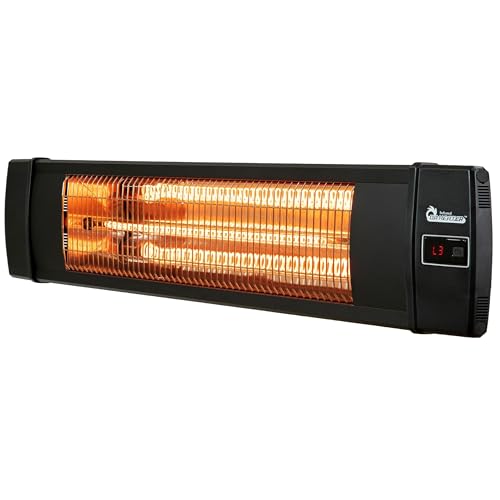
- Best for most small patios: Dr Infrared Heater DR-238 Carbon Infrared Patio Heater, 1500W, Wall or Ceiling Mount — Check on Amazon
- Pamapic 89-Inch Pyramid Patio Heater, 48,000 BTU Quartz Glass Tube, with Wheels and Cover — Check on Amazon
- Amazon Basics 46,000 BTU Outdoor Propane Patio Heater with Wheels, Slate Gray — Check on Amazon
- EAST OAK 50,000 BTU Patio Heater with Round Table Design, Bronze — Check on Amazon
See 2 more options reviewed in full below
- Hiland HLDS01-SSHST 48,000 BTU Propane Patio Heater with Wheels and Adjustable Table — reviewed below as a prose-only pick (see the sources note for why there is no link)
- Fire Sense Pyramid Flame Patio Heater, 40,000 BTU, Stainless Steel — reviewed below as a prose-only pick (see the sources note for why there is no link)
Read the full guide ↓
Disclosure: As an Amazon Associate, dailyhomedecorating.com earns from qualifying purchases. Links to Amazon on this page are affiliate links; they cost you nothing extra. Listing details such as price and availability change often, so check the current Amazon listing before you buy.
Choosing the best outdoor heater for small patios under $500 begins with an honest measurement most heater guides skip: a heater’s real footprint is not the base it stands on, it is the base plus the clearance circle its manual demands — typically about three feet of empty space on every side and two to three feet overhead. Add that up and a full-size tower, whatever its base diameter, claims a circle seven or eight feet across before a single chair is placed. On a generous patio that is a planning detail. On a small patio it is the whole question, and this guide is organized around it: which verified heaters genuinely fit small spaces, which fit only some small spaces, and which should be ruled out by your tape measure before your budget is even consulted.
The answer, for most small patios, is the heater with a footprint of zero. The Dr Infrared DR-238 mounts on a wall or ceiling, plugs into a standard outlet, and beams carbon infrared warmth directly onto the two or three people a small patio actually holds — no floor space consumed, no fuel stored, no flame, no exhaust, and no clearance circle eating the seating plan. It leads this guide because small patios reward exactly its virtues. But small is not one thing: a narrow-but-open terrace with a level pad and sky above it can host a pyramid whose base is barely two feet square, and a compact open patio can hold a classic tower if the chairs arrange around its circle. So the propane picks from our main guide are reviewed here too, re-ranked by footprint honesty — the pyramid’s tidy square base, the towers’ real space claims stated plainly — with the two prose-only picks placed where they belong for small spaces: at the end, with their conditions named.
The budget, meanwhile, is the easy part. Every verified heater in this guide sits in the lower half of the $500 ceiling, which means a small-patio buyer can afford the right fit rather than the forced fit — plus the cover that a heater living outdoors on a small patio (where there is no spare corner to hide it in) genuinely needs, and, for propane, the second tank that keeps a small evening going. What this tier cannot buy is more patio. Spend the money on the heater whose geometry respects the space you have, and the space will feel bigger, not smaller, for being warm.
In this guide
Quick Picks: The Best Outdoor Heater for Small Patios Under $500, by Fit
Start from your patio’s shape and rules, not from the product list. Each row names the small-space situation and the heater that honestly fits it.
| Your small patio | Pick | Why it fits | Link |
|---|---|---|---|
| Covered, narrow, or shared with the door swing | Dr Infrared Heater DR-238 Carbon Infrared Patio Heater | Zero floor footprint; no flame or fuel; warms the exact seats a small patio holds | Check on Amazon |
| Open-topped with one level corner pad | Pamapic 89-Inch Pyramid Patio Heater, 48,000 BTU | A roughly 23-inch-square base; flame and warmth from one compact corner; cover included | Check on Amazon |
| Compact but genuinely open, value first | Amazon Basics 46,000 BTU Outdoor Propane Patio Heater, Slate Gray | Published 9 ft radius makes the seating math honest; the least expensive verified tower | Check on Amazon |
| Small footprint, maximum warmth wanted | EAST OAK 50,000 BTU Patio Heater, Bronze | The strongest output in the guide and a table built in, where the clearance circle truly fits | Check on Amazon |
| Standing drinks on a compact terrace | Hiland HLDS01-SSHST 48,000 BTU Patio Heater with Adjustable Table | The table ring replaces a side table the patio has no room for | Prose-only pick — see review |
| A designed small terrace, permanence first | Fire Sense Pyramid Flame Patio Heater, Stainless Steel | Full stainless pyramid as a fixed feature of a finished space | Prose-only pick — see review |
How the picks were chosen
The verification base is shared with our main outdoor heater guide: every linked pick has an Amazon listing confirmed through independent sources, with a price sighted inside this budget during research; the Hiland table tower and the Fire Sense pyramid are verified as products but appear in prose without links — the Hiland because we could not capture a current in-tier Amazon price, the Fire Sense because we could not verify a current Amazon ASIN — with details in the sources note. We checked the category against the CPSC recall record and excluded recalled brands entirely. The small-patio filter then applied the tests this variant exists for: true space claim, meaning base footprint plus manual clearances, not base footprint alone; heat pattern at close range, because small-patio seating sits near the heater and feels gradients and hot spots that a big patio forgives; storage reality, since a small patio usually belongs to a small home; and rule fit, because small patios are disproportionately attached to apartments, condos and townhomes where leases and fire codes restrict fuel-burning appliances — if that is your situation, read our apartments guide’s rules section alongside this one, and note that the electric pick leads both guides for the same reason.
The six heaters, reviewed by footprint
1. Dr Infrared Heater DR-238 Carbon Infrared Patio Heater — the zero-footprint pick
Who it suits. Most small-patio owners: anyone whose space is covered, narrow, or already fully committed to furniture, and anyone whose building’s rules close the door on flame and fuel.
The DR-238 is a carbon infrared bar — 1,500 watts at maximum on a standard 120-volt circuit, with 900 and 1,200 watt settings, a remote control and a shutoff timer — that mounts on a wall or ceiling with included brackets. Its small-patio case is arithmetic: it occupies no floor at all, asks for mounting clearances rather than a floor clearance circle, and produces no flame, no combustion and no carbon monoxide, which keeps it lawful and sensible in the covered, close-quarters settings where small patios live. Infrared heat suits small scale in a second way: it radiates directly onto people and surfaces, so the two chairs and a loveseat that constitute a small patio’s entire population are warmed immediately and personally, including in the breezes that eddy around small enclosed-feeling spaces and strip a tower’s warm air away. The host runs it from a chair with the remote; the off-season storage question is answered by the fact that it never comes down.
Pros. Zero floor footprint; the only pick that fits covered and rule-restricted small patios; instant, silent, personal warmth sized exactly to small seating; no tanks to store in a small home; negligible running cost.
Honest limitation. It warms the people in its beam — a small group, aimed deliberately. Angle it at the seating when you mount it, because repositioning a mounted bar is a tools-out job, not a nudge. At full power it draws close to a standard circuit’s comfortable capacity, and its listing’s weather rating appears in two forms (IP55 in the bullets, a lower splash rating in the detail modules), so mount it under cover as intended.
Choose it if your patio is small in the usual ways — covered, narrow, furnished to its edges. Skip it if your small patio is an open terrace where a flame feature is the point and the pyramid’s corner pad is waiting. Check on Amazon.
2. Pamapic 89-Inch Pyramid Patio Heater — the compact corner flame
Who it suits. Owners of small but open-topped patios with one level corner where a roughly 23-inch-square base can stand with its clearances honored — and who want that corner to glow.
Measured by base alone, the Pamapic is the tidiest propane pick in this guide: about 23 inches square, 89 inches tall, roughly 62 pounds on wheels. Its flame rises in a quartz tube and radiates warmth at torso height in every direction, which at small-patio range is a genuinely pleasant pattern — the two or three seats near the corner feel it evenly, and the flame gives a small space a focal point that makes it feel furnished rather than merely equipped. The safety specification is the most complete we verified: a valve that cuts the gas if the unit tilts beyond 45 degrees, flameout protection and overheat protection. The included fitted cover is close to mandatory equipment on a small patio, where the heater lives outdoors in view; a covered pyramid in the corner reads as furniture, an uncovered one as clutter. Be honest about the two things the base measurement hides: the manual’s clearance circle still applies around that tidy footprint, and 89 inches of height plus overhead clearance rules out any patio roofed by a balcony or a low pergola.
Pros. The smallest propane footprint in the guide; flame as a focal point for a small space; the strongest published safety package here; cover included; wheels for the short moves small patios require.
Honest limitation. The quartz tube is fragile to impact, and small patios concentrate traffic — chair backs, passing guests, the door swing. Site the corner with that traffic in mind. And if your tape measure says the clearance circle swallows the seating, believe it: the DR-238 exists for that patio.
Choose it if you have the corner, the sky and the clearances. Skip it if any of the three is missing. Check on Amazon.
3. Amazon Basics 46,000 BTU Outdoor Propane Patio Heater — the honest tower
Who it suits. Owners of compact but genuinely open patios who want classic tower warmth at the value end — and who have done the clearance math and watched it pass.
The Amazon Basics tower’s small-patio virtue is a published number: the maker rates its heat to a nine-foot radius, one of the few concrete figures in the class, so a small-patio planner can draw the circle on the ground — heater at the center, chairs inside the radius, clearances honored — and know before ordering whether the geometry works. The heater itself is the proven formula: 46,000 BTU, adjustable knob, one-touch ignition, a water-box base you fill for ballast, a chain securing the 20 lb tank, wheels, and a slate gray finish that visually recedes against furniture — a real consideration where the heater will be a large fraction of everything in view. The caveats are the class caveats at small scale: at roughly 91 inches it needs full overhead clearance, the powder coat wants the cover on through wet weather, and the piezo igniter is the part owners across the value tier service first.
Pros. Published radius for honest small-space planning; least expensive verified tower; ballast and tank chain included; quiet finish; leaves budget for cover and spare tank.
Honest limitation. A tower’s clearance circle is the largest space claim in this guide relative to its warmth at close range, and on a small patio the seats nearest the pole can be too warm while the far seat is just right — arrange the furniture in the ring, not in a row, and run the heater at partial output, which suits its adjustable control well.
Choose it if the circle fits and value leads. Skip it if the patio is covered, narrow or rule-restricted — the first two picks divide those cases between them. Check on Amazon.
4. EAST OAK 50,000 BTU Patio Heater with Round Table — maximum warmth, if it fits
Who it suits. Small-patio owners whose space passes every clearance test and who still want the strongest verified heat — plus the built-in table that deletes a piece of furniture from a crowded floor plan.
The EAST OAK brings the guide’s highest output — a 50,000 BTU maximum through a double-layer stainless burner — a triple protection system, wheels, and a conical base that takes a sand box and a fillable water tank, so its stability comes from ballast rather than bulk. Its round stainless table on the tank housing is a small-patio feature in disguise: on a floor plan with no room for a side table, the heater carries the drinks itself. The maker’s claim of heat spread up to a 20-foot diameter should be read as the edge of detectable warmth; on a small patio you will live in the comfortable core, likely at partial output, which is the right way to run any strong tower in a small space — the adjustable control exists precisely so the heater can be sized to the evening. Everything in its favor is conditional on the fit: full overhead clearance, the side clearances genuinely empty, a level hard surface under the base.
Pros. Most output in the guide, adjustable down to small-patio scale; ballast-based stability; table built in, saving a furniture footprint; full protection system.
Honest limitation. It is the most heater here, and a small patio that fails any clearance test fails it completely — there is no partial credit at 50,000 BTU. Run at full output in a tight space it will simply be too much; its case rests on the dial, the fit and the table.
Choose it if your measurements pass and you want warmth plus the table in one footprint. Skip it if the circle does not fit — drop to the pyramid’s corner or the infrared bar’s wall, in that order. Check on Amazon.
5. Hiland HLDS01-SSHST 48,000 BTU Patio Heater with Adjustable Table — prose-only pick
Who it suits. Compact-terrace hosts whose gatherings stand: the Hiland’s height-adjustable table ring gives a small standing group a warm center and a surface, in one footprint.
From AZ Patio Heaters’ long-running HLDS01 line, the SSHST is rated at 48,000 BTU in its Amazon listing, with variable control, a thermocouple and anti-tilt safety devices, wheels, a burner cover and regulator around a standard 20 lb tank. For a small terrace its table ring does the same furniture-deleting work as the EAST OAK’s table, with height adjustment the EAST OAK does not offer, and the model’s deep parts channel suits a heater that will live outdoors in view for years. It is prose-only because we verified the listing and specifications but could not capture a current Amazon price inside this budget during research — only older retail references — so confirm the live listing as your final step. Its space claim is a full tower’s: the clearance circle and overhead requirements apply in full, and on a small patio that test, not the table, decides.
Pros. Adjustable table ring for standing gatherings; stainless in weather-exposed parts; the deepest parts support in the guide; full safety baseline.
Honest limitation. The price-verification caveat, and a tower’s full space claim on a patio that may not have it to give.
Choose it if the circle fits and the table is the point. Skip it if you want the table idea in a fully verified listing — the EAST OAK — or if the circle fails, when the wall-mounted pick is the answer.
6. Fire Sense Pyramid Flame Patio Heater, Stainless Steel — prose-only pick
Who it suits. Owners of finished small terraces who want the heater to be a permanent design element — the stainless pyramid as the space’s one deliberate object — and who buy comfortably through general retail.
Fire Sense’s pyramid is the specialist build: 40,000 BTU, stainless burners and heating grid, full stainless frame, wheels and a tip-over switch. We verified its specifications and a retail price inside this budget at a national chain during research, but could not verify a current Amazon ASIN for the exact model, so it is reviewed in prose rather than linked on a guess. In a small space its virtues are permanence and proportion — stainless that stays presentable in view, a flame that furnishes the terrace — and its cautions are the pyramid cautions compounded by smallness: the glass tube sits within everyone’s reach and traffic, the overhead clearance must be real, and its 40,000 BTU is the gentlest output here, which at small-patio range is honestly less of a drawback than anywhere else in this series.
Pros. Full stainless permanence; specialist maker and parts catalog; design-grade presence for a finished terrace.
Honest limitation. No verified Amazon listing; the tube-and-traffic problem is at its sharpest in small spaces; every clearance rule applies in full.
Choose it if the terrace is finished, open-topped and calm-traffic. Skip it if you want the pyramid verified and covered in the box — the Pamapic — or if the space argues for the wall, as most small patios do.
Comparison table
| Pick | Type | Output | Space claim | Watch out for |
|---|---|---|---|---|
| Dr Infrared DR-238 | Electric carbon infrared bar | 900 / 1,200 / 1,500 W | None — wall or ceiling mounted | Warms the group in its beam; aim it at mounting time |
| Pamapic 89-Inch Pyramid | Propane glass-tube pyramid | 48,000 BTU | ~23 in square base plus clearance circle | Glass tube in concentrated traffic; overhead clearance |
| Amazon Basics 46,000 BTU | Propane mushroom tower | 46,000 BTU | Tower footprint plus full clearance circle | Near seats can overheat; run at partial output |
| EAST OAK 50,000 BTU with Table | Propane mushroom tower | 50,000 BTU | Tower footprint plus full clearance circle | Most heater here — the fit test is pass/fail |
| Hiland HLDS01-SSHST (prose-only) | Propane tower with table | 48,000 BTU (listing) | Tower footprint plus full clearance circle | Current Amazon price not verified in this research |
| Fire Sense Pyramid Flame (prose-only) | Propane glass-tube pyramid | 40,000 BTU | Pyramid footprint plus clearance circle | Amazon ASIN not verified; tube within everyone’s reach |
Safety first: clearances, CO and tip-over in tight quarters
Small patios concentrate every risk in this category, because the distances that safety depends on are the distances a small patio does not have. Start with the clearance cylinder: the manuals for the propane heaters here typically require about three feet to the sides and two to three feet overhead, measured from the reflector or tube. In a small space that cylinder contains the house wall and its siding, the railing, the door’s swing, the storage box, the plant stand — so measure it honestly, in the patio’s furnished state, and let the measurement veto products. A tower that fits only with the chairs pushed against the railing does not fit. Carbon monoxide discipline tightens in the same way: small patios are often roofed, walled on two or three sides, or tucked under a balcony, and a fuel-burning heater in a semi-enclosed pocket is a CO hazard regardless of the patio’s size — the CPSC record for this category includes tabletop propane heaters recalled for dangerous CO emissions and a current recall of certain natural-gas patio heaters sold online for a gas-release fire hazard, a brand excluded from this guide entirely. If your small patio has a roof and walls, it is an electric-pick patio, full stop.
Tip-over risk also scales inversely with space: the heater stands closer to traffic, chair legs catch bases, and a small patio’s surface is more likely to be a deck with a slope for drainage. Fill the ballast the maker provides — the pyramid’s base weight, the towers’ water boxes and sand boxes — site on the level hard surface the manual requires, and treat tip-over shut-offs (the Pamapic’s valve cuts gas at 45 degrees of tilt) as backups. The electric pick’s list is shorter but real: a GFCI-protected outdoor outlet, no extension cord as a permanent installation, mounting into structure at the manual’s height and clearances, and nothing combustible stored beneath the element’s beam path. Finally, check any model — including ours — against the CPSC recall database by exact brand and model before buying; in a small space you will live closer to your heater than any other reader of this series, and that is the best reason of all to buy verified equipment from identifiable makers.
How to choose: the tape-measure method
Step one: draw the real footprint. For each candidate, sketch its base plus a three-foot clearance ring on every side and its overhead requirement above. If the drawing leaves no room for the furniture, the candidate is out — before price, before output, before aesthetics.
Step two: classify your patio. Covered or walled-in means electric. Open-topped with a level corner means the pyramid is in play. Open and squarish with a true center means a tower can work. Narrow in any dimension usually means the wall-mounted bar, because it is the only pick whose space claim is zero.
Step three: check the rules if you are attached to a building. Small patios belong disproportionately to apartments, condos and townhomes. If a lease, HOA or fire code restricts fuel-burning appliances, the propane list closes and the DR-238 is the guide’s whole answer — see the apartments variant for the full rules discussion.
Step four: size the output down, not up. Small seating sits close to the heater. Adjustable controls matter more than maximum BTU: a strong tower at partial output, a three-level infrared bar, a pyramid’s even radiation. Buy the dial, not the headline.
Step five: plan storage and the off-season. Where does a propane heater live in January, and where does its tank live — in compliance with your building’s rules — all year? The mounted electric pick answers both questions by never asking them, which is worth real money in a small home even before the $500 math starts.
Common mistakes to avoid
Measuring the base instead of the clearance circle. The single most common small-patio error. The base is two feet; the heater’s real claim is seven or eight. Measure the claim.
Squeezing a tower under a low cover. A 91-inch tower beneath a balcony soffit or pergola roof violates its overhead clearance the moment it is lit, however neatly it stands there when cold. Height is a pass/fail test.
Buying maximum output for minimum space. Fifty thousand BTU at three feet is not luxury, it is a sunburn with a thermostat. Small patios reward adjustable, even, close-range heat patterns.
Forgetting the door. Small patios are circulation space. A heater inside the door’s swing or the path to the steps will be bumped, leaned on and cursed — site it in the corner the traffic already avoids.
Storing the tank in the storage box. The deck box at the patio’s edge is not compliant propane storage, and an indoor closet is worse. If the building offers no lawful spot, the electric pick has already won.
Skipping the cover to save the last few dollars. On a small patio the heater is always in view and always outdoors. The cover is what keeps it furniture instead of clutter — and keeps water out of the burner between uses.
Three small-patio layouts that actually work
The covered nook (the commonest small patio). A loveseat and two chairs under a roof or balcony above, a door opening onto it, storage box along one wall. No propane product belongs here — the ceiling fails the clearance test and the walls trap what a burner emits. The layout that works: the DR-238 mounted on the wall above and behind the loveseat, angled down at the seating per its manual, its beam covering the loveseat and spilling to the chairs. The floor stays entirely furniture. The outlet question is the only project: a GFCI outdoor outlet within reach of the mounting position, or a conversation with the building before a purchase.
The open corner terrace. A square of pavers, open sky, a railing on two sides, room for four chairs if nobody buys anything large. The pyramid layout: the Pamapic in the corner the door does not serve, its clearance ring drawn honestly — which on this terrace means the chairs sit in a shallow arc facing the corner, inside the warmth, outside the ring. The flame becomes the view the railing is not. The cover lives on the pyramid between uses because there is no other storage, and the tank lives in its lawful outdoor spot, which the owner identified before ordering. If the arc of chairs does not fit outside the ring, this layout collapses back to the covered-nook answer with the bar mounted on the house wall — the tape measure, not preference, makes that call.
The compact open patio with a true center. Squarish, uncovered, big enough that a seven-to-eight-foot circle fits with chairs around it. Only here does a tower earn its place: the Amazon Basics for value or the EAST OAK for maximum warmth and the built-in table, centered, ballasted, run at partial output so the near ring is pleasant rather than blasted. The furniture forms a ring, not rows; the door’s path clips the circle’s edge without crossing its center; the cover and the spare tank were in the first order because a small home has no slack for a second delivery’s worth of gear. This layout is the exception that proves the guide’s rule — it works because the measurements passed, and the owner checked them before falling for a silhouette.
When the patio is also the storage
Small patios rarely come with big homes attached, so every pick here was also judged as an object you live with in the off-season and walk past daily. The mounted infrared bar wins this test absolutely: it is storage-neutral, present in January exactly as in October, and its only footprint on your life is a remote in a drawer. The pyramid stores as furniture — covered, in its corner, visually deliberate — which is why its included cover and its finish matter more in this variant than in any other: an uncovered pyramid in a small space is not stored, it is merely abandoned in view. The towers store worst, being tall, top-heavy and happiest under a cover in a sheltered corner they may have to share with the grill and the bikes; measure the storage corner with the same honesty as the heating circle. And the tank, always, stores by the rules — outdoors, upright, lawful — a constraint that in a small home with a small patio can be the deciding vote for electric all by itself. None of this appears on a specification sheet, and all of it decides whether, three winters from now, your small patio’s heater is a pleasure or an obstacle with a valve.
Small patio, small print: warranties, returns and the box it came in
A last piece of small-space realism concerns the paperwork nobody reads until the igniter fails. Buy from listings that name a real manufacturer — as every linked pick here does — because the warranty claim, the replacement tube and the spare valve all flow through the maker’s channel, and a small patio offers no corner in which to hide a dead heater while a no-name seller’s inbox goes unanswered. Register the product or keep the receipt where your small home keeps such things; photograph the model and serial plate at installation, since the plate will be weather-faded by the year you need it. Keep the pyramid’s packaging if you possibly can: the quartz tube travels in its molded protection or not at all, and small homes move more often than large ones. And use the return window deliberately — a heater’s fit is a geometry fact you can verify in your own space within days, so do the clearance drawing with the real object during the window, not after it. If the circle does not fit, the window is when that discovery is free.
The same realism applies to running costs, which small households feel proportionally more. The infrared bar’s hour of warmth costs a small amount of electricity and nothing else — no consumables, no spares beyond the element’s eventual life. The propane picks burn a tank across roughly eight to ten hours at full output, less often at the partial settings small patios actually use, plus the occasional igniter or tube across the years. Neither figure should surprise a buyer who read this far; both belong in the decision beside the tape measure, because a small patio’s heater is not a purchase, it is a small appliance with a small, predictable appetite — and predictable is what small homes need most.
Final recommendation
For most small patios, mount the Dr Infrared DR-238 and be done: it takes no floor, breaks no rules, and warms exactly the seats your patio holds. If your tape measure gives you the corner, the sky and the clearances, the Pamapic pyramid turns that corner into the warmest seat in the home. Towers belong on small patios only when the full clearance circle honestly fits — and when it does, the Amazon Basics is the value way in and the EAST OAK the maximum. Every route stays well inside $500; the discipline that matters here is not the budget, it is the measurement.
Frequently asked questions
What is the smallest-space outdoor heater that actually works? A wall- or ceiling-mounted infrared bar like the DR-238. It consumes no floor space, needs mounting clearances rather than a floor clearance circle, and warms a small seating group directly. Among floor-standing options, a glass-tube pyramid has the tidiest base — about 23 inches square for the Pamapic — but its manual clearances still apply around it.
How much clearance does a patio heater really need on a small patio? Typically about three feet to the sides and two to three feet overhead for the propane models here, measured from the reflector or tube — check your model’s manual for its exact figures. That makes a tower’s true claim a circle seven to eight feet across. If your patio cannot hold that circle plus furniture, the honest options are the pyramid in a compliant corner or the mounted electric bar.
Can I use a propane heater on a small covered patio? Only if the cover is high enough to satisfy the manual’s overhead clearance with genuinely open sides for ventilation — and many small covered patios fail that test, especially those roofed by a balcony. Carbon monoxide makes semi-enclosed spaces the dangerous ones; when in doubt, the electric pick is the answer, and “in doubt” covers most small covered patios.
Is a big tower too much heat for a small patio? At full output, usually yes — seating sits close, and the near chairs overheat. Adjustable output rescues the format: a strong tower run at partial setting can be pleasant. But if the clearance circle does not fit, no dial fixes it, and the smaller patterns — pyramid radiation or the infrared beam — are the right tools.
Where do I store a patio heater in a small home? The pyramid and towers live outdoors under their covers in a corner, which is why the cover matters; the propane tank must be stored outdoors, upright and lawfully — never indoors or in an enclosed deck box. The mounted infrared bar needs no storage at all, which is a decisive advantage in a small home.
Are tabletop propane heaters a good small-patio shortcut? No. They are still open-flame fuel-burning appliances with the same clearance and carbon monoxide rules, and tabletop propane models carry a specific CPSC recall history for CO emissions. Small is a geometry problem; the mounted electric bar solves it, the tabletop burner does not.
My patio is small but my household is tall — does heater height matter? For towers and pyramids, the relevant figure is not your height but the structure’s: the heater plus its overhead clearance must fit under whatever is above the patio. For the mounted infrared bar, mounting height matters the other way — the manual specifies a minimum mounting height so the element’s beam spreads before it reaches seated heads, and a small patio’s wall may offer exactly one compliant position. Measure both directions before ordering; small patios forgive nothing in the vertical plane either.
Can a small patio support both a heater and a fire pit? Rarely at the same time, and never casually. Each appliance claims its own clearance circle, the circles may not overlap anything combustible — including, in effect, each other’s zones of use — and a small patio that fits one circle honestly seldom fits two. Choose the appliance that matches your evenings: the fire pit for the ritual and the smoke-scented hour, the heater for reliable, instant, repeatable warmth. The related guides below treat the fire pit option with the same clearance-first discipline if your heart is set that way.
Will a patio heater annoy my neighbors at small-patio distances? The propane picks are quiet — a soft burner hiss — but they glow, and their warmth and exhaust drift exactly the few feet that separate small patios from the next one. The infrared bar is silent, invisible in operation and produces nothing that drifts, which is why close-neighbor situations keep resolving to it in this guide. Whichever you choose, the considerate pattern is the same: run it for the hours you are actually outside, at the setting the evening needs, and off when you go in — a discipline that costs nothing and buys goodwill that no specification sheet lists.
How do I know if my patio’s outlet can run the electric pick? The DR-238 draws up to 1,500 watts, which is most of a standard 15-amp household circuit’s comfortable capacity. Check three things: the outlet is outdoors-rated and GFCI-protected (the test button on the outlet or its breaker is the tell), the circuit is not already feeding a refrigerator, a pump or another heavy load, and the breaker holds at the heater’s middle setting before you trust the maximum. If any check fails, an electrician’s single visit is the fix — still cheaper than any propane alternative once its tank, cover and storage are counted.
What is the cheapest honest way to warm a small patio? If the patio is covered or rule-restricted, the mounted infrared bar is both the cheapest and the only honest route — one purchase, no fuel, no storage, no accessories beyond the mounting it ships with. If the patio is open and compliant, the Amazon Basics tower is the least expensive verified propane route, provided its clearance circle fits; a propane heater bought cheaply for a patio it does not fit is the most expensive option of all, because it will be replaced by the bar within a season.
Related guides
The full field is compared in the Best Outdoor Heater Under $500; the same fit-first logic at a lower tier is in the Best Outdoor Heater For Small Patios Under $300. If your small patio comes with a lease, read the Best Patio Heater For Small Patios Under $500 and the apartments rules discussion, compare mid-tier options in the Best Outdoor Heater Under $300, and furnish the space with the Best Fire Pit For Small Patios Under $500 guide’s clearance-first picks.


