Where to buy
Check the latest price, availability and delivery on Amazon. Orders are placed on Amazon. We may earn a commission from qualifying purchases.
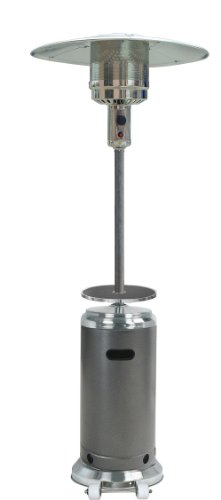
- Best overall for backyards: Hiland 48,000 BTU Propane Patio Heater with Wheels and Adjustable Table — Check on Amazon
- EAST OAK 50,000 BTU Patio Heater with Sand Box, Bronze — Check on Amazon
- Hykolity 50,000 BTU Propane Patio Heater with Table Design, Brown — Check on Amazon
- Amazon Basics 46,000 BTU Outdoor Propane Patio Heater with Wheels, Slate Gray — Check on Amazon
- EAST OAK Pyramid Patio Heater, 48,000 BTU with Quartz Glass Tube — Check on Amazon
One further pick — a tabletop heater for a second seating zone — is covered in prose only, with the reason stated in its review. Read the full guide ↓
Disclosure: As an Amazon Associate, dailyhomedecorating.com earns from qualifying purchases. Links to Amazon on this page are affiliate links; they cost you nothing extra. Listing details such as price and availability change often, so check the current Amazon listing before you buy.
The best outdoor heater for backyards under $300 has a harder job than its patio cousins, and this guide is written around that difference. A backyard is not a slab with chairs on it. It is a big, open, wind-exposed space where the seating might be a deck off the house, a dining table on pavers, a fire-side cluster of chairs halfway down the lawn — or all three on the same evening. Heat that works beautifully in a sheltered patio corner dissipates fast out there, distances are longer, and the question is rarely “which heater is strongest” but “which heater, placed where, serves the zone my family actually uses.” Every pick below was chosen with that zoning question in mind: full-size propane towers for the main seating zone, because nothing else in this budget throws comparable heat across open air, plus one tabletop unit for the second zone that a single tower cannot reach.
The good news is that the under-$300 budget is well matched to backyard work. Every linked pick was verified on Amazon during research and sits inside the budget — check price on Amazon for the current figure — and the field divides cleanly. Two towers reach the 50,000 BTU class for maximum open-air output. The Hiland, our overall pick, trades a small amount of headline output for the category’s best ownership story: parts everywhere, a drink table, wheels for the long roll from shed to deck. The Amazon Basics is the value tower with a coverage radius you can plan a chair layout against. The EAST OAK pyramid is the one to buy when the backyard hosts parties and the heater should look like part of the occasion. And because backyards are where heaters live outdoors through real weather, this guide weights burner construction, base ballast and storage discipline as heavily as output — a corroded burner in year two heats nothing, however impressive its first-season specification was.
One discipline runs through the whole guide: safety sized for open land. Backyard placement tempts people into errors a patio prevents — a tower on grass, a tower beside the firewood stack, a tower under the pergola “because the yard is big.” The safety section below covers clearances, carbon monoxide, ground surfaces and tip-over protection in backyard terms, and every pick was screened against current US recall notices before it earned its place. Read the safety section before the reviews; in a backyard, placement is the product.
In this guide
Quick Picks
Short on time, or comparing several options at once? Each row below names a backyard situation and the product that suits it, with a link to the listing.
| Backyard situation | Pick | Why it stands out | Link |
|---|---|---|---|
| Best overall | Hiland 48,000 BTU Propane Patio Heater with Wheels and Adjustable Table | The proven tower: strong open-air heat, drink table, wheels for shed-to-deck moves, unmatched parts availability | Check on Amazon |
| Biggest, most exposed yards | EAST OAK 50,000 BTU Patio Heater with Sand Box | Top output class, double-layer stainless burner, freeze-proof sand ballast for year-round outdoor life | Check on Amazon |
| Output plus table, value tier | Hykolity 50,000 BTU Propane Patio Heater with Table Design | 50,000 BTU with a table surface, triple protection and wheels at an accessible tier | Check on Amazon |
| Best value tower | Amazon Basics 46,000 BTU Outdoor Propane Patio Heater with Wheels | A published 9-foot heating radius to plan chairs against, tilt shut-off and a water-weighted base | Check on Amazon |
| Party focal point | EAST OAK Pyramid Patio Heater, 48,000 BTU | A visible flame column in a quartz tube — the heater guests gather around | Check on Amazon |
| Second zone at one table | Hiland Portable Table Top Patio Heater, 11,000 BTU | Tabletop warmth for a distant dining or card table a tower cannot reach — prose-only pick, see its review | See review below |
How These Picks Were Chosen
The first filter was the budget, honestly applied. Every linked product is a real Amazon listing whose ASIN we cross-checked against at least one independent record — a price-tracking record, a retailer mirror of the listing, the maker’s own material or a manual — and each had a price sighting inside the under-$300 budget during research. One pick’s price history straddles the ceiling, and its review says so plainly rather than hiding it. This guide prints no fixed price for any heater, because prices in this category move with the season; check the current price on Amazon before judging any pick’s value. One pick is prose-only because its exact listing ASIN could not be confirmed from an authoritative record — it is reviewed on its verified specifications, without a link, and the review explains why.
The second filter was safety screening, applied before any performance comparison. We checked current US Consumer Product Safety Commission recall notices for patio and outdoor heaters; any model under recall for gas-release, fire or carbon monoxide hazards was excluded entirely and is not named anywhere in this guide. Every surviving pick had to evidence the category’s non-negotiables: tip-over or anti-tilt shut-off, flame-out protection that closes the gas supply if the flame dies, a base designed to be weighted, and a certification or listing from a recognized testing laboratory where the maker publishes one.
The third filter was backyard fitness specifically. Output was read as a class — the 46,000 to 50,000 BTU spread matters less in a chair than placement and wind do — while construction was read closely: double-layer stainless burners resist the corrosion that outdoor storage inflicts, sand ballast survives freezes that crack water boxes left full, and wheels matter more when the heater travels twenty yards from storage than when it crosses a patio. Coverage claims are reported as makers’ claims, with their inconsistencies flagged, because a 20-foot-diameter brochure circle and a 9-foot-radius measured claim are not the same kind of statement. We did not test these heaters ourselves; we worked from listings, manuals and specification records. Households whose backyard life centers on a flame feature rather than radiant towers should compare Best Fire Pit For Backyards Under $300 alongside this guide before deciding.
Safety in a Big Space: Clearances, Ground and Carbon Monoxide
Backyards forgive many things, but a heater’s physics is not one of them. Start with placement surfaces. A freestanding tower belongs on a hard, level surface — deck, pavers, concrete — never on grass, gravel, mulch or soil, where a tall, top-heavy appliance can settle, lean and eventually fall, tip-over switch or not. If your seating zone is on the lawn, the honest solutions are a proper paver or deck pad installed for the heater, or seating moved to the hard surface you have. Next, clearances: portable outdoor gas heaters must stand away from buildings and combustible overhangs — fire-code guidance commonly requires at least 5 feet from buildings and combustible overhangs, awnings and decorations — and a backyard adds its own combustible inventory to keep distance from: firewood stacks, sheds, fences with dry vines, play equipment, and the dry leaf drifts that collect in autumn corners. The reflector head runs extremely hot; nothing combustible belongs above or beside it, and a pergola or gazebo roof over a tower is a clearance violation in most real dimensions, however open the structure feels.
Carbon monoxide discipline does not relax because the yard is large. A gas heater is for genuinely open air: never indoors, never in a garage or shed, never in a tent or a screened enclosure that traps combustion gases, and never as a way to warm a workshop with the doors “mostly open.” If the evening’s plan moves inside, the heater’s evening is over. Tip-over protection — fitted to every pick here, alongside flame-out shut-off — is the last line of defense; the first lines are yours: fill the sand or water ballast the maker provides (and drain water boxes before freezing weather, or choose sand), lock or chock wheels on any slope, route the heater’s home position away from football trajectories, dog runs and mower paths, and never leave a lit heater unattended. Children treat a warm pole as a climbing invitation; a lit tower and unsupervised children should never share a yard.
Fuel handling closes the section. Towers run on a standard 20 lb propane cylinder housed in the base and sold separately; inspect the cylinder and connection, leak-check as the manual describes, close the valve between uses, and store spares outdoors, upright and shaded — never in the house or garage. Before the season’s first lighting, search the CPSC recall database for your exact model even if you bought it new last year; recalls arrive when they arrive. And check your local rules once: some municipalities and HOAs regulate outdoor heaters and open-flame appliances even on private land, and a burn-ban day suspends common sense exceptions you may have assumed. None of this is burdensome in practice — it is five minutes of placement discipline that turns a fire appliance into a safe one.
The 6 Best Outdoor Heaters for Backyards Under $300, Reviewed
Hiland 48,000 BTU Propane Patio Heater with Wheels and Adjustable Table
Who it suits: Most backyard households: a deck or paver seating zone, a family that hosts as often as it relaxes, and an owner who wants the heater to still be repairable in five years.
The Hiland is the tower the rest of this category is measured against, and a backyard is where its virtues compound. Output is 48,000 BTU under a wide reflector, with a variable control that lets you run below full power on mild evenings — the setting discipline that stretches a 20 lb cylinder across many more evenings than the full-blast habit does. The adjustable table around the pole earns its keep at every gathering, because backyard seating sprawls and side tables are always one short. The wheels earn theirs weekly: a backyard heater lives a double life between its working position and its storage position, and a heater one person can tilt and roll is a heater that actually gets put away before storms, while a drag-it heater gets left out to weather. Above all, the parts story: this design has sold for years in many finishes under AZ Patio Heaters’ Hiland name, so regulators, thermocouples, reflectors, igniters and covers are commodity items. In a category where an orphaned off-brand tower is a write-off at its first failed part, that ecosystem is the difference between an appliance and a consumable.
For pricing, check price on Amazon — research sightings sat comfortably inside this budget across finishes. The honest limitations are placement and presence. At about 87 inches tall it needs its full clearances, a hard level pad, and a storage plan; it will not civilize a windy ridge-top yard, because no tower heats moving air; and its classic mushroom silhouette is handsome in the way of a street lamp — present, not invisible. If your backyard’s main zone is a deck or patio of ordinary size, this is the heater to buy first and the one the rest of this guide is compared against.
- 48,000 BTU with variable control — full heat for cold nights, throttled warmth for mild ones.
- Adjustable drink table and wheels: built for the storage-to-seating commute.
- The category’s deepest replacement-parts ecosystem, via AZ Patio Heaters / Hiland.
- Anti-tilt and thermocouple flame protection fitted as standard.
Honest limitation: Needs a hard, level pad and full clearances; wind defeats its warm circle like every tower’s, and it is a large object to store.
Choose it if you want the default backyard tower, done properly, for years. Skip it if your yard is exceptionally exposed — read the EAST OAK below on output, and the zoning advice in the how-to-choose section before spending.
EAST OAK 50,000 BTU Patio Heater with Sand Box, Bronze
Who it suits: Large, open, unsheltered backyards — the seating zone far from the house, the breeze unbroken by fences — where maximum burner output and outdoor-proof construction matter most.
This is the guide’s heavy artillery, chosen for the yards that defeat lesser towers. The burner is rated at 50,000 BTU, the top of the residential class, and while no burner out-heats the wind, the extra output buys back some of what an exposed site steals: chairs at the edge of the circle stay in the evening longer. EAST OAK claims a heat spread of up to 20 feet in diameter; treat it as a calm-air ceiling, and plan your chairs inside it. The construction suits a backyard that stores its heater outdoors. The burner is a double-layer stainless steel design, resisting the burn-through corrosion that ends thin burners left in damp air, and the base ballast is a sand box — the right answer for a heater that overwinters outside, because sand does not freeze, expand and crack its container the way a forgotten water box does. A round table surface, wheels and the maker’s triple protection system — tip-over shut-off, flame-out protection and ignition safeguards — complete a specification that reads like it was written by someone who has owned a cheaper tower through two winters.
Its honest costs are appetite and size. At full output it consumes a 20 lb cylinder faster than anything else here, so the variable control is not a nicety; run it at the setting the evening needs. It is also a substantial appliance to wheel across a yard, and its stability depends on the sand box being filled and the ground being level — artillery still needs a firm firing position. For pricing, check price on Amazon: research sightings placed it mid-budget, below several weaker towers, which makes it the value-per-output pick of this guide as well as the power pick.
- 50,000 BTU — the highest output class here — with adjustable control.
- Double-layer stainless burner and sand-box ballast: built for outdoor storage and freezes.
- Triple protection system with tip-over and flame-out shut-offs.
- Round table surface and wheels included.
Honest limitation: Thirstiest pick at full power, and its 20-foot coverage claim is a best case — in wind, every tower’s circle shrinks, this one included.
Choose it if your yard is big, open and breezy and the heater will live outdoors. Skip it if your seating is a small sheltered deck — the Hiland or the value pick below will serve you at a gentler tier.
Hykolity 50,000 BTU Propane Patio Heater with Table Design, Brown
Who it suits: Backyard hosts who want the 50,000 BTU class and the table design together at a value tier — pool decks, garden dining zones and big-family yards.
Hykolity matches the EAST OAK’s headline output — 50,000 BTU from a stainless steel burner — and pairs it with the table design and a warm brown finish that sits naturally against wood decking, fencing and planting. The safety specification is complete for its class: a triple protection system with tip-over shut-off, push ignition, adjustable output and wheels, in an ETL-listed appliance. For a host, the table is not a garnish: backyard gatherings orbit the heater, and a surface at the center of the orbit collects the glasses, the s’mores kit and the speaker that would otherwise migrate to chair arms and grass. Research sightings put this heater at the accessible end of the budget — check price on Amazon for the live figure — which makes it the pick that leaves room for the cylinder, a fitted cover and still stays inside the under-$300 framing with money unspent.
The trade is the brand’s depth. Hykolity is a broad value line rather than a patio-heating specialist; the heater is well specified today, but the five-year parts story is thinner than the Hiland’s, and a buyer who keeps appliances for a decade should weigh that honestly against the saving. For the common backyard case — a heater bought for this house, this deck, this decade of family evenings, at a tier that does not sting — the trade is usually right. Placement discipline is identical to every tower’s: hard level ground, ballast filled, clearances honored, and no illusions about heating a gale.
- 50,000 BTU stainless-burner output with adjustable control and push ignition.
- Table design at the center of the gathering; wheels for repositioning.
- Triple protection with tip-over shut-off; ETL listed.
- Value tier in this budget — check price on Amazon.
Honest limitation: A value brand’s long-term parts ecosystem is thinner than the leader’s, and full-power running empties cylinders quickly.
Choose it if you want top-class output plus the table without top-tier spending. Skip it if a decade-long parts story outranks the saving — that is the Hiland’s home ground.
Amazon Basics 46,000 BTU Outdoor Propane Patio Heater with Wheels, Slate Gray
Who it suits: Backyard buyers furnishing a whole outdoor room at once — heater, seating, lighting — who need the heater line-item kept lean without giving up full-size heat.
Amazon’s tower is the budget allocator’s pick, and its signature specification is a piece of planning honesty: a published heating radius of up to 9 feet. In a backyard, where the failure mode is chairs scattered hopefully across thirty feet of lawn, a radius you can pace out is worth real money: set the tower, pace nine feet, put the chairs inside the line, and the heater will do what the listing says. Output is 46,000 BTU — marginally below the class leaders, undetectably so from a chair — with one-touch ignition, an adjustable knob, built-in wheels, a water box for base ballast, a chain to secure the 20 lb cylinder, and a tilt safety valve that cuts the gas if the heater is knocked off level. The slate gray finish is the neutral that disappears against decking and fencing alike.
What the value tier omits is the table — your drinks live on your own furniture — and the finish is built to its price, so the cover discipline in the mistakes section matters if you want it presentable in year three. Water ballast also asks one backyard-specific chore: drain it before hard freezes, or fill with sand instead where the design allows. None of that touches the heat. When the same budget must also buy the seating the heater serves, this is the tower that lets the whole yard happen at once; research sightings sat at the accessible end of the budget — check the current price on Amazon.
- 46,000 BTU with a published heating radius of up to 9 feet — a layout number, not a slogan.
- One-touch ignition, tilt safety shut-off, water-box ballast and tank chain.
- Wheels fitted; neutral slate gray finish.
- The budget-spreading pick — check price on Amazon.
Honest limitation: No table, value-tier finish, and a water box that must be drained or sand-filled before freezes.
Choose it if the backyard budget is spread across furniture as well as heat. Skip it if the heater is your yard’s one big purchase and you want the ownership story — spend up to the Hiland.
EAST OAK Pyramid Patio Heater, 48,000 BTU with Quartz Glass Tube
Who it suits: Backyard entertainers whose seating zone is also the party’s stage — the heater as firelight, landmark and warm center of the yard.
A pyramid heater heats like a tower and performs like a fire feature. Inside its roughly 91-inch stainless pyramid, a flame burns within a quartz glass tube, visible from every chair, while 48,000 BTU of propane heat spreads over a claimed 10-foot diameter. Guests do what humans have always done: they migrate toward the flame, which means the pyramid organizes a backyard gathering the way a campfire does, with the considerable advantage of a knob. EAST OAK’s version is CSA certified, starts on one button, adjusts from low to high, and carries triple protection — anti-tip shut-off beyond its safe tilt angle and immediate gas cut-off if the flame dies. In a backyard it earns a second, quieter virtue: as a landmark. On a large lot, a lit pyramid is visible from the kitchen window and the far fence alike, and the seating zone reads as a destination rather than a scattering of chairs.
The budget honesty from our research bears repeating in full: this model’s price history lives at the top of this guide’s ceiling, its current US price sat just inside the under-$300 line when we checked, and its long-run average sits above the line. Buy it on a day when the live price is inside the budget — check price on Amazon — or do not buy it that day; the model is discounted often enough that patience is a strategy, and the Hiland heats as well while you wait. Ownership asks two cares a steel tower does not: the glass tube must cool before covering, and it should be handled as what it is — durable quartz, and still glass. For parties that run long and yards that host them, those are fair prices for the flame.
- 48,000 BTU with a visible flame in a quartz glass tube — heat plus gathering point.
- Triple protection: anti-tip and flame-out shut-offs; CSA certified.
- One-button ignition, adjustable output, wheels fitted.
- Stainless pyramid body, about 91 inches tall.
Honest limitation: Its price crosses this budget’s ceiling at times — verify the live figure — and the glass tube needs cooling time and care.
Choose it if your backyard hosts and the flame is part of the point. Skip it if you want maximum heat per purchase or a heater you can ignore all winter.
Hiland Portable Table Top Patio Heater, 11,000 BTU
Who it suits: Backyards with a second, distant seating zone — a dining table by the garden, a card table on the far patio — that one tower cannot serve and a second tower would overwhelm.
Every multi-zone backyard meets the same arithmetic: the main tower warms the main chairs, and the far table gets the evening’s chill and the party’s overflow. The tabletop heater is the right-sized answer for that far table. Hiland’s unit stands about 38 inches tall at the table’s center, produces 11,000 BTU, runs on a 1 lb propane canister — or a 20 lb cylinder through an adapter hose that is not included — and carries its class’s proper safety kit: thermocouple, anti-tilt shut-off, burner screen guard and a weight plate, in a CSA-approved design. It warms the people at its table — faces, hands, the circle over the plates — and it is honest about doing nothing more. Carried out when the zone is used and back when it is not, it is the most flexible heat in this guide.
It appears in prose, without a purchase link, for a procedural reason this guide applies everywhere: its specifications are well documented across independent records, but we could not confirm the exact current Amazon listing ASIN from an authoritative source, and this guide does not guess ASINs. Search Amazon for the model name, confirm the listing is the CSA-approved Hiland tabletop unit, and check its live price there; the class sits at the low end of this budget. Its limits are real and worth stating: a flame sits at seated head height, so the table must be stable, bare of cloth near the burner, and supervised; a 1 lb canister is a short-evening fuel supply, so hosts should keep spares or use the adapter; and like every gas appliance here it is open-air only, with the same prohibitions on enclosed use as its full-size relatives.
- 11,000 BTU tabletop output, honestly sized for one table of guests.
- 1 lb canister convenience, or 20 lb cylinder via an adapter hose (not included).
- Thermocouple, anti-tilt shut-off, screen guard and weight plate; CSA approved.
- Prose-only pick: exact listing ASIN could not be authoritatively confirmed.
Honest limitation: One table’s worth of heat, a flame at head height that demands supervision, and short runtime per 1 lb canister.
Choose it if your yard has a second zone that needs its own small sun. Skip it if one zone is your whole yard — put the money toward the main tower instead.
Comparison Table
| Product | Type | Best use | Link |
|---|---|---|---|
| Hiland 48,000 BTU Patio Heater with Table | Propane tower, 48,000 BTU, wheels | Most backyards: proven heat with the best parts story | Check on Amazon |
| EAST OAK 50,000 BTU Patio Heater | Propane tower, 50,000 BTU, sand-box base | Big, exposed yards; outdoor storage and freezes | Check on Amazon |
| Hykolity 50,000 BTU Patio Heater | Propane tower, 50,000 BTU, table design | Top output plus a table at a value tier | Check on Amazon |
| Amazon Basics 46,000 BTU Patio Heater | Propane tower, 46,000 BTU, 9 ft radius claim | Whole-yard furnishing budgets; plannable chair layout | Check on Amazon |
| EAST OAK Pyramid Patio Heater | Propane pyramid, 48,000 BTU, glass tube | Parties: the flame as the yard’s gathering point | Check on Amazon |
| Hiland Portable Table Top Heater | Propane tabletop, 11,000 BTU | A second, distant table zone | Prose-only — see review |
How to Choose the Best Outdoor Heater for Backyards Under $300
- Zone the yard before you shop. Walk the yard at the hour you actually use it and name the zones: main seating, dining, the far chairs. One tower serves one zone — a circle you should plan at the conservative end of its maker’s claim (the Amazon Basics publishes a 9-foot radius; the high-output towers claim diameters up to 20 feet at their most optimistic). A second zone wants its own smaller heat, like the tabletop pick, not a bigger tower aimed hopefully across the lawn.
- Site the tower like infrastructure. Hard, level ground — deck, pavers, concrete; never grass or mulch. At least 5 feet from the house and combustible overhangs under fire-code guidance, plus distance from fences, firewood, sheds and play routes. If the perfect social spot fails the siting rules, move the chairs, not the rules.
- Respect the wind’s vote. Every tower heats air that moving air removes. A fence, hedge or house wall on the windward side does more for a backyard’s warmth than the difference between any two burners in this guide. If your yard is a wind tunnel with a view, spend on shelter first and the mid-output tower second — or accept shorter, calmer evenings as the yard’s terms.
- Choose ballast for your winters. Sand boxes shrug off freezes; water boxes must be drained before hard frost or they crack. If the heater will overwinter outdoors, that single specification may matter more than 2,000 BTU either way. Add a fitted cover to the plan either way; burners and reflectors age in weather, not in use.
- Verify the safety trio and the recall list. Tip-over shut-off, flame-out protection, a certification mark from a recognized laboratory — then five minutes in the CPSC recall database with the exact model name, before purchase and at each season’s start. Backyards put heaters near children, pets and dry landscaping; the screening is the cheapest safety device in this guide.
- Budget the whole installation. The cylinder (not included), a spare or exchange habit for hosts, the cover, and possibly a paver pad for the heater’s station are part of the real purchase. The under-$300 ceiling absorbs all of it comfortably when the heater itself is a mid-budget tower — which is the practical argument against spending the entire ceiling on the pyramid unless the flame is truly the point. Party-focused households should also read the companion guide, Best Outdoor Heater For Outdoor Entertaining Under $300, where the same field is ranked for guests rather than for family evenings.
Placement Patterns That Work in Real Backyards
Three layouts cover most backyards, and each assigns the heater a different job. In the deck-anchored layout — the commonest — the tower stands on the deck or patio just outside the seating cluster’s edge, close enough that every chair sits well inside the warm circle and far enough that clearances and traffic lanes stay honest. The heater never moves except to its storage corner, the cylinder exchange is a short trip, and the zone it serves is the one the household uses nightly. This is the layout the Hiland and the Amazon Basics were born for, and it is where a first backyard heater should start.
In the destination layout, the seating lives away from the house — a dining set on a paver circle, chairs around a garden feature — and the heater must live there too, because heat does not commute. The destination layout rewards the construction picks in this guide: a sand-ballast base that overwinters in place, a corrosion-resistant burner, a cover that lives on the heater between evenings, and a storage answer for the cylinder that does not involve carrying it across a wet lawn in the dark. It is also the layout where the tabletop second zone earns its place, warming the dining table while the tower holds the lounge chairs — two modest circles, honestly drawn, instead of one heroic circle that exists only in a brochure.
In the party layout, the yard hosts a crowd a few times a season and a family the rest of the year. Here the pyramid’s logic peaks: placed at the gathering’s center on hard ground with its clearances paced out in advance, it becomes the landmark guests orbit, and the host’s job shrinks to keeping the circle’s edge stocked with chairs. The practical host plans the party layout on paper first — heater position, chair ring, a clear lane for the cylinder swap, children routed away from the hot zone — because rearranging a lit 91-inch appliance mid-party is nobody’s idea of hospitality. Whichever layout is yours, the pattern underneath is the same: the heater is furniture-grade infrastructure, placed once with intention, and the evenings arrange themselves around it.
Common Buying Mistakes
- Standing a tower on grass “just for the party” — soft ground, a tall lever and a crowd are the tip-over scenario the safety switch exists for, and switches are backups, not plans.
- Believing the largest coverage claim and scattering chairs across the whole yard, then concluding the heater is weak. The circle is the product; seat inside it.
- Leaving the ballast empty, or leaving a water box full into the first freeze and cracking it.
- Tucking the tower under the pergola or gazebo to “hold the heat in,” in violation of its overhead clearances.
- Storing spare propane cylinders in the garage or house between parties; spares live outdoors, upright and shaded.
- Skipping the cover because the heater is “outdoor rated” — outdoor rated means it survives weather, not that it ignores it; burners corrode on neglect, not on use.
- Buying the pyramid on a screenshot price from last season. Its live price moves across this budget’s ceiling; verify on the day.
- Running a gas heater inside a screened porch or tent to warm a card game — the carbon monoxide scenario, unchanged by the size of the yard outside.
Final Recommendation
- Most backyards: Hiland 48,000 BTU Propane Patio Heater with Wheels and Adjustable Table.
- Big, exposed yards: EAST OAK 50,000 BTU Patio Heater with Sand Box.
- Output plus table, value tier: Hykolity 50,000 BTU Propane Patio Heater.
- Furnishing the whole yard at once: Amazon Basics 46,000 BTU Outdoor Propane Patio Heater.
- Backyard parties: EAST OAK Pyramid Patio Heater, 48,000 BTU.
- A second zone: Hiland Portable Table Top Patio Heater (prose-only).
Our top two are the Hiland for the ordinary backyard — proven heat, honest furniture value, and a parts story that respects a decade of ownership — and the EAST OAK 50,000 BTU for the yard that fights back: big, open and breezy, with a heater built to live outdoors through it. The Amazon Basics spreads a furnishing budget furthest, the Hykolity puts top output and a table at a value tier, and the pyramid turns the heater into the party. Site it on hard ground, fill the base, seat everyone inside the circle, check the current price on Amazon, and the backyard season gets measurably longer. For the full category reference, keep Best Outdoor Heater Under $300 alongside this guide, and for smaller budgets the same zoning logic is applied in Best Outdoor Heater For Backyards Under $150.
Frequently Asked Questions
How many patio heaters does a backyard need?
One per seating zone, not one per yard. A tower warms a circle around itself — plan chairs within the conservative version of its maker’s radius claim — so a yard with one seating cluster needs one heater, however large the lawn beyond it is. A yard with two clusters used at the same time needs two heat sources, and the economical pattern is a full tower for the main zone plus a tabletop unit for the secondary table, exactly the pairing this guide recommends.
Can I leave a patio heater outside all year?
You can, with the right model and habits, and this guide’s picks were chosen with that in mind: stainless double-layer burners resist corrosion, sand ballast survives freezes, and a fitted cover keeps water and debris out of the burner and reflector. Water-box bases must be drained before hard frost. Even so, a heater stored under cover or in a shed will outlast one left in the weather, and every heater deserves a pre-season check — burner, hose, connections and safety devices — before its first lighting of the year.
Why does my backyard heater feel weak on some nights?
Almost always wind, then distance. A tower warms the air in its circle, and moving air carries that warmth away faster than the burner replaces it; the same heater on a calm night feels twice as strong. Distance is the second factor: comfort falls steeply toward the edge of the claimed circle. The fixes are placement (a windward fence or wall behind the seating), tighter chair placement, and running the heater at full output early so the zone is established before guests sit down.
Is it safe to use a patio heater near a wooden fence or deck?
With the clearances honored, yes — that is the normal installation. Keep the heater at least 5 feet from buildings and combustible structures and overhangs per fire-code guidance and its manual, on a hard level surface, with nothing combustible above the reflector. What is not safe is the improvised version: a tower backed against a fence to save space, or under a pergola roof to trap heat. The distances are the product’s operating requirements, not suggestions.
How long will a 20 lb propane tank last in backyard use?
Treat runtime as evenings, not weeks: at full output, a 46,000–50,000 BTU tower works through a cylinder over a handful of long evenings, and at the throttled settings most family evenings actually need, the same tank lasts considerably longer. Hosts who entertain weekly should keep an exchange plan or a spare cylinder stored outdoors. The cheapest runtime upgrade in this category is the control knob — use the setting the evening requires.
Tower heater or fire pit for a backyard?
They deliver different evenings. A tower gives instant, adjustable, smoke-free radiant heat over a seating circle, starts and stops on a knob, and works on a deck. A fire pit gives flame, ritual and gathering gravity, with smoke, fuel handling, local burn rules and a slower start. Many backyards eventually run both — tower for weeknight dinners, fire for weekend gatherings — and the comparison is laid out in the fire-pit companion guide linked from this one. If only one fits this year’s budget, the tower is the more usable heat for more evenings.


