Where to buy
Check the latest price, availability and delivery on Amazon. Orders are placed on Amazon. We may earn a commission from qualifying purchases. One honesty note before the list: three of the six picks below are links, and all three are clearly labelled accessories — fuel and repair parts, not heaters. The three actual heaters in this guide sit in higher price tiers, so they are covered in words only, with no link, rather than linked at a price this budget cannot support.
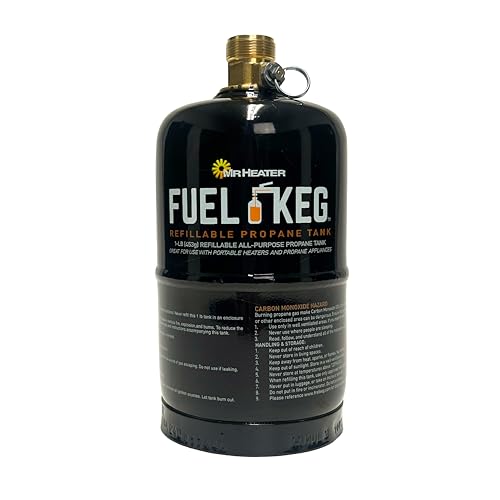
- Best honest spend under $20 (accessory — not a heater): Mr. Heater Fuel Keg 1 lb Refillable Propane Tank — Check on Amazon
- Best repair part (accessory — not a heater): Thermocouple and Tilt Switch Repair Kit for Patio Heaters — Check on Amazon
- Best fuel-cost cutter (accessory — not a heater): Gogoonike Propane Refill Adapter for 1 lb Tanks — Check on Amazon
The heaters themselves — covered in this guide, priced above this tier: Mr. Heater Portable Buddy MH9BX, EAST OAK 50,000 BTU patio heater and Cuisinart COH-500 tabletop heater. Each is reviewed in full below so you can judge which format a backyard actually rewards; none is linked, because none belongs in an under-$20 list.
Read the full guide ↓
Disclosure: As an Amazon Associate, dailyhomedecorating.com earns from qualifying purchases. Links to Amazon on this page are affiliate links; they cost you nothing extra. Listing details such as price and availability change often, so check the current Amazon listing before you buy.
The best outdoor heater for backyards under $20 does not exist, and a backyard is the worst place to learn that the hard way. A backyard is the most demanding setting in this whole series: open on most sides, exposed to wind, with people spread across a lawn or a deck rather than gathered in a sheltered corner. Heat that feels generous on a still, walled patio simply leaves a backyard — carried off by the first breeze, diluted across open sky. That physics is exactly why real backyard heaters are big, powerful and expensive: the tall propane columns outside every restaurant are not a style choice, they are what it takes to push back against open air. When we researched this guide, the cheapest genuine heater we could verify — a small portable propane model from the category’s best-known maker — sold in a tier several times above this budget, and full-size backyard heaters live several tiers above that. Any listing that offers a complete backyard heater at this price is shipping a part, a fuel accessory, or a claim no recognised maker will sign.
What $20 honestly buys a backyard household is the supporting cast — and in a backyard, the supporting cast matters more than anywhere else, because backyards are where heaters live permanently, weather beats on them year-round, and fuel consumption is highest. This guide reviews the three under-budget purchases that genuinely pay: a certified refillable 1 lb fuel cylinder that ends the disposable-bottle economy for portable heaters; the repair kit that fixes the single most common reason the tall heater already standing in your yard will not stay lit; and a refill adapter that connects the two into a bulk-fuel system. Alongside them, reviewed without links, are the three heater formats a backyard shopper will actually choose between when the budget grows: a two-setting portable radiant for close seating and work areas, a full-size 50,000 BTU column heater for a defined seating zone, and a tabletop model for dining — with honest accounts of what each can and cannot do in wind, across distance, and over a whole evening.
Safety scales with size, and this guide treats it that way. Bigger heaters mean bigger clearances, heavier fuel inventories and taller objects that wind can push. Every propane heater here is for open-air use only; every clearance figure quoted is a manufacturer’s minimum, to be respected with margin; and before any purchase, at any tier, two minutes on the U.S. Consumer Product Safety Commission’s recall listings is time well spent — this category has seen heaters recalled for gas leaks and fire risk in recent years, and a recalled model is excluded from this guide entirely, as should it be from your yard. Below you will find a quick picks table, detailed notes on all six picks, a comparison table, a buying checklist tuned to open yards, the mistakes backyard shoppers make, and answers to the questions that come up again and again.
In this guide
Quick Picks
Short on time, or comparing several options at once? Each row names a backyard situation and the product that suits it. Read the “What it is” column carefully: at this budget, honesty about what a product actually is matters more than the ranking.
| Backyard situation | Pick | What it is | Why it stands out | Link |
|---|---|---|---|---|
| Best honest spend under $20 | Mr. Heater Fuel Keg 1 lb Refillable Propane Tank | Accessory — fuel cylinder, not a heater | A DOT-certified refillable 1 lb cylinder that replaces disposable bottles in any small propane heater | Check on Amazon |
| Best way to revive the tall heater in the yard | Thermocouple and Tilt Switch Repair Kit | Accessory — replacement part, not a heater | Replaces the two safety components whose failure causes most “won’t stay lit” column heaters | Check on Amazon |
| Best fuel-cost cutter | Gogoonike Propane Refill Adapter for 1 lb Tanks | Accessory — refill fitting, not a heater | Lets a refillable 1 lb cylinder be filled from a standard 20 lb tank — for refillable cylinders only | Check on Amazon |
| Best real heater to save toward: flexible portable | Mr. Heater Portable Buddy MH9BX | Heater — higher tier, no link | 4,000 or 9,000 BTU settings; works at the seating cluster, the workbench or the firewood stack | Prose only — see review |
| Best real heater to save toward: a fixed seating zone | EAST OAK 50,000 BTU Patio Heater | Heater — higher tier, no link | Full-size column output for a defined deck or patio zone, on a standard 20 lb tank | Prose only — see review |
| Best real heater to save toward: backyard dining | Cuisinart COH-500 Tabletop Patio Heater | Heater — higher tier, no link | 11,000 BTU of table-height heat with tilt switch and thermocouple, made for a dining table | Prose only — see review |
How These Picks Were Chosen
We started with the question the keyword asks and tested every plausible answer against four filters. First, existence: is it a complete heater, with burner, fuel connection, guard and housing? Second, safety equipment: a tip-over switch, a thermocouple on gas models that closes the valve if the flame dies, and an oxygen depletion sensor on portables their maker rates for enclosed spaces. Third, verifiability: model number and specifications confirmable from the maker’s own documentation or a major retail listing, not from an anonymous listing’s claims. Fourth, recall status: we checked the category against U.S. Consumer Product Safety Commission recall notices, and anything under an active recall for fire, gas leak or carbon monoxide was excluded completely — not ranked lower, excluded.
No complete heater passed all four filters at this price. The three accessories did, and each earns its place on backyard logic specifically. Backyard heaters burn more fuel than any other setting’s — longer evenings, bigger spaces, higher settings — so the fuel system (a refillable cylinder, plus an adapter to fill it from bulk) returns more in a yard than anywhere else. And backyards are where heaters live outdoors permanently, ageing in weather, so the failure this guide’s repair kit addresses — the won’t-stay-lit fault that worn thermocouples and tilt switches cause — is a backyard owner’s most predictable maintenance event. A kit that costs less than this budget, against a service call or a replacement column at many times the price, is the easiest recommendation in the series.
The three heaters reviewed without links map the formats a backyard budget grows into. The two-setting portable is the flexible tool: seating cluster tonight, workshop tomorrow. The full-size column is the fixed installation: one defined zone, heated properly, on bulk fuel. The tabletop is the specialist: dining, at table height. Their specifications — outputs, run times, coverage claims — come from manufacturer manuals and product pages, and where a maker’s coverage figure describes enclosed air, we translate it into what open sky will actually do to it. A backyard is where inflated coverage claims go to die; this guide would rather bury them here than let you bury money in the yard.
Safety First: Fire, Carbon Monoxide and Clearance
Outdoor heating is fire, fuel and carbon monoxide managed at arm’s length, and a backyard adds two hazards of its own: wind and distance. Wind first. A gust does three dangerous things to a heater: it can push a tall column heater toward tipping — which is why tall models must be weighted, anchored or filled exactly as the manual describes, and why their tilt switches exist; it blows flame and radiant heat sideways, closing the clearance gap on the downwind side to whatever is standing there; and it carries sparks and heat to dry material — leaf litter, mulch, dry grass, stored firewood — that a sheltered patio never has nearby. Site a backyard heater on a flat, hard, level surface — decking, pavers, concrete — never directly on grass or mulch, and walk the downwind side before lighting, not after.
Carbon monoxide discipline does not relax because the sky is open. Propane heaters are for open-air use: never in a garage with the door “mostly up”, never in a shed, greenhouse or tent without the ventilation the manufacturer specifies, never under a solid roof or canopy unless the specific model’s manual allows the configuration and its upward clearance is met with margin — heat and exhaust rise, and a roof collects both. The portable models in this guide carry oxygen depletion sensors and are approved by their makers for certain ventilated enclosed spaces; a backyard’s open air is their proper home, and the sensor is a safety net, not a design brief. Fuel storage follows the same seriousness: propane cylinders live outdoors, upright, shaded from heat, away from ignition — never in a living space or a hot closed shed — and a 20 lb tank feeding a column heater sits in the heater’s own housing or exactly where the manual places it, nowhere improvised.
Clearances are manufacturers’ minimums, quoted in each review below: the portable specifies 30 inches above, 24 in front and 6 at the sides; the tabletop 3 feet at the sides and 2 above; a full-size column needs feet, not inches, in every direction including — critically — above, where tree branches, pergola beams and string lights live. Backyard furniture migrates; chairs, throws and cushions drift toward warmth all evening, so build margin beyond the printed minimums and reset the zone when you light up, every time. Never leave a burning heater unattended, keep children and pets beyond the printed clearance — radiant surfaces stay burn-hot well after shutoff — and let any heater cool completely before covering, moving or refuelling it. Finally, recalls: search any model on the CPSC database before buying, and before bringing a stored heater back into service each season. A heater that spent winter in a damp shed deserves a leak check and a recall check before its first flame of spring, and a recalled unit comes out of service immediately, at any age.
The Picks in Detail
1. Mr. Heater Fuel Keg 1 lb Refillable Propane Tank — Best Honest Spend Under $20 (Accessory — Not a Heater)
What it is. A 1 lb — 16 oz — propane cylinder (model F200048) from the maker of the portable heaters in this guide, built and DOT certified to be refilled instead of discarded. It threads into the same socket as the familiar disposable green bottles, arrives empty, and fills only with the maker’s matching refill kit, sold separately, which the maker says completes a fill in about a minute. Nothing about your heater’s balance, storage or handling changes — only the economics of its fuel.
Who it suits. Backyard households running a portable propane heater regularly — the seating cluster most evenings, the workshop on weekends, the heater that travels to the firewood pile, the tailgate and the campsite. Backyard use burns fuel at the highest rate in this series, and disposable 1 lb bottles are the most expensive way to buy propane per hour of heat. A refillable cylinder converts that stream of small, pricey purchases into an occasional bulk fill, and it is the one purchase under $20 that makes every future portable-heater evening cheaper.
Pros. A verifiable product from the category’s most established maker — published model number, genuine DOT certification for refilling, a valve designed for the job disposable bottles’ valves are not designed for. It fits the whole installed base of 1 lb appliances: heaters, lanterns, camp stoves. It ends the garage shelf of mystery half-empty bottles, because a refillable can be topped up on a schedule instead of guessed at. And in a yard with a 20 lb tank already on the grill, it plugs straight into the bulk-fuel system the third pick completes.
Honest limitation. It is not a heater; alone, it warms nothing, and if your $20 must produce heat this weekend and you own no heater, this is not your purchase. It arrives empty and needs the maker’s refill kit — a further purchase — before its first fill. One pound is one pound: a few hours on a small portable, less on anything bigger, so heavy users will want more than one cylinder in rotation. And cylinders store outdoors, upright and shaded — a yard makes that easy, but it is a rule, not a preference.
Choose it if you own or are saving toward a 1 lb propane heater and use it often. Skip it if you have no propane appliance and no plan to buy one — bank the $20 toward the heater itself. Check price on Amazon, and confirm the listing is the refillable Fuel Keg cylinder itself, not the refill kit or a bundle at a different price point.
2. Thermocouple and Tilt Switch Repair Kit — Best Way to Revive the Tall Heater in the Yard (Accessory — Not a Heater)
What it is. A replacement thermocouple and dump — tilt — switch set of the pattern used by round stand-up and pyramid propane patio heaters: exactly the tall column heaters that populate backyards. The thermocouple is the probe in the pilot flame whose tiny electrical signal holds the gas valve open; the tilt switch cuts the gas if the heater tips. When a column heater lights at the pilot and dies as you release the knob, or will not stay lit at all, manufacturers’ own troubleshooting guides point at these two components first — before the valve, before the regulator, before the burner.
Who it suits. Anyone whose backyard column heater has developed the won’t-stay-lit fault after a season or three outdoors — which is to say, eventually, almost every column heater owner, because these heaters live in weather and these two parts are wear items in the flame path and the safety chain. If your yard already holds the heater, this kit is the difference between a working heater this weekend and a replacement decision at many times the price.
Pros. The economics are the strongest in this guide: a sub-budget kit against a service call or a new column. It replaces safety components with safety components — the repaired heater keeps its flame-failure and tip-over protection, which matters doubly for a tall heater in a windy yard. The parts pattern fits the common round and pyramid designs, the job is hand-tool work documented in makers’ manuals, and doing it teaches you the anatomy of the appliance you will maintain for years.
Honest limitation. It is a part, not a heater — useless to anyone without a broken heater to fix. Compatibility is broad, not universal: match thread and lead length against your model’s parts diagram before ordering. Corrosion is the backyard caveat: if the burner, reflector or valve body is rusted through, a sensor kit is lipstick on a retirement decision. Gas work has a hard rule — any smell of gas after reassembly means stop, close the cylinder valve, call a professional. And a heater under active recall is never repaired back into service; follow the recall remedy.
Choose it if your column heater lights and dies or will not stay lit, and the model is not under recall. Skip it if you own no heater, or the damage is structural. Check price on Amazon, and verify the kit against your heater’s diagram first.
3. Gogoonike Propane Refill Adapter for 1 lb Tanks — Best Fuel-Cost Cutter (Accessory — Not a Heater)
What it is. A solid brass adapter connecting a 1 lb cylinder thread to the QCC1/Type 1 fitting of a standard 20 lb propane tank, with an on/off control — the standard design sold across this category. In a backyard it completes the obvious system: the grill’s 20 lb tank already holds the cheapest propane you own; a certified refillable cylinder carries it to the portable heater. Bulk price per hour of heat, portable convenience at the point of use.
Who it suits. Backyard households with both halves of the system: a 20 lb tank on the premises and a refillable 1 lb cylinder in the heater, plus a portable heater used often enough for bottle economics to genuinely bite — near-nightly patio users, workshop regulars, households whose heater also travels to tailgates and campsites, where the same cylinder system follows.
Pros. Brass construction, standard fittings at both ends, the lowest price in this guide. It turns fuel from a stream of retail purchases into an occasional bulk event, and by making the safe system easy, it removes the temptation toward the dangerous one — refilling a disposable bottle — which this adapter must never be used for.
Honest limitation — read this one twice. This adapter is only safe and legal with cylinders designed and certified for refilling. Disposable 1 lb bottles are not: their valves are not built for repeated filling, overfilling is easy, and transporting a refilled disposable is prohibited for good reason. Adapter listings often mention disposable cylinders; ignore that language. Fill outdoors, away from ignition, never overfill, and use a propane dealer if any step is unclear. The adapter also heats nothing by itself — it is the third pick because the cylinder it serves matters more, and the heater matters most of all.
Choose it if you run the refillable-cylinder system and keep a bulk tank. Skip it if your plan involves disposable bottles — change the plan — or if your portable heater comes out twice a year. Check price on Amazon.
4. Mr. Heater Portable Buddy MH9BX — The Flexible Portable to Save Toward (Heater — Higher Tier, No Link)
What it is. A radiant propane heater with two settings — 4,000 and 9,000 BTU per hour — rated by the maker for enclosed spaces up to 225 square feet, running about 6 hours on low or 3 hours on high from a single 1 lb cylinder, and far longer from a 20 lb tank on the maker’s optional hose and filter. It carries an oxygen depletion sensor, an accidental tip-over shutoff and piezo ignition, with published clearances of 30 inches above, 24 in front and 6 at the sides.
Who it suits. The backyard generalist. A backyard is not one heating problem but several in rotation: four people at the seating cluster, one person at the workbench, a crew around a project on the drive. A portable that moves to the problem — and that runs gently at 4,000 BTU for close company or hard at 9,000 for a work area — fits that life better than any fixed appliance. On the maker’s hose, it also becomes the cheapest route in this guide to long evenings, sipping bulk propane instead of bottles.
Pros. Two honest settings, the strongest safety package relative to output in this guide, and a fuel system that spans the whole series’ accessories — the Fuel Keg above fits it directly. The maker’s figures are published and consistent, the model has a long production history, and its fold-down handle and swivel regulator make the moving-it-around life genuinely easy. In still air, at seating distance, its high setting changes the feel of a small cluster, not just of the person nearest it.
Honest limitation. It sits in a higher tier — a save-toward product, unlinked here on principle. The 225 square foot figure is an enclosed-space rating: in open air with any breeze, its comfort zone is the few seats around it, and no portable of any output heats “a backyard” as such. On high it empties a 1 lb cylinder in about three hours, so regular high-setting use really wants the hose-and-tank setup. It is not sold in Massachusetts or Canada, per the maker, and its oxygen sensor does not make it a sealed-room heater.
Choose it if your backyard heating happens in clusters and work areas that move. Skip it if your yard life is one fixed seating zone used by six or more people — the next pick exists for exactly that — or if dining is the main event, where the tabletop after it wins. The tier guides that pick this story up start at Best Outdoor Heater For Backyards Under $50.
5. EAST OAK 50,000 BTU Patio Heater — The Fixed Seating Zone to Save Toward (Heater — Higher Tier, No Link)
What it is. A full-size propane column heater of the restaurant pattern: 50,000 BTU from a double-layer stainless steel burner under a wide reflector, on a wheeled base with a sand box for ballast, a side table design, and a standard 20 lb tank housed in the base. This is the class of heater that actually contests open air: enough output to create a genuine warm zone on a deck or paved patio, run for long evenings on bulk fuel, and stay in place as yard furniture rather than travelling as a tool.
Who it suits. Households whose backyard life has a capital city: one defined seating zone — the deck corner, the paved circle, the outdoor sofa arrangement — used by four to eight people, often, deep into the cold months. For that household, a fixed column is not an extravagance but the only format whose output matches the ambition, and a recognised maker with published specifications is the way to buy one. Hosts will find the overlap with the entertaining scenario obvious; the companion guide for that lens is Best Outdoor Heater For Outdoor Entertaining Under $20, whose higher tiers develop the same shortlist for parties specifically.
Pros. Output in a different league from the portables — the only pick here that heats a zone rather than a person. Bulk fuel in the base means evening-long run times and the cheapest propane per hour in this guide, with no bottles to manage. Wheels and a ballast box address the format’s two practicalities — moving it and keeping it upright — and a stainless burner is the right material for an appliance that lives outdoors. A maker’s name, manual and parts channel stand behind it, which anonymous columns at fantasy prices cannot offer.
Honest limitation. It lives in a premium tier — the furthest heater here from this guide’s budget — and is unlinked accordingly. Size is a commitment: it needs a permanent home with clearances in feet in every direction, including above, where branches, pergolas and festoon lights must be audited honestly; it must be weighted and sited exactly as the manual directs, because a tall heater in a gust is a lever looking for a fulcrum; and even 50,000 BTU obeys physics — in real wind, every outdoor heater’s zone shrinks, and on the coldest, breeziest nights the honest venue is indoors. Assembly is a real job, and winter storage wants a cover and a dry corner.
Choose it if one seating zone hosts your yard life and your budget can grow to the tier where fixed heat lives. Skip it if your gatherings move around the yard, your space cannot honour the clearances, or your climate’s evenings are mostly windy — a portable, used close, will serve you better for less.
6. Cuisinart COH-500 Tabletop Patio Heater — Backyard Dining Heat to Save Toward (Heater — Higher Tier, No Link)
What it is. A tabletop propane heater from a major kitchen brand: 11,000 BTU of radiant heat from a reflector-topped unit about 25 inches tall and roughly 8.5 pounds, standing on the table, running on a 1 lb cylinder in its base or — with the maker’s optional regulator hose — from a 20 lb tank. The maker rates its warmth at about 30 square feet, specifies clearances of 3 feet at the sides and 2 feet above, and equips it with a thermocouple, an anti-tilt shutoff and a burner screen guard. Outdoor use only, per the manual.
Who it suits. Backyard diners. If the yard’s main event is a table — long dinners, board games, a laptop evening at the outdoor desk — heat delivered at table height, radiating down across the settings, is the most comfortable format there is, and it leaves the ground around the table free for chairs, feet and dogs. A backyard table is also the one setting in this series that can usually honour this heater’s clearances without argument.
Pros. Serious output in exactly the right place; a real brand with a real manual, certification and parts list; adjustable output from a simple dial; light enough to carry out and store in a cupboard, which solves winter storage more elegantly than any column; and the hose option for long dinners where a tank can sit lawfully beside the table.
Honest limitation. A premium-tier product, unlinked here. A 1 lb cylinder lasts roughly two hours at full output, so the hose setup is near-mandatory for long evenings. The 3-foot side clearances demand a genuinely spacious table — no serving stands, centrepiece foliage or umbrella hardware crowding the column of heat. And it remains a flame: open air only, never under a low cover, and never left burning while the party moves indoors for dessert.
Choose it if dining is your yard’s headline act and your table can honour the geometry. Skip it if your gatherings stand, roam or cluster on sofas — the portable and the column serve those shapes better.
Comparison Table
The six picks side by side. Note the first column’s honesty: three accessories this budget can actually buy, and three heaters it cannot — yet.
| Pick | Type | Key verified figures | Safety equipment | Best for | Link |
|---|---|---|---|---|---|
| Mr. Heater Fuel Keg | Accessory — refillable fuel cylinder | 1 lb / 16 oz capacity; DOT certified; fills via maker’s refill kit | Certified refillable valve design | Cutting running costs of any 1 lb heater | Check on Amazon |
| Thermocouple & Tilt Switch Kit | Accessory — repair part | Fits common round stand-up and pyramid propane heaters | Restores flame-failure and tip-over shutoff | Reviving a column heater that will not stay lit | Check on Amazon |
| Gogoonike Refill Adapter | Accessory — refill fitting | Brass; QCC1/Type 1 to 1 lb thread; on/off valve | For certified refillable cylinders only | Filling refillables from a 20 lb tank | Check on Amazon |
| Mr. Heater Portable Buddy MH9BX | Heater — higher tier | 4,000 / 9,000 BTU; up to 225 sq ft (maker, enclosed); ~6 hrs low / ~3 hrs high per 1 lb cylinder | Oxygen depletion sensor; tip-over shutoff | Moving clusters and work areas | Prose only |
| EAST OAK 50,000 BTU | Heater — higher tier | 50,000 BTU; double-layer stainless burner; wheeled base with sand box; 20 lb tank in base | Tip-over protection per maker; ballast base | One fixed seating zone, 4–8 people | Prose only |
| Cuisinart COH-500 | Heater — higher tier | 11,000 BTU; ~30 sq ft (maker); ~25 in tall; clearances 3 ft sides / 2 ft top | Thermocouple; anti-tilt shutoff; burner guard | Seated dining at a spacious table | Prose only |
How to Choose the Best Outdoor Heater for Backyards Under $20
Backyard choosing is zoning before it is shopping. Work through these five questions and the right purchase — including the purchase of nothing — becomes obvious.
1. Where does your yard life actually happen? Walk the yard at the hour you use it and mark the truth: the seats that fill, the table that hosts, the bench where projects happen. Heat follows furniture. One fixed zone argues for a column in a higher tier; moving clusters argue for a portable; a dining table argues for a tabletop. A heater bought for the yard you wish you had will warm the yard you wish you had.
2. How much wind does that spot really get? Wind is the backyard tax on every heater. A sheltered corner between house and fence can halve the output you need; an open lawn doubles it and adds a tipping hazard for anything tall. If your spot is breezy most evenings, plan on radiant heat used close — portables and tabletops — rather than a column trying to warm moving air, and never site a tall heater where gusts funnel between buildings.
3. Do you already own a heater? Backyards accumulate appliances. A column that will not stay lit wants the repair kit in this guide — the cheapest warmth available at any tier, because the heater is already paid for. A working portable that eats disposable bottles wants the refillable cylinder and, with a bulk tank on the premises, the adapter. A working everything wants nothing: put the $20 in the fuel fund and stop shopping.
4. What surface, and what is overhead? Heaters belong on flat, hard, level ground — deck, pavers, concrete — with clearances honoured in every direction and nothing combustible overhead: branches, pergola beams, shade sails and string lights all count. Measure before choosing a format, and remember that furniture migrates toward warmth all evening; your clearances must survive the party, not just the setup.
5. What will it cost to run, per evening? Purchase price is the smaller number. Disposable bottles are the dearest fuel per hour; a refillable cylinder on bulk propane is the cheapest portable arrangement; a column on its base tank burns bulk fuel by design. The accessories in this guide exist because running cost is where a small budget genuinely wins. When the heater budget itself grows, the next tiers are compared in Best Outdoor Heater For Backyards Under $75 and Best Outdoor Heater Under $50 — and if flame-free ambience would serve some evenings better than heat at all, Best Fire Pit For Backyards Under $20 covers the neighbouring idea honestly.
Common Buying Mistakes
Believing the photograph. The classic under-budget heater listing shows a gleaming column heater and ships a reflector or a part. Read the title’s nouns, the dimensions and the weight. A real column heater is taller than you are and ships in a box to match; if a listing cannot state its BTU, shutoffs and model number, it is not a heater.
Buying for the whole yard. No single heater warms “a backyard”. Makers’ coverage figures describe enclosed air; open sky and breeze shrink every zone to the seats near the appliance. Buy for a zone — a cluster, a table, a bench — and let the rest of the yard be cool. It is a yard; cool edges are allowed.
Siting on grass or mulch. A heater on soft, uneven or combustible ground is a tip-over and ignition risk combined, and dry grass under a radiant heater is a fire waiting for a gust. Hard, level, non-combustible surfaces only — and if your zone is lawn, pavers are a better first purchase than any heater.
Ignoring the overhead. Backyard shoppers measure sideways and forget to look up. Branches, beams, sails and lights above a column heater are the clearances most often violated, and heat rises whether you planned for it or not.
Refilling disposable cylinders. The green 1 lb bottles are single-use by design and by law; their valves are not built for refilling, and a refilled disposable is a leak with a journey ahead of it. The certified refillable cylinder in this guide is the safe version of the same idea.
Storing fuel carelessly. Cylinders in a hot closed shed, a tank beside the water heater, bottles in the house “for winter” — propane storage has rules because leaks find ignition. Outdoors, upright, shaded, away from heat: that is the whole system, and a backyard makes it easy.
Final Recommendation
The best outdoor heater for backyards under $20 does not exist, and the best use of this budget depends on what your yard already holds. If a column heater stands out there refusing to stay lit, buy the repair kit and fix it — the only purchase here that produces actual warmth this week: check the thermocouple and tilt switch kit on Amazon. If you run a working portable on disposable bottles, buy the fuel system — the Mr. Heater Fuel Keg refillable cylinder, plus the refill adapter if a bulk tank lives on the premises — and cut every future evening’s cost. If you own no heater, buy nothing yet: save toward the Portable Buddy for moving clusters, the EAST OAK column for one fixed zone, or the Cuisinart tabletop for dining, and let the tier guides in this series time the purchase. A backyard rewards patience more than any other setting in this series — its real heaters are the biggest, and the gap between a fake one and a real one is measured in seasons of use, not evenings.
Frequently Asked Questions
Is there really no backyard heater under $20? No complete, safe one from any verifiable maker. The cheapest genuine portable heaters sell in tiers several times higher, and full-size backyard columns higher still. At this price the market offers parts, fuel accessories and misdescribed listings — which is why this guide reviews accessories honestly labelled as accessories, plus the real formats to save toward.
How many BTU do I need for a backyard? Enough for a zone, not a yard. A few thousand BTU serves one or two people sitting close to a radiant portable; a dining table is well served by a tabletop in the low five figures; a fixed seating zone for a group is column territory, at tens of thousands of BTU. Wind matters more than any of these numbers — double your output expectations for an exposed site, and prefer radiant heat close to people over any attempt to warm open air.
Can I leave a patio heater outside all year? It is built for outdoor use, not for neglect. Weather ages seals, spiders nest in burner tubes, and corrosion attacks exactly the parts this guide’s repair kit replaces. A cover, a dry storage corner for winter, and a spring routine — leak check, recall check, test burn in the open — will double a heater’s useful life. The manual’s storage instructions outrank any habit.
Is it safe to use a patio heater under a pergola or canopy? Only if the specific model’s manual allows it and its upward clearance is met with real margin. Most pergolas fail the above-clearance figure for column heaters, and heat plus exhaust collect under any solid cover. When the manual does not clearly bless your exact setup, the answer is no.
How do I check whether a heater has been recalled? Search the exact model on the U.S. Consumer Product Safety Commission’s recall site before buying, and again before each season’s first use. This category has seen recalls for gas components that can release fuel and create fire risk. A recalled heater comes out of service immediately and is handled through the recall remedy — never repaired back into use or passed on to another household.
Propane or electric for a backyard? Propane owns portability and output; nothing electric matches a column heater’s zone, and no cord limits where a propane portable can work. Electric infrared owns convenience and zero on-site exhaust, and suits a fixed zone near the house with a proper outdoor circuit. Most serious backyard setups end up propane for the far zone and, eventually, electric for the terrace by the door — the higher-tier guides in this series compare both without a budget gun to their heads.


