Affiliate disclosure: As an Amazon Associate, Daily Home Decorating may earn from qualifying purchases. Product links may earn a commission at no extra cost to you.
intro
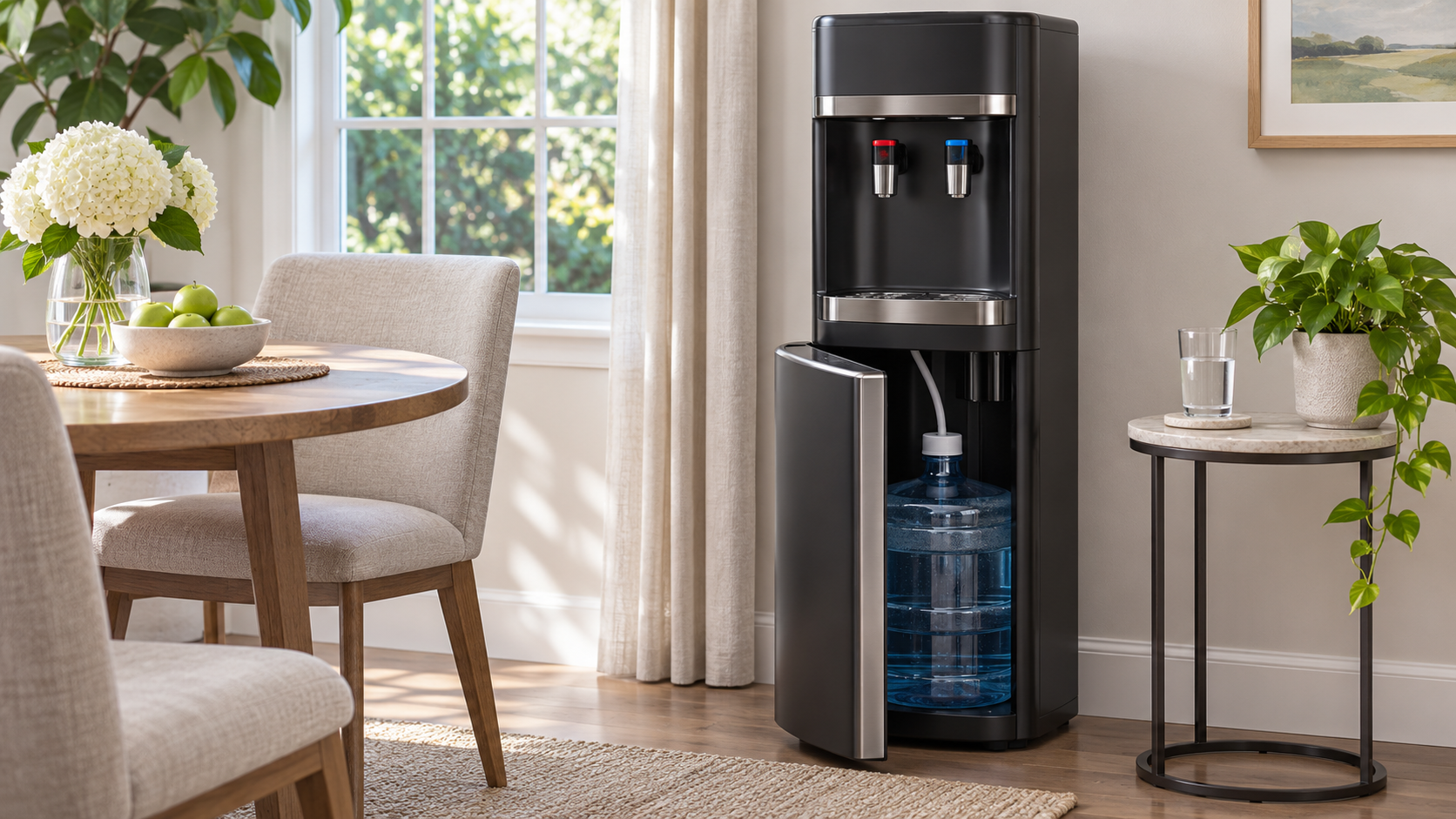
The best Oasis bottom load water cooler for most homes and small offices is the Aquarius BAEB1SHSK if you want a bottled, freestanding unit with hot, cold, and room-temperature water. Oasis also offers the Mirage MIR311D-3, a more flexible model that can use a bottom-loaded bottle or be converted to a plumbed water-line configuration with the included parts, according to Oasis product literature. These are different designs, so the choice depends on whether you want a straightforward bottle dispenser or a model that can adapt to a direct water connection. This guide explains the available models, bottle handling, dispensing controls, installation, cleaning, replacement parts, and how Oasis compares with other cooler formats. Product availability varies, and we do not claim side-by-side testing; model details are based on Oasis documents and current listing data.
Quick picks by setup
Choose Aquarius BAEB1SHSK when your priority is a simple bottom-load bottled cooler with hot, cold, and room-temperature dispense options. The lower bottle compartment removes the need to lift a full jug to the top of the unit, while the three-temperature arrangement suits homes, break rooms, and small offices. Consider Mirage MIR311D-3 when you may want to begin with bottled water but later connect to a plumbed supply; Oasis literature describes the model as convertible. For the fewest moving parts, compare these with a top-load cooler. For a continuous supply without bottle changes, compare point-of-use models, but remember that plumbing and filtration requirements are different from bottle-loading convenience.
What makes an Oasis cooler different
Oasis is a long-standing cooler and fountain maker whose catalog includes residential bottled dispensers as well as commercial drinking fountains, bottle fillers, and point-of-use coolers. That breadth means a web search for an “Oasis cooler” can show wall-mounted fountains, water-line models, replacement parts, or bottle units with similar brand naming. For this keyword, focus on exact model codes and bottle-loading method. The two models most relevant to a bottom-load household dispenser are Aquarius BAEB1SHSK and Mirage MIR311D-3. Always confirm the manufacturer model number on the rating label, manual, seller listing, and any replacement-part page before ordering.
Aquarius BAEB1SHSK: the core bottom-load model
Oasis identifies BAEB1SHSK as the Aquarius Bottom Load Bottle Cooler. Its tri-temperature design dispenses hot, cold, and room-temperature water. The Oasis product brochure describes its bottom-load design as eliminating heavy bottle lifting, with a polymer cabinet, indicator lights for power, heating, cooling, and empty bottle, a removable drip tray, and a high dispense point intended to help fill larger bottles. The user guide identifies the unit as model BAEB1SHSK and describes a bottle cap with a siphon tube for 3- or 5-gallon bottles. These details make the Aquarius the main product to compare when shoppers mean a conventional freestanding Oasis bottle cooler.
Mirage MIR311D-3: bottle or point-of-use flexibility
Oasis’s Mirage brochure describes the MIR311D-3 as a bottom-load cooler that can also be connected directly to a water line using supplied conversion parts. Its three-temperature dispensing includes hot, cold, and room-temperature water, and the brochure lists stainless steel reservoirs and a hot tank. The source also describes black styling with stainless accents and a three-year limited warranty for the stated model line. This flexibility can matter in a location where bottled water is useful during installation or backup but a permanent water connection may become practical later. Verify with Oasis or the authorized seller that the exact MIR311D-3 package still includes the conversion components, because used and old-stock packages may be incomplete.
Aquarius versus Mirage at a glance
Aquarius is the simpler choice when the water source will remain a 3- or 5-gallon bottle. It is designed around a lower bottle compartment and has straightforward three-temperature dispensing. Mirage is worth considering if the ability to convert to point-of-use is a real requirement and you can confirm the fittings and parts are included. Both serve hot, cold, and room-temperature water, but the presence of a line-conversion option changes installation planning. Do not treat the two model names as cosmetic variations. Compare the model code, dimensions, reservoir materials, package contents, warranty terms, and exact seller. Pricing or availability can change, so make the decision around your water source and service needs rather than a temporary discount.
Bottom load versus top load
A bottom-load cooler stores the bottle inside the cabinet. You slide the jug onto the floor of the unit and connect its neck to a siphon tube, avoiding the overhead lift required by many top-load designs. This can make changes easier for people who do not want to raise a heavy jug above shoulder level and keeps the bottle hidden behind a door. The tradeoff is that a pump has to move water from the lower bottle to the reservoirs, and the unit needs floor space for the bottle bay. A top-load model is usually easier to inspect visually and may have a simpler feed path, but it requires lifting the jug. Both approaches still need cleaning and correct bottle handling.
Bottle sizes and replacement rhythm
The Aquarius guide states that its siphon tube can accommodate a 3- or 5-gallon bottle. A five-gallon jug reduces the number of changes but weighs substantially more when full, while the bottom-load cabinet avoids lifting it to the top. A three-gallon bottle may be easier to position in a narrow bay and can be a practical choice when the cooler is used lightly. Check the cabinet opening and bottle dimensions before selecting a supplier’s jug; bottle shoulders and caps can vary. A compatible cap must form a secure connection with the cooler’s bottle connector. When the empty-bottle indicator illuminates, replace the jug using the procedure in the manual rather than continuing to run the pump dry.
How bottom-loading bottle pickup works
The user guide shows a cap and siphon tube assembly that reaches into the bottle and connects to the cooler. In general, the pickup tube draws water from the jug into the cooler’s reservoirs when the system calls for it. Correct connection is essential: the manual warns that the pump can run without dispensing if the cap is not securely connected to the bottle connector. Insert the tube fully, make sure the cap fits the jug, and check that the line is not pinched when the bottle slides into the cabinet. The assembly should remain clean and intact. Do not pull hard on the tube or force a bottle neck that does not match the cap.
Hot, cold, and room temperature
The Aquarius and Mirage are tri-temperature options in their relevant model descriptions. Hot water can be convenient for tea, instant oatmeal, and other uses, while cold and room-temperature choices suit drinking and cooking. The actual water temperature and recovery depend on the model, ambient conditions, reservoir size, and how frequently several people draw water. A dispenser is not an instant high-volume kettle or refrigerator. Review the specific manual and official performance data if the cooler will serve a busy break room. If your household will never use hot water, consider whether a hot-water tank and its standby energy use are worth having; some units provide a separate rear switch to disable heating.
Aquarius buttons, safety, and indicator lights
The Aquarius user guide describes separate controls for hot, room-temperature, and cold water, and a safety feature on the hot-water control. Read the operation labels and manual before use, especially if children can reach the dispenser. Hot water can cause burns; supervise children and use the safety lock as instructed. The unit also has indicator lights for power, heating, cooling, and an empty bottle. The empty indicator helps distinguish an empty jug from an electrical or dispensing problem. Learn which lights represent normal heating and cooling cycles before troubleshooting; indicator behavior is most helpful when understood in context of the model manual.
Dispensing height, cups, and bottle filling
Oasis marketing material highlights an extra-high dispense point on the Aquarius so users can fill taller sport bottles. The real usable height depends on the bottle neck and the drip tray arrangement, so measure your most-used bottle instead of assuming every wide tumbler fits. A removable drip tray catches small spills and can be lifted out for cleaning. Check that the faucet position, cup recess, and tray work with the containers your household uses. If users fill large water bottles every day, the clearance below the spout may matter more than cabinet color or a night-light feature.
Where an Oasis bottom-load cooler fits
A freestanding bottled cooler needs an accessible outlet and enough floor area to open the lower door and slide a full jug in and out. Leave space behind and around the unit for ventilation as stated in the manual; do not push condenser vents against a wall or block them with stored items. A kitchen corner, office break area, reception room, or workshop may work if the floor is level and the surrounding area stays dry. Measure doorway and corridor clearance before delivery. Also consider the user’s path to the water: a bottom-load door that is blocked by a cabinet or trash bin defeats the easier bottle change.
Aquarius installation checklist
Place the cooler on a level, stable floor near a properly grounded electrical outlet. Follow the Aquarius manual’s clearance and electrical instructions. With the unit unplugged and the hot and cooling switches off, open the lower cabinet, place the bottle on the floor in front, remove its cap, and fit the siphon assembly as described. Slide the tube into the bottle and secure the cap. Move the jug gently into the cabinet and close the door without pinching the tube. Connect power only as the manual directs. Allow the reservoir to fill and confirm water flows from the appropriate outlets before turning on heating or cooling. Do not energize an empty tank; manufacturer instructions take precedence over this summary.
First use and priming
After a new installation or bottle change, the manual says the pump may run while reservoirs refill. Wait for the pump to stop and confirm water flows before enabling the heating and cooling switches as instructed. The user guide recommends flushing an initial volume through the system before regular use and provides first-use wait times for hot and cold water; consult the current manual for exact amounts and timing for your unit. A new dispenser may need time to cool or heat its reservoirs, so do not judge performance immediately after plugging it in. If water does not flow, check the cap seal, tube position, bottle supply, switches, and indicator state rather than repeatedly cycling power.
Bottle-change routine
A careful bottle change limits spills and protects the pickup assembly. Turn the dispenser off or follow the model-specific instructions for changing a bottle. Open the cabinet, pull the bottle out without yanking the tube, and remove the cap assembly. Replace the empty jug with a compatible full one, secure the cap, lower the tube to the bottle bottom, and slide the bottle back without twisting the line. Close the door so the empty-bottle indicator can reset if the manual specifies that behavior. If there is a spill, wipe it up immediately and make sure the floor and electrical area are dry. Keep spare bottles upright and away from direct heat.
Cleaning schedule and safe routine
Oasis manuals instruct users to clean their bottled coolers at regular intervals; the Aquarius guide calls for cleaning every six months. Follow the exact manual for the model and any local water-supplier requirements. Unplug the cooler before cleaning. If the unit has been heating, allow the hot tank to cool as directed before draining. Use only the cleaner and concentration approved by the manual, rinse as instructed, and do not pour cleaner into electrical openings or the compressor area. Clean removable drip trays separately and allow them to dry. Avoid abrasive scouring that can damage a finish, and never mix cleaning chemicals. A written maintenance date helps households remember the six-month interval.
Siphon tube and bottle cap care
The siphon tube contacts the bottle and water path, so keep it clean and handle it carefully. The Aquarius guide advises that if the tube must be removed, it should be washed with soapy water and rinsed thoroughly before it is reinstalled. Use the manual’s instructions for disassembly and avoid touching the tube unnecessarily. Inspect the bottle cap and connectors for cracks, loose fit, or residue. Replace damaged pieces with the correct model parts rather than tape or improvised fittings. After cleaning, ensure every part is fully rinsed so soap does not change the taste. If the line becomes cloudy, brittle, or kinked, contact Oasis or a parts distributor for a compatible replacement.
Drip tray and dispensing area
The removable drip tray is one of the easiest parts to maintain. Empty it before it overflows, lift it out without splashing, wash it with mild dish soap if allowed by the manual, rinse, dry, and reinstall it. Wipe the dispensing area with a clean cloth and an approved surface cleaner. Do not spray directly into buttons, outlets, or the faucet assembly. The tray is not a drain connection; water collected there must be emptied. If a persistent puddle forms beneath the unit, investigate the bottle, cap, tubing, and internal drain area according to the service manual, and unplug the cooler if water reaches electrical components.
Parts and service access
Oasis maintains a parts catalog and an authorized service network for many cooler models. Search by the full model code and serial or rating-label data. The Aquarius parts breakdown identifies distinct components such as the door, drip tray, buttons, sensors, control board, hot tank, valves, pump, bottle cap assembly, compressor, and drain assembly. This level of parts documentation is helpful when a unit needs repair, but it does not mean every part is stocked everywhere or that user repair is appropriate. Electrical, compressor, sealed-system, and hot-tank work should be handled by a qualified technician. Contact Oasis or a service provider with the model and symptom rather than ordering by a generic part name.
What to check before buying replacement parts
Confirm that a replacement part number is listed for your exact cooler model and revision. A similar-looking Oasis part may fit a different dispenser family. Compare the part diagram, connector shape, voltage, and model table. For an Aquarius, the parts documentation associates the BAEB1SHSK model with its own cap and pump components. For Mirage, consult its separate model parts list and conversion kit documentation. If you buy through an independent parts dealer, ask whether the item is original equipment, compatible aftermarket, or a substitute, and check return rules. Keep the original manual or a photograph of the rating label for future service.
Aquarius versus Mirage service strategy
Aquarius is the direct choice for a bottle-only installation, so its service concerns center on the bottle cap/siphon, pump, tank, controls, refrigeration system, and hot-water components. Mirage adds conversion-to-POU flexibility, so users planning to plumb it should also clarify the included parts, water-line connection requirements, filtration, shutoff valve, and installation service. A direct water connection is not a simple substitute for a bottle: it requires appropriate plumbing, and may introduce local requirements. If the cooler is in a rental or temporary office, Aquarius bottle-only use may be easier to relocate. For a permanent break room with water nearby, Mirage’s conversion capability may justify the extra planning.
Power, energy, and operating cost
Both heating and refrigeration draw electricity, and a hot-water tank may maintain temperature between draws. Oasis marketing and Energy Star product information provide model-specific figures; Energy Star currently lists Aquarius BAEB1SHSK as a certified bottom-load, high-capacity hot/cook/cold unit, with a published daily energy use under its defined idle test conditions. That lab figure is not a household bill estimate. Real use depends on room temperature, draw frequency, settings, ventilation, and whether heating is left on. If you rarely use hot water, check whether the exact model has a separate hot switch and follow the manual for disabling it. Compare total ownership cost with a cooler that provides only the temperatures you actually use.
Safety around hot water and electricity
The cooler combines mains electricity, chilled water, and a heated tank. Keep the plug and surrounding floor dry, use a grounded outlet as specified, and do not operate a unit with a damaged cord. Follow the hot-water safety lock procedure and keep children away from the dispensing point. Unplug before cleaning or opening a service panel. If you detect a leak, burning smell, unusual electrical noise, or repeated breaker trips, stop using the unit and contact qualified service. Never remove a hot tank cap or service refrigeration components while the unit is powered. This guide is for selection and routine user care; the model manual and qualified service instructions govern repairs.
Oasis versus other bottom-load brands
A brand comparison should consider exact model support and parts availability, not just the cabinet or advertised temperature buttons. Oasis offers Aquarius and Mirage examples with documented bottle handling and service parts. Other brands may offer larger feature displays, self-cleaning cycles, UV features, or child locks, but those features differ by model and can add maintenance or electronics. Verify whether the bottle pump is replaceable, whether the drip tray is removable, how hot water is secured, and whether filters are needed. Compare dimensions and bottle capacity. An Oasis unit may be preferable when its commercial-style parts documentation and service network matter; another brand could suit buyers who prioritize a lower purchase price or different controls.
Bottom-load versus bottleless point-of-use
A bottleless point-of-use cooler connects to a pressurized water line and typically requires a filter, a shutoff, and an installation route. It avoids ordering and storing bottles but adds filter replacement and plumbing maintenance. Oasis Mirage is notable because its product literature describes a bottom-load bottled mode and a conversion to point-of-use with included components. Confirm the actual contents of the package before treating that flexibility as available. A fixed POU model is a better fit if you know the water line will be permanent; a bottle unit is useful where plumbing is not practical. Compare the cost of bottles over time with filters, installation, and service.
Bottom-load versus countertop
A countertop dispenser occupies less floor area but consumes valuable counter space and may have smaller reservoirs or different bottle capacities. A freestanding Aquarius or Mirage keeps the bottle and dispenser on the floor and can serve multiple users without taking over a work surface. Check counter load limits and dimensions if considering countertop alternatives. For a large family or small office that draws repeatedly throughout the day, a floor unit may be more convenient. For a single user with limited floor space, countertop equipment could be a better match. The Oasis keyword specifically points to bottom-load floor-standing models, so do not confuse an Aquarius countertop model with the Aquarius bottom-load cooler.
Troubleshooting common symptoms
If the dispenser does not dispense after a bottle change, check whether the jug is empty, the cap is secure, the tube reaches the bottle, the door is fully closed, and the reservoir has finished filling. If cold water is not cold immediately after installation, allow the manual’s stated pull-down time. If hot water is unavailable, check the hot switch and indicator, but avoid opening the unit. If the pump runs continuously, the manual suggests checking the bottle-cap connection and water supply; persistent pump operation may signal a leak or sensor issue and should be serviced. If water appears below the unit, unplug it if safe and find the source before resuming operation.
Warranty, seller, and model-code checks
Warranty length differs by model and may vary by seller, region, or purchase date. Oasis’s Mirage brochure describes a three-year limited warranty for the stated model, while the Aquarius documentation should be checked for its applicable warranty rather than assuming it is identical. Keep the invoice and model/serial label. Marketplace listings sometimes combine titles, images, and specifications from multiple Oasis models. Confirm the model code, color, temperature options, bottle size support, and whether the cooler is new, used, or refurbished. Ask the seller who handles warranty claims and whether the unit ships with the manual and all bottle connection parts.
Who should buy Aquarius BAEB1SHSK
Aquarius is a strong candidate for a household or office that wants conventional hot, cold, and room-temperature bottled water, dislikes lifting a heavy jug onto the top of a cooler, and values a defined bottle-loading procedure and service parts. It suits users willing to store spare jugs and perform periodic cleaning. It is less compelling if you want to avoid bottle deliveries, need a compact countertop unit, or do not use hot water. Measure its height, width, depth, and cabinet opening from a current spec sheet or retailer listing before reserving floor space.
Who should consider Mirage MIR311D-3
Mirage makes sense when a buyer values a path from bottle loading to a direct water connection. It still offers bottom-load access and three temperatures, while Oasis product literature describes conversion to POU using included parts. That can fit a changing office or home arrangement, but it should not be bought on that promise alone: verify the current kit, water-line requirements, installation details, warranty, and available service. If you only plan to use bottles, Aquarius may be the simpler choice. If you know you want plumbing from day one, compare Mirage with Oasis’s dedicated POU coolers and check whether the conversion package adds components you will not use.
How to decide between the two models
Ask four questions. First, do you want only bottled supply, or may you plumb the unit later? Second, do you need three temperatures, including hot water, or would cold and ambient suffice? Third, who will change the bottle, and is a 3- or 5-gallon jug a manageable fit for the cabinet? Fourth, can you obtain model-specific parts and service locally? Aquarius is the straightforward bottle-first answer. Mirage is the flexible bottle-or-POU option. If either model is difficult to find new, use the exact model code to compare authorized dealers and parts support instead of selecting a different Oasis product with a similar name.
Frequently asked questions: Is Aquarius a bottom-load cooler?
Yes. Oasis identifies Aquarius BAEB1SHSK as a bottom-load bottle cooler. The full model code matters because Oasis also sells other Aquarius products, including countertop and plumbed variants.
Frequently asked questions: Which Oasis model can be converted to point-of-use?
Oasis literature describes Mirage MIR311D-3 as bottom-load and convertible to point-of-use with supplied parts. Check current package contents and installation requirements with the seller or Oasis before purchase.
Frequently asked questions: What bottle size fits Aquarius?
The Aquarius BAEB1SHSK manual describes the siphon tube as accommodating 3- or 5-gallon bottles. Confirm the bottle cap and neck fit the model connector.
Frequently asked questions: How often should I clean an Oasis cooler?
Follow the manual for your exact model. The Aquarius user guide calls for regular cleaning and specifies a six-month interval. Clean sooner if the cooler is visibly dirty or has been contaminated, following Oasis instructions.
Frequently asked questions: Does an Oasis bottom-load cooler need plumbing?
Aquarius BAEB1SHSK uses a bottle. Mirage MIR311D-3 can be configured for bottle use or converted to point-of-use according to Oasis literature. A dedicated bottleless model requires a water-line connection.
Frequently asked questions: Is the Aquarius Energy Star certified?
The U.S. Energy Star product finder lists model BAEB1SHSK as certified, bottom-load, hot/cook/cold, and high capacity. Confirm the exact model and current listing before purchase; energy data is based on a defined test method.
Official sources and product support
Model details can change, so use the current documentation for the exact product: Oasis Aquarius bottom-load brochure; Oasis Mirage product brochure; Oasis Coolers product and support site; Oasis parts catalog; Energy Star BAEB1SHSK listing; Aquarius BAEB1SHSK user manual. Product examples and primary image are from Amazon Creators API. For current prices, bottle availability, warranty, and service, verify with the seller and Oasis.
Oasis Aquarius bottom-load model

For Oasis Mirage MIR311D-3, use this exact-model Amazon search; confirm the model code and seller listing before buying.
Certain content that appears on this site comes from Amazon. This content is provided “as is” and is subject to change or removal at any time. Product names and images are supplied through Amazon Creators API; confirm current listing details and compatibility on the product page.