Where to buy
Check the latest price, availability and delivery on Amazon. Orders are placed on Amazon. We may earn a commission from qualifying purchases.
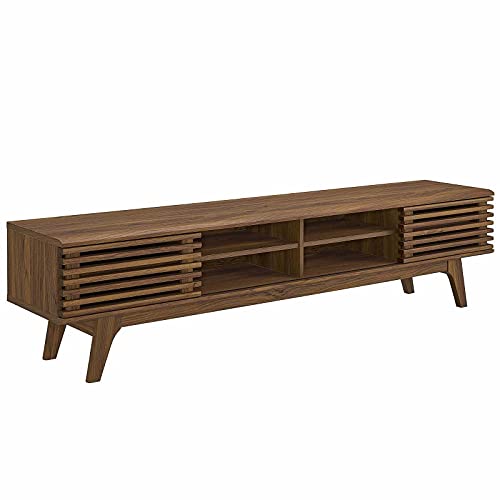
- Modway Render 70-Inch Low Profile Media Console, Walnut — Check on Amazon · view the listing
- SIMPLIHOME Artisan 53-Inch Tall Solid Wood Media Console, Natural Aged Brown — Check on Amazon · view the listing
- SIMPLIHOME Harper 60-Inch Solid Wood Media Console, Walnut Brown — Check on Amazon · view the listing
- Walker Edison Mid Century Modern TV Stand Console with 3 Drawers, 60 Inch, Walnut — Check on Amazon · view the listing
- Walker Edison Modern Slatted Wood TV Stand, 70 Inch, Dark Walnut — Check on Amazon · view the listing
- SIMPLIHOME Artisan 72-Inch Solid Wood Media Console, Tobacco Brown — Check on Amazon · view the listing
Read the full guide below before you order. Finishes and stock change, so confirm the exact variation on the listing itself.
Disclosure: As an Amazon Associate, dailyhomedecorating.com earns from qualifying purchases. Links to Amazon on this page are affiliate links; they cost you nothing extra. Listing details such as price and availability change often, so check the current Amazon listing before you buy.
Hunting the best media console for small apartments under $1000 means unlearning the usual advice, because in an apartment the console is never just a TV stand — it is also the living room’s main storage furniture, a room divider of visual weight, and a piece that had to survive the elevator, the hallway turn and possibly a walk-up before it stored anything. The six picks here were judged on apartment realities: depth before width, delivery and assembly sanity, storage that replaces a second piece of furniture, and footprints that leave a small room still feeling like a room.
Apartment life adds two constraints houses forgive. The first is the rental constraint: most leases frown on wall-mounting a big TV, so the console must carry the set confidently — and anchoring with a strap, where the lease allows, or choosing low, stable profiles where it does not. The second is the one-room-many-jobs constraint: the console that holds the TV at night holds the laptop at noon and the board games on Friday, so drawers and closed cabinets earn more here than open display shelving ever will.
As throughout this batch, prices are not printed — every pick belongs to the under $1000 tier, so check price on Amazon for the current figure — and every dimension was verified, because in a small apartment a two-inch error is not a detail, it is the difference between fitting and returning. Measure your wall, your doorway and your TV feet before you fall for any pick below, including our favorites.
In this guide
Quick Picks
Short on time? Each row names a buyer type and the console that suits it. Every pick belongs to the under $1000 tier — check price on Amazon for the current figure on the finish you want.
| Buyer type | Pick | Why it stands out | Link |
|---|---|---|---|
| Best overall | Modway Render 70-Inch Low Profile Media Console, Walnut | Low, shallow mid-century console with sliding slatted doors, four cubbies and two cable management holes. At 70 (W) x 13.5 (D) x 17 (H) inches, for TVs up to 78 inches — check price on Amazon | Check on Amazon |
| Best for a large TV | SIMPLIHOME Artisan 53-Inch Tall Solid Wood Media Console, Natural Aged Brown | Narrow, tall solid-wood console with two drawers, an open center with adjustable shelves and glass-front side cabinets. At 53 (W) x 16.5 (D) x 34.8 (H) inches, for TVs up to 60 inches — check price on Amazon | Check on Amazon |
| Best modern profile | SIMPLIHOME Harper 60-Inch Solid Wood Media Console, Walnut Brown | Solid-wood 60-inch console with three notched-handle drawers and two open compartments with rear cable cutouts. At 60 (W) x 19 (D) x 22 (H) inches, for TVs up to 65 inches — check price on Amazon | Check on Amazon |
| Best slim footprint | Walker Edison Mid Century Modern TV Stand Console with 3 Drawers, 60 Inch, Walnut | Tall mid-century console pairing three drawers with closed cabinet storage in a 60-inch frame. At 60 (W) x 16 (D) x 33 (H) inches, for TVs up to 65 inches — check price on Amazon | Check on Amazon |
| Best for storage | Walker Edison Modern Slatted Wood TV Stand, 70 Inch, Dark Walnut | Long laminate console with slatted door fronts, three open top compartments, two side cabinets and a center drawer. At 70 (W) x 15 (D) x 24 (H) inches, for TVs up to 80 inches — check price on Amazon | Check on Amazon |
| Best for a short wall | SIMPLIHOME Artisan 72-Inch Solid Wood Media Console, Tobacco Brown | Extra-wide solid-wood console with framed tempered-glass cabinets, a flip-down drawer and a pull-out drawer. At 72 (W) x 16.5 (D) x 26 (H) inches, for TVs up to 80 inches — check price on Amazon | Check on Amazon |
How These Picks Were Chosen
Footprint discipline filtered this list first. We capped depth hard — the leading pick is only 13.5 inches deep — and favored consoles whose storage stacks vertically or hides behind sliding doors that need no swing clearance in a tight traffic path. Wide picks survived only when their depth stayed shallow enough to justify the wall they consume.
Storage-per-square-foot came second, because an apartment console must do two jobs. We counted drawers and closed cabinets as the valuable currency — they replace the extra chest or sideboard a small home has no floor for — and marked down open-only designs that display clutter in a room with nowhere else for it to go. Assembly and delivery were scored too: flat-pack that one person can get up the stairs beats a beautiful console that cannot make the turn.
The grown-up checks still applied: verified dimensions, stated TV fit that matches the top width, ventilation for hot equipment, and rear cable cutouts, because a small room shows every dangling cord at twice its size. What survived is a list that starts narrow and shallow and only goes wide where wide genuinely works.
Detailed Reviews
Each review follows the same pattern: who the console suits, what it does well, the limitation we would want to know before buying, and a plain choose-or-skip verdict.
Modway Render 70-Inch Low Profile Media Console, Walnut
Who it suits: Anyone furnishing a narrow room who wants a wide TV to sit low and close to the wall. The Render leads for apartments on geometry alone: sliding doors, minimal depth, and a low line that keeps a small room open.
The verified numbers first: 70 (W) x 13.5 (D) x 17 (H) inches, designed for TVs up to 78 inches, weighing 56 lb before the TV and components go on. Low, shallow mid-century console with sliding slatted doors, four cubbies and two cable management holes. Those numbers decide real things. Width decides whether the TV feet land with margin or at the very edge. Depth decides whether a receiver plus its cable bends fit behind closed doors or force the console off the wall. Height decides whether the screen center lands near seated eye level or floats above it. We judged every pick on that geometry first and on styling second, because at this tier the console you keep for a decade is the one whose storage matches the equipment you own, not the one with the prettiest listing photo.
In practice, measure three things before this console earns a place on your shortlist. First, the footprint of your TV feet, not the screen diagonal printed on the box: two TVs with the same diagonal can stand a foot apart or nearly at the edges, and only the foot spacing tells you whether the set sits safely inside the top. Second, the tallest component you own, measured with its cables bent behind it, because a receiver that fits the bay on paper can still cook itself when the rear panel leaves no room for air to move. Third, the path from the front door to the wall, including the turn at the hallway, because a long or tall console that cannot make the turn is a return, not a purchase. Shoppers who run those three checks almost never send a console back, and shoppers who skip them account for most of the frustrated measuring-tape stories attached to furniture this size.
Pros
- Only 13.5 inches deep and 17 inches high, the slimmest footprint of any 70-inch pick here
- Sliding doors need no swing clearance, ideal in tight traffic paths
- Light enough at 56 pounds for one person to reposition during setup
Honest limitation: The low, shallow cubbies will not fit a tall AV receiver or a center speaker with room to breathe. Every console has a version of this trade-off, and naming it plainly is the point of this guide. If the limitation collides with your equipment or your room, skip this pick without regret — the list is built so the next pick covers this one’s weakness.
Assembly and ownership deserve the same honesty as the dimensions. Consoles in this tier arrive flat-packed or partly assembled, and the realistic build is a two-person job with a clear floor, a soft blanket under the panels, and the patience to leave every fastener finger-tight until the whole frame is square. Once built, the care routine is simple but not optional: dust with a dry or barely damp cloth, keep standing water and hot mugs off the top without a coaster, re-tighten leg and hinge hardware after the first month as the joints settle, and route cables so nothing heavy hangs from a port. None of that is glamorous, and all of it is the difference between a console that still looks intentional in five years and one that wobbles by the second holiday season.
Choose it if the fit notes above match your TV, wall and equipment list. Skip it if the limitation is the one thing your room cannot work around. Check on Amazon Check on Amazon
SIMPLIHOME Artisan 53-Inch Tall Solid Wood Media Console, Natural Aged Brown
Who it suits: Short-wall rooms, bedrooms and dens where width is scarce but a 55- to 60-inch TV still needs a real stand. The tall Artisan is the apartment storage play — a dresser’s worth of cabinets standing on a 53-inch footprint.
The verified numbers first: 53 (W) x 16.5 (D) x 34.8 (H) inches, designed for TVs up to 60 inches, weighing 94.8 lb before the TV and components go on. Narrow, tall solid-wood console with two drawers, an open center with adjustable shelves and glass-front side cabinets. Those numbers decide real things. Width decides whether the TV feet land with margin or at the very edge. Depth decides whether a receiver plus its cable bends fit behind closed doors or force the console off the wall. Height decides whether the screen center lands near seated eye level or floats above it. We judged every pick on that geometry first and on styling second, because at this tier the console you keep for a decade is the one whose storage matches the equipment you own, not the one with the prettiest listing photo.
In practice, measure three things before this console earns a place on your shortlist. First, the footprint of your TV feet, not the screen diagonal printed on the box: two TVs with the same diagonal can stand a foot apart or nearly at the edges, and only the foot spacing tells you whether the set sits safely inside the top. Second, the tallest component you own, measured with its cables bent behind it, because a receiver that fits the bay on paper can still cook itself when the rear panel leaves no room for air to move. Third, the path from the front door to the wall, including the turn at the hallway, because a long or tall console that cannot make the turn is a return, not a purchase. Shoppers who run those three checks almost never send a console back, and shoppers who skip them account for most of the frustrated measuring-tape stories attached to furniture this size.
Pros
- The narrowest width in this guide, made for short walls that still deserve solid wood
- Tall body stacks storage vertically instead of spreading it across the floor
- Ball-bearing drawer glides and adjustable shelves feel properly furniture-grade
Honest limitation: Heaviest pick here despite being the narrowest, and the tall stance demands an anti-tip strap. Every console has a version of this trade-off, and naming it plainly is the point of this guide. If the limitation collides with your equipment or your room, skip this pick without regret — the list is built so the next pick covers this one’s weakness.
Assembly and ownership deserve the same honesty as the dimensions. Consoles in this tier arrive flat-packed or partly assembled, and the realistic build is a two-person job with a clear floor, a soft blanket under the panels, and the patience to leave every fastener finger-tight until the whole frame is square. Once built, the care routine is simple but not optional: dust with a dry or barely damp cloth, keep standing water and hot mugs off the top without a coaster, re-tighten leg and hinge hardware after the first month as the joints settle, and route cables so nothing heavy hangs from a port. None of that is glamorous, and all of it is the difference between a console that still looks intentional in five years and one that wobbles by the second holiday season.
Choose it if the fit notes above match your TV, wall and equipment list. Skip it if the limitation is the one thing your room cannot work around. Check on Amazon Check on Amazon
SIMPLIHOME Harper 60-Inch Solid Wood Media Console, Walnut Brown
Who it suits: Buyers who want one honest, furniture-grade console for a 55- to 65-inch TV and plan to keep it for years. The Harper suits apartments with a standard wall and a big clutter problem: three drawers end the remote-and-charger sprawl.
The verified numbers first: 60 (W) x 19 (D) x 22 (H) inches, designed for TVs up to 65 inches, weighing 81.6 lb before the TV and components go on. Solid-wood 60-inch console with three notched-handle drawers and two open compartments with rear cable cutouts. Those numbers decide real things. Width decides whether the TV feet land with margin or at the very edge. Depth decides whether a receiver plus its cable bends fit behind closed doors or force the console off the wall. Height decides whether the screen center lands near seated eye level or floats above it. We judged every pick on that geometry first and on styling second, because at this tier the console you keep for a decade is the one whose storage matches the equipment you own, not the one with the prettiest listing photo.
In practice, measure three things before this console earns a place on your shortlist. First, the footprint of your TV feet, not the screen diagonal printed on the box: two TVs with the same diagonal can stand a foot apart or nearly at the edges, and only the foot spacing tells you whether the set sits safely inside the top. Second, the tallest component you own, measured with its cables bent behind it, because a receiver that fits the bay on paper can still cook itself when the rear panel leaves no room for air to move. Third, the path from the front door to the wall, including the turn at the hallway, because a long or tall console that cannot make the turn is a return, not a purchase. Shoppers who run those three checks almost never send a console back, and shoppers who skip them account for most of the frustrated measuring-tape stories attached to furniture this size.
Pros
- Solid hardwood build feels a clear step above flat-pack laminate at this tier
- Three wide drawers swallow remotes, controllers and game cases out of sight
- Two open bays ventilate a receiver or console properly, with cable cutouts behind
Honest limitation: At 19 inches deep it is the deepest pick here, so measure alcoves and walkways before ordering. Every console has a version of this trade-off, and naming it plainly is the point of this guide. If the limitation collides with your equipment or your room, skip this pick without regret — the list is built so the next pick covers this one’s weakness.
Assembly and ownership deserve the same honesty as the dimensions. Consoles in this tier arrive flat-packed or partly assembled, and the realistic build is a two-person job with a clear floor, a soft blanket under the panels, and the patience to leave every fastener finger-tight until the whole frame is square. Once built, the care routine is simple but not optional: dust with a dry or barely damp cloth, keep standing water and hot mugs off the top without a coaster, re-tighten leg and hinge hardware after the first month as the joints settle, and route cables so nothing heavy hangs from a port. None of that is glamorous, and all of it is the difference between a console that still looks intentional in five years and one that wobbles by the second holiday season.
Choose it if the fit notes above match your TV, wall and equipment list. Skip it if the limitation is the one thing your room cannot work around. Check on Amazon Check on Amazon
Walker Edison Mid Century Modern TV Stand Console with 3 Drawers, 60 Inch, Walnut
Who it suits: Buyers who need viewing height and serious drawer storage in a standard 60-inch width. The tall drawer console fits apartment bedrooms and studios where the TV must sit high and storage must stack.
The verified numbers first: 60 (W) x 16 (D) x 33 (H) inches, designed for TVs up to 65 inches. Tall mid-century console pairing three drawers with closed cabinet storage in a 60-inch frame. Those numbers decide real things. Width decides whether the TV feet land with margin or at the very edge. Depth decides whether a receiver plus its cable bends fit behind closed doors or force the console off the wall. Height decides whether the screen center lands near seated eye level or floats above it. We judged every pick on that geometry first and on styling second, because at this tier the console you keep for a decade is the one whose storage matches the equipment you own, not the one with the prettiest listing photo.
In practice, measure three things before this console earns a place on your shortlist. First, the footprint of your TV feet, not the screen diagonal printed on the box: two TVs with the same diagonal can stand a foot apart or nearly at the edges, and only the foot spacing tells you whether the set sits safely inside the top. Second, the tallest component you own, measured with its cables bent behind it, because a receiver that fits the bay on paper can still cook itself when the rear panel leaves no room for air to move. Third, the path from the front door to the wall, including the turn at the hallway, because a long or tall console that cannot make the turn is a return, not a purchase. Shoppers who run those three checks almost never send a console back, and shoppers who skip them account for most of the frustrated measuring-tape stories attached to furniture this size.
Pros
- The tall 33-inch profile raises the screen, useful where seating is high or the TV doubles as a bedroom set
- Three drawers plus closed cabinets give the most concealed storage per inch of width here
- Angled mid-century legs keep the tall body from looking blocky
Honest limitation: A tall console with a big TV on top must be wall-anchored, no exceptions, and takes longer to level. Every console has a version of this trade-off, and naming it plainly is the point of this guide. If the limitation collides with your equipment or your room, skip this pick without regret — the list is built so the next pick covers this one’s weakness.
Assembly and ownership deserve the same honesty as the dimensions. Consoles in this tier arrive flat-packed or partly assembled, and the realistic build is a two-person job with a clear floor, a soft blanket under the panels, and the patience to leave every fastener finger-tight until the whole frame is square. Once built, the care routine is simple but not optional: dust with a dry or barely damp cloth, keep standing water and hot mugs off the top without a coaster, re-tighten leg and hinge hardware after the first month as the joints settle, and route cables so nothing heavy hangs from a port. None of that is glamorous, and all of it is the difference between a console that still looks intentional in five years and one that wobbles by the second holiday season.
Choose it if the fit notes above match your TV, wall and equipment list. Skip it if the limitation is the one thing your room cannot work around. Check on Amazon
Walker Edison Modern Slatted Wood TV Stand, 70 Inch, Dark Walnut
Who it suits: Style-led buyers with a big TV who want a long, low, modern line and lots of divided storage. The slatted 70-inch pick works in long, narrow apartment living rooms where the wall is generous but the depth is not.
The verified numbers first: 70 (W) x 15 (D) x 24 (H) inches, designed for TVs up to 80 inches, weighing 90 lb before the TV and components go on. Long laminate console with slatted door fronts, three open top compartments, two side cabinets and a center drawer. Those numbers decide real things. Width decides whether the TV feet land with margin or at the very edge. Depth decides whether a receiver plus its cable bends fit behind closed doors or force the console off the wall. Height decides whether the screen center lands near seated eye level or floats above it. We judged every pick on that geometry first and on styling second, because at this tier the console you keep for a decade is the one whose storage matches the equipment you own, not the one with the prettiest listing photo.
In practice, measure three things before this console earns a place on your shortlist. First, the footprint of your TV feet, not the screen diagonal printed on the box: two TVs with the same diagonal can stand a foot apart or nearly at the edges, and only the foot spacing tells you whether the set sits safely inside the top. Second, the tallest component you own, measured with its cables bent behind it, because a receiver that fits the bay on paper can still cook itself when the rear panel leaves no room for air to move. Third, the path from the front door to the wall, including the turn at the hallway, because a long or tall console that cannot make the turn is a return, not a purchase. Shoppers who run those three checks almost never send a console back, and shoppers who skip them account for most of the frustrated measuring-tape stories attached to furniture this size.
Pros
- Slatted fronts hide clutter while still letting remote signals and air reach components
- Three open top bays fit a soundbar, console and streamer side by side
- Shallow 15-inch depth keeps a long console from eating the room
Honest limitation: Laminate over engineered wood will not age like the solid-wood picks and hates standing water. Every console has a version of this trade-off, and naming it plainly is the point of this guide. If the limitation collides with your equipment or your room, skip this pick without regret — the list is built so the next pick covers this one’s weakness.
Assembly and ownership deserve the same honesty as the dimensions. Consoles in this tier arrive flat-packed or partly assembled, and the realistic build is a two-person job with a clear floor, a soft blanket under the panels, and the patience to leave every fastener finger-tight until the whole frame is square. Once built, the care routine is simple but not optional: dust with a dry or barely damp cloth, keep standing water and hot mugs off the top without a coaster, re-tighten leg and hinge hardware after the first month as the joints settle, and route cables so nothing heavy hangs from a port. None of that is glamorous, and all of it is the difference between a console that still looks intentional in five years and one that wobbles by the second holiday season.
Choose it if the fit notes above match your TV, wall and equipment list. Skip it if the limitation is the one thing your room cannot work around. Check on Amazon
SIMPLIHOME Artisan 72-Inch Solid Wood Media Console, Tobacco Brown
Who it suits: Large-screen owners who want closed, dust-managed storage without crossing into custom cabinetry money. The 72-inch Artisan is the exception pick: only for apartments blessed with one genuinely long wall.
The verified numbers first: 72 (W) x 16.5 (D) x 26 (H) inches, designed for TVs up to 80 inches, weighing 92.6 lb before the TV and components go on. Extra-wide solid-wood console with framed tempered-glass cabinets, a flip-down drawer and a pull-out drawer. Those numbers decide real things. Width decides whether the TV feet land with margin or at the very edge. Depth decides whether a receiver plus its cable bends fit behind closed doors or force the console off the wall. Height decides whether the screen center lands near seated eye level or floats above it. We judged every pick on that geometry first and on styling second, because at this tier the console you keep for a decade is the one whose storage matches the equipment you own, not the one with the prettiest listing photo.
In practice, measure three things before this console earns a place on your shortlist. First, the footprint of your TV feet, not the screen diagonal printed on the box: two TVs with the same diagonal can stand a foot apart or nearly at the edges, and only the foot spacing tells you whether the set sits safely inside the top. Second, the tallest component you own, measured with its cables bent behind it, because a receiver that fits the bay on paper can still cook itself when the rear panel leaves no room for air to move. Third, the path from the front door to the wall, including the turn at the hallway, because a long or tall console that cannot make the turn is a return, not a purchase. Shoppers who run those three checks almost never send a console back, and shoppers who skip them account for most of the frustrated measuring-tape stories attached to furniture this size.
Pros
- The widest top in this guide, properly proportioned under 75- and 80-inch TVs
- Glass-front cabinets show off a receiver display while keeping dust off components
- Solid wood with an NC lacquer finish that can be wiped clean and touched up
Honest limitation: Needs a genuinely long wall and two people to position safely at over 90 pounds. Every console has a version of this trade-off, and naming it plainly is the point of this guide. If the limitation collides with your equipment or your room, skip this pick without regret — the list is built so the next pick covers this one’s weakness.
Assembly and ownership deserve the same honesty as the dimensions. Consoles in this tier arrive flat-packed or partly assembled, and the realistic build is a two-person job with a clear floor, a soft blanket under the panels, and the patience to leave every fastener finger-tight until the whole frame is square. Once built, the care routine is simple but not optional: dust with a dry or barely damp cloth, keep standing water and hot mugs off the top without a coaster, re-tighten leg and hinge hardware after the first month as the joints settle, and route cables so nothing heavy hangs from a port. None of that is glamorous, and all of it is the difference between a console that still looks intentional in five years and one that wobbles by the second holiday season.
Choose it if the fit notes above match your TV, wall and equipment list. Skip it if the limitation is the one thing your room cannot work around. Check on Amazon
Comparison Table
| Pick | Dimensions (W x D x H) | TV fit | Storage style |
|---|---|---|---|
| Modway Render 70-Inch Low Profile Media Console, Walnut | 70 (W) x 13.5 (D) x 17 (H) inches | TVs up to 78 inches | Drawers + open bays |
| SIMPLIHOME Artisan 53-Inch Tall Solid Wood Media Console, Natural Aged Brown | 53 (W) x 16.5 (D) x 34.8 (H) inches | TVs up to 60 inches | Glass cabinets + drawers |
| SIMPLIHOME Harper 60-Inch Solid Wood Media Console, Walnut Brown | 60 (W) x 19 (D) x 22 (H) inches | TVs up to 65 inches | Slatted doors + open bays |
| Walker Edison Mid Century Modern TV Stand Console with 3 Drawers, 60 Inch, Walnut | 60 (W) x 16 (D) x 33 (H) inches | TVs up to 65 inches | Sliding doors + cubbies |
| Walker Edison Modern Slatted Wood TV Stand, 70 Inch, Dark Walnut | 70 (W) x 15 (D) x 24 (H) inches | TVs up to 80 inches | Drawers + cabinets |
| SIMPLIHOME Artisan 72-Inch Solid Wood Media Console, Tobacco Brown | 72 (W) x 16.5 (D) x 26 (H) inches | TVs up to 80 inches | Drawers + glass cabinets |
How to Choose
Measure the room, then the wall, then the doorway — in that order. Note the wall length, but also the depth budget: in most apartments the console can take 14 to 17 inches of floor depth before it starts stealing the walkway, which is why the shallow picks lead this list. Then measure the delivery path honestly, including the tightest turn, and compare it with the packaged and assembled dimensions on the listing.
Choose storage that replaces furniture. A console with three real drawers and two cabinets can absorb the remotes, the game library, the chargers and the blanket, letting you skip the extra storage piece your floor plan cannot hold. Sliding and slatted fronts earn a premium in apartments because they open without swing space, and a tall narrow console is often the smartest buy of all: it stores like a dresser while standing on a footprint the width of a doorway.
Plan the TV without wall-mounting if your lease says no. A low, wide console keeps a big set’s center of gravity down; a tall console must be anchored, so check the lease before choosing height. Keep cables inside the footprint with the rear cutouts and an in-bay power strip — in a small room the cable nest is not behind the furniture, it is part of the furniture, and everyone sees it.
Common Mistakes
- Buying the widest console the wall can hold and discovering it consumes the room’s only walkway depth.
- Ignoring the delivery path — the console that cannot turn the hallway corner becomes a return at the worst possible moment.
- Choosing open shelving in a one-room home, so every object you own joins the TV wall on permanent display.
- Assuming the TV can be wall-mounted later, without ever checking what the lease actually allows.
- Skipping depth measurements and ending up with a console floating inches off the wall on its cable bends.
- Buying storage-free minimalism and then buying a second storage piece that costs the floor space you saved.
Before ordering, do the apartment triple-check one final time: tape the console’s footprint on the floor with painter’s tape and live around it for an evening, measure the tightest turn on the delivery path with the packaged dimensions from the listing, and photograph your current clutter pile so you can honestly judge whether the drawers you are buying can swallow it. If the taped footprint eats the walkway, drop to the shallower pick without nostalgia — in a small apartment, the best console is the one whose absence of problems you notice every day, not the one whose extra four inches of width you notice once.
Final Recommendation
For most small apartments the Render is the answer: a full 70 inches of TV capacity folded into the shallowest, lowest footprint in this guide, with sliding doors that ask for nothing from your walkway. If your wall is short instead of shallow, take the tall 53-inch Artisan — solid wood, stacked storage, and a footprint that fits where no wide console can.
Whichever pick you choose, measure the delivery path before the wall, keep one open bay for the hot equipment, and let the console’s drawers do the work of the storage piece you now do not need. In a small apartment the right console does not just hold the TV — it gives you back floor, and floor is the one thing no apartment ever has enough of.
Frequently Asked Questions
What is the best media console size for a small apartment?
For most small apartments, 53 to 60 inches wide and no more than about 16 inches deep is the sweet spot: wide enough for a 55- to 65-inch TV, shallow enough to keep the walkway. If your wall is longer than it is deep, a shallow 70-inch low console can work beautifully — depth, not width, is the measurement that decides.
Can a media console replace other storage in an apartment?
Yes, and in a small home it should. Consoles with real drawers and closed cabinets absorb the media clutter, chargers, games and blankets that would otherwise need a second piece. The tall and drawer-led picks here were chosen for exactly that double duty; count your storage needs before choosing the prettiest front.
What if my lease does not allow wall-mounting or anchoring?
Choose low and stable: a low-profile console with a wide footprint keeps the TV’s weight down low, and furniture pads plus careful placement do the rest. If anchoring is allowed with small holes, a strap into a stud remains the safest option and most leases treat it like a picture hook — but read your own lease, not our summary of one.
How do I get a big console into a small apartment?
Check the listing’s packaged dimensions against your door, elevator and hallway turn before ordering, and favor flat-pack designs that assemble in the room. The lighter picks here can be handled by one person; the solid-wood picks are a two-person carry, so plan the help for delivery day, not after the box is in the hall.
Are sliding doors better than hinged doors in small spaces?
For tight rooms, usually yes: sliding doors need zero swing clearance, so the console can sit closer to seating and walkways. Slatted fronts offer a similar benefit with better airflow. Hinged doors win on full access to the cabinet interior, so the choice is clearance versus convenience — measure your walkway and decide.
Related Guides
Planning the same room? These guides from our living room furniture batch pair naturally with this one:
- Best Tv Stand For Small Apartments Under $1000
- Best Media Console Under $1000
- Best Coffee Table For Small Apartments Under $1000
- Best Bookcase For Small Apartments Under $1000
- Best End Table For Small Apartments Under $1000