Disclosure: As an Amazon Associate, dailyhomedecorating.com earns from qualifying purchases. Links to Amazon on this page are affiliate links; they cost you nothing extra. Prices and availability change often, so check the current Amazon listing before you buy.
The best mattresses for belly sleepers — stomach sleepers, in the more common phrase — are firm, flat, and unsentimental, because stomach sleeping is the position with the least margin for error. Lying face-down, your pelvis is the heaviest point on the bed; if the surface lets it sink even a few inches deeper than your chest, your lower back spends the night in an exaggerated arch, and your neck spends it rotated hard to one side so you can breathe. A soft mattress is therefore not a kindness to a belly sleeper — it is an eight-hour backbend. The right mattress holds the pelvis level with the chest on a firm, even plane, cushions the ribs and knees just enough to be comfortable, and pairs with the thinnest pillow you can tolerate (or none). This guide is comfort framing, not medical advice — persistent back or neck pain deserves a clinician — but the mechanics here are simple and unforgiving, and every pick below respects them.
We screened the pool for firmness integrity: firm-leaning feels, high-density cores, coil systems that hold the midsection up, and responsive surfaces that do not slowly swallow the pelvis overnight. Plush, deep-sinking mattresses were excluded regardless of their other virtues — for this keyword, they are not mattresses, they are traps.
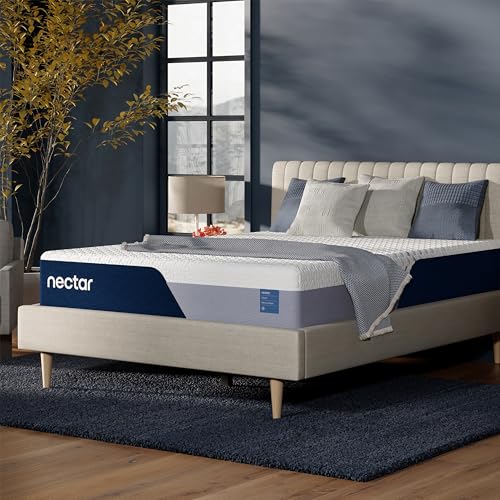
Where to Buy
All six picks are sold on Amazon — verify current price, size, and trial terms on the listing before buying. Start with the Nectar 12″ Memory Foam Mattress, the firmest contouring discipline in the pool; confirm it via this Check on Amazon link. The remaining picks: Sealy Dreamlife 12″ Hybrid Mattress-in-a-Box — Check on Amazon; GhostBed Classic 11 Inch Memory Foam Mattress — Check on Amazon; Signature Design by Ashley Chime 12 Inch Hybrid Mattress — Check on Amazon; Purple Mattress — Check on Amazon; Tuft & Needle Original Legacy Mattress — Check on Amazon.
In this guide
Quick Picks
| Pick | Badge | Why it earns its place |
|---|---|---|
| Nectar 12″ Memory Foam Mattress | Best Overall | Firm contouring over an adaptive support layer — the pelvis held level, with a year to prove it. |
| Sealy Dreamlife 12″ Hybrid Mattress-in-a-Box | Best Hybrid | Encased coils hold the midsection up with spring force that does not tire overnight. |
| GhostBed Classic 11 Inch Memory Foam Mattress | Best Dense Foam | A high-density core that refuses pelvic sink, with a cool, lively surface. |
| Signature Design by Ashley Chime 12 Inch Hybrid Mattress | Best for Lumbar Discipline | 13-gauge pocketed coils plus a gel lumbar layer, in a full size with a 180-night trial. |
| Purple Mattress | Best Cooling | The grid holds the pelvis on a firm, airy lattice — no foam heat pooled under a face-down body. |
| Tuft & Needle Original Legacy Mattress | Best Responsive Foam | Adaptive foam that firms as you settle — support that scales with the pelvis’s load. |
Key Takeaways
- Firm and level is the whole brief: the pelvis must not sink below the chest, ever, on any night.
- Coils and dense cores hold the midsection best over time; soft foam is this position’s enemy.
- Your pillow should be thin or absent — a thick pillow cranks a face-down neck into hours of extension and rotation.
- A small pillow under the hips is the classic comfort adjustment if your back still arches — test it before replacing the mattress.
- Combination sleepers who land on their stomachs need responsive firmness, not the deepest contour.
- If stomach sleeping is one stop in a rotating night, the broader alignment logic lives in Best Mattresses For Sore Backs.
How These Picks Were Chosen
We filtered the verified pool by a single ruthless criterion applied three ways: does the listing document firmness (firm-leaning feel, high-density core, firm coil gauge), does the support architecture hold the pelvis specifically (coils, lumbar layers, adaptive support), and does the surface stay level over time (density, warranty, coil construction)? Mattresses whose identity is plushness, deep contour, or soft zoning were excluded even when they headline other guides in this lot. The survivors span foam, hybrid, and grid architectures because belly sleepers arrive with different secondary needs — cooling, budget, motion isolation — but they share one non-negotiable: pelvic discipline.
Trials matter here for a subtle reason: stomach sleepers adapting from a soft old mattress often find a correct firm mattress strange for the first week, because their back has calibrated to the arch. The long trials in this guide exist to let the body recalibrate before the verdict.
The 6 Best Mattresses for Belly Sleepers — Reviewed

Nectar 12″ Memory Foam Mattress
Our badge: Best Overall
The Nectar 12″ Memory Foam Mattress leads because it delivers foam’s comfort under firm discipline: the brand describes the feel as firm with a touch of comfort — solid support with slightly more cradling than an extra-firm mattress — and explicitly names stomach sleepers among its intended positions. The contouring memory foam relieves pressure at the ribs, hips, and knees (a face-down body’s contact points), while the adaptive support layer promotes the spinal alignment that keeps the pelvis from migrating downward through the night. The 365-night trial and forever warranty complete the safest purchase in the guide.
Strengths
- Firm-leaning support designed with stomach sleepers named in the brief
- Contouring relieves the rib and hip-bone pressure unique to face-down sleep
- A year-long trial outlasts the adaptation period entirely
Trade-offs
- Foam’s slow response is noticeable when rolling out of the prone position
- Side-sleeping partners may find it firm for their shoulders
- Seventy-eight pounds at setup
| Color | White |
| Size | Queen |
| Dimensions | 80 x 60 x 12 inches |
| Weight | 78 pounds |
The Nectar’s belly-sleeping virtue is what it refuses to do at 3 a.m.: soften. Budget foam warms, relaxes, and gradually lets the pelvis descend; the Nectar’s layered system — cooling cover, contouring foam, dynamic support foam — holds its line from lights-out to alarm. The cooling top layer matters more in this position than any other, because a face-down body presents its full front to the mattress and generates a broad, warm contact patch that lesser foams turn into a sauna.
Pair it with the thinnest pillow you own, or trial a few nights with none, and judge the combination across the trial’s first month. Stomach sleepers who make that pillow change alongside the mattress change routinely report that the pillow was half the problem — which is why this guide keeps mentioning it, and why the Nectar’s long trial, which lets you change one variable at a time, is worth more than its price suggests.
Best for: dedicated stomach sleepers wanting firm foam discipline with maximum trial safety / Not suited for: side sleepers sharing the bed who need a soft shoulder
Choose it as the position’s benchmark; skip it if your household’s other sleeper vetoes firm. Check on Amazon

Sealy Dreamlife 12″ Hybrid Mattress-in-a-Box
Our badge: Best Hybrid
The Sealy Dreamlife 12″ Hybrid Mattress-in-a-Box holds the pelvis the way only springs can: with stored mechanical energy that pushes back all night without fatigue. Seven inches of individually encased coils provide targeted support across the surface, under two inches of gel memory foam that cushions the ribs and hip bones and a high-density transition layer that keeps the feel consistent. For a stomach sleeper, that architecture means the midsection is held at coil height from the first minute to the eighth hour — no gradual foam surrender, no morning arch.
Strengths
- Coil support does not tire, warm, or soften across the night
- Gel foam surface spares the face-down pressure points
- Ventilated core keeps a fully-contacted body cooler than foam blocks
Trade-offs
- Motion isolation is a step below all-foam picks
- Just over eighty pounds at setup
- The responsive feel may read bouncy to foam devotees
| Color | Dreamlife |
| Size | Queen |
| Dimensions | 80 x 60 x 12 inches |
| Weight | 80.6 pounds |
Hybrids are the traditional answer to stomach sleeping for a reason: the position was designed for, and by, the innerspring era, and coils remain its most honest technology. The Dreamlife adds the modern refinements — encased coils that move independently (so a partner’s side does not become your slope), gel foam for the contact points, Surface-Guard antimicrobial protection — without diluting the core virtue. Getting out of the prone position is also easiest here: the coils return your energy instead of absorbing it.
Longevity completes the case. A stomach sleeper’s mattress lives or dies by its midsection, and coils hold that zone’s support for years after foam cores begin their slow softening. If your history is foam mattresses that felt firm in the store and arched you by spring, the Sealy is the structural correction.
Best for: stomach sleepers wanting coil-held levelness and easy exits / Not suited for: couples prioritizing total motion isolation
Choose it for mechanical honesty; skip it if you want foam’s stillness. Check on Amazon

GhostBed Classic 11 Inch Memory Foam Mattress
Our badge: Best Dense Foam
The GhostBed Classic 11 Inch Queen Memory Foam Mattress is the foam pick for stomach sleepers who distrust foam: a high-density core built for spinal alignment, in a balanced medium-firm feel the brand explicitly aims at stomach, back, side, and combo sleepers. Above the core, cooling gel memory foam and aerated latex keep the surface springy and breathable — so the face-down body gets a firm, cool, responsive plane rather than a warm, slow one. CertiPUR-US certified, made in the USA and Canada.
Strengths
- Density-first core: the foam least likely to let the pelvis migrate
- Lively latex-gel surface makes rolling out of prone effortless
- Cooling layers address the position’s broad warm contact patch
Trade-offs
- Contains a latex layer — excluded for latex-sensitive shoppers
- Medium-firm may still read soft to the strictest firm-bed stomach sleepers
- Uniform support, no lumbar specialization
| Color | White |
| Size | Queen |
| Dimensions | 80 x 60 x 11 inches |
| Weight | 50 pounds |
The GhostBed’s stomach-sleeping experience is defined by what does not happen: no slow sink, no heat buildup under the torso, no wrestling match when you roll to your side at dawn. Its fifty-pound weight is a practical kindness — the lightest queen here — for a sleeper whose morning routine may already involve a stiff back negotiating with the day. Rotation, the maintenance that keeps a midsection honest, stays a one-person job.
For the budget-conscious stomach sleeper, it is also the guide’s value anchor: flagship-adjacent density at an accessible tier, from a brand whose entire identity is this balanced, firmer foam. If the Nectar’s trial is more patience than you need and the Sealy’s coils are more bounce than you want, the GhostBed is the middle answer with the firmest foam conscience.
Best for: stomach and combination sleepers wanting dense, cool, manageable foam / Not suited for: latex-sensitive shoppers or the strictest firmness purists
Choose it for dense value; skip it if only coils convince you. Check on Amazon

Signature Design by Ashley Chime 12 Inch Hybrid Mattress
Our badge: Best for Lumbar Discipline
The Signature Design by Ashley Chime 12 Inch Hybrid Full Size Mattress in a Box is the stomach sleeper’s specialist in a full size: a high-density gel memory foam lumbar layer targeting the lower back, over 13-gauge pocketed coils — a firm gauge — with reinforced perimeter rows. The brand positions it at back-comfort seekers at a medium-firm level; for a face-down sleeper, that translates to the pelvis zone receiving the mattress’s strongest argument, exactly where this position loads it. A 180-night trial and ten-year warranty back the engineering.
Strengths
- Firm-gauge coils plus a lumbar layer: the midsection is doubly defended
- 180-night trial — the longest evaluation in this guide after the Nectar
- Adjustable-base compatible for sleepers who also rest elevated
Trade-offs
- Full size only in this listing; couples need a queen pick
- Firmness will feel assertive to anyone transitioning from a soft bed
- Less contouring for the ribs than the foam picks
| Color | White |
| Size | Full |
| Dimensions | 74.4 x 53.3 x 12 inches |
| Weight | 62 pounds |
The Chime understands something specific: for a stomach sleeper, “support” is not a whole-mattress average but a local event at the pelvis and lumbar. Its design spends extra material exactly there, and the perimeter rows mean the discipline extends to the edges — relevant when a stomach sleeper sprawls diagonally, as the tribe does. The pocketed coils move independently, so the support is targeted rather than plank-like, and the gel lumbar foam keeps the contact from feeling punitive.
Single sleepers in full-size rooms are its natural owners, and the trial length suits the position’s adaptation curve: a back calibrated to a soft bed needs weeks to trust a level one. Give it those weeks. Stomach sleepers whose rooms are queens should take the Sealy as this pick’s larger sibling in spirit.
Best for: single stomach sleepers wanting maximum midsection discipline / Not suited for: couples or softness seekers
Choose it for the firmest targeted support here; skip it if you need a queen. Check on Amazon

Purple Mattress
Our badge: Best Cooling
The Purple Mattress serves the stomach sleeper who overheats: two inches of GelFlex Grid on a supportive base create a firm, even, temperature-neutral plane — the grid holds the pelvis up on its lattice rather than letting it nest into foam, and its air channels move heat away from the broad face-down contact patch continuously. The feel is medium-firm, the response is instant, and the brand positions it for every sleep position, stomach included.
Strengths
- Firm lattice support that cannot gradually soften through the night
- The coolest surface in the guide for the warmest sleeping position
- Instant response makes the prone-to-side roll effortless
Trade-offs
- One hundred pounds of setup — plan help
- Premium tier in this guide
- The grid’s feel under the ribs is distinctive; trial it honestly
| Color | White |
| Size | Queen |
| Dimensions | 80 x 60 x 11 inches |
| Weight | 100 pounds |
Stomach sleeping and heat are natural enemies: the position maximizes body-to-mattress contact, and foam monetizes that contact as warmth. The grid refuses the transaction — there is barely any material to warm up — and many stomach sleepers find the Purple is the first mattress they do not have to flip a pillow against or escape from at 3 a.m. Its pelvic support is structural rather than foam-deep: the lattice yields at sharp points (a hip bone, a rib) and holds across the pelvis’s broad load, which is precisely the position’s requirement stated in physics.
It is also the pick for the stomach sleeper who shares with a side sleeper: the grid’s local flex serves her shoulder without softening his pelvis’s platform — a diplomacy uniform mattresses cannot perform. That dual service is why a premium pick earns its keep in a position guide dominated by firmness.
Best for: hot stomach sleepers and mixed-position couples / Not suited for: shoppers who cannot manage a heavy setup
Choose it for cool, structural levelness; skip it if you love foam’s feel. Check on Amazon

Tuft & Needle Original Legacy Mattress
Our badge: Best Responsive Foam
The Tuft & Needle Original Legacy Medium Firm Gel Foam Queen Mattress closes the guide as the adaptive answer: T&N Adaptive foam contours with bounce-back support, and T&N Flex foam firms the deeper you settle — which means the pelvis, pressing deepest, automatically receives the mattress’s firmest response. For a stomach sleeper, that load-scaling is the position’s physics implemented in foam. Gel and graphite cool the surface, ventilated foam relieves pressure at the ribs, and the certifications run CertiPUR-US plus GREENGUARD Gold.
Strengths
- Support that scales with load — the pelvis firms its own foundation
- Responsive surface: no foam trap at the morning roll-out
- Cooling gel, graphite, and cover for the warm prone posture
Trade-offs
- Ten inches is the slimmest profile here; very heavy stomach sleepers need more
- Two-week break-in before the feel settles
- Medium feel may underwhelm the strictest firmness devotees
| Color | White |
| Size | Queen |
| Dimensions | 80 x 60 x 10 inches |
| Weight | 72 pounds |
The Tuft & Needle is the combination sleeper’s stomach pick: backs and sides get a democratic medium, stomach intervals get the flex foam’s deepening support, and every transition between positions is free of charge. Its medium label undersells its pelvic behavior — lie face-down and the mattress’s answer firms beneath you in a way a uniform medium never does. That behavior, plus genuine cooling, makes it the guide’s most modern foam interpretation of an old requirement.
Heavier stomach sleepers should respect the ten-inch depth and look to the twelve-inch picks; average-weight combination sleepers will find this the easiest mattress in the guide to live with across all their positions, stomach included.
Best for: combination sleepers whose rotation includes stomach intervals / Not suited for: very heavy dedicated stomach sleepers
Choose it for adaptive, all-position competence; skip it if you want maximum depth and firmness. Check on Amazon
Comparison Table
| Pick | Pelvic Support System | Feel | Profile | Check price on Amazon |
|---|---|---|---|---|
| Nectar 12″ Memory Foam | Adaptive support layer | Firm contouring | 12 inch | Check price on Amazon |
| Sealy Dreamlife 12″ | Encased coils | Supportive hybrid | 12 inch | Check price on Amazon |
| GhostBed Classic 11″ | High-density core | Medium-firm, springy | 11 inch | Check price on Amazon |
| Ashley Chime 12″ | 13-gauge coils + lumbar gel | Medium-firm, targeted | 12 inch (Full) | Check price on Amazon |
| Purple Mattress | GelFlex Grid lattice | Medium-firm, cool | 11 inch | Check price on Amazon |
| Tuft & Needle Original | Load-firming adaptive foam | Medium, responsive | 10 inch | Check price on Amazon |
How to Choose the Best Mattress for Belly Sleepers
The Pelvis Test Is the Only Test
Lie face-down on any candidate, in the store or during the trial, and attend to one thing: does your pelvis feel level with your chest, or is it settling into a valley? A hand slipped under your lower back tells the story — if the back is arched enough to park fingers in the hollow easily and your lower back feels strained within minutes, the mattress fails this keyword regardless of its other virtues. Every pick in this guide passes; make any outside candidate pass too, in person, before money moves.
Firmness Labels Lie; Architecture Does Not
“Firm” on a thin, cheap foam mattress means hard on top and surrendering beneath — the worst stomach profile. Judge by architecture: coil gauge, foam density, support layers with names. A medium-firm hybrid with real coils will hold a pelvis higher than an “extra firm” foam slab by month three. Buy the mechanism, not the adjective.
The Pillow Rule for Stomach Sleepers
Thin, thinner, or none. A standard pillow under a face-down head forces the neck into extension plus rotation for hours — the position’s second injury, after the pelvis. If you cannot give up a pillow, choose the flattest one available and consider placing it under your forehead with your face angled into the mattress’s edge, or trial a small pillow under the hips instead, which reduces the lumbar arch directly. Change the pillow in the trial’s second week, after the mattress alone has had its hearing — one variable at a time, as this lot’s guides keep advising.
Weight Scales the Requirement
Heavier stomach sleepers load the pelvis zone with more force and need the strongest answers: coil systems, the firmest gauges, the deepest dense cores. Lighter stomach sleepers can achieve levelness on medium-firm foam that a heavier sleeper would sink through. Match the architecture to the load honestly — the reviews’ trade-offs route you — and remember that a mattress that starts level and softens is a mattress on a countdown, which density and coils extend.
Consider the Transition Question Honestly
Many stomach sleepers are told — by clinicians, partners, and their own necks — to migrate toward side or back sleeping. If that migration is your real project, a mattress that serves the destination matters too: the picks here were chosen to be firm for the stomach without being hostile to the back, and several serve the side adequately. Buy for the sleeper you are, with a mattress that does not punish the sleeper you are becoming. Our Best Mattresses For Back Pain And Side Sleepers guide covers the destination position’s full system if the migration succeeds.
How Do You Set Up a Stomach Sleeper’s Bed?
Foundation first: a stomach sleeper’s mattress needs a base that does not bow, because any base sag adds directly to the pelvic valley. Slats close and level, or a firm platform. Fit the thinnest pillow you own, or clear the pillow entirely for the trial’s first nights, and keep a small, flat cushion within reach for the under-hip experiment — a thin pillow beneath the pelvis and lower abdomen tilts the pelvis slightly and relieves the lumbar arch for many stomach sleepers; if it helps, it stays, and if it does not, it leaves without a purchase. Keep bedding light: a heavy duvet presses the body into the mattress and deepens every sink. Rotate the mattress quarterly — the pelvis zone is a single, concentrated load address, and rotation is how you stop it from becoming a permanent address-shaped dent.
Problem: lower back aches by morning despite a firm mattress — try the thin pillow under the hips for a week; if the ache persists, the mattress may still be too soft for your weight class, or the issue is beyond mattress scope and worth a clinician’s look.
Problem: neck stiffness dominates — the pillow is too thick, almost mechanically certain; go thinner or pillowless before blaming the mattress.
Problem: ribs and hip bones feel bruised — your surface is disciplined but bare; a thin cushioning layer (not a plush topper) over a firm core is the legitimate adjustment.
Problem: you keep rolling to your side and waking — your body may be voting for a position change; a mattress that serves both (several here do) plus a body pillow as a transition aid is the pragmatic path.
Problem: the middle of the mattress feels softer after months — rotate immediately and audit the foundation; concentrated pelvic load ages the center first, and early rotation redistributes the sentence.
Stomach Sleeping and the Neck: The Second Problem
Every stomach sleeper breathes by turning the head, which means the cervical spine spends the night at the end of its rotation range. The mattress cannot fix that geometry — only position change can — but it can stop compounding it: a surface that keeps the chest level (so the neck is not also extended), a pillow thin enough to add no extra crank, and enough responsiveness that the sleeper can switch the head’s side without a full waking negotiation. This is why the guide weights responsive surfaces (coils, grid, adaptive foam) above deep slow foam for this position even when the foam is firm: the head-turn at 3 a.m. should cost nothing. If neck symptoms are your dominant complaint — stiffness, headaches, arm tingling — that is a clinician conversation first; the mattress is the supporting act, never the headline.
Can Stomach Sleepers Use Soft Mattresses With a Topper Trick?
A question this keyword’s shoppers ask constantly deserves a direct answer: no layering trick converts a soft mattress into a stomach-appropriate one. A firm topper over a soft core still lets the pelvis descend into the core’s give — the topper merely upholsters the valley. The pelvis’s level is decided by the deepest support it meets, which is why this guide insists on architecture over adjustments. The one legitimate surface adjustment runs the other direction: a thin cushioning layer over a firm mattress, to spare ribs and hip bones, because it does not change the level the core enforces. Buy the level first; upholster it second, if at all.
Training Off the Stomach: A Gradual, Honest Program
Many belly sleepers reading this guide are doing so at a clinician’s or a partner’s suggestion that the position itself should change — and the ones who succeed treat the change as training, not willpower. The mechanism of stomach sleeping is partly habit and partly comfort-seeking: the position feels secure because the body’s front is protected and the surface feedback is total. A gradual program exploits both facts. Week one changes nothing except the mattress and pillow discipline this guide prescribes, letting the body learn that the new surface is safe. Week two introduces a body pillow on one side, so rolling from the stomach meets an embrace rather than a void — most stomach sleepers discover the position was partly a hug they were giving themselves. Week three moves the starting position: fall asleep on your side against the pillow, accepting that the night may still end prone; starting positions shape more of the night than intentions do. By week four, many trainees find their prone intervals shortening without any single dramatic night — and those who do not have lost nothing, because the firm, level mattress they bought for the training remains the correct mattress for the position they kept.
Setbacks deserve a sentence of their own: illness, exhaustion, and travel all regress position training, and none of them represents failure. The mattress, meanwhile, should be chosen — as this guide chose — to serve the sleeper at every stage of the program, firm enough for the prone nights, kind enough for the side nights that replace them. Readers further along the migration will find Best Mattresses For Back Pain And Side Sleepers waiting at the destination, and those whose stomach sleeping pairs with heat will find the cooling analysis in Best Mattresses For Night Sweats directly relevant, since the prone position’s broad contact patch makes it the warmest way to sleep. Train gradually, keep the log, and let the mattress be the constant while the habit changes. If the neck-and-shoulder end of the position is your dominant complaint rather than the lumbar end, Best Mattresses For Upper Back Pain treats that segment’s mechanics in the depth they deserve.
Stomach Sleeping Through the Decades: Children, Adults, and Older Sleepers
The prone position has a life arc. Children flop into it without consequence — light bodies, flexible spines, and no accumulated anything — and most migrate out of it on their own as they grow. Adults who keep the position bring adult loads to it: the pelvis heavier, the lumbar curve less forgiving, the neck’s rotation range quietly narrowing, which is why this guide’s firmness discipline matters more with every decade the position is kept. Older stomach sleepers add the exit problem in its sharpest form — rising from prone, on a surface that must be firm enough to push against and kind enough to elbows and knees that no longer enjoy hard duty — and for them the responsive picks here (coils, grid, adaptive foam) are not preferences but equipment. The honest counsel scales with the decades: the young stomach sleeper needs mainly the thin pillow and a mattress that will not sag; the middle-aged need the full discipline of this guide; the older sleeper should have the position conversation with a clinician in earnest, because the neck and lumbar arithmetic compounds, and because a mattress chosen for the migration — firm for the prone nights, kind for the side nights that increasingly replace them — is the purchase that serves the whole arc rather than one chapter of it.
Households shopping for more than one generation at once will recognize the pattern from this lot’s other guides: specification follows the body, the body follows the years, and the trial log is the only honest translator between the two. Buy for the sleeper’s current decade, with the next one in peripheral vision, and the position — kept or gradually left — will be as kind as engineering can make it.
Belly Sleepers and Breathing: The Position’s Hidden Constraint
Every other position lets the sleeper breathe with the head straight; the stomach sleeper breathes in rotation, and that constraint shapes more of the position’s experience than firmness alone. A rotated head means the airway’s geometry is asymmetric, which is why some stomach sleepers snore in one direction and not the other — and why the direction of the turn, alternated across nights, belongs in the position’s hygiene alongside the thin pillow. It also means the mattress’s surface at the face matters unusually: a surface that seals around the turned face — deep, slow foam — makes the breathing feel labored in a way a responsive or ventilated surface does not, one more reason this guide’s picks favor coils, grid, and adaptive foam over plush memory foam for this tribe. Sleepers whose breathing is already a clinical topic — apnea and its treatments above all — should treat the position itself as part of that conversation, since prone sleeping interacts with therapy equipment and with the condition in ways a mattress guide must not freelance. For the uncomplicated stomach sleeper, the practical rules are simple: alternate the turn, keep the pillow thin enough that the neck is not also extended, and prefer a surface your face can breathe against. The position is demanding enough without making its one involuntary act — breathing — do extra work.
Stomach Sleeping and the Athlete: Recovery in the Prone Position
A disproportionate share of committed stomach sleepers are athletes and physical workers — people whose days load the front of the body and whose nights seek the floor-like feedback the prone position gives. Their recovery needs sharpen this guide’s standard advice in two places. First, the surface under the trained tissue matters doubly: ribs, hip flexors, and the fronts of the thighs take both the day’s work and the night’s contact, so the thin cushioning over a firm core — this guide’s recurring formula — is for this tribe a recovery specification, not a comfort preference. Second, the morning exit is part of training: a prone sleeper with spent legs and a loaded lumbar spine needs a mattress whose edge and responsiveness assist the roll-and-rise, because the day’s first movement sets the tone for the second day’s performance.
Coaches and clinicians who work with prone-sleeping athletes generally aim at the same compromise this guide does: respect the position’s grip on the sleeper, engineer its costs down with firmness and pillow discipline, and revisit the migration question in the off-season rather than mid-preparation. The mattress that serves that program is the one that never becomes the story — level, cool, and forgotten by morning.
The Floor Test: What Your Body Already Knows
Stomach sleepers own a free diagnostic that other positions envy: one night on a firm floor or a very firm futon, with the thinnest of pillows, tells the truth about your surface needs with laboratory clarity. If the floor morning is better than your mattress morning — less lumbar ache, a back that feels worked-with rather than worked-on — your current mattress has been convicted of softness by the strictest witness available, and this guide’s firm picks are your remedy with the evidence already in. If the floor morning is worse in the ribs and hips while the back improves, you have isolated your specification precisely: firm core, thin kindness on top — the formula half this guide’s table is built on.
Run the test before the purchase and the shortlist writes itself; run it during a trial and it grades the candidate against the position’s raw requirement. Few diagnostics in this entire lot cost nothing and conclude so much.
The Position’s Defenders: A Fair Hearing for Stomach Sleeping
Stomach sleepers are accustomed to being told their position is simply wrong, and a fair guide should record the defense before returning to the engineering. The prone position is, for many adults, the fastest route to sleep itself — the full-front contact quiets a restless body in a way side and back positions do not — and sleep onset is not a trivial variable to sacrifice on an alignment theory. Some sleepers snore less prone; some reflux-prone sleepers prefer it; many simply feel safe there, and felt safety is a legitimate sleep ingredient. The position has real costs, which this guide has spent its length engineering down — but a sleeper who keeps it knowingly, on a firm level surface with a thin pillow and open eyes, is not making an error. They are making a trade, and trades made with data are what every guide in this lot exists to enable.
Common Buying Mistakes
Buying Plush Because It Feels Kind in the Store
For a stomach sleeper, plush is a backbend with good marketing. The five-minute lie-down cannot feel the eight-hour arch; the pelvis test can. Trust the test.
Keeping the Thick Pillow
Half of this keyword’s morning pain is pillow, and it is the cheapest half to fix. A stomach sleeper who upgrades the mattress and keeps the lofty pillow has solved the expensive half of the problem.
Trusting “Firm” Labels on Thin Foam
Firmness adjectives on low-density foam describe week one. Architecture — density, gauge, layers — describes year two. Stomach sleepers live in year two’s midsection.
Ignoring the Partner’s Position
A firm stomach mattress shared with a side sleeper can export the problem across the bed. The grid and zoned picks exist for mixed households; buy the diplomacy if you share.
Judging During the Adaptation Week
A back calibrated to a soft arch will call a level mattress “too hard” for days. The trial’s length is the remedy — use weeks, log mornings, and let the recalibration finish before the verdict.
Final Recommendation
The Nectar 12″ Memory Foam Mattress is our top pick for belly sleepers: firm contouring discipline, stomach sleepers named in its design, and a full year to let your back recalibrate and vote. Coil loyalists should take the Sealy, lumbar-focused singles the Ashley Chime — Check on Amazon for its trial terms — and hot sleepers the Purple’s cool lattice. Whichever you choose, retire the thick pillow the same week, run the pelvis test during the trial, and rotate the mattress like the midsection’s lease depends on it — because it does. For the stomach sleeper mid-migration to side sleeping, Best Latex Mattresses For Side Sleepers covers the responsive materials that make the destination position feel like an upgrade rather than a sentence.
Frequently Asked Questions
What firmness is best for stomach sleepers?
Firm to medium-firm with real architecture beneath the label — the pelvis must rest level with the chest all night. Dedicated stomach sleepers lean firm; combination sleepers can accept medium-firm if the support system (coils, dense core, load-firming foam) holds the midsection.
Why does my lower back hurt after stomach sleeping?
The common mechanical story is pelvic sink: the heavy pelvis drops below the chest, the lumbar spine arches for hours, and morning stiffness follows. A level, firm surface and a thin pillow under the hips are the mattress-side answers; persistent or radiating pain deserves clinical evaluation.
Should stomach sleepers use a pillow?
The thinnest one you can tolerate, or none — a lofty pillow forces the neck into extension and rotation simultaneously. Many stomach sleepers do best with a very flat pillow under the forehead or no pillow at all, letting the mattress carry the head’s level.
Is memory foam bad for stomach sleepers?
Soft memory foam is. Firm, well-cored memory foam — the Nectar pattern — holds the pelvis while cushioning the ribs and hip bones, and its motion isolation suits couples. Judge foam by its core’s density and support layer, not by the material’s reputation.
Can a mattress help me stop stomach sleeping?
Indirectly: a mattress that makes back and side sleeping genuinely comfortable removes the reason many stomach sleepers retreat to the prone position. Body pillows and gradual position training do the direct work. Several picks here serve all three positions precisely for sleepers in transition.
How do I know if my current mattress is too soft for stomach sleeping?
Run the pelvis test: lie face-down for ten minutes and notice whether your pelvis settles below your chest and your lower back begins to arch and ache. Then check the mattress unloaded — a visible center trough is a confession. Either result means the midsection has lost, and replacement outranks adjustment.


