Where to buy
Check the latest price, availability and delivery on Amazon. Orders are placed on Amazon. We may earn a commission from qualifying purchases.
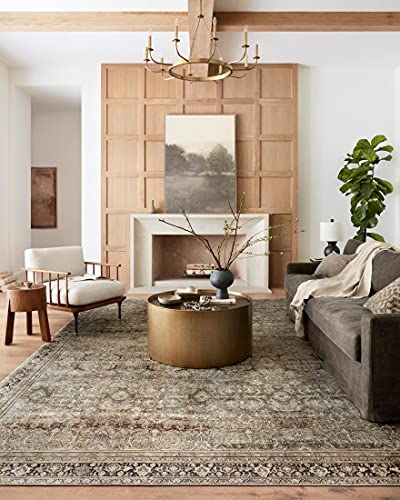
- Best overall: Loloi II Layla Collection Rug, Olive/Charcoal, 7’6″ x 9’6″ — Check on Amazon
- Best washable: Ruggable Kamran Ivory Opal Rug, 8′ x 10′, with Standard Pad — Check on Amazon
- Best handmade wool: SAFAVIEH Trace Collection Rug, Ivory, 8′ x 10′ — Check on Amazon
- Best vintage look for less: SAFAVIEH Adirondack Collection Rug, Ivory & Silver, 8′ x 10′ — Check on Amazon
See 2 more Amazon options
- Best plush pile: SAFAVIEH California Shag Collection Rug, Ivory, 8′ x 10′ — Check on Amazon
- Best organic texture: SAFAVIEH Natura Collection Rug, Ivory, 8′ x 10′ — Check on Amazon
Read the full guide ↓
Disclosure: As an Amazon Associate, dailyhomedecorating.com earns from qualifying purchases. Links to Amazon on this page are affiliate links; they cost you nothing extra. Listing details such as price and availability change often, so check the current Amazon listing before you buy.
Shopping for the best living room rug under $1000 sounds like a single decision, but it is really four decisions wearing one coat. You are choosing a size that has to anchor a sofa and chairs without swallowing the room, a material that has to survive your household’s actual traffic, a pile height that has to work with your doors, your vacuum and your furniture legs, and a pattern that has to hold the whole seating area together visually for years. A generous budget ceiling changes the shape of the problem in a useful way. Below this ceiling you are not forced into the thinnest machine-made rugs on the market. Real wool, genuinely washable two-piece systems, dense plush piles and large 9′ x 12′ formats all come into play, and the question stops being “what can I afford?” and becomes “which construction actually fits the way my living room gets used?” That is a much better question, and it is the one this guide answers.
Here is the honest starting point most rug guides skip: at this budget, the most expensive option is rarely the best one for a given room. A handmade wool rug is a wonderful thing under a low-traffic, adults-only sofa, and a poor thing under a toddler’s snack zone or a dog who comes in muddy. A washable rug sounds like pure convenience until you realise the largest sizes need a large-capacity washing machine and some patience to relay flat. A deep shag pile feels luxurious for exactly as long as it takes a household to drop its first bowl of popcorn into it. Every pick below is genuinely good; the work of this guide is matching each one to the household it serves, and being plain about the trade-off each one carries. If you already know your ceiling is lower, our companion roundups at Best Living Room Rug Under $700 and Best Living Room Rug Under $400 apply the same tests at tighter budgets.
Our short answer, before the detail: for most living rooms, start with the Loloi II Layla in Olive/Charcoal. Its printed vintage pattern hides everyday mess better than almost anything else at any price, its very low pile slides under doors and furniture, and it asks almost nothing of you in maintenance. If spills are a weekly event rather than an accident, the Ruggable Kamran system is the pick, because the whole top layer goes in the wash. If you want the rug to be the one genuinely premium, natural-fibre piece in the room and your traffic is moderate, the handmade wool SAFAVIEH Trace is where the budget earns its keep. The sections below explain how we chose, review each rug in full, compare them side by side, and walk through sizing, materials and the mistakes that lead to returns.
In this guide
Quick Picks
In a hurry? This table matches each rug to the living room it suits best. Every pick sits comfortably inside the under-$1000 ceiling in the large sizes most living rooms need — check price on Amazon for the exact size you are ordering.
| Buyer type | Pick | Why it stands out | Link |
|---|---|---|---|
| Best overall | Loloi II Layla Collection, Olive/Charcoal | Printed vintage pattern, very low pile, hides mess and vacuums in seconds | Check on Amazon |
| Best washable | Ruggable Kamran Ivory Opal, 8′ x 10′ | Two-piece system; the rug top goes in a home washing machine | Check on Amazon |
| Best handmade wool | SAFAVIEH Trace Collection, Ivory | Handmade wool with a raised high-low pile and quiet, premium texture | Check on Amazon |
| Best vintage look for less | SAFAVIEH Adirondack, Ivory & Silver | Distressed floral design, non-shedding, easy-clean synthetic pile | Check on Amazon |
| Best plush pile | SAFAVIEH California Shag, Ivory | Deep, soft 2-inch shag pile that turns hard floors into a lounging surface | Check on Amazon |
| Best organic texture | SAFAVIEH Natura Collection, Ivory | Chunky hand-knotted wool blend with oversized loops and artisan character | Check on Amazon |
How These Picks Were Chosen
We built the shortlist from manufacturer specifications and current Amazon listings, then filtered it against the way living rooms actually fail rugs. Four tests did most of the work. First, size honesty: every pick is available in a genuine living-room size — 8′ x 10′ or close to it — because a rug that only works at 5′ x 7′ is a bedroom rug wearing a costume. Second, construction transparency: we favoured rugs whose maker states the fibre, the weave and the pile height plainly, and we dropped lines where the listing could not say what the rug is made of. Third, maintenance realism: each pick’s care instructions had to match its marketing. A rug sold as easy-care that turns out to be professional-clean-only did not survive the cut. Fourth, pattern behaviour: in a living room, a pattern is not decoration first — it is camouflage. We weighted designs that disguise crumbs, pet hair and the faint traffic lane that develops between the sofa and the door.
Two deliberate exclusions are worth explaining. We left out thin printed mats with no separate pad and no stated pile, because in a main living room they read as temporary and they bunch under coffee tables. We also left out very high-pile novelty rugs in fibres that mat down within a season; a deep pile only earns a place here if the fibre has the resilience to spring back, which is why the one shag on this list is a dense polypropylene from a maker that specialises in it. Finally, a note on prices: rug prices move with size, colourway and season, and a figure printed here would be stale within weeks. Every pick was selected to sit inside the under-$1000 frame in its large living-room sizes at the time of research; use the links to check price on Amazon for the exact size and colour you want before you commit.
The 6 Best Living Room Rugs Under $1000, Reviewed
Loloi II Layla Collection Rug — Olive/Charcoal, 7’6″ x 9’6″
Who it suits: Almost everyone, which is why it leads this list — busy households, pet owners, people with dark or mid-tone floors, and anyone whose living room doubles as the home’s main thoroughfare. If you want one rug that makes the room look finished and then gets out of the way, this is the default recommendation.
The Layla is a printed rug, and understanding that is the key to understanding its strengths. Instead of weaving the pattern into a thick pile, Loloi prints a vintage Persian-style design onto a low, flat surface. The pile height is just 0.13 inches, so the rug lies almost like a tailored mat: doors swing over it, dining-style chairs and robot vacuums glide over it, and furniture legs do not sink or wobble. The Olive/Charcoal colourway is the famous one for a reason. The distressed, faded pattern mixes olive, charcoal, warm beige and hints of rust in a way that hides an astonishing amount of daily life — crumbs disappear into the motif, pet hair blends, and the worn-look centre means a developing traffic lane simply reads as more distressing. It is made from synthetic fibre (polyester), machine made with a flat woven feel, and it does not shed, which matters more than people expect: no fibre tumbleweed in the corners, no fuzz on dark socks.
Pros: Exceptionally forgiving pattern; very low pile suits doors, chairs and robot vacuums; non-shedding; easy to spot-clean and vacuum; the 7’6″ x 9’6″ size anchors a standard sofa arrangement without overwhelming the floor border. Honest limitation: There is almost no cushion. The Layla feels tailored, not plush, and on hard floors you will want a rug pad under it for comfort, grip and floor protection — budget for a pad as part of the purchase, and know that the printed surface, while durable, will never have the depth or hand of a woven wool pattern up close. Choose it if your living room works hard and you want the lowest-maintenance good-looking rug on this list. Skip it if barefoot softness is the whole point of the purchase — look at the California Shag or the wool picks instead.

Ruggable Kamran Ivory Opal Rug — 8′ x 10′, with Standard Pad
Who it suits: Households where spills are routine — kids with drinks, dogs with muddy paws, enthusiastic red-wine Fridays — and anyone who has ever looked at a stained rug and thought “I wish I could just wash that.” It is also the strongest pick here for allergy-conscious homes, because the rug surface itself can be laundered rather than just vacuumed.
Ruggable’s system is two pieces: a non-slip rug pad that stays on the floor, and a lightweight rug top that clings to it and peels off for washing. The Kamran design is a vintage-inspired Persian motif, and the Ivory Opal colourway is a soft, warm neutral that brightens a room without the starkness of white. The rug top is stain-resistant and machine washable, and the standard pad included in this configuration gives it a low, stable profile that works under doors and furniture. In daily use the system behaviour is what sells it: a spill is blotted, and if it leaves a mark, the top goes into the machine and comes back clean, while a conventional rug would carry that mark, faded but present, for the rest of its life. The low profile also makes it one of the best rugs here for high-traffic lanes and for homes where a wheelchair, walker or stroller needs a smooth roll.
Pros: Fully machine-washable rug top; stain-resistant surface; non-slip pad included in the system; low profile for doors and mobility aids; vintage pattern that hides light soiling between washes. Honest limitation: An 8′ x 10′ rug top needs a large-capacity washing machine, and relaying it flat and aligned on the pad is a two-person, few-minutes job, not a thirty-second one. The feel underfoot is also thinner than a conventional piled rug — comfortable with the pad, but tailored rather than cushioned. Choose it if washability is your top priority and you have the machine capacity for the size you are ordering. Skip it if you want a deep, sink-in pile, or if your laundry setup is a small shared machine — a smaller size or a spot-cleanable pick will serve you better.
SAFAVIEH Trace Collection Rug — Ivory, 8′ x 10′
Who it suits: Buyers spending toward the top of this budget on purpose — people furnishing a calmer, lower-traffic living room who want the rug to be a genuine natural-fibre piece with texture you can see and feel, and who are happy to maintain wool properly in exchange for how it ages.
The Trace is handmade from wool, with a raised high-low pile: the pattern is not printed or even strongly coloured, it is sculpted, with higher and lower areas of ivory wool creating a subtle contemporary design that changes with the light across the day. This is the rug on the list that most rewards a second look. Wool brings properties synthetics imitate imperfectly — natural resilience, so the pile recovers from furniture marks better; a matte, light-absorbing surface that reads as calm rather than shiny; and a fibre that hides dry soil within its structure between cleanings. The medium pile gives real underfoot comfort without the door-clearance and vacuuming drama of a shag. In a room with a linen sofa, wood furniture and restrained colour elsewhere, the Trace does the work of pattern, texture and warmth all at once, which is exactly what a premium rug is supposed to do.
Pros: Real handmade wool; sculpted high-low texture that elevates neutral rooms; resilient pile that ages gracefully; medium pile balances comfort and practicality. Honest limitation: Wool asks for wool-appropriate care — it sheds lightly at first, wants a suction-only vacuum setting rather than a beater bar, and spills need prompt blotting rather than soaking or harsh chemicals. It is also the wrong choice for a room where muddy paws cross daily. Choose it if your traffic is moderate, your style is neutral and textural, and you want the one-piece-in-the-room quality this budget makes possible. Skip it if your household needs hose-it-off or machine-wash care — the Ruggable or the Adirondack will fit your life better.
SAFAVIEH Adirondack Collection Rug — Ivory & Silver, 8′ x 10′
Who it suits: Anyone who loves the soft, distressed vintage look but wants to spend well below the ceiling and keep the change for a pad, a coffee table or the next project. It is also a smart pick for renters and first homes, where a rug needs to look established without being precious.
The Adirondack line is SAFAVIEH’s long-running take on the faded oriental rug: a floral vintage design, deliberately distressed, power-loomed from polypropylene in Turkey in the case of this collection’s typical production. The Ivory & Silver colourway is pale and airy — ivory ground, silvery grey motif — which makes it the lightening pick on this list, the one that opens up a room with a darker sofa or north-facing light. Polypropylene is the workhorse fibre of family rugs for good reasons: it is inherently stain-resistant, it does not shed, it tolerates vacuuming with a beater bar, and spills blot up from the surface rather than diving in. The pile is a low-to-medium cut pile, soft enough to sit on, flat enough for chair legs and doors. Where the Layla achieves its vintage look by printing, the Adirondack weaves its pattern into an actual pile, so up close it feels more like a traditional rug — at a position in this budget that leaves most of the ceiling untouched.
Pros: Woven pile with a genuine rug feel; stain-resistant, non-shedding polypropylene; pale colourway brightens darker rooms; easy, forgiving maintenance. Honest limitation: Pale ivory shows dark spills and muddy paw prints more honestly than the mid-tone picks — the pattern helps, but this is not the rug for a white-glove fantasy in a mud-season household. Synthetic pile also flattens in the main traffic lane over the years in a way wool resists. Choose it if you want the classic faded-oriental look, woven rather than printed, with easy care and money left over. Skip it if your floors see heavy mud and dark spills daily — the Layla’s darker, busier pattern will forgive more.
SAFAVIEH California Shag Collection Rug — Ivory, 8′ x 10′
Who it suits: Comfort-first households: movie-night floor-sitters, families whose living room floor is also the play mat and the reading pile, and anyone with cold hard floors who wants the rug to function almost as soft furniture.
The California Shag is built around a single idea — depth. Its polypropylene pile stands about 2 inches high, dense and speckled with multi-tone ivory yarns that give the surface a soft visual movement rather than a flat block of colour. Underfoot it is the opposite of the Layla: you sink, slightly and pleasantly, and the floor becomes a place people choose to sit. That depth also brings real acoustic value; a shag this thick absorbs the echo that makes hard-floored living rooms feel stark, and it insulates noticeably in winter. SAFAVIEH makes the pile from polypropylene, so despite the height it is non-shedding and more stain-tolerant than a wool shag would be, and the speckled colouring is doing quiet camouflage work between cleans. This is the pick that changes how a room is used, not just how it looks — board games migrate to the floor, toddlers cruise along the sofa edge onto a soft landing, and the dog claims it within the hour.
Pros: Deepest, softest underfoot feel on this list; sound-dampening and insulating; non-shedding synthetic pile; speckled ivory hides lint and light debris. Honest limitation: Physics applies — a 2-inch pile is the hardest surface here to vacuum thoroughly, it will stop most robot vacuums, crumbs and small toys disappear into it, and dining chairs or wheeled furniture do not belong on it. Doors need genuine clearance. Choose it if your living room is a lounge-first space and you will happily trade some cleaning effort for comfort. Skip it if the rug sits in a walk-through lane or under furniture that moves daily.
SAFAVIEH Natura Collection Rug — Ivory, 8′ x 10′
Who it suits: Texture-led decorators — coastal, Scandinavian, organic-modern and warm-minimal rooms — and buyers who want a handmade natural-fibre rug whose interest comes from its weave rather than a pattern.
The Natura is handcrafted from a blend of 80% wool and 20% cotton, built with chunky knotted yarns, oversized loops and flat sections that create a mosaic of textures across an ivory ground. No two areas of the surface are quite alike, and that hand-made irregularity is the aesthetic: it reads as artisanal and calm at the same time. Functionally, the looped, medium-textured surface is tougher than it looks — loops do not crush the way cut pile does, wool brings its natural resilience and soil-hiding character, and the cotton content softens the hand of the yarn. It is the most tactile rug here, the one guests notice by walking across it. In rooms full of smooth surfaces — leather, glass, lacquer, polished wood — that texture is often the missing ingredient, and the Natura supplies it without introducing a single new colour to argue with the rest of the scheme.
Pros: Distinctive chunky hand-knotted texture; natural wool-cotton blend; loop construction resists crushing; neutral ivory works with almost any palette. Honest limitation: Loops and pet claws are natural enemies — a dog or cat that digs or scratches can pull a loop, and looped texture traps debris a little more than a flat weave. Like all wool, it wants prompt spill blotting and gentle vacuuming without a aggressive beater bar. Choose it if your room needs texture more than pattern and your pets are not diggers. Skip it if you need a claw-proof or machine-washable surface.
Comparison Table
The six picks side by side. “Care” is the deciding column for most households — be honest about which routine you will actually keep up.
| Pick | Material & construction | Size shown | Pile | Care style | Link |
|---|---|---|---|---|---|
| Loloi II Layla, Olive/Charcoal | Printed synthetic, flat woven | 7’6″ x 9’6″ | Very low (0.13″) | Vacuum & spot-clean | Check on Amazon |
| Ruggable Kamran Ivory Opal | Two-piece washable system with pad | 8′ x 10′ | Low | Machine wash the rug top | Check on Amazon |
| SAFAVIEH Trace, Ivory | Handmade wool, high-low pile | 8′ x 10′ | Medium | Gentle vacuum, blot spills | Check on Amazon |
| SAFAVIEH Adirondack, Ivory & Silver | Power-loomed polypropylene | 8′ x 10′ | Low–medium | Vacuum & spot-clean | Check on Amazon |
| SAFAVIEH California Shag, Ivory | Polypropylene shag | 8′ x 10′ | High (about 2″) | Deep vacuum, shake out | Check on Amazon |
| SAFAVIEH Natura, Ivory | Hand-knotted wool/cotton loops | 8′ x 10′ | Medium, textured | Gentle vacuum, blot spills | Check on Amazon |
How to Choose the Best Living Room Rug Under $1000
Start with size, because size errors cause most returns. The reliable rule: the front legs of the sofa and every chair in the conversation group should stand on the rug, with a border of bare floor — roughly 8 to 18 inches — visible around it. For a standard three-seat sofa that usually means 8′ x 10′; for sectionals and larger rooms, 9′ x 12′. A rug that floats in the middle with all furniture around it makes the room look smaller, not tidier. Measure the seating footprint, not the whole room, and tape the corners on the floor before ordering if you are between sizes. Readers working with tighter footprints should also see Best Living Room Rug For Small Spaces Under $1000, where the sizing logic for compact rooms is worked through in detail.
Match the fibre to your traffic, not your aspirations. Polypropylene and polyester shrug off stains, tolerate family life and cost less per square foot; they are the honest choice for busy rooms. Wool costs more, asks for gentler care, and repays it with resilience, a matte premium look and a longer graceful life in calmer rooms. Washable systems trade pile depth for the ability to launder the whole surface — the right trade when spills are structural to your household. Natural plant fibres and chunky loops bring texture but dislike moisture and claws. None of these is “best”; each is best somewhere. If two adults and no pets use the room, wool is a joy. If the room hosts toddlers, dogs and Friday-night takeaway, synthetics or washable systems will make you happier for longer.
Set pile height by doors and furniture, then by comfort. Measure the clearance under your living room door before falling for a thick pile; a rug plus pad that the door scrapes is a daily irritation. Low piles (under about a quarter inch) suit doors, dining-adjacent layouts, robot vacuums and wheeled chairs. Medium piles are the all-rounders. Deep piles belong in lounge zones where furniture is static and feet, not wheels, do the travelling. And whatever the pile, plan on a pad: it stops creep, protects the floor, extends the rug’s life and adds the cushion that low-pile rugs deliberately leave out. For households where the family factor dominates every one of these choices, Best Living Room Rug For Families Under $1000 applies this same framework with kids and pets at the centre.
Common Buying Mistakes
Buying the 5′ x 7′ because it costs less. The single most common rug regret. A too-small rug under a full sofa arrangement reads as a bath mat scaled up, and the room never looks finished no matter how good the rug is. At this budget the jump to 8′ x 10′ is affordable — take it.
Choosing colour from the screen, in isolation. Rug colourways shift with your floor tone and your light. An ivory rug on pale oak in a south-facing room can vanish; the same rug on walnut glows. Order with the floor and sofa in mind, check the listing photos taken in real rooms, and use the retailer’s return window honestly if the tone is wrong in your light.
Skipping the pad. An unpadded rug creeps, curls at the corners, wears faster against hard floors and feels half as good as it should. The pad is not an accessory; it is part of the rug. Washable systems with an included pad are the exception, not the model.
Matching the rug to the sofa too exactly. A rug in the same flat tone as the sofa upholstery merges into one visual block. Contrast in tone, or texture where tones are close — a looped or high-low rug under a smooth sofa — is what makes the arrangement look designed.
Ignoring the vacuum you own. A deep shag plus a robot vacuum is a household argument waiting to happen; a looped wool plus an aggressive beater bar is slow damage. Check your vacuum’s settings against the rug’s care notes before the rug arrives, not after.
Colour, Pattern Scale and Light
The last decision is visual, and it is the one photographs online are worst at helping with. Start with pattern scale. A large, open motif like the Adirondack’s distressed floral breathes in a big room but can look lost and fragmentary when a small seating group covers most of it; a dense, small-scale pattern like the Layla’s reads as texture from standing height and hides both mess and furniture shadows better. Texture-only rugs — the Trace and the Natura — behave like very quiet patterns: they add interest through shadow, which means they need decent natural light to show it. In a dim room their subtlety can flatten, and a mid-tone printed or woven pattern will usually do more work.
Then judge the colourway against your floor, not your sofa. The floor is the rug’s frame and the larger surface. Warm oak and walnut floors flatter the Layla’s olive and the Kamran’s ivory equally, but in opposite directions — one deepens the room, the other lifts it. Grey-washed floors and cool light push ivory rugs toward blue; if your room already runs cold, choose the warmer colourways on this list and let the rug correct the temperature. Finally, remember that every one of these rugs will look slightly different at 9 a.m. and 9 p.m. That is not a flaw to eliminate but a quality to choose: high-low wool and chunky loops change the most across the day, printed flats the least. Pick the behaviour that suits a room used mostly in daylight or mostly by lamplight, and the rug will keep pleasing you after the newness wears off.
What This Budget Ceiling Actually Buys You
It is worth being concrete about what changes as you spend toward this ceiling, because the differences are not linear. At the lower end of the living-room rug market, you are paying for coverage: a large rectangle of decent synthetic that warms the floor and defines the seating zone. That is a legitimate purchase, and several picks in our tighter-budget roundups do it well. Moving up within this guide’s ceiling buys three specific things. The first is construction: woven and hand-finished surfaces — the Trace’s sculpted wool, the Natura’s knotted loops — that carry their pattern in the structure of the rug rather than on its surface, and that keep their character as they wear instead of fading toward flatness. The second is systems: the Ruggable’s pad-and-top engineering, which converts cleaning from a surface treatment into a full reset, something no amount of spot-cleaning a conventional rug can match. The third is pile with resilience: the California Shag’s depth works because the fibre springs back; cheap depth collapses into matted lanes within a season.
What the ceiling does not buy is immunity from the fundamentals. A handmade wool rug still hates a muddy traffic lane. A washable rug still needs a machine that fits it. The most expensive rug on this list, placed in the wrong size, still looks wrong. That is why our ranking puts the mid-priced, low-maintenance Layla first for most homes: at this budget the winning move is usually to buy the rug whose construction matches your household, at the largest size your room takes, with a proper pad — and to let the remaining budget improve the rest of the room. Spend up to the ceiling when a specific quality — real wool, full washability, serious texture — is the thing your room is missing. Spend below it, confidently, when it is not.
Final Recommendation
For the majority of living rooms, the Loloi II Layla is the rug to buy first
and regret least: its printed vintage pattern forgives daily life, its low pile fits under everything, and it leaves most of this generous budget unspent for the pad and the rest of the room — Check on Amazon. If your household’s defining feature is spills, step straight to the washable Ruggable Kamran instead — Check on Amazon. And if your room is calm, your style is textural and you want the budget to buy one genuinely premium natural piece, the handmade wool Trace is the connoisseur’s pick of this list. Whichever you choose, size it generously, pad it properly, and match the fibre to the life the room actually lives — that, more than any brand or pattern, is what makes a rug feel like the right purchase five years from now. For a modern-leaning take on the same budget, see Best Living Room Rug For Modern Homes Under $1000.
Sizing Layouts That Actually Work
Numbers alone do not settle sizing; the layout of your furniture does. Work through the three standard arrangements and find yours. In the front-legs layout — the default for 8′ x 10′ — the rug sits under the front half of the sofa and chairs, unifying the group while leaving a generous floor border. This is the layout that suits most rooms and most of the picks here, and it is forgiving: a few inches either way changes nothing. In the all-legs layout, every piece of seating furniture stands fully on the rug. It feels luxurious and anchored, but it demands the 9′ x 12′ class of rug and a room that can take it; the Ruggable Verena-size end of the market and large-format wool rugs exist for exactly this. In the floating layout, the rug sits in front of the sofa with no legs on it at all. Designers use it in very small rooms, but for a main living room it usually looks accidental, and we do not recommend planning around it at this budget — if your room forces it, our small-spaces companion guide handles the exceptions properly.
Two measurements save more returns than any review. First, the walkway test: the path from the room’s entrance to the next doorway should either cross the rug fully or miss it entirely. A path that clips one corner creates a curled, tripped-over corner within a month and a permanent wear stripe within a year. Second, the door test: measure the gap under every door that swings over the rug’s position with the door fully open, then compare it against rug pile plus pad thickness, not the rug alone. The Layla and the Ruggable system pass almost any door; the California Shag needs a genuinely tall gap and fails many interior doors. Finally, leave the floor border even. A rug pushed against one wall and floating 2 feet from the opposite one looks like a measuring error, because it is one — centre the rug on the seating group, not on the room, and let the border vary only where a fireplace or doorway forces it.
Care Routines, Material by Material
A rug’s lifespan is mostly decided by unglamorous weekly habits, and the right routine differs by fibre. Printed and low-pile synthetics like the Layla and the Adirondack want frequent, quick vacuuming — their flat surfaces give up dirt easily, which is precisely why dirt should not be left to grind in — plus prompt blotting of spills with a clean cloth, working from the edge of the spill inward so it does not spread. Washable systems like the Ruggable want the opposite rhythm: vacuum lightly as needed, and when the surface looks tired or a spill defeats blotting, wash the top cold, dry it fully, and relay it on the pad in one go rather than letting it sit half-fitted, which is how corners learn to curl. Wool like the Trace and the Natura wants patience: expect light shedding in the first weeks and simply vacuum it away with a suction-only setting, keep the beater bar off the loops and high-low texture, blot spills without soaking — wool holds a great deal of water before it feels wet, and over-wetting is the classic owner error — and rotate the rug a half-turn every few months so light and traffic even out. Deep shag like the California Shag wants a suction-only vacuum worked slowly in sections, an occasional outdoor shake, and a rake with fingers or a wide-tooth comb when the pile starts to lean. None of these routines is burdensome; all of them are cheaper than replacing a rug two years early, and choosing the routine you will genuinely follow is the last honest step before choosing the rug itself.
Frequently Asked Questions
Is an 8′ x 10′ rug big enough for most living rooms?
For a standard sofa-and-two-chairs arrangement, yes — it is the size most living rooms need, large enough for all front legs to sit on the rug with a floor border around it. Sectionals, open-plan rooms and sofas over about 8 feet long usually step up to 9′ x 12′. When in doubt, tape the outline on the floor and live with it for a day.
Are washable rugs worth it in a large size?
They are worth it when spills are frequent and you have a large-capacity washing machine. The ability to launder the whole rug top resets stains and odours that spot-cleaning only manages. If your machine is small, choose a smaller washable size or a stain-resistant synthetic you can spot-clean confidently.
Does a rug this size need a pad?
Yes, unless the system includes one, as Ruggable’s does. A pad prevents slipping and corner curl, protects hard floors from backing abrasion, adds cushion under low piles and measurably extends the rug’s life. Match the pad to your floor type and keep total thickness within your door clearance.
Wool or synthetic — which lasts longer?
In a calm room, quality wool usually ages more gracefully, recovering from dents and hiding soil. In a high-spill, high-traffic family room, a synthetic often looks better for longer simply because it tolerates aggressive cleaning. Longevity follows the match between fibre and household more than the fibre alone.
How do I stop a low-pile rug looking flat and cheap?
Three things: a good pad underneath for body, a pattern with tonal variation rather than a flat single colour, and correct sizing — a generously sized low-pile rug reads as tailored, while a small one reads as skimpy. The Layla’s distressed print is a good example of pattern doing this work.
Can I put a living room rug over carpet?
You can, with the right pad made for rug-on-carpet use to stop creep and bunching. Low, flat rugs behave best over carpet; deep piles on top of carpet tend to ripple and make furniture unstable. In a rental, a rug over worn carpet is also a practical refresh — see Best Living Room Rug For Small Apartments Under $1000 for more rental-friendly tactics.
How long should a rug at this level last?
With the right fibre-to-household match and basic care, the picks on this list are multi-year purchases: synthetics in family rooms typically stay presentable for years of daily traffic, and wool in calmer rooms can serve far longer, often outlasting the sofa above it. The usual early failures are not wear but mismatch — a delicate construction in a brutal location, or a size so small the edges take all the traffic.
Should I rotate my living room rug?
Yes — a half-turn every few months evens out sunlight fading and the traffic lane between the door and the sofa, and it costs ten minutes. It matters most for wool and for rugs in rooms with one strong window, and least for washable tops that get laundered back to an even state anyway.
What if my room falls between two standard sizes?
Size up, and let the floor border shrink on the sides where furniture hides it. A rug that is slightly generous under the seating group always looks intentional; a rug that is slightly small always looks like a compromise, and the difference between the two impressions is much larger than the difference between the two sizes. If the larger size breaks a doorway swing or a walkway, that is the one legitimate reason to stay smaller — function outranks the rule, and a flat, low-pile design will carry the smaller footprint most gracefully.