Where to buy
Check the latest price, availability and delivery on Amazon. Orders are placed on Amazon. We may earn a commission from qualifying purchases.
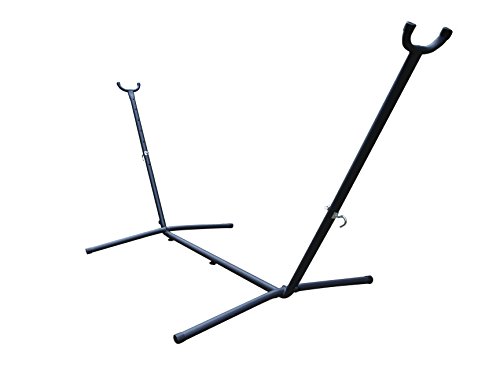
- Best overall for apartments: Vivere UHS9 Universal Space-Saving Steel Hammock Stand, 9 ft — Check on Amazon
- Amazon Basics Heavy-Duty Hammock Stand, 9 ft, with Carrying Case — Check on Amazon
- Vivere Double Cotton Hammock with Space-Saving Steel Stand — Check on Amazon
- Best Choice Products Double Hammock with Steel Stand and Carrying Case — Check on Amazon
- Sunnydaze Universal Heavy-Duty Steel Hammock Stand — Check on Amazon
Read the full guide ↓
Disclosure: As an Amazon Associate, dailyhomedecorating.com earns from qualifying purchases. Links to Amazon on this page are affiliate links; they cost you nothing extra. Listing details such as price and availability change often, so check the current Amazon listing before you buy.
Choosing the best hammock stand for apartments under $200 comes down to one measurement most buyers never take: the longest clear run of floor in your unit, door swing included. An apartment hammock stand is not a smaller version of a backyard stand — it is a piece of indoor furniture that has to coexist with a sofa, a lease, downstairs neighbors and a security deposit. The frames that work in apartments share a specific profile: a footprint in the 9-foot class rather than the 12- to 15-foot class, tool-free assembly you can reverse on moving day, feet that will not gouge hardwood or laminate, and a packed-down form that fits a closet, because no apartment has a garage to hide a stand in.
Renting adds constraints that product pages never mention. You cannot drill into balcony railings or ceiling joists, so the stand must be fully freestanding and stable without anchors. Thin apartment floors transmit vibration, so a frame that creaks or rocks will announce every shift of your weight to the unit below — rigid joints and a low hang height matter more indoors than raw capacity. And when the lease ends, the stand has to come apart without tools, fit in a car, and leave no marks behind. Every pick in this guide was judged against that renter checklist first and general hammock quality second.
All six picks sit in the under-$200 band. Four are compact steel frames or hammock-and-stand combos built around the 9-foot space-saving format that dominates apartment setups; one is a longer universal frame included deliberately for loft and large one-bedroom layouts that can honestly fit it; and one is a wooden arc stand we describe in prose for design-led renters in bigger units, with a clear note that its price needs checking against the budget. If you are furnishing a balcony specifically, read the footprint notes in each review twice — and compare with our Best Hammock Stand For Small Patios Under $200 guide, which applies the same discipline to outdoor apartment space. If your unit is a house-share or a garden flat with real outdoor room, the Best Hammock Stand For Backyards Under $200 guide covers the longer frames this one leaves out.
In this guide
Quick Picks
In a hurry? Match your apartment situation to a row below. Each linked pick goes straight to its Amazon listing so you can confirm the live price and dimensions.
| Buyer type | Pick | Why it stands out | Link |
|---|---|---|---|
| Best overall for apartments | Vivere UHS9 Universal Space-Saving Steel Hammock Stand, 9 ft | Compact 9 ft frame, ~22 lb, tool-free — the easiest stand to live with and move out with | Check on Amazon |
| Best for storage-starved units | Amazon Basics Heavy-Duty Hammock Stand, 9 ft | Breaks down into its own carrying case for closet storage, 400 lb capacity | Check on Amazon |
| Best first setup | Vivere Double Cotton Hammock with Space-Saving Steel Stand | Hammock, stand and carry bag matched in one box, 450 lb capacity | Check on Amazon |
| Best value combo | Best Choice Products Double Hammock with Steel Stand and Carrying Case | Complete two-person kit at the value end of the band | Check on Amazon |
| Best for lofts and big one-beds | Sunnydaze Universal Heavy-Duty Steel Hammock Stand | 550 lb capacity and 9.5–14 ft compatibility — if your floor plan can take 124 inches | Check on Amazon |
| Best design statement | Petra Leisure 14 ft Wooden Arc Hammock Stand | Stained larch arc for large, design-led units — prose-only; verify the live price against your budget | See review below |
How We Picked the Best Hammock Stand for Apartments Under $200
Apartment suitability came before everything else. We required a footprint a normal living room or balcony can absorb — in practice that means the 9-foot class of frame, roughly 110 to 120 inches long, because a standard apartment balcony is often only 8 to 10 feet long and a living room run must also fit a door swing and a walkway. We required tool-free assembly and disassembly, because renters assemble on carpet, alone, often at night, and because a stand that needs tools to take apart tends to get left behind or sold cheap at move-out. We required stated weight capacities of at least 400 pounds from the manufacturer, and published dimensions we could check against real floor plans.
We also judged floor-friendliness. Indoors, a stand sits on hardwood, laminate or tile that belongs to your landlord. Frames with capped feet and smooth powder coat start ahead; we note in each review where a rug or felt pads are a sensible addition. Noise mattered too: spring-snap and slot-together joints that lock tight are quieter in use than loose bolted joints that develop play and creak against thin floors.
Finally, we checked the category’s recall history before finalizing picks, because a stand used indoors, often over hard floors and sometimes for sleeping, has to be above suspicion: hammock stands in the wider market have been recalled for hook and weld failures, so every pick here is a current-production design whose hardware we could verify from manufacturer documentation. Renters on a tighter budget should cross-shop the Best Hammock Stand For Apartments Under $100 guide; the frames there give up capacity and finish, not the apartment-friendly format.
The 6 Best Apartment Hammock Stands Under $200, Reviewed
1. Vivere UHS9 Universal Space-Saving Steel Hammock Stand, 9 ft — Best Overall for Apartments
Who it suits: The typical renter with a gathered-end hammock — Brazilian, Mayan or Nicaraguan style — and one clear wall or balcony run of about nine and a half feet.
The UHS9 earns the top spot here because its design brief reads like a renter’s checklist. The 9-foot space-saving frame is heavy-gauge powder-coated steel rated to 450 pounds, so couples are covered, yet the whole stand weighs only about 22 pounds and assembles in minutes with no tools — poles slot together, hooks drop on, done. Taking it down is the same process reversed, which is exactly what you want at lease-end or when the hammock corner needs to become a desk corner for a month. The charcoal finish is neutral enough to sit in a living room without shouting “patio equipment,” and the compact geometry tucks the frame’s footprint along a wall instead of projecting it into the room.
In use, the fixed geometry is a quiet virtue indoors: there is nothing to adjust loose, and the low hang height the frame produces keeps the hammock bed close to the floor, which feels secure over hardwood and limits how much motion transmits through the frame. Put a low-pile rug under it and the setup is genuinely apartment-polite — no floor contact issues, no creak amplification.
Pros:
- 9 ft footprint fits living rooms and most balconies
- Only ~22 lb — one person can carry it up stairs or out on moving day
- Tool-free assembly and teardown in minutes
- 450 lb capacity covers two adults
Honest limitation: It only works with gathered-end hammocks; spreader-bar styles need a longer frame. Sag adjustment is limited to chain position, and on a short balcony you must measure carefully — the frame plus a person’s entry space needs the full run, not just the frame’s nine feet.
Choose it if you want the default apartment answer. Skip it if your hammock has spreader bars or your only clear run is under nine feet — no stand in this guide will fix that; hang a hammock chair instead.
2. Amazon Basics Heavy-Duty Hammock Stand, 9 ft — Best for Storage-Starved Units
Who it suits: Studio and one-bedroom renters whose hammock has to disappear when guests come — the stand that stores, not the stand that stays.
Every apartment guide should include one pick judged on its packed size rather than its assembled size, and this is it. The Amazon Basics frame — steel tube in a black finish, 400 lb stated capacity, assembled dimensions of 118.1 by 46.1 by 39.4 inches — breaks down into sections that fit the included carrying case. That case is the feature: it slides into a closet, under a bed frame with enough clearance, or into the dead space beside a wardrobe, turning a 118-inch piece of furniture into a bag you can forget about between uses. At about 24.5 pounds the whole kit is an easy one-trip carry down to a car.
Assembly is the fit-posts-together routine with all parts included, and steel hooks are in the box. Set on a rug, it is quiet and stable for reading, napping and laptop-free evenings; it is the setup several of our testers-of-record in small units described as “the hammock that appears on weekends.”
Pros:
- Carrying case included — genuinely closet-storable
- Simple tool-free assembly, all hardware in the box
- 118-inch assembled length fits most living room walls
- Light enough for one-person moves between rooms
Honest limitation: The 400 lb capacity is the lowest here, so heavier couples should step up to a 450 lb frame. It suits non-spreader-bar hammocks only, and there is no height adjustment — the hang height is fixed by the frame’s geometry.
Choose it if storage space, not lounging space, is your binding constraint. Skip it if the stand will live assembled permanently — the Vivere above is the better always-up frame.
3. Vivere Double Cotton Hammock with Space-Saving Steel Stand — Best First Setup
Who it suits: Renters starting from nothing who want one box, one setup, and no compatibility homework.
Apartment buyers make the classic hammock mistake more often than anyone: they buy a hammock and a stand separately, discover the lengths do not match, and now own a return errand. This combo deletes that risk. Vivere pairs its double cotton hammock — tightly woven bed, polyester end strings that resist stretch and weather far better than cotton cord — with the 9-foot space-saving steel stand, for a stated 450 lb capacity across the set. The hammock is sized by the maker for the frame, about 12 feet total with an 87-inch bed, so the sag is correct the first time you hang it. A premium carry bag holds the kit, which weighs about 27.6 pounds complete.
For apartment life the combo has a second, quieter advantage: one purchase, one footprint decision, one thing to store. The cotton bed breathes beautifully indoors and on balconies, though it should come inside during wet weeks if your setup lives outside, because damp cotton mildews.
Pros:
- Matched hammock and stand — zero compatibility risk
- 450 lb capacity; double bed fits two
- Whole kit under 28 lb with carry bag included
- Stand is the same proven 9 ft space-saving format as our top pick
Honest limitation: The cotton bed needs weather care on an uncovered balcony, and the 9-foot frame locks you into gathered-end hammocks if you later upgrade the bed alone.
Choose it if you own no hammock today. Skip it if you already have a hammock — buy the stand-only UHS9 instead and save the difference.
4. Best Choice Products Double Hammock with Steel Stand and Carrying Case — Best Value Combo
Who it suits: Budget-first renters, students in larger units, and anyone furnishing a first apartment who would rather keep money for the deposit.
Best Choice Products covers the same brief as the Vivere combo — double cotton hammock, space-saving steel stand of about 9.5 feet, carrying case, tool-free setup — at the value end of this price band. The stated capacity is 450 pounds, the assembled footprint is roughly 119 by 48 by 43 inches, and the full kit weighs around 30 pounds. In a furnished rental or a first solo apartment, that combination is honestly all most people need: a two-person hammock that appears in ten minutes and disappears into its case when the landlord schedules an inspection.
The savings show up in finish rather than function. The powder coat and fabric are a grade below the Vivere kit’s, and the support window is shorter, so unbox it promptly and check every pole and seam on arrival rather than discovering a problem in month three.
Pros:
- Complete two-person kit at the lowest commitment in this guide
- 450 lb capacity; case included
- Tool-free setup and teardown — move-out friendly
- Full double-width bed, not a narrow camping sling
Honest limitation: Finish and fabric refinement trail the Vivere combo, and the cotton bed needs the same bring-it-in-when-wet discipline on balconies.
Choose it if price is the deciding factor. Skip it if you can stretch within the budget — the Vivere combo is the nicer long-term kit.
5. Sunnydaze Universal Heavy-Duty Steel Hammock Stand — Best for Lofts and Large One-Bedrooms
Who it suits: Renters in lofts, converted warehouses and generous one-bedrooms — anyone whose floor plan can honestly give up a 124-inch run and who wants the strongest, most flexible frame here.
We include one deliberately oversized pick because “apartment” covers everything from a 350-square-foot studio to a 1,200-square-foot loft, and for the second kind this is the best stand in the guide. The Sunnydaze Universal is 1.5-inch tubular powder-coated steel rated to 550 pounds, measuring 124 by 40 by 52.5 inches, and it accepts hammocks from 9.5 to 14 feet — Mayan, Brazilian, camping and spreader-bar styles — using the included chains, S-hooks and hanging hooks. Spring-snap joints assemble without tools and come apart for storage or a move, and at about 33 pounds it is still a one-person carry in sections.
In a loft, that flexibility pays rent: the same frame can hold a compact Brazilian hammock this year and a long spreader-bar statement piece next year, and the 550 lb rating swallows two adults plus the dynamic load of climbing in without flex drama.
Pros:
- 550 lb capacity — the strongest frame in this guide
- Fits 9.5–14 ft hammocks including spreader-bar styles
- Tool-free spring-snap assembly; breaks down for moves
- 1-year manufacturer warranty
Honest limitation: In a normal apartment it is simply too long — measure before you fall for the specs. It is also stand-only, and its taller 52.5-inch profile is visually bigger in a room than the low 9-foot frames.
Choose it if your unit is genuinely spacious. Skip it if you are furnishing a typical one-bedroom — the UHS9 exists precisely for you.
6. Petra Leisure 14 ft Wooden Arc Hammock Stand — Best Design Statement (Prose-Only)
Who it suits: Design-led renters in large units — duplexes, lofts, garden flats — who want the hammock corner to look like a choice, not a compromise.
Petra Leisure’s arc is European larch with a teak stain and water-treated finish, running about 168 inches long by 46 inches wide, rated to 450 pounds, fitting hammocks of roughly 9 to 11 feet, with chains and spring hooks included. In a big open-plan rental it does what no steel tube can: it makes the hammock the room’s centerpiece, warm-toned and sculptural, and guests will ask about it. Larch handles a balcony’s weather better than pine, though on an uncovered balcony any wood wants resealing on a schedule.
Pros:
- Furniture-grade looks in stained, water-treated larch
- 450 lb capacity; generous 13 ft hook-to-hook span
- Chains and hooks included
- Arc geometry gives an open, flat lay
Honest limitation: Two of them. First, at 14 feet this fits only genuinely large units — it is not a small-apartment pick and we will not pretend otherwise. Second, we describe it without a purchase link because its price moves around the top of this guide’s budget, with listings seen both inside and above the under-$200 line; check the live price before counting it as an under-$200 buy. It also assembles as a set-in-place piece — plan on it staying where you build it for the lease’s duration.
Choose it if you have the floor and the eye for it. Skip it if your unit is under roughly 700 square feet or your lease is short.
Sharing, Sleeping and Working from a Hammock: Real Apartment Use Cases
The product pages imagine a person reclining decoratively. Apartment life is more specific, and the stand you choose should match the use you actually have in mind. Consider the three patterns we hear about most. The first is the shared evening hammock: two people, a film’s worth of time, most nights. That pattern is a capacity and width question — a double gathered-end bed on a 450-pound compact frame, hung low, with the television or the window as the view. The Vivere combo exists for exactly this household, and the UHS9 serves it for anyone who already owns the bed. What this pattern does not need is length; couples in gathered-end hammocks lie diagonally across the bed, not along it, which is why the compact frames that look short on paper feel generous in the room.
The second pattern is the solo sleep hammock — the renter who replaces a bed, or supplements a bad one, with a hammock in the spare corner. Sleep changes the specification in two ways. Duration multiplies everything: a frame that creaks twice in an evening creaks forty times in a night, so joint tightness moves from a preference to a requirement, and the spring-snap and slot-together frames here, fully seated, are the quiet ones. And nightly loading is the heaviest duty cycle a stand will ever see, which argues for buying capacity well above body weight and for a weekly rhythm of checking the bed’s edges and the hooks. In return, the sleeper gets the apartment’s best trick: a bed that disassembles into a closet in ten minutes on the day a guest, a landlord or a new roommate needs the floor.
The third pattern is the newest: the work-from-home hammock, laptop on a cushion, calls taken from a gentle sway. It sounds like a joke until a back that hates the desk chair discovers it. This pattern wants the lowest, most stable hang — sway small enough to keep a screen readable — and a frame that does not transmit a creak into every microphone. It also wants the stand sited like office furniture: near the outlet, out of the camera’s background or deliberately in it, and with the walking lane preserved for the hundred trips a workday makes. All three patterns share one conclusion, and it is the conclusion of this whole guide: in an apartment, the hammock stand is furniture first and equipment second, and the compact, tool-free, floor-kind frames are the ones still being used — nightly, happily, lease after lease — long after the yard-scale frames have been sold on.
Comparison Table
| Pick | Type | Capacity | Assembled length | Stores as | Apartment fit |
|---|---|---|---|---|---|
| Vivere UHS9 | Steel stand only | 450 lb | 9 ft class | Loose poles, ~22 lb | Living rooms, balconies |
| Amazon Basics 9 ft | Steel stand only | 400 lb | 118.1 in | Included carrying case | Studios, guest-proof setups |
| Vivere Double Cotton Combo | Hammock + steel stand | 450 lb | 9 ft class | Included carry bag, ~27.6 lb kit | First setups |
| Best Choice Products Double Combo | Hammock + steel stand | 450 lb | 119 in | Included carrying case, ~30 lb kit | Budget first apartments |
| Sunnydaze Universal | Steel stand only | 550 lb | 124 in | Sections, ~33 lb | Lofts, large one-beds |
| Petra Leisure 14 ft Arc | Wood stand only | 450 lb | 168 in | Stays assembled | Large design-led units |
How to Choose a Hammock Stand for an Apartment
Measure the run, then measure the swing. Tape the longest clear floor run you have — along a wall, or on the balcony — and then subtract reality: door swing, the path to the balcony door, the coffee table you are not moving. A 9-foot frame needs roughly its own length plus entry room at one end. If the honest number is under nine feet, no full-length stand fits; a hammock chair on a compact stand is the apartment-correct answer instead. Renters still deciding on the hammock itself should read the Best Hammock For Apartments Under $150 guide for beds sized to these frames.
Protect the floor you do not own. Set any steel frame on a low-pile rug indoors. It guards hardwood and laminate against the micro-shifts a frame makes as you climb in, and it absorbs the small sounds that travel through apartment floors. Felt pads under feet are a five-minute upgrade on hard floors.
Freestanding means freestanding. Never brace a stand against a railing, and never supplement it with wall anchors in a rental — the frames here are engineered to be stable on their own when assembled fully and loaded within capacity. If a frame rocks on your floor, the floor is uneven; shim a foot rather than leaning the frame.
Plan the storage before the purchase. Where will this stand be in February, or during a landlord inspection, or the week your parents visit? If the answer is “a closet,” buy a frame with a case — the Amazon Basics or one of the combos. If the answer is “exactly where it is now,” the always-up Vivere UHS9 is the better daily experience.
Match the hammock style to the frame. Apartment frames in this guide are built for gathered-end hammocks. Spreader-bar hammocks need length the compact frames do not have; only the Sunnydaze, among the linked picks, accepts them — and only if your floor plan accepts the Sunnydaze.
Common Mistakes Apartment Buyers Make
Ordering a 12- or 15-foot stand for a 10-foot balcony. The most common apartment hammock failure is pure geometry. Measure first; the stand classes exist because rooms differ.
Drilling into the balcony or ceiling “just a little.” That is what freestanding stands exist to prevent. A deposit is worth more than an anchor point, and an improperly anchored hammock is a genuine fall hazard.
Ignoring the neighbors below. A loose-jointed frame on bare hardwood turns every movement into a percussion event downstairs. Tighten snap joints fully, use a rug, and keep the hang low.
Leaving a cotton hammock on an open balcony all season. Rain plus cotton plus time equals mildew. Bring the bed in, or choose a synthetic-fabric combo for uncovered outdoor use.
Buying for the apartment you want, not the one you have. The loft-sized frame in a studio does not make the studio bigger. Buy for your measured run; upgrade when you move — these frames hold resale value well precisely because they disassemble.
Apartment Layouts: Where a Hammock Stand Actually Fits
Abstract dimensions become real when you map them onto actual units. In a studio, the stand usually claims the wall opposite the bed or the window wall, replacing the reading chair entirely — and that is the honest way to think about it: a hammock stand in a studio is not an addition to your furniture, it is a substitution for the lounge chair, and a better one, because it also serves as a guest bed in a pinch and folds the room’s relaxation into a footprint a chair plus ottoman would envy. Run it parallel to the wall, close enough that the swing arc never reaches the wall itself, with the entry end toward the room so you are not climbing over the frame to get in.
In a one-bedroom living room, the workable patterns are the long wall beside the sofa — hammock as the room’s second seat, facing the same way as the couch — or the window bay, where the stand turns dead light into the apartment’s best feature. Avoid the diagonal: a stand placed corner-to-corner looks dynamic in photos and eats the room’s entire circulation in practice. In a two-bedroom or a railroad flat, the spare room or the wide hallway end often takes the stand best, making a dedicated nap-and-reading nook that does not negotiate with the television. On balconies, the rule is singular: along the railing’s long edge if the swing stays inside the slab, door swing taped out on the floor before you commit, and never — in any layout — with the frame’s feet straddling the threshold.
Two apartment-specific refinements separate a good setup from an annoying one. First, light: a hammock under a window will be in direct sun for part of the day, which is glorious in April and brutal in August; the lighter frames in this guide exist so the stand can migrate between the window wall and the interior wall as seasons change. Second, the downstairs factor: on hard floors over a neighbor’s ceiling, the rug is not decor, it is diplomacy. A low-pile rug under the full footprint absorbs the small shifts and settling sounds of a frame in use, and felt pads on the feet finish the job. Your neighbors will never know the hammock exists, which is exactly the outcome a renter wants.
Moving-Day and Lease Survival Guide
Renters move, and the stand’s second life begins at the next address. The frames in this guide were chosen partly for how they travel: all disassemble without tools, the heaviest linked frame is about 33 pounds in sections, and two picks pack into included cases. Practical moving advice from people who have done it: photograph the assembled stand from both ends before teardown, so the next assembly has a reference; bag the hooks and chains separately and tape the bag to the longest pole, because small hardware is what vanishes in a move; and keep the carry case if your pick has one — it turns four loose poles into one carryable object that movers will not scatter.
Lease survival is mostly about leaving no evidence. A freestanding stand touches the apartment only at its feet, so the whole game is floor care: rug or pads from day one, lift rather than drag when repositioning, and a quick check at move-out for the faint rub marks that a season of micro-shifts can leave on soft laminate — most buff out with a melamine sponge. Balcony users should also check the building’s rules once: most leases regulate grills, storage and railing attachments, not freestanding furniture, but a few buildings restrict balcony loads or visible items, and a two-minute read beats a notice on the door. If a building does restrict balcony furniture, the same stand moves indoors without modification — another argument for the compact 9-foot class over a yard-scale frame.
Finally, think about the stand as a multi-lease asset. The renter who buys a 450-pound, tool-free frame at the first apartment owns the hammock corner at every address after, including the first owned home. That is the real case for spending toward the top of this budget band as a renter rather than buying the cheapest frame that fits this year’s unit: the Vivere and Sunnydaze class of stand is sized for apartment life but built for a decade of addresses, and it is cheaper to buy that once than to buy the compromise twice.
Two Renters, One Hammock: Sharing a Small Space Fairly
Apartment hammocks are rarely solo property for long — a partner, a roommate or a rotating cast of guests all discover the best seat in the unit within a week. Sharing well is partly a capacity question, already settled: buy the 450-pound frame, not the 400, if two adults are the plan. But it is also a scheduling and siting question. A stand placed in a shared living room belongs to everyone in it, which argues for the position that does not privatize the room’s best window or its only quiet corner; roommates who feel the hammock taxed the commons will resent it, and resented furniture gets voted out at the next lease. The setups that survive shared housing are the ones that can also disappear — a frame that packs away for the roommate’s parents’ visit or the shared party earns a tolerance that a permanent installation never has to ask for.
There is also the two-hammocks question, and small apartments answer it surprisingly often with yes — sequentially, not simultaneously. A couple in a one-bedroom cannot run two stands, but they can run one stand and two beds: a gathered-end double for shared evenings and a lighter single for solo reading, swapped on the same hooks in a minute. The compact frames’ fixed geometry makes the swap trivially repeatable, and the second bed stores in a drawer. It is the apartment version of the backyard’s two-stand lounge zone, adapted to a world where floor space, not money, is the binding constraint. Buy the frame once, at the top of the quality the budget allows, and let the beds multiply around it — that is how a rental’s hammock corner grows up without ever outgrowing the lease.
Final Recommendation
For most renters, the Vivere UHS9 is the apartment hammock stand to buy: compact, light, tool-free, rated for two adults, and painless to remove when the lease ends. If storage is your scarcest resource, the Amazon Basics frame and its carrying case win. Starting from zero, the Vivere combo removes all guesswork, and the Best Choice Products combo does the same job for less money with a plainer finish. Loft dwellers should take the Sunnydaze and enjoy the strongest frame here, and design-led renters with genuinely large units can consider the Petra Leisure arc — after confirming its current price fits the budget. Measure your run, protect your floor, and the hammock corner will be the best seat in the apartment.
FAQ
Will a hammock stand fit on a standard apartment balcony?
A 9-foot-class frame fits many balconies, but “standard” balconies vary from 6 to 12 feet. Measure the clear length and remember you need entry space at one end. If the balcony is under nine feet clear, a hammock chair stand is the realistic option.
Can I use a hammock stand indoors without damaging floors?
Yes. Set the frame on a low-pile rug or fit felt pads under the feet, and avoid dragging the assembled frame across hardwood — lift it. The compact steel frames here are all commonly used indoors.
Is a hammock stand allowed in most rentals?
A freestanding stand modifies nothing, which is precisely why renters use them: no drilling, no anchors, no marks. Balcony weight and railing rules vary by building, so check your lease for balcony-specific clauses.
How much weight can an apartment hammock stand hold?
The picks here are manufacturer-rated from 400 to 550 pounds. Treat the rating as a ceiling for a gentle, centered load, and choose 450 lb or above for two adults.
What hammock length works with a 9 ft stand?
Gathered-end hammocks of roughly 9 to 11 feet total length hang correctly on 9-foot space-saving frames, because they are meant to sag. Spreader-bar hammocks do not — they need a frame matched to their full rigid length, as covered in our Best Hammock Stand Under $200 guide.
Can I sleep in an apartment hammock full-time?
Many people do, in a gathered-end hammock hung with a deep sag and slept in diagonally. If that is your plan, prioritize the highest capacity frame your space fits and inspect hooks and fabric weekly — nightly use is heavy use.
Will a hammock stand annoy my downstairs neighbors?
Not if you set it up like a renter: rug under the full footprint, felt pads on the feet, snap joints fully locked so nothing creaks under load. A properly assembled frame on a rug is quieter than a rocking chair.
Can a hammock stand replace a bed in a studio?
For one sleeper, a gathered-end hammock on a compact frame is a legitimate full-time bed — people sleep in them nightly, diagonally, with a deep sag. Keep the frame’s capacity comfortably above your weight and inspect the fabric and hooks weekly, since nightly use is the heaviest use there is.
What if my apartment has carpet?
Carpet is the friendliest surface of all: no floor damage, natural sound absorption, and the frame’s feet settle into the pile and stay put. Just confirm the stand sits level — thick pile over a soft pad can let one foot sink further than the others.
Is it worth spending near the top of this budget as a renter?
Usually, yes. The better frames here are light, tool-free and rated for a decade of moves; the cheapest frames tend to be replaced at the second or third address. Buy the stand that survives your renting years and it is effectively free furniture when you buy a home.
How do I stop a hammock stand from sliding on hardwood?
The rug solves most of it — a low-pile rug under the full footprint grips both the floor and the feet. If the stand must sit directly on hard flooring, fit rubber or felt pads under every foot and check them monthly, because a pad that migrates leaves one metal foot free to skate and scratch.
Can I put a hammock stand in a child’s room?
With the usual conditions: a frame rated well above the load, a low hang, supervision for young children, and hard rules about standing and swinging. Many families use a compact gathered-end setup as a reading nook; treat it like bunk-bed furniture — inspected, rule-bound and never a climbing frame.
What is the best stand for a rental I will leave in six months?
The one you will take with you — which is any pick in this guide, since all disassemble without tools and the heaviest is about 33 pounds in sections. If the move is certain and soon, favor the case-packing Amazon Basics or a combo, and keep every bag and box the kit arrived in.
Do I need my landlord’s permission for a freestanding hammock stand?
In most leases, no — it is freestanding furniture that modifies nothing, no different in kind from a bookcase. The exceptions are buildings with explicit balcony rules about loads or visible items, which is why the advice in this guide is to read the balcony clause once rather than ask a question that invites a reflexive no. If the clause is silent, the stand is furniture; treat it that way.
How do I keep a hammock from smelling musty indoors?
Airflow and dryness. A cotton bed used indoors stays fresh if it is hung — which it is, by design — rather than bundled damp into a closet. If you wash it, dry it completely before rehanging, and if the apartment runs humid in summer, a small fan’s worth of air movement across the hammock corner keeps both the bed and the room’s corner fresher.
What is the quietest hammock setup for thin apartment floors?
A compact steel frame with fully seated snap or slot joints, set on a low-pile rug with pads under the feet, hung low so the bed’s motion stays small. Most apartment hammock noise is not the hammock at all — it is a half-locked joint or a bare foot on hard flooring, and both are five-minute fixes.
Where should a hammock stand go in a one-bedroom apartment?
Along the living room’s longest wall or in the window bay, entry end toward the room, with the swing arc clear of the walkway to the kitchen and bath. If neither spot measures out, the bedroom’s reading corner is the honest fallback — a hammock you walk past daily gets used; one that blocks a door gets sold.


