Where to buy
Check the latest price, availability and delivery on Amazon. Orders are placed on Amazon. We may earn a commission from qualifying purchases.
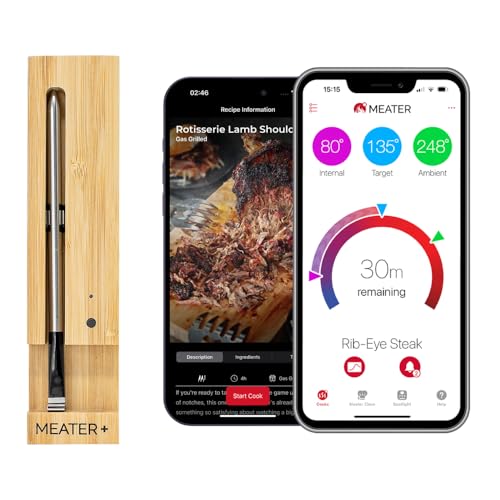
- Best overall: MEATER Plus Smart Wireless Meat Thermometer — Check on Amazon
- ThermoWorks Thermapen ONE Instant-Read Thermometer — Check on Amazon
- Keter Unity Outdoor Prep Table and Serving Cart, 40 Gallon — Check on Amazon
- MEATER Block WiFi Smart Meat Thermometer, 4-Probe — Check on Amazon
Read the full guide ↓
Disclosure: As an Amazon Associate, dailyhomedecorating.com earns from qualifying purchases. Links to Amazon on this page are affiliate links; they cost you nothing extra. Listing details such as price and availability change often, so check the current Amazon listing before you buy.
Finding the best grill accessories for apartments under $300 starts with a constraint no backyard guide has to think about: in an apartment, the rules of the building are part of the product specification. Many leases and HOA rules ban charcoal outright on balconies, restrict gas grills by fuel size or distance from the structure, or limit cooking to electric grills — and local fire codes often add their own distance rules for multi-family buildings. So before any pick below earns a place here, it has to pass the apartment test: it must work with the grill you are actually allowed to use, store in the space you actually have, produce no permanent installation, and be carryable through a hallway and an elevator without a second person. Accessories that fail that test — however good they are in a yard — are discussed honestly as exclusions, not smuggled in as recommendations.
Within those rules, $300 is a generous and genuinely useful budget. Apartment grilling fails in predictable ways: the cook cannot judge doneness through a small grill’s uneven heat, there is nowhere to set a tray down, tools live in a kitchen drawer three rooms away, and cleanup has to happen at a sink rather than with a hose. The picks below attack exactly those failures. Temperature tools come first, because a compact grill’s hot spots make guessing worse and a thermometer makes guessing unnecessary. A right-sized prep-and-storage cart comes next, because it turns a balcony railing into a workstation and then swallows every accessory when the cook is over. Two further picks are covered in prose only — a bristle-free cleaning brush and a wired-probe alarm thermometer — because we could not verify their Amazon listings to the standard this guide requires for a link. And one safety rule outranks every pick: no wire-bristle grill brush, ever. Federal regulators have recalled millions of them from major brands after loose bristles were swallowed and caused serious injuries. On a small apartment grill the risk calculus is identical to a big backyard one, so every cleaning recommendation here is bristle-free.
In this guide
Quick Picks
Short on time? Each row names an apartment situation and the accessory that suits it, with a link where one was verified.
| Buyer type | Pick | Why it stands out | Link |
|---|---|---|---|
| Best overall | MEATER Plus | One wire-free probe; monitor a small-grill cook from the kitchen | Check on Amazon |
| Best instant-read | ThermoWorks Thermapen ONE | Fast, accurate spot checks on a grill with hot spots | Check on Amazon |
| Best prep and storage | Keter Unity Prep Table, 40 Gallon | A worktop plus enclosed storage sized for a balcony | Check on Amazon |
| Best for feeding a crowd | MEATER Block, 4-Probe | Four wire-free probes when the balcony hosts dinner | Check on Amazon |
| Best cleaning (prose only) | Kona Safe/Clean Bristle-Free Brush | Coiled, bristle-free cleaning — no wire-bristle risk | See review |
| Best wired alternative (prose only) | ThermoWorks Signals | Four wired channels for oven-to-grill cooks | See review |
How These Picks Were Chosen
Three filters shaped this list, and the first was the building. Every pick had to be compatible with apartment reality: usable with electric, small gas or small charcoal grills where those are permitted; requiring no permanent mounting, no gas-line work and no structural change; and storable in a footprint a renter actually has. That filter removed the stars of our general guide — full-size rotisserie kits and the 78-gallon prep station — not because they are poor products, but because a 22-inch kettle rotisserie answers a question a balcony cannot ask. Where a category was excluded, the review text says so and explains what to do instead.
The second filter was verification. A pick carries an Amazon link only if its ASIN was confirmed against an independent record of the Amazon listing and a price sighting for that exact ASIN sat at or under $300 at research time. Products that failed either check — including two we genuinely like — are prose-only, with no link and no price, and the sources file beside this guide records the distinction. Because grill gear pricing is seasonal, the article prints no fixed figure for any product: check price on Amazon for the number that will apply to your order. We did not use these products ourselves; we compared maker listings, specifications and independent price records, and weighted the apartment-specific numbers — stored footprint, weight, whether a probe survives direct heat — as heavily as headline features.
The third filter was safety, and it removed a whole subcategory before scoring began. Wire-bristle grill brushes have been recalled in the millions — Weber, Cuisinart and Nexgrill models among them — after the U.S. Consumer Product Safety Commission documented bristles detaching, sticking to grates and food, and being swallowed, in some cases requiring surgery to remove. Apartment cooks sometimes assume a small grill makes a small risk; it does not. No wire brush is recommended anywhere in this guide, tool sets containing one were excluded, and the one cleaning pick is a bristle-free coil design.
The 6 Best Grill Accessories for Apartments Under $300
MEATER Plus Smart Wireless Meat Thermometer
Who it suits: The apartment cook whose grill is small, whose kitchen is inside, and whose attention is split between the balcony and everything else dinner requires.
Small grills punish hovering. Their lids are light, their heat is uneven, and every lid lift dumps a meaningful share of the cooking temperature — yet apartment cooks hover constantly, because the alternative is guessing. The MEATER Plus ends the hovering. It is a single, completely wire-free probe — one sensor at the tip reads the meat’s internal temperature, a second at the handle end reads the air temperature around it — that stays in the food from seasoning to slicing and reports to the MEATER app on your phone. The bamboo charging block hides the trick that makes it work on a balcony: a Bluetooth repeater that stretches the probe’s link to a maker-rated 165 feet, so the signal that would die inside a steel grill box instead relays from the charger sitting beside it, through the balcony door, to you at the stove. The app’s guided cooks estimate the finish time and alert you at target, which in an apartment means the chicken announces itself while you are making the salad, not after it has dried out.
The apartment fit is excellent in the details. The whole system stores in a block the size of a glasses case, in a kitchen drawer. There are no cables to route through a balcony door or trip over. The probe is dishwasher safe, which matters when cleanup is a sink, not a hose. The limits deserve equal clarity: the probe’s ambient rating is 527°F and its internal rating 212°F, so it belongs in roasting and indirect cooking, not left in a steak over a compact grill’s fierce direct zone — pull the meat, rest the probe, and spot-check the sear with the instant-read below. One probe also means one cut at a time; a balcony dinner for six with mixed proteins is the Block’s argument, further down. Check price on Amazon — the Plus sits at the accessible end of this budget, and for most apartment cooks it is the single highest-value accessory in this guide. If your space is a small patio rather than a balcony, the same logic scales in Best Grill Accessories For Small Patios Under $300.
- Single wire-free probe with internal and ambient sensors.
- Bluetooth repeater in the charger extends range to a maker-rated 165 feet.
- Stores in a drawer; no cables, no installation, nothing permanent.
- Dishwasher-safe probe — sink-friendly cleanup.
Honest limitation: One probe watches one cut, the 527°F ambient ceiling excludes direct-flame searing duty, and monitoring depends on a phone and the app — there is no display on the unit.
Choose it if you cook one main protein at a time and want to stop hovering over a small grill. Skip it if you regularly cook several proteins at once, or your building limits you to an indoor electric grill you can already watch from a step away.
ThermoWorks Thermapen ONE Instant-Read Thermometer
Who it suits: Every apartment griller — and most especially anyone whose compact grill has a fierce center and cool corners, which is nearly every compact grill ever made.
On a big grill, uneven heat is a nuisance you can cook around. On a small grill, it is the whole story: two chicken thighs an inch apart can be ten degrees apart, and the difference between the hot spot and the edge is the difference between charred and safe. That is why an instant-read thermometer is arguably more valuable in an apartment than in a backyard. The Thermapen ONE is the professional standard of the type — ThermoWorks’ flagship folding-probe thermometer, built to read in about a second with the accuracy tolerance that restaurant kitchens and competition teams rely on. At a small grill it works like a scanner: thigh by thigh, burger by burger, finding the one piece that needs another minute and the one that needed to come off a minute ago, without cutting anything open and losing its juices to the grate.
Its apartment virtues are practical. It folds shut and lives in the same drawer as the tongs. It needs no pairing, no charging schedule and no app — open it and it reads, close it and it sleeps. The display rotates to the hand you are holding it in, useful when you are reaching across a balcony rail-side grill from an awkward angle. And because it is not grill-specific, it earns its keep indoors all winter: roasts, bread, candy, reheated leftovers checked properly instead of optimistically. Check price on Amazon; it uses a modest share of this budget and leaves the rest free for the storage and monitoring picks around it. The honest boundary is the same as everywhere: it reads only while you stand there holding it, so it verifies cooks rather than supervising them — which is why it pairs with the MEATER Plus above rather than competing with it.
- Professional-grade instant readings — the spot-check standard.
- Folding probe stores in a kitchen drawer; no app, pairing or charging routine.
- Auto-rotating display for awkward balcony angles.
- Equally useful indoors year-round — not a single-purpose grill gadget.
Honest limitation: It cannot monitor a cook remotely or alert you; it only reads at the moment you probe, so long, slow cooks still want a leave-in thermometer alongside it.
Choose it if your grill has hot spots — it does — and you want doneness you can prove. Skip it if you only ever cook one item at a time on an indoor grill you never leave; a basic thermometer covers that simpler case.
Keter Unity Outdoor Prep Table and Serving Cart, 40 Gallon
Who it suits: Balcony and small-patio cooks whose current prep surface is the grill’s side shelf, the railing, or a tray balanced on a chair.
Every apartment cook knows the choreography: raw chicken on a plate in one hand, tongs in the other, nowhere legal to set anything down, and a return trip through the sliding door for the sauce, the thermometer and the clean plate you forgot. The Unity is the smaller sibling of the big prep station in our general guide, scaled for exactly this problem. It is a rolling cart with a stainless steel top that works as a genuine prep and landing surface — a tray of vegetables, a cutting board, the resting plate — above a weather-resistant resin body with a 40-gallon enclosed storage cabinet. That cabinet is the real purchase: it swallows the tongs, the brushes, the drip pans, the chimney or fuel, the cover and the cleaning supplies that otherwise live in a hallway closet or, worse, in a plastic bin that migrates around the balcony. Hooks, a paper towel holder and a bottle opener ride along, and the casters let the cart work beside the grill during the cook and roll flat against the wall — or serve as a drinks station — when guests arrive.
Measure before you fall in love: this is still a piece of furniture, and on a truly tiny balcony it may claim the square footage your second chair wanted. Check your balcony’s usable depth and your building’s rules about balcony storage, which some leases do regulate. Assembly is a real, if manageable, project — allow an unhurried hour, and ideally build it in the room where it will live rather than carrying it through doorways. The resin body is chosen for weather resistance and hose-or-wipe cleaning rather than heirloom solidity, and the steel top deserves a trivet under pans straight off the grate. Check price on Amazon — it occupies the upper-middle of this budget, and judged as the piece that gives an apartment grill a counter and a closet at once, it is the pick that most changes how the space feels. Renters furnishing the rest of the balcony will find the seating side covered in our companion guides listed below.
- Stainless steel worktop: real prep and landing space beside a small grill.
- 40 gallons of enclosed storage for tools, fuel and accessories.
- Weather-resistant resin body on casters; rolls to the wall after the cook.
- Hooks, paper towel holder and bottle opener built in.
Honest limitation: It is still furniture — measure your balcony, confirm your lease allows balcony storage, and expect an hour of assembly.
Choose it if your accessories live in a bin and your trays live on chairs. Skip it if your balcony fits the grill and two chairs and nothing else — drawer-stored temperature tools will serve you better.
MEATER Block WiFi Smart Meat Thermometer, 4-Probe
Who it suits: The apartment host — the cook whose small grill regularly feeds four to six people, with a chicken, a side of salmon and two steaks all landing at once.
It may seem odd to recommend a four-probe system to the smallest kitchens in this series, but the logic is sound: a small grill cooking for a crowd is a sequencing problem, and sequencing is exactly what multiple probes solve. The Block gives you four wire-free probes, each reading both the meat’s internal temperature and the ambient temperature around it, docked in a wooden block with its own display and a standalone mode that runs a cook with no phone at all. Built-in WiFi relays everything through your home network to the app, so the cook can be inside — where apartment hosts actually are, setting the table and opening drinks — while four finish-time estimates tick down on the dock or the phone. On a small grill the practical pattern is rotation: proteins go on in thickness order, each probed, and come off by alert rather than by guess, which is how a two-burner balcony grill produces a table’s worth of correctly cooked food in waves.
The constraints are the family’s constraints, stated plainly. Each probe is rated to 212°F internal and 527°F ambient, so searing over a compact grill’s direct zone is instant-read work, not probe work. Probe-to-dock range shrinks through heavy steel, so keep the dock on the balcony, near the grill, and let WiFi cross the apartment. The dock runs on AA batteries with a USB option for long cooks. And the honest apartment question — do you need four probes? — answers itself by household: a couple grilling two steaks should buy the Plus and keep the change; the host whose balcony is a dinner venue will use all four slots on the first big night. Check price on Amazon: the Block sits in the upper half of this budget, the premium buying simultaneity rather than accuracy.
- Four wire-free probes with internal and ambient sensors.
- WiFi built in, plus a standalone dock display — phone optional.
- Turns a small grill’s crowd problem into a managed sequence.
- Probes are dishwasher safe; the dock stores and charges all four.
Honest limitation: Genuine overkill for one- or two-person weeknight cooks, with the same 527°F ambient ceiling as the Plus and a dock that wants to live near the grill.
Choose it if your balcony regularly feeds a table. Skip it if your typical cook is one protein for two people — the Plus is the same idea at the right scale.
Kona Safe/Clean Bristle-Free Grill Brush (Prose Only)
Who it suits: Every apartment griller, because every grill grate needs cleaning and the apartment cook cleans at closer quarters than anyone.
This pick carries no Amazon link, and the reason is procedural rather than a judgment on the product: we could not verify its Amazon ASIN and a matching price sighting to the standard this guide’s linked picks had to meet, so it is recommended in prose — check price on Amazon if you shop for it. The product itself is the cleaning answer this guide gives everywhere. Instead of individual wire bristles, the Kona Safe/Clean scrubs with continuous stainless steel coils — there are no separate bristles to fatigue, snap and hide on the grate. Used on a hot grate after a dip in water, the coils steam-clean as they scrub, lifting the residue that a small grill accumulates fast precisely because its grate is small and its cooking is concentrated. It is sized and rated for the grate materials apartment grills actually use — porcelain-enameled, ceramic, steel and cast iron — and its long handle keeps hands clear of a compact grill’s close heat.
Why devote a pick slot to a brush at all in a $300 guide? Because the alternative category is the one genuinely dangerous product in grilling. Wire-bristle brushes from Weber, Cuisinart, Nexgrill and others have been recalled in the millions after detached bristles were swallowed and caused serious internal injuries, and regulators advise consumers to stop using them entirely. Apartment cooks are not exempt by scale — a bristle on a small grate is the same bristle. The bristle-free discipline is simple: choose coils, steam heads or a wooden scraper; inspect the tool before each use; retire it at the first sign of damage. Within that discipline, the Kona’s coil design is the closest thing to the familiar brush motion, which is why it is the named recommendation here despite its prose-only status.
- Bristle-free continuous-coil head — no individual wires to shed.
- Steam-cleans on a hot grate when dipped in water first.
- Suited to porcelain, ceramic, steel and cast iron grates.
- Long handle for close-quarters balcony grills.
Honest limitation: Prose-only in this guide — verify the current listing and price yourself before buying — and coil brushes ask for a slightly different scrubbing angle than wire brushes, which takes one or two cleans to learn.
Choose it if a wire brush came with your grill or your tool set — replace it before the next cook. Skip it if you already own a bristle-free cleaner in good condition; one is enough.
ThermoWorks Signals BBQ Alarm Thermometer (Prose Only)
Who it suits: The apartment cook who splits cooking between a balcony grill and an indoor oven or smoker alternative, and who wants one serious thermometer system for both.
Signals is ThermoWorks’ four-channel alarm thermometer: wired probes — typically three for food and one for the cooking chamber’s air — report to a base unit with WiFi and Bluetooth, a real display, and alarms you set per channel. It is prose-only here because, while the product is well documented by its maker, we could not verify a price sighting for its Amazon listing to this guide’s standard; check price on Amazon if you shop for it, and note the maker’s own store pricing has historically sat inside this budget. Its apartment case is different from the MEATERs’: the wired probes tolerate the heat that wire-free probes cannot, the base unit works with no phone in the loop, and the same system that watches a balcony brisket on Saturday watches an oven roast on Sunday — a genuine consideration when every gadget must justify its drawer.
The trade-offs are equally clear. Wires mean routing: through the grill lid’s edge, across the balcony, with a base unit that needs a spot to sit — the opposite of the MEATERs’ vanish-into-the-meat elegance. Four channels is competition-grade capacity that a two-person apartment cook may never use. And an alarm thermometer supervises temperature only; it will not estimate your finish time with an app’s polish unless you use the connected features. For the cook whose grilling is part of a broader serious-cooking habit, though, Signals is the durable, repairable, no-subscription instrument in this guide — the one most likely to still be working, unchanged, a decade from now.
- Four wired channels, including an air probe, with per-channel alarms.
- WiFi and Bluetooth plus a full display on the base — phone optional.
- Wired probes tolerate heat that wire-free probes cannot.
- Works identically at the grill and the indoor oven.
Honest limitation: Prose-only here, wired by design — cables to route and a base unit to house — and more channels than most apartment cooks will ever use.
Choose it if you want one heat-proof thermometer system for grill and oven alike. Skip it if wire-free convenience is the whole point of upgrading — that is the MEATER line above.
Comparison Table
| Product | Type | Best use | Link |
|---|---|---|---|
| MEATER Plus | Single wire-free probe | Monitoring one cut from inside the apartment | Check on Amazon |
| ThermoWorks Thermapen ONE | Instant-read thermometer | Spot-checking a small grill’s hot spots | Check on Amazon |
| Keter Unity, 40 Gallon | Prep table and storage cart | Counter space and enclosed storage on a balcony | Check on Amazon |
| MEATER Block, 4-Probe | Wire-free thermometer system, WiFi | Sequencing several proteins for guests | Check on Amazon |
| Kona Safe/Clean Brush | Bristle-free coil brush | Safe grate cleaning (prose only) | See review |
| ThermoWorks Signals | Wired 4-channel alarm thermometer | Grill-and-oven cooks who want wired reliability (prose only) | See review |
How to Choose Grill Accessories for Apartments
- Start with your building’s rules, not a catalog. Lease, HOA and local fire code decide which grills — and therefore which accessories — are even possible on your balcony. Charcoal is commonly banned in multi-family buildings; gas is often restricted; electric is usually allowed. Verify before you buy anything fuel-adjacent.
- Measure storage before features. In an apartment, every accessory must have an indoor or cabinet home. Prefer tools that fold, nest, dock or hang. If a product’s storage plan is “leave it outside,” check that your lease and your weather agree.
- Prioritize temperature over tools. Small grills have the most uneven heat and their cooks have the least room to maneuver. A leave-in probe plus an instant-read fixes more failed dinners than any other purchase in this guide.
- Respect wire-free probes’ heat ceiling. A 527°F ambient limit is fine for roasting and indirect cooking and wrong for direct searing. Plan the hand-off: probe for the cook, instant-read for the finish.
- Buy the workstation before the gadgets. If trays balance on railings, a right-sized prep cart changes every cook. Measure the balcony, count the cabinet’s gallons against your actual clutter, and let that decide between the 40-gallon Unity and drawer-only minimalism.
- Go bristle-free, without exception. Millions of wire-bristle brushes have been recalled after swallowed bristles caused serious injuries. Coils, steam heads or wood scrapers clean apartment grates just as well.
- Prefer dual-duty products. Apartment storage taxes single-purpose gadgets. A thermometer that serves the oven all winter earns its drawer in a way a grill-only novelty never will.
- Check the live price before judging value. Grill gear is seasonal; the same cart or probe moves significantly between spring and autumn. This guide prints no fixed prices — check price on Amazon on buying day.
What Apartment Grilling Rules Out — and What to Do Instead
Honesty about exclusions is part of this guide’s job, because apartment shoppers are marketed backyard products constantly. Rotisserie kits are the clearest example: the excellent kettle and gas-grill kits in our general guide assume a full-size grill, an outdoor outlet within reach, and the freedom to run a motor and an open cook for an hour — a combination most balconies cannot offer and many leases forbid. The apartment substitute is technique, not hardware: spatchcocked chickens and butterflied leg of lamb cook evenly on a small grill precisely because they are flat, and a probe thermometer delivers the doneness certainty a rotisserie promises. Full-size prep stations fail the same test at 78 gallons; the 40-gallon Unity above is the honest scale. Chimney starters assume charcoal is allowed at all — where it is not, they are storage. And anything requiring permanent mounting, from tool rails to gas splitters, is a conversation with your landlord before it is a purchase. The accessories that remain after those exclusions are not a diminished list; they are the list that fits the life you actually live in the building you actually live in.
The Apartment Kit: How the $300 Collection Reading Works
Because apartment budgets usually work better as a collection than as a single anchor purchase, it is worth walking through the arithmetic of priorities — in order, not in prices, since this guide prints none. First comes verification: an instant-read thermometer, because it improves every single cook from the first night and asks for four inches of drawer. Second comes supervision: a single wire-free probe, because apartment cooks are indoor cooks half the time, prepping sides and setting tables while the balcony does the roasting. Third comes the cleaning replacement: if any wire-bristle brush is in your possession, its bristle-free successor is not optional spending but the settlement of a safety debt, and it is the cheapest item on this list. Fourth comes the workstation: the prep cart, bought when the first three are in place and the remaining frustration is purely spatial — trays, doors, and the long walk between kitchen and grill. Fifth, and only for hosts, comes scale: the four-probe system that turns a small grill into a sequenced production line for guests.
Notice what is not on that list, because apartment accessory marketing will try to sell all of it: the twenty-piece tool set (you need tongs, a turner and a basting brush that fit a drawer, not a roll-up bag of duplicates), the grill light with a clamp that fits no railing, the novelty apron-and-glove bundle, the pizza stone sized for a grill twice yours. Each is a storage problem wearing a product’s clothes. The discipline that makes a $300 apartment budget feel generous is simply refusing to spend any of it on objects whose main residence will be the hallway closet. Every pick in this guide was chosen because it either lives in a drawer, lives in the cart, or is the cart.
Smoke, Neighbors and Other Apartment Realities
Apartment grilling has a social specification that backyards mostly escape: your smoke is your neighbor’s evening. Accessories cannot repeal that, but choices can soften it. Fat management is the big lever — a drip pan under fatty cuts, trimmed rather than untrimmed meat over direct heat, and a lid kept closed all reduce the flare-up smoke that drifts into the balcony above. A probe thermometer helps here in an unexpected way: cooks who trust their temperatures open the lid less, and every avoided lid-lift is smoke that never billows. Timing helps too; the long, low cook that perfumes a building for four hours is a different neighbor proposition from a thirty-minute weeknight grill, and apartment cooks who save the marathon sessions for weekends — or for a park grill — tend to keep the peace that keeps their own grilling privileges intact.
Cleanup carries the same logic indoors. Apartment grates get cleaned at kitchen sinks, which is why this guide favors tools that rinse clean without shedding anything into a drain you share with your dinnerware, and why the prep cart’s enclosed cabinet matters beyond tidiness: charcoal ash, used drip pans and greasy tools sealed in a cabinet are a different balcony from the same items in an open bin. None of this requires expensive equipment. It requires the modest, well-chosen kit above, used with the awareness that in an apartment, good grilling is partly a cooking skill and partly a tenancy skill — and the accessories that respect both are the ones worth $300.
Common Buying Mistakes
- Buying accessories for the grill you wish the building allowed, instead of the one it does.
- Ignoring balcony storage rules and buying a cart the lease makes you remove.
- Leaving a wire-free probe in meat over a compact grill’s direct flame and exceeding its ambient rating.
- Keeping the wire-bristle brush that came free with the grill — recalled category, replace it.
- Buying a giant tool set that needs a storage bin bigger than the balcony cabinet you did not buy.
- Skipping the instant-read because the grill “has a lid thermometer” — lid thermometers read air, slowly, in the wrong place.
- Ordering furniture-scale items without measuring the balcony door, the elevator and the balcony itself.
- Assuming a sale price from a review still applies — verify on the listing, especially for seasonal grill gear.
Final Recommendation
- Most apartment cooks: MEATER Plus.
- The essential verifier: ThermoWorks Thermapen ONE.
- No counter, no storage: Keter Unity Prep Table, 40 Gallon.
- The balcony host: MEATER Block, 4-Probe.
- Cleaning, safely: Kona Safe/Clean Bristle-Free Brush (prose only).
- Grill-and-oven traditionalists: ThermoWorks Signals (prose only).
If only two purchases fit the budget and the balcony, make them the MEATER Plus and the Thermapen ONE: one supervises the cook while you are inside, the other tells the truth at the grate, and together they use a fraction of this budget and a single kitchen drawer. Add the Unity when the tray-balancing starts, and replace any wire brush in the building with a bristle-free cleaner before your next cook — that last one is not a recommendation so much as a recall notice you should act on.
The Electric-Grill Apartment: A Special Case
A large share of apartment grilling happens on electric grills, because they are the one category most buildings allow without argument — no open flame, no fuel storage, nothing for a fire code to object to. Electric grills change the accessory calculus in two ways worth stating. First, their heat is gentler and slower to recover, which makes temperature discipline more valuable, not less: the lid stays closed because opening it costs minutes, so a leave-in probe that reports without a lid-lift is doing double duty, and an instant-read’s speed matters because the surface you are checking is cooling while you check it. Second, electric grills live closer to indoor life — many are used on kitchen counters as readily as on balconies — so accessories that serve both contexts, like the Thermapen and the wired Signals, pull ahead of anything designed only for a patio.
What electric grilling rules out is mostly fuel theater: no chimney, no charcoal tools, no smoker boxes that need a flame to smolder. What it rewards is exactly the kit this guide recommends — compact, drawer-stored, dual-purpose instruments and one good cart. If your building’s rules have already made the electric decision for you, take comfort in the arithmetic: the entire recommended apartment kit, thermometer pair and cart included, fits the budget with room to spare, and none of it will ever need to be explained to a landlord.
A Note on Shared Spaces: Courtyards and Rooftop Decks
Some apartment grilling happens not on a private balcony but in shared space — a courtyard with a communal grill, a rooftop deck with a sign-up sheet — and the accessory logic shifts once more. Shared grills reward accessories that travel: the probe and the instant-read in a small caddy, the bristle-free brush that leaves the communal grate cleaner than you found it, the tray system that keeps your food stream separate from the previous tenant’s residue. They punish anything stored on-site, because shared space stores nothing safely. If your building offers a shared grill, the kit in this guide still applies — simply weight the portable picks first, treat the prep cart as an in-unit staging station that rolls to the elevator, and add one habit no product can supply: leave the shared grate brushed, the area wiped and the next tenant’s first impression a good one. In shared spaces, your accessories are also your reputation.
Frequently Asked Questions
Are grills even allowed on apartment balconies?
It depends on your lease, your HOA and your local fire code, and the variation is wide. Many multi-family buildings ban charcoal entirely, restrict gas grills by size or distance from the structure, and permit electric grills most freely. Some jurisdictions set their own separation rules for open-flame cooking in multi-family housing. Read your lease’s grill clause and your building’s rules before buying a grill or any fuel-related accessory — the accessories in this guide were chosen to work within the strictest common version of those rules.
How should I interpret “under $300” for an apartment — one item or a whole kit?
For apartments, the whole-kit reading usually wins. Balcony grilling needs several modest things done right — monitoring, verification, a work surface, safe cleaning — more than it needs one $300 statement piece. This guide’s linked picks can be combined well inside the budget, and each review notes what a pick costs you in the currency apartments actually run short of: storage space.
Is a wire grill brush really a problem on a small grill?
Yes. The hazard — a fatigued wire bristle snapping off, sticking to the grate, transferring to food and being swallowed — does not scale down with grill size, and regulators have recalled millions of wire-bristle brushes from major brands and advise against using the category at all. Bristle-free coils, steam heads and wooden scrapers clean small grates effectively; there is no remaining reason to own the wire version.
Can I use a wireless probe on an electric grill?
Yes — wire-free probes like the MEATER models work in any cooker that holds food and heat, including electric grills, ovens and smokers, as long as the probe’s temperature limits are respected. On an electric grill the ambient ceiling is rarely a problem, since few electric models reach the direct-flame temperatures of gas or charcoal. The app’s guided cooks apply the same way indoors and out.
What is the best first accessory for a new apartment griller?
An instant-read thermometer, because a small grill’s uneven heat makes guessing least reliable exactly where beginners start. Add a leave-in probe when you begin cooking thicker cuts or whole chickens, a prep cart when the space choreography frustrates you, and a bristle-free brush on day one if any wire brush is currently in your drawer.
Will a prep cart violate my lease?
It can — some leases and HOAs regulate what may be stored on balconies, including furniture and storage boxes. Check your building’s balcony rules before ordering, measure the space the cart would occupy, and remember that a rolling cart can also live just inside the balcony door and roll out for cooks if outdoor storage is restricted.


