Where to buy
Short on time? This shortlist for the best glass meal prep containers for small kitchens under $25 is the place to start — check the latest price, availability and delivery on Amazon. Orders are placed on Amazon. We may earn a commission from qualifying purchases.
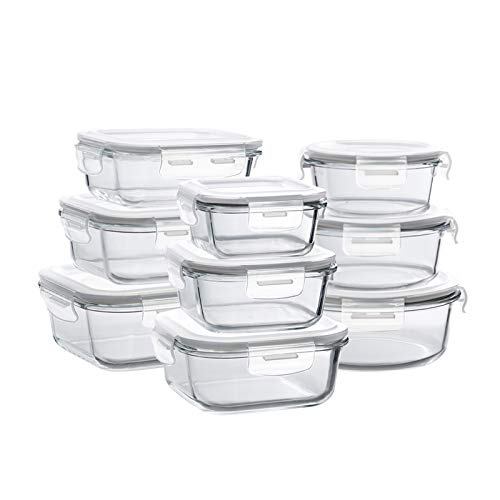
- Best overall under this tier: Bayco 9 Sets Glass Meal Prep Containers with Lids — Check on Amazon
- Pyrex Simply Store 18-Piece Glass Food Storage Set — Check on Amazon
- Anchor Hocking TrueSeal 10-Piece Glass Food Storage Set, Mineral Blue — Check on Amazon
- Prep Naturals 5 Pack 27oz Glass Meal Prep Containers, 2-Compartment — Check on Amazon
- Rubbermaid Brilliance Glass 3.2-Cup Containers, Set of 4 — Check on Amazon
- Razab 24-Piece Airtight Glass Food Storage Container Set — Check on Amazon
Read the full guide ↓
Disclosure: As an Amazon Associate, dailyhomedecorating.com earns from qualifying purchases. Links to Amazon on this page are affiliate links; they cost you nothing extra. Listing details such as price and availability change often, so check the current Amazon listing before you buy.
Finding the best glass meal prep containers for small kitchens under $25 is really a search for the right combination of glass, lid and sizes for the way your household actually cooks and stores — not the biggest piece count in a product photograph. This guide works through six picks at this budget, judged on glass type, honest lid security, size logic and how each set behaves across an ordinary week, and it is written specifically for small-kitchen households where every shelf centimetre works.
In a small kitchen a container set is not really food storage — it is a land claim. Every container you own occupies cupboard volume when empty, fridge volume when full, and drying-rack volume in between, and in a compact kitchen all three are rationed. The sets that succeed here are the ones designed around that triple cost: bases that nest deeply when empty, lids that store flat or clip together, and filled footprints that tile a small fridge shelf without the crescent gaps round containers leave behind.
Weight and handling matter more in small spaces too. Compact kitchens often store containers high — above the fridge, over the cabinets — and a nested stack of glass that is safe to lift down one-handed beats a sprawling set stored at ankle level behind the pots. This guide notes, for every pick, how the empty set actually stores: nested depth, lid behaviour, and whether the whole system can live in a single standard cupboard shelf or a deep drawer.
The third small-kitchen test is multi-tasking. A container that only stores is a luxury; the winners here also bake, serve at the table, and reheat, replacing a baking dish, a serving bowl and a mixing bowl you then do not have to own. Borosilicate picks earn extra credit in this lens for exactly that reason, and every review states plainly what else each set can stand in for.
A $25 budget buys a genuine glass system: borosilicate fleets with gasketed snap lids, established-brand sets with decades of spares behind them, and latching-lid systems that can be trusted with soup. The six picks below are ordered by how completely they solve the whole job for small-kitchen households where every shelf centimetre works, not by price within the tier.
If you are still deciding which budget level fits, the wider series helps: start with Best Glass Meal Prep Containers For Meal Prep Under $200 for a neighbouring budget in this same group, then come back here for the picks tuned to small-kitchen households where every shelf centimetre works.
In this guide
Quick Picks: the best glass meal prep containers for small kitchens under $25 at a glance
Six picks, six different strengths. The table pairs each situation with the one product in this guide that fits it best; the detailed reviews below explain the trade-offs behind each row.
| Best for | Pick | Why it stands out | Link |
|---|---|---|---|
| Best overall under this tier | Bayco 9 Sets Glass Meal Prep Containers with Lids | Borosilicate meal-prep set, mixed sizes; Borosilicate glass | Check on Amazon |
| Best mixed-shape household set | Pyrex Simply Store 18-Piece Glass Food Storage Set | Mixed round and rectangular glass set; Tempered soda-lime glass, non-porous | Check on Amazon |
| Best round set with sealed lids | Anchor Hocking TrueSeal 10-Piece Glass Food Storage Set, Mineral Blue | Round glass set with silicone-sealed lids; Tempered glass, made in the USA glass | Check on Amazon |
| Best divided lunches | Prep Naturals 5 Pack 27oz Glass Meal Prep Containers, 2-Compartment | Two-compartment borosilicate meal-prep set; Borosilicate glass | Check on Amazon |
| Best leak-resistant lunch size | Rubbermaid Brilliance Glass 3.2-Cup Containers, Set of 4 | Glass containers with latching airtight lids; Glass base (Brilliance Glass line) | Check on Amazon |
| Best piece-count value format | Razab 24-Piece Airtight Glass Food Storage Container Set | Mixed glass storage set with locking lids; Glass containers (maker positions the line for oven/freezer/microwave use without lids) | Check on Amazon |
How these picks were chosen
Every pick had to pass the same five tests, weighted for small-kitchen households where every shelf centimetre works. We verified each model against maker and retailer listings before including it — glass types, lid systems, set compositions and capacities in the reviews come from those listings, and the sources file published with this article records them pick by pick. Products we could not verify were left out or covered without links, however often they appear in round-ups. Where a format honestly does not exist at this budget, the guide says so instead of inventing a listing.
Nested storage volume. How small the whole set folds down when empty — measured by nesting depth and whether lids store flat, clipped or upright in the same footprint.
Fridge tiling. Rectangular footprints and flat lids that let a small fridge shelf hold a full week without dead corners; rounds are penalised for this lens.
One-set versatility. Bake, serve, store and reheat in the same vessel to displace other kitchenware; oven-safe borosilicate scores highest here.
Right-sized piece count. Enough containers for the household’s real week and no more — in a small kitchen, two surplus containers are a shelf problem, not a bonus.
Lift-down safety. Nested stacks that stay together and are light enough, size by size, to retrieve from high storage without a wobble.
Finally, we weighted the results for small-kitchen households where every shelf centimetre works specifically. A set can be excellent in general and wrong for this guide’s reader; the ordering below reflects the criteria above as they apply to small-kitchen households where every shelf centimetre works, which is why sibling guides in this series — written for other situations at the same budget — rank some of the same products differently.
Detailed reviews: the best glass meal prep containers for small kitchens under $25, pick by pick
1. Bayco 9 Sets Glass Meal Prep Containers with Lids — Best overall under this tier
Who it suits: Households whose week matches its capacity — nine containers in graduated sizes — a full week of varied portions rather than identical boxes — and who want its particular balance of glass type and lid security. If that is your kitchen, this is one of the most satisfying ways to spend this budget.
Start with what it is: a borosilicate meal-prep set, mixed sizes, built around borosilicate glass, closed by snap-locking lids with silicone seal. Those three facts — format, glass, lid — predict almost everything about how it will behave in your kitchen, and the rest of this review is really an unpacking of them.
Capacity, stated as real food rather than piece-count marketing: nine containers in graduated sizes — a full week of varied portions rather than identical boxes. Read that against your own week before anything else in this review. In a guide written for small-kitchen households where every shelf centimetre works, that capacity is best spent on the loads the criteria section describes, and the set rewards households whose routine matches its shape. Ask it to cover a completely different pattern of cooking and it will feel wrong for reasons that have nothing to do with quality.
The lid system deserves its own paragraph, because it decides what this set can be trusted to carry. Snap-locking lids with silicone seal — in daily terms that means the difference between a container you toss into a bag without thinking and one you carry flat, in hand, like a bowl of soup at a buffet. The reviews in this guide never call a press-on lid leakproof, and where a gasketed system earns the word, it is because the seal is a removable silicone ring compressed evenly by the closure, not because the listing said so.
Stacking load travels through lids, not walls. When filled containers stack, the weight of the top box rests on the lid and rim of the one below — which is why flat, rigid lids stack calmly and domed or soft lids wander. Judge any set’s stacking by its lid tops, not by how neatly the empty bases nest in the shop photograph.
Living with it long-term comes down to care that is simple but specific. Store bases nested with a cloth or paper layer between them if your cupboard is tight; glass-on-glass in a jolting drawer is how rim chips are born. Lids stored flat and dry keep their gaskets uncompressed and sealing evenly. The glass itself will outlast several generations of lids if the rims are treated kindly, so judge this pick as a system: excellent glass with an orphaned lid is a bowl, not a container.
Pros:
- Snap-lock gasket seal suited to saucy, carried food
- Borosilicate or tempered bases that reheat in the same vessel
- Lids interchange across the set’s sizes in daily use
- Format and sizes: Nine containers in graduated sizes — a full week of varied portions rather than identical boxes
Honest limitation: Mixed sizes nest and stack less uniformly than a single-size fleet; label lids by size for the first weeks.
Choose it if its sizes match the meals you actually make and its lid class matches how the food travels. Skip it if your routine needs a different lid class or a different size logic — the neighbouring picks in this guide exist for exactly those cases. — Check on Amazon
2. Pyrex Simply Store 18-Piece Glass Food Storage Set — Best mixed-shape household set
Who it suits: Households whose week matches its capacity — nine containers mixing rounds and rectangles — leftovers, prepped ingredients and lunches in one system — and who want its particular balance of glass type and lid security. If that is your kitchen, this is one of the most satisfying ways to spend this budget.
Start with what it is: a mixed round and rectangular glass set, built around tempered soda-lime glass, non-porous, closed by bpa-free plastic lids. Those three facts — format, glass, lid — predict almost everything about how it will behave in your kitchen, and the rest of this review is really an unpacking of them.
Capacity, stated as real food rather than piece-count marketing: nine containers mixing rounds and rectangles — leftovers, prepped ingredients and lunches in one system. Read that against your own week before anything else in this review. In a guide written for small-kitchen households where every shelf centimetre works, that capacity is best spent on the loads the criteria section describes, and the set rewards households whose routine matches its shape. Ask it to cover a completely different pattern of cooking and it will feel wrong for reasons that have nothing to do with quality.
The lid system deserves its own paragraph, because it decides what this set can be trusted to carry. BPA-free plastic lids — in daily terms that means the difference between a container you toss into a bag without thinking and one you carry flat, in hand, like a bowl of soup at a buffet. The reviews in this guide never call a press-on lid leakproof, and where a gasketed system earns the word, it is because the seal is a removable silicone ring compressed evenly by the closure, not because the listing said so.
Glass rewards a cool-down habit. Hot food sealed immediately steams its own lid, rains condensation back onto the meal, and pressures the gasket while it is warm and most pliable. Ten uncovered minutes on the counter before lidding is the cheapest quality upgrade in all of meal prep, whatever set you own.
Living with it long-term comes down to care that is simple but specific. Wash lids and gaskets as deliberately as the glass: lids on the top rack, gaskets lifted out weekly, washed warm and soapy, and dried fully before reseating — a gasket put away damp is next week’s mystery smell. The glass itself will outlast several generations of lids if the rims are treated kindly, so judge this pick as a system: excellent glass with an orphaned lid is a bowl, not a container.
Pros:
- Fastest lids in the guide — on and off with one hand
- Flat lids stack calmly in fridge and cupboard
- Decades-proven glass from an established maker
- Format and sizes: Nine containers mixing rounds and rectangles — leftovers, prepped ingredients and lunches in one system
Honest limitation: Two shapes means two stacking logics; the set organises best when rounds and rectangles get separate shelves or zones.
Choose it if its sizes match the meals you actually make and its lid class matches how the food travels. Skip it if your routine needs a different lid class or a different size logic — the neighbouring picks in this guide exist for exactly those cases. — Check on Amazon
3. Anchor Hocking TrueSeal 10-Piece Glass Food Storage Set, Mineral Blue — Best round set with sealed lids
Who it suits: Households whose week matches its capacity — five round containers: one 1-cup, two 2-cup, one 4-cup and one 7-cup — and who want its particular balance of glass type and lid security. If that is your kitchen, this is one of the most satisfying ways to spend this budget.
Start with what it is: a round glass set with silicone-sealed lids, built around tempered glass, made in the usa glass, closed by trueseal lids with silicone seal ring, mineral blue. Those three facts — format, glass, lid — predict almost everything about how it will behave in your kitchen, and the rest of this review is really an unpacking of them.
Capacity, stated as real food rather than piece-count marketing: five round containers: one 1-cup, two 2-cup, one 4-cup and one 7-cup. Read that against your own week before anything else in this review. In a guide written for small-kitchen households where every shelf centimetre works, that capacity is best spent on the loads the criteria section describes, and the set rewards households whose routine matches its shape. Ask it to cover a completely different pattern of cooking and it will feel wrong for reasons that have nothing to do with quality.
The lid system deserves its own paragraph, because it decides what this set can be trusted to carry. TrueSeal lids with silicone seal ring, mineral blue — in daily terms that means the difference between a container you toss into a bag without thinking and one you carry flat, in hand, like a bowl of soup at a buffet. The reviews in this guide never call a press-on lid leakproof, and where a gasketed system earns the word, it is because the seal is a removable silicone ring compressed evenly by the closure, not because the listing said so.
Rims are where glass containers live and die. Chips almost never start on walls; they start where rims strike taps, granite edges and each other in the sink. Sets with slightly rolled, reinforced rims and households that wash glass separately from heavy pans keep their containers intact for years longer.
Living with it long-term comes down to care that is simple but specific. Glass bases themselves are nearly maintenance-free: dishwasher-safe across this guide, unbothered by tomato, turmeric or beetroot, and restored completely by a soak if a baked-on edge ever appears. It is the plastic lid, not the glass, that sets the system’s care rhythm. The glass itself will outlast several generations of lids if the rims are treated kindly, so judge this pick as a system: excellent glass with an orphaned lid is a bowl, not a container.
Pros:
- Snap-lock gasket seal suited to saucy, carried food
- Borosilicate or tempered bases that reheat in the same vessel
- Lids interchange across the set’s sizes in daily use
- Format and sizes: Five round containers: one 1-cup, two 2-cup, one 4-cup and one 7-cup
Honest limitation: All-round line-up: brilliant for soups, grains and round-fridge-door storage, less space-efficient for packed rectangular meal-prep rows.
Choose it if its sizes match the meals you actually make and its lid class matches how the food travels. Skip it if your routine needs a different lid class or a different size logic — the neighbouring picks in this guide exist for exactly those cases. — Check on Amazon
4. Prep Naturals 5 Pack 27oz Glass Meal Prep Containers, 2-Compartment — Best divided lunches
Who it suits: Households whose week matches its capacity — five 27oz divided containers — a working week of portioned lunches — and who want its particular balance of glass type and lid security. If that is your kitchen, this is one of the most satisfying ways to spend this budget.
Start with what it is: a two-compartment borosilicate meal-prep set, built around borosilicate glass, closed by snap-lock airtight lids with silicone seal. Those three facts — format, glass, lid — predict almost everything about how it will behave in your kitchen, and the rest of this review is really an unpacking of them.
Capacity, stated as real food rather than piece-count marketing: five 27oz divided containers — a working week of portioned lunches. Read that against your own week before anything else in this review. In a guide written for small-kitchen households where every shelf centimetre works, that capacity is best spent on the loads the criteria section describes, and the set rewards households whose routine matches its shape. Ask it to cover a completely different pattern of cooking and it will feel wrong for reasons that have nothing to do with quality.
The lid system deserves its own paragraph, because it decides what this set can be trusted to carry. Snap-lock airtight lids with silicone seal — in daily terms that means the difference between a container you toss into a bag without thinking and one you carry flat, in hand, like a bowl of soup at a buffet. The reviews in this guide never call a press-on lid leakproof, and where a gasketed system earns the word, it is because the seal is a removable silicone ring compressed evenly by the closure, not because the listing said so.
Visibility changes behaviour in a way no label system matches. Food you can see gets eaten; food hidden in opaque tubs becomes archaeology. Clear glass on all sides is a genuine freshness feature for leftovers, because the fridge audit takes three seconds instead of a lid-lifting expedition.
Living with it long-term comes down to care that is simple but specific. Once a month, run a fingernail slowly around each rim under good light. A chip you can feel is a container to retire from freezer and oven duty — it can live on as a dry-goods or desk container, but thermal stress finds chips. The glass itself will outlast several generations of lids if the rims are treated kindly, so judge this pick as a system: excellent glass with an orphaned lid is a bowl, not a container.
Pros:
- Snap-lock gasket seal suited to saucy, carried food
- Borosilicate or tempered bases that reheat in the same vessel
- Lids interchange across the set’s sizes in daily use
- Format and sizes: Five 27oz divided containers — a working week of portioned lunches
Honest limitation: Compartment divider keeps foods visually separate, not liquid-sealed; the 27oz size suits moderate appetites better than large ones.
Choose it if its sizes match the meals you actually make and its lid class matches how the food travels. Skip it if your routine needs a different lid class or a different size logic — the neighbouring picks in this guide exist for exactly those cases. — Check on Amazon
5. Rubbermaid Brilliance Glass 3.2-Cup Containers, Set of 4 — Best leak-resistant lunch size
Who it suits: Households whose week matches its capacity — four 3.2-cup containers — the lunch-size core of the brilliance glass system — and who want its particular balance of glass type and lid security. If that is your kitchen, this is one of the most satisfying ways to spend this budget.
Start with what it is: a glass containers with latching airtight lids, built around glass base (brilliance glass line), closed by latching lids with silicone seal, built-in steam vents. Those three facts — format, glass, lid — predict almost everything about how it will behave in your kitchen, and the rest of this review is really an unpacking of them.
Capacity, stated as real food rather than piece-count marketing: four 3.2-cup containers — the lunch-size core of the brilliance glass system. Read that against your own week before anything else in this review. In a guide written for small-kitchen households where every shelf centimetre works, that capacity is best spent on the loads the criteria section describes, and the set rewards households whose routine matches its shape. Ask it to cover a completely different pattern of cooking and it will feel wrong for reasons that have nothing to do with quality.
The lid system deserves its own paragraph, because it decides what this set can be trusted to carry. Latching lids with silicone seal, built-in steam vents — in daily terms that means the difference between a container you toss into a bag without thinking and one you carry flat, in hand, like a bowl of soup at a buffet. The reviews in this guide never call a press-on lid leakproof, and where a gasketed system earns the word, it is because the seal is a removable silicone ring compressed evenly by the closure, not because the listing said so.
Weight is information. A glass container’s heft tells your hand it is full, seals your grip on a wet surface less ambiguously than flexing plastic, and keeps the vessel planted when a spoon digs in. The same weight is the honest cost in a commuting bag — both halves of that sentence stay true for every pick in this guide.
Living with it long-term comes down to care that is simple but specific. Store bases nested with a cloth or paper layer between them if your cupboard is tight; glass-on-glass in a jolting drawer is how rim chips are born. Lids stored flat and dry keep their gaskets uncompressed and sealing evenly. The glass itself will outlast several generations of lids if the rims are treated kindly, so judge this pick as a system: excellent glass with an orphaned lid is a bowl, not a container.
Pros:
- Latching seal that genuinely contains liquids in a carried bag
- Steam-vent lids make reheating tidier
- Clarity of glass with a system-brand spares path
- Format and sizes: Four 3.2-cup containers — the lunch-size core of the Brilliance Glass system
Honest limitation: Sold as a 4-pack of one size; a full system means adding other Brilliance sizes separately.
Choose it if its sizes match the meals you actually make and its lid class matches how the food travels. Skip it if your routine needs a different lid class or a different size logic — the neighbouring picks in this guide exist for exactly those cases. — Check on Amazon
6. Razab 24-Piece Airtight Glass Food Storage Container Set — Best piece-count value format
Who it suits: Households whose week matches its capacity — twelve containers in mixed shapes and sizes for prep plus leftovers — and who want its particular balance of glass type and lid security. If that is your kitchen, this is one of the most satisfying ways to spend this budget.
Start with what it is: a mixed glass storage set with locking lids, built around glass containers (maker positions the line for oven/freezer/microwave use without lids), closed by snap-locking airtight lids. Those three facts — format, glass, lid — predict almost everything about how it will behave in your kitchen, and the rest of this review is really an unpacking of them.
Capacity, stated as real food rather than piece-count marketing: twelve containers in mixed shapes and sizes for prep plus leftovers. Read that against your own week before anything else in this review. In a guide written for small-kitchen households where every shelf centimetre works, that capacity is best spent on the loads the criteria section describes, and the set rewards households whose routine matches its shape. Ask it to cover a completely different pattern of cooking and it will feel wrong for reasons that have nothing to do with quality.
The lid system deserves its own paragraph, because it decides what this set can be trusted to carry. Snap-locking airtight lids — in daily terms that means the difference between a container you toss into a bag without thinking and one you carry flat, in hand, like a bowl of soup at a buffet. The reviews in this guide never call a press-on lid leakproof, and where a gasketed system earns the word, it is because the seal is a removable silicone ring compressed evenly by the closure, not because the listing said so.
Borosilicate and soda-lime glass fail differently, and knowing which you own changes how you cook. Borosilicate’s low thermal expansion lets it shrug off the freezer-to-oven swing that defines meal prep. Tempered soda-lime glass is mechanically tough — it survives knocks that would chip lesser vessels — but its expansion rate asks for a gentler temperature path. Neither fact makes one glass ‘better’; it makes them suited to different weeks.
Living with it long-term comes down to care that is simple but specific. Wash lids and gaskets as deliberately as the glass: lids on the top rack, gaskets lifted out weekly, washed warm and soapy, and dried fully before reseating — a gasket put away damp is next week’s mystery smell. The glass itself will outlast several generations of lids if the rims are treated kindly, so judge this pick as a system: excellent glass with an orphaned lid is a bowl, not a container.
Pros:
- Snap-lock gasket seal suited to saucy, carried food
- Borosilicate or tempered bases that reheat in the same vessel
- Lids interchange across the set’s sizes in daily use
- Format and sizes: Twelve containers in mixed shapes and sizes for prep plus leftovers
Honest limitation: Mixed shapes maximise variety and minimise stacking uniformity; keep like-with-like zones in the fridge.
Choose it if its sizes match the meals you actually make and its lid class matches how the food travels. Skip it if your routine needs a different lid class or a different size logic — the neighbouring picks in this guide exist for exactly those cases. — Check on Amazon
Comparison table
The six picks side by side. Read the lid column first — it decides what the set can carry — then glass type, then capacity.
| Pick | Format | Glass | Lids | Link |
|---|---|---|---|---|
| Bayco 9 Sets Glass Meal Prep Containers with Lids | Borosilicate meal-prep set, mixed sizes | Borosilicate glass | Snap-locking lids with silicone seal | Check on Amazon |
| Pyrex Simply Store 18-Piece Glass Food Storage Set | Mixed round and rectangular glass set | Tempered soda-lime glass, non-porous | BPA-free plastic lids | Check on Amazon |
| Anchor Hocking TrueSeal 10-Piece Glass Food Storage Set, Mineral Blue | Round glass set with silicone-sealed lids | Tempered glass, made in the USA glass | TrueSeal lids with silicone seal ring, mineral blue | Check on Amazon |
| Prep Naturals 5 Pack 27oz Glass Meal Prep Containers, 2-Compartment | Two-compartment borosilicate meal-prep set | Borosilicate glass | Snap-lock airtight lids with silicone seal | Check on Amazon |
| Rubbermaid Brilliance Glass 3.2-Cup Containers, Set of 4 | Glass containers with latching airtight lids | Glass base (Brilliance Glass line) | Latching lids with silicone seal, built-in steam vents | Check on Amazon |
| Razab 24-Piece Airtight Glass Food Storage Container Set | Mixed glass storage set with locking lids | Glass containers (maker positions the line for oven/freezer/microwave use without lids) | Snap-locking airtight lids | Check on Amazon |
How to choose the best glass meal prep containers for small kitchens under $25 for your kitchen
Step 1: name the job before the set. Write down what the containers must do in a real week — how many lunches travel, how many stay home, what gets frozen, what gets baked. The job list, not the shelf at the shop, decides whether you need a uniform fleet, a mixed household set, or a small starter pack plus patience.
Step 2: choose your glass by your temperature path. Freezer-to-oven cooking points to borosilicate. Fridge-to-microwave routines are served perfectly well by tempered soda-lime glass, usually at a friendlier cost per container. Stovetop and broiler are off-limits to every pick in this guide.
Step 3: choose your lid by your liquids. Dry and stay-at-home food tolerates press-on lids. Sauces carried any distance need a silicone gasket under snaps or latches. Soup in a commuting bag needs the strongest seal you can buy and a flat carry — no lid class repeals physics.
Step 4: weight the choice for small-kitchen households where every shelf centimetre works. Re-read the criteria section above and rank the five tests by your own routine. The best pick in this guide is the one whose strengths line up with the test you ranked first, which is why the Quick Picks table is organised by situation rather than by a single winner.
Step 5: check the current listing before ordering. Set compositions, lid colours and included extras differ between listings of the same model family. Confirm the exact contents and sizes on the live listing, and check price on Amazon at that moment rather than relying on any figure quoted elsewhere.
Two related guides in this series are worth a look while you decide: Best Glass Meal Prep Containers For Small Kitchens Under $10 covers a neighbouring situation at this budget, and Best Glass Meal Prep Containers For Families Under $25 looks at the same problem from a different angle. For the dry-goods side of the kitchen, Best Glass Meal Prep Containers For Small Kitchens Under $30 is the natural companion read.
Common mistakes to avoid
Buying the 35-piece set for a one-bed kitchen. Piece counts are marketed as value; in a small kitchen they are volume debt. Count your fridge shelf and cupboard shelf first, then buy the set that fits both.
Storing lids in a separate overflowing drawer. Lids are half the storage problem. Choose sets whose lids stack flat, clip to bases, or stand in a slim rack inside the same cupboard zone as the bases.
Keeping round containers in a small square fridge. Rounds waste the corners of every shelf they touch. In compact fridges that waste is the difference between fitting the week’s prep and playing Tetris at midnight.
Storing the nested stack on the highest shelf. A full nested set of glass is heavier than it looks. Keep glass at waist-to-shoulder height; the top shelf is for the light plastic and the rarely used.
Owning containers that cannot go in the oven. In a small kitchen every vessel should hold at least two jobs. A storage-only set forces you to also own the baking dish it could have been.
Setup, care and knowing when to replace a container
Set the system up once, properly. On day one, wash everything, seat every gasket deliberately, and match each lid to its base with the set unhurried in front of you. Decide where the system lives — one cupboard zone or one deep drawer, bases nested, lids together — and label nothing yet; live with the sizes for a fortnight first. For small-kitchen households where every shelf centimetre works, that first arrangement matters more than it sounds, because a storage system whose home is wrong gets abandoned in week three no matter how good the glass is.
Care is a rhythm, not a project. Daily: rinse gaskets when a container carried something oily or strong-smelling, and let lids dry before stacking them away. Weekly: Wash lids and gaskets as deliberately as the glass: lids on the top rack, gaskets lifted out weekly, washed warm and soapy, and dried fully before reseating — a gasket put away damp is next week’s mystery smell. Monthly: inspect rims for chips and gaskets for nicks or flattening, and re-seat any seal that has started to sit unevenly. None of this is deep maintenance; it is the small attention that separates a set that seals like new in year three from one that weeps in month three.
Replace parts before you replace sets. A flattened gasket, a warped lid or a single chipped base are component failures, not system failures — established brands sell lids and singles precisely so the rest of the set can serve on. Retire an individual glass base from oven and freezer duty the moment a rim chip appears, and replace the whole system only when spares disappear or your household’s pattern of cooking has genuinely outgrown its size logic.
One last ownership note for small-kitchen households where every shelf centimetre works: the happiest owners of any pick in this guide treat the lids as the consumable and the glass as the permanent asset. Budget your attention accordingly — glass forgives almost everything except a dropped corner; lids forgive almost nothing except being washed gently and stored dry.
Final recommendation
For most readers of this guide, start with the Bayco 9 Sets Glass Meal Prep Containers with Lids: it best matches the criteria that matter for small-kitchen households where every shelf centimetre works at this budget — a glass type matched to real cooking, a lid class described honestly, and sizes that map onto real food. It is the pick we would buy first with $25 and the one against which the others in this guide are alternatives for specific situations.
If your kitchen argues for a different format — a different lid class, a different size logic, a load the top pick handles badly — the Pyrex Simply Store 18-Piece Glass Food Storage Set is the alternative we would choose, for the reasons set out in its review. Every other pick in this guide earns its place the same way: not as a runner-up, but as the right answer to a specific version of the problem.
Whichever you choose, match the glass to your temperatures, the lid to your liquids, and the sizes to your real week. Those three decisions matter more to fresh food and calm cupboards than any single product choice in this guide.
Frequently asked questions
What is the best container shape for a small fridge?
Rectangular, straight-sided and flat-lidded. Rectangles tile shelves with almost no wasted space, stack in stable layers, and their lids store flat. Round containers are fine for soups at home but are the least space-efficient shape a small fridge can hold.
How many glass containers can a small kitchen justify?
For one or two people: five to nine containers total, biased to the 2-to-4-cup band, plus one large. That covers a week of lunches and leftovers while nesting into roughly one cupboard shelf — the mid-size picks in this guide are sized with exactly this maths in mind.
Do glass containers nest well enough for small cupboards?
The better sets nest deeply — mixed-size sets often collapse to the footprint of their largest base. Lids decide the rest: flat-stacking or clip-together lids keep the stored volume close to the glass volume, while domed or latching lids can double it, which the reviews flag per pick.
Is borosilicate worth it in a small kitchen?
Usually yes, for a reason beyond durability: borosilicate containers double as baking dishes, which deletes a separate bakeware category from your cupboards. That second job is worth more in a small kitchen than anywhere else.
Where should glass containers live in a compact kitchen?
A deep drawer near the prep zone is ideal — bases nested, lids upright in a divider. Failing that, one waist-height cupboard shelf. Avoid above-head storage for full nested stacks and avoid splitting bases and lids into different rooms of the kitchen.
Still comparing? These related guides on the same site cover the neighbouring ground: Best Airtight Food Storage Containers For Pantry Organization Under $30, Best Glass Meal Prep Containers For Meal Prep Under $200 and Best Glass Meal Prep Containers For Small Kitchens Under $10.


