Where to buy
Short on time? This shortlist for the best glass food storage containers under $50 is the place to start — check the latest price, availability and delivery on Amazon. Orders are placed on Amazon. We may earn a commission from qualifying purchases.
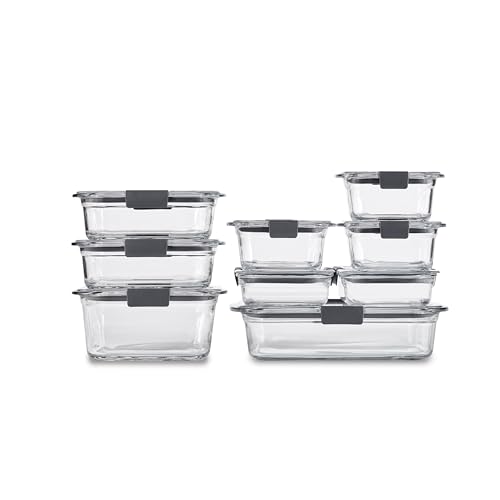
- Best overall — most complete sealed system: Rubbermaid Brilliance Glass Food Storage Set of 9 Containers — Check on Amazon
- OXO Good Grips 16-Piece Smart Seal Glass Container Set — Check on Amazon
- Glasslock 18-Piece Assorted Oven Safe Glass Container Set — Check on Amazon
- Razab 35-Piece Glass Food Storage Container Set with Lids — Check on Amazon
- Pyrex Simply Store 24-Piece Glass Food Storage Set — Check on Amazon
- Bayco 24-Piece Glass Food Storage Container Set, Purple Lids — Check on Amazon
Read the full guide ↓
Disclosure: As an Amazon Associate, dailyhomedecorating.com earns from qualifying purchases. Links to Amazon on this page are affiliate links; they cost you nothing extra. Listing details such as price and availability change often, so check the current Amazon listing before you buy.
Finding the best glass food storage containers under $50 is really a search for the right combination of glass, lid and sizes for the way your household actually cooks and stores — not the biggest piece count in a product photograph. This guide works through six picks at this budget, judged on glass type, honest lid security, size logic and how each set behaves across an ordinary week, and it is written specifically for everyday households replacing plastic storage with glass.
Most kitchens arrive at glass storage the same way: a drawer of stained, warped plastic tubs whose lids no longer match, and one curry too many that never washed out. Glass fixes the real problems — it does not stain, it does not keep the smell of last week’s garlic, it reheats without a transfer dish, and it looks like something you can serve from. Its honest costs are weight and breakability, and this guide states both for every pick instead of pretending the swap is free.
Two glasses dominate this category and they behave differently. Borosilicate — Bayco, Prep Naturals and OXO in this guide — shrugs off temperature swings and suits freezer-to-oven cooking. The tempered soda-lime glass in US Pyrex and Anchor Hocking sets is mechanically tough, proven over decades and cheaper per container, but wants a few minutes of counter rest between freezer and hot oven. Glasslock splits the difference with tempered glass rated for oven use in its oven series. The reviews name each pick’s glass plainly so you can match it to how you actually cook.
Lids, more than glass, decide whether a storage system makes you happy. Press-on lids (Pyrex Simply Store) are the fastest in the kitchen and stack flat, but they resist splashes rather than sealing liquids. Gasketed snap-locks and four-hinge systems (Glasslock, Bayco, Razab) genuinely contain soup. Latching vented lids (Rubbermaid Brilliance Glass, OXO Smart Seal) add tidy reheating on top. Every review in this guide grades its lid by what it can honestly carry.
A $50 budget buys a genuine glass system: borosilicate fleets with gasketed snap lids, established-brand sets with decades of spares behind them, and latching-lid systems that can be trusted with soup. The six picks below are ordered by how completely they solve the whole job for everyday households replacing plastic storage with glass, not by price within the tier.
If you are still deciding which budget level fits, the wider series helps: start with Best Glass Food Storage Containers For Families Under $25 for a neighbouring budget in this same group, then come back here for the picks tuned to everyday households replacing plastic storage with glass.
In this guide
Quick Picks: the best glass food storage containers under $50 at a glance
Six picks, six different strengths. The table pairs each situation with the one product in this guide that fits it best; the detailed reviews below explain the trade-offs behind each row.
| Best for | Pick | Why it stands out | Link |
|---|---|---|---|
| Best overall — most complete sealed system | Rubbermaid Brilliance Glass Food Storage Set of 9 Containers | Mixed glass set with latching airtight lids; Glass bases (Brilliance Glass line) | Check on Amazon |
| Best borosilicate brand system | OXO Good Grips 16-Piece Smart Seal Glass Container Set | Borosilicate glass set with locking-tab lids; Borosilicate glass | Check on Amazon |
| Best locking-lid value set | Glasslock 18-Piece Assorted Oven Safe Glass Container Set | Tempered-glass mixed set with four-hinge locking lids; Tempered glass (oven-safe series) | Check on Amazon |
| Best maximum piece count | Razab 35-Piece Glass Food Storage Container Set with Lids | Extra-large mixed glass set with sauce pots; Glass containers | Check on Amazon |
| Best established-brand big set | Pyrex Simply Store 24-Piece Glass Food Storage Set | Large mixed glass storage set; Tempered soda-lime glass | Check on Amazon |
| Best colour-coded family system | Bayco 24-Piece Glass Food Storage Container Set, Purple Lids | Large mixed borosilicate storage set; Borosilicate glass | Check on Amazon |
How these picks were chosen
Every pick had to pass the same five tests, weighted for everyday households replacing plastic storage with glass. We verified each model against maker and retailer listings before including it — glass types, lid systems, set compositions and capacities in the reviews come from those listings, and the sources file published with this article records them pick by pick. Products we could not verify were left out or covered without links, however often they appear in round-ups. Where a format honestly does not exist at this budget, the guide says so instead of inventing a listing.
Glass type matched to your temperature path. Borosilicate for freezer-to-oven confidence; tempered soda-lime for fridge-and-microwave routines at friendlier cost per container. We record the glass for every pick and never blur the two.
Lid honesty. Press-on, snap-lock with gasket, four-hinge locking, or latching with vent — each pick is rated by what its lid can actually hold: dry food, saucy food, or soup in a moving bag.
Size logic for real leftovers. A useful system covers a 1-to-2-cup band for sauces and half ingredients, a 3-to-4-cup everyday band, and at least one 7-cup vessel for batch cooking. Sets strong in only one band are marked down.
Fridge and cupboard behaviour. Filled containers should stack two or three high without sliding; empty ones should nest without lid chaos. Rectangular footprints use shelf space measurably better than rounds.
Spares and system lifespan. Replacement lids, buyable singles and gasket care decide what a set costs over five years. Established systems win on spares; value sets win on cheap whole-set replacement — both paths are scored openly.
Finally, we weighted the results for everyday households replacing plastic storage with glass specifically. A set can be excellent in general and wrong for this guide’s reader; the ordering below reflects the criteria above as they apply to everyday households replacing plastic storage with glass, which is why sibling guides in this series — written for other situations at the same budget — rank some of the same products differently.
Detailed reviews: the best glass food storage containers under $50, pick by pick
1. Rubbermaid Brilliance Glass Food Storage Set of 9 Containers — Best overall — most complete sealed system
Who it suits: Households whose week matches its capacity — nine containers in mixed sizes — the most complete leak-resistant glass system in this guide — and who want its particular balance of glass type and lid security. If that is your kitchen, this is one of the most satisfying ways to spend this budget.
Start with what it is: a mixed glass set with latching airtight lids, built around glass bases (brilliance glass line), closed by latching lids with silicone seal and steam vents. Those three facts — format, glass, lid — predict almost everything about how it will behave in your kitchen, and the rest of this review is really an unpacking of them.
Capacity, stated as real food rather than piece-count marketing: nine containers in mixed sizes — the most complete leak-resistant glass system in this guide. Read that against your own week before anything else in this review. In a guide written for everyday households replacing plastic storage with glass, that capacity is best spent on the loads the criteria section describes, and the set rewards households whose routine matches its shape. Ask it to cover a completely different pattern of cooking and it will feel wrong for reasons that have nothing to do with quality.
The lid system deserves its own paragraph, because it decides what this set can be trusted to carry. Latching lids with silicone seal and steam vents — in daily terms that means the difference between a container you toss into a bag without thinking and one you carry flat, in hand, like a bowl of soup at a buffet. The reviews in this guide never call a press-on lid leakproof, and where a gasketed system earns the word, it is because the seal is a removable silicone ring compressed evenly by the closure, not because the listing said so.
Headspace is a safety feature, not wasted room. Liquids expand as they freeze, and a container filled to the rim gives that expansion nowhere to go except against the glass and the lid. A clear finger of empty space at the top is the difference between a frozen soup that thaws perfectly and a hairline crack discovered at the worst possible moment.
Living with it long-term comes down to care that is simple but specific. Wash lids and gaskets as deliberately as the glass: lids on the top rack, gaskets lifted out weekly, washed warm and soapy, and dried fully before reseating — a gasket put away damp is next week’s mystery smell. The glass itself will outlast several generations of lids if the rims are treated kindly, so judge this pick as a system: excellent glass with an orphaned lid is a bowl, not a container.
Pros:
- Latching seal that genuinely contains liquids in a carried bag
- Steam-vent lids make reheating tidier
- Clarity of glass with a system-brand spares path
- Format and sizes: Nine containers in mixed sizes — the most complete leak-resistant glass system in this guide
Honest limitation: Latching lids stack slightly taller than press-on lids; measure shelf height if your fridge shelves are fixed.
Choose it if its sizes match the meals you actually make and its lid class matches how the food travels. Skip it if your routine needs a different lid class or a different size logic — the neighbouring picks in this guide exist for exactly those cases. — Check on Amazon
2. OXO Good Grips 16-Piece Smart Seal Glass Container Set — Best borosilicate brand system
Who it suits: Households whose week matches its capacity — eight containers in graduated round and rectangular sizes for everyday leftovers and lunches — and who want its particular balance of glass type and lid security. If that is your kitchen, this is one of the most satisfying ways to spend this budget.
Start with what it is: a borosilicate glass set with locking-tab lids, built around borosilicate glass, closed by smart seal lids with silicone gasket and four locking tabs. Those three facts — format, glass, lid — predict almost everything about how it will behave in your kitchen, and the rest of this review is really an unpacking of them.
Capacity, stated as real food rather than piece-count marketing: eight containers in graduated round and rectangular sizes for everyday leftovers and lunches. Read that against your own week before anything else in this review. In a guide written for everyday households replacing plastic storage with glass, that capacity is best spent on the loads the criteria section describes, and the set rewards households whose routine matches its shape. Ask it to cover a completely different pattern of cooking and it will feel wrong for reasons that have nothing to do with quality.
The lid system deserves its own paragraph, because it decides what this set can be trusted to carry. Smart Seal lids with silicone gasket and four locking tabs — in daily terms that means the difference between a container you toss into a bag without thinking and one you carry flat, in hand, like a bowl of soup at a buffet. The reviews in this guide never call a press-on lid leakproof, and where a gasketed system earns the word, it is because the seal is a removable silicone ring compressed evenly by the closure, not because the listing said so.
Stacking load travels through lids, not walls. When filled containers stack, the weight of the top box rests on the lid and rim of the one below — which is why flat, rigid lids stack calmly and domed or soft lids wander. Judge any set’s stacking by its lid tops, not by how neatly the empty bases nest in the shop photograph.
Living with it long-term comes down to care that is simple but specific. Glass bases themselves are nearly maintenance-free: dishwasher-safe across this guide, unbothered by tomato, turmeric or beetroot, and restored completely by a soak if a baked-on edge ever appears. It is the plastic lid, not the glass, that sets the system’s care rhythm. The glass itself will outlast several generations of lids if the rims are treated kindly, so judge this pick as a system: excellent glass with an orphaned lid is a bowl, not a container.
Pros:
- Snap-lock gasket seal suited to saucy, carried food
- Borosilicate or tempered bases that reheat in the same vessel
- Lids interchange across the set’s sizes in daily use
- Format and sizes: Eight containers in graduated round and rectangular sizes for everyday leftovers and lunches
Honest limitation: Smart Seal lids are excellent but proprietary — a lost lid orphans its base unless you buy OXO spares, and the mixed round/rectangle line-up needs two stacking zones.
Choose it if its sizes match the meals you actually make and its lid class matches how the food travels. Skip it if your routine needs a different lid class or a different size logic — the neighbouring picks in this guide exist for exactly those cases. — Check on Amazon
3. Glasslock 18-Piece Assorted Oven Safe Glass Container Set — Best locking-lid value set
Who it suits: Households whose week matches its capacity — nine containers mixing rectangles, squares and rounds — roughly 0.7-cup minis up to a 6.3-cup large rectangle — and who want its particular balance of glass type and lid security. If that is your kitchen, this is one of the most satisfying ways to spend this budget.
Start with what it is: a tempered-glass mixed set with four-hinge locking lids, built around tempered glass (oven-safe series), closed by four-hinge locking lids with silicone gasket. Those three facts — format, glass, lid — predict almost everything about how it will behave in your kitchen, and the rest of this review is really an unpacking of them.
Capacity, stated as real food rather than piece-count marketing: nine containers mixing rectangles, squares and rounds — roughly 0.7-cup minis up to a 6.3-cup large rectangle. Read that against your own week before anything else in this review. In a guide written for everyday households replacing plastic storage with glass, that capacity is best spent on the loads the criteria section describes, and the set rewards households whose routine matches its shape. Ask it to cover a completely different pattern of cooking and it will feel wrong for reasons that have nothing to do with quality.
The lid system deserves its own paragraph, because it decides what this set can be trusted to carry. Four-hinge locking lids with silicone gasket — in daily terms that means the difference between a container you toss into a bag without thinking and one you carry flat, in hand, like a bowl of soup at a buffet. The reviews in this guide never call a press-on lid leakproof, and where a gasketed system earns the word, it is because the seal is a removable silicone ring compressed evenly by the closure, not because the listing said so.
Glass rewards a cool-down habit. Hot food sealed immediately steams its own lid, rains condensation back onto the meal, and pressures the gasket while it is warm and most pliable. Ten uncovered minutes on the counter before lidding is the cheapest quality upgrade in all of meal prep, whatever set you own.
Living with it long-term comes down to care that is simple but specific. Once a month, run a fingernail slowly around each rim under good light. A chip you can feel is a container to retire from freezer and oven duty — it can live on as a dry-goods or desk container, but thermal stress finds chips. The glass itself will outlast several generations of lids if the rims are treated kindly, so judge this pick as a system: excellent glass with an orphaned lid is a bowl, not a container.
Pros:
- Snap-lock gasket seal suited to saucy, carried food
- Borosilicate or tempered bases that reheat in the same vessel
- Lids interchange across the set’s sizes in daily use
- Format and sizes: Nine containers mixing rectangles, squares and rounds — roughly 0.7-cup minis up to a 6.3-cup large rectangle
Honest limitation: Four hinges per lid is the most fiddly closure in this guide — secure once latched, slow when you are sealing nine containers in a row; rounds in the mix tile a fridge less densely than the rectangles.
Choose it if its sizes match the meals you actually make and its lid class matches how the food travels. Skip it if your routine needs a different lid class or a different size logic — the neighbouring picks in this guide exist for exactly those cases. — Check on Amazon
4. Razab 35-Piece Glass Food Storage Container Set with Lids — Best maximum piece count
Who it suits: Households whose week matches its capacity — fifteen glass containers plus lids and five sauce pots — the biggest household system here — and who want its particular balance of glass type and lid security. If that is your kitchen, this is one of the most satisfying ways to spend this budget.
Start with what it is: a extra-large mixed glass set with sauce pots, built around glass containers, closed by locking lids; set includes 5 small plastic sauce/dip pots per listing title. Those three facts — format, glass, lid — predict almost everything about how it will behave in your kitchen, and the rest of this review is really an unpacking of them.
Capacity, stated as real food rather than piece-count marketing: fifteen glass containers plus lids and five sauce pots — the biggest household system here. Read that against your own week before anything else in this review. In a guide written for everyday households replacing plastic storage with glass, that capacity is best spent on the loads the criteria section describes, and the set rewards households whose routine matches its shape. Ask it to cover a completely different pattern of cooking and it will feel wrong for reasons that have nothing to do with quality.
The lid system deserves its own paragraph, because it decides what this set can be trusted to carry. Locking lids; set includes 5 small plastic sauce/dip pots per listing title — in daily terms that means the difference between a container you toss into a bag without thinking and one you carry flat, in hand, like a bowl of soup at a buffet. The reviews in this guide never call a press-on lid leakproof, and where a gasketed system earns the word, it is because the seal is a removable silicone ring compressed evenly by the closure, not because the listing said so.
Rims are where glass containers live and die. Chips almost never start on walls; they start where rims strike taps, granite edges and each other in the sink. Sets with slightly rolled, reinforced rims and households that wash glass separately from heavy pans keep their containers intact for years longer.
Living with it long-term comes down to care that is simple but specific. Store bases nested with a cloth or paper layer between them if your cupboard is tight; glass-on-glass in a jolting drawer is how rim chips are born. Lids stored flat and dry keep their gaskets uncompressed and sealing evenly. The glass itself will outlast several generations of lids if the rims are treated kindly, so judge this pick as a system: excellent glass with an orphaned lid is a bowl, not a container.
Pros:
- Snap-lock gasket seal suited to saucy, carried food
- Borosilicate or tempered bases that reheat in the same vessel
- Lids interchange across the set’s sizes in daily use
- Format and sizes: Fifteen glass containers plus lids and five sauce pots — the biggest household system here
Honest limitation: Not a pure-glass set: the five sauce pots are plastic, and the sheer piece count needs a real cupboard, not a shelf corner.
Choose it if its sizes match the meals you actually make and its lid class matches how the food travels. Skip it if your routine needs a different lid class or a different size logic — the neighbouring picks in this guide exist for exactly those cases. — Check on Amazon
5. Pyrex Simply Store 24-Piece Glass Food Storage Set — Best established-brand big set
Who it suits: Households whose week matches its capacity — twelve containers — the family-scale version of the simply store system, from 1-cup portions to large serving leftovers — and who want its particular balance of glass type and lid security. If that is your kitchen, this is one of the most satisfying ways to spend this budget.
Start with what it is: a large mixed glass storage set, built around tempered soda-lime glass, closed by bpa-free plastic lids. Those three facts — format, glass, lid — predict almost everything about how it will behave in your kitchen, and the rest of this review is really an unpacking of them.
Capacity, stated as real food rather than piece-count marketing: twelve containers — the family-scale version of the simply store system, from 1-cup portions to large serving leftovers. Read that against your own week before anything else in this review. In a guide written for everyday households replacing plastic storage with glass, that capacity is best spent on the loads the criteria section describes, and the set rewards households whose routine matches its shape. Ask it to cover a completely different pattern of cooking and it will feel wrong for reasons that have nothing to do with quality.
The lid system deserves its own paragraph, because it decides what this set can be trusted to carry. BPA-free plastic lids — in daily terms that means the difference between a container you toss into a bag without thinking and one you carry flat, in hand, like a bowl of soup at a buffet. The reviews in this guide never call a press-on lid leakproof, and where a gasketed system earns the word, it is because the seal is a removable silicone ring compressed evenly by the closure, not because the listing said so.
Visibility changes behaviour in a way no label system matches. Food you can see gets eaten; food hidden in opaque tubs becomes archaeology. Clear glass on all sides is a genuine freshness feature for leftovers, because the fridge audit takes three seconds instead of a lid-lifting expedition.
Living with it long-term comes down to care that is simple but specific. Wash lids and gaskets as deliberately as the glass: lids on the top rack, gaskets lifted out weekly, washed warm and soapy, and dried fully before reseating — a gasket put away damp is next week’s mystery smell. The glass itself will outlast several generations of lids if the rims are treated kindly, so judge this pick as a system: excellent glass with an orphaned lid is a bowl, not a container.
Pros:
- Fastest lids in the guide — on and off with one hand
- Flat lids stack calmly in fridge and cupboard
- Decades-proven glass from an established maker
- Format and sizes: Twelve containers — the family-scale version of the Simply Store system, from 1-cup portions to large serving leftovers
Honest limitation: The biggest Pyrex set here still uses press-on lids; households that commute with liquids should pair it with one locking-lid set.
Choose it if its sizes match the meals you actually make and its lid class matches how the food travels. Skip it if your routine needs a different lid class or a different size logic — the neighbouring picks in this guide exist for exactly those cases. — Check on Amazon
6. Bayco 24-Piece Glass Food Storage Container Set, Purple Lids — Best colour-coded family system
Who it suits: Households whose week matches its capacity — twelve containers across sizes — meal prep, leftovers and pantry decanting in one colour-coded system — and who want its particular balance of glass type and lid security. If that is your kitchen, this is one of the most satisfying ways to spend this budget.
Start with what it is: a large mixed borosilicate storage set, built around borosilicate glass, closed by snap-locking lids, purple in this variant. Those three facts — format, glass, lid — predict almost everything about how it will behave in your kitchen, and the rest of this review is really an unpacking of them.
Capacity, stated as real food rather than piece-count marketing: twelve containers across sizes — meal prep, leftovers and pantry decanting in one colour-coded system. Read that against your own week before anything else in this review. In a guide written for everyday households replacing plastic storage with glass, that capacity is best spent on the loads the criteria section describes, and the set rewards households whose routine matches its shape. Ask it to cover a completely different pattern of cooking and it will feel wrong for reasons that have nothing to do with quality.
The lid system deserves its own paragraph, because it decides what this set can be trusted to carry. Snap-locking lids, purple in this variant — in daily terms that means the difference between a container you toss into a bag without thinking and one you carry flat, in hand, like a bowl of soup at a buffet. The reviews in this guide never call a press-on lid leakproof, and where a gasketed system earns the word, it is because the seal is a removable silicone ring compressed evenly by the closure, not because the listing said so.
Weight is information. A glass container’s heft tells your hand it is full, seals your grip on a wet surface less ambiguously than flexing plastic, and keeps the vessel planted when a spoon digs in. The same weight is the honest cost in a commuting bag — both halves of that sentence stay true for every pick in this guide.
Living with it long-term comes down to care that is simple but specific. Glass bases themselves are nearly maintenance-free: dishwasher-safe across this guide, unbothered by tomato, turmeric or beetroot, and restored completely by a soak if a baked-on edge ever appears. It is the plastic lid, not the glass, that sets the system’s care rhythm. The glass itself will outlast several generations of lids if the rims are treated kindly, so judge this pick as a system: excellent glass with an orphaned lid is a bowl, not a container.
Pros:
- Snap-lock gasket seal suited to saucy, carried food
- Borosilicate or tempered bases that reheat in the same vessel
- Lids interchange across the set’s sizes in daily use
- Format and sizes: Twelve containers across sizes — meal prep, leftovers and pantry decanting in one colour-coded system
Honest limitation: The blue-lid sibling variant’s ASIN could not be confirmed to the same standard during research, so this guide links only the purple variant.
Choose it if its sizes match the meals you actually make and its lid class matches how the food travels. Skip it if your routine needs a different lid class or a different size logic — the neighbouring picks in this guide exist for exactly those cases. — Check on Amazon
Comparison table
The six picks side by side. Read the lid column first — it decides what the set can carry — then glass type, then capacity.
| Pick | Format | Glass | Lids | Link |
|---|---|---|---|---|
| Rubbermaid Brilliance Glass Food Storage Set of 9 Containers | Mixed glass set with latching airtight lids | Glass bases (Brilliance Glass line) | Latching lids with silicone seal and steam vents | Check on Amazon |
| OXO Good Grips 16-Piece Smart Seal Glass Container Set | Borosilicate glass set with locking-tab lids | Borosilicate glass | Smart Seal lids with silicone gasket and four locking tabs | Check on Amazon |
| Glasslock 18-Piece Assorted Oven Safe Glass Container Set | Tempered-glass mixed set with four-hinge locking lids | Tempered glass (oven-safe series) | Four-hinge locking lids with silicone gasket | Check on Amazon |
| Razab 35-Piece Glass Food Storage Container Set with Lids | Extra-large mixed glass set with sauce pots | Glass containers | Locking lids; set includes 5 small plastic sauce/dip pots per listing title | Check on Amazon |
| Pyrex Simply Store 24-Piece Glass Food Storage Set | Large mixed glass storage set | Tempered soda-lime glass | BPA-free plastic lids | Check on Amazon |
| Bayco 24-Piece Glass Food Storage Container Set, Purple Lids | Large mixed borosilicate storage set | Borosilicate glass | Snap-locking lids, purple in this variant | Check on Amazon |
How to choose the best glass food storage containers under $50 for your kitchen
Step 1: name the job before the set. Write down what the containers must do in a real week — how many lunches travel, how many stay home, what gets frozen, what gets baked. The job list, not the shelf at the shop, decides whether you need a uniform fleet, a mixed household set, or a small starter pack plus patience.
Step 2: choose your glass by your temperature path. Freezer-to-oven cooking points to borosilicate. Fridge-to-microwave routines are served perfectly well by tempered soda-lime glass, usually at a friendlier cost per container. Stovetop and broiler are off-limits to every pick in this guide.
Step 3: choose your lid by your liquids. Dry and stay-at-home food tolerates press-on lids. Sauces carried any distance need a silicone gasket under snaps or latches. Soup in a commuting bag needs the strongest seal you can buy and a flat carry — no lid class repeals physics.
Step 4: weight the choice for everyday households replacing plastic storage with glass. Re-read the criteria section above and rank the five tests by your own routine. The best pick in this guide is the one whose strengths line up with the test you ranked first, which is why the Quick Picks table is organised by situation rather than by a single winner.
Step 5: check the current listing before ordering. Set compositions, lid colours and included extras differ between listings of the same model family. Confirm the exact contents and sizes on the live listing, and check price on Amazon at that moment rather than relying on any figure quoted elsewhere.
Two related guides in this series are worth a look while you decide: Best Glass Food Storage Containers For Pantry Organization Under $30 covers a neighbouring situation at this budget, and Best Glass Food Storage Containers For Families Under $75 looks at the same problem from a different angle. For the dry-goods side of the kitchen, Best Glass Food Storage Containers For Pantry Organization Under $150 is the natural companion read.
Common mistakes to avoid
Moving a container straight from freezer to hot oven. Even borosilicate prefers a short counter rest, and tempered soda-lime demands it. Let the chill come off while the oven preheats and thermal shock stops being a practical risk.
Microwaving with the lid sealed tight. Steam needs an exit: vent latching lids, offset press-on lids, or remove the lid entirely. A sealed lid warps, pops, or paints the microwave ceiling with sauce.
Judging a set by piece count alone. A 35-piece box with five sizes you never use is cupboard clutter with a receipt. Count a real week of leftovers, lunches and ingredients, then buy for that week plus two spares.
Trusting press-on lids with soup in a bag. Press-on lids are splash guards. Liquids that travel need a silicone gasket compressed by snaps, hinges or latches — and a flat carry regardless of lid class.
Storing lids snapped onto empty containers. Gaskets stored compressed age faster, and lids left on trap moisture and odours. Store bases nested, lids flat or upright together, gaskets dry.
Setup, care and knowing when to replace a container
Set the system up once, properly. On day one, wash everything, seat every gasket deliberately, and match each lid to its base with the set unhurried in front of you. Decide where the system lives — one cupboard zone or one deep drawer, bases nested, lids together — and label nothing yet; live with the sizes for a fortnight first. For everyday households replacing plastic storage with glass, that first arrangement matters more than it sounds, because a storage system whose home is wrong gets abandoned in week three no matter how good the glass is.
Care is a rhythm, not a project. Daily: rinse gaskets when a container carried something oily or strong-smelling, and let lids dry before stacking them away. Weekly: Store bases nested with a cloth or paper layer between them if your cupboard is tight; glass-on-glass in a jolting drawer is how rim chips are born. Lids stored flat and dry keep their gaskets uncompressed and sealing evenly. Monthly: inspect rims for chips and gaskets for nicks or flattening, and re-seat any seal that has started to sit unevenly. None of this is deep maintenance; it is the small attention that separates a set that seals like new in year three from one that weeps in month three.
Replace parts before you replace sets. A flattened gasket, a warped lid or a single chipped base are component failures, not system failures — established brands sell lids and singles precisely so the rest of the set can serve on. Retire an individual glass base from oven and freezer duty the moment a rim chip appears, and replace the whole system only when spares disappear or your household’s pattern of cooking has genuinely outgrown its size logic.
One last ownership note for everyday households replacing plastic storage with glass: the happiest owners of any pick in this guide treat the lids as the consumable and the glass as the permanent asset. Budget your attention accordingly — glass forgives almost everything except a dropped corner; lids forgive almost nothing except being washed gently and stored dry.
Final recommendation
For most readers of this guide, start with the Rubbermaid Brilliance Glass Food Storage Set of 9 Containers: it best matches the criteria that matter for everyday households replacing plastic storage with glass at this budget — a glass type matched to real cooking, a lid class described honestly, and sizes that map onto real food. It is the pick we would buy first with $50 and the one against which the others in this guide are alternatives for specific situations.
If your kitchen argues for a different format — a different lid class, a different size logic, a load the top pick handles badly — the OXO Good Grips 16-Piece Smart Seal Glass Container Set is the alternative we would choose, for the reasons set out in its review. Every other pick in this guide earns its place the same way: not as a runner-up, but as the right answer to a specific version of the problem.
Whichever you choose, match the glass to your temperatures, the lid to your liquids, and the sizes to your real week. Those three decisions matter more to fresh food and calm cupboards than any single product choice in this guide.
Frequently asked questions
Is borosilicate glass always better than tempered glass for food storage?
Not always. Borosilicate handles temperature swings better, which matters for freezer-to-oven cooking. Tempered soda-lime glass is strong, cheaper per container and ideal for fridge, freezer and microwave routines. Match the glass to the routine rather than paying for a property you will never use.
Can glass food storage containers go in the oven?
The glass bases in this guide are oven-safe within their makers’ limits — lids never are, and must come off first. Avoid broilers and direct flame, preheat the oven before the dish goes in, and give frozen containers a short counter rest before baking.
Why do my glass containers leak in my bag?
Usually the lid class, not a defect. Press-on lids resist splashes only. For liquids on the move you need a gasketed snap-lock, hinge-lock or latching lid, carried flat, with the gasket seated cleanly and every latch closed.
How many glass containers does a typical household need?
A workable core is two large vessels (7 cups and up), six to eight everyday containers in the 3-to-4-cup band, and four small ones for sauces and half-used ingredients — roughly what the mid-size sets in this guide contain.
Do glass containers keep food fresher than plastic?
Glass walls are non-porous, so they neither stain nor absorb odours, and a gasketed glass set seals as well as any plastic equivalent. Freshness itself comes from the lid seal and how full the container is, not the wall material alone.
Can I freeze soup in glass containers?
Yes — leave headspace for expansion, cool the soup before lidding, and choose straight-sided containers, which release frozen contents more easily than narrow-shouldered shapes.
Still comparing? These related guides on the same site cover the neighbouring ground: Best Airtight Food Storage Containers For Pantry Organization Under $30, Best Glass Food Storage Containers For Families Under $25 and Best Glass Food Storage Containers For Pantry Organization Under $30.


