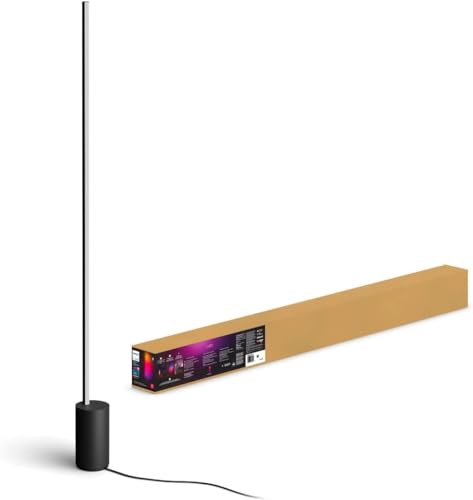
Where to buy
Check the latest price, availability and delivery on Amazon. Orders are placed on Amazon. We may earn a commission from qualifying purchases.
- Best overall for modern homes: Philips Hue Signe Gradient Floor Lamp, Black — Check on Amazon
- BenQ e-Reading Floor Lamp, Matte Silver — Check on Amazon
- Koncept Z-Bar Floor Lamp (Gen 3), Metallic Black — Check on Amazon
- Govee Tree Floor Lamp with 3 Rotatable Lights, Matter Compatible — Check on Amazon
See 2 more Amazon options
- Govee Floor Lamp 2, RGBICWW Smart Floor Lamp with Matter — Check on Amazon
- LEPOWER Wood Tripod Floor Lamp, Rubberwood Legs, Flaxen Linen Shade — Check on Amazon
Read the full guide ↓
Disclosure: As an Amazon Associate, dailyhomedecorating.com earns from qualifying purchases. Links to Amazon on this page are affiliate links; they cost you nothing extra. Listing details such as price and availability change often, so check the current Amazon listing before you buy.
Choosing the best floor lamp for modern homes under $400 is an exercise in restraint, because modern interiors punish the wrong lamp twice: once for how it lights, and once for how it looks doing it. A contemporary room runs on clean lines, uncluttered surfaces and a small number of deliberate objects — which means a floor lamp cannot hide behind ornament, and its light cannot be an afterthought either. It has to disappear as a silhouette and perform as a system: washing a wall in a controlled gradient, pooling precisely over a reading chair, or articulating like a piece of studio equipment that earns its visual presence. The useful fact about this budget is that $400 reaches the genuine top of the orderable floor lamp market. The mainstream lamps cluster far below this line, and the stretch up to it buys the small group of designs that modern rooms actually call for — a gradient light sculpture from a real lighting ecosystem, a sensor-managed task instrument with a published color-rendering figure, an architect’s arm scaled to the floor. This guide ranks those designs by how they behave in a modern interior, not by how loudly they photograph.
Two honesty notes before the picks. First, brightness: almost every lumen figure in this category is a maker’s figure with no shared measurement standard behind it, and almost no floor lamp publishes a verified color rendering index (CRI). One pick below does — the BenQ, at Ra 95 by its maker’s specification — and in a modern home, where light is often asked to render art, textiles and skin tones honestly, that figure matters more than it does elsewhere. For every other lamp we report the maker’s claims as claims and judge by geometry and control: where the light goes, how smoothly it dims, how finely its color can be set. Second, the ceiling: in our research across this series, the most expensive floor lamp we could verify as genuinely orderable on Amazon sits just under this guide’s $400 line, and the band above it is essentially empty until true designer retail far above. A modern home does not need to overspend to light well; it needs to choose precisely. Homeowners working the same rooms on a smaller budget will find the design argument re-run in Best Floor Lamp For Modern Homes Under $300, and the unfiltered ranking for every interior style is in Best Floor Lamp Under $400.
Our headline pick for modern homes is the Philips Hue Signe Gradient, the rare lamp that improves a contemporary room while switched off by barely existing, and transforms it while on by turning the wall itself into the light source. If your modern room is built around a reading chair rather than a media wall, start with the BenQ instead. Below: the quick picks table, detailed notes on all six lamps, a comparison table, a buying checklist tuned to contemporary interiors, the mistakes that date a modern room fastest, and answers to the questions this style always raises.
In this guide
Quick Picks
Short on time, or comparing several options at once? Each row below names a modern-home situation and the lamp that suits it, with a link to the listing.
| Modern-home situation | Pick | Why it stands out | Link |
|---|---|---|---|
| Best overall for modern homes | Philips Hue Signe Gradient Floor Lamp | A near-invisible pole that turns the wall into a gradient light source | Check on Amazon |
| Best minimalist task light | BenQ e-Reading Floor Lamp | Sensor-managed light with a published Ra 95 CRI over the reading chair | Check on Amazon |
| Best sculptural statement | Koncept Z-Bar Floor Lamp (Gen 3) | A counterbalanced architect’s arm — functional sculpture in aluminum | Check on Amazon |
| Best for open-plan layouts | Govee Tree Floor Lamp, 3 Rotatable Lights | Three aimed heads zone a loft-style space from one outlet | Check on Amazon |
| Best slim smart pole | Govee Floor Lamp 2 (H607C) | Segmented gradient color and full-range white in a minimal silhouette | Check on Amazon |
| Best warm-modern accent | LEPOWER Wood Tripod Floor Lamp | Real rubberwood and linen — the mid-century note in a cool room | Check on Amazon |
How These Picks Were Chosen
The first filter was the budget, applied the way a buyer experiences it: every lamp below is a real Amazon listing whose recommended configuration sits at or under $400 in the United States. One pick — the Koncept Z-Bar — carries an explicit condition, because its generation has been discontinued and its live listing price could not be verified from a dated source during our research: it is included on design merit, with the printed rule that it belongs in this guide only if the live price is at or under the $400 line. We would rather print that condition than invent a price or quietly drop the category’s most sculptural lamp. Where any price moves with deals or finishes, we say so and tell you to check the current price on Amazon before ordering.
The second filter was the modern interior itself, applied as three tests. Silhouette: does the lamp hold a clean line — a slim pole, a deliberate arc, an honest material — or does it bring visual noise (exposed hardware clutter, faux finishes pretending to be what they are not) into a room that has no ornament to hide behind? Light behavior: modern rooms are lit in layers and scenes, so we weighted dimming smoothness, color control and direction — wall wash, ceiling bounce, aimed pool — above raw output claims. And system manners: a contemporary home increasingly runs on an ecosystem, so we noted exactly what each connected lamp needs (a bridge, an app, a 2.4GHz network) and gave full credit to the two picks that need nothing but a socket or a switch. Lamps that were merely tall and chrome were cut; the modern market is full of them and they date on arrival.
We did not use these lamps ourselves. We read maker listings and specification pages, compared dimensions, finishes, output claims, color ranges, dimming methods and warranty terms, and treated every brightness figure as a maker’s claim rather than a measurement — because in this category that is what it is. Where a maker’s figures conflict between production runs, we note the conflict instead of printing the flattering number. Where a listing was vague about a finish or a dimension, we say so rather than guess.
The 6 Best Floor Lamps for Modern Homes Under $400
Philips Hue Signe Gradient Floor Lamp, Black
Who it suits: Modern homeowners whose living room is composed rather than decorated — anyone with a media wall, a low sofa line and an empty vertical plane that light could turn into the room’s main event, especially households already running Philips Hue.
The Signe understands modern interiors better than any lamp in this guide because it understands subtraction. A slim aluminum pole, about 57.4 inches tall, stands nearly invisible against the wall — and then the wall becomes the lamp. Its hidden light source throws a seamless gradient of color upward along the surface behind it, multiple hues blending along a single fixture, so the room’s largest plane becomes a controlled wash of light rather than a blank. Signify rates the output at up to 2,550 lumens at 4000K and 1,800 lumens at 2700K; those are maker figures, as always, but the honest translation is real ambient brightness for an indirect lamp — enough to carry a living room’s base layer alone, bounced off wall and ceiling, with no visible source and no glare point anywhere in the room. It speaks Bluetooth out of the box for single-room app control, and joins the full Hue ecosystem — scenes, routines, voice assistants, entertainment sync — with a Hue Bridge. This guide links the black version; a white version exists under its own listing, and an oak finish sits at the very top of this budget by the maker’s pricing, so confirm the finish and check the current price on Amazon before ordering.
In a modern room, the Signe’s deeper advantage is that it replaces decoration with light. The gradient scenes — a slow warm dim for evenings, a saturated wash behind the screen for films — do the visual work that objects and artwork do in other styles, and they can be re-composed nightly without moving a single piece of furniture. The limits are the ecosystem’s limits, stated plainly. Signify publishes no CRI for the Signe, so treat its white as pleasant rather than color-accurate; this is not the lamp to hang over a desk or an easel. Full automation, out-of-home control and entertainment features require the Bridge, an additional purchase this budget can absorb but which should be counted honestly. Its light is indirect by design — it will make a room glow and will not put a readable pool on a book. And the LED is integrated and sealed. None of that dents its position here: for the modern living room, it is the most considered light in the category, and the effective ceiling of what Amazon sells in it.
- Seamless multi-color gradient wash — the wall becomes the lampshade, and the room needs no other decoration.
- Maker-rated up to 2,550 lumens at 4000K: genuine ambient brightness from an invisible source.
- Bluetooth out of the box, full Hue ecosystem with a Bridge — check price on Amazon, and confirm the finish.
Honest limitation: No published CRI, indirect light only (no task pool), the full feature set needs a Hue Bridge bought separately, and the LED is integrated and non-replaceable.
Choose it if your modern room’s missing element is atmosphere with discipline. Skip it if you need reading light or verified color — the BenQ below is the modern lamp for surfaces, not walls.

BenQ e-Reading Floor Lamp (AR15_D Floor), Matte Silver
Who it suits: Readers and makers in modern homes — the household whose minimalist living room contains one serious chair, a side table and a stack of books or a project, and wants the light over that chair to be as engineered as everything else in the room.
Modern design respects objects that do one thing completely, and the BenQ is the purest example in this guide. Its wide, curved head throws an oval of light roughly 35 by 27 inches — a desk’s worth of even coverage from a lamp that never touches the desk — while an ambient sensor reads the room and auto-dims the lamp to suit, with distinct modes tuned for screens and for paper. BenQ specifies a color rendering index of Ra 95 for the series, the only verified CRI figure attached to any pick in this guide, and offers 13 color-temperature steps from 2700K to 5700K across 23 brightness levels, so the pool over a page can be set with instrument precision and then left to the sensor. The form matches the philosophy: a matte silver finish, clean alloy construction in aluminum, zinc alloy and engineering resin, no visible clutter, and a heavy base of about 10.4 kilograms that anchors the lamp physically the way its light anchors the chair visually. One ordering caveat matters: this ASIN is the e-Reading listing family, so select the floor lamp configuration on the listing before checkout. Check the current price on Amazon for that configuration; it sits at the upper end of this guide’s range.
The BenQ’s modern credentials include a refusal: there is no app, no account, no color, no scene — nothing between the user and the light except controls on the lamp and a sensor doing the one automated job that matters. In an interior philosophy that prizes calm technology, that restraint reads as confidence. The honest costs are the mirror of the Signe’s: this is a white-light task instrument, and it will not warm a party, wash a wall or join a whole-home scene; its look is equipment, honest and minimal, but equipment nonetheless; and its light engine is integrated, so its lifespan is set by its driver, with an established display company standing behind it. Modern rooms usually need both kinds of light — the wall’s and the chair’s — and if the budget stretches to one instrument-grade lamp, this is the one whose quality is specified rather than asserted. Readers furnishing the sleeping end of a modern home should carry the same standards into Best Floor Lamp For Bedrooms Under $300, where warm dimming joins the criteria.
- Published CRI of Ra 95 (maker specification) — the only verified color figure among these picks.
- Ambient-sensing auto-dim; 13 color temperatures from 2700K to 5700K; 23 brightness levels.
- About 10.4 kg of alloy construction with a matte silver finish — check price on Amazon, and select the floor configuration.
Honest limitation: A white-light task instrument only — no color, no ecosystem, no decorative glow — with an integrated light engine, on a listing family page where the floor configuration must be selected.
Choose it if your modern room is built around one serious chair. Skip it if the room’s need is atmosphere — return to the Signe — or if you want the lamp to vanish entirely rather than read as equipment.

Koncept Z-Bar Floor Lamp (Gen 3), Metallic Black, Cool White
Who it suits: Design-literate buyers who treat a lamp as functional sculpture — anyone whose modern interior can hold one expressive object, and who wants that object to also be the most positionable light in the room.
Every modern room can absorb exactly one gesture, and the Z-Bar is this guide’s candidate for it. It takes the articulated desk lamp — the counterbalanced arm that has served drafting tables for a century — and scales it to floor height in aluminum: the arm and head sweep through a wide arc and hold their position without knobs or locks, drawing a clean diagonal through the room’s verticals and horizontals. A touch dimmer on the head sets the level, and the LED bar spreads light along a line rather than a point, which flatters pages, sheet music and work surfaces. This listing is the Gen 3 in metallic black with the cool-white configuration (model AR5000-C-MBK-FLR); a warm-white silver variant exists under a different listing, so confirm the configuration on the live page. Now the condition this pick carries, printed plainly: the Gen 3 has been discontinued in favor of a newer generation that sells above this guide’s budget at design retailers, and during our research we could not verify a current Amazon price for this listing from a dated source. We therefore print no price — check the current price on Amazon, and treat this pick as belonging in this guide only if the live price is at or under $400.
Why does a discontinued lamp earn a place in a modern-homes guide? Because the modern interior is precisely where its two qualities matter most. The first is positional: every other pick here has fixed geometry, and the room must arrange itself around the light; the Z-Bar’s light rearranges itself around the room, pulled low over a lounge chair, swung out over a desk edge, pushed up and away when the corner becomes social. The second is sculptural honesty: it is a designed object from a specialist lighting brand, with the counterbalance mechanism as its ornament — the rare lamp that looks more modern switched off than most lamps look switched on. The honest costs follow from its status. Stock is finite, support runs through a design brand rather than a mass-market operation, the LED head is integrated and not user-replaceable, and we verified no lumen figure for this model that we were willing to print, so none appears. If the live listing has drifted above the line, the BenQ gives you the better-specified light in a calmer shape — the Z-Bar is the pick only when its price and its gesture both fit the room.
- Counterbalanced articulated arm: the light positions itself, and the mechanism is the decoration.
- Aluminum construction and a touch dimmer, from a specialist design-lighting brand.
- Check price on Amazon and buy only if the live price is at or under this guide’s $400 line.
Honest limitation: A discontinued generation with finite stock, an integrated LED head, no verified current price we could print, and no lumen figure we were willing to repeat.
Choose it if your room wants one expressive, endlessly repositionable object. Skip it if the listing sits above the line, or your modern is the invisible kind — the Signe disappears better.
Govee Tree Floor Lamp with 3 Rotatable Lights, Matter Compatible
Who it suits: Open-plan modern homes — loft-style spaces and great rooms where one continuous volume must read as lounge, dining and work zones at different hours, and the lighting has to redraw the boundaries without walls.
Modern architecture removed the walls; the Tree is a lamp designed for what that decision did to light. Three heads on a single pole rotate independently — the arms sweep 350 degrees horizontally and tilt 90 degrees vertically — so one head can wash the wall behind the media unit, one can aim down at a reading chair, and one can bounce off the ceiling for the room’s base glow, all from a single outlet and roughly a square foot of floor. Govee rates the three heads at up to 1,500 lumens combined, about 500 per head; as with every figure here, that is a maker’s number with no shared standard behind it, and the honest reading is flexible ambient light rather than task power. Each head carries full RGB color plus white with Govee’s LuminBlend mixing, dozens of dynamic scenes and music sync, and the lamp speaks Matter, so it ties into Alexa, Google Home or SmartThings rather than living only inside its maker’s app — the correct protocol manners for a modern home that refuses single-brand lock-in. Check the current price on Amazon: it sits comfortably inside this budget, well below the ceiling, which is itself a comment on where this market’s real top sits.
The modern case for the Tree is zoning as a design tool. In an open plan, light is how zones are declared: a warm pool says sit here, a washed wall says look here, a dimmed head says this corner is closed for the evening. The Tree redraws those declarations nightly, and re-draws them when the furniture moves — and open-plan furniture moves constantly, because the first layout is never the final one. The costs are the smart-lamp costs. The LEDs are integrated and not replaceable, so the lamp’s life is its driver’s life. Its best features live in an app on a 2.4GHz network, and Matter softens but does not erase that dependence. Its silhouette is busier than the Signe’s or the Floor Lamp 2’s — three heads read as equipment, and in a severely minimal room that visual information may be more than the composition wants. And per-head output is ambient, not task-grade. Judged as the open plan’s zoning instrument, though, nothing else under this ceiling does the job at all — which is what earns a mid-priced lamp its place in a $400 guide.
- Three independently rotating heads declare zones in an open plan — from one outlet and one footprint.
- Full color plus white with Matter support: ecosystem manners a modern home can accept.
- Sits well inside the budget — check price on Amazon — so the premium buys flexibility, not badge.
Honest limitation: Integrated, non-replaceable LEDs; features depend on an app and a 2.4GHz network; a busier silhouette than minimal rooms may want; per-head output is ambient.
Choose it if your modern home is one volume doing three jobs. Skip it if your composition demands invisibility — the Signe — or a single pool of excellent light — the BenQ.
Govee Floor Lamp 2 (H607C), RGBICWW Smart Floor Lamp
Who it suits: Modern homeowners who want the Signe’s idea at a fraction of its commitment — a slim, quiet pole that paints gentle gradients and full-range white light along a wall, without a bridge, a flagship price or a flagship’s visual claim on the room.
If the Signe is the gallery piece, the Floor Lamp 2 is the well-designed production version of the same thought. A slim pole, about 55 inches tall and only about 3 kilograms, carries a segmented RGBICWW strip that blends color gradients up its length while dedicated white diodes handle honest illumination. Govee rates it at 1,725 lumens — a maker’s figure, as always — with a white range from 2200K candle-warm to 6500K daylight, more than 80 scene modes, music sync, and Matter over Wi-Fi alongside Alexa, Google and SmartThings. That white range is its modern credential: contemporary interiors live at several color temperatures a day — cool and alert over a morning workspace corner, candle-warm against the evening’s materials — and this lamp spans all of them in a silhouette that asks for almost no visual space. Check the current price on Amazon: in our research sightings it sat in the lower-middle of this guide’s range. One caveat from our notes: at least one crawl of this listing showed no featured offer available, so confirm a live offer and the configuration on the live listing before ordering.
The honest comparison with the guide’s leader is instructive. The Signe washes a wall from hiding and joins a deeper ecosystem; the Floor Lamp 2 glows itself, as a visible column of gradient light, and joins a broader, shallower one. Some modern rooms prefer the column — a deliberate vertical accent in a corner — and some find the Signe’s invisibility worth its premium; neither answer is wrong, but they are different lamps wearing a similar idea. The Floor Lamp 2’s own limits: the LED is integrated, Govee publishes no CRI for it (treat its white as pleasant, not color-accurate), its brightness is mood-and-ambient rather than task-grade, and at about 3 kilograms it is a light object that belongs in a calm corner rather than a busy thoroughfare. As the modern home’s flexible accent — the lamp that tunes the room’s temperature to the hour — it has no rival near its price, and it pairs naturally with a serious task lamp in the way modern rooms are actually lit: in layers.
- Warm-to-cool white (2200K–6500K claimed) plus segmented gradient color in one minimal pole.
- Matter over Wi-Fi with Alexa, Google and SmartThings — no bridge required to start.
- The Signe’s layer of the room at a fraction of the commitment — check price on Amazon.
Honest limitation: Integrated LED with no published CRI; ambient rather than task brightness; a light, slim object for calm corners; full value depends on the app and network.
Choose it if you want tunable atmosphere in a minimal silhouette without flagship pricing. Skip it if you want the light source invisible (Signe) or the white color-accurate (BenQ).

LEPOWER Wood Tripod Floor Lamp (UF1101), Flaxen Linen Shade
Who it suits: Modern homeowners whose rooms run cool — glass, concrete, pale walls, black metal — and who know the composition needs one warm, organic note: real wood, real linen, and light with no software in it.
Every other pick in this guide is a product of the smart era; the LEPOWER is here because modern interiors are not. The mid-century strand of contemporary design runs on exactly this lamp’s materials: three legs of genuine natural rubberwood — a real hardwood with weight and grain, not a photograph of wood printed on plastic — joined to a flaxen linen shade, standing about 61 inches tall. In a cool modern room that material honesty is the point: the tripod’s stance is a deliberate geometric gesture, the wood warms the palette the way no metal finish can, and the linen shade throws the softest, most forgiving light in this guide. Under the shade sits the second period-correct virtue, a standard E26 socket, so the light source is a replaceable bulb and the lamp contains no electronics at all — no app, no firmware, no driver board aging toward a failure that totals the lamp. Fit a high-CRI bulb and it renders honestly; fit a smart bulb and the smarts live in a replaceable part. Check the current price on Amazon. Two shopping notes from our research: the bulb is not included, so budget for the LED bulb of your choice, and at least one crawl of this listing showed no featured offer available — confirm a live offer before ordering, because third-party markups on this model can be out of line.
The modern caveats are geometric and practical. A tripod’s footprint is wide by design — that stance is the look — so it needs a real corner with clearance on three sides, and it must never stand where a walkway passes, because a tripod leg at shin height is a trip hazard in the literal sense; in the open plans this guide mostly serves, place it as you would a plant, as a composed object with its own territory. The listing states plainly that the lamp is not dimmable; dimming, if wanted, comes from a dimmable bulb on a plug-in dimmer or a smart bulb. The leg joints, like all tripod joints, want a tightening check now and then. None of that diminishes its role here: it is the warm counterweight in a guide of cool instruments, the lamp most likely to still look current in a decade’s version of modern, and the only pick whose materials improve the room while it is switched off at noon. Homes applying the same warm-modern logic to the dining end of the plan will find its relatives throughout Best Floor Lamp Under $300, where the socket lamps cluster.
- Real rubberwood tripod legs and a linen shade — genuine materials at a plastic-lamp price.
- E26 socket with zero electronics in the lamp: nothing to brick, pair or update, ever.
- The mid-century warm note in a cool modern room — check price on Amazon; bulb not included.
Honest limitation: Bulb not included, the lamp itself does not dim, and the wide tripod stance is a genuine trip hazard in walkways — this lamp needs a composed corner, not a gap.
Choose it if your modern room needs warmth and material honesty more than features. Skip it if your floor plan is tight or your traffic paths cross its corner — the Floor Lamp 2 gives you modern in a few inches of floor.

Comparison Table
| Product | Type | Light source | Best modern-home use | Link |
|---|---|---|---|---|
| Philips Hue Signe Gradient | Wall-wash design pole | Integrated LED, gradient color | The media wall and the composed living room | Check on Amazon |
| BenQ e-Reading Floor Lamp | Curved-head task lamp | Integrated LED, Ra 95 CRI, sensor auto-dim | The reading chair, specified like an instrument | Check on Amazon |
| Koncept Z-Bar Floor Lamp (Gen 3) | Articulated arm lamp | Integrated LED bar, touch dimmer | One sculptural gesture that also aims the light | Check on Amazon |
| Govee Tree Floor Lamp | Multi-head smart pole | Integrated LED, color + white | Zoning an open-plan volume by the hour | Check on Amazon |
| Govee Floor Lamp 2 (H607C) | Slim smart pole | Integrated LED, RGBICWW | Tunable atmosphere in a minimal silhouette | Check on Amazon |
| LEPOWER Wood Tripod Floor Lamp | Tripod, linen shade | Replaceable E26 bulb | The warm organic accent in a cool room | Check on Amazon |
How to Choose a Floor Lamp for a Modern Home Under $400
- Light the layers, not the room. Modern interiors are composed in layers: an ambient layer (wall wash or ceiling bounce), a task layer (a real pool over the chair or desk), and an accent layer (a gradient, a glow, a warm shade). Decide which layer is missing before you shop — most modern rooms own two and lack one — and buy the lamp that is that layer, rather than a brighter version of a layer you already have.
- Judge the silhouette switched off. A modern lamp is furniture for sixteen hours a day and a light for eight. Slim poles (Signe, Floor Lamp 2) nearly disappear; an articulated arm (Z-Bar) makes one deliberate gesture; a tripod (LEPOWER) composes a corner. Choose the off-state your room can absorb, because that is the state you will look at most.
- Demand one checkable number. At this tier you can buy verified quality: a published CRI (the BenQ’s Ra 95), a stated color-temperature range, a lux figure at the surface. Where a maker publishes none of these, treat output claims as marketing and judge by geometry — light on a wall glows, light on a ceiling fills, light on a page reads.
- Pick your ecosystem deliberately. Hue is a deep system that rewards commitment and asks for a Bridge at full strength; Matter-based lamps (both Govees) trade depth for neutrality across platforms; a smart bulb in a socket lamp keeps the smarts in a replaceable part. A modern home usually standardizes — buy the lamp that joins the standard you already keep.
- Count the materials honestly. Modern rooms expose finishes: a leaf finish is a finish, printed wood grain is a photograph, and both will be found out by daylight. This tier can buy real aluminum, real rubberwood and real linen — insist on them, and read listings for the words that admit otherwise.
- Mind the configuration. Listings at this tier are families: floor versus desk versions (BenQ), finishes at different prices (Signe), generations current and discontinued (Z-Bar), regional variants of smart models. The most common expensive mistake in the category is checking out with the wrong variant — confirm the configuration, finish and generation on the live listing.
- Place light where the architecture points. Modern rooms offer strong cues: the long wall behind a low sofa wants a wash (Signe), the corner by the reading chair wants a pool (BenQ, Z-Bar), the open plan wants zones (Tree). A lamp fighting its architecture looks wrong at any price; a lamp obeying it looks inevitable.
- Let the budget be an allowance. Three of these six picks sit far below the ceiling, and the layer your room lacks may be the cheap one. There is no composition prize for spending $400; the prize is a room where every light has a reason.
What $400 Buys a Modern Home — and What It Doesn’t
Here is the tier’s honest shape for a contemporary interior. The money buys the top of the orderable market: the flagship gradient lamp of the largest smart-lighting ecosystem, the only verified-CRI task instrument in the category, and a discontinued architect’s arm that design retail has already replaced at a higher price. It buys real materials — aluminum, rubberwood, linen — dimming that sweeps instead of steps, sensors that manage light for you, and silhouettes designed rather than assembled. For a modern home, whose rooms are judged as compositions, those are exactly the qualities worth paying for, and worth paying for once.
What $400 does not buy deserves equal clarity. It does not buy designer objects: the true design names in floor lighting start above this tier and live mostly in showrooms and design channels, not in verifiable Amazon listings — stretching past this ceiling on Amazon mostly buys the same lamps at worse prices until that genuine retail jump. It does not buy a brighter room in any simple sense; the strongest ambient effects here are matters of geometry, not budget. And it does not buy immunity from the category’s physics — five of these six light engines are sealed, indirect lamps still cannot light a page, and a tripod still needs its corner. Spend the $400 on the layer, the silhouette and the material your room lacks, and keep the change when the lack turns out to be modest.
Common Buying Mistakes
- Buying a lamp for its photograph — a silhouette that composes in a listing’s white void and clutters a real room.
- Asking one lamp to be every layer: an indirect lamp expected to light reading, or a task lamp expected to warm a party.
- Ranking by printed lumen numbers, which are maker claims with no shared measurement standard behind them.
- Checking out with the wrong variant — the desk version of a listing family, the wrong finish, a discontinued generation at a collector’s price.
- Forgetting the Bridge when pricing a Hue lamp’s full feature set.
- Accepting faux finishes in a room with no ornament to hide them — daylight exposes printed grain and leaf substitutes.
- Placing a tripod where a walkway passes, or a light smart pole where it will be bumped daily.
- Mixing ecosystems lamp by lamp, until the home’s light answers to four apps and no routines.
Final Recommendation
- Most modern homes: Philips Hue Signe Gradient — the wall becomes the light — check the current price on Amazon, confirm the finish, and budget the Bridge if you want the full system.
- The reading chair: BenQ e-Reading Floor Lamp — specified light quality, sensor-managed, in matte silver.
- One sculptural gesture: Koncept Z-Bar — only while the live price respects the $400 line.
- Open-plan zoning: Govee Tree — three aimed heads redraw the room nightly.
- Minimal silhouette, tunable light: Govee Floor Lamp 2 — the gradient column for calm corners.
- Warmth and real materials: LEPOWER Wood Tripod — rubberwood, linen and a bulb you choose.
Our top two for modern homes are the Signe, because it is the only lamp here that improves the room by disappearing and transforms it by appearing, and the BenQ, because a modern interior respects an object that does one thing to a published standard. Between them they cover the modern living room’s two permanent layers — the wall’s atmosphere and the chair’s pool. Add the Tree if your plan is open, the Z-Bar if your composition wants a gesture, the Floor Lamp 2 if your corners want a tunable glow, and the LEPOWER if your palette wants warming. Decide the missing layer first, check the current price on Amazon, confirm the configuration on the listing, and buy the lamp your architecture was already asking for.
Frequently Asked Questions
What style of floor lamp suits a modern living room best?
The styles that work share one trait: a single clear idea. A slim wall-wash pole (the Signe) suits rooms built around a media wall and low furniture; a curved-head task lamp (the BenQ) suits the reading-chair composition; an articulated arm (the Z-Bar) suits a room that can hold one sculptural gesture; a wood tripod suits the warm, mid-century strand of modern. What dates a modern room fastest is the lamp with no idea — generic chrome, mixed ornament, a shade pretending to be something it is not. Choose the idea your room is already expressing and let the lamp complete it.
Do I need a Hue Bridge for the Signe floor lamp?
Not for basic use: the Signe works over Bluetooth with the Hue app in the same room, so colors, gradients and brightness are available out of the box. The Bridge unlocks the full system — control from anywhere, routines and automations, wider voice-assistant integration and entertainment syncing. If the Signe is your only Hue product in one room, start without it; if your modern home already runs Hue, or will, the Bridge is what makes this lamp a system rather than a novelty, and this budget can absorb it.
Is warm or cool light better for a modern interior?
Both, at different hours — which is why tunable white is the modern lamp’s most useful specification. Cooler, brighter light (toward 4000–6500K) suits morning, work and the clean look of pale materials; warm light (2200–3000K) suits evenings, wood and textiles, and keeps a minimal room from feeling clinical after dark. Lamps with a stated wide range, like the Govee Floor Lamp 2’s claimed 2200K–6500K or the BenQ’s stepped 2700K–5700K, let one fixture serve both registers. Fixed-color lamps should be bought warm for living spaces, since evenings are when floor lamps earn their keep.
How do I light an open-plan modern space with floor lamps?
Zone it. Open plans fail when one lamp tries to fill the whole volume evenly; they succeed when light declares the zones the walls no longer do. Use an ambient anchor (a wall wash or ceiling bounce) for the base layer, a task lamp at the reading or work chair, and a zoning lamp like the Govee Tree — three independently aimed heads — to redraw boundaries as the room changes jobs through the evening. Dimming is the mortar: zones read as zones because their levels differ, not because their lamps do.
Should a modern home worry about sealed LED lamps?
Weigh the trade as a design decision. Integrated engines allow the slim silhouettes modern rooms want — the Signe’s pole and the Floor Lamp 2’s column are only possible because the light is built in — and makers rate them for tens of thousands of hours. The cost is a lifespan set at the factory and no upgrade path for color or output. If a lamp is a permanent architectural element of the room, that risk argues for established brands and real warranties; if your interior evolves every few years, the sealed designs’ shapes are worth more than the theoretical risk. The one socket lamp here, the LEPOWER, removes the question entirely at the price of a traditional form.
Is it worth spending the full $400 in a modern room?
Only on the layer the room lacks. The flagship spends — the Signe’s gradient system, the BenQ’s specified light quality — earn their price when the wall or the chair is genuinely the room’s weak point. But modern composition punishes excess objects more than modest budgets: several picks here sit far below the ceiling, and a room completed by the right $150 layer looks better than a room crowded by a $400 lamp bought because the budget allowed it. Spend on the missing layer, the honest material and the silhouette you can live with switched off — and let the rest of the allowance go.


