Disclosure: As an Amazon Associate, dailyhomedecorating.com earns from qualifying purchases. Links to Amazon on this page are affiliate links; they cost you nothing extra. Prices and availability change often, so check the current Amazon listing before you buy.
Finding the best fabric for rugs is less about chasing a single perfect product than about matching construction, backing and care to the room you actually live in. This guide is about choosing rug fabric by fibre, not by pattern, and it ranks six picks that earn their place for different, honest reasons. Most rug regret is a fabric mistake, not a colour mistake. The pattern looked right in the listing, but the fibre sheds in the hallway, flattens under the sofa, stains in the dining room or feels scratchy where children play. Fabric decides cleanability, durability, softness and price more than any other single choice.
Each pick below was judged on fibre family first (natural versus synthetic), then pile construction, shedding behaviour, stain response and how the fabric ages in the specific room it will live in. Readers working through neighbouring decisions often compare this guide with Best Indoor Outdoor Rugs For Inside and with Best Vacuums For Rugs, and the buying guide further down explains the measurements, materials and tests behind every recommendation, so you can apply the same checks to any rug beyond this list.
A note on method before the picks: we worked from verified product data — dimensions, materials, construction and care instructions as listed — and we say plainly where a pick is a compromise. There are no prices in this guide because listings change constantly; every pick links to Amazon so you can check the current price and availability on the day you buy.
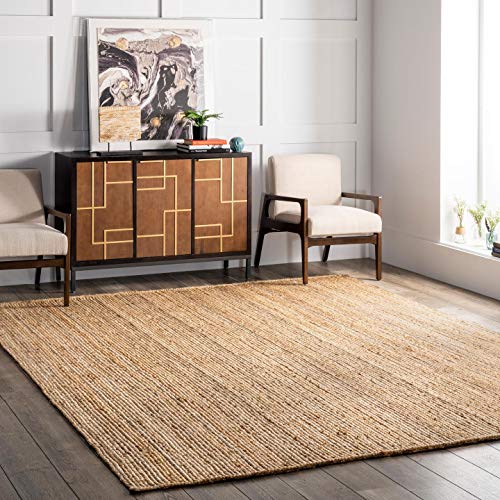
Where to Buy
Every linked pick in this guide is sold on Amazon, where you can check the current price, size options and availability on the listing before you buy. Where this guide discusses product types in prose — because our verified pool has no honest listing for them — search the type name on Amazon and apply the checks in the buying guide below before ordering.
- Nuloom Rigo Handmade — Check on Amazon
- DII Woven Cotton Throw Rug — Check on Amazon
- Tumble Lisa Washable Area Rug | 9×12 Living Room Bedroom Area Rug — Check on Amazon
- SAFAVIEH Area Rug 8×10 – Adirondack Collection – Large – Ivory & Sage — Check on Amazon
- Loloi Layla Olive/Charcoal 7′-6″ x 9′-6″ Area Rug | LAY-03 Printed Approx. 8×10 Green Livi — Check on Amazon
- SAFAVIEH Hudson Shag Rug 9×12 — Check on Amazon
In this guide
Quick Picks
| Pick | Badge | Why it earns its place |
|---|---|---|
| Nuloom Rigo Handmade | Best Overall | Earns its place for choosing rug fabric by fibre, not by pattern — 100% Jute, made in India. |
| DII Woven Cotton Throw Rug | Best Natural Cotton | Earns its place for choosing rug fabric by fibre, not by pattern — DIMENSIONS: Rug measures 24 x 36 inches; made of 100% cotton handloomed yarn. |
| Tumble Lisa Washable Area Rug | 9×12 Living Room Bedroom Area Rug | Best Washable Synthetic | Earns its place for choosing rug fabric by fibre, not by pattern — Lisa Midnight rug design: The first washable rug with a decorative fringe. The Lisa merges Persian rug and vintage rug elegance with modern sophistication to make any space more inviting. |
| SAFAVIEH Area Rug 8×10 – Adirondack Collection – Large – Ivory & Sage | Best Everyday Polypropylene | Earns its place for choosing rug fabric by fibre, not by pattern — SAFAVIEH’s Adirondack rug features a muted sage green floral motif across a soft ivory backdrop, with an ornamental border and distressed detailing creating a faded, vintage-inspired look. |
| Loloi Layla Olive/Charcoal 7′-6″ x 9′-6″ Area Rug | LAY-03 Printed Approx. 8×10 Green Livi | Best Printed Polyester | Earns its place for choosing rug fabric by fibre, not by pattern — Designer area rug aesthetic: the Layla collection blends traditional, Moroccan and boho styles with fresh materials and distressed patterns. |
| SAFAVIEH Hudson Shag Rug 9×12 | Best Plush Fibre | Earns its place for choosing rug fabric by fibre, not by pattern — SAFAVIEH’s Hudson Shag area rug blends ivory and beige in soft, cloud-like striations across a plush pile. |
Key Takeaways
- For best fabric for rugs, construction and backing matter more than pattern: judge those first, then choose the look.
- Our top pick is the Nuloom Rigo Handmade (Best Overall), because it answers the core problem of choosing rug fabric by fibre, not by pattern most completely.
- Measure the space and check door clearance before ordering; most rug regret is a sizing mistake, not a quality failure.
- A suitable pad is part of the purchase on hard floors — for grip, for floor protection and for the cushion your feet actually feel.
- Cleanability decides long-term satisfaction: choose the most washable construction your room’s traffic honestly needs.
- Check the current Amazon listing for sizes, colours and availability on the day you buy, because ranges change.
How These Picks Were Chosen
We started from the verified pool for this topic and filtered it against the specific demands of best fabric for rugs: fibre family first (natural versus synthetic), then pile construction, shedding behaviour, stain response and how the fabric ages in the specific room it will live in. Products that could not meet the core demand were set aside, however attractive their patterns, and we say so where a whole product type is missing from the pool rather than pretending otherwise. What survived was ranked by how completely it answers the keyword’s problem, then spread across badges so that a budget-leaning, a premium-leaning and a use-specific option are all represented.
Two filters did most of the work. The first was honesty of fit: a rug that needs conditions your room cannot give it — dry-only care in a wet zone, a deep pile where doors swing, a backing that fights your floor — was marked down even if its listing photographs beautifully. The second was verifiability: every specification quoted in the mini spec boxes below comes from the verified pool data for that exact product, and where the pool gives no specification, this guide gives none. Features are described from the maker’s own stated information, and trade-offs are stated as plainly as strengths, because a review that hides the limitation you will discover in week two has failed at its only job.
Finally, each article in this series is argued from its own keyword outward. The same product can lead one guide and trail another, because best fabric for rugs asks a different question from its neighbours — compare Best Indoor Rugs For Snow to see the same pool judged by a different standard. That is deliberate: a ranking that never changes with the question is not a ranking, it is an advertisement.
The 6 Best Best Fabric for Rugs — Reviewed
Nuloom Rigo Handmade
Our badge: Best Overall
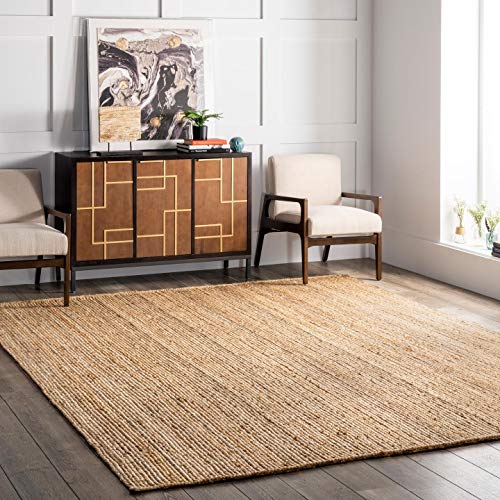
The Nuloom Rigo Handmade is our best overall choice for best fabric for rugs. 100% Jute, made in India. Judged specifically on fibre family first (natural versus synthetic), then pile construction, shedding behaviour, stain response and how the fabric ages in the specific room it will live in, it is the pick whose strengths line up most directly with what this keyword demands, and its review below separates what it genuinely does well from where it asks something of you in return.
Strengths
- Hand-woven 100% jute brings natural texture no synthetic fully imitates
- Slim 0.35-inch profile fits entryways and under furniture without blocking doors
- Forgiving natural tone hides dry dirt and everyday dust well
Trade-offs
- Jute dislikes water — spills must be blotted fast and never soaked
- Coarse texture is not the softest choice for sitting or play on the floor
- Needs a pad to stop sliding and to protect the floor from its back
| Color | Natural |
| Size | 9′ x 12′ (Rectangular) |
| Dimensions | 143.99999985312 x 26.99999997246 x 0.249999999745 inches |
| Weight | 59.75 pounds |
| Product Group | Furniture |
| Binding | Kitchen |
In daily use for choosing rug fabric by fibre, not by pattern, the details that decide satisfaction are the unglamorous ones: how the surface behaves after a month of real traffic, how it responds to the vacuum you actually own, and whether its care routine fits a normal week. The perfect combination of style and durability, jute rugs bring home effortless sophistication, perfect for the living room, dining room, kitchen, or hallway. The sleek and functional 0.35 inch thickness allows for convenient placement in entryways and underneath furniture, and will not obstruct doorways. Read together, the maker’s stated features describe a rug built for regular, lived-in rooms rather than showpiece spaces, and that is the right temperament for this keyword — the winning rugs in this category are the ones still looking composed after the season that tests them hardest, not the ones that photographed best on day one.
Placement is where this pick rewards a little thought. Give it the zone its construction suits, keep its edges flat and anchored, and pair it with the pad guidance in the buying guide below and it will hold its line for years. Force it into the wrong zone — the wrong moisture level, the wrong traffic, the wrong door swing — and its trade-offs, listed honestly above, will be the first things you notice. That is not a flaw in the rug; it is the whole argument of this guide, that best fabric for rugs is a matching problem, and this product is the match for the household described in its verdict line.
Best for: households whose priority for best fabric for rugs matches this pick’s badge — Best Overall — and who will use it in the zone it was built for. / Not suited for: buyers who need the opposite extreme of this pick’s trade-offs, or whose room conditions contradict its care requirements.
Choose it if its strengths answer your main problem and its trade-offs are ones you can live with; skip it and move to the next pick if any single trade-off contradicts how your room actually works. Check on Amazon

DII Woven Cotton Throw Rug
Our badge: Best Natural Cotton
The DII Woven Cotton Throw Rug is our best natural cotton choice for best fabric for rugs. DIMENSIONS: Rug measures 24 x 36 inches; made of 100% cotton handloomed yarn. Judged specifically on fibre family first (natural versus synthetic), then pile construction, shedding behaviour, stain response and how the fabric ages in the specific room it will live in, it is the pick whose strengths line up most directly with what this keyword demands, and its review below separates what it genuinely does well from where it asks something of you in return.
Strengths
- 100% cotton handloomed construction with a natural, breathable feel
- Compact 2×3 size shakes out in seconds and suits small zones perfectly
- Ombre black design adds pattern to entries, kitchens and bathrooms
Trade-offs
- Cotton can transfer colour — the maker recommends a pad or grip beneath
- Shake or spot clean only; not a machine-wash rug
- Small size only suits accent zones, not seating arrangements
| Color | Ombre Black |
| Size | 2′ x 3′ (Rectangular) |
| Dimensions | 36 x 24 x 0.25 inches |
| Weight | 1.68 pounds |
| Product Group | Furniture |
| Binding | Kitchen |
In daily use for choosing rug fabric by fibre, not by pattern, the details that decide satisfaction are the unglamorous ones: how the surface behaves after a month of real traffic, how it responds to the vacuum you actually own, and whether its care routine fits a normal week. These chic rugs are the perfect accessory for any room, for the kitchen, bathroom, mudroom, or entryway. Long-lasting rugs hold up to everyday wear and tear and are great for high traffic areas. The maker recommends a rug pad or grip to prevent colour transfer and slipping, and care is to shake briskly to clean or spot clean as needed. Read together, the maker’s stated features describe a rug built for regular, lived-in rooms rather than showpiece spaces, and that is the right temperament for this keyword — the winning rugs in this category are the ones still looking composed after the season that tests them hardest, not the ones that photographed best on day one.
Placement is where this pick rewards a little thought. Give it the zone its construction suits, keep its edges flat and anchored, and pair it with the pad guidance in the buying guide below and it will hold its line for years. Force it into the wrong zone — the wrong moisture level, the wrong traffic, the wrong door swing — and its trade-offs, listed honestly above, will be the first things you notice. That is not a flaw in the rug; it is the whole argument of this guide, that best fabric for rugs is a matching problem, and this product is the match for the household described in its verdict line.
Best for: households whose priority for best fabric for rugs matches this pick’s badge — Best Natural Cotton — and who will use it in the zone it was built for. / Not suited for: buyers who need the opposite extreme of this pick’s trade-offs, or whose room conditions contradict its care requirements.
Choose it if its strengths answer your main problem and its trade-offs are ones you can live with; skip it and move to the next pick if any single trade-off contradicts how your room actually works. Check on Amazon

Tumble Lisa Washable Area Rug | 9×12 Living Room Bedroom Area Rug
Our badge: Best Washable Synthetic
The Tumble Lisa Washable Area Rug | 9×12 Living Room Bedroom Area Rug is our best washable synthetic choice for best fabric for rugs. Lisa Midnight rug design: The first washable rug with a decorative fringe. The Lisa merges Persian rug and vintage rug elegance with modern sophistication to make any space more inviting. Judged specifically on fibre family first (natural versus synthetic), then pile construction, shedding behaviour, stain response and how the fabric ages in the specific room it will live in, it is the pick whose strengths line up most directly with what this keyword demands, and its review below separates what it genuinely does well from where it asks something of you in return.
Strengths
- Spillproof surface lets liquids bead up so spills can be wiped before they settle
- Complete set includes a cushioned non-slip pad with a corner-pocket system that keeps corners flat
- Machine washable at full size in a standard household washer and dryer
Trade-offs
- Large 9×12 format needs a big machine and two people to handle when wet
- Fringe detailing needs care during vacuuming to stay neat
- Midnight colourway shows pale pet hair and lint readily
| Color | Midnight |
| Size | 9×12′ |
| Product Group | Furniture |
In daily use for choosing rug fabric by fibre, not by pattern, the details that decide satisfaction are the unglamorous ones: how the surface behaves after a month of real traffic, how it responds to the vacuum you actually own, and whether its care routine fits a normal week. Machine washable and spillproof: liquids and oils bead up on the protective surface, giving you time to wipe up spills before they settle in, and all Tumble sizes fit in a standard household washer and dryer. Every Tumble area rug includes a cushioned quarter-inch non slip rug pad with a patented corner-pocket system that anchors the rug and keeps corners flat and curl-free, with no Velcro required. Read together, the maker’s stated features describe a rug built for regular, lived-in rooms rather than showpiece spaces, and that is the right temperament for this keyword — the winning rugs in this category are the ones still looking composed after the season that tests them hardest, not the ones that photographed best on day one.
Placement is where this pick rewards a little thought. Give it the zone its construction suits, keep its edges flat and anchored, and pair it with the pad guidance in the buying guide below and it will hold its line for years. Force it into the wrong zone — the wrong moisture level, the wrong traffic, the wrong door swing — and its trade-offs, listed honestly above, will be the first things you notice. That is not a flaw in the rug; it is the whole argument of this guide, that best fabric for rugs is a matching problem, and this product is the match for the household described in its verdict line.
Best for: households whose priority for best fabric for rugs matches this pick’s badge — Best Washable Synthetic — and who will use it in the zone it was built for. / Not suited for: buyers who need the opposite extreme of this pick’s trade-offs, or whose room conditions contradict its care requirements.
Choose it if its strengths answer your main problem and its trade-offs are ones you can live with; skip it and move to the next pick if any single trade-off contradicts how your room actually works. Check on Amazon

SAFAVIEH Area Rug 8×10 – Adirondack Collection – Large – Ivory & Sage
Our badge: Best Everyday Polypropylene
The SAFAVIEH Area Rug 8×10 – Adirondack Collection – Large – Ivory & Sage is our best everyday polypropylene choice for best fabric for rugs. SAFAVIEH’s Adirondack rug features a muted sage green floral motif across a soft ivory backdrop, with an ornamental border and distressed detailing creating a faded, vintage-inspired look. Judged specifically on fibre family first (natural versus synthetic), then pile construction, shedding behaviour, stain response and how the fabric ages in the specific room it will live in, it is the pick whose strengths line up most directly with what this keyword demands, and its review below separates what it genuinely does well from where it asks something of you in return.
Strengths
- Power-loomed polypropylene with a 3/8-inch low pile that is virtually non-shedding
- OEKO-TEX certified and built for high-traffic, kid and pet homes
- Distressed vintage floral pattern forgives spills, crumbs and daily wear
Trade-offs
- Low pile gives little cushion — comfort depends on the pad beneath
- Pale ivory ground shows dark spills more than a mid-tone pattern
- Needs vacuuming without a beater bar to protect the surface
| Color | Ivory/Sage |
| Size | 8′ x 10′ (Rectangular) |
| Dimensions | 120 x 96 x 0.38 inches |
| Weight | 6.61386786 pounds |
| Product Group | Furniture |
| Binding | Kitchen |
In daily use for choosing rug fabric by fibre, not by pattern, the details that decide satisfaction are the unglamorous ones: how the surface behaves after a month of real traffic, how it responds to the vacuum you actually own, and whether its care routine fits a normal week. Power-loomed from polypropylene fibers with a smooth 3/8 inch low-profile pile that works well under furniture and in entryways, with virtually non-shedding performance and OEKO-TEX certification. The Adirondack design makes a versatile fit for living rooms, bedrooms, and dining rooms, complementing traditional, transitional, vintage, and contemporary interiors alike. Read together, the maker’s stated features describe a rug built for regular, lived-in rooms rather than showpiece spaces, and that is the right temperament for this keyword — the winning rugs in this category are the ones still looking composed after the season that tests them hardest, not the ones that photographed best on day one.
Placement is where this pick rewards a little thought. Give it the zone its construction suits, keep its edges flat and anchored, and pair it with the pad guidance in the buying guide below and it will hold its line for years. Force it into the wrong zone — the wrong moisture level, the wrong traffic, the wrong door swing — and its trade-offs, listed honestly above, will be the first things you notice. That is not a flaw in the rug; it is the whole argument of this guide, that best fabric for rugs is a matching problem, and this product is the match for the household described in its verdict line.
Best for: households whose priority for best fabric for rugs matches this pick’s badge — Best Everyday Polypropylene — and who will use it in the zone it was built for. / Not suited for: buyers who need the opposite extreme of this pick’s trade-offs, or whose room conditions contradict its care requirements.
Choose it if its strengths answer your main problem and its trade-offs are ones you can live with; skip it and move to the next pick if any single trade-off contradicts how your room actually works. Check on Amazon
Loloi Layla Olive/Charcoal 7′-6″ x 9′-6″ Area Rug | LAY-03 Printed Approx. 8×10 Green Livi
Our badge: Best Printed Polyester
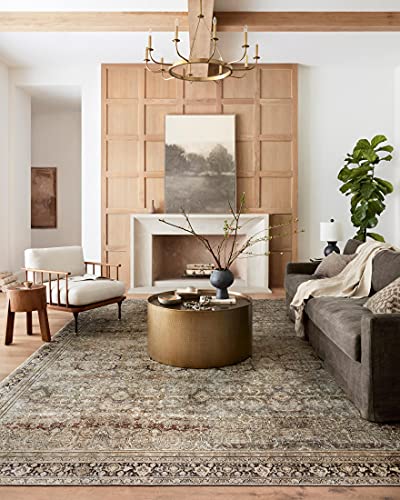
The Loloi Layla Olive/Charcoal 7′-6″ x 9′-6″ Area Rug | LAY-03 Printed Approx. 8×10 Green Livi is our best printed polyester choice for best fabric for rugs. Designer area rug aesthetic: the Layla collection blends traditional, Moroccan and boho styles with fresh materials and distressed patterns. Judged specifically on fibre family first (natural versus synthetic), then pile construction, shedding behaviour, stain response and how the fabric ages in the specific room it will live in, it is the pick whose strengths line up most directly with what this keyword demands, and its review below separates what it genuinely does well from where it asks something of you in return.
Strengths
- Very low printed pile slides under doors and furniture without catching
- Non-shedding power-loomed construction keeps its look in busy lanes
- Vintage distressed pattern hides everyday wear and light soil gracefully
Trade-offs
- Printed design has less pile texture than a woven rug up close
- Very light weight means a pad is essential on smooth floors
- Creases from packaging can take days to fully relax
| Color | Olive / Charcoal |
| Size | 7’6″ x 9’6″ (Rectangular) |
| Dimensions | 114 x 90 x 0.13 inches |
| Weight | 6.61386786 pounds |
| Product Group | Furniture |
| Binding | Kitchen |
In daily use for choosing rug fabric by fibre, not by pattern, the details that decide satisfaction are the unglamorous ones: how the surface behaves after a month of real traffic, how it responds to the vacuum you actually own, and whether its care routine fits a normal week. This low pile, soft rug is great for high traffic areas like the living room, bedroom, dining room, kitchen, home office, dorm, or hallway. Quality craftsmanship and materials maintain texture, colour, and overall beauty for years, with power loomed designs and detail that cannot be replicated by hand. Read together, the maker’s stated features describe a rug built for regular, lived-in rooms rather than showpiece spaces, and that is the right temperament for this keyword — the winning rugs in this category are the ones still looking composed after the season that tests them hardest, not the ones that photographed best on day one.
Placement is where this pick rewards a little thought. Give it the zone its construction suits, keep its edges flat and anchored, and pair it with the pad guidance in the buying guide below and it will hold its line for years. Force it into the wrong zone — the wrong moisture level, the wrong traffic, the wrong door swing — and its trade-offs, listed honestly above, will be the first things you notice. That is not a flaw in the rug; it is the whole argument of this guide, that best fabric for rugs is a matching problem, and this product is the match for the household described in its verdict line.
Best for: households whose priority for best fabric for rugs matches this pick’s badge — Best Printed Polyester — and who will use it in the zone it was built for. / Not suited for: buyers who need the opposite extreme of this pick’s trade-offs, or whose room conditions contradict its care requirements.
Choose it if its strengths answer your main problem and its trade-offs are ones you can live with; skip it and move to the next pick if any single trade-off contradicts how your room actually works. Check on Amazon

SAFAVIEH Hudson Shag Rug 9×12
Our badge: Best Plush Fibre
The SAFAVIEH Hudson Shag Rug 9×12 is our best plush fibre choice for best fabric for rugs. SAFAVIEH’s Hudson Shag area rug blends ivory and beige in soft, cloud-like striations across a plush pile. Judged specifically on fibre family first (natural versus synthetic), then pile construction, shedding behaviour, stain response and how the fabric ages in the specific room it will live in, it is the pick whose strengths line up most directly with what this keyword demands, and its review below separates what it genuinely does well from where it asks something of you in return.
Strengths
- Deep 1.75-inch plush pile is the softest underfoot feel in this pool
- OEKO-TEX certified construction for materials peace of mind
- Ivory and beige striations hide shedding and light marks between cleans
Trade-offs
- Deep shag traps dust, crumbs and pet hair more than any low pile
- High pile can block low-clearance doors and catch vacuum beaters
- Shedding and a new-rug odour are normal at first and need airing out
| Color | Ivory/Beige |
| Size | 9′ x 12′ (Rectangular) |
| Dimensions | 144 x 108 x 1.75 inches |
| Weight | 53.5 pounds |
| Product Group | Furniture |
| Binding | Kitchen |
In daily use for choosing rug fabric by fibre, not by pattern, the details that decide satisfaction are the unglamorous ones: how the surface behaves after a month of real traffic, how it responds to the vacuum you actually own, and whether its care routine fits a normal week. Woven for a deep, plush shag texture with a 1 3/4 inch pile that feels soft and inviting underfoot, and OEKO-TEX certified for added peace of mind. The Hudson Shag design makes a versatile fit for the bedroom, living room, office, and entryway, complementing shag flokati, transitional, modern, and casual interiors alike. Read together, the maker’s stated features describe a rug built for regular, lived-in rooms rather than showpiece spaces, and that is the right temperament for this keyword — the winning rugs in this category are the ones still looking composed after the season that tests them hardest, not the ones that photographed best on day one.
Placement is where this pick rewards a little thought. Give it the zone its construction suits, keep its edges flat and anchored, and pair it with the pad guidance in the buying guide below and it will hold its line for years. Force it into the wrong zone — the wrong moisture level, the wrong traffic, the wrong door swing — and its trade-offs, listed honestly above, will be the first things you notice. That is not a flaw in the rug; it is the whole argument of this guide, that best fabric for rugs is a matching problem, and this product is the match for the household described in its verdict line.
Best for: households whose priority for best fabric for rugs matches this pick’s badge — Best Plush Fibre — and who will use it in the zone it was built for. / Not suited for: buyers who need the opposite extreme of this pick’s trade-offs, or whose room conditions contradict its care requirements.
Choose it if its strengths answer your main problem and its trade-offs are ones you can live with; skip it and move to the next pick if any single trade-off contradicts how your room actually works. Check on Amazon
Comparison Table
| Pick | Colour | Size (verified listing) | Badge | Check price on Amazon |
|---|---|---|---|---|
| Nuloom Rigo Handmade | Natural | 9′ x 12′ (Rectangular) | Best Overall | Check price on Amazon |
| DII Woven Cotton Throw Rug | Ombre Black | 2′ x 3′ (Rectangular) | Best Natural Cotton | Check price on Amazon |
| Tumble Lisa Washable Area Rug | 9×12 Living Room Bedroom Area Rug | Midnight | 9×12′ | Best Washable Synthetic | Check price on Amazon |
| SAFAVIEH Area Rug 8×10 – Adirondack Collection – Large – Ivory & Sage | Ivory/Sage | 8′ x 10′ (Rectangular) | Best Everyday Polypropylene | Check price on Amazon |
| Loloi Layla Olive/Charcoal 7′-6″ x 9′-6″ Area Rug | LAY-03 Printed Approx. 8×10 Green Livi | Olive / Charcoal | 7’6″ x 9’6″ (Rectangular) | Best Printed Polyester | Check price on Amazon |
| SAFAVIEH Hudson Shag Rug 9×12 | Ivory/Beige | 9′ x 12′ (Rectangular) | Best Plush Fibre | Check price on Amazon |
Read the table as a shortlist, not a verdict: the right row is the one whose colour, verified size and badge line up with your room’s measurements and your main problem. Sizes and colourways change across listings, so confirm the exact variant on Amazon before ordering — and if your room sits between two sizes, the buying guide below explains why the larger, correctly anchored rug almost always outlives the smaller, cheaper one.
How to Choose the Best Option for Best Fabric for Rugs
Measure the Real Space, Including the Furniture’s Opinion
Start with the tape measure, not the listing. For best fabric for rugs, record the full zone the rug must serve, the furniture that will anchor it, and the doors that must clear it. A rug should be large enough that its job — catching, cushioning, defining — happens on the rug, not half on and half off it. Leave a consistent border of bare floor where the room allows it, and when your measurement falls between two listed sizes, choose the larger: undersized is the one rug mistake no quality of material can compensate for.
Judge Construction Before Pattern
Pattern is what you notice in the listing; construction is what you live with. For this keyword the deciding construction facts are fibre family first (natural versus synthetic), then pile construction, shedding behaviour, stain response and how the fabric ages in the specific room it will live in. Turn every listing you consider — in this guide or beyond it, including Best Rug Colors Light Gray Sofa — into those plain questions and answer them from the specification, not the photographs. A beautiful pattern on the wrong construction is a return waiting to happen.
Match the Backing and Pad to Your Exact Floor
Backings and pads are a floor-protection decision as much as a comfort one. Identify your floor honestly — polished hardwood, laminate, tile, composite or carpet — and choose the backing and pad combination that grips it without marking, sticking or trapping moisture against it. Keep the floor clean beneath the system, lift and inspect seasonally, and treat any stickiness, residue or outline as a signal to change the pad, not to endure it.
Be Honest About Cleaning, Because Cleaning Is the Product
A rug’s second year looks like its cleaning routine, not its first week. Count the real events — mud, spills, pet accidents, salt, crumbs — and choose the most cleanable construction that survives them: fully washable where washing is the routine, low and non-shedding where vacuuming is, hose-clean where the outdoors is involved. Then keep the routine small and regular. Every rug in this guide rewards little-and-often care and punishes heroic annual rescue attempts.
Set a Tier, Then Buy Once
Decide your tier by cost-per-year, not by ticket. A rug that serves five years in the right construction is cheaper than two rugs that each failed in the wrong one, and the same logic applies to the pad beneath it. Use the tier framing on the Amazon listing on the day you buy, spend first on correct size and construction, and let pattern be the tiebreaker between picks that already pass every practical test above.
How to Test a Rug Fabric Before You Commit to a Room
The routine that makes any pick in this guide succeed is the barefoot test, the white-cloth rub test for loose dye and fibre, the fold test that shows backing quality, and a two-week trial placement in the real traffic pattern before furniture goes on top. None of it is difficult, and all of it is cheaper than the problems it prevents. Work through it in order the first time you lay the rug, then fold the maintenance steps into the cleaning rhythm you already keep for the room.
Begin with a clean, dry floor — grit left underneath at installation becomes the abrasive the system grinds on for months. Lay the pad first where one is used, trimmed inside the rug’s outline, then unroll the rug with help so nothing drags. Let packaging creases relax for several days before judging flatness; most settle with time, a reverse roll, and furniture weight in the right places. Then run the honest tests: doors through their full swing, chairs through their real movements, and a deliberate sideways foot-push in the busiest lane. Adjust placement while adjusting is free.
Maintenance is a rhythm, not an event. Vacuum in the direction and setting the construction prefers — gentle and beater-free for low woven piles, deeper and slower for anything plush — and treat spills by blotting, never rubbing, working from the edge of the mark inward. Rotate the rug at least twice a year so traffic lanes, sunlight and furniture weight are shared. At every rotation, vacuum the underside, check the pad, and look at the floor with fresh eyes: that five-minute inspection is where small, fixable issues are caught while they are still small.
Problem: Rug creeping or bunching in one lane — Re-clean the floor beneath, check the pad for wear, and re-anchor the edge under furniture; creep is a system symptom, not a rug defect.
Problem: Edges or corners curling — Reverse-roll the corner, weight it flat overnight, and confirm the pad is trimmed inside the rug edge rather than tenting it.
Problem: A spill has left a mark — Blot, rinse with plain water first, use the mildest cleaner the fibre allows, and dry fully with airflow before traffic returns.
Problem: The rug smells stale — Vacuum both sides, air it outdoors in shade where possible, and check underneath for trapped damp before blaming the fibres.
Problem: Colour looks uneven after months — Rotate the rug to even sun and traffic exposure; gradual, even change is normal ageing, while sharp outlines mean something sat on it too long.
Natural Fibres: Jute, Cotton and Wool Behaviour in Real Rooms
Plant and animal fibres bring texture and a matte, grounded look that synthetics imitate but rarely match. Jute is tough and forgiving of dry dirt but dislikes soaking. Cotton is soft, light and easy to shake out, but it shows soil quickly and needs a pad because it has little body of its own. Understanding those trade-offs is what turns a natural-fibre rug from a gamble into a deliberate choice.
Applied to best fabric for rugs, the practical takeaway is to test before you trust: small checks in the first fortnight — a backing test in an unseen corner, a colour check under evening light, a grip test in the busiest lane — tell you more than any listing can. Readers comparing the neighbouring question in Best Area Rug For Blue Sofas will find the same principle argued from a different room’s point of view, and it holds there too: the households happiest with their rugs are the ones who verified the match early, while changing their mind was still easy.
Synthetic Fibres: Polypropylene, Polyester and Modern Chenille
Synthetics earn their place on cleanability and consistency. Polypropylene resists staining and sheds very little, polyester holds printed detail and colour beautifully, and modern chenille constructions make washable rugs practical at large sizes. Their weaknesses are different: heat sensitivity, a flatter hand-feel in cheap constructions, and pile crushing in the busiest lanes if the density is low.
Applied to best fabric for rugs, the practical takeaway is to test before you trust: small checks in the first fortnight — a backing test in an unseen corner, a colour check under evening light, a grip test in the busiest lane — tell you more than any listing can. The households happiest with their rugs are the ones who verified the match early, while changing their mind was still easy, and who kept the small regular care rhythm that every construction in this guide rewards.
Common Buying Mistakes
Buying the Pattern and Ignoring the Construction
The listing photograph sells the pattern; the specification decides your next three years. Check pile, backing, material and care first, and let pattern choose only between picks that already pass. For best fabric for rugs specifically, this mistake is the one we see repeated most, because the keyword’s core demand — fibre family first (natural versus synthetic), then pile construction, shedding behaviour, stain response and how the fabric ages in the specific room it will live in — is exactly what the shortcut skips.
Ordering a Size Too Small
A small rug slides more, catches more chair legs and door swings, and looks apologetic in the room. Measure, apply the sizing rules in the buying guide, and size up when between options. For best fabric for rugs specifically, this mistake is the one we see repeated most, because the keyword’s core demand — fibre family first (natural versus synthetic), then pile construction, shedding behaviour, stain response and how the fabric ages in the specific room it will live in — is exactly what the shortcut skips.
Skipping the Pad on Hard Floors
The pad is grip, floor protection and most of the cushion in one purchase. Omitting it to save money spends the saving on a worn finish and a travelling rug. For best fabric for rugs specifically, this mistake is the one we see repeated most, because the keyword’s core demand — fibre family first (natural versus synthetic), then pile construction, shedding behaviour, stain response and how the fabric ages in the specific room it will live in — is exactly what the shortcut skips.
Using the Wrong Cleaner for the Fibre
Soaking natural fibres, steaming delicate backings and overdosing detergent cause more rug damage than spills do. Patch-test, use less product, rinse fully, dry completely. For best fabric for rugs specifically, this mistake is the one we see repeated most, because the keyword’s core demand — fibre family first (natural versus synthetic), then pile construction, shedding behaviour, stain response and how the fabric ages in the specific room it will live in — is exactly what the shortcut skips.
Judging Colour at Noon in the Shop — or on a Screen
Rugs live under your lamps in your room’s light. Check samples in the evening, against your floor’s undertone, and distrust any colour decision made from a listing image alone. For best fabric for rugs specifically, this mistake is the one we see repeated most, because the keyword’s core demand — fibre family first (natural versus synthetic), then pile construction, shedding behaviour, stain response and how the fabric ages in the specific room it will live in — is exactly what the shortcut skips.
Final Recommendation
If you buy one pick from this guide, buy the Nuloom Rigo Handmade — our Best Overall choice — because it answers the central problem of best fabric for rugs most completely, with the fewest conditions attached. If its trade-offs contradict your room, the runner-up is the DII Woven Cotton Throw Rug: Check on Amazon — it trades a little of the leader’s specialisation for a different balance that suits the households described in its own verdict line. Whichever you choose, choose it by the match, keep the care routine small and regular, and revisit Best Kitchen Rugs For Laminate Floors when the neighbouring room needs the same treatment.
Frequently Asked Questions
What is the most durable rug fabric?
For busy indoor lanes, tightly constructed polypropylene is hard to beat. For natural fibres, a dense flat weave outlasts a loose loop. Construction density matters as much as the fibre name.
Which rug fabric is easiest to clean?
Washable polyester and chenille constructions that fit in a domestic machine are the easiest for whole-rug cleaning. Polypropylene is the easiest for spot cleaning and vacuuming.
Do natural fibre rugs shed?
Most shed at first, and jute continues to release some fibre under heavy use. Regular gentle vacuuming settles it. Heavy, persistent shedding usually signals a loose construction, not just a natural fibre.
What fabric is softest for a bedroom or play space?
A plush synthetic pile or a soft chenille surface feels warmest underfoot. Pair softness with a pad, because the pad supplies much of the cushion you actually feel.
Can I put a jute rug in a kitchen or bathroom?
Dry kitchens can work with care, but jute dislikes standing water and steam. A washable synthetic is the safer fabric anywhere splashes are routine.
Does fabric change how a rug looks on dark or light floors?
Yes. Matte natural fibres absorb light and ground a pale floor, while printed synthetics carry the pattern contrast. Judge fabric and colour together, in your room’s actual light.


