Where to buy
Check the latest price, availability and delivery on Amazon. Orders are placed on Amazon. We may earn a commission from qualifying purchases.
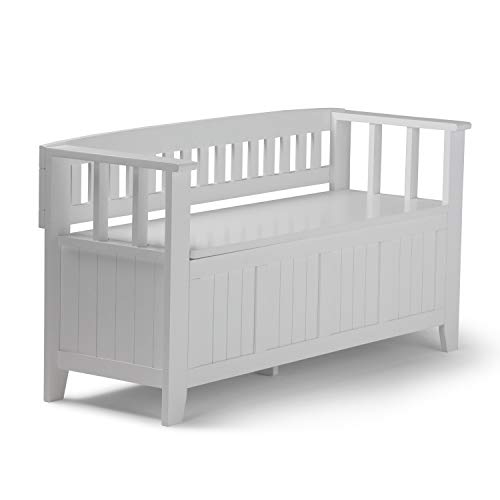
- Best overall solid-wood storage: SIMPLIHOME Acadian 48-Inch Entryway Storage Bench — Check on Amazon
- SIMPLIHOME Amherst Entryway Storage Bench — Check on Amazon
- VASAGLE Storage Chest Bench (ULHS11WT) — Check on Amazon
- VASAGLE Hall Tree with Shoe Bench (UHSR41BX) — Check on Amazon
See 2 more Amazon options
- Amazon Basics Solid Pine Shoe Bench — Check on Amazon
- Huatean Home 48-Inch Upholstered Storage Ottoman Bench — Check on Amazon
Read the full guide ↓
Disclosure: As an Amazon Associate, dailyhomedecorating.com earns from qualifying purchases. Links to Amazon on this page are affiliate links; they cost you nothing extra. Listing details such as price and availability change often, so check the current Amazon listing before you buy.
Choosing the best entryway bench for modern homes under $1000 is an exercise in restraint. A modern entryway works because everything in it looks intentional: clean lines, honest materials, nothing shouting for attention, and — hardest of all — no visible clutter. The bench is where that discipline usually collapses, because a bench invites dumping. Shoes gather under it, post piles on it, and within a month the calm minimal hall has a wooden confession of everything the household could not put away. The benches that survive in a modern home share three traits: hidden storage, so the mess is structurally invisible; a silhouette simple enough to sit beside a console or a framed print without arguing with it; and materials — solid pine, matte finishes, plain upholstery — that read as texture rather than decoration. Under $1000 buys all three without compromise.
This roundup was filtered through that modern lens rather than by raw capacity. Two solid-pine lift-lid benches made the cut because their plain, transitional lines disappear into a scheme while their interiors swallow the daily mess. A trunk-style chest earned its place through sheer visual quietness — a closed box is the most modern storage of all. A steel-frame hall tree is here for loft-style and industrial-modern entries where open structure is the aesthetic. A compact espresso shoe bench serves narrow modern halls and darker palettes. And a beige upholstered storage ottoman represents the soft-modern direction: upholstered, low, and deliberately plain. Each was verified against maker specifications for dimensions, materials and seat ratings before it was allowed anywhere near this list.
Our modern short answer: the Acadian in a light, plain finish is the easiest bench to make disappear into a contemporary hall while still working hard, and the upholstered Huatean is the pick when your scheme leans soft and tonal. The Amherst’s distressed finish is the one to choose carefully — it suits modern-rustic hybrids, not strict minimalism. Details, honest style limitations and measuring advice follow.
In this guide
Quick Picks: Best Entryway Bench for Modern Homes Under $1000
In a hurry? This table matches each bench to the situation it handles best.
| Buyer type | Pick | Why it stands out | Link |
|---|---|---|---|
| Best overall solid-wood storage | SIMPLIHOME Acadian 48-Inch Entryway Storage Bench | Plain transitional lines in solid pine; the mess vanishes under the lid | Check on Amazon |
| Best with a backrest | SIMPLIHOME Amherst Entryway Storage Bench | Modern-rustic crossover: backrest comfort in a distressed grey that suits hybrid schemes | Check on Amazon |
| Best safety-hinge trunk bench | VASAGLE Storage Chest Bench (ULHS11WT) | A closed trunk silhouette — visually the quietest storage form there is | Check on Amazon |
| Best hall tree with bench | VASAGLE Hall Tree with Shoe Bench (UHSR41BX) | Steel-frame structure for industrial-modern and loft entries | Check on Amazon |
| Best compact solid-pine shoe bench | Amazon Basics Solid Pine Shoe Bench | Deep espresso pine for darker modern palettes and narrow halls | Check on Amazon |
| Best padded seat with hidden storage | Huatean Home 48-Inch Upholstered Storage Ottoman Bench | Soft-modern upholstery in plain beige with hidden storage and a low profile | Check on Amazon |
How picks were chosen
Modern judging adds a visual test to the practical ones: a bench can pass every functional check and still fail the room.
We started with the full field of entryway benches sold for US homes and applied four filters before style was even discussed. First, verifiability: every pick had to have a traceable maker listing with published dimensions, materials and a stated seat capacity, because a bench you sit on daily is not the place for mystery specifications. Second, honest capacity: we favored stated seat ratings of 250 lb and above, and we report the rating exactly as the maker states it rather than rounding it into marketing language. Third, storage that matches the claim: a bench sold as a storage bench must actually hide a useful volume, and a shoe bench must fit real pairs on real shelves, which is why shelf counts and compartment layouts appear in every review below. Fourth, price discipline: the keyword sets a ceiling of $1000, and every pick sits inside that framing — we never print a static product price in these guides, because listings change; use the Amazon links to check the current figure before you buy.
We also weighted the unglamorous details that decide whether a bench is still loved in year three. Hinge type matters on any lift-lid model, because a lid that slams is a lid that eventually gets left closed with clutter on top of it instead. Frame material matters because entryways are wet, gritty places: solid pine can be dried, sanded and re-tightened; thin board that swells at the edges cannot. Seat height matters because a bench is a tool for changing shoes, and a seat much below 17 inches or much above 19 inches makes that job harder for most adults. And assembly matters: every pick here is either simple bolt-together furniture or arrives largely built, and none requires specialist tools. Where a pick has a real weakness — a lower seat rating, an open design that shows clutter, a finish that will fight a particular scheme — we say so in its review rather than smoothing it over, because an honest limitation now is cheaper than a return later.
Detailed reviews
Six benches, six different answers to the same doorway. Read the limitation in each review as carefully as the pros — that is where the right choice usually reveals itself.
SIMPLIHOME Acadian 48-Inch Entryway Storage Bench
Who it suits: In a modern scheme this works because it asks for no attention: straight lines, a flat lid, and everything unsightly sealed inside a divided compartment.
The verified facts first. SIMPLIHOME Acadian 48-Inch Entryway Storage Bench is built around these maker-stated specifications: 48 inches wide, solid pine, lift-up lid over a dual storage compartment, 300 lb capacity, seats two. Those numbers are the reason it earned its slot as best overall solid-wood storage in this roundup, and they are the numbers to compare against your own tape measurements before anything else in this review matters. In daily use, the specification that owners feel most is usually the seat: its height and firmness decide whether changing shoes is a comfortable pause or an awkward crouch, and its stated capacity decides whether the bench is a household tool or a decorative risk. The second most-felt specification is the storage geometry. Divided interiors, open shelves, hooks and hidden cavities all behave differently once real shoes, real bags and real weather arrive, and the reviews in this guide consistently favor the geometry that matches the way the entry is actually used rather than the geometry that photographs best.
Pros: Solid pine throughout rather than a veneer over board, a flip-up lid that opens onto two separate compartments, and a full 48-inch seat that genuinely fits two adults side by side while they change shoes. Beyond that headline strength, the bench benefits from the general virtues of its class: a footprint that was clearly designed for entryways rather than adapted from dining furniture, a seat height in the range most adults find natural for changing shoes, and a storage layout that can be understood at a glance by guests and children without instruction. It also sits comfortably inside the under-$1000 framing of this guide, leaving budget headroom for the mat, tray or baskets that complete an entry system.
Honest limitation: The lid is flat solid wood with no cushion, so long sits while you lace boots are firmer than on a padded bench, and the open interior has no dividers beyond the single central split. No bench in this roundup escapes trade-offs, and pretending otherwise would make the rest of this guide worthless; the question is always whether a pick’s particular limitation touches your household’s actual routine or passes it by.
Choose it if its headline strength matches the problem your entry actually has. Skip it if its stated limitation describes your daily reality — another pick in this list was chosen precisely to cover that case. Either way, confirm the current listing details before you order: Check on Amazon.
SIMPLIHOME Amherst Entryway Storage Bench
Who it suits: Choose it deliberately, not by default: in a modern-rustic or Scandinavian-hybrid entry the distressed grey reads as texture, and the backrest adds a lounge-like note.
The verified facts first. SIMPLIHOME Amherst Entryway Storage Bench is built around these maker-stated specifications: Solid pine in a distressed grey finish, backrest, lift-up lid with safety hinges, dual hidden compartment, 300 lb class frame. Those numbers are the reason it earned its slot as best with a backrest in this roundup, and they are the numbers to compare against your own tape measurements before anything else in this review matters. In daily use, the specification that owners feel most is usually the seat: its height and firmness decide whether changing shoes is a comfortable pause or an awkward crouch, and its stated capacity decides whether the bench is a household tool or a decorative risk. The second most-felt specification is the storage geometry. Divided interiors, open shelves, hooks and hidden cavities all behave differently once real shoes, real bags and real weather arrive, and the reviews in this guide consistently favor the geometry that matches the way the entry is actually used rather than the geometry that photographs best.
Pros: A proper backrest, which almost no entryway bench in this class offers, plus safety hinges on the lift-up lid and the same dual-compartment hidden storage idea as its Acadian sibling in a moodier distressed grey finish. Beyond that headline strength, the bench benefits from the general virtues of its class: a footprint that was clearly designed for entryways rather than adapted from dining furniture, a seat height in the range most adults find natural for changing shoes, and a storage layout that can be understood at a glance by guests and children without instruction. It also sits comfortably inside the under-$1000 framing of this guide, leaving budget headroom for the mat, tray or baskets that complete an entry system.
Honest limitation: The backrest makes it deeper in use than a backless bench and it reads distinctly rustic, which can fight a very minimal or glossy modern entry scheme. No bench in this roundup escapes trade-offs, and pretending otherwise would make the rest of this guide worthless; the question is always whether a pick’s particular limitation touches your household’s actual routine or passes it by.
Choose it if its headline strength matches the problem your entry actually has. Skip it if its stated limitation describes your daily reality — another pick in this list was chosen precisely to cover that case. Either way, confirm the current listing details before you order: Check on Amazon.
VASAGLE Storage Chest Bench (ULHS11WT)
Who it suits: A closed chest is the modernist’s friend — from across the room it is simply a low rectangular volume, and the safety hinges keep that calm from being interrupted by a slamming lid.
The verified facts first. VASAGLE Storage Chest Bench (ULHS11WT) is built around these maker-stated specifications: 39.4 inches wide, engineered wood, two safety hinges, side carry handles, 300 lb seat capacity. Those numbers are the reason it earned its slot as best safety-hinge trunk bench in this roundup, and they are the numbers to compare against your own tape measurements before anything else in this review matters. In daily use, the specification that owners feel most is usually the seat: its height and firmness decide whether changing shoes is a comfortable pause or an awkward crouch, and its stated capacity decides whether the bench is a household tool or a decorative risk. The second most-felt specification is the storage geometry. Divided interiors, open shelves, hooks and hidden cavities all behave differently once real shoes, real bags and real weather arrive, and the reviews in this guide consistently favor the geometry that matches the way the entry is actually used rather than the geometry that photographs best.
Pros: Two safety hinges that hold the lid at the angle you leave it, cut-out side handles that make the trunk genuinely movable, and a compact 39.4-inch width that fits halls where a 48-inch bench will not. Beyond that headline strength, the bench benefits from the general virtues of its class: a footprint that was clearly designed for entryways rather than adapted from dining furniture, a seat height in the range most adults find natural for changing shoes, and a storage layout that can be understood at a glance by guests and children without instruction. It also sits comfortably inside the under-$1000 framing of this guide, leaving budget headroom for the mat, tray or baskets that complete an entry system.
Honest limitation: It is particleboard rather than solid wood, so it dislikes standing water from soaked boots left against it, and the interior is one open cavity rather than divided storage. No bench in this roundup escapes trade-offs, and pretending otherwise would make the rest of this guide worthless; the question is always whether a pick’s particular limitation touches your household’s actual routine or passes it by.
Choose it if its headline strength matches the problem your entry actually has. Skip it if its stated limitation describes your daily reality — another pick in this list was chosen precisely to cover that case. Either way, confirm the current listing details before you order: Check on Amazon.
VASAGLE Hall Tree with Shoe Bench (UHSR41BX)
Who it suits: For industrial-modern entries the exposed steel frame and open shelves are the point: this is storage as architecture, best where your scheme already uses black metal and warm wood.
The verified facts first. VASAGLE Hall Tree with Shoe Bench (UHSR41BX) is built around these maker-stated specifications: 27.6 W x 12.6 D x 68.9 H inches, steel frame, nine hooks, two mesh shoe shelves, bench rated 300 lb, anti-tip kit included. Those numbers are the reason it earned its slot as best hall tree with bench in this roundup, and they are the numbers to compare against your own tape measurements before anything else in this review matters. In daily use, the specification that owners feel most is usually the seat: its height and firmness decide whether changing shoes is a comfortable pause or an awkward crouch, and its stated capacity decides whether the bench is a household tool or a decorative risk. The second most-felt specification is the storage geometry. Divided interiors, open shelves, hooks and hidden cavities all behave differently once real shoes, real bags and real weather arrive, and the reviews in this guide consistently favor the geometry that matches the way the entry is actually used rather than the geometry that photographs best.
Pros: It solves the whole entry wall in one footprint: nine hooks in two rows, a hanging position for coats and bags, two mesh shelves for shoes, and a bench seat rated to 300 lb, all on a narrow 27.6-inch width. Beyond that headline strength, the bench benefits from the general virtues of its class: a footprint that was clearly designed for entryways rather than adapted from dining furniture, a seat height in the range most adults find natural for changing shoes, and a storage layout that can be understood at a glance by guests and children without instruction. It also sits comfortably inside the under-$1000 framing of this guide, leaving budget headroom for the mat, tray or baskets that complete an entry system.
Honest limitation: At 68.9 inches tall it needs wall fixing with the included anti-tip kit to be safe, and the open mesh shelves show your shoes rather than hiding them. No bench in this roundup escapes trade-offs, and pretending otherwise would make the rest of this guide worthless; the question is always whether a pick’s particular limitation touches your household’s actual routine or passes it by.
Choose it if its headline strength matches the problem your entry actually has. Skip it if its stated limitation describes your daily reality — another pick in this list was chosen precisely to cover that case. Either way, confirm the current listing details before you order: Check on Amazon.
Amazon Basics Solid Pine Shoe Bench
Who it suits: Espresso is the underused modern finish: against white walls it gives the entry a single deliberate dark note, and the compact width suits the narrow halls modern apartments often have.
The verified facts first. Amazon Basics Solid Pine Shoe Bench is built around these maker-stated specifications: 27.56 W x 10.4 D x 17.72 H inches, 100 percent solid pine in espresso, two open shelves, 250 lb capacity. Those numbers are the reason it earned its slot as best compact solid-pine shoe bench in this roundup, and they are the numbers to compare against your own tape measurements before anything else in this review matters. In daily use, the specification that owners feel most is usually the seat: its height and firmness decide whether changing shoes is a comfortable pause or an awkward crouch, and its stated capacity decides whether the bench is a household tool or a decorative risk. The second most-felt specification is the storage geometry. Divided interiors, open shelves, hooks and hidden cavities all behave differently once real shoes, real bags and real weather arrive, and the reviews in this guide consistently favor the geometry that matches the way the entry is actually used rather than the geometry that photographs best.
Pros: One hundred percent solid pine at a small 27.56-inch width, with two open shelves that hold roughly three pairs each and a striped top surface with smooth, snag-proof recessed screws. Beyond that headline strength, the bench benefits from the general virtues of its class: a footprint that was clearly designed for entryways rather than adapted from dining furniture, a seat height in the range most adults find natural for changing shoes, and a storage layout that can be understood at a glance by guests and children without instruction. It also sits comfortably inside the under-$1000 framing of this guide, leaving budget headroom for the mat, tray or baskets that complete an entry system.
Honest limitation: At 250 lb its seat rating is the lowest here and the open shelves offer no hidden storage, so clutter stays visible. No bench in this roundup escapes trade-offs, and pretending otherwise would make the rest of this guide worthless; the question is always whether a pick’s particular limitation touches your household’s actual routine or passes it by.
Choose it if its headline strength matches the problem your entry actually has. Skip it if its stated limitation describes your daily reality — another pick in this list was chosen precisely to cover that case. Either way, confirm the current listing details before you order: Check on Amazon.
Huatean Home 48-Inch Upholstered Storage Ottoman Bench
Who it suits: When your modern leans warm and tonal rather than hard-edged, this upholstered volume in plain beige is the bench that matches the sofa-side of your taste while hiding the same amount of clutter.
The verified facts first. Huatean Home 48-Inch Upholstered Storage Ottoman Bench is built around these maker-stated specifications: 48.4 inches wide, upholstered polyester-blend seat, double safety hinges, 330 lb capacity, 16.54-inch seat height. Those numbers are the reason it earned its slot as best padded seat with hidden storage in this roundup, and they are the numbers to compare against your own tape measurements before anything else in this review matters. In daily use, the specification that owners feel most is usually the seat: its height and firmness decide whether changing shoes is a comfortable pause or an awkward crouch, and its stated capacity decides whether the bench is a household tool or a decorative risk. The second most-felt specification is the storage geometry. Divided interiors, open shelves, hooks and hidden cavities all behave differently once real shoes, real bags and real weather arrive, and the reviews in this guide consistently favor the geometry that matches the way the entry is actually used rather than the geometry that photographs best.
Pros: A thick upholstered seat you can actually linger on, double hinges described by the maker for safer closing, and the highest seat rating in this roundup at 330 lb, wrapped in a clean beige fabric that suits calm, light entryways. Beyond that headline strength, the bench benefits from the general virtues of its class: a footprint that was clearly designed for entryways rather than adapted from dining furniture, a seat height in the range most adults find natural for changing shoes, and a storage layout that can be understood at a glance by guests and children without instruction. It also sits comfortably inside the under-$1000 framing of this guide, leaving budget headroom for the mat, tray or baskets that complete an entry system.
Honest limitation: Fabric upholstery in an entryway will need faster attention after muddy or wet contact than a wipe-clean wood top, and its 16.54-inch seat height is a touch low for taller users. No bench in this roundup escapes trade-offs, and pretending otherwise would make the rest of this guide worthless; the question is always whether a pick’s particular limitation touches your household’s actual routine or passes it by.
Choose it if its headline strength matches the problem your entry actually has. Skip it if its stated limitation describes your daily reality — another pick in this list was chosen precisely to cover that case. Either way, confirm the current listing details before you order: Check on Amazon.
Comparison table
Specifications below are the makers’ stated figures, gathered during verification. Use them with your own measurements, not instead of them.
| Pick | Key specs | Link |
|---|---|---|
| SIMPLIHOME Acadian 48-Inch Entryway Storage Bench | 48 inches wide, solid pine, lift-up lid over a dual storage compartment, 300 lb capacity, seats two | Check on Amazon |
| SIMPLIHOME Amherst Entryway Storage Bench | Solid pine in a distressed grey finish, backrest, lift-up lid with safety hinges, dual hidden compartment, 300 lb class frame | Check on Amazon |
| VASAGLE Storage Chest Bench (ULHS11WT) | 39.4 inches wide, engineered wood, two safety hinges, side carry handles, 300 lb seat capacity | Check on Amazon |
| VASAGLE Hall Tree with Shoe Bench (UHSR41BX) | 27.6 W x 12.6 D x 68.9 H inches, steel frame, nine hooks, two mesh shoe shelves, bench rated 300 lb, anti-tip kit included | Check on Amazon |
| Amazon Basics Solid Pine Shoe Bench | 27.56 W x 10.4 D x 17.72 H inches, 100 percent solid pine in espresso, two open shelves, 250 lb capacity | Check on Amazon |
| Huatean Home 48-Inch Upholstered Storage Ottoman Bench | 48.4 inches wide, upholstered polyester-blend seat, double safety hinges, 330 lb capacity, 16.54-inch seat height | Check on Amazon |
How to choose the right bench for your entry
Begin with your scheme’s existing materials and be honest about them. If your entry already mixes black metal and warm wood, the hall tree extends the language; if your hall is white, pale wood and one framed print, a closed pale bench extends yours. The rule that keeps modern entries calm is one storage voice per space: do not combine an open-shelf bench, a basket tower and a hook rail, because three systems read as clutter even when each is tidy. Choose hidden storage as the default and let exactly one open element exist if you must. Proportion matters as much as finish: in a modern hall, a bench should sit lower than the console or artwork line and leave visible wall above it, which is why the 48-inch-wide but visually light picks here outperform taller, busier pieces. Finally, plan the landing strip: a modern bench stays modern only if keys and post have a tray, so budget a small tray or wall pocket alongside it.
One last discipline: decide the bench’s job description in a single sentence before you order. ‘Seat two, hide eight pairs, nothing visible’ points to a divided lift-lid bench. ‘Somewhere to sit, coats off the floor’ points to a hall tree. ‘Shoes visible and grabbed in seconds’ points to open shelves. When the sentence is clear, the right pick in this list is usually obvious — and when two picks both fit the sentence, choose by the limitation you mind least, because you will meet the limitation daily and the headline strength only on the days you think about it.
Common mistakes to avoid
- Mixing three storage systems — open bench, baskets, hook rail — so the entry reads as clutter even when tidy.
- Choosing ornate or heavily distressed furniture for a strict minimalist scheme and wondering why the room feels off.
- Letting the bench top become the household’s default dumping surface with no tray or landing rule.
- Ignoring the view from the living room: in open-plan modern homes the entry bench is always on display.
- Buying a tall, visually heavy piece that crowds the sightline and shrinks the whole entry.
Every mistake on this list has the same root: shopping from a photograph instead of from the measured, lived reality of the entry. The fixes are equally consistent — measure the space, count the shoes, assign the storage, and respect the hinge.
Materials, care and keeping an entry bench alive
An entryway is the harshest furniture environment in the house: water, grit, UV through the door glass, and heavy daily contact in a small area. Solid pine, which several picks here use, is the forgiving option — it dries after wet contact, small dents read as patina rather than damage, and joints can be re-tightened years later with basic tools. Engineered wood and particleboard, used in the trunk-style and hall-tree picks, are stable and consistent but dislike standing water, so the rule is simple: wet boots go on a mat, not against the bench, and spills get wiped the same day. Upholstery needs the fastest response of all — blot, do not rub, and keep a fabric-safe cleaner in the hall closet rather than in a distant cupboard where good intentions go to die.
Hardware deserves a twice-yearly minute. Hinges, hook screws and leg bolts all loosen microscopically with daily use; a quarter-turn with the right driver in spring and autumn prevents the wobble that owners later blame on build quality. Felt pads under legs protect hard floors and make the bench easier to slide for cleaning — and cleaning behind an entry bench matters, because that gap collects the grit that scratches floors when the bench shifts. Finally, rotate the storage seasonally. A bench that holds only the current season’s shoes and accessories stays easy to use; a bench asked to hold all four seasons becomes the rummage pit this guide keeps warning about, regardless of how well it was built.
Setting up the entry system around the bench
A bench alone is a seat with storage; a bench plus three cheap companions is an entry system. The first companion is a mat, sized to the door’s swing, which takes the water and grit before the bench or the floor does. The second is a landing tray or small wall pocket for keys and post, which enforces the rule that the bench top is a seat, not a shelf. The third is light: entries are often the darkest part of the home, and a bench you can see properly is a bench you will actually use rather than dump bags beside. Add a mirror if the wall allows it — not for vanity, but because a mirror above a bench makes a small entry feel twice its size and gives the bench a visual anchor. None of this requires the bench to be expensive; it requires the bench to be the center of a small, deliberate system, which is exactly what the under-$1000 tier lets you build without strain.
Seat height, depth and the ergonomics of changing shoes
The most-used measurement on an entryway bench is one most listings make you hunt for: seat height. Changing shoes is a sit-stand movement performed with your hands busy at floor level, and the geometry is unforgiving. For most adults, a seat between about 17 and 19 inches high lets the feet rest flat while the knees stay near a right angle, which means you can lean forward to a lace without your thighs doing the work of a squat. Much lower — the mid-15 to 16-inch range that some upholstered ottomans sit at — and taller or older users feel the rise in their knees every single time; the Huatean in this roundup, at a stated 16.54 inches, is the one to think hardest about if anyone in the household has stiff joints, even though its padding is the kindest surface here. Much higher than 19 inches and shorter legs dangle, which children tolerate happily and adults quietly hate.
Depth matters in the same quiet way. A seat depth in the mid-teens of inches supports the thigh without pushing the sitter forward, and it also decides how the bench behaves as storage: deeper benches swallow bulkier items like boot pairs stood upright, while shallow benches force shoes to lie flat and stack. When you compare the picks in this guide, read width, depth and seat height as one ergonomic sentence rather than three separate numbers. Then rehearse the movement at home: sit on a chair or step of similar height, mime tying a shoe, and notice your knees and back. Thirty seconds of rehearsal predicts years of daily comfort better than any product photograph, and it is the cheapest research in this entire guide.
Storage layouts compared: lids, shelves, hooks and cavities
Four storage geometries appear in this roundup, and each creates a different daily habit. The lift-lid divided interior — the Acadian and Amherst pattern — is the tidiest: everything disappears, categories stay separated, and the entry looks calm even on a chaotic day. Its cost is access speed; you must lift a lid and, if someone is sitting on it, ask them to stand. The single-cavity trunk — the VASAGLE chest pattern — trades the divider for simplicity and volume: brilliant for blankets, seasonal gear and mixed clutter, weaker for small items that migrate to the bottom, which is why owners of cavity benches should add one small basket inside for gloves and keys-adjacent clutter. Open shelves — the Amazon Basics pattern — are the fastest system ever built for shoes: no lid, no door, just place and go, which is exactly why children and rushed adults actually use them; the price is that the shoes remain visible, so the system only looks tidy if the household’s shoe count is disciplined. Hooks plus shelves — the hall tree pattern — move the problem upward: coats, bags and hats get assigned vertical territory, the bench stays a seat rather than a dumping ground, and the floor stays clear; the price is a taller visual presence and the need for an anti-tip fixing.
None of these geometries is objectively best, which is why this guide carries all four. The reliable method is to watch your current entry for one ordinary day and name the failure precisely. Shoes in a pile on the floor is a shelving failure. Coats on the stair rail is a hook failure. A bench buried under bags is a cavity failure — the storage exists but the habit does not. Match the geometry to the failure you actually observed, not to the entry you wish you had, and the bench you buy will still be earning its place when the next season’s footwear rotates in.
Delivery, assembly and the first week with a new bench
Benches in this class arrive as honest flat-pack or part-assembled furniture, and the assembly experience follows a predictable pattern: the frame panels and seat go together quickly, and the hardware — hinges on a lift-lid model, hooks and shelves on a hall tree — is where patience pays. Lay every part out before the first screw turns, because discovering a missing cam lock at step nine is a special kind of misery. Tighten in two passes: finger-tight plus a quarter-turn while the frame is squared against a wall, then a full tighten once the bench sits level on its real floor, since floors are never as flat as the workshop the instructions imagine. On any lift-lid model, fit the safety hinges and test the lid’s behavior empty before the bench is loaded — the lid should hold where you leave it and close without a drop. On the hall tree, fit the anti-tip kit as part of the original assembly, not as a someday task; someday tasks attached to safety hardware have a poor record.
The first week decides the bench’s long-term fate, because habits form around new furniture fast. Put the mat down on day one, before the first wet arrival, not after the first muddy one. Assign the storage territories on day one too — this side for shoes, that side for accessories, these hooks for children, those for adults — and say the assignments out loud, because unspoken systems exist only in the mind of the person who bought the bench. Keep the top clear for the entire first week even when it costs effort; a bench that starts life as a seat tends to stay a seat, while a bench that spends its first week as a shelf will be a shelf forever. At the end of the week, do the honest audit: open the lid, look at the shelves, and adjust the system to the behavior you actually observed rather than the behavior you planned. Every durable entry system in every home we have studied was tuned once, like this, after real life had voted.
Final recommendation
If you read nothing else: start with the SIMPLIHOME Acadian 48-Inch Entryway Storage Bench unless a specific constraint in your entry rules it out — it is the most complete answer here to the ordinary version of this problem. If width, fingers or vertical space is your binding constraint, the VASAGLE Storage Chest Bench (ULHS11WT) is the alternative we would buy with our own money. Both sit inside the under-$1000 framing; check the current listing, confirm the dimensions against your wall one final time, and order once, correctly.
FAQ
What style of entryway bench suits a modern home?
Low, closed, and plain: lift-lid storage in a simple silhouette, a matte or natural finish, and no ornamental detail competing with the room.
Can a hall tree work in a modern entryway?
Yes, in industrial-modern and loft schemes where exposed steel and open structure are already part of the language. In a soft minimal scheme, a closed bench is calmer.
How do I keep a modern entryway from looking cluttered?
Hidden storage for everything daily, one storage system per space, and a defined landing tray for keys and post so the bench top stays clear.
Is upholstery practical in an entryway?
Plain, tightly woven upholstery in a mid-tone is workable if wet items go on a mat first. It suits soft-modern schemes better than pale boucle or deep pile.
What finish works with white walls and light floors?
Natural or white-painted pine keeps the bench recessive; a single espresso piece works as a deliberate contrast if the rest of the entry stays quiet.
Related guides
Keep researching with these related roundups from the same site: Best Entryway Bench Under $1000, Best Entryway Bench For Modern Homes Under $700, Best Entryway Bench For Modern Homes Under $300, Best Entryway Bench Under $700, Best Entryway Bench For Small Apartments Under $1000.