Best Drywall Saws
A drywall saw is a simple tool that can save a lot of trouble when you need to cut an opening in gypsum board. The classic hand tool is a jab saw, sometimes called a keyhole saw: a narrow, pointed blade with teeth that can enter a panel and follow a marked line. Some drywall saws have a fixed blade; others fold or use a replaceable blade. These tools are useful for outlet and switch openings, small access holes, and repair cuts where a large powered saw would be awkward.
Choosing the best drywall saw is less about finding the sharpest or most aggressive teeth and more about matching the blade and handle to the cut. A controlled point helps start an opening, a rigid blade helps follow the line, and a comfortable grip helps prevent slips. The best choice also depends on whether you are cutting a new sheet on a workbench or making a careful opening in an existing wall, where wiring, plumbing, framing, and hidden fasteners may be present.
This guide focuses on manual jab saws and hand-operated drywall cutout tools. It explains tooth styles, blade shape, handles, cutout measurement, controlled plunge technique, repair work, dust management, and safe operation. It does not claim hands-on testing, invent product specifications, or list current prices. A hand saw is only one option: powered oscillating tools and reciprocating saws can be useful for some work, but they require different setup and risk management.
Affiliate disclosure: DailyHomeDecorating.com may earn a commission from qualifying purchases made through links. This does not affect the guidance in this article or the price you pay. Product availability and features can change; confirm current details and follow the tool and building-material manufacturers’ instructions.
Amazon product examples to compare

ASIN: B000B3EGN8

ASIN: B0051QIAVO
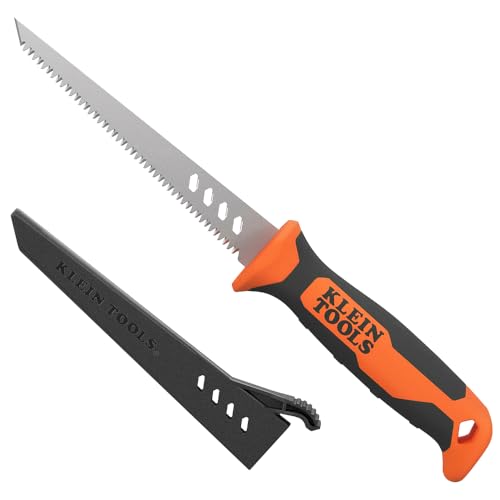
ASIN: B0FSHCH2GX

ASIN: B07DKRCNX3
Certain content that appears on this site comes from Amazon. This content is provided “as is” and is subject to change or removal at any time. Product examples and images are supplied through Amazon Creators API; confirm specifications and availability on the current listing.
Quick answer: what makes a good drywall saw?
For most homeowners, a useful drywall jab saw has a narrow pointed blade, teeth that cut predictably in gypsum board, a stiff blade that does not flex excessively, and a handle that stays secure in the hand. A fixed blade is straightforward for regular use. A folding or replaceable-blade design can be easier to store or maintain, provided the lock or clamp is solid and easy to inspect. Choose blade length and shape around your access and cut size rather than assuming a longer blade is always better.
For a new panel, a sharp point can be convenient for starting a small opening after the panel is positioned and marked. For an existing wall, a shallow, cautious approach is essential because the cavity may contain electrical wires, plumbing, pipes, insulation, or framing. A drywall saw does not sense what is behind the board. If you cannot establish what is in the wall, stop and investigate rather than puncturing blindly.
What is a drywall saw?
A manual drywall saw is a hand tool with a relatively narrow, pointed blade designed to cut gypsum board and similar sheet materials. It may be called a jab saw because a pointed tip can be pushed through a panel to begin an interior cut. Some designs have teeth on one or both edges; others have a blade intended to cut in a particular direction. Product descriptions vary, so inspect the tooth orientation and instructions rather than relying only on the name.
Drywall saws are commonly used for openings around electrical boxes, switch boxes, vents, access panels, and for trimming small sections during repairs. They can also cut a piece of board to fit a repair opening. They are not designed to replace a utility knife for long straight scoring cuts through a flat sheet, nor are they a universal wood saw. For straight panel cuts, a knife and straightedge can often produce a controlled score-and-snap cut; for irregular openings, the jab saw offers more reach and a blade that can follow a marked boundary.
The word “drywall saw” can also appear in listings for powered cutout tools or accessories. This article uses the term for manual hand saws. If you need a powered tool, compare a drywall-specific rotary cutout tool or an oscillating multi-tool separately, because their cutting action, attachments, dust behavior, and safety concerns differ.
Types of manual drywall saws
Fixed-blade jab saws
A fixed-blade jab saw has a blade permanently attached to the handle. It is a simple choice with few moving parts. A fixed blade is ready to use without opening or locking a folding mechanism, and the connection between blade and handle can feel secure. The tradeoff is that the pointed blade takes up more space in a toolbox and needs a sheath or other protection to keep the tip from damaging nearby items or causing injury.
When inspecting a fixed saw, look for a blade that aligns well with the handle, has no wobble at the joint, and has a handle shape that helps your hand stay away from the blade. Check that the tip is not bent and the teeth are not damaged. Do not buy based on a vague claim about “professional” use; judge the construction and the intended cut.
Folding drywall saws
A folding model closes into its handle for storage. This can protect the teeth and point and reduce the chance of the blade catching on other tools. It adds a hinge and locking mechanism that must hold the blade securely open during use. Check how the lock engages, whether it has noticeable play, and whether it can be operated without placing fingers in the blade path. Keep the hinge clear of gypsum dust, which can interfere with a small moving mechanism.
Folding is a storage feature, not a reason to accept a loose blade. If the lock does not engage reliably, do not use the saw. Do not attempt to cut with the blade partially folded or held in place by friction. Follow the manufacturer’s instructions for opening, locking, closing, and cleaning the saw.
Replaceable-blade cutout saws
Some hand drywall saws accept replaceable blades. Replacement can extend the useful life of the handle and let the user select from compatible blade profiles. Before buying, confirm that replacement blades are available, match the tool’s model, and can be changed using a secure procedure. A blade that is removable may be convenient, but its clamp must prevent movement under ordinary cutting force. Never improvise a substitute blade or use a damaged locking part.
Double-edge and single-edge patterns
Some blades have teeth on both edges, which can allow cutting strokes in more than one direction; others emphasize a single cutting direction. Double-edge designs can help in confined positions where the stroke direction is constrained, while a single-edge pattern may give a more predictable working side for a beginner. This is not a universal performance ranking. Check the maker’s instructions, test on scrap, and learn which strokes produce controlled progress with the specific saw.
Tooth design and blade shape
Tooth spacing and aggressiveness
Drywall saw teeth are typically designed to cut a relatively soft gypsum core and paper facing. Larger, more aggressive teeth may remove material quickly but can tear the paper or leave a rougher edge if the saw is pushed too hard. Finer or less aggressive teeth can support more controlled work, but may cut more slowly or clog depending on the board and tooth design. Manufacturers may list teeth per inch, but that number alone does not tell you how the saw will feel; tooth geometry, set, blade stiffness, and stroke all matter.
Use a sharp, undamaged blade. A dull saw encourages extra force, which reduces control and makes slips more likely. If teeth are damaged, missing, clogged, or bent, replace or service the blade according to its design. Avoid forcing the blade to compensate for dullness. Start with light, controlled strokes and let the teeth do the work.
Pointed tip and blade width
A sharp point is helpful when starting an opening in an accessible panel, but it can also puncture too far. Blade width influences how easily a saw turns and how straight it tracks. A narrower blade can negotiate smaller contours but may flex more; a wider or stiffer blade can help make a straighter cut but needs room to turn. For a small outlet opening, the marked shape is typically mostly straight-sided, so a moderately stiff blade that follows a short line may be more useful than a very narrow blade designed for tight curves.
Think about the actual cut shape. If you mostly cut rectangular openings, prioritize control and a comfortable stroke. If you need to follow a curved line in a patch or irregular opening, confirm that the blade can turn without binding and without bending. Do not twist a saw hard to steer it around a tight corner; that can bind or damage the blade and enlarge the cut unintentionally.
Blade length and useful reach
A longer blade can provide reach through a panel and may be useful for broader cuts, but it can also be harder to control in a shallow cavity or close to hidden obstacles. A shorter blade may improve control for a small opening but limit stroke length. Pick a blade that extends enough to cut through the board comfortably while allowing you to stop before contacting what lies behind it. When working in an existing wall, minimal penetration is a key advantage of a short, controlled stroke.
Do not confuse blade length with maximum safe cutting depth. A long blade can reach farther than the board thickness, but that is not a reason to push it deep into a cavity. Blade length should be considered alongside tip design, stroke, access, and the risk of hidden services. For precise cutouts, a depth-limited method or a different tool may be preferable if the material and setup permit.
Handle, grip, and control
The handle is the part you control directly, so it deserves close attention. A comfortable handle should allow a firm grip without excessive squeezing and should stay secure if your hand is dusty. The shape should help prevent the hand from sliding forward toward the blade. Some handles are straight, others curved or pistol-shaped. Neither style is best for every hand; comfort depends on grip size, wrist position, and the direction of the cut.
Look for a handle with a secure blade connection and a guard or shoulder that helps keep fingers behind the blade. A textured surface can improve grip, but should be comfortable and easy to clean. If you wear gloves for the task, ensure they do not snag on the teeth or reduce your ability to hold the saw. Gloves are not a substitute for a safe grip or keeping hands clear of the cut line.
A comfortable handle can improve control, but it cannot make an unsafe plunge safe. Before starting, know where the blade tip will enter, how far it can travel, and where your other hand is. Keep the free hand away from the panel’s backside and from the expected blade path. If the panel is not supported or if you cannot see what lies behind it, change the plan.
Choosing a saw for cutouts and repairs
Electrical outlet and switch openings
Box openings are a common use for a drywall jab saw. Measure carefully from panel edges or fixed reference points, and transfer the box outline to the board. The U.S. Gypsum/CGC installation guide describes measuring from panel edges to the near and far sides of an electrical box, then tracing the outline and cutting with a keyhole saw, jab saw, or rotary tool. See the CGC Sheetrock gypsum panel installation guide for an example of this process. Confirm the actual box position, dimensions, and local installation requirements for your project.
If the sheet is not yet installed, laying it on stable supports can make the cut easier to control. Confirm the supports are clear of the cut area and cannot be struck by the saw. If the panel is already attached, first identify the location and depth of wiring and other services. Do not jab into an existing wall until you have a reliable plan for avoiding hidden hazards.
Cutting openings for vents and access panels
Larger rectangular openings require accurate layout and a strategy for supporting the piece being removed. Mark all corners and connect them with straight lines. Starting at a corner with a controlled entry can work for some manual saws and panel conditions, but a corner may be near framing or a service. Determine the cavity conditions first. Cut to the waste side of the line and check fit before enlarging an opening. If the offcut is large or could fall, support it so it does not break the board or damage wiring.
For an access opening, think ahead to how the edge will be finished and supported. A cutout that is oversized or ragged may require a larger patch. Keep the blade perpendicular where practical and avoid levering the saw sideways to break away a corner. A dedicated powered cutout tool can be faster for repeated work, but it does not eliminate the need to locate hazards and control depth.
Small wall repairs
When removing damaged drywall for a patch, use a square or rectangular cut where possible because straight edges are easier to support and finish. Mark a boundary that reaches sound material and accounts for studs or backing. Before cutting an existing wall, inspect both sides if possible and locate utilities. Use a short blade stroke and pause frequently to assess progress. A manual saw provides tactile feedback and does not have a spinning motor, but its sharp point can still reach wires, pipes, or a hand behind the panel.
After cutting, remove loose dust and fragments carefully. Do not blow gypsum dust around with compressed air. Use cleanup methods appropriate to the room and material, and avoid spreading dust into occupied areas. If the home is older or the wall may contain hazardous materials, get qualified advice before disturbing it.
A practical buying framework
- Identify the work. Decide whether you need occasional box cutouts, repair openings, long straight cuts, or repeated production cutouts.
- Choose blade format. Fixed blade for simplicity, folding for protected storage, or replaceable blade if compatible replacements are readily available.
- Match the tooth pattern. Consider the material, cut direction, edge quality, and whether you want cutting strokes in one or both directions.
- Assess point and stiffness. A pointed tip can start an opening but needs careful control; blade stiffness should support the shapes you cut.
- Check handle security. Look for a comfortable grip, a firm blade joint, and geometry that keeps fingers behind the blade.
- Consider reach. Select a blade long enough for the board while avoiding unnecessary penetration into a wall cavity.
- Confirm serviceability. For folding or replaceable systems, inspect the lock or blade clamp and verify compatible replacement parts.
- Plan safety equipment. Include eye protection, suitable dust control, stable support, and a way to identify concealed services.
- Practice first. Make a short test cut in scrap drywall to learn the saw’s stroke, entry, and turning behavior.
Do not overvalue features that do not support your work. A built-in ruler or unusual handle may be convenient, but does not replace accurate layout. A folding design is useful only if its lock is reliable. The tool should feel predictable and easy to inspect, with a blade shape suited to the cut. For infrequent home repairs, a straightforward hand saw may be enough; for repeated work, consider the speed and dust controls of an appropriate powered tool.
Marking and cutting drywall with a manual saw
Prepare the panel and confirm the location
For a loose panel, measure the opening from consistent reference edges and transfer those measurements carefully. Confirm orientation before marking; a mirrored measurement can put a box opening on the wrong side. Use a square to draw straight sides and label the waste area. Double-check all measurements before cutting. The CGC installation guidance is a helpful reference for measuring electrical-box cutouts in new gypsum panels.
For a wall already in place, locate studs and services before cutting. Use plans, suitable detection tools, visible access from the other side, or qualified assistance as needed. Detection devices have limitations and may not find every cable or pipe. Turn off and verify relevant electrical circuits where the work requires it, and follow electrical safety rules. If the cutout could intersect wiring, plumbing, gas lines, or other hazards, do not proceed until the location is known and safe.
Support the board
Secure the panel so it cannot shift or vibrate. On a loose sheet, support it near the cut while keeping the blade path clear. On a mounted wall, use a plan that prevents the cut section from dropping or tearing the paper facing. Keep the supporting hand well away from both sides of the cut. Never ask another person to hold material in a position where their hand could be struck by the saw.
Start with controlled entry
Hold the saw with a secure grip and place the tip at the planned entry point. Use slow, deliberate pressure and short strokes. Avoid a hard blind jab; it can send the blade deep into the cavity before you feel resistance. Once the teeth have established a kerf, continue with measured strokes and keep the blade aligned to the waste side of the line. Maintain a comfortable wrist angle and stop if the blade flexes, binds, or veers away from the mark.
As you approach a corner, shorten the stroke and reduce pressure. Do not rotate the blade by twisting the handle forcefully. If the saw cannot turn within the marked geometry, make a separate controlled entry on the next side or choose a different method. Remove the cutout carefully, supporting it so it does not break away unexpectedly. Inspect the edges and enlarge only where needed.
Keep the cut clean
Gypsum dust can settle across the room, and the paper face can tear if the blade is forced or the panel is unsupported. Work with ventilation and dust collection appropriate to the setting. Keep dust away from sensitive equipment and occupied areas. Use a suitable dust mask or respirator when conditions and product safety instructions call for it; selection and fit matter. Keep the saw and blade clean according to its manual, and do not use compressed air in a way that spreads fine dust.
Puncture, hidden services, and dust safety
Control the pointed blade
The defining advantage of a jab saw—its pointed blade—is also a significant hazard. A point can enter a panel quickly and may penetrate farther than intended. Keep the blade pointed away from your body, hands, and other people. Do not place a hand behind the material. Start gently, use short strokes, and maintain a depth-conscious approach. When cutting wallboard already mounted on framing, do not assume the framing or empty cavity makes the cut safe; services can be routed through the same space.
Check for wires, pipes, and framing
Before cutting an existing wall, find out what is behind the board. Electrical wiring may run horizontally or vertically from boxes; plumbing and other services may be concealed; studs and blocking can interrupt the cut. A jab saw can damage them without warning. Use reliable information about the wall, verify circuits as appropriate, and seek a qualified tradesperson if you cannot establish a safe cutting area. Do not use a drywall saw to probe a cavity or locate a wire by feel.
Manage gypsum and joint-compound dust
Manual cutting produces less airborne material than many powered operations, but it still creates dust and fragments. Keep the area ventilated, contain dust where practical, and use eye protection. Follow the drywall and joint-compound safety data sheets. OSHA notes that drywall and joint compound may contain trace crystalline silica and that exposure can rise in prolonged, very dusty conditions; its drywall and silica interpretation explains that occupational exposure depends on task and conditions. Do not generalize that statement into a guarantee that dust is harmless. Reduce dust, avoid breathing it, and use appropriate protective equipment.
For sanding joint compound or working for long periods in dusty conditions, additional controls may be needed. OSHA’s construction silica information describes employer obligations and the conditions covered by the standard. Homeowners should use product instructions and local guidance, and consider qualified help where hazardous dusts or older materials may be present. Never clean dust by blowing it into the air.
General hand-tool precautions
- Inspect the blade, handle, hinge, and lock before use; do not use loose or damaged parts.
- Wear safety glasses to protect from chips and fragments.
- Keep hands behind the blade and out of the cut path; secure the material.
- Use short strokes and moderate pressure, especially when starting or finishing a cut.
- Keep the blade pointed away from your body and others when carrying or storing the saw.
- Use a sheath or fold the blade only after cleaning and following the tool maker’s instructions.
- Stop if the blade binds, flexes, or contacts an unexpected obstruction. Reassess instead of forcing the cut.
Manual drywall saws versus powered tools
Manual jab saw
A manual saw is quiet, portable, and gives direct feedback through the hand. It requires no battery, cord, or dust-extraction connection. It can be a good fit for a small number of openings or repair cuts. It is slower than powered methods and still has a sharp point and teeth, so safe layout and controlled strokes remain essential.
Oscillating multi-tool
An oscillating multi-tool can make controlled plunge and flush cuts with an appropriate blade, and may be useful in repairs or near corners. It is powered, so vibration, blade exposure, dust, and the risk of contacting a hidden service require careful handling. Use the right attachment, follow the manufacturer’s depth and accessory guidance, and do not assume a powered tool is safer simply because it has a short blade. Our cordless jigsaw guide discusses a different powered saw category for curved cuts; a jigsaw is not automatically a drywall cutout tool and may need more space behind the panel.
Reciprocating saw
A reciprocating saw is generally used for demolition and rough cuts, with a long blade moving back and forth. It can be too aggressive for a neat small opening, especially when the operator cannot see or control blade depth behind a wall. A specialized short blade and a known-clear cavity can change the suitability, but the tool still needs careful support and utility checks. See our reciprocating saw guide for that distinct category.
Rotary drywall cutout tool
A rotary cutout tool can make repeated openings efficiently and may use a guide bit to follow the perimeter of a box. It requires careful depth setting, a compatible bit, and knowledge of the box and panel position. The bit can damage hidden wiring or plumbing if used without a safe layout. For one or two simple cuts, a hand jab saw may be simpler; for repeated professional work, a properly configured cutout tool may make sense.
Each tool has different strengths. Choose by number of cuts, required edge quality, material, access, and the ability to control depth. Do not use a larger or faster tool simply because it is available. For a manual alternative with a different purpose, our coping saw guide covers a fine hand saw for curves in trim and other thin stock, rather than drywall cutouts.
Maintenance and storage
After use, remove dust and gypsum fragments with a brush or cleaning method permitted by the manufacturer. Keep dust out of hinges, locks, and blade clamps. Dry the blade before storage if it has been exposed to moisture, and protect the point and teeth with a sheath or by folding the blade according to instructions. Store the tool where children cannot reach it and where the tip cannot puncture a bag or toolbox liner.
Inspect teeth for wear, chips, and bending. Check that the blade remains firmly attached and that the handle has no cracks. On folding models, verify that the lock opens and closes reliably. On replaceable-blade designs, use only the specified replacement and secure it as directed. Do not sharpen a blade unless the maker says it is designed to be sharpened; many small toothed blades are replaced rather than serviced.
Do not leave a dusty saw on clean surfaces or return it to a tool bag where gypsum dust can spread. Clean the work area using methods that capture rather than disperse dust. Keep the product packaging or manual details so replacement blades and care instructions remain identifiable.
How this guide was prepared
This article is a research-based buying guide, not a hands-on product comparison. Its recommendations reflect common manual drywall saw tasks and information from the CGC Sheetrock gypsum-panel installation guide, OSHA resources on drywall and silica exposure, and manufacturer product documentation. The CGC guide describes measuring and marking electrical box cutouts and identifies a jab saw among possible cutting methods. OSHA’s guidance helps frame dust exposure by material and working conditions; it does not mean every drywall task has the same exposure.
No current prices, unverified specifications, product test results, or ASINs are asserted. For a final shortlist, check the current product page and manufacturer instructions for blade material, blade length, teeth per inch, lock design, replacement blade availability, intended materials, and warranty. Where a manufacturer does not publish a specification, do not infer it from a similar-looking model. Test the tool on scrap gypsum board and decide whether its stroke and grip feel controllable before using it on a wall.
Frequently asked questions
What is the difference between a drywall saw and a jab saw?
The terms often refer to the same manual pointed hand saw used to cut openings in drywall. “Jab saw” describes the pointed blade and a common way of starting an interior cut. Some listings use “drywall saw” for powered tools or accessories, so check the product description and photos to confirm that it is a manual saw.
Can a drywall saw cut an electrical outlet opening?
Yes. A manual jab saw is one tool used to cut openings for electrical boxes in gypsum board. Measure the box position from panel edges, mark the outline, and cut carefully. For a panel already installed, first identify wiring and other hidden services. Never jab blindly into an existing wall.
Should I choose a fixed or folding drywall saw?
A fixed blade is simple and ready to use but needs a sheath or protected storage. A folding saw protects the teeth and point when closed, but its lock must hold the blade securely open. Choose whichever is easier for you to inspect and use safely, and reject any model with a loose hinge or unreliable lock.
Are more teeth per inch always better?
No. Tooth count is only one aspect of blade design. Tooth shape, set, blade stiffness, cutting direction, board type, and technique also affect speed and edge quality. Compare the manufacturer’s intended use and practice on scrap rather than selecting from tooth count alone.
Can I use a drywall saw to cut wood?
A drywall saw is designed primarily for gypsum board and should not be treated as a general-purpose wood saw. It may cut thin or soft material in limited situations, but the blade’s teeth and stiffness may not suit the wood or finish. Use a saw designed for the material and task.
How do I avoid cutting wires behind drywall?
Determine what is behind the board before cutting. Use building plans, access from the other side, appropriate detection tools, and qualified advice as needed. Turn off and verify circuits when required. Detection tools have limits; if you cannot establish a safe cut zone, do not proceed. A manual jab saw does not prevent accidental contact with wiring.
Is a manual drywall saw safer than an oscillating tool?
Not automatically. A hand saw moves more slowly and may provide tactile feedback, while an oscillating tool can make cuts efficiently with a suitable blade and controlled depth. Both can injure the user or damage hidden services. Choose based on the cut, experience, access, and ability to control the blade, and follow the tool manual.
Does cutting drywall create dangerous silica dust?
Dust content and exposure depend on the board, compound, task, duration, and work conditions. OSHA explains that drywall and joint compounds may contain trace silica and that exposures can rise during prolonged, very dusty work. Minimize dust, ventilate, use appropriate protection, and consult product safety information. Older walls may contain other hazardous materials, so investigate before disturbing them.
How can I make a cleaner cutout?
Measure from fixed reference points, mark the complete outline, support the board, use a sharp compatible saw, and make short controlled strokes. Cut to the waste side of the line and avoid twisting the blade. Practice on scrap first and enlarge the opening gradually only if the fit requires it.
When should I use a powered drywall cutout tool instead?
A powered cutout tool may be worthwhile for frequent or repeated openings when you understand its depth control and can manage dust. For a small repair or occasional box cutout, a hand saw may be simpler. The key requirement with either method is knowing the cavity and avoiding hidden services.
Final reminder: choose a saw that fits the shape and frequency of your cuts, but treat every wall opening as a hidden-conditions problem. Mark carefully, support the board, begin with shallow controlled strokes, and stop when you encounter an unexpected obstruction. A sharp, well-maintained jab saw and a verified cut path are more useful than an aggressive blade used without a plan.