Best Cordless Jig Saws: A Practical Guide to Curved Cuts
The best cordless jig saws make curved, shaped, and interior cuts without tying the tool to a power cord. A thin blade moves rapidly up and down through the work while the operator guides the shoe across the material. That makes a jigsaw useful for sink or vent openings, rounded corners, curved furniture parts, trim adjustments, and pattern cuts that a straight-cutting saw cannot follow. A battery model adds portability, but its battery, balance, runtime, and compatibility are part of the buying decision.
A cordless jigsaw is not the same as a reciprocating saw or a scroll saw. A reciprocating saw is generally designed for rough demolition and pruning cuts with a longer blade and different grip; it is not a precision curve-cutting substitute. A scroll saw holds a blade vertically in a table while the user moves the workpiece. A handheld jigsaw moves over the stock and is steered by the operator. Knowing that distinction helps set realistic expectations for accuracy and finish.
This guide compares cordless jigsaws by battery platform, blade system, orbital action, shoe and visibility, materials, setup, and maintenance. It does not claim hands-on testing or current product performance, and it does not invent model specifications or prices. Product features can vary by model and kit. Check the official manual and current listing for the exact saw, blade, battery, charger, and included accessories before buying.
Affiliate disclosure: DailyHomeDecorating.com may earn a commission from qualifying purchases through links in this article. This does not change the price you pay.
Amazon product examples to compare
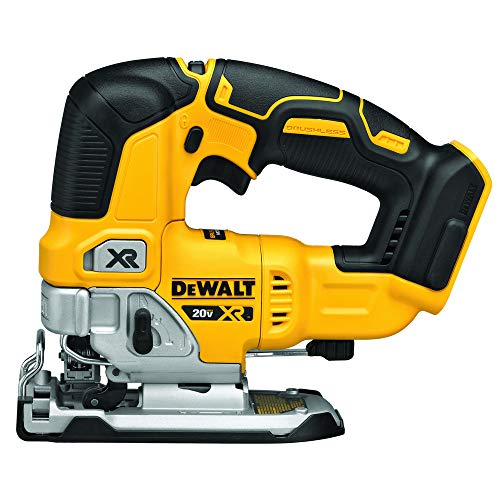
ASIN: B07JPFHQKG
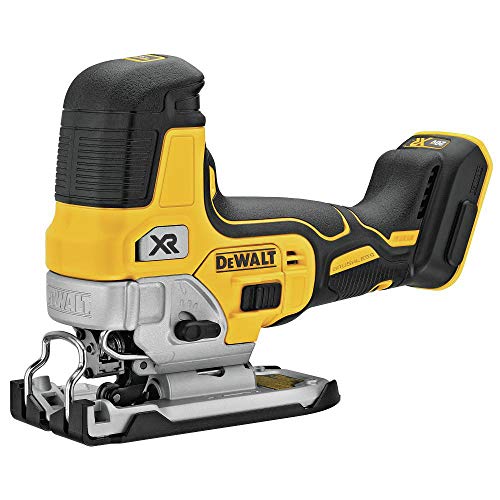
ASIN: B07KSS2BGF

ASIN: B078C5S3NC

ASIN: B07KGMR1J1
Certain content that appears on this site comes from Amazon. This content is provided “as is” and is subject to change or removal at any time. Product examples and images are supplied through Amazon Creators API; confirm specifications and availability on the current listing.
Table of contents
- What a cordless jigsaw does well
- Battery platform and runtime
- Blade compatibility and selection
- Orbital action and speed control
- Shoe, visibility, and cut control
- Materials and intended uses
- Setup and safe cutting
- Frequently asked questions
What a cordless jigsaw does well
A jigsaw’s narrow blade moves vertically through a kerf, and the tool is steered along a marked line. It can cut curves and shapes in sheet goods, boards, and other approved materials with a suitable blade. A starter hole lets the blade enter a panel for an interior opening. The tool is useful when the cut is too curved or irregular for a circular saw, but the finish depends on the blade, material support, speed, and how smoothly the user guides the shoe.
Cordless operation can be convenient for quick repairs, mobile work, and locations where an outlet or safe cord route is unavailable. The tool can be carried with the material and moved around a workpiece without a trailing extension cord. This portability may be especially helpful for trimming a panel in place or making a rough shape before sanding. It does not make a jigsaw suited to every job: long straight cuts are usually easier with a guide, track saw, or circular saw, while repeated precise curves may be better suited to a stationary scroll or band saw.
For a straight portable cut, see the site’s circular saw guide. For stationary intricate patterns, a scroll saw guide describes a different workflow. And for rough back-and-forth cuts in demolition or branches, a battery chainsaw guide covers an entirely different power tool and cut type. These tools should not be substituted casually for a jigsaw.
A jigsaw blade can bend under sideways pressure, especially when turning a tight curve or cutting thick stock. It may track at an angle even if the top line appears correct. A jigsaw is best when a shaped cut and manageable stock are more important than a perfectly square edge through thick material. If the underside edge must be clean or square, test a blade and technique on scrap and plan to refine the edge if needed.
Choose a battery platform for the way you work
Battery platform is one of the first decisions for a cordless tool. If you already own batteries and a charger, staying within a compatible tool family can lower the cost of adding a jigsaw and simplify charging. Compatibility is model-specific, however. Confirm the exact battery family, voltage designation, charger, and any manufacturer restrictions. Similar-looking packs or matching voltage labels do not guarantee they fit or are approved for each other’s tools.
Check whether the listing is for a bare tool or a kit. A bare-tool package may include the jigsaw and one blade but no battery or charger. A kit may include a battery, charger, case, and accessory blades, but the details vary. Compare the complete system cost and the battery capacity you plan to use. Do not assume the tool’s headline voltage predicts runtime or cutting ability.
Runtime and battery capacity
Actual runtime depends on the battery, blade sharpness, material, thickness, cut shape, orbital setting, speed, temperature, and how much time the motor spends cutting. A curved cut may require more steering and slower feed than an easy straight cut. A dense material or dull blade can use energy differently from thin softwood. Treat manufacturer runtime figures as configuration-specific information rather than a promise for every project.
If you make occasional cuts, one compatible battery may be enough. For extended work, consider a spare pack and a charging plan. A larger battery can add weight and change balance at the handle. Some users value longer intervals between charges, while others prefer a lighter setup for one-handed guidance over brief cuts. Try the tool with the battery installed if possible, and follow instructions for charging, cooling, storage, and temperature limits.
Battery health and storage matter too. Do not use a cracked, swollen, wet, or overheated pack. Store batteries as their maker directs, use only approved chargers, and keep contacts away from metal objects that can bridge them. A tool’s convenience depends on a reliable battery, so include battery replacement availability and service support in the buying checklist.
Motor design and control
Product listings may describe brushed or brushless motors, but the label alone does not decide which jigsaw is right. Compare the manufacturer’s intended uses, tool weight, control layout, battery compatibility, and included features. A brushless design can be marketed for efficiency, but runtime still varies with battery and load. Do not infer a guaranteed cut count or performance advantage without a direct, comparable test using the same material, blade, and setup.
Trigger placement can affect how easily you control speed while steering. Some models use a variable-speed trigger, a dial, or a combination. A dial can help set a maximum speed, while a trigger can respond to finger pressure; how those controls feel is personal. Try the grip if possible, and check whether you can hold the tool securely without accidentally changing a setting or obstructing the blade path.
Blade compatibility and selection
Before buying a jigsaw, confirm which blade shank it accepts. T-shank blades are common on modern jigsaws, while some tools or older models use U-shank systems. They are not interchangeable in every clamp. Bosch’s official jigsaw overview states that Bosch jigsaws use T-shank blades and do not support U-shank blades; this is an example of why compatibility must be checked for the specific tool, not a universal rule for all brands.
Blade fit is only the first question. The blade length, width, thickness, tooth geometry, and material rating influence what it can cut and how it behaves. A narrow blade can follow tighter curves, while a wider or thicker blade may track straighter in suitable stock. A fine-tooth blade may leave a smoother edge on some materials but cut more slowly. A coarser blade can remove material faster but may leave a rougher edge. Follow the blade maker’s guidance for the material and desired finish.
| Blade choice | Typical use | What to verify |
|---|---|---|
| Fine-tooth wood blade | Cleaner cuts in suitable wood, veneer, or laminate | Direction of cut and finish side; test on scrap. |
| Coarse wood blade | Faster curved or rough cuts in approved stock | Expect a rougher edge and manage tear-out. |
| Narrow scrolling blade | Tighter curves and intricate paths | Use only within the blade’s stock-thickness guidance. |
| Metal blade | Metal types and thicknesses listed by the blade maker | Use appropriate speed and secure the stock. |
| Specialty blade | Plastic, ceramic, or other materials when rated | Confirm tool, blade, and material instructions all permit it. |
Do not assume a blade designed for wood can safely cut metal, plastic, ceramic, fiber cement, or composite products. Materials may require different tooth geometry, speed, cooling, or dust controls. Identify the stock before cutting, check the blade packaging and manual, and use a dedicated tool if the intended application is not clearly supported.
Tooth direction and blade change
Most jigsaw blades cut on the upstroke, but specialized blade designs may cut on the downstroke or in another pattern. The direction affects tear-out and which face appears cleaner. Follow the blade label and tool manual, and test on an offcut from the same material. A down-cut blade may help protect a finished top face in some situations, but it can also behave differently during steering and may require a slower feed.
A tool-free blade clamp can make changes quicker, but the blade must still be inserted fully and locked. Disconnect the battery before changing a blade or clearing a jam. The blade and clamp can be hot after cutting; let them cool, or use the procedure in the manual. Check that the blade is straight, securely held, and has room to move through the shoe opening. Never use a bent, cracked, blunt, or incompatible blade.
Blade change systems vary. Some use a lever, a collar, or a clamp; others need a tool. Read the manual and practice with the battery removed before starting a project. Do not force the blade into a clamp that does not accept its shank. If it does not lock reliably, stop and confirm compatibility or seek service.
Blade length and cut depth
Blade length must exceed the material thickness by enough for the saw to complete its stroke and the tool’s manual to allow the operation. The saw’s published cutting capacity and bevel setting matter. A longer blade can flex more if it is pushed sideways; it is not a universal solution for thick stock. Check the maximum cut depth for wood and other materials listed for the exact model. Do not exceed those limits.
Orbital action and speed control
Many jigsaws offer orbital action, which adds a forward-and-back component to the blade’s up-and-down stroke. Straight cutting is generally the least aggressive setting; higher orbital settings move material more assertively and can speed suitable cuts in softer stock, often with a rougher finish. DEWALT’s official cordless jigsaw manual describes its orbital action as a more aggressive blade motion for soft materials such as wood or plastic and cautions against using that setting for metal or hardwoods on that model. Settings and permitted materials differ by tool, so consult the manual rather than copying a setting across brands.
Orbital action can be helpful for rougher cuts, but it is not a speed boost to use automatically. For tight curves, delicate veneers, or a clean visible edge, a lower or straight action may give more control. For a rough cut in an approved softer material, a more aggressive setting may be appropriate if the manual allows it. Make test cuts and inspect both faces before cutting the finished part.
Variable speed helps match blade movement to the material and cut. A faster stroke rate may suit some wood cuts; slower movement can be useful for materials or blades that need more control. Do not assume a particular speed number applies to every blade or stock. Follow the blade maker’s directions and use the saw’s settings conservatively until you understand how the tool behaves.
Base, shoe, and visibility
The shoe, or base plate, rides on the workpiece and supports the tool as the blade cuts. A flat, rigid shoe helps the blade stay square to the surface. The shoe may bevel for angled cuts; the lock should hold securely and the scale should be checked on scrap. Some saws include a removable no-mar cover to protect delicate surfaces, but the cover’s fit and condition matter. A loose or damaged shoe cover can catch on the work.
Consider how the shoe’s shape fits around the blade and whether the tool rests flat when starting and finishing a cut. A wider base may feel stable on a broad panel but be harder to position near an edge or in tight spaces. A shoe can be made of different materials and have different bevel mechanisms. Instead of assuming one material is superior, check for flatness, rigidity, secure locking, and replacement availability.
Visibility is central to following a curve. Check the line of sight from the normal grip position and whether the motor housing, battery, dust port, or your hand blocks the mark. A work light can help in a dim shop. A dust blower may clear chips from the line, while extraction can reduce airborne debris; neither guarantees a clear path. Choose the setting and accessories that allow you to see without leaning into an unsafe posture.
Some jigsaws have a dust port or blower that can be switched off for certain materials. Use an extractor hose only if it does not pull the tool or interfere with the cut. Dust from wood and engineered materials can be harmful, so use eye and respiratory protection appropriate to the material and workplace. Keep bystanders clear of chips and dust.
Materials and intended uses
Wood, plywood, and laminate
Wood is a common jigsaw material, but species, grain, thickness, and moisture can affect the cut. Plywood and veneer may splinter at the entry or exit face. Choose a blade suited to the panel, support the work, and test the blade direction on scrap. A fine-tooth blade, backing board, or other method recommended by the panel maker may reduce tear-out, but no single technique is reliable for every product.
Laminate and finished surfaces can scratch from the shoe or chip around the cut. Use a clean shoe and an approved non-marring cover if available. Mark the line on painter’s tape or use another method that will not damage the finish, and make a test cut. Do not let the shoe rock or tilt as the blade turns. A jigsaw can leave a slightly angled edge through thick stock, so check the underside and allow for sanding or trimming if the joint requires a square edge.
Metal and plastics
Some cordless jigsaws and blades can cut suitable metals or plastics, but compatibility depends on the exact saw, blade, thickness, and method. Secure thin metal to limit vibration and use a blade with the proper tooth geometry. For plastics, heat can soften the edge or clog the blade, so use settings and feed guidance from the material and blade makers. Do not cut an unknown plastic until you know its composition and safety requirements.
Metal and plastic cutting can create sharp chips, fumes, or dust. Wear suitable eye and respiratory protection, secure the material, and manage chips safely. Avoid flammable materials, hidden utilities, and contact with the blade after cutting because it may be hot. If the manufacturer does not list the material as an intended use, choose another tool.
Curved cuts and interior openings
For a curve, keep the shoe flat and turn the saw gradually along the line. A tight curve may require a narrow blade and a slower feed. Do not twist the tool sideways to force the blade around a corner; the blade can deflect or break. Relief cuts in the waste area can give the blade room to turn. For an interior opening, drill a starter hole large enough for the blade to pass, then disconnect power before inserting the blade and starting the cut.
For a smooth curve, focus on the line just ahead of the blade rather than steering by looking at the shoe edge. Move the tool at a pace that lets the blade clear chips. If you must push hard, the blade may be dull, unsuitable, or cutting too aggressively. Stop and inspect the setup. Practice on scrap with curves of varying radii before cutting a visible part.
A jigsaw can follow patterns, but it is handheld and the operator supports the tool. For repetitive decorative shapes, a stationary scroll saw may offer another workflow: see the site’s scroll saw guide. For straight breakdown cuts in panels, the track saw guide covers guide-rail cutting. Selecting the right tool can improve control and reduce the need to force a jigsaw into an unsuitable cut.
Bevel and flush cuts
Some jigsaws allow the shoe to tilt for bevel cuts. Verify the angle on scrap and check whether the blade length and shoe arrangement provide enough capacity at the chosen setting. A bevel cut can be harder to follow accurately because the blade may flex and the shoe has less contact area. For precise angles, consider a saw designed for repeated bevel cuts instead.
Flush-cut blades are intended for specific applications and may not work with every shoe or tool. Review the manual before removing or changing a shoe cover or guard. Do not cut blind behind a wall, floor, cabinet, or trim where hidden wiring and plumbing may be present. A flush blade can reach into tight spaces, but it also increases the risk of contacting unseen objects.
How a cordless jigsaw differs from similar tools
Do not confuse jigsaws with reciprocating saws. A reciprocating saw has a longer blade and is often selected for demolition, rough cuts, and pruning where finish is secondary. A jigsaw’s narrower blade and shoe are intended for guided curves and shapes through supported material. A reciprocating saw is not a substitute for a jigsaw when a controlled pattern matters.
A scroll saw is stationary and the operator moves the workpiece around a small vertical blade. A jigsaw is portable and the operator moves the tool. A band saw uses a continuous blade and may be useful for larger curved stock in a shop. Each type has different setup, limits, and safety requirements. For general straight cuts in boards and panels, see the circular saw guide; for hand pruning, a gardening hand-saw guide covers another distinct category.
Setup and safe cutting
Read the manual and install a blade compatible with both the saw and material. Remove the battery before changing a blade, adjusting the shoe, or inspecting a jam. Confirm that the blade is straight, fully seated, and secured. Check that the shoe locks at the intended angle and the guard is functioning. OSHA’s handheld saw guidance describes jigsaws as useful for intricate curves, while warning about blade contact and flying chips; it recommends appropriate guarding, sharp blades, slow turns, and narrow blades for tight curves.
Support and clamp the workpiece. The material should not shift, vibrate, or pinch the blade. Keep the area below the cut clear of hands, cables, and other objects. Mark the waste side of the line, check for hidden wiring, pipes, screws, or nails, and plan where the blade will emerge. The jigsaw shoe should sit flat before the motor starts. If the workpiece is too small to hold safely, use a fixture or choose a different method rather than placing fingers close to the blade.
Wear eye protection and hearing protection as appropriate; use respiratory protection suitable for the material. Tie back long hair, secure loose clothing, and remove jewelry that could catch. Keep the battery, corded tools, dust hose, and bystanders away from the blade path. Maintain a stable stance and keep both hands in safe positions. Do not cut above shoulder height or in a posture that prevents control.
Start the saw according to its manual, with the blade clear of the work if instructed. Let it reach the correct motion before entering the cut. Guide the saw at a steady pace without forcing it. When the cut is complete, release the trigger and wait for the blade to stop before lifting the tool or clearing the offcut. If the blade binds, the shoe tilts, or the tool jumps, release the trigger, wait, remove the battery, and investigate.
Reduce tear-out and wandering
Use a sharp blade suited to the material, keep the shoe flat, and support the work near the cut without trapping the offcut. A guide or template can help with long straight lines, but clamp it securely and confirm the shoe will not hit it. For a curve, practice a similar radius on scrap and reduce orbital action if the edge is too rough. Avoid oversteering; a jigsaw blade can bend while the top of the cut appears to follow the line.
If the cut wanders, check whether the blade is dull or too narrow for the stock, whether the feed is too fast, and whether the material is moving. Do not compensate by tilting the tool. Check the underside for angle and adjust the blade or technique on scrap. If the saw vibrates unusually or the blade repeatedly breaks, stop and inspect the clamp, blade, and work support.
Maintenance and storage
Remove the battery before cleaning. Brush or vacuum dust from the shoe, blade clamp, vents, and dust port as the manual permits. Keep the shoe surface clean so it slides without scratching the material. Check the blade clamp for wear and make sure the guard, shoe lock, trigger, and battery latch work. Do not use the tool if a safety component is damaged.
Inspect blades before and after use. Replace blades that are bent, cracked, dull, or missing teeth. Store them in packaging or a case organized by shank type and intended material. Keep the jigsaw in a dry place and protect the blade clamp and shoe from impact. Store batteries and chargers according to their maker’s directions, away from moisture, extreme heat, and metal objects that could bridge contacts.
Routine checks can prevent a poor cut from becoming a safety issue. Before each session, confirm battery charge, blade fit, shoe setting, guard operation, and workpiece support. For a cordless system, use an approved battery and charger and stop using a damaged pack. If the motor makes an unfamiliar sound, overheats, or sparks abnormally, stop and consult service support rather than continuing.
Research-based buying method
This draft does not claim hands-on testing. It compares cordless jigsaws by published manufacturer documentation and official safety information: battery compatibility and kit contents; blade shank system and blade-change method; variable-speed and orbital-action controls; shoe bevel and lock; visibility aids and dust options; stated material and cut capacities; and manual instructions for blade installation and safe operation. Bosch’s jigsaw overview provides official compatibility and material guidance for Bosch tools; DEWALT’s cordless jigsaw page and manual illustrate model-specific features and settings. OSHA’s handheld saw guidance informs the safety discussion.
These references are not universal endorsements. A feature available on one model may not be available on another, and orbital settings can have different recommendations. Check the exact product manual and the blade manufacturer’s instructions. Current prices, packages, and stock change by seller and region, so confirm the live listing for the product you select.
Frequently asked questions
What is the difference between a jigsaw and a reciprocating saw?
A jigsaw uses a shorter, narrow blade and a shoe that rides on the stock for shaped cuts and curves. A reciprocating saw uses a longer blade for rougher demolition or pruning cuts. The tools are not interchangeable when edge finish or a controlled pattern matters.
What battery should I use?
Use the battery family and capacity recommended for the exact model. Confirm whether the package is a bare tool or kit and whether your existing charger is compatible. Larger packs may add weight; runtime depends on the work, blade, and battery conditions.
Are T-shank and U-shank blades interchangeable?
Not necessarily. The saw’s clamp determines which shanks fit. Check the manual and buy blades that are explicitly compatible. Some manufacturers do not support one of the shank types on their jigsaws.
What does orbital action do?
Orbital action adds forward motion to the blade’s up-and-down stroke. It can make some cuts more aggressive, often with a rougher finish. Use only settings recommended for the material and model, and test on scrap.
Can a cordless jigsaw cut metal?
Some saws can cut certain metals with a suitable blade and setup, but capability depends on the model, blade, stock, and speed. Verify the manual and blade rating. Secure the material and use appropriate protection; do not assume every metal or thickness is supported.
How do I cut a circle or interior opening?
For a circle, mark the path and turn gradually with a blade suited to the radius. For an interior opening, drill an access hole in the waste, remove the battery, insert a compatible blade, and secure it before cutting. Confirm the underside is clear of hazards and keep the shoe stable.
Why does my cut angle away underneath?
The blade may be flexing because of feed pressure, a tight curve, unsuitable blade width, or stock thickness. A dull blade or unstable shoe can also contribute. Practice on scrap, slow down, and inspect the underside. Do not twist the saw to force the blade back to the line.
Can I use a jigsaw for straight cuts?
It can make short straight cuts, but long cuts may wander. A clamped guide can help if the shoe travels freely and the blade stays aligned. For long, accurate straight cuts, a circular saw or track saw is generally a better fit.
What should I do if the blade binds?
Release the trigger, keep the tool stable, and wait for the blade to stop. Remove the battery before inspecting the blade and stock. Check for a closing kerf, shifted workpiece, dull blade, or excessive feed. Never pull a running blade free.
How do I protect a finished surface?
Use a clean shoe and an approved no-mar cover if the model includes one. A suitable blade and a test cut can help reduce chipping. Keep dust and grit from collecting under the shoe because debris can scratch the finish.
Conclusion: match the battery saw to the shape and material
The best cordless jig saws combine a compatible battery system, secure blade clamp, useful speed and orbital controls, a stable shoe, and a clear view of the cut line. Blade choice and work support determine much of the result. Battery convenience is valuable when a cord would interfere, but the battery and charger add cost, weight, and runtime planning.
Before buying, confirm the blade shank, material ratings, cut capacity, kit contents, and manual instructions for orbital action and bevel adjustments. Start with a supported scrap piece, keep the shoe flat, and guide curves gradually without forcing the blade. For straight cuts, rough demolition, or stationary pattern work, choose the saw designed for that job. A jigsaw is most useful when its portability and narrow blade solve a specific curved-cut problem safely.