Best Drill for Hole Saws
The best drill for a hole saw is the drill that can run the specific cutter at the manufacturer’s recommended speed while giving you enough control to resist a bind. A hole saw removes a ring of material rather than drilling away the whole center, so its teeth can grab abruptly if the cutter tilts, binds, or breaks through. The larger the cup and the tougher the material, the more important speed selection, a secure chuck, a side handle, and workpiece support become.
For many small and medium holes in wood or thin materials, a quality 1/2-inch drill/driver with two speed ranges, a robust chuck, and a side handle can be a practical choice. Larger hole saws, repeated cuts, or tougher materials may call for a higher-capacity drill, a right-angle drill, or a drill press or magnetic drill designed for the work. The hole saw’s arbor must fit the drill, and the drill must be rated for the cutter and material. Physical fit alone does not establish compatibility.
This guide focuses on choosing and setting up the drill that drives a hole saw. It does not repeat the full cutter-selection topics in our wood hole saw guide or metal hole saw guide. It explains chuck size, speed and torque, corded versus cordless power, side handles, support, and when a drill is the wrong machine. It also distinguishes hole saws from other powered cutting tools such as the oscillating multi-tool.
Affiliate disclosure: DailyHomeDecorating.com may earn a commission from qualifying purchases made through links. This does not affect the recommendations or the price you pay. Drill and hole-saw capacities vary by model; confirm the exact product manuals and current package details before buying or using them.
Amazon product examples to compare

ASIN: B00002233E
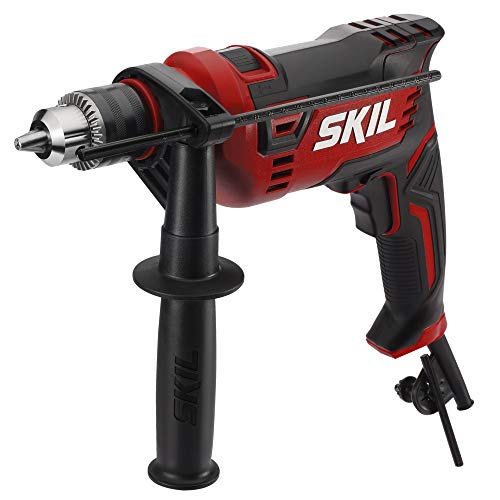
ASIN: B086D1MDPD

ASIN: B08433C5J4

ASIN: B0GNB4XT2G
Certain content that appears on this site comes from Amazon. This content is provided “as is” and is subject to change or removal at any time. Product examples and images are supplied through Amazon Creators API; confirm specifications and availability on the current listing.
Quick answer: what should you look for?
Start with the hole saw’s diameter, material, and manufacturer speed chart. Choose a drill with a chuck and arbor interface that match, a low-speed gear suitable for the cutter, enough control to maintain steady pressure, and a side handle when required or provided. For large cutters, tough materials, repeated work, or locations where a drill can bind, prefer a drill with an auxiliary handle and an anti-kickback or clutch system designed for that application. If the maker’s capacity chart calls for a drill press, right-angle drill, or magnetic drill, follow that recommendation instead of forcing a handheld drill to do the job.
Do not select only by peak torque or battery voltage. Published torque figures do not tell you whether a drill will safely run a given hole saw at the correct speed, nor how much reaction force you can control. The best combination is a compatible drill, arbor, pilot bit, cup, material, and secure setup.
Why drill choice matters with a hole saw
A hole saw has a circular rim of teeth or abrasive cutting material and a central pilot bit. The arbor transfers rotation from the drill to the cup. The pilot helps start and center the cut, but the cup’s rim does most of the work. As the cutter engages, the drill must provide rotation at a speed appropriate to the cutter and material while the operator holds the drill aligned.
If the cup catches or tilts, the drill body can rotate suddenly in the operator’s hands. OSHA’s electrical-contractor guidance warns that hole saws and drill bits can bind while spinning and produce strong kickback that can injure wrists, elbows, and shoulders. It recommends appropriate control features, torque bars, and not forcing the bit. This is why a side handle and supported workpiece are essential considerations for larger hole saws.
Drill requirements change with cutter diameter, material, stock thickness, tooth type, and whether the work is horizontal, vertical, or overhead. A small wood cup and a large metal hole saw do not necessarily need the same drill. A saw’s maximum rated diameter is only a starting point; use the cutter and drill manufacturers’ operating charts for the exact combination.
Drill types for hole saws
Standard drill/driver
A 1/2-inch drill/driver with a low-speed/high-torque gear can suit many small and medium hole saws, especially in wood, plastic, or other materials allowed by the cutter maker. The 1/2-inch chuck generally accepts larger shanks than a 3/8-inch chuck, but check the actual arbor shank diameter and drill manual. A robust ratcheting chuck helps hold a round or hex shank securely when installed as instructed.
Look for a drill with a side handle and speed control appropriate to the work. Many compact drill/drivers are designed for a broad range of fastening and drilling tasks, but not every model is rated for large hole saws or heavy continuous cutting. Check the manual’s hole-saw capacity, gear, and recommended materials. If no capacity is given, contact the manufacturer or choose a drill that explicitly supports the intended cutter.
Hammer drill/driver
A hammer drill/driver can often be used as an ordinary drill when hammer action is switched off. For a hole saw, hammer mode is normally not the cutting action wanted; impacts can damage teeth, the workpiece, or the arbor. Confirm the manual’s instructions and select drill-only mode. A hammer drill’s extra mechanism does not automatically make it a better hole-saw drill. What matters is rated capacity, low-speed control, chuck retention, and handles.
Right-angle drill
A right-angle drill is designed for drilling in confined spaces such as between studs or joists. Some models are made for large hole-boring work and include a long auxiliary handle or torque bar. Their body geometry can provide a longer lever arm that helps control reaction torque, though the exact operating position still matters. A right-angle drill may be a suitable choice when a standard drill cannot fit or when the application calls for a purpose-built hole-boring tool.
Do not confuse a compact right-angle drill for cabinet installation with a high-torque hole-boring drill. Check the product’s capacity for the hole saw and material. A short side handle, handle extension, or torque bar should be used only if the manufacturer approves it for that drill.
Corded drill
A corded drill can provide sustained power without battery changes and may suit stationary or repeated hole-making. Select a model with the needed speed range and auxiliary handle. Route the cord away from the cutter and workpiece; keep it clear of sharp edges, chips, and areas where the drill could rotate. Use only extension cords and power sources allowed by the manual. A corded drill can still bind and kick back, and continuous power does not replace speed control or safe support.
Impact driver
An impact driver is generally not the default drive for a toothed hole saw. Its impact mechanism and hex collet are designed for different accessory types and can deliver sudden impulses that are unsuitable for some arbors and cutters. Some specialized accessories may be approved for an impact driver; unless the hole-saw and tool manufacturers explicitly permit that exact combination, use a drill with a compatible chuck and controlled rotation.
Chuck size, arbor, and compatibility
Chuck capacity
Drill chucks commonly have a stated maximum shank capacity, such as 3/8 inch or 1/2 inch. This refers to the shank the chuck can hold, not the diameter of hole saw the drill can safely drive. A small arbor can fit a chuck even if the drill lacks capacity or torque control for the cup. Conversely, a large hole saw may use an arbor whose shank fits the chuck but still exceeds the tool’s rated use.
Compare the arbor shank with the chuck and check that the drill’s chuck is in good condition. A keyless chuck should be tightened as the manual directs, and a keyed chuck should use the correct key and tightening procedure. Keep the arbor fully seated and centered. A loose or off-center arbor can cause vibration, poor tracking, or sudden release.
Arbor interface and pilot bit
Hole saw systems use different threads, quick-change connections, adapters, pilot bits, and arbor lengths. Ensure the arbor matches the cup and is rated for its diameter. Check the pilot bit type and length, and confirm that it is intended for the material and drill speed. Do not stack improvised adapters or use a shank reducer unless the manufacturers approve the combination. The entire assembly must be compatible, not merely the cup and drill.
Some arbor systems have a clutch, quick-change mechanism, or pilot release that must be seated and locked before use. Follow the exact instructions. Inspect threads and locking components for wear. If a mandrel is bent, a pilot is damaged, or a cup wobbles, stop using it and replace the part.
Use the cutter manufacturer’s chart
Hole-saw makers publish speed guidance by diameter and material. The chart can differ for mild steel, stainless steel, aluminum, wood, plastic, or other stock. A larger cup generally calls for lower rotational speed, but do not rely on a universal rule when the manufacturer provides an exact chart. DeWALT and Milwaukee product documentation lists material-specific hole-saw capacities and speed recommendations for particular product lines. Those values apply to those products, not all cutters or drills.
Speed, torque, and control
Two-speed gearbox
A two-speed drill lets the user choose a lower-speed, higher-torque gear or a higher-speed gear. Large hole saws often need a lower speed than small ones, but the correct setting depends on the material and cup. Read the chart and confirm the drill’s low-speed range covers the cutter’s recommendation. Avoid changing gears while the tool is running or loaded; follow the manual.
Some drills have a variable-speed trigger. This gives additional control during engagement and can help avoid a sudden start, but it does not replace selecting the proper gear or following the hole-saw speed chart. A drill that is held halfway on the trigger throughout a long cut may overheat or operate outside an efficient range. Use the tool’s intended speed-selection method.
Torque ratings do not tell the whole story
Manufacturers may publish torque figures measured under specific conditions. Different models and brands may use different test methods, so comparing the numbers directly can mislead. A high torque rating does not mean the operator can safely hold a drill when a cutter catches. Assess the drill’s anti-kickback feature, clutch behavior, side handle, grip, gear range, and use rating. Also consider work position and whether the workpiece is secure.
Some drill clutches are intended primarily for driving fasteners and may not be designed to disengage smoothly with a hole saw. Do not rely on a clutch as a substitute for a two-handed grip or a rated anti-kickback function. Follow the exact drill manual about clutch settings and large-hole operations. If a tool’s operation is unclear, select one whose manufacturer explicitly describes the application.
Material and cutter diameter affect speed
A cup that is appropriate for thin wood panels may be too large or too fast for steel. Harder materials generally need compatible teeth, lower speed, and sometimes cutting fluid. Some hole saws use abrasive grit or carbide teeth rather than conventional bi-metal teeth. These products can have different operating instructions. Never use the same speed assumption across every cup and material.
As a cut progresses, chips must clear the kerf. If chips pack into the cup, the cutter can bind, heat, or slow. Use the maker’s recommended feed and chip-clearing method. Do not force the drill or twist it to remove a stuck plug while powered. Stop, disconnect, and follow the manual for clearing or removing the cutter.
Side handles and kickback control
For larger hole saws, an auxiliary side handle is a key feature. It gives the second hand a position to resist rotation and helps keep the drill aligned. Check whether the handle is included, where it attaches, and whether it can be positioned for the work. A drill with no auxiliary handle may be inappropriate for large or high-reaction-torque applications even if its chuck accepts the arbor.
Anti-kickback or anti-rotation electronics can reduce the severity of some bind-up events, but they do not eliminate kickback. Milwaukee’s current M18 FUEL 1/2-inch drill/driver product page describes an AutoStop control mode intended to protect against over-rotation during bind-up and lists a side handle in the box. These features are examples to compare, not a guarantee of safety or a recommendation for every cutter. Read the specific drill manual and use the side handle whenever provided or required.
OSHA’s drilling safety guidance notes that hole saws and bits can bind and create strong kickback, and discusses torque bars, tools with kickback clutches, and not forcing the bit. Keep your body positioned so you can resist rotation without being pinned between the drill handle and a wall or post. Do not put your face or torso directly behind the drill’s possible rotation path.
Corded or cordless
Cordless drills
Cordless drills are convenient for installation work, overhead cuts, and locations without power. Battery runtime depends on the hole saw, material, speed, feed pressure, battery capacity, and tool condition. Large cutters in dense material can drain a battery quickly. A brushless motor or high-capacity battery may improve runtime in some applications, but compare the exact tool and do not assume that marketing language guarantees a number of holes per charge.
Consider the weight of the drill with the battery installed. A heavy setup can be tiring on walls or overhead. If using a cordless drill for large hole saws, prioritize side-handle control, low-speed range, and kickback protection. Check whether the battery is included; bare-tool listings can appear less expensive but require an existing platform.
Corded drills
Corded drills can suit a stationary workbench or continuous production. Look for variable speed, appropriate low-speed operation, a side handle, and a rated capacity for the application. Route the cord to avoid the cutting zone and never allow it to wrap around the work. A corded tool can be harder to control in tight spaces, especially if its body is large or the operator is off balance.
Pick based on the real workload
Choose cordless when mobility matters and the drill platform has enough capacity for the cutter. Choose corded when the work is stationary and continuous use matters. Choose a specialty hole-boring drill if the hole saw diameter, stock, and application exceed the range of an ordinary drill/driver. A product that is portable is not automatically suitable for every hole size.
When to use a drill press or magnetic drill
A drill press can provide controlled alignment for workpieces that fit its table and capacity. It can be useful for repeated holes in flat, securely clamped stock. It does not automatically make a large hole saw safe: the machine, arbor, chuck, speed, guard, and workpiece fixture must all be suitable. The workpiece must be clamped so it cannot spin. Do not hold stock by hand under a hole saw.
A magnetic drill is designed for certain metalworking applications on ferrous surfaces and uses its own mounting and safety requirements. It may be appropriate for large holes in structural steel where a hand drill is unsuitable. Confirm the machine, cutter, material, magnetic base, and electrical supply are all approved for the task. Do not use it on a surface where the base cannot hold securely or on non-ferrous material unless the manufacturer provides an approved alternative.
Some tasks are better assigned to a shop or contractor. If the hole is very large, the material is thick, access is awkward, or a bind could cause severe injury, use a machine or setup intended for the work rather than stretching a household drill beyond its manual rating.
Buying framework: match drill to cutter and task
- Identify the material. Wood, metal, plastic, drywall, tile, and composites need different hole saws and may call for different speeds.
- Find the cutter diameter and speed chart. Use the hole-saw maker’s guidance for that specific cup and stock.
- Check the full assembly. Match cup, arbor, pilot bit, shank, and chuck, and confirm the drill is rated for the application.
- Choose a speed range. Make sure the drill’s low and variable speeds can run the cup as directed without relying on an improvised trigger technique.
- Assess torque control. Look for a side handle, anti-rotation or kickback feature, suitable grip, and body shape you can control.
- Choose power source. Compare cord routing, battery weight, platform cost, and runtime needs.
- Plan workholding. Make sure the stock can be clamped or supported safely and cannot rotate or fall.
- Budget for accessories. Include the arbor, pilot bits, handle, batteries, charger, cutting fluid where specified, and dust control.
- Read both manuals. The drill manual governs the tool; the hole-saw manual governs the cutter and recommended speeds.
- Practice first. Test the setup on scrap of the same material before cutting finished work.
Safe setup and operation
Read the drill, arbor, and hole-saw manuals before use. Mark the center and confirm both sides of the material are clear. Locate hidden wiring, plumbing, and other obstructions before cutting a wall or structural component. Secure the workpiece in a vise or with clamps. Do not hold a loose board, sheet, pipe, or metal part by hand while operating a hole saw.
Install the correct arbor and cup with the drill disconnected from power or with the battery removed. Tighten the chuck as directed. Set the drill to the recommended gear, speed, and operating mode. Turn hammer action off unless a manufacturer specifically states that a specialized hole saw system requires it. Position the side handle to give a stable two-handed grip. Wear eye protection and any material-specific protective equipment. For metal, follow guidance on sharp chips and cutting fluid; for masonry or materials that create hazardous dust, follow the tool and material safety instructions.
Start the cut as the manufacturers instruct and apply steady pressure without forcing the cutter. Keep the drill aligned with the hole axis. If the cutter binds, release the trigger and maintain control; do not twist the tool violently or pull a spinning cutter sideways. Wait for rotation to stop before clearing chips or removing the plug. Do not touch the cup immediately after cutting; it may be hot. Inspect the hole and shaft before continuing.
For large hole saws, especially in metal or dense wood, plan for reaction torque. Keep the drill’s side handle installed and use the posture described in the manual. If you cannot comfortably control the drill with both hands while maintaining balance, stop and choose a more suitable machine or have the work performed by a qualified operator.
Common compatibility mistakes
Buying for chuck size alone
A 1/2-inch chuck does not prove the drill can safely drive a 4-inch hole saw. Capacity charts, speed, handles, and material all matter. Verify the specific cutter and drill combination.
Using high speed for a large cup
Hole saw speed requirements vary by diameter and material. A large cutter run too fast can overheat, grab, or damage teeth. Use the cutter maker’s chart and the drill’s gear range.
Relying on a fastening clutch
A torque collar designed for screws may not control a hole saw bind-up in a predictable way. Do not treat it as an anti-kickback system unless the manufacturer explicitly says it is designed for that application.
Using an impact driver by default
Impact drivers are not the general-purpose drive for hole saw arbors. Use them only when the exact accessory and tool makers approve the combination.
Leaving hammer mode on
Hammering is not normally the cutting action for toothed hole saws. Check the manual and select drill mode unless the manufacturer specifies otherwise.
Holding the work by hand
A hole saw can catch and spin a workpiece. Clamp it in an appropriate fixture and support long stock. Keep hands away from the cup and pilot bit.
How this guide was prepared
This is a research-based drill-selection guide, not a hands-on test. It draws on OSHA’s drilling and torque-control guidance, Milwaukee’s official M18 FUEL 1/2-inch drill/driver product information, the official M18 FUEL SUPER HAWG drill page, and manufacturer hole-saw guidance such as Milwaukee’s material-specific speed and compatibility information. These examples show how drills and cutters document capacity, handles, and speed; they do not establish a universal best drill or guarantee safety for every setup.
No current price, hands-on performance result, or unsupported product ranking is claimed. Confirm the exact drill’s manual, hole-saw diameter limit, material, chuck, speed range, side-handle requirement, battery or cord setup, and accessories. Confirm the hole-saw maker’s speed chart, arbor rating, pilot bit, and material approval. If the manufacturers do not document the combination, do not assume it is compatible.
Frequently asked questions
What kind of drill is best for a hole saw?
A suitable drill/driver with a compatible chuck, low-speed gear, variable-speed control, and side handle can work for many small and medium cutters. Large or demanding hole saws may require a dedicated hole-boring drill, drill press, or magnetic drill. Follow the drill and cutter manuals.
Do I need a 1/2-inch drill for hole saws?
Not for every hole saw. The arbor shank must fit the chuck, but chuck size alone does not establish capacity. A 1/2-inch chuck can accept larger shanks, while the drill may still be undersized for the cup. Verify the rated capacity for the exact drill, cutter, and material.
Should I use high or low speed with a hole saw?
Use the hole-saw manufacturer’s speed chart for the diameter and material. Larger cups commonly require lower speeds than smaller ones, but the exact setting varies. Do not guess when the manufacturer publishes a chart.
Can I use a hammer drill with a hole saw?
Often the hammer mechanism can be switched off and the tool used in drill-only mode, but confirm the model’s manual and capacity. Hammer mode is not normally the cutting action for toothed hole saws unless the manufacturer specifies a specialized system.
Is an impact driver suitable for hole saws?
Not as a default. Use an impact driver only if both the tool and hole-saw accessory manufacturers explicitly approve the exact arbor and cutter. A conventional drill with a compatible chuck and speed control is typically the intended drive.
Why does a hole saw grab the drill?
The cup may bind if it tilts, teeth catch, chips pack into the cut, the workpiece shifts, or the cutter reaches an unsupported edge. A bind can create strong reaction torque. Secure the stock, select the right speed, use the side handle, and do not force the cut.
Do I need a side handle?
For larger cutters or higher-torque work, a side handle gives a second point of control and may be required by the drill manual. Use it whenever supplied or directed. It does not eliminate the need to secure the stock and maintain a stable stance.
Can a cordless drill run a hole saw?
Some cordless drills are rated for hole-saw work. Capacity and runtime depend on the tool, battery, cutter, material, and hole size. Check the manual and compare the drill with the cutter chart. Do not infer capability from voltage alone.
When should I use a drill press instead?
A drill press may suit repeated or accurately aligned holes in workpieces that fit its table and capacity. The workpiece must be clamped securely, and the press, arbor, speed, and guard must be suitable for the cutter. A drill press is not automatically safe for every hole saw.
Does this guide replace the hole saw guide?
No. This article focuses on the drill and drive setup. The wood and metal hole-saw guides cover cutter material, tooth design, diameter, depth, arbor, and workpiece-specific choices.
Final reminder: choose the drill only after matching the hole saw, arbor, pilot bit, material, and recommended speed. Use an auxiliary handle for high-reaction-torque work, secure the stock, and stop if the cutter binds. If you cannot verify the combination in the manufacturers’ instructions, choose a documented setup or have a qualified shop make the hole.