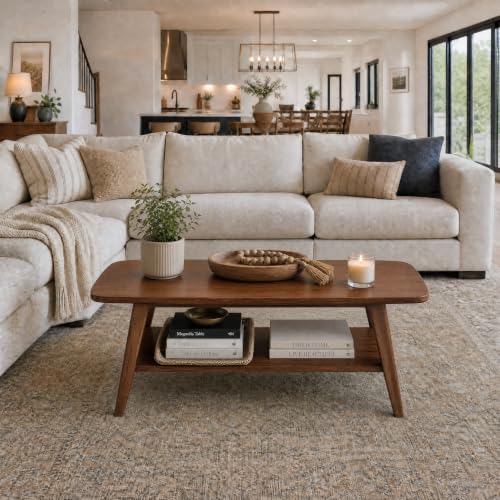
Where to buy
Check the latest price, availability and delivery on Amazon. Orders are placed on Amazon. We may earn a commission from qualifying purchases.
- Best solid-oak family build: Wayshome 100% Solid Oak Wood Coffee Table, 2-Tier — Check on Amazon
- Pajiasen 51-Inch Mid-Century Lift-Top Coffee Table with Storage — Check on Amazon
- Kate and Laurel Eastmont Rectangle Wood Coffee Table — Check on Amazon
- Modway Holloway 30-Inch Round Mango Wood Coffee Table — Check on Amazon
- Nathan James Uchu 2-Piece Nesting Coffee Table Set — Check on Amazon
- Homary 43-Inch Japandi Oval Travertine Stone Top Coffee Table — Check on Amazon
Read the full guide ↓
Disclosure: As an Amazon Associate, dailyhomedecorating.com earns from qualifying purchases. Links to Amazon on this page are affiliate links; they cost you nothing extra. Listing details such as price and availability change often, so check the current Amazon listing before you buy.
Searching for the best coffee table for families under $2000 usually starts with a photograph and ends with a tape measure, and that order is exactly backwards. A coffee table is the most touched, most looked-at and most collided-with piece of furniture in the living room, and at a premium budget the cost of choosing badly is not just money — it is years of living around a table that is slightly too big, slightly too low, or finished in a material that cannot survive your household. This guide reverses the process: proportions and use first, materials second, looks third, and only then the shortlist.
Family use is a stress test no showroom simulates: toddlers pull themselves up on the edge, school-age children do homework and board games on the top, drinks get knocked, feet go up during films, and the surface becomes the default landing zone for everything the household owns. So this lens ranks corners, stability, cleanability and storage ahead of pure looks — a beautiful table that wobbles, stains or offers nowhere to hide the clutter will be resented within a month, however much it cost.
The six tables below were chosen for households with children, games, snacks and everyday clutter. They are deliberately different from one another — rectangular and round, solid wood and stone, fixed and lift-top, single and nesting — because the right answer at this budget is never a single table; it is the table whose shape, material and storage match your sofa, your floor plan and your habits. Prices are never printed in this guide because premium listings change with finish and configuration; check price on Amazon for the exact variant you want, and judge value on construction, not on a number captured on one day.
Think about proportion in the context of families use, not in the abstract. A specification only matters when it changes what happens on an ordinary evening: whether a mug sits safely, whether knees fit, whether the surface survives the week without a new mark, and whether the table still looks intentional once real objects — remotes, books, chargers, a half-finished puzzle — have landed on it. There is also a time dimension to proportion. New furniture always looks good in week one. The differences that justify spending more show up in month six: hinges that still move smoothly, feet that still grip, a finish that has absorbed daily contact without turning cloudy, and edges that have met shins, vacuum cleaners and toy traffic without chipping into something shabby. Finally, weigh proportion against the room you have, not the room in the listing photograph. Measure your sofa’s seat height and length, the gap you actually leave for walking through, and where feet, baskets and floor cushions already live. Ten minutes with a tape measure and some painter’s tape on the floor will tell you more than any product gallery can.
In this guide
Quick picks: the best coffee table for families under $2000 at a glance
| Pick | Best for | Key specification | Watch out for |
|---|---|---|---|
| Wayshome Oak | Best solid-oak family build | Solid FAS-grade oak throughout, lower storage shelf, rounded corners, listed maximum weight recommendation just under 300 lb | Solid oak is heavy and shows ring marks without coasters |
| Pajiasen Lift-Top | Best lift-top storage | 51.1-inch lift top, hidden storage compartment, four drawers in the listing configuration, 108.3 lb item weight | At over 100 lb it is a two-person move once assembled |
| Eastmont | Best all-round rectangle | 46-inch rectangular top, tapered legs, adjustable feet for uneven floors, walnut-brown finish | Finish is a walnut tone over wood — confirm the exact material breakdown on the listing |
| Holloway | Best round drum design | 30-inch round solid mango wood top, enclosed drum base, smooth circular silhouette | Closed drum base means no under-table storage or leg room |
| Uchu Nesting Set | Best flexible nesting pair | Two round nesting tables, large table 32-inch diameter, 60 lb capacity per tabletop, smaller table tucks underneath | Mixed materials — not a solid-wood-throughout build |
| Homary Japandi | Best stone statement piece | 43-inch oval natural travertine top, double-pedestal base, 150 lb capacity, tool-free setup in about 15 minutes | Natural stone needs coasters and pH-neutral cleaning |
Read the table as a routing tool, not a ranking of worth. Think about the shortlist in the context of families use, not in the abstract. A specification only matters when it changes what happens on an ordinary evening: whether a mug sits safely, whether knees fit, whether the surface survives the week without a new mark, and whether the table still looks intentional once real objects — remotes, books, chargers, a half-finished puzzle — have landed on it. There is also a time dimension to the shortlist. New furniture always looks good in week one. The differences that justify spending more show up in month six: hinges that still move smoothly, feet that still grip, a finish that has absorbed daily contact without turning cloudy, and edges that have met shins, vacuum cleaners and toy traffic without chipping into something shabby.
How the picks were chosen
Every candidate had to clear the same gates. First, identity: the exact model, dimensions and materials had to be verifiable from the manufacturer’s listing or a reputable retailer — no generic marketplace descriptions, no borrowed specifications from a similarly named table. Second, budget honesty: the table had to sit plausibly within the under-$2000 frame in its standard configuration, verified at research time, with the understanding that you should check price on Amazon before buying because finishes and sizes shift the total. Third, construction: at this level we looked for real material — solid wood, genuine stone, or honestly described engineered construction — and marked down anything dressing a printed finish up as the real thing without saying so.
Fourth, the families test described in the introduction was applied as a filter, not a garnish: candidates that failed it were dropped even when they photographed beautifully. Fifth, safety and recall screening: any model with a current safety recall was excluded outright. Finally, we favoured tables with a clear, single job — the best rectangle, the best drum, the best storage build — over jacks of all trades, because a focused design is what survives years of use. Think about verification in the context of families use, not in the abstract. A specification only matters when it changes what happens on an ordinary evening: whether a mug sits safely, whether knees fit, whether the surface survives the week without a new mark, and whether the table still looks intentional once real objects — remotes, books, chargers, a half-finished puzzle — have landed on it. There is also a time dimension to verification. New furniture always looks good in week one. The differences that justify spending more show up in month six: hinges that still move smoothly, feet that still grip, a finish that has absorbed daily contact without turning cloudy, and edges that have met shins, vacuum cleaners and toy traffic without chipping into something shabby.
The best coffee table for families under $2000 options, reviewed in detail
Wayshome Oak — Best solid-oak family build
Who it suits: households that value solid timber, a lower shelf, and edges designed with real life in mind for families use. The headline facts are Solid FAS-grade oak throughout, lower storage shelf, rounded corners, listed maximum weight recommendation just under 300 lb. In overall size it measures 39.37 x 19.68 x 17.32 inches, built from 100% North American FAS-grade solid oak, two tiers, rounded corners.
In daily use, the Wayshome Oak earns its place through behaviour rather than brochure claims. Set it at the standard gap from the sofa — about eighteen inches — and it lands in the natural reach zone for drinks and books without forcing anyone to shuffle forward. The surface takes the ordinary load of a living room (trays, laptops, feet during a film, a stack of hardbacks) with the steadiness you are paying for at this level, and the silhouette stays calm once the room’s real objects accumulate on it. Think about this design in the context of families use, not in the abstract. A specification only matters when it changes what happens on an ordinary evening: whether a mug sits safely, whether knees fit, whether the surface survives the week without a new mark, and whether the table still looks intentional once real objects — remotes, books, chargers, a half-finished puzzle — have landed on it. There is also a time dimension to this design. New furniture always looks good in week one. The differences that justify spending more show up in month six: hinges that still move smoothly, feet that still grip, a finish that has absorbed daily contact without turning cloudy, and edges that have met shins, vacuum cleaners and toy traffic without chipping into something shabby.
Pros
- Solid FAS-grade oak throughout, not a veneer over board
- Rounded corners are kinder to shins, hips and small children
- Lower shelf doubles usable storage without visual bulk
Honest limitation: Solid oak is dense and heavy for its size, and like all real timber it will record a ring if hot or wet items sit on it unprotected.
Choose it if its best-for job matches your room’s main job; skip it if the limitation above touches something you do every day — a limitation you meet weekly becomes the reason a premium table gets replaced. When you are ready, view the Wayshome Oak on Amazon to confirm the current configuration, then Check on Amazon for the live listing, and you can also see it here in the finish you are considering.
Pajiasen Lift-Top — Best lift-top storage
Who it suits: people who work, dine and store from the sofa and need the table to do three jobs for families use. The headline facts are 51.1-inch lift top, hidden storage compartment, four drawers in the listing configuration, 108.3 lb item weight. In overall size it measures 51.1 x 27.5 x 18.9 inches, built from Wood top with walnut finish, fluted/grooved detailing, hidden compartment plus drawers.
In daily use, the Pajiasen Lift-Top earns its place through behaviour rather than brochure claims. Set it at the standard gap from the sofa — about eighteen inches — and it lands in the natural reach zone for drinks and books without forcing anyone to shuffle forward. The surface takes the ordinary load of a living room (trays, laptops, feet during a film, a stack of hardbacks) with the steadiness you are paying for at this level, and the silhouette stays calm once the room’s real objects accumulate on it. Think about this design in the context of families use, not in the abstract. A specification only matters when it changes what happens on an ordinary evening: whether a mug sits safely, whether knees fit, whether the surface survives the week without a new mark, and whether the table still looks intentional once real objects — remotes, books, chargers, a half-finished puzzle — have landed on it. There is also a time dimension to this design. New furniture always looks good in week one. The differences that justify spending more show up in month six: hinges that still move smoothly, feet that still grip, a finish that has absorbed daily contact without turning cloudy, and edges that have met shins, vacuum cleaners and toy traffic without chipping into something shabby.
Pros
- Lift top brings work and dining to sofa height on demand
- Hidden compartment plus drawers swallow remotes, games and chargers
- Large 51-inch top hosts board games and serving trays easily
Honest limitation: At 108.3 lb before you fill the drawers, this is the hardest pick here to move, reposition or take to another home.
Choose it if its best-for job matches your room’s main job; skip it if the limitation above touches something you do every day — a limitation you meet weekly becomes the reason a premium table gets replaced. When you are ready, view the Pajiasen Lift-Top on Amazon to confirm the current configuration, then Check on Amazon for the live listing, and you can also see it here in the finish you are considering.
Eastmont — Best all-round rectangle
Who it suits: living rooms built around a three-seat sofa that need a classic rectangular anchor for families use. The headline facts are 46-inch rectangular top, tapered legs, adjustable feet for uneven floors, walnut-brown finish. In overall size it measures 46 x 22 x 17 inches, built from Wood with walnut-brown finish, tapered legs, adjustable feet.
In daily use, the Eastmont earns its place through behaviour rather than brochure claims. Set it at the standard gap from the sofa — about eighteen inches — and it lands in the natural reach zone for drinks and books without forcing anyone to shuffle forward. The surface takes the ordinary load of a living room (trays, laptops, feet during a film, a stack of hardbacks) with the steadiness you are paying for at this level, and the silhouette stays calm once the room’s real objects accumulate on it. Think about this design in the context of families use, not in the abstract. A specification only matters when it changes what happens on an ordinary evening: whether a mug sits safely, whether knees fit, whether the surface survives the week without a new mark, and whether the table still looks intentional once real objects — remotes, books, chargers, a half-finished puzzle — have landed on it. There is also a time dimension to this design. New furniture always looks good in week one. The differences that justify spending more show up in month six: hinges that still move smoothly, feet that still grip, a finish that has absorbed daily contact without turning cloudy, and edges that have met shins, vacuum cleaners and toy traffic without chipping into something shabby.
Pros
- Full-size 46-inch top suits a standard three-seat sofa proportion
- Adjustable feet solve the wobble that older floors cause
- Tapered-leg silhouette mixes with both traditional and modern seating
Honest limitation: The walnut-brown finish is a tone on wood rather than solid walnut timber, so set expectations on material, and confirm the current listing description before ordering.
Choose it if its best-for job matches your room’s main job; skip it if the limitation above touches something you do every day — a limitation you meet weekly becomes the reason a premium table gets replaced. When you are ready, view the Eastmont on Amazon to confirm the current configuration, then Check on Amazon for the live listing, and you can also see it here in the finish you are considering.
Holloway — Best round drum design
Who it suits: seating arranged in a curve or square grouping, and anyone who prefers a sculptural closed form for families use. The headline facts are 30-inch round solid mango wood top, enclosed drum base, smooth circular silhouette. In overall size it measures 30-inch diameter drum, built from Kiln-dried solid mango wood, drum base, walnut finish.
In daily use, the Holloway earns its place through behaviour rather than brochure claims. Set it at the standard gap from the sofa — about eighteen inches — and it lands in the natural reach zone for drinks and books without forcing anyone to shuffle forward. The surface takes the ordinary load of a living room (trays, laptops, feet during a film, a stack of hardbacks) with the steadiness you are paying for at this level, and the silhouette stays calm once the room’s real objects accumulate on it. Think about this design in the context of families use, not in the abstract. A specification only matters when it changes what happens on an ordinary evening: whether a mug sits safely, whether knees fit, whether the surface survives the week without a new mark, and whether the table still looks intentional once real objects — remotes, books, chargers, a half-finished puzzle — have landed on it. There is also a time dimension to this design. New furniture always looks good in week one. The differences that justify spending more show up in month six: hinges that still move smoothly, feet that still grip, a finish that has absorbed daily contact without turning cloudy, and edges that have met shins, vacuum cleaners and toy traffic without chipping into something shabby.
Pros
- Solid mango wood gives real grain and repairable substance
- Round top removes corner collisions in the walkway
- Drum base hides the visual clutter of legs and stored items
Honest limitation: The enclosed drum offers no shelf and no leg room underneath, so it cannot double as storage or a footrest zone.
Choose it if its best-for job matches your room’s main job; skip it if the limitation above touches something you do every day — a limitation you meet weekly becomes the reason a premium table gets replaced. When you are ready, view the Holloway on Amazon to confirm the current configuration, then Check on Amazon for the live listing, and you can also see it here in the finish you are considering.
Uchu Nesting Set — Best flexible nesting pair
Who it suits: rooms whose layout changes — guests, floor play, occasional extra surfaces — especially for families use. The headline facts are Two round nesting tables, large table 32-inch diameter, 60 lb capacity per tabletop, smaller table tucks underneath. In overall size it measures 32-inch diameter (large table), 18 inches high, built from Pine, rubberwood, engineered wood and veneer, sled base, set of two.
In daily use, the Uchu Nesting Set earns its place through behaviour rather than brochure claims. Set it at the standard gap from the sofa — about eighteen inches — and it lands in the natural reach zone for drinks and books without forcing anyone to shuffle forward. The surface takes the ordinary load of a living room (trays, laptops, feet during a film, a stack of hardbacks) with the steadiness you are paying for at this level, and the silhouette stays calm once the room’s real objects accumulate on it. Think about this design in the context of families use, not in the abstract. A specification only matters when it changes what happens on an ordinary evening: whether a mug sits safely, whether knees fit, whether the surface survives the week without a new mark, and whether the table still looks intentional once real objects — remotes, books, chargers, a half-finished puzzle — have landed on it. There is also a time dimension to this design. New furniture always looks good in week one. The differences that justify spending more show up in month six: hinges that still move smoothly, feet that still grip, a finish that has absorbed daily contact without turning cloudy, and edges that have met shins, vacuum cleaners and toy traffic without chipping into something shabby.
Pros
- Two tables nest to one footprint and separate when guests arrive
- Round tops are the easiest shape to circulate around
- Smaller table’s open design adds tuck-away storage
Honest limitation: The build mixes pine, rubberwood, engineered wood and veneer, so it should not be bought expecting solid-wood-throughout construction.
Choose it if its best-for job matches your room’s main job; skip it if the limitation above touches something you do every day — a limitation you meet weekly becomes the reason a premium table gets replaced. When you are ready, view the Uchu Nesting Set on Amazon to confirm the current configuration, then Check on Amazon for the live listing, and you can also see it here in the finish you are considering.
Homary Japandi — Best stone statement piece
Who it suits: buyers who want one genuine material statement and entertain often enough to enjoy it for families use. The headline facts are 43-inch oval natural travertine top, double-pedestal base, 150 lb capacity, tool-free setup in about 15 minutes. In overall size it measures 43 x 23.5 inches oval, built from Natural beige travertine top (3/4-inch thick), engineered-wood double pedestal base.
In daily use, the Homary Japandi earns its place through behaviour rather than brochure claims. Set it at the standard gap from the sofa — about eighteen inches — and it lands in the natural reach zone for drinks and books without forcing anyone to shuffle forward. The surface takes the ordinary load of a living room (trays, laptops, feet during a film, a stack of hardbacks) with the steadiness you are paying for at this level, and the silhouette stays calm once the room’s real objects accumulate on it. Think about this design in the context of families use, not in the abstract. A specification only matters when it changes what happens on an ordinary evening: whether a mug sits safely, whether knees fit, whether the surface survives the week without a new mark, and whether the table still looks intentional once real objects — remotes, books, chargers, a half-finished puzzle — have landed on it. There is also a time dimension to this design. New furniture always looks good in week one. The differences that justify spending more show up in month six: hinges that still move smoothly, feet that still grip, a finish that has absorbed daily contact without turning cloudy, and edges that have met shins, vacuum cleaners and toy traffic without chipping into something shabby.
Pros
- Genuine travertine top — each piece has natural, unrepeatable veining
- Oval shape seats more people comfortably than a rectangle of the same length
- Double-pedestal base is stable and leaves knee room at the ends
Honest limitation: Travertine is porous stone: it needs coasters, quick attention to spills and pH-neutral cleaner, and it will patina with use.
Choose it if its best-for job matches your room’s main job; skip it if the limitation above touches something you do every day — a limitation you meet weekly becomes the reason a premium table gets replaced. When you are ready, view the Homary Japandi on Amazon to confirm the current configuration, then Check on Amazon for the live listing, and you can also see it here in the finish you are considering.
A last word on value for families, because the under-$2000 frame tempts buyers toward the most beautiful object rather than the most survivable one. The family premium is justified by stability you can test, corners designed for contact, storage that swallows the daily debris field, and materials whose care routine fits a busy kitchen-table standard of effort. It is not justified by delicate veneers, glass, or sculptural bases that rock when leaned on. Every pick here was kept because it passed the household test first and the beauty test second; hold any substitute to the same order, and the table you buy will be the table still earning its place when the children are taller than the sofa back.
Comparison table
| Table | Shape | Size | Material | Storage |
|---|---|---|---|---|
| Wayshome Oak | Rectangular | 39.37 x 19.68 in | Solid oak | Lower shelf |
| Pajiasen Lift-Top | Rectangular | 51.1 x 27.5 in | Wood, walnut finish | Hidden compartment + drawers |
| Eastmont | Rectangular | 46 x 22 in | Wood, walnut finish | Open underneath |
| Holloway | Round | 30 in diameter | Solid mango wood | None — closed drum |
| Uchu Nesting Set | Round, set of 2 | 32 in diameter (large) | Pine, rubberwood, engineered wood, veneer | Open storage in smaller table |
| Homary Japandi | Oval | 43 x 23.5 in | Natural travertine, engineered-wood base | Open underneath |
Use the comparison to eliminate, not to crown. Cross out any row whose shape fights your walkway or whose material care clashes with your household, and the right answer is usually the row that remains. Think about comparing shapes in the context of families use, not in the abstract. A specification only matters when it changes what happens on an ordinary evening: whether a mug sits safely, whether knees fit, whether the surface survives the week without a new mark, and whether the table still looks intentional once real objects — remotes, books, chargers, a half-finished puzzle — have landed on it. There is also a time dimension to comparing shapes. New furniture always looks good in week one. The differences that justify spending more show up in month six: hinges that still move smoothly, feet that still grip, a finish that has absorbed daily contact without turning cloudy, and edges that have met shins, vacuum cleaners and toy traffic without chipping into something shabby.
How to choose the right coffee table for families
Start with the sofa, not the table
Measure seat length and seat height first. Aim for a top roughly two-thirds of the seat length and a height at or an inch or two below seat height; that pairing is what makes a premium table feel inevitable rather than inserted. Think about start with the sofa, not the table in the context of families use, not in the abstract. A specification only matters when it changes what happens on an ordinary evening: whether a mug sits safely, whether knees fit, whether the surface survives the week without a new mark, and whether the table still looks intentional once real objects — remotes, books, chargers, a half-finished puzzle — have landed on it.
Fix the gaps before the style
Leave about eighteen inches between sofa and table and keep through-walkways genuinely passable. Tape the footprint on the floor and live with it for an evening before ordering anything at this price. Think about fix the gaps before the style in the context of families use, not in the abstract. A specification only matters when it changes what happens on an ordinary evening: whether a mug sits safely, whether knees fit, whether the surface survives the week without a new mark, and whether the table still looks intentional once real objects — remotes, books, chargers, a half-finished puzzle — have landed on it.
Choose material by household, not by photograph
Stone patinas, solid wood records rings without coasters, finishes vary in repairability. The best material is the one whose care routine you will actually keep. Think about choose material by household, not by photograph in the context of families use, not in the abstract. A specification only matters when it changes what happens on an ordinary evening: whether a mug sits safely, whether knees fit, whether the surface survives the week without a new mark, and whether the table still looks intentional once real objects — remotes, books, chargers, a half-finished puzzle — have landed on it.
Decide what the table must store
If the answer is ‘everything the room generates’, a lift-top or shelf design earns its premium. If the answer is ‘nothing’, a clean drum or pedestal will look calmer for a decade. Think about decide what the table must store in the context of families use, not in the abstract. A specification only matters when it changes what happens on an ordinary evening: whether a mug sits safely, whether knees fit, whether the surface survives the week without a new mark, and whether the table still looks intentional once real objects — remotes, books, chargers, a half-finished puzzle — have landed on it.
Plan the delivery and the next move
Check assembled weight, doorway widths and whether the top separates from the base. Premium tables are long-term purchases; make sure this one can physically enter — and one day leave — your home. Think about plan the delivery and the next move in the context of families use, not in the abstract. A specification only matters when it changes what happens on an ordinary evening: whether a mug sits safely, whether knees fit, whether the surface survives the week without a new mark, and whether the table still looks intentional once real objects — remotes, books, chargers, a half-finished puzzle — have landed on it.
Common mistakes to avoid
Buying the photograph’s scale: listing images use wide lenses and small sofas, so a table that looks modest online can dominate a real room — trust your taped footprint, not the gallery.
Spending the whole budget on the top and ignoring the base: wobble, racking and scuffed floors come from bases and feet, which is why adjustable feet and pedestal stability feature in this guide.
Treating stone and solid wood as maintenance-free: both are durable and both record misuse; coasters and prompt spill care are the entire price of keeping them beautiful.
Forgetting the room’s second job: if the living room also hosts work, games or floor play, a fixed decorative table will fight you daily — match the mechanism to the calendar.
Ordering before checking the route in: stairs, lifts and door swings have ended more premium purchases than taste ever has; measure the path, not just the room.
Final recommendation
For most readers chasing the best coffee table for families under $2000, start with the Wayshome Oak: it answers this lens’s main demand most completely, with the fewest daily compromises. If its honest limitation is the one thing your household cannot live with, the Pajiasen Lift-Top is the deliberate alternative rather than a runner-up — it trades the top pick’s strength for a different one that may suit your room better. Either way, confirm dimensions against your taped footprint, then check price on Amazon for the exact finish and configuration before you commit.
Think about the final decision in the context of families use, not in the abstract. A specification only matters when it changes what happens on an ordinary evening: whether a mug sits safely, whether knees fit, whether the surface survives the week without a new mark, and whether the table still looks intentional once real objects — remotes, books, chargers, a half-finished puzzle — have landed on it. There is also a time dimension to the final decision. New furniture always looks good in week one. The differences that justify spending more show up in month six: hinges that still move smoothly, feet that still grip, a finish that has absorbed daily contact without turning cloudy, and edges that have met shins, vacuum cleaners and toy traffic without chipping into something shabby. Measure once more, choose the build your household can lean on, spill on and tidy in two minutes, and let it gather the family’s marks slowly and honourably over the years ahead.
Frequently asked questions
What size should a coffee table be for a standard sofa?
About two-thirds the length of the sofa’s seating, at or slightly below seat height, with roughly eighteen inches of clearance — close enough to reach, far enough to pass.
Is solid wood better than stone for a coffee table?
Neither is universally better. Solid wood is warmer, lighter and repairable; stone is cooler, heavier and develops patina. Choose by care tolerance and the room’s palette.
Are lift-top coffee tables worth it at this budget?
If you regularly work or eat from the sofa, yes — the mechanism replaces a separate desk or tray table. If you never do, the same money buys better static construction.
How do I keep a premium table looking new?
Coasters under drinks, felt pads under objects, prompt attention to spills, and the cleaner the maker specifies for the material — neutral products for stone, dry or lightly damp cloths for wood finishes.
Should I choose round or rectangular?
Round and oval shapes circulate better and soften tight or busy rooms; rectangles maximise surface and align with long sofas. Let your walkway decide.
Which shape is safest around toddlers?
Round and oval tops remove the corner at exactly the height a new walker falls against, which is why the drum and oval designs rank highly in this lens, and why the rectangular pick here — the Wayshome — was chosen partly for its rounded corners. Whatever the shape, test stability the way a child will: a firm pull and lean on the edge should not rock the table. Pedestal and drum bases with a low centre of gravity behave best under that test, and any table that tips or slides in the showroom test should be crossed off a family list regardless of looks.
How do we stop the family table becoming permanent clutter storage?
Give the table a nightly reset that takes under two minutes and make it a shared job rather than one person’s resentment: everything on the surface either joins the tray, enters the drawer, shelf or compartment the table provides, or leaves the room. Storage-rich picks like the Pajiasen help because the reset has somewhere to put things. Once a week, one person does the two-minute clean described in the care section above. Families keep systems that are short, shared and scheduled; they abandon systems that rely on somebody caring the most.
Family-proofing, cleaning and the rules that actually stick
No rule about a family coffee table survives contact with children unless it is effortless, so build the system around the table rather than policing the table itself. Put a washable tray at the end nearest the kitchen: drinks, snacks and remotes land there by gravity, and a spill that happens on a tray is a ten-second event instead of a refinishing project. Keep a pack of coasters in the tray permanently — not in a drawer, not ‘somewhere in the kitchen’ — because a coaster that requires a journey will not be used by a seven-year-old, or, honestly, by most adults at 9 p.m.
Cleaning should be a two-minute routine anyone in the house can do: crumbs and grit first with a dry cloth (grit dragged under a mug is what scratches finishes), then a lightly damp cloth for sticky marks, then dry. For solid wood, that routine plus prompt attention to standing liquid is essentially the whole maintenance programme; for stone-look and stone tops, use neutral cleaners and keep acidic spills — citrus, tomato, fizzy drinks left to sit — from lingering. Once a term, clear the table completely, check feet and fixings, and deal with the drawer or shelf amnesty: family storage fills with orphaned game pieces and dead batteries unless it is emptied on a schedule.
Set expectations by zone rather than by lecture. Homework and crafts belong on the table with a mat underneath; hot dishes belong on a trivet, always; feet are a negotiation every family settles differently, but shoes are an easy line to hold. Children copy the system they see, so the adults’ mug goes on a coaster first. A table chosen for rounded corners, stability and honest materials — the priorities of this guide — will absorb the remaining chaos gracefully, and the small marks it does collect become the record of the room being used, which is what a family table is for.


