Disclosure: As an Amazon Associate, dailyhomedecorating.com earns from qualifying purchases. Links to Amazon on this page are affiliate links; they cost you nothing extra. Prices and availability change often, so check the current Amazon listing before you buy.
Finding the best cleaner for plastic tubs is mostly an exercise in not damaging the tub while you clean it. Plastic tubs, whether acrylic, ABS, or fiberglass-reinforced plastic, scratch far more easily than porcelain or enamel, and the wrong cleaner, meaning anything abrasive, strongly solvent-based, or left sitting too long, can dull the gloss, yellow the surface, or leave a network of fine scratches that hold dirt forever after. The best cleaner for plastic tubs therefore depends on what you are removing: everyday soap film wants a gentle surfactant, hard-water scale wants a mild acid used briefly and rinsed well, and ground-in grime wants dwell time and a soft tool, never force. This guide compares three verified cleaner products, each checked against its maker’s listing with plastic and acrylic safety in view, alongside three prose-only cleaner types that complete the system. The types are described qualitatively so you can match them to your tub and your soil, and the products carry the jobs — weekly prevention, soap-scum rescue, and mineral scale — where a specific, label-verified bottle matters most.
The stakes are higher than they look. A plastic tub’s shine is a surface, not a material property all the way through, and once that surface is scratched or chemically dulled, every future cleaning gets harder and the tub ages years in a single afternoon. The good news is that plastic is also forgiving of patience: the right cleaner, given ten quiet minutes to work, lifts soil that scrubbing would have ground in. Households dealing with the fiberglass version of this problem should also read Best Cleaner For Fiberglass Tubs And Showers, and anyone fighting the specific white crust of dried soap should jump to Best Soap Scum Remover For Fiberglass Tubs, because soap scum has its own chemistry and its own best answers.
Read the Quick Picks for a fast match, then the reviews for how each cleaner type behaves on plastic specifically, what it removes well, and where it can go wrong. After the reviews, a buying guide helps you read cleaner labels like a chemist, a step-by-step cleaning method protects the finish, and sections on yellowing, scratches, and hard water cover the three problems plastic tub owners actually write in about.
Where to Buy
All three linked picks are sold on Amazon, where you can check the current price and availability and read the full label details before buying. Start with the Wet & Forget Shower Cleaner Spray as the weekly no-scrub foundation, and confirm it through its Check on Amazon link. The other linked picks are the Scrubbing Bubbles Grime Fighter Disinfectant Bathroom Cleaner Spray — Check on Amazon — and the Zep Shower Tub and Tile Cleaner — Check on Amazon, included for mineral scale with the acid cautions its review explains. The three prose-only types — an enzyme-based plastic-safe tub cleaner, a baking-soda paste method for spot work, and a dish-soap daily spray method for maintenance — are sold everywhere bathroom cleaners are sold. Whatever you buy, check the label for plastic and acrylic safety before you buy: if a listing does not state that it is safe for acrylic or plastic tubs, treat that silence as a no.
In this guide
Quick Picks
| Pick | Badge | Why it earns its place |
|---|---|---|
| Wet & Forget Shower Cleaner Spray | Best Overall | A bleach-free, no-scrub weekly spray that works on acrylic and fiberglass and prevents soap scum and grime from ever curing. |
| Scrubbing Bubbles Grime Fighter Disinfectant Bathroom Cleaner Spray | Best for Soap Scum | A foaming disinfectant cleaner formulated to remove soap scum, with fiberglass among its listed surfaces. |
| Zep Shower Tub and Tile Cleaner | Best for Mineral Scale | An acidic, scrub-free formula that dissolves water-related stains and scale, used briefly and carefully on plastic. |
| Enzyme-Based Plastic-Safe Tub Cleaner (Type) | Best for Gentle Weekly Care | Breaks down soap film and body oils gently, with dwell time doing the work instead of scrubbing. |
| Baking-Soda Paste Method (Type) | Best Budget | A pantry staple used as a gentle paste for light soil and odor, costing almost nothing. |
| Dish-Soap Daily Spray Method (Type) | Best for Maintenance | A diluted daily or weekly spray that prevents buildup so deep cleaning becomes rare. |
Key Takeaways
- On plastic, the cleaner matters less than the tool: soft cloths and non-scratch sponges only, never scouring pads or powders.
- Dwell time is the safe substitute for scrubbing force; give a plastic-safe cleaner ten minutes before you wipe.
- Avoid acetone, strong solvents, and abrasive cleansers on acrylic and plastic tubs entirely.
- Match chemistry to soil: surfactants for soap film, mild acids briefly for mineral scale, enzymes for organic grime.
- Prevention beats cure: a quick weekly maintenance spray stops soap scum from becoming a project.
- Always test a new cleaner in a hidden spot and rinse thoroughly, especially on older or refinished plastic.
How These Picks Were Chosen
Three of these picks are verified products from the site’s supplement pool, each confirmed against its maker’s listing: a bleach-free weekly no-scrub spray whose listed surfaces include acrylic and fiberglass, a foaming disinfectant cleaner that names fiberglass among its surfaces, and an acid-based scale remover included with strict cautions for plastic. The other three picks are cleaner types, chosen for demonstrated suitability to plastic surfaces: non-abrasive action, compatibility with acrylic and ABS, and effectiveness against the soils plastic tubs actually collect, namely soap film, body oils, hard-water spotting, and dye or rust marks at the waterline. Each type is described by how it works and where it fails, with no invented specifications and no performance numbers.
Excluded were the categories that damage plastic: abrasive powders and pads, solvent-heavy degreasers, acetone-based products, and strong bleach soaks left sitting on the surface. Bleach has a narrow, careful role in disinfecting some surfaces, but as a routine plastic tub cleaner it risks yellowing and dulling, so it does not appear as a pick. Also excluded were steam methods, which can stress some plastics and adhesives at close range, and any miracle product whose label will not say what is in it.
The guidance that follows is method-based and conservative: test first, dwell rather than scrub, rinse well, and keep ventilation sensible whenever you use any household chemical. If your tub is reglazed or refinished rather than factory plastic, be stricter still, and read Best Bath Mat For Reglazed Tubs for the same protective philosophy applied to what touches the finish.
The 6 Best Cleaner for Plastic Tubs — Reviewed

Wet & Forget Shower Cleaner Spray
Our badge: Best Overall
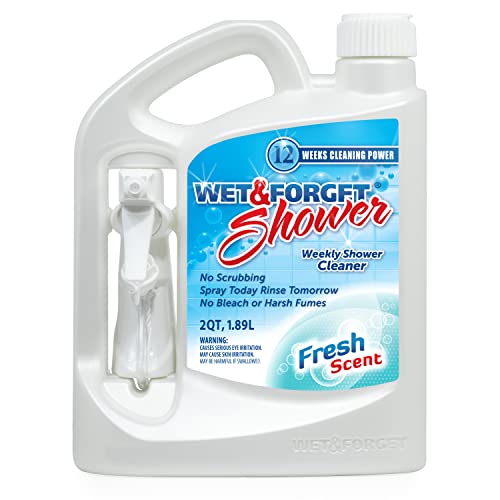
The Wet & Forget Shower Cleaner Spray earns the top badge by removing scrubbing from plastic-tub care entirely. Its no-scrub weekly formula is sprayed on tubs, basins, shower doors, and tile, left for eight to twelve hours, and rinsed with warm water at the next use; the maker lists fiberglass and acrylic among the surfaces it cleans, and it works by preventing soap scum, grime, and body oils from building rather than blasting them off afterward. It is bleach-free, with no ammonia or dyes, in a fresh scent — and on a surface whose gloss dies by contact, a cleaner that never puts a tool against the tub is the safest strong recommendation this guide can make.
Strengths
- True no-scrub method: nothing abrasive ever meets the plastic surface.
- Weekly prevention stops soap scum and grime from curing on acrylic and fiberglass.
- Bleach-free formula avoids the yellowing risk that bleach routines carry on plastic.
Trade-offs
- It is a prevention and maintenance system; heavy existing buildup needs a pre-clean first, as the maker itself advises.
- The eight-to-twelve-hour dwell requires planning around the household’s bathing schedule.
- It prevents hard-water staining but is not a heavy scale remover.
| Color | Fresh Scent |
|---|---|
| Size | 64 Fl Oz (Pack of 1) |
| Dimensions | 7.75 x 4.1 x 9 inches |
| Weight | 4.94 pounds |
On plastic specifically, the virtue compounds. Every scrub a tub never receives is a network of micro-scratches that never forms, and micro-scratches are exactly where film anchors — so a no-contact cleaner is not merely convenient, it is the one method whose cleaning power does not slowly create the conditions for a dirtier tub. Households with severe existing buildup should do one honest rescue clean first, with the Scrubbing Bubbles pick below, then hand the tub to Wet & Forget for keeping. The maker notes that one bottle provides up to twelve weeks of weekly cleaning, which makes the rhythm easy to sustain as well as cheap to keep.
Best for: weekly prevention on acrylic and plastic tub-showers in regular use / Not suited for: rescuing a neglected tub on its own
Choose Wet & Forget as the system’s foundation. Skip it as a rescue product; rescue first, then prevent. Check on Amazon

Scrubbing Bubbles Grime Fighter Disinfectant Bathroom Cleaner Spray
Our badge: Best for Soap Scum
The Scrubbing Bubbles Grime Fighter Disinfectant Bathroom Cleaner Spray is this guide’s rescue and reset cleaner: a foaming spray formulated to remove soap scum from tubs, shower walls, sinks, and fixtures, with fiberglass among the surfaces its maker lists as suitable. Where Wet & Forget prevents, this one intervenes — it is the bottle to reach for when a plastic tub has drifted past maintenance into visible scum, or as the one honest rescue clean before the weekly system takes over a tub that is already behind. Its disinfecting action, used as directed, also covers the hygiene side of a shared family tub-shower that a prevention spray is not designed to handle.
Strengths
- Foaming formula clings long enough to work on soap scum without hard scrubbing.
- Fiberglass is among its listed surfaces, and it is made for tubs and shower walls.
- Doubles as the household’s disinfecting step for shared tub-showers, used as directed.
Trade-offs
- A stronger chemistry than the prevention picks; on plastic, respect the label’s dwell time and rinse thoroughly rather than letting it sit.
- Scented and assertive in a small, steamy bathroom; ventilate while it works.
- Not a mineral-scale specialist; crusty hard-water deposits belong to the Zep pick, used with its cautions.
| Size | 32 Fl Oz (Pack of 1) |
|---|
Used well on plastic, the technique is spray, wait, and wipe with a soft sponge: the foam’s dwell does the lifting, and the moment you feel tempted to add pressure, add minutes instead. Work the waterline and the textured floor last, rinse the whole tub thoroughly, because a disinfecting cleaner left to dry leaves its own film, and dry the surface if you want to judge the result honestly. In this guide’s system it is a quarterly or as-needed instrument, not a weekly one — households that find themselves reaching for the rescue foam every week do not need a stronger bottle, they need the Wet & Forget rhythm above to start working for them.
Best for: rescue cleans and periodic resets on plastic and fiberglass tubs with cured soap scum / Not suited for: daily use, or mineral scale
Choose the Grime Fighter when the tub is already behind. Skip it as your routine cleaner; rescue with it, then prevent. Check on Amazon

Zep Shower Tub and Tile Cleaner
Our badge: Best for Mineral Scale
The Zep Shower Tub and Tile Cleaner is the strongest chemistry in this guide, and it is here for exactly one job: dissolving the soap scum and mineral scale that hard water leaves behind, with an acidic, scrub-free formula made for shower, tub, and tile stains. That acidity is also why this pick carries the guide’s firmest cautions on plastic. Acid-based cleaners can dull or etch acrylic and plastic finishes if they are left sitting, so on a plastic tub this is a spot-test-first, brief-dwell, rinse-immediately tool — used on verified scale, in small areas, and never as a routine cleaner.
Strengths
- Acidic formula dissolves mineral scale and water-related stains that surfactant cleaners cannot touch.
- Scrub-free action: the chemistry, not a pad, does the work.
- Economical when reserved for genuine scale, because a little treats a small area at a time.
Trade-offs
- Acid-based: on acrylic and plastic it demands a hidden spot test and a brief dwell; it is not a spray-and-forget product.
- Not for routine or whole-tub use on plastic; overuse risks dulling the very gloss it was bought to save.
- Keep it off any finish the label does not clear, and never mix it with bleach-containing products.
| Size | 32 Fl Oz (Pack of 1) |
|---|---|
| Dimensions | 3 x 11.2 x 4.4 inches |
| Weight | 2.01 pounds |
The discipline that makes Zep safe on plastic is sequence. First confirm the enemy is actually scale — the rough, white-gray crust at the waterline that survives a surfactant clean — because acid spent on soap film is risk without benefit. Then spot-test in a hidden area near the drain and wait. Apply to a small section, watch the clock rather than the stain, rinse thoroughly the moment the brief dwell ends, and inspect the dried surface at a low angle before treating the next section. Used that way, it solves the one problem the gentle system cannot, and the tub returns to the prevention picks with its gloss intact. Used casually, it becomes the cautionary tale this guide exists to prevent.
Best for: verified mineral scale and stubborn water stains on plastic, used briefly and carefully / Not suited for: routine cleaning, glossy acrylic maintenance, or anyone unwilling to spot-test first
Choose Zep for scale and nothing else. Skip it for everyday film — that is what the picks above and below are for. Check on Amazon
Enzyme-Based Plastic-Safe Tub Cleaner (Type)
Our badge: Best for Gentle Weekly Care
An enzyme-based plastic-safe tub cleaner is the gentlest everyday answer for most plastic tubs. These cleaners use enzymes and gentle surfactants to break down the organic part of bathroom soil, the body oils, skin cells, and soap residue that make up the gray film on a used tub, and they do it during dwell time rather than under a scrubbing hand. You spray or spread the cleaner, wait the label’s stated minutes, and wipe with a soft cloth; the film releases because its chemistry was dismantled, not because it was sanded off. For a glossy plastic surface you intend to keep glossy, that distinction is the whole game.
Strengths
- Gentle on acrylic and plastic gloss while genuinely effective on soap film and body oils.
- Dwell-time action replaces scrubbing, protecting the surface from micro-scratches.
- Pleasant to use weekly, which makes it the cleaner most likely to be used at all.
Trade-offs
- Weak against hard-water mineral scale, which needs a different chemistry.
- Requires patience; it will not perform in a thirty-second wipe.
- Costs more per bottle than basic sprays, though a little goes further than expected.
In practice, this is the cleaner to build a wipe-based routine around. Used weekly, it keeps a plastic tub at a baseline where deep cleans become quarterly rather than monthly, and it is the safest first attempt on any new stain, because it cannot really harm the surface while you learn what the stain is. Apply it to a damp surface, give it its full dwell, and resist the urge to help it with a stiff brush. Rinse thoroughly, since enzyme cleaners left to dry can leave their own faint film, and dry the tub if you want the full gloss to show. Households with textured plastic floors should work the cleaner in with a soft brush, in small circles, letting the bristles, not pressure, reach into the texture.
Best for: weekly cleaning of acrylic and plastic tubs with normal soap film / Not suited for: heavy mineral scale or neglected, ground-in grime on its own
Choose this type as your gentle default if you prefer a wipe routine to a spray schedule. Skip it as your only cleaner if your water is very hard, and pair it with the Zep pick above — briefly and carefully — for the scale it cannot touch.
Baking-Soda Paste Method (Type)
Our badge: Best Budget
The baking-soda paste method is the pantry answer: baking soda mixed with a little water into a soft paste, applied with a cloth or your fingers, left briefly, and rinsed. Baking soda is a very mild abrasive and a gentle alkali, which makes it useful on light soap film, odor, and fresh marks, and it is about as inexpensive as cleaning gets. On plastic, the key word is paste, not powder: a wet, sloppy paste used with a soft cloth and no real pressure is a mild cleaner, while dry powder scrubbed hard becomes the abrasive you were trying to avoid.
Strengths
- Nearly free, always on hand, and free of harsh chemicals.
- Gentle alkalinity helps with light film and bathroom odors.
- Useful test cleaner when you are unsure what a new mark is.
Trade-offs
- Mild abrasion means restraint: soft cloth, wet paste, light pressure, or not at all on high-gloss acrylic.
- Weak on scale and on old, heavy buildup.
- Leaves a powdery residue if not rinsed thoroughly.
Treat baking soda as the first, gentlest escalation and the budget standby, not the whole system. It shines on a fresh ring, on deodorizing a tub that sat closed while you traveled, and on the outside surfaces and rim where gloss matters less. On a prized high-gloss acrylic interior, test in a hidden area and keep pressure feather-light, or reach for the enzyme cleaner instead. Rinse until the surface squeaks clean, because dried soda film looks exactly like the soap scum you were removing. For households avoiding commercial cleaners where possible, this method plus the dish-soap spray below covers most weeks honestly.
Best for: light soil, odor, and budget or low-chemical households / Not suited for: heavy buildup, scale, or hard scrubbing on glossy acrylic
Choose the paste for gentle, cheap spot work. Skip it when the job needs real chemistry.
Dish-Soap Daily Spray Method (Type)
Our badge: Best for Maintenance
The dish-soap daily spray method is prevention bottled: a spray bottle of water with a small amount of ordinary dish soap, misted over the tub after use or a few times a week, given a minute, and rinsed or wiped. Dish soap is a surfactant designed to lift grease and food film gently, and bathroom film is a close cousin. Used little and often, it stops soap and body oils from ever curing into scum, which means the deep cleaners above come out rarely. It is the method behind most tubs that always look clean: not a better product, but a shorter interval.
Strengths
- Prevents buildup so deep cleaning becomes occasional.
- Extremely cheap, gentle, and safe for plastic with normal dilution.
- Takes under a minute, especially as an after-shower habit in tub-showers.
Trade-offs
- Does nothing for existing heavy buildup; it maintains, it does not restore.
- Too much soap in the mix leaves its own slippery residue; dilute honestly.
- Depends entirely on habit, which is a real cost for some households.
Set the system up to succeed: keep the bottle in the tub area, pair the spray with the end of a shower, and rinse with the showerhead so no film dries in place. A squeegee pass on surrounds afterward multiplies the effect, particularly in hard-water homes. Households that adopt this method often find the quarterly oxygen soak becomes a twice-yearly event, and the plastic keeps the gloss it had when new, because nothing was ever allowed to sit on it long enough to need force. That is the deepest truth in this guide: on plastic, frequency is the safest cleaning power there is.
Best for: households willing to trade a daily minute for rare deep cleans / Not suited for: restoring a neglected tub on its own
Choose the daily spray as your maintenance layer. Skip it as a rescue method; rescue first with the soak, then maintain.
Comparison Table
| Pick | Best Soil | Contact Style | Main Caution | Check price on Amazon |
|---|---|---|---|---|
| Wet & Forget Shower Cleaner | Soap scum, grime prevention | Spray, dwell, rinse | Needs a pre-clean on heavy buildup | Check price on Amazon |
| Scrubbing Bubbles Grime Fighter | Cured soap scum | Foam, dwell, wipe | Rinse thoroughly; ventilate | Check price on Amazon |
| Zep Shower Tub and Tile | Mineral scale | Spot apply, brief dwell | Acid-based: spot-test first | Check price on Amazon |
| Enzyme-Based Cleaner | Soap film, body oils | Spray, dwell, wipe | Weak on mineral scale | Check price on Amazon |
| Baking-Soda Paste | Light film, odor | Paste on soft cloth | Keep pressure feather-light | Check price on Amazon |
| Dish-Soap Spray | Prevention | Mist and rinse | Dilute properly | Check price on Amazon |
How to Choose the Best Cleaner for Plastic Tubs
Read the Label for Plastic and Acrylic First
The first filter is not scent, brand, or cleaning claims; it is the surface list. A cleaner for a plastic tub should say it is safe for acrylic, ABS, or fiberglass-reinforced plastic, and should carry no warnings against plastic use. If the label lists only tile, porcelain, and enamel, it was not made for your tub, whatever the advertising implies. When in doubt, the manufacturer’s website usually carries a fuller surface list than the bottle.
Match the Chemistry to the Soil
Soap film and body oils are organic and respond to surfactants and enzymes. Hard-water scale is mineral and responds to mild acids, used briefly and rinsed thoroughly, and only in products labeled for plastic. Rust marks are a spot problem for a cream cleanser. Trying to solve mineral scale with an enzyme cleaner, or soap film with an acid, wastes effort and tempts you toward scrubbing, which is where plastic gets hurt. Identify the soil first, on a small patch, before committing the whole tub.
Choose Tools as Carefully as Chemistry
Microfiber cloths, soft sponges, and soft-bristled brushes are the entire toolkit a plastic tub should ever meet. Non-scratch scrub sponges exist and are labeled as such; everything else, including the scouring side of a standard kitchen sponge, is a scratch waiting for pressure. Melamine foam pads deserve caution too: they are micro-abrasives, effective on some marks, but capable of dulling gloss, so reserve them for hidden spots or skip them on prized finishes.
Decide Your Cleaning Interval Honestly
A household that will spray and rinse twice a week can run on the gentlest products in this guide. A household that cleans monthly needs the soak and the enzyme cleaner and should accept a longer session. Neither is wrong, but buying a maintenance product for a monthly reality, or a heavy-duty product for a weekly reality, mismatches chemistry to life and ends in either buildup or overexposure.
How to Clean a Plastic Tub Without Scratching It
Start by rinsing the whole tub with warm water and removing loose hair and grit, because grit under a cloth is sandpaper you brought yourself. Apply your chosen cleaner to the damp surface, walls first with a spray cleaner if you are using one, base second with the enzyme cleaner, and let everything dwell for the label’s full time while you clean the fixtures with a separate cloth. Wipe in long, light strokes, rinsing the cloth often, and use a soft brush only inside textured areas. Rinse the entire tub thoroughly with the showerhead or a pitcher, because cleaner residue attracts film. Dry with a clean microfiber if you want the gloss to read as clean, and check the surface at a low angle, where remaining film shows as a rainbow sheen.
For a neglected tub, reverse the order of ambition: a filled-tub soak first to lift the bulk, the enzyme clean second for the film, and a targeted spot treatment last for the marks that remain. That sequence escalates only as far as needed and keeps every step non-abrasive. Ventilate the room whenever you use any household chemical, keep different cleaners off the surface at the same time, and never mix products, especially anything containing bleach with anything acidic or ammoniated.
Problem: The tub looks clean wet but dull when dry — That is micro-scratching or dried cleaner residue; rinse more thoroughly, stop all abrasive tools, and maintain with the daily spray to rebuild a consistent gloss.
Problem: A yellow cast is developing — Yellowing usually comes from harsh chemicals, strong bleach soaks, or age and light; switch to enzyme-based cleaning, stop bleach sitting on the surface, and accept that deep chemical yellowing is not reversible by cleaning.
Problem: The textured floor stays gray — Use the oxygen soak, then a soft brush with enzyme cleaner in small circles; texture hides film that flat surfaces surrender to a cloth.
Problem: A dye mark from a bath product will not lift — Apply a non-abrasive cream cleanser in repeated gentle sessions rather than one hard one, and rinse bath products off promptly in future to stop transfer setting.
Problem: Water spots return within days — That is hard water, not dirt; dry the tub after use or squeegee the surround, and treat scale occasionally with a plastic-safe product labeled for mineral deposits.
Why Plastic Scratches, and Why It Matters More Than Dirt
Plastic tubs feel their history. Every scratch is a tiny valley that catches soap, minerals, and pigment, and valleys clean worse than flat surfaces, so a scratched tub gets dirtier faster and cleans slower, which tempts harder scrubbing, which cuts more valleys. Breaking that cycle early is the entire economic argument for gentle cleaning: a tub cleaned softly for a decade can look newer than a tub scrubbed hard for a year. It also explains why the maintenance methods in this guide punch above their weight. Film that never cures never needs force, and a surface that never meets force never starts the cycle. If you inherit a tub that is already scratched and dull, gentle methods still apply, and they will keep it from worsening; refinishing, covered in Best Paint For Tubs, is the reset button for surfaces past cleaning’s help.
Hard Water, Soap Scum, and Plastic: The Triangle
Hard water changes the cleaning problem on plastic. Minerals in the water react with soap to form soap scum that is part soap, part stone, and it bonds to plastic’s slight texture more stubbornly than to glass-smooth porcelain. The countermeasures are interval and drying: shorter times between cleans, a squeegee or towel pass after use in very hard water, and an occasional plastic-safe treatment for mineral deposits before scale becomes visible crust. Water softening, where a household has it, quietly transforms tub cleaning from a battle into a chore. Until then, the triangle is managed, not solved, and the households that manage it best are the ones that stopped expecting a single heroic product to do what only routine can.
Common Buying Mistakes
Buying a Tile Cleaner for a Plastic Tub
Tile and enamel cleaners can be acidic or abrasive in ways plastic cannot tolerate. If acrylic or plastic is not on the label’s safe list, the product does not go on the tub.
Scrubbing Harder Instead of Waiting Longer
Pressure is the enemy. Give the cleaner its dwell time, reapply if needed, and let chemistry do what force would do at the surface’s expense.
Using the Kitchen Sponge’s Scouring Side
That green pad is a plastic-cutting tool. Keep a dedicated set of soft cloths and non-scratch sponges for the tub and label them if the household shares supplies.
Letting Cleaner Dry on the Surface
Dried cleaner becomes the next film. Work in sections, keep surfaces wet while they dwell, and rinse completely.
Chasing Yellowing With Stronger Chemicals
Chemical yellowing is damage, not dirt, and stronger products deepen it. Switch to gentle care, and consider refinishing if the appearance truly bothers you.
Cleaning the Plastic Tubs You Do Not Think About: Storage Bins, Laundry Tubs, and Kids’ Baths
The phrase plastic tubs reaches beyond the bathroom, and the same principles travel with it. Laundry and utility tubs in molded plastic collect detergent residue, soil from gardening and pet washing, and a gray film that responds beautifully to the enzyme approach and the oxygen soak, scaled to a sink instead of a bath. Storage bins and washing-up tubs want the surfactant methods and a full rinse, especially anything that will touch food or children’s items, where thorough rinsing matters more than cleaning power. Plastic baby baths and toddler tubs deserve the gentlest end of this guide’s range: mild soap solutions, soft cloths, complete rinsing, and air drying, with no fragranced or chemical-heavy cleaner used on a surface that meets infant skin, whatever the label promises. In every case the rules rhyme with the bathroom version: soft tools, dwell over force, rinse like you mean it, and dry the plastic rather than leaving it to sit in its own moisture, which is where odors and mildew begin.
Outdoor plastic deserves one extra caution. Garden tubs, trugs, and patio storage that live in sunlight are already fighting ultraviolet degradation, which makes the surface more brittle and more porous over time; harsh chemicals accelerate a decline the sun started. A mild cleaner and a soft brush keep outdoor plastic serviceable for years, while the aggressive degreaser that seems proportionate to outdoor dirt quietly shortens the tub’s life. When outdoor plastic finally goes chalky and rough, that is weathering, not dirt, and no cleaner in this guide or any other will reverse it.
When Cleaning Is Not Enough: Damage, Refinishing, and Replacement
An honest cleaner guide should say where cleaning ends. Scratches deep enough to catch a fingernail, chemical dullness that covers whole panels, cracks at stress points around drains and feet, and yellowing that has entered the material rather than sitting on it are all beyond chemistry. For a bathroom tub, the middle path is refinishing: a professionally applied or carefully DIY coating system, covered in the companion guide to Best Paint For Tubs, which can give a sound but ugly plastic or fiberglass tub a fresh surface. Refinishing makes sense when the tub’s structure is solid, its shape still suits the room, and replacement would mean plumbing and tiling upheaval. It makes no sense over cracks, flexing, or a tub whose size and depth the household has outgrown, because paint does not change geometry.
Replacement, the expensive honesty, is right when the tub is damaged, when the bathroom is being remodeled anyway, or when years of hard cleaning have left a surface that soils faster than any routine can manage. The households that reach replacement latest are, predictably, the ones that cleaned gently from the start, which is the economic summary of this entire guide: soft cloths and dwell time are not fussiness, they are the cheapest years of tub life you will ever buy. Until that day, the system in this guide — the no-scrub spray weekly, the enzyme cleaner for film, the foam for rescues, the acid only for scale, paste and spray for the in-between — will keep a plastic tub as clean as plastic can honestly be.
A Seasonal Deep-Clean Calendar for Plastic Tubs
Plastic tubs reward a calendar more than a crisis, and a simple seasonal rhythm keeps every soil in this guide from ever reaching the rescue stage. Monthly, run the maintenance clean your pick prescribes: the no-scrub spray’s weekly rhythm in the shower-tub, a soft-cloth washdown for utility and storage tubs, and a rinse-and-dry habit for anything that stores water. Quarterly, give the main tub the full sequence from the how-to, soak, dwell, soft wipe, rinse to the sheeting test, and inspect the caulk line, the drain surround, and any texture where soil anchors first, because those three addresses predict next quarter’s problems. Twice a year, audit the tools themselves: retire any sponge or brush that has hardened, frayed, or picked up grit, since yesterday’s soft tool is tomorrow’s scratch source, and check stored spare tubs for the mustiness that a rinse and a day of air will cure.
The calendar’s real product is information. A household that cleans on rhythm notices the quarter when the water started spotting harder, the month the texture began holding film, the week a new bath product started tinting the base, and can answer each while it is still a maintenance note rather than a restoration project. Plastic’s enemies, abrasion, mineral armor, and neglected film, all share the property of being cheap to prevent and expensive to reverse, which is why this guide ends its teaching where it began: the best cleaner for a plastic tub is the gentle one, used on schedule, by a household that has made the schedule too easy to skip.
The Two-Minute Rinse: The Habit Under All the Others
If the calendar is the strategy, the two-minute rinse is the tactic that does most of the work. After a bath or a shower in the plastic tub, a quick rinse of the walls and base with the shower head, a swipe of the waterline with the hand or a soft cloth, and a moment’s attention to the drain surround removes the soap, oils, and minerals while they are still a rinse’s prisoners rather than a soak’s project. It is too small to feel like cleaning, which is precisely its power: habits that cost nothing survive, and this one quietly subtracts the majority of the soil load that the monthly and quarterly cleans would otherwise inherit. Households with children can make it a game, households with guests can make it a house custom mentioned warmly at check-in, and households of one can pair it with the towel-off so it borrows an existing routine’s momentum. Every product in this guide performs better behind the two-minute rinse, and the tubs that look permanently new in plastic, a material nobody expects to age gracefully, are almost always standing behind it.
Teaching the Household: Kids, Guests, and the Shared Plastic Tub
A plastic tub’s worst enemies are rarely products; they are people who do not know its rules, and a household that teaches the rules once will clean less forever. Children are the first class: bath toys with rough bases, grit carried in from the garden on small feet, and the universal childhood instinct to scrub something with whatever is hard and nearby. The teaching that works is architectural rather than scolding: a mesh bag for toys so nothing abrasive lives loose in the tub, a rinse of feet that becomes part of the bath’s opening ceremony, and soft sponges issued as the official tools, since a child given the right sponge rarely goes hunting for a wrong one. Guests are the second class, and the Airbnb version of this problem appears in this lot’s rental guides as well: the guest who attacks a stain with the scouring pad under the sink is trying to be helpful, and the host’s defense is to leave the correct tools visible, the soft cloth and the gentle spray at the tub’s edge, so helpfulness has somewhere safe to go. A small, warm note in the house book, the tub thanks you for soft cloths only, completes a defense that costs nothing and saves finishes.
The third class is the household itself on its busiest weeks, when the rules bend toward whatever is fastest. This is where the calendar and the two-minute rinse earn their keep a second time, because a system carried by habits survives a bad week in a way a system carried by intentions does not. The households whose plastic tubs age gracefully are not the ones with the strongest cleaners or the strictest rules; they are the ones who arranged the bathroom so that the gentle thing is also the easy thing, the soft sponge closer than the scouring pad, the spray at hand rather than in a distant cupboard, the rinse built into the bath’s own ending. Design the environment and the teaching mostly does itself, which is as true of plastic tubs as of everything else in a home.
Final Recommendation
For most households, the top pick is the Wet & Forget Shower Cleaner Spray as the weekly foundation: a bleach-free, no-scrub system that keeps a plastic tub clean by never letting soil cure and never putting a tool against the surface. The runner-up is the Scrubbing Bubbles Grime Fighter, the rescue foam for tubs that are already behind, through its Check on Amazon link. Keep the Zep for verified scale and nothing else, an enzyme cleaner for film if you prefer a wipe routine, baking soda for the budget shelf, and the dish-soap daily spray for daily prevention, and you own a complete, plastic-safe system. Whatever you buy, confirm the acrylic-safe label on the listing before you buy, and remember that on plastic, the softest routine wins.
Related guides
Frequently Asked Questions
Can I use bleach on a plastic tub?
Occasional, well-diluted bleach solutions are sometimes used for disinfection, but bleach should not sit on plastic or acrylic as a routine cleaner, because it can yellow and dull the surface over time. For regular cleaning, enzyme and surfactant cleaners are safer and effective; if you disinfect, rinse extremely well and do not make it a habit.
What should I never use on an acrylic or plastic tub?
Abrasive powders and pads, scouring sponges, acetone and strong solvents, and any cleaner whose label does not list plastic or acrylic as safe. Also avoid letting any strong chemical dwell far beyond its label time. The surface you save will be your own, every week, for years.
How do I remove soap scum from a plastic tub?
Start with an enzyme cleaner given full dwell time and a soft cloth; escalate to the foaming rescue cleaner in this guide for cured scum, and a filled-tub soak for the base. Scum that includes hard-water minerals may need a plastic-safe product labeled for mineral deposits, used briefly and rinsed well. The dedicated guide linked in the introduction covers scum chemistry in depth.
Why does my plastic tub feel rough in patches?
Rough patches are usually mineral scale, dried cleaner residue, or micro-scratch damage. Rinse thoroughly first; if roughness remains and catches a fingernail in straight lines, it is likely scratching, which cleaning cannot reverse, only avoid worsening.
How often should a plastic tub be cleaned?
A light clean weekly, a rinse or maintenance spray after use where practical, and a deep soak quarterly suits most households. Hard water and heavy use shorten those intervals; the moment film becomes visible to the eye, the interval was too long.
Is baking soda safe on acrylic tubs?
As a wet paste used with a soft cloth and light pressure, it is a mild option for light soil, but it is still a gentle abrasive, so high-gloss acrylic deserves a hidden-spot test and feather pressure, or the enzyme cleaner instead. Never scrub dry powder into the surface.


