Where to buy
Check the latest price, availability and delivery on Amazon. Orders are placed on Amazon. We may earn a commission from qualifying purchases.
- Best single grill for entertaining — the stretch: Weber Jumbo Joe 18-Inch Charcoal Grill (prose-only pick — see review below for why)
- Best grate for crowd-pleasing rows of food: Char-Griller Portable Charcoal Grill and Side Fire Box (E82424) (prose-only pick — see review below for why)
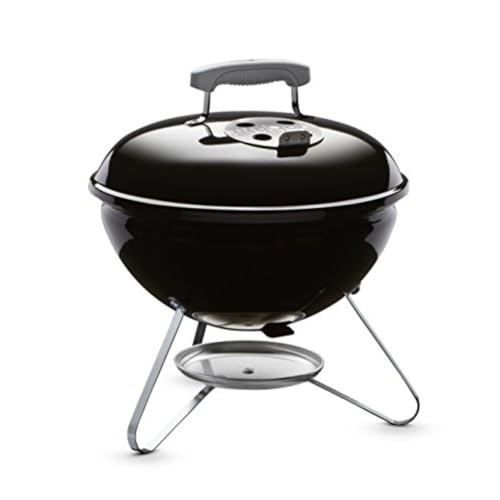
- Best in-tier grill for small gatherings: Weber Smokey Joe 14-Inch Portable Charcoal Grill — Check on Amazon
- Best second fire for sides and overflow: Cuisinart 14-Inch Portable Charcoal Grill (CCG-190RB, Red) — Check on Amazon
- Best backup grill for big guest lists: Gas One CG-14 14-Inch Portable Charcoal Grill — Check on Amazon
- Best refined kettle for hosts, if stocked: Weber Smokey Joe Premium 14-Inch Portable Charcoal Grill (prose-only pick — see review below for why)
Read the full guide ↓
Disclosure: As an Amazon Associate, dailyhomedecorating.com earns from qualifying purchases. Links to Amazon on this page are affiliate links; they cost you nothing extra. Listing details such as price and availability change often, so check the current Amazon listing before you buy. Picks marked prose-only are recommended on merit but carry no purchase link, because we could not verify a live in-budget offer for that exact model when this guide was written.
The best charcoal grill for outdoor entertaining under $75 is not simply the best small grill, because entertaining exposes every weakness a grill has. A weeknight grill cooks one meal for people who love you; a party grill cooks in waves, for guests holding drinks, while you are also supposed to be having fun. So this guide looks for the grill — or the combination of grills — that survives a guest list. This guide ranks for that reality. It leads with the two capacity picks — labeled honestly as stretches past the tier, prose-only with no purchase link — because entertaining is the one use case where grate area is not a luxury. Then it ranks the in-tier grills by how they actually behave at a gathering, including the strategy this budget quietly enables: two inexpensive grills running two fires at once, which out-cooks any single grill at this money.
Think about what a gathering demands. Throughput: burgers and dogs in batches that land together, not in a trickle. Temperature range at the same moment: searing heat for steaks while something gentle happens to corn, peppers or a vegetarian main that must not share a grate with the meat. Forgiveness: a fire that holds steady while you are pulled away to greet, pour and answer the door — which is where kettle vent control stops being a spec and becomes the party. And a clean ending: ash and grease handled in a routine that does not leave a hazard sitting in the yard overnight.
No single grill under $75 does all of that for more than about four guests, and this guide will not pretend otherwise. What the tier does brilliantly is the two-fire strategy: a primary kettle plus a bargain tabletop costs less than most single mid-size grills, gives you two temperatures, two grates — one can be the dedicated vegetarian or allergen-aware grate — and a backup if one fire misbehaves. Hosts who entertain monthly rather than weekly should also read the stretch picks seriously: the 18-inch kettle’s two-zone fire is the classic entertainer’s tool, and buying it once is cheaper than assembling workarounds for years.
The short version: hosts of five or more should stretch to the Jumbo Joe or run the two-fire plan — Smokey Joe plus Cuisinart or Gas One. Gatherings of four or fewer are served completely by the Smokey Joe alone — check price on Amazon. Either way, the plan matters more than the product, and the how-to-choose section is written as a hosting playbook, not a spec sheet.
In this guide
Quick Picks
Short on time, or comparing several options at once? Each row below names a buyer type and the product that suits it.
| Buyer type | Pick | Why it stands out | Link |
|---|---|---|---|
| Best single grill for entertaining — the stretch | Weber Jumbo Joe 18-Inch Charcoal Grill | 240 sq in and two-zone control — the only single-grill answer for a crowd near this budget | Prose-only — see review |
| Best grate for crowd-pleasing rows of food | Char-Griller Portable Charcoal Grill and Side Fire Box (E82424) | About 250 sq in of cast iron for skewers, links and wings in crowd-sized rows | Prose-only — see review |
| Best in-tier grill for small gatherings | Weber Smokey Joe 14-Inch Portable Charcoal Grill | Enamel kettle quality for gatherings of four or fewer; check price on Amazon | Check on Amazon |
| Best second fire for sides and overflow | Cuisinart 14-Inch Portable Charcoal Grill (CCG-190RB, Red) | A cheap second fire doubles your timing options; check price on Amazon | Check on Amazon |
| Best backup grill for big guest lists | Gas One CG-14 14-Inch Portable Charcoal Grill | The inexpensive insurance policy for overflow and park parties; check price on Amazon | Check on Amazon |
| Best refined kettle for hosts, if stocked | Weber Smokey Joe Premium 14-Inch Portable Charcoal Grill | The tidy-ash Smokey Joe variant for hosts who find it in-tier | Prose-only — see review |
How we chose the best charcoal grill for outdoor entertaining under $75 picks
Standard verification applied — real models, verified offers for linked picks, two-vent control, no recalls — and then we ranked by entertaining criteria: batch capacity, ability to hold two temperatures (on one grate or across two grills), fire stability when the cook is distracted, and cleanup burden after guests leave. Picks that normally sell above the tier are prose-only and labeled as stretches wherever they appear; we include them because entertaining is where undersizing hurts most, and a guide that hides the capacity answer to protect a price headline fails its reader.
We also weighted menu flexibility. A grill that can only sear is a grill that fails the vegetarian guest, the slow-cooking ribs and the warming tray of rolls. Kettle shape, lid height and vent range all feed that flexibility, which is why kettles dominate this ranking and the barrel earns its place on grate geometry alone.
Detailed reviews
Weber Jumbo Joe 18-Inch Charcoal Grill — Best single grill for entertaining — the stretch
Key specs: 18-inch portable kettle · 240 sq in cooking area · porcelain-enameled bowl and lid · Tuck-N-Carry lid lock · about 18 lb.
Who it suits: you host five to eight people, want one grill to run the show, and will use two-zone cooking constantly — searing on one side, finishing and holding on the other.
The Jumbo Joe is the grill most people actually want when they shop this tier — an 18-inch Weber kettle with 240 square inches of cooking area, the same porcelain-enameled construction as the Smokey Joe, and a Tuck-N-Carry lid lock that keeps it genuinely portable at about 18 pounds. That extra four inches of grate diameter is transformative in practice: 240 square inches holds around ten burgers, gives you a real two-zone fire with a hot side and a safe side, and makes indirect cooking — a beer-can-style chicken, a rack of ribs curled to fit, a tray of peppers beside the steaks — realistically possible instead of theoretical.
So why is it prose-only here? Honesty about the tier. The Jumbo Joe’s normal selling price sits above the $75 line this guide is built around — it is a step-up purchase, not an under-$75 purchase, and printing a check-price link under an under-$75 headline would mislead you. It earns its place in this guide as the documented stretch option: the grill to buy if you read the 14-inch reviews, recognize the capacity ceiling will frustrate you within a month, and can flex the budget once rather than buying twice. Weber’s warranty support on the bowl and lid and the easy availability of the 18-inch grate size reinforce that logic.
The honest limitation is the format: like the Smokey Joe, it is a short-leg tabletop kettle, so it needs a sturdy stand, table or heat-safe surface at a comfortable height, and 18 pounds plus a load of ash is a two-hand carry. It is portable in the car-and-go sense, not the hike-it-in sense. Within those bounds, it is the best charcoal cooking experience anywhere near this budget.
Pros
- 240 sq in — real two-zone fires and indirect cooking become possible
- Same porcelain-enamel durability and Weber support as the Smokey Joe
- Still genuinely portable at about 18 lb with a locking lid
Honest limitation: Normally sells above this $75 tier — a deliberate stretch, not a budget pick.
Choose it if one-grill simplicity with real capacity is worth stretching past the tier for, once. Skip it if your gatherings are four or fewer — the in-tier Smokey Joe plus a cheap second grill gives you more flexibility for less.
Prose-only pick: no purchase link — see the review above and the sources note for this guide for the verification reason.
Char-Griller Portable Charcoal Grill and Side Fire Box (E82424) — Best grate for crowd-pleasing rows of food
Key specs: Tabletop barrel grill · about 250 sq in cooking area · cast-iron cooking grates · heavy steel body, roughly 37 lb and up · doubles as an offset side fire box.
Who it suits: your party menu runs in rows — skewer nights, sausage and pepper feasts, wing batches — and cast-iron sear marks are part of the show.
The Char-Griller E82424 is the odd one out in this guide, and for some backyards it is the right one. Instead of a kettle, it is a small horizontal barrel grill with cast-iron cooking grates and roughly 250 square inches of cooking area — the largest grate in this lineup — built from noticeably heavier steel than the portable kettles. It also leads a double life: Char-Griller designed it to bolt onto the side of its barrel smokers as an offset fire box, so it can burn a fire that feeds smoke into a bigger cooker, or stand alone on a table as a grill in its own right.
That barrel shape changes the cooking. The long grate suits skewers, sausages, corn and anything else that cooks in rows, and the cast-iron grates hold serious heat for sear marks that thin wire grates cannot match. The weight — roughly 37 pounds before fuel — is the trade: this is a move-it-twice-a-year tabletop, not a carry-to-the-park grill. It lives on a sturdy outdoor table or stand in the backyard, and that is exactly the use case it suits.
Why prose-only? Two honest reasons. Its typical selling price sits above this $75 tier, and at the time of writing it was primarily sold direct and through home-center channels rather than a verifiable in-tier Amazon offer, so this guide will not attach a purchase link it cannot verify. The honest limitation matches: heavy, needs seasoning and oiling of the cast iron to prevent rust, and overkill for anyone who mainly wants a light grill to store in a closet. For a backyard cook who wants barrel capacity and cast iron near this budget, it is the connoisseur’s stretch pick.
Pros
- Largest cooking area here — about 250 sq in with cast-iron grates
- Heavy steel body holds heat better than thin portable kettles
- Doubles as an offset fire box for Char-Griller barrel smokers
Honest limitation: Roughly 37 lb — a backyard fixture, not a portable; typically priced above this tier.
Choose it if you entertain in a fixed backyard spot and can stretch for the largest grate near the budget. Skip it if your parties move — parks, tailgates, other people’s yards. At roughly 37 pounds, this grill hosts at home or not at all.
Prose-only pick: no purchase link — see the review above and the sources note for this guide for the verification reason.
Weber Smokey Joe 14-Inch Portable Charcoal Grill — Best in-tier grill for small gatherings
Key specs: 14-inch kettle · 147 sq in cooking area · porcelain-enameled steel bowl and lid · plated-steel cooking grate · aluminum dampers · Tuck-N-Carry lid lock on current production.
Who it suits: your entertaining is dinner-party scale — four people, a real menu, courses paced rather than rushed — and you want enamel durability at the center of it.
The Smokey Joe is the grill that defines this entire price tier, and it earns that position the honest way: it is a real Weber kettle, shrunk rather than cheapened. The bowl and lid are porcelain-enameled steel, the same rust-resistant finish Weber puts on its full-size kettles, and that single fact separates it from nearly everything else under $75. Painted budget grills start flaking and rusting at the fire line within a season or two; porcelain enamel is baked on and shrugs off the heat cycling that kills thin finishes. The cooking grate is plated steel over a 14-inch fire bowl, giving 147 square inches of cooking area — enough for a half-dozen burgers at once, a spatchcocked chicken if you bank the coals to one side, or a couple of steaks with room to move them off direct heat.
Heat control comes from aluminum dampers in the lid and bowl, and this is where kettle geometry matters. Because the bowl is deep and round, a small charcoal fire sits at a sensible distance below the food, and closing the vents genuinely slows the fire down instead of just trapping smoke. Owners who learn the two basic vent positions — wide open for searing, half closed for gentler cooking — can cook far more than burgers on it. Current production adds the Tuck-N-Carry lid lock, which clips the lid down for carrying and doubles as a lid holder while you cook, solving the oldest small-grill annoyance: where to put a hot lid when your hands are full of tongs and a plate.
The honest limitation is capacity and ash. One hundred forty-seven square inches is a hard ceiling — this is a grill for one to four people, not a crowd — and there is no enclosed ash catcher, so ash management means letting the bowl cool and tipping it into a metal container. The legs are short, so it wants a sturdy table, a tailgate or a heat-safe stand rather than the ground. None of that is a flaw at this price; it is the trade you make for genuine enamel and Weber parts support, including replacement grates that are still easy to find years later.
Pros
- Porcelain-enameled bowl and lid resist rust far better than painted budget steel
- Real kettle vent control — dampers genuinely change fire behavior
- Tuck-N-Carry lid lock makes it easy to carry and holds the lid while cooking
- Replacement grates and parts are widely available
Honest limitation: 147 sq in caps you at roughly six burgers — no room for a crowd.
Choose it if gatherings are small, quality matters, and the budget is firm. Skip it if you host eight with burgers expected all at once; pair it with a second grill or stretch to the Jumbo Joe.
Check on Amazon — check price on Amazon for the current listing, colors and delivery options.
Cuisinart 14-Inch Portable Charcoal Grill (CCG-190RB, Red) — Best second fire for sides and overflow
Key specs: 14-inch tabletop grill · chrome-plated cooking grate · dual vent system · three lid locks · fire bowl with ash catcher · very light, only a few pounds.
Who it suits: you already have a primary grill and the party problem is timing: sides, vegetables, a separate vegetarian grate, a warming fire.
The Cuisinart CCG-190 is the value play of this tier, and it knows it. Where the Weber spends your money on enamel and longevity, the Cuisinart spends it on convenience per dollar: a 14-inch chrome-plated grate, a dual-vent system with an intake below the fire and an exhaust in the lid, three latches that lock the lid down for one-handed carrying, and a small ash catcher hanging under the fire bowl. Cuisinart rates the grate generously — treat the usable cooking space as roughly the same class as other 14-inch grills — and the whole unit weighs only a few pounds, which makes it the easiest grill here to grab from a closet shelf with one hand while carrying a tray of food with the other.
In use, the dual vents are the feature that punches above the price. Many ultra-budget grills give you a lid vent and nothing else, which means the fire gets air whether you want it to or not. Here you can choke the intake to calm a flare-up or open both ends to get a small fire properly hot for searing. The locking lid matters more than it sounds: it turns the grill into a sealed metal container for transport, so yesterday’s ash stays inside the grill instead of dusting the inside of your car or storage bin.
The honest limitation is material thickness. The steel is thin, the finish is not porcelain enamel, and this is not a buy-it-for-a-decade grill — expect the fire bowl to show its age first, especially if it lives outdoors uncovered. The grate is chrome-plated rather than heavier plated steel, so aggressive wire-brush scrubbing will wear it. Buy it as a light, cheap, genuinely functional grill for a few seasons of regular use, store it dry, and it is excellent value. Buy it expecting Weber longevity and you will be disappointed.
Pros
- Dual vents give real fire control at a budget price
- Three lid locks seal the grill shut for clean, one-handed transport
- Featherweight — the easiest pick here to store on a shelf or in a closet
- Ash catcher under the fire bowl keeps small messes contained
Honest limitation: Thin steel and non-enamel finish — a few-seasons grill, not a decade grill.
Choose it if a second, independent fire solves your actual bottleneck for very little money. Skip it if it would be your only grill for a crowd — as a primary for six-plus it is undersized.
Check on Amazon — check price on Amazon for the current listing, colors and delivery options.
Gas One CG-14 14-Inch Portable Charcoal Grill — Best backup grill for big guest lists
Key specs: 14-inch portable grill · 3-point locking lid · dual venting system · compact folding-leg tabletop format.
Who it suits: you host occasionally and largely, and want inexpensive insurance: an extra grate for dogs and corn while the main grill works.
The Gas One CG-14 is the cheapest route into real charcoal cooking in this guide, and it is a better grill than its bargain positioning suggests. The design copies the proven 14-inch locking-lid formula: a round fire bowl, a lid that clamps down at three points so the whole unit carries like a bucket, and a dual venting system with airflow control at the bowl and the lid. That vent pairing is the detail to care about, because it is what separates a grill you can actually cook on from a metal bowl that simply burns charcoal under food. With the intake partly closed, a small fire settles down for sausages and chicken pieces; opened up, it sears burgers and hot dogs exactly the way a tailgate grill should.
Size is the whole story here, in both directions. Fourteen inches of grate is dinner for two to four people cooked in a single batch, or a larger group’s food cooked in honest relays — burgers first, then dogs, then corn while people eat the first round. The grill’s small footprint and folding format mean it stores in a car trunk corner, a camper cabinet or the bottom of a hall closet, and it sets up in minutes with no tools worth mentioning. For a first charcoal grill, a camping grill, or a spare grill kept for park cookouts where a lost or damaged unit would not sting, that combination is hard to argue with.
The honest limitation is build weight. At this end of the market the steel is thin, the grate is light, and nothing about the CG-14 pretends to be a ten-year appliance. Treat it roughly, leave it out in the rain, and it will rust on a budget timeline. Treat it as what it is — an inexpensive, functional, genuinely portable charcoal grill — keep it dry between uses, and it returns far more cooking than its price suggests.
Pros
- Lowest-cost way into real charcoal grilling in this guide
- 3-point locking lid keeps ash sealed inside during transport
- Dual venting allows basic but genuine temperature control
- Packs small enough for a trunk corner, camper or closet
Honest limitation: Thin, light steel throughout — durability is budget-grade, store it dry.
Choose it if overflow capacity at the lowest possible cost, stored in the shed between parties. Skip it if you entertain weekly; weekly duty deserves the Cuisinart’s ash catcher or better.
Check on Amazon — check price on Amazon for the current listing, colors and delivery options.
Weber Smokey Joe Premium 14-Inch Portable Charcoal Grill — Best refined kettle for hosts, if stocked
Key specs: 14-inch kettle · 147 sq in cooking area · porcelain-enameled bowl and lid · lid lock and lid holder · ash catcher pan.
Who it suits: you host small gatherings often and the tidy ash pan and lid system of the Premium suit a frequent, polished routine.
The Smokey Joe Premium takes the standard Smokey Joe’s proven 14-inch porcelain-enameled kettle and fixes its two most-mentioned annoyances. The lid gains a proper lock that also parks the lid on the side of the bowl while you cook, and the vent arrangement moves to the sides of the lid with a shallow ash catcher pan beneath the bowl, so ash disposal is a lift-out pan rather than a tip-the-whole-grill exercise. The cooking fundamentals are identical — 147 square inches, the same deep kettle bowl, the same excellent parts support — which is precisely the point: this is the refined version of the tier’s benchmark grill.
Why is it prose-only in this guide? Because at the time of writing we could verify the model and its specifications, but we could not verify a live Amazon offer for this exact listing at or under the $75 tier line, and this guide does not attach purchase links it cannot stand behind. It is included because shoppers comparing 14-inch kettles will run into it, and the honest advice is simple: if you find it in stock from a reputable seller within this budget, it is arguably the nicest 14-inch kettle Weber makes; if the only offers are marked up well past the standard Smokey Joe, the standard model is the smarter buy and gives up very little.
The honest limitation, beyond availability, is the same capacity ceiling as every 14-inch grill here — this is a one-to-four-person cooker — and the side-vent layout is a matter of taste: some longtime kettle users prefer the standard model’s bowl damper for fine fire control. Neither point diminishes it; both are worth knowing before you pay a premium for the Premium.
Pros
- All the standard Smokey Joe’s enamel durability, with a better lid system
- Ash catcher pan makes cleanup tidier than the base model
- Same 147 sq in kettle cooking performance and Weber parts support
Honest limitation: No verified in-tier Amazon offer at time of writing — availability is the catch.
Choose it if you find it in-tier and value cleanup polish in a grill guests stand around. Skip it if only marked-up offers exist when you shop — the standard Smokey Joe hosts identically.
Prose-only pick: no purchase link — see the review above and the sources note for this guide for the verification reason.
Comparison table
Side by side — for hosts, read the cooking area and format columns first.
| Pick | Format | Cooking area | Standout feature | Format notes | Best for | Link |
|---|---|---|---|---|---|---|
| Weber Jumbo Joe 18-Inch Charcoal Grill | 18 in | 240 sq in | Porcelain-enameled kettle | Tabletop / short legs | Anyone who can stretch past the tier | Prose-only |
| Char-Griller Portable Charcoal Grill and Side Fire Box (E82424) | Barrel | About 250 sq in | Cast-iron grates, heavy steel | Backyard tabletop fixture | Backyard cooks wanting barrel capacity | Prose-only |
| Weber Smokey Joe 14-Inch Portable Charcoal Grill | 14 in | 147 sq in | Porcelain-enameled kettle | Tabletop / short legs | Couples, small households | Check on Amazon |
| Cuisinart 14-Inch Portable Charcoal Grill (CCG-190RB, Red) | 14 in | 14-inch class | Chrome-plated grate, dual vents | Tabletop, locking lid | Tightest budgets, storage-first buyers | Check on Amazon |
| Gas One CG-14 14-Inch Portable Charcoal Grill | 14 in | 14-inch class | Locking lid, dual vents | Tabletop, folding format | First grill, camping and park cookouts | Check on Amazon |
| Weber Smokey Joe Premium 14-Inch Portable Charcoal Grill | 14 in | 147 sq in | Porcelain-enameled kettle, ash pan | Tabletop / short legs | Weber fans who find it in stock in-tier | Prose-only |
How to choose a grill for entertaining on this budget
Count guests, then choose a strategy. Four or fewer: one good 14-inch kettle is a complete answer. Five to eight: either stretch to the 18-inch kettle or run two fires. Nine or more on charcoal at this budget means relays and a menu designed for them — batch-friendly food, a holding plan, and no à-la-minute steaks for the whole yard.
Design the menu around the fire. Entertaining menus that work on small grills share a pattern: one hero item cooked in a managed batch, plus sides that tolerate the second fire, the oven or room temperature. Skewers, sausages, chicken pieces and burgers forgive timing; a dozen individual steaks do not. The grill you choose should match the menu you actually serve, not the one in the photograph.
Value a lid and vents over raw size. A lidded kettle with real dampers holds a steady fire while you socialize, finishes food gently with the lid down, and kills flare-ups by closing a vent instead of spraying water. At a party, that control is worth more than two extra inches of grate you cannot manage.
Plan the end of the night. Guests leave; a bowl of ash remains, hot for hours. The routine is fixed: grill stays outside in its spot until completely cold, ash goes to the metal can the next day. Set the can up when you set the grill up, and the safest part of hosting becomes automatic. Seating and serving space matter too — see our Best Patio Dining Set Under $150 notes and Best Outdoor Rug Under $75 guide for grounding a gathering space on a budget.
Common entertaining mistakes with a small charcoal grill
Promising a big menu on a small grate. The mismatch is visible an hour in, when half the guests are eating and half are watching raw chicken wait for space. Match the menu to the grate, or add the second fire — both are cheaper than the apology.
Lighting too much charcoal. A mountain of coals in a small kettle means flare-ups, scorched first batches and a fire that outlasts the party by hours. Entertaining fires should be sized to the batch, with a chimney ready to light a second, smaller load if the night runs long.
One grate for every diet. Meat and vegetarian mains sharing one small grate satisfies nobody. The two-fire strategy solves it structurally — one grill is simply designated, from the first skewer, as the meat-free grate.
Cooking everything à la minute. Hosts who grill every item to order never leave the grill. Batch, rest and hold: most grilled food holds beautifully for twenty minutes, and a rested tray beats a stressed cook.
Forgetting the cold routine in the cleanup. Post-party tiredness is exactly when ash shortcuts happen. The grill cools outside overnight, untouched, and ash moves tomorrow. Write it into the plan before the first guest arrives.
Final recommendation
Entertaining on this budget is a strategy decision wearing a product costume. Small gatherings: the Smokey Joe alone, enamel and vent control doing quiet, excellent work — check price on Amazon. Bigger lists: stretch once to the Jumbo Joe for two-zone capacity, or assemble the two-fire team — a kettle plus the Cuisinart or Gas One — and gain two temperatures and a dietary-separation grate for less than most single grills. Add the barrel if your menu lives in rows. Whichever route you take, design the menu to the fire, keep the ash routine sacred, and you will spend the party at the party — which was the point of buying the grill.
Finish the setup with our Best Grill Accessories For Outdoor Entertaining Under $75 guide and the guest-comfort picks in Best Adirondack Chair For Outdoor Entertaining Under $75.
The host’s timeline: running a gathering on small grills
Two days out. Decide the menu against the fire plan, not the other way round: one hero protein in a managed batch, one second-fire item, sides that hold. Count guests against grates honestly — a 14-inch grate is a batch of six burgers, so a party of ten is two batches plus the second grill’s output, and the menu should say so. Check charcoal: a gathering burns more than a dinner, and running out mid-party is the one logistics failure guests remember.
The afternoon of. Set the station before anyone arrives: grills on stands, ash cans placed, chimney loaded and waiting, a landing table for raw and cooked food kept separate, drinks stationed away from the grill so guests circulate instead of crowding the fire. Marinate, skewer and tray everything that can be prepped; entertaining on a small grill is won or lost in the kitchen, hours before the first coal lights.
Thirty minutes before food. Light the chimney. While it catches, make the rounds as a host — this is the social dividend of charcoal’s startup time, and it is why the vent-controlled kettle suits parties: once the fire is set and the vents are set, it largely minds itself in five-minute check-ins rather than demanding attendance.
Service. Cook in the planned sequence: the item that rests best goes first and holds, tented, while the fast items finish. Burgers and dogs in the final wave land hot as guests gather. Announce the last batch before you cook it — it prevents the late plate that restarts a dying fire for one sausage — and let the fire burn down under a closed lid as the evening moves to seats and conversation.
The morning after. The grill, cold at last, gives up its ash to the metal can; the grate gets brushed; the yard returns to normal in ten minutes. Hosts who build this closing routine into the plan never face the alternative — a week-old bowl of rain-soaked ash quietly rusting the fire bowl — and their grills, even the budget ones, last like expensive ones.
Three gatherings, three fire plans
The dinner party of four. One kettle, one fire, a paced menu. The Smokey Joe runs a banked fire: protein sears over the coals, vegetables finish on the cool side under the lid, and dessert — grilled fruit over the dying fire — costs no extra charcoal. The host cooks in short, calm passes and sits for most of the meal. This is the gathering small grills were born for, and it needs no second grill, no stretch budget and no apology.
The backyard eight. Two fires, divided by job. The primary kettle runs hot and continuous — burgers in two batches, then sausages — while the second grill, a Cuisinart or Gas One, runs gentle: corn, vegetable skewers, the vegetarian mains, and finally a warming grate for rolls. Guests eat in one overlapping wave instead of two separated ones, and the cook works a system rather than a queue. Total hardware cost stays inside what many hosts expect to pay for one grill, which is the quiet arithmetic that makes this guide’s two-fire advice more than a consolation.
The skewer night. The barrel’s moment. Rows of skewers over cast iron, turned in sequence, eaten standing up as they finish — a format where the food is the entertainment and the grate geometry does the hosting. If your gatherings reliably look like this, the Char-Griller stretch pick is not an extravagance; it is the correct tool, and the kettles become the support act for sides and seconds.
Notice what all three plans share: the menu was chosen for the fire, the fire was lit once and managed rather than rebuilt, and the host’s evening was designed before the first guest arrived. That is the whole secret of entertaining on a budget grill — the product matters, and the plan matters more.
Drinks, seating and the grill’s place in the party
The grill is the party’s engine, not its center. Set the drinks and the seating in a loose arc at conversational distance — close enough that the cook is in the conversation, far enough that nobody’s chair sits in the smoke path or within reach of the grill’s heat. Guests naturally gather where the food appears, so give them a landing table for plates and glasses beside the grill rather than letting a crowd form around the fire itself with nowhere to set anything down. A host working a small grill with a clear station, a clear table and a clear path between them looks unhurried — and an unhurried host is, in the end, the entire product this guide is selling.
Frequently asked questions
How big a charcoal grill do I need for a party of eight?
As a single grill, 18 inches is the comfortable minimum, run two-zone with disciplined batches. Two 14-inch grills are the budget alternative and arguably the better tool: two fires, two temperatures, and a clean separation for vegetarian food. Below that, redesign the menu around relays.
Is two cheap grills really better than one good grill?
For entertaining, often yes. Two fires give you simultaneous searing and gentle cooking, a backup if one fire fades, and a dedicated grate for guests with dietary needs. One good kettle gives you better build quality and two-zone technique on a single grate. The right answer depends on whether your parties are limited by temperature juggling or by grate space.
What foods work best for entertaining on a small grill?
Batch-tolerant foods: sausages, skewers, chicken thighs and drumsticks, burgers in managed rounds, corn and vegetable packets. Thick steaks for a crowd are the hardest brief for a small grate — if steak night is your signature, the 18-inch stretch pick is your grill.
How far ahead should I light the grill when hosting?
Light the chimney about half an hour before the first food goes on; a kettle is at steady cooking heat roughly twenty minutes after the coals go in. Build greeting and drinks into that window, and light a second small chimney later only if the night demands it.
How do I keep food warm while batches finish?
Rest cooked batches on the cool side of a two-zone fire, or on the second grill running low, loosely tented. Most grilled meats improve with the rest, so sequencing batches is a quality technique, not a compromise.
What is the safest way to end a grill party?
Close the vents, leave the grill exactly where it cooked, and let it cool completely — overnight is normal. Ash moves to a lidded metal container the next day. Never bring a cooling grill into a garage or shed, and never bag warm ash.


