Best Booster Pumps for Water Pressure: How to Fix Weak Flow at Home
A shower that fades to a trickle when someone starts the washing machine, a kitchen faucet that struggles to rinse dishes, and an upstairs bathroom that never feels quite right are classic signs of low water pressure at home. For many households, the best booster pumps for water pressure are the most direct fix, because they work with your existing supply instead of asking you to replace every pipe and fixture in the house. A booster pump does not create water. It adds energy to water that is already arriving, raising pressure so fixtures can work the way they were designed to work.
That simple idea hides a lot of important choices. A pump that is too small will still disappoint when several fixtures run at once. A pump that is too large, badly controlled, or installed in the wrong place can cycle on and off, make noise, waste energy, and put extra stress on plumbing. This guide explains how to choose among booster pumps for water pressure without relying on invented rankings or unverified product claims. It covers flow rate, head, target pressure in PSI, power source, materials, pump types, use cases, installation, maintenance, and the mistakes that most often turn a good idea into a frustrating project.
Disclosure: As an Amazon Associate, Daily Home Decorating earns from qualifying purchases made through links in this article, at no extra cost to you. Product details are based on published manufacturer specifications.
Quick Picks
| Pick | Product | Best For |
|---|---|---|
| Best Overall | Grundfos SCALA1 3-45 (99631742) | Smart, self-priming whole-house boosting on 115V |
| Best for Wells & Cisterns | Grundfos MQ3-45 | Quiet all-in-one boosting from a tank or shallow well |
| Best for City Pressure | Davey BT14-45T2-USA Torrium II | Steady municipal pressure with constant-flow control |
| Best High Flow | Davey BT20-40T2-USA Torrium II | Larger homes that need up to 20 GPM on tap |
| Best Compact Inline | Little Giant Inline 400 (92061503) | Tight utility spaces and simple in-line installs |
| Best Premium Quiet | Grundfos SCALA2 3-45 (98562818) | Constant pressure with the lowest noise in the group |
Our Picks
1. Grundfos SCALA1 3-45 (99631742) — Best Overall
The SCALA1 3-45 is a self-priming, all-in-one booster built for homes that want set-and-forget pressure on a standard 115V circuit. It combines the pump, motor and smart controls in one compact unit with 1-inch NPT connections, so installation is mostly plumbing it in line and plugging it in. Built-in Bluetooth pairs with the Grundfos GO app for setup, pressure adjustment and fault readouts, which makes dialing in your target pressure far easier than guessing with a mechanical switch. Dry-run protection and automatic restart help guard the pump if the supply tank runs low. It suits one- and two-story homes fed by city water or a storage tank where incoming pressure is inconsistent. Choose it if you want modern controls and quiet, even pressure at every tap without adding a separate pressure tank and switch.
2. Grundfos MQ3-45 — Best for Wells & Cisterns
The MQ3-45 is a complete booster station in a single housing: pump, small built-in pressure tank, pressure switch, flow sensor and check valve are all integrated, which removes most of the guesswork from pairing separate components. This 1 HP, 115V version is self-priming, so it can lift water from a cistern or shallow well as well as boost a weak municipal feed. A water-cooled motor design keeps noise low compared with fan-cooled pumps, and the control panel handles start/stop logic, dry-run shutdown and anti-cycling automatically. It is a strong fit for homes drawing from storage tanks where pressure fades as the tank empties. If your problem is low pressure plus no room for a big tank-and-pump setup, the MQ3-45 covers both in one compact footprint.
3. Davey BT14-45T2-USA Torrium II — Best for City Pressure
Davey’s BT14-45 pairs a 14 GPM pump with the Torrium II controller, which holds constant flow and pressure as fixtures open and close instead of letting pressure sag mid-shower. Davey rates this model for a boost of up to roughly 57 PSI, giving weak city feeds a meaningful lift for multi-bathroom homes. The Torrium controller also adds loss-of-prime and dry-run protection, and its adaptive cut-in logic reduces short cycling that wears out ordinary pressure switches. Stainless internals suit it to long service on chlorinated municipal water. Pick this model when your incoming pressure is usable but disappointing, and you want the controller, not a big pressure tank, to smooth out delivery across simultaneous showers, laundry and irrigation zones.
4. Davey BT20-40T2-USA Torrium II — Best High Flow
When the house is big and fixtures run together, flow matters more than peak pressure, and that is where the BT20-40 earns its place. It delivers up to 20 GPM under Torrium II constant-pressure control, so a couple of showers, a soaking tub and the washing machine can run at once without the usual pressure collapse. The controller protects against dry running and loss of prime, and it adjusts cut-in pressure based on demand to limit cycling. Note that this listing is the 240V version, so confirm your panel and circuit before ordering; a licensed electrician can usually add the circuit during installation. Choose the BT20-40 for larger homes, multi-unit setups or properties adding irrigation demand on top of household use.
5. Little Giant Inline 400 (92061503) — Best Compact Inline
The Inline 400 takes a different approach: instead of a tank-based station, this compact 1/3 HP, 115V unit installs directly in the water line and switches on automatically when it senses flow, boosting weak city pressure toward the 55 PSI range. Its small footprint fits in closets, crawl spaces and under-stair utility areas where a tank system simply will not go, and it can work alongside a small pressure tank if you want extra smoothing. Because it only runs when water is moving, standby losses are minimal. It is best for apartments, condos and smaller homes with one or two bathrooms where pressure is low but total flow demand is modest. If space is your main constraint, this is the easiest booster here to fit in.
6. Grundfos SCALA2 3-45 (98562818) — Best Premium Quiet
The SCALA2 is the refinement pick: a fully integrated, variable-speed booster that holds truly constant pressure by speeding up and slowing down with demand, rather than banging on and off at switch points. The 115V US model (product number 98562818) is rated at 13.2 GPM with a maximum head of 148 feet, and Grundfos quotes noise under 47 dB(A) in typical use, quieter than most appliances in the same room. It is self-priming, includes a small built-in tank and check valve, and protects itself against dry running and leaks. Grundfos lists it for houses up to three floors and eight tapping points. Choose the SCALA2 if pressure swings and pump noise are your chief complaints and you are willing to pay for the smoothest delivery in this group.
What to Look for First
Start by diagnosing the problem before you shop. Low pressure and low flow feel similar at a faucet, but they are not the same thing, and a booster pump mainly addresses pressure. If pressure is fine when one tap is open but collapses when a second tap opens, your limit may be flow capacity, pipe size, a partially closed valve, a clogged filter, or a failing pressure regulator. A simple pressure gauge on an outdoor spigot or laundry tap can give you a useful starting picture, and checking pressure at different times of day can show whether the municipal supply itself fluctuates.
Flow Rate: How Much Water Your Home Actually Uses
Flow rate, usually expressed in gallons per minute, describes how much water a pump can move at a given pressure. This is the number that decides whether your shower holds up when the dishwasher, washing machine, and a second bathroom are all in use. List the fixtures you realistically run at the same time, not every fixture in the house, and think in terms of peak moments: weekday mornings and laundry days are usually the honest test.
A pump rated for generous flow only at very low pressure may not deliver that flow at the pressure you actually want, so read performance curves rather than a single headline figure when manufacturers provide them. The useful question is always how much water the pump delivers at your target pressure, not how much it can move with no resistance at all.
Head and Pressure: Understanding the Lift Behind the Tap
Head describes the vertical distance and resistance a pump must work against, often expressed in feet. In a booster setup, head is closely tied to pressure, because raising water to an upper floor and pushing it through long pipe runs, elbows, filters, and fixtures all consume energy. A tall house, a long run from the street connection, or a home on a slope will ask more of a pump than a compact single-story layout on flat ground.
Think of head and pressure as two ways of describing the same workload. If the pump cannot overcome the total resistance at the flow you need, the upstairs shower will still feel weak even if the ground floor improves. That is why sizing should account for the highest and farthest fixture, not just the easiest one to reach.
Target Pressure in PSI
Most homeowners are not chasing maximum pressure. They are chasing comfortable, consistent pressure. In general terms, many homes feel comfortable in a moderate range rather than at extremes, and going far beyond what fixtures and pipes are designed for can cause leaks, noisy pipes, water hammer, and premature wear on valves and appliances. Your target should be a steady pressure that makes showers, laundry, and dishwashing feel normal, not the highest number a pump can produce.
Adjustable controls are valuable here. A system that lets you set and fine-tune the cut-in and cut-out points, or that varies speed to hold pressure steady, gives you room to find the balance between comfort and restraint. If your local code or water supplier sets limits, those limits come first, and a licensed plumber can confirm what is appropriate for your home.
Power Source and Electrical Needs
Most residential booster pumps run on standard household electricity, either as a plug-in unit or a hardwired installation. Check the voltage, circuit, and starting load the pump requires, and plan for a dedicated, properly protected circuit where the instructions call for one. Because a booster pump lives near water and often in a basement, garage, or utility space, ground-fault protection and correct grounding are not optional details.
Also consider what happens during an outage. A standard electric booster pump stops when the power stops, so homes that lose power often may want to think about water storage or backup plans separately rather than expecting the pump alone to solve every problem.
Materials and Build Quality
Look at what the water touches. Pump housings, impellers, and fittings made from corrosion-resistant materials suited to potable water tend to last longer and protect water quality better than bargain materials chosen only for price. Stainless steel, quality brass, and engineered plastics each have a place, depending on design, but the key questions are whether the materials are rated for drinking water, whether seals are replaceable, and whether the pump is built for continuous household duty rather than occasional light use.
Types of Booster Pumps Explained
Booster pumps are not one single design. The type you choose affects noise, consistency, energy use, and how much supporting hardware you need.
Single-Stage Booster Pumps
A single-stage pump uses one impeller to add pressure. These designs are often simpler and more compact, and they can be a sensible fit for a modest home with a mild pressure shortfall and a limited number of fixtures running at once. Their limitation shows up when demand is high or pressure needs to be very steady: a basic single-stage unit may feel less composed when several taps open together.
Multistage Booster Pumps
Multistage pumps pass water through a series of impellers, building pressure in steps. They are commonly chosen when a home needs a larger pressure increase, steadier delivery, or service to upper floors. They tend to be a strong general-purpose option for whole-house boosting, though they can cost more and may be larger than a simple single-stage design. For many families comparing the best booster pumps for water pressure, this is the category that deserves the closest look.
Pumps With a Pressure Tank
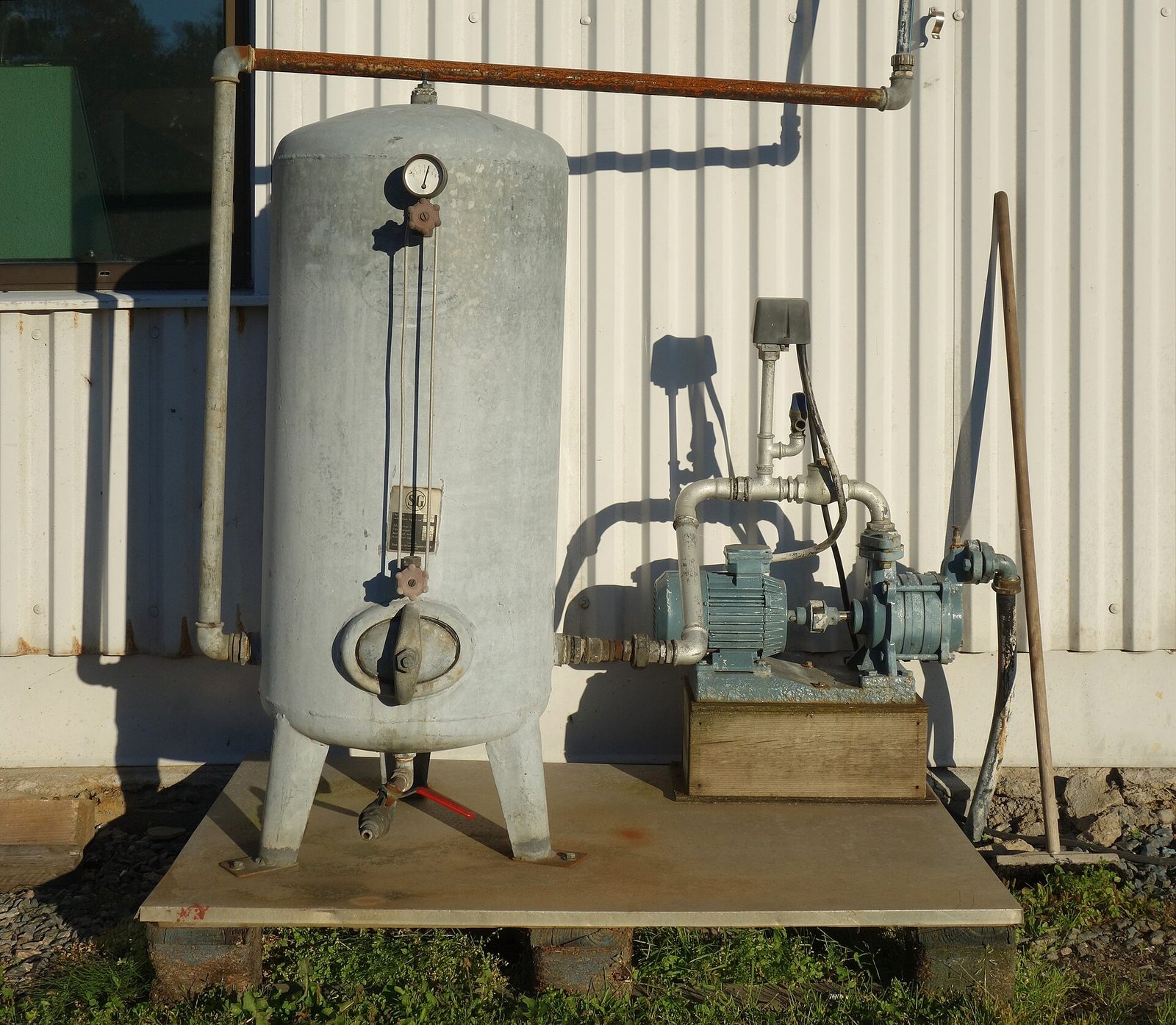
Some systems pair the pump with a pressure tank and a pressure switch. The tank stores a small reserve of pressurized water, so the pump does not need to start for every brief hand wash. The switch turns the pump on when pressure falls to a set point and off when it recovers. A well-sized tank reduces short cycling, smooths delivery, and can extend pump life. The trade-off is space: a tank needs room, and its air charge needs occasional checking.
Variable-Speed and Constant-Pressure Systems
Variable-speed systems adjust motor speed to match demand, aiming to hold pressure steady whether one faucet or three are open. When they work as designed, they can feel noticeably calmer and quieter than fixed-speed systems that swing between on and off. They also tend to be more complex and more expensive, and they rely on electronic controls that should be protected from moisture and power surges. For households whose main complaint is pressure that rises and falls, that steadiness may be worth more than raw power.
How to Choose by Use Case
Weak Showers on an Upper Floor
If the main problem is an upstairs shower, focus on head and delivery at the farthest fixture. A pump that looks adequate at the ground floor may still fall short two stories up, especially with long pipe runs. A multistage or constant-pressure design is often the more realistic fit, and checking for clogged shower heads, old restrictive valves, and narrow supply runs matters just as much as pump size.
Several Fixtures Running at Once
For busy family homes, flow at target pressure is the deciding factor. Morning routines that combine showers, toilet flushing, laundry, and kitchen use will expose an undersized pump immediately. Size for your real peak, consider a pressure tank to soften demand spikes, and do not judge a pump only by its maximum flow figure.
A Whole House on a Weak Municipal Supply
When incoming pressure is low all day, a whole-house booster installed after the main shutoff and any required backflow protection is the usual approach. This is also the case where local rules matter most, because some water suppliers require specific backflow prevention or limit how a booster can draw from the main. Confirm those requirements before you buy, not after the pump is on the wall.
One Problem Area Only
Sometimes only part of the home suffers: a distant bathroom, an irrigation zone, or a laundry room at the end of a long run. In those cases a smaller point-of-use approach near the problem area may be simpler than boosting the entire house, provided the supply pipe feeding that area can deliver enough water in the first place. Boosting pressure cannot fix a pipe that simply cannot carry the volume you need.
Installation: What to Expect
Installation is where many booster projects succeed or fail. A typical whole-house setup places the pump on the main supply line, after the meter and main shutoff and in line with any filtration or backflow devices your code requires, in an accessible, dry, and frost-protected spot. The pump needs a stable mount, correct inlet and outlet orientation, isolation valves so it can be serviced, and often a bypass loop so the house still has water if the pump is removed for repair.
Before You Install
Shut off the water, drain the affected lines, and confirm electrical supply before any work begins. Check local plumbing and electrical codes, and be realistic about your own skills: a booster pump combines pressurized plumbing and electricity in one project, which is exactly the combination that rewards professional help. Many homeowners hire a licensed plumber for the wet work and an electrician for a new circuit, even if they are comfortable with general DIY.
During Installation
Follow the manufacturer’s instructions for priming, venting air, and setting the pressure switch or controller, because start-up procedure varies by design. Open a downstream faucet to let air escape, check every joint under pressure, and listen during the first cycles. Short, rapid cycling usually means the tank charge, switch settings, or sizing need attention, while rattling or hammering can point to loose mounting or pressure set too high.
After Installation
Test the fixtures that frustrated you in the first place, at the times of day they frustrated you. Run the shower and the washing machine together. Fill a tub. Flush while the shower runs. A good installation is judged by those ordinary moments, not by a gauge reading taken in an empty house at midday.
Care and Maintenance
Booster pumps are not set-and-forget appliances, but the routine is manageable. Check periodically for leaks around fittings and seals, listen for changes in noise or cycling behavior, and keep the area around the pump dry and ventilated. If your system has a pressure tank, check its air charge with the system depressurized as the instructions direct, because a waterlogged tank is a common cause of rapid cycling. If you have inlet filters or strainers, clean or replace them on schedule, since a clogged filter can mimic pump failure.
Protect the pump from freezing if it sits in a garage or outbuilding, and follow the manual for any seasonal shutdown. Keep the manual, your pressure settings, and the install date together, and note any changes you make to switch settings, one adjustment at a time, so you can undo a change that makes things worse. A pump that suddenly runs longer, louder, or hotter than usual is asking for attention, and catching that early is far cheaper than a burned-out motor.
Common Mistakes to Avoid
The most common mistake is buying a pump before diagnosing the problem. A clogged aerator, a failing regulator, a half-closed valve, or corroded narrow pipes can all masquerade as a pump problem. The second mistake is sizing by headline numbers alone, ignoring flow at your actual target pressure and the height of your highest fixture.
Other frequent errors include setting the target pressure too high and stressing old plumbing, installing a pump without a needed backflow preventer, skipping the pressure tank or sizing it too small so the pump short-cycles, mounting the pump where it cannot be serviced, and ignoring noise until the pump is bolted beside a bedroom wall. Finally, many owners forget the electrical side: an undersized circuit, a missing ground-fault protection, or a damp location for electronic controls can turn a plumbing upgrade into a safety problem.
Frequently Asked Questions
How do I know if I need a booster pump or just a repair?
If pressure is low at every fixture, all day, and a gauge confirms it, a booster pump is a reasonable answer. If only one fixture is weak, or pressure changed suddenly, look for a clog, a valve problem, or a failing regulator first. A pump will not fix a blockage.
Will a booster pump increase my water flow as well as pressure?
Pressure and flow are linked. Raising pressure usually improves flow at fixtures, but only up to what your pipes and the incoming supply can deliver. If the supply line itself is too small or restricted, a pump cannot move more water than the line allows.
What PSI should I set a home booster pump to?
Aim for a moderate, steady pressure that makes daily use comfortable without straining pipes and fixtures, and stay within local code and supplier limits. Exact settings depend on your home, incoming pressure, and pump design, so confirm them during installation rather than copying a number from another house.
Do I need a pressure tank with a booster pump?
Not always, but a tank often helps. It reduces how often the pump starts, smooths pressure during small draws, and can extend pump life. Constant-pressure variable-speed systems handle this differently, using controls instead of a large tank, though many still use a small one.
How loud are booster pumps?
Noise varies widely by design, mounting, and location. A pump on a solid mount in a utility space, with flexible connectors where recommended, will be far less intrusive than the same pump bolted to a resonant surface near living space. Variable-speed systems running below full speed are often perceived as calmer, but installation quality matters as much as type.
Can I install a booster pump myself?
A confident homeowner with plumbing and electrical experience may be able to, where code allows, but many installations are better handled by a licensed plumber and, for new circuits, an electrician. Permits, backflow rules, and potable-water requirements vary by location, and mistakes can damage plumbing or create safety risks.
Conclusion
The best booster pumps for water pressure are the ones sized for your real life: enough flow for your busiest hour, enough head for your highest shower, a sensible target pressure your plumbing can live with, and controls that keep delivery steady without constant cycling. Diagnose first, respect local code, choose materials built for drinking water, and plan the installation and maintenance before you buy. Done that way, a booster pump stops being a gamble and becomes what it should be: the quiet background reason your shower finally feels right, even when the washing machine is running.
Word count (body, excluding front matter): 2,713 words.