Best Solar Powered Water Pumps: How to Choose a Complete Solar System
Choosing the best solar powered water pumps is not just about choosing a pump. It is about choosing a complete system that must work together on bright days, cloudy mornings, and everything in between. The pump, panel, controller, wiring, and, in some setups, a battery all affect how much water you get, when you get it, and how reliably the system runs over a season.
This guide takes a system-first approach. Instead of ranking models or relying on unverified claims, it explains how to work out how much water you need, how high and how far it must travel, and how much solar power is required to move it in the sunlight your site actually receives. It also covers flow rate, head height, power source, and materials, and how those criteria change when power comes from the sun and the pump may sit submerged for long periods.
Disclosure: As an Amazon Associate, Daily Home Decorating earns from qualifying purchases made through links in this article, at no extra cost to you. Product details are based on published manufacturer specifications.
Quick Picks
| Pick | Product | Best For |
|---|---|---|
| Best Overall | Solariver Solar Water Pump Kit, 20W (SRK20360) | Most ponds and water features |
| Best for Wells & Farms | ECO-WORTHY 12V Solar Well Pump Kit, 200W (SPE-24-12) | Deep wells, livestock and tank filling |
| Best Mid-Size Pond Kit | POPOSOAP 20W Solar Water Pump | Adjustable flow for garden ponds |
| Best for Larger Fountains | ECO-WORTHY 25W Solar Fountain Water Pump Kit | Bigger fountains and pond aeration |
| Best with Filtration | POPOSOAP 55W Solar Pond Filter with Fountain Pump | Koi ponds that need filtering as well as flow |
| Best for Birdbaths | AISITIN 2.5W Solar Fountain Pump | Birdbaths and small tabletop features |
Our Picks
1. Solariver Solar Water Pump Kit, 20W (SRK20360) — Best for most ponds and water features
The Solariver SRK20360 is the kit to start with if you want a complete, sensibly matched solar system rather than a box of parts. A 20-watt, 12V panel drives a submersible pump rated at 360+ GPH, which is enough to run a modest fountain, feed a small waterfall, or keep a garden pond or hydroponic setup circulating through the sunny hours. The listing highlights an adjustable flow valve and dry-run protection, two details that matter in real use: you can tune the display instead of accepting whatever the sun gives you, and the pump is protected if the water level drops. Extension tubes and three fountain attachments are included, and the long cord gives you freedom to place the panel in full sun while the pump stays in the water. Like most kits at this level there is no battery, so flow follows the daylight — exactly the trade-off the guide above describes. Choose it for features and small-to-medium ponds where daytime circulation is the goal.
2. ECO-WORTHY 12V Solar Well Pump Kit, 200W (SPE-24-12) — Best for wells, livestock and tank filling
Where the smaller kits are about decoration, this ECO-WORTHY kit is about supply. Two 100W panels feed a stainless steel submersible well pump through a 20A charge controller, and the published figures are aimed at real off-grid work: around 3.2 GPM, a maximum lift of 230 feet, and a maximum submersion of 100 feet, with a 10-foot pump cable in the kit. That makes it a credible option for filling header tanks, watering livestock, or irrigating from a well or borehole where there is no mains power to lean on. Stainless construction suits long submersion, and because it is a genuine system — panels, controller and pump sized together — it answers the panel-sizing and controller questions raised earlier in this guide better than a bare pump ever could. Output still depends on sun and depth, so size it against your busiest day, not your average one. Pick it when the water has a job to do on a small farm, allotment, or off-grid plot.
3. POPOSOAP 20W Solar Water Pump — Best adjustable mid-size pond kit
POPOSOAP’s 20W kit sits in the useful middle of the solar range: a 20W, 18V panel, a maximum flow of 320 GPH, and adjustable flow control so you can calm the pump down for a small pond or open it up for a waterfall. The 16.4-foot cord is a practical highlight, because panel placement decides how many working hours you actually get, and a longer lead means the panel can sit in open sun while the pump stays shaded in the feature. Spray heads and PVC tubing are included, so it can arrive as a fountain and later be replumbed as a simple circulation or waterfall pump. There is no battery storage, so expect it to work when the sun does and rest when it does not — fine for ornamental ponds and wildlife gardens, less suitable where fish depend on constant movement. Choose it if your pond is mid-sized, your layout needs cord length, and you want flow you can tune rather than a fixed-speed novelty pump.
4. ECO-WORTHY 25W Solar Fountain Water Pump Kit — Best for larger garden fountains
If a 20W kit sounds marginal for your feature, this 25W ECO-WORTHY kit steps up both panel and pump. The monocrystalline 25-watt panel drives a submersible pump rated at 410 GPH with a maximum lift of about 6.9 feet, which translates into a stronger fountain display, better pond aeration, or a short stream that still has energy left at the top. It is sold as a complete fountain kit for ponds, water features and hydroponics, so the components are matched rather than improvised — the system-first approach this guide recommends. The extra headroom matters more than the headline flow: at a real working lift, a pump with margin keeps a respectable stream, while a pump at its limit fades to a dribble. There is no battery, so plan on a daytime feature. Pick it for larger basins, taller risers, and ponds where you want visible movement and oxygenation whenever the sun is out.
5. POPOSOAP 55W Solar Pond Filter with Fountain Pump — Best for pond filtration as well as flow
Most solar pumps only move water; this POPOSOAP kit filters it too. A 55W panel powers a brushless 580 GPH pump paired with a filter box containing filter pads and bio-balls, and the listing positions it for ponds up to roughly 1,160 gallons — koi ponds, waterfalls and larger garden features where clarity matters as much as circulation. That combination addresses a gap in many solar setups, where the water moves all day but fines and debris are never captured. Brushless motors are the right call for a pump expected to run every sunny day of the season, and the kit includes nozzles and tubing so it can double as a fountain. As with every battery-free solar system, filtration stops when the light does, so heavily stocked ponds should treat it as daytime support rather than their only line of defence. Choose it when your pond needs cleaning and circulation in one solar package.
6. AISITIN 2.5W Solar Fountain Pump — Best for birdbaths and small features
Not every solar job needs panels on stakes and hundreds of gallons per hour. The AISITIN 2.5W is a compact floating fountain — a 6.7-inch unit with the panel built into its top face — that drops into a birdbath, bowl, or small container pond and starts spraying as soon as sunlight hits it. Six nozzles are included so you can change the spray pattern and height, with listed spray heights in the 15–27 inch range depending on nozzle and sun strength. There are no cables to route and no separate panel to site, which makes it the simplest possible introduction to solar water movement, and easy to lift out for cleaning. The limits are equally simple: no battery means no stored power for cloudy spells or evenings, and flow is decorative rather than useful for filtration. Pick it to keep birdbath water moving, discourage mosquitoes, and add life to a sunny corner for very little effort.
How to Choose: The Core Criteria
Every pump purchase starts with the same four questions, but solar power makes each one more important. If any one is wrong, the whole system underperforms, and there is no wall outlet quietly making up the difference.
Flow Rate: How Much Water Do You Need?
Flow rate is how much water a pump moves in a given time, usually in gallons per hour or gallons per minute. Start with your real daily need. For a garden, add up how long you water, how many beds you cover, and how often you irrigate in dry weather. For a pond, think about circulation: how often you want the pond volume to turn over for clarity and oxygen. For a small farm, count drinking, cleaning, and crop needs on the busiest day, not the average day.
Headline flow figures are achieved with little or no lift and short piping, so real flow falls as lift, distance, filters, and fittings increase. Compare flow at your working conditions, not just the biggest number on a box. For solar, also think in water per day: a pump running steadily through the sunny hours can deliver a useful daily total even if its hourly rate looks modest.
Head Height: How High and How Far?
Head height, or head, is the vertical lift a pump must overcome, plus resistance from pipes, hoses, bends, and filters. Measure from the water surface where the pump draws to the highest point where water is delivered, then add an allowance for friction. Long runs, narrow hose, sharp bends, and clogged filters all act like extra lift.
As a pump approaches its maximum head, flow drops sharply, and beyond that limit it may deliver almost nothing. Choose a pump whose comfortable working range — not just its maximum — covers your measured lift with room to spare. If your site has a slope or a long pipe run, measure carefully and write the numbers down before you shop.
Power Source: Sunlight as a Fuel Supply
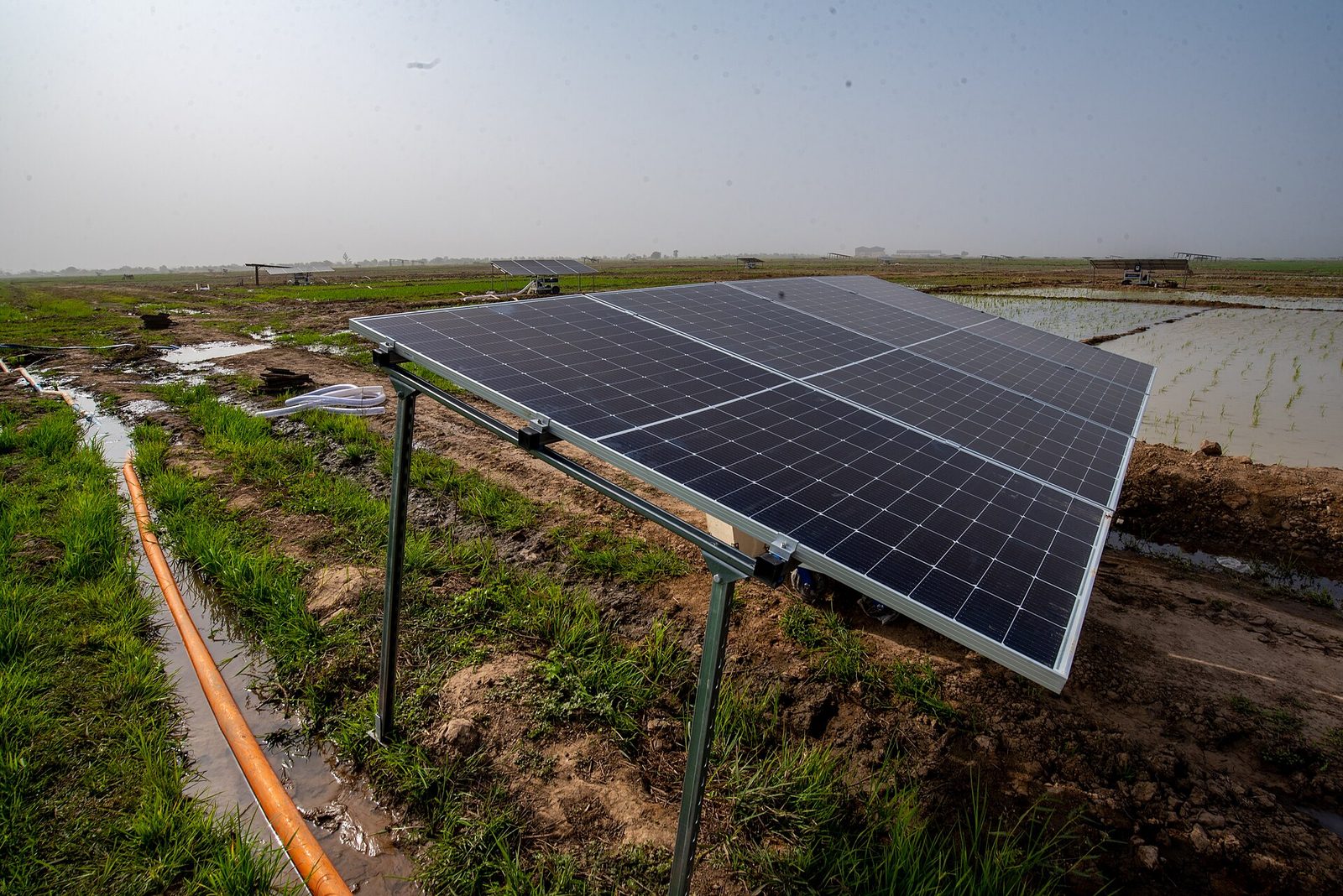
With solar powered water pumps, the power source is a system, not a single part. The panel converts sunlight into electricity, the controller manages that electricity and protects the pump, and the pump converts it into moving water. A capable pump paired with an undersized panel will run slowly or only in strong sun. A generous panel paired with an unsuitable controller can waste power or fail to protect the motor.
Think about when you need water. Direct solar systems pump while the sun shines, which suits filling a tank during the day, circulating a pond, or irrigating in daylight. If you need water before sunrise, after sunset, or on overcast days, you need stored energy or stored water. Storing water in an elevated tank is often simpler than storing electricity, because the tank then supplies water by gravity when the pump is off. Panels also need an unshaded spot close to the pump, safe from damage and flooding. Shade that looks harmless in the morning can cut output for hours, so check your site at different times of day.
Materials and Corrosion Resistance When Submerged
Many solar pumps are submersible, meaning the body sits in the water it moves. Constant immersion is demanding. Look for materials described as corrosion resistant and suitable for continuous use in water, and check seals, cable quality, and the intake screen. Minerals, algae, and organic debris in pond water add to the strain, and cheaper materials that corrode or crack will lose efficiency and fail early.
Check what the pump is rated for. A pump intended for clean water may struggle in a muddy pond or a gritty farm source, which wears internal parts quickly. A robust intake filter helps, but only if you can reach it for cleaning. Stainless steel, engineered plastics, and other water-resistant materials are common in submersible designs because they cope better with immersion. Confirm that cable entries and connectors are sealed for submerged use, not merely splash resistant.
Understanding a Complete Solar Pumping System
A satisfying solar installation is a matched system, not a collection of parts. Four elements deserve attention: the panel, the controller, the pump, and optional storage.
Solar Panels: Sizing by Sunlight, Not by Guesswork
Panel sizing starts with your local sunlight. The same panel produces far more energy on a long, clear summer day than in a short, overcast winter week. Begin with the pump’s power requirement, as stated by its maker, then consider how many effective sun hours your site receives in the season when you need the most water. Gardens and farms need the most pumping in summer, which aligns with the strongest sun, but shoulder seasons still matter for early crops and year-round ponds.
Size the panel with a margin above the pump’s minimum requirement. That margin helps the pump start earlier, run later, and keep working through light cloud and lower morning and afternoon sun. Follow the system maker’s guidance on compatible panel ranges, and keep panel voltage and pump requirements matched as a set. Dust, pollen, and bird droppings reduce output, so mount panels where you can clean them safely, at an angle that sheds rain and debris.
The Controller: The Brains of the System
A controller sits between panel and pump. Depending on the design, it can regulate voltage, manage starting in low light, protect against damaging conditions, and connect a battery if the system supports one. Small pumps may have built-in electronics, while larger systems use a separate controller mounted out of the water in a dry, ventilated place.
Ask what protections a controller provides, such as safeguards against dry running, overload, or incorrect wiring, and confirm them for any specific setup. Simple indicator lights or a display showing whether the pump is running, paused for low light, or stopped by a fault makes troubleshooting far easier than guessing.
Battery Storage: When It Helps and When It Does Not
A battery lets the pump run in cloud, early or late in the day, and, for small needs, after dark. That can matter for livestock water on demand, a pond feature in the evening, or irrigation timed to avoid midday heat. The trade-offs are cost, maintenance, and lifespan: batteries need correct charging through a compatible controller, a dry and ventilated home, and eventual replacement.
Many gardeners find that a larger water tank, filled during sunny hours, delivers the same benefit with fewer parts. Choose battery storage when you need pumping at unsunny times, not by default. If you include one, size panel, controller, and battery together, since changing one part affects the others.
The Pump: Surface or Submersible?
Surface solar pumps sit out of the water and draw through a hose. Submersible solar pumps sit in the source itself, push water efficiently, prime easily because they start in water, and run quietly. They suit wells, tanks, ponds, and deeper sources. Surface pumps are easier to access for cleaning and inspection, but they need careful priming, a sealed suction hose, and protection from weather and running dry. Depth, debris, distance, and access for maintenance should decide this choice.
Types of Solar Pumps and Related Options
Solar pumps are often described by the job they are built for. Small circulation pumps serve ponds and water features, prioritizing gentle, continuous movement over high lift. Irrigation-oriented pumps prioritize useful flow at moderate head for drip lines, soaker hoses, or filling distribution tanks, though pressurized drip layouts may need extra components for even delivery. Higher-lift pumps raise water from deeper sources or up slopes to storage, trading maximum flow for pushing power.
Two operating styles matter as well. Direct-drive systems run mainly while sunlight is available. They are simple, have fewer parts to maintain, and pair naturally with water storage. Battery-backed systems add stored electricity for flexibility at higher cost and complexity. Neither is automatically better. The right style matches when your plants, animals, or pond actually need water.
How to Choose by Use Case
Gardens and Allotments
A forgiving garden design is solar pumping into a storage tank or water butt during the day, with watering by gravity or a low-pressure hose from storage. This smooths out the mismatch between sunny hours and the morning or evening times many gardeners prefer to water. If you irrigate directly, remember that long, narrow lines and filters reduce delivery. Raised beds on a slope add head that is easy to forget, so measure from your highest bed, not your nearest one.
Ponds and Water Features
Pond owners usually want circulation, a small waterfall or fountain effect, or both. Circulation supports clearer water and better oxygen distribution, and ponds benefit most on sunny days, when warm water holds less oxygen. Size for gentle, sustained running rather than a dramatic display for one hour at noon. Place submersible pumps where you can retrieve them for cleaning, keep intakes clear of weed and silt, and route cables so they are protected and not a tripping hazard.
Small Farms, Livestock, and Remote Water
On a small farm, reliability matters more than novelty. Livestock need consistent daily water, and remote troughs and fields may be far from mains electricity, which is where solar earns its keep. Design for the busiest day, provide storage so a cloudy day does not become an emergency, and protect panels, controllers, and cables from animals, machinery, and weather. A float switch in a trough or tank, where a system supports one, can stop pumping when storage is full and restart it as the level falls. Confirm compatibility before relying on automatic control.
Filling Tanks and Off-Grid Use
For off-grid buildings and remote tanks, solar pumping into elevated storage is often the backbone of the water supply. Head calculations are critical here, because lifting to a roof-level or hillside tank is real work for a small system. Keep pipe runs as short, straight, and wide as practical, protect stored water from contamination and freezing where relevant, and keep a simple manual backup for maintenance days.
Installation: Setting Up Safely and Well
Position the panel in full sun, secure it against wind, and confirm the mounting will not shade itself. Run cables with gentle bends, protect them from abrasion, rodents, and strimming, and keep connections dry and accessible. Place the controller out of the water, sheltered from rain and direct heat, following its instructions for ventilation and mounting.
Electrical Safety with Submersible Solar Pumps
Although many small solar systems work at lower voltages than mains equipment, treat the electrics with respect. Water and electricity are a risky combination in any form. Never handle connections with wet hands or while standing in the water with the system connected. Disconnect the panel, or cover it to stop generation, before working on wiring, because a panel produces power whenever light falls on it. Use only cables and connectors rated for outdoor and, where applicable, submerged use. If any part connects to mains electricity, that work should follow local electrical codes and is best handled by a qualified electrician.
Lower a submersible pump into the water with a rope attached to its lifting point, never by its electrical cable. Support the delivery pipe so its weight does not hang from the pump outlet. Test the system on a clear day, check every joint for leaks, and confirm that flow at the delivery point meets the need you calculated. Adjust panel position or pipe routing at this stage, while changes are still easy.
Submersible pumps must stay fully submerged, below the lowest expected water level, with clearance from silt at the bottom. Keep the intake off the bottom so debris is not drawn in constantly, but low enough that normal drops in level do not expose it. Watch the first runs closely: strain, surging flow, or frequent cut-outs point to excess head, low light, a blocked intake, or a system mismatch that is better corrected now than after a season of wear.
Care and Maintenance
Clean the panel surface when dust, pollen, or droppings build up, using gentle methods that will not scratch it, and check the mounting after storms. Inspect cables and connectors for damage, corrosion, and water entry, especially where cables enter the water or pass through tank walls and pond liners.
Clean intake screens and pre-filters on a schedule based on your water, not the calendar alone: a leafy pond in autumn needs more frequent checks than a clean tank. Remove algae, silt, and grit before they restrict flow and make the motor work harder in weak light. If the pump will sit unused through freezing weather, follow the maker’s guidance on removing, draining, and storing it, since ice can damage seals and housings. Batteries need clean terminals, correct charging, and planned eventual replacement. Keep simple notes on weak flow and filter cleaning; that record makes troubleshooting much faster.
Common Mistakes to Avoid
The most common mistake is buying a pump alone and treating the panel as an afterthought, or the reverse. Solar pumping works as a matched system, and mismatched parts are a leading cause of disappointment. A close second is ignoring head height, especially lift to a raised tank or uphill bed, and then blaming the sun for a problem that is really physics.
Other frequent errors include placing the panel where partial shade crosses it for hours, sizing for average days instead of the busy season, and needing water at night without storing either water or electricity. Letting intakes clog until the pump strains or runs dry shortens its life, as does hauling a submersible pump out by its cable or leaving connections in puddles. Finally, many buyers skip the daily-needs calculation. Ten minutes with a bucket, a watch, and a tape measure will tell you more than an afternoon of marketing claims.
Frequently Asked Questions
How many solar panels do I need for a water pump?
It depends on the pump’s power requirement, how many hours it must run, and how much effective sunlight your site receives in the season of greatest need. Start from the maker’s compatible panel range, then size with a margin so the pump runs usefully in morning, afternoon, and light cloud, not only at midday.
Can solar powered water pumps work on cloudy days?
They can, but output falls as light falls. A well-sized system may keep pumping at a reduced rate through light cloud, while heavy overcast may pause a direct-drive system until light improves. If uninterrupted delivery matters, store water during sunny periods, add battery storage, or combine both.
Do I need a battery for a solar water pump?
Not always. Many garden, pond, and tank-filling systems work well without one by pumping while the sun shines and storing the water itself. A battery helps when you need pumping early, late, in cloud, or after dark, but it adds cost, maintenance, and eventual replacement.
Are submersible or surface solar pumps better?
Neither is universally better. Submersible pumps prime easily, run quietly, and push water well from wells, tanks, and ponds, but they must be retrieved for cleaning. Surface pumps are easier to inspect but need an airtight suction line, priming, and weather protection. Let your water source decide.
How long do solar water pumps last?
Lifespan depends on build quality, water conditions, correct sizing, and maintenance. A correctly matched system, protected from dry running and kept clean, should give extended service, while a strained or clogged system can wear quickly. Panels generally outlast pumps and batteries, so plan for those parts to need attention first.
Can a solar pump run a garden irrigation system?
Yes, within limits. It can feed low-pressure watering directly or, more reliably, fill a storage tank that then supplies irrigation. Pressurized layouts with many outlets, filters, and long lines add head and demand steadier pressure, so calculate flow and lift carefully and consider storage.
Conclusion
The best solar powered water pumps are complete, well-matched systems: a pump chosen for your real flow and head height, a panel sized for your sunlight with a sensible margin, a controller that protects the equipment, and storage — of water, electricity, or both — only where your pattern of use truly needs it. Start with measurements, not marketing: how much water, how high, how far, and when. Match materials to life in the water if the pump will be submerged, install with care around electricity and water, and keep panels, intakes, and connections clean. A system chosen that way will quietly move the water you planned for, through the sunny hours, season after season.
Word count (body, excluding front matter): 2,951 words.