Disclosure: As an Amazon Associate, dailyhomedecorating.com earns from qualifying purchases. Links to Amazon on this page are affiliate links; they cost you nothing extra. Prices and availability change often, so check the current Amazon listing before you buy.
The best blankets for rabbits are chosen by a different standard than any other blanket in a home, because the user is a small herbivore with continuously growing teeth and strong opinions. A rabbit blanket has to be soft enough for delicate feet (rabbits lack paw pads and are prone to sore hocks on hard or abrasive floors), safe when chewed and dug at — which it will be — washable at a tempo set by litter habits, and cheap enough to replace without resentment when a determined bunny renovates it. Fleece is the rabbit community’s standard answer for a specific physical reason: it does not fray into long threads when chewed or torn, and loose threads are the entanglement and ingestion hazard that makes woven blankets risky.
This guide ranks the options honestly from our verified pool plus the wider category. Three linked picks are fleece blankets from the pool that rabbit owners genuinely use — as enclosure flooring, bonding blankets, and cuddle laps — with their sizes and limits stated plainly. Three further slots are prose-only recommendations for the dedicated rabbit-textile types (fleece liners, natural grass mats, and washable absorbent pads), described qualitatively with no links and no invented specifications, because the pool contains no rabbit-specific products and this guide will not pretend a bed blanket is one. Safety framing runs throughout: supervise chewing, retire damaged textiles, and never give a rabbit a heated or weighted blanket.
If your rabbit shares the human bed or couch, the pet-household strategies in our Best Dog Blankets For Bed guide transfer surprisingly well — sacrificial layers, designated territory, rotation washing — scaled down to a two-kilogram interior decorator.
Where to Buy
The linked picks below are sold on Amazon, where you can check the current price and size before buying; the prose-only picks are rabbit-textile types to search for by description. Start with our top pick, the Exclusivo Mezcla Fleece Throw Blanket — Check on Amazon. The remaining linked picks: Bedsure GentleSoft Sherpa Fleece Throw Blanket — Check on Amazon; Bedsure Fleece Bed Blanket Queen — Check on Amazon. The prose-only picks (fleece enclosure liners, natural grass mats, and washable absorbent pads) are reviewed in their own blocks below.
In this guide
Quick Picks
| Pick | Badge | Why it earns its place |
|---|---|---|
| Exclusivo Mezcla Soft Large Fleece Throw Blanket for Couch | Best Overall | Light, smooth fleece at a replaceable price — the everyday enclosure, floor-time, and lap blanket. |
| Bedsure GentleSoft Sherpa Fleece Throw Blanket for Couch | Best for Cuddling and Bonding | A plush lap blanket for bonding sessions, with a smooth flannel face that is easier on hay and hair. |
| Bedsure Fleece Bed Blankets Queen Size Grey – Soft Cozy Warm Winter Blanket | Best for Large Enclosures | Queen-size fleece to line a pen or floor-time room in one piece — or cut into multiple liners. |
| Fleece enclosure liners (prose-only) | Best Purpose-Built | Pre-sized fleece liners made for pens and cages, described below. |
| Natural grass and hay mats (prose-only) | Best Chewable | Edible woven mats that satisfy the digging and chewing the fleece must be protected from, described below. |
| Washable absorbent pads (prose-only) | Best for Litter Zones | Absorbent washable pads for under litter boxes and water bowls, described below. |
Key Takeaways
- Fleece is the rabbit standard because it does not fray into threads — the entanglement and ingestion hazard of woven textiles.
- Supervision is part of the product: any rabbit that ingests fabric needs the textile removed and a vet’s advice, not a tougher blanket.
- Buy for replacement: cheap, washable, and multiple beats one precious blanket at rabbit tempo.
- Never heated, never weighted, never long-pile — a rabbit’s blanket system is flat, light, and boring by design.
- Give the chewing somewhere legal to go (grass mats, hay, cardboard) and the fleece survives dramatically longer.
How These Picks Were Chosen
We applied rabbit-specific filters to the verified pool, and most of the pool failed them honestly. Long piles (faux fur, sherpa faces) trap hay, hide debris, and invite ingestion of fibers; open knits catch claws and teeth; waffle weaves snag nails; weighted and heated products are unsafe for a small animal that cannot move or escape them and may chew cords. What survived were flat fleeces: smooth, low-pile, machine washable, and inexpensive — the Exclusivo as the everyday standard, the GentleSoft for supervised lap and bonding time (its flannel face out, sherpa managed), and the queen Bedsure as bulk fleece for large spaces and DIY liners.
The three prose-only slots cover what the pool cannot: the purpose-built fleece liner market, the chewable mat category that protects every other textile, and absorbent washable pads for the wet zones of rabbit keeping. Each is described by its well-known category characteristics, without links or fabricated specifications, following this site’s rule for partial-fit keywords — the reader is told exactly what is linked, what is not, and why.
A veterinary commonplace underlies the whole guide and is stated once, plainly: rabbits that eat fabric, rubber, or carpet are at risk of gastrointestinal blockage, a genuine emergency. Blanket choice reduces exposure; it does not eliminate the need to watch what your rabbit actually does with textiles, especially in the first weeks with a new one. When in doubt, ask your rabbit-savvy vet — this guide is a buyer’s guide, not a medical one.
The 6 Best Best Blankets for Rabbits — Reviewed

Exclusivo Mezcla Soft Large Fleece Throw Blanket for Couch
Our badge: Best Overall
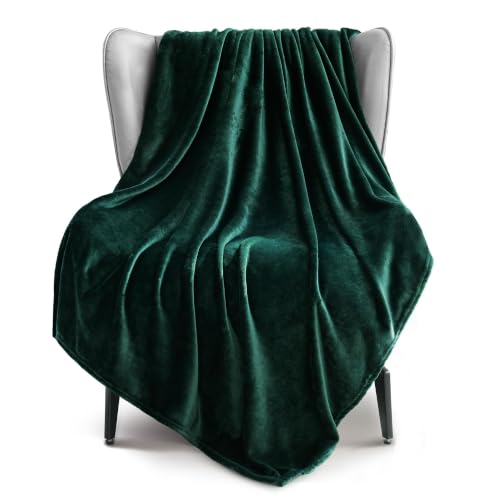
The Exclusivo Mezcla Soft Large Fleece Throw Blanket for Couch is the rabbit blanket of practical keepers: a smooth brushed flannel fleece, 50×70 inches, at 1.55 pounds and a price that treats replacement as a routine event. Its flat, low-pile surface is the safest common textile geometry for rabbits — nothing to catch a claw, no threads when torn, soft under unpadded feet — and its size covers a pen floor, a floor-time corner, or a lap with room to spare.
Strengths
- Flat fleece construction: the rabbit-safe standard, with no fraying threads when damaged
- Light and quick-washing — the tempo rabbit laundry actually runs at
- Replaceable price: buy several, rotate them, retire the chewed without grief
Trade-offs
- It is a human throw, not a rabbit product — no absorbent layer, so pair it with pads in wet zones
- A determined digger will eventually hole it; that is the fleece’s job in the system, not a defect
- Forest green shows hay and light fur plainly (hay shows on everything; accept it)
| Color | Forest Green |
| Size | Throw XL (50″ x 70″) |
| Weight | 1.55 pounds |
Deployment patterns from real rabbit rooms: folded double as a pen’s sleeping corner, flat as the floor-time mat that defines the rabbit’s territory on a hard floor, and draped over the keeper’s lap for handling and grooming sessions, where its smoothness sheds hay and fur better than any plush alternative. The maker’s care routine — cold gentle wash, low dry — suits the weekly (or twice-weekly) rabbit wash cycle, and the blanket dries fast enough to return the same day.
Introduce any new fleece with supervision for the first sessions: most rabbits dig, bunch, and rearrange fleece harmlessly, but the minority that eat it declare themselves early, and those rabbits get fleece only under supervision, with grass mats carrying the unsupervised hours. That single observation habit is the difference between fleece as the safest standard and fleece as a vet bill.
Best for: everyday enclosure flooring, floor time, and lap handling for most rabbits / Not suited for: unsupervised use with a known fabric-eater
Choose it as the herd’s standard fleece; skip it only if your rabbit has already voted against fleece entirely. Check on Amazon

Bedsure GentleSoft Sherpa Fleece Throw Blanket for Couch
Our badge: Best for Cuddling and Bonding
The Bedsure GentleSoft Sherpa Fleece Throw Blanket for Couch earns its place in the supervised hours: bonding sessions, lap time, and the carrier-lining role for vet trips. Its smooth flannel face (220 GSM per the maker) is the side the rabbit sits on — hay shakes off it, and it presents no pile to ingest — while the sherpa back (260 GSM) cushions the human’s lap and makes the whole arrangement feel like the plush ritual bonding is supposed to be.
Strengths
- Smooth working face with a plush reverse: comfort for the human, safer surface for the rabbit
- Thicker and more cushioning than flat fleece — kind to older rabbits’ joints during lap time
- Washes back to service easily after supervised sessions
Trade-offs
- The sherpa face is not a rabbit surface: supervise, and keep the flannel side toward the bunny
- Too warm and bulky for enclosure flooring in warm rooms
- It is the most expensive fleece here to have renovated by teeth
| Color | 01 – Grey |
| Size | Throw (50″ X 60″) |
| Weight | 2.03 pounds |
Bonding deserves the emphasis: new rabbits, rescue rabbits, and pairs being introduced all bond better on neutral, soft, keeper-scented textiles, and a dedicated bonding blanket becomes part of the ritual’s furniture — the rabbit learns that this blanket means calm handling, grooming, and treats. The GentleSoft’s human-grade softness matters because bonding sessions are long, and a comfortable keeper is a patient one. It was recognized in the Good Housekeeping Best Bedding Awards as a fuzzy fleece throw per the maker; in the rabbit room, its award is the first voluntary lap-sit.
Between sessions it lives out of the enclosure, which is the correct storage for any textile a rabbit should meet only supervised. If your rabbit is a known fleece-eater, skip this pick entirely and bond on the flat Exclusivo with a grass mat between rabbit and textile.
Best for: bonding, lap time, grooming, and carrier lining under supervision / Not suited for: unsupervised enclosure use or fleece-eating rabbits
Choose it for the relationship hours; skip it as flooring. Check on Amazon

Bedsure Fleece Bed Blankets Queen Size Grey – Soft Cozy Warm Winter Blanket
Our badge: Best for Large Enclosures
Free-roam and large-pen rabbits need fleece by the square yard, and the Bedsure Fleece Bed Blankets Queen Size Grey – Soft Cozy Warm Winter Blanket is the economical way to buy it: 90×90 inches of the same flat flannel fleece, at a bed blanket’s price per area that craft-store fleece rarely beats. One blanket floors a large pen in a single piece — no seams to dig at, no gaps to catch toes — or cuts into a set of custom liners with fleece’s no-fray edge making the cutting a finished act.
Strengths
- Bulk fleece economics: the lowest cost per square foot in this guide
- One-piece pen flooring eliminates the seams and overlaps rabbits exploit
- Cut-to-fit liners with no hemming required — fleece does not fray
Trade-offs
- A 90-inch blanket is a serious laundry object; cutting it into liners is the practical pattern for most homes
- Grey shows hay, fur, and litter evidence honestly (mid-tones hide some of it)
- As with all fleece: flooring for supervised-established rabbits, with eaters managed by the rules above
| Color | Grey |
| Size | Queen (90″ X 90″) |
| Weight | 3.19 pounds |
The DIY liner pattern deserves detail, because it is how experienced keepers actually use this product: measure the pen, cut the fleece two inches oversize in each direction, and let the excess climb the pen’s edges slightly, which discourages the corner-digging that starts most fleece destruction. Cut two sets and the laundry rotation never leaves the pen bare. Under the fleece, place the absorbent pads from the prose-only picks in the litter and water zones, and the system — fleece over pads, grass mats for chewing — is the complete textile architecture of a modern rabbit enclosure.
For floor-time rooms, the uncut blanket protects the human floor and defines the rabbit’s parish in one gesture. Its day job as a bed blanket is covered in Best Blankets For Queen Size Bed; in the rabbit room it is raw material, and excellent raw material at that.
Best for: large pens, free-roam rooms, and DIY liner makers / Not suited for: keepers wanting ready-made, fitted liners with no cutting
Choose it for scale and value; skip it if your enclosure is small and the Exclusivo already covers it. Check on Amazon
Fleece Enclosure Liners (Prose-Only)
Our badge: Best Purpose-Built
This slot is a prose-only recommendation — a product type described qualitatively, with no link and no invented specifications, because the verified pool contains no rabbit-specific products. The dedicated fleece enclosure liner is the same flat fleece as the picks above, but cut and finished to standard pen and cage dimensions, often sold with an absorbent middle layer or as a fleece-and-pad system. Its advantage over DIY is fit and finish: corners that sit flat, sizes matched to common enclosures, and sets sold in rotation quantities.
What to look for when you shop the type: flat, low-pile fleece (never plush or sherpa-faced for unsupervised use), dimensions measured against your actual enclosure rather than a size name, and construction that survives hot, frequent washing — the liner’s whole life is laundry. Keepers who sew often make their own from the bulk fleece above; keepers who do not will find the ready-made premium worth it for the fit alone. Either way, the textile logic is identical to this guide’s linked picks, which is the point: the rabbit market’s purpose-built product and the household fleece aisle converge on the same flat, washable, replaceable answer.
Best for: keepers who want fitted, ready-made pen flooring / Not suited for: unusual enclosure dimensions, where DIY cutting fits better
Choose the type for convenience; there is no link for this pick — search the description and measure your enclosure before ordering.
Natural Grass and Hay Mats (Prose-Only)
Our badge: Best Chewable
Also prose-only, and arguably the most important slot in the guide: woven grass, hay, and seagrass mats are the textiles a rabbit is allowed to destroy. They satisfy the digging and chewing drives that otherwise aim at the fleece, they are edible by design (verify any specific product’s materials before offering it), and they give the rabbit a work surface for the rearranging behavior that keeps indoor rabbits occupied. A pen with a grass mat is a pen whose fleece lives measurably longer.
What to look for: mats woven from named natural grasses without wire cores, glues, or synthetic stitching you cannot verify; sizes that cover the digging corner; and prices that treat the mat as a consumable, because it is one — a well-used grass mat is a mat being replaced monthly, and that replacement is the system working. Rotate mat types (grass, hay, seagrass) for enrichment variety. This is the category where “the rabbit ate the blanket” is the review you want to read.
Best for: every rabbit enclosure, as the legal target for chewing and digging / Not suited for: use as absorbent flooring — mats are enrichment, not plumbing
Choose the type universally; there is no link for this pick — judge by materials and weave, and replace as consumed.
Washable Absorbent Pads (Prose-Only)
Our badge: Best for Litter Zones
The third prose-only type completes the system: washable absorbent pads — quilted, multi-layer pads sold for pets and small animals — go under the fleece in the places rabbits are wet: beneath and around the litter box, under water bowls and bottles, and in the sleeping corner of elderly or unwell rabbits. Fleece alone wicks and passes moisture; the pad is what actually holds it, protecting the floor beneath the pen and cutting odor between changes.
What to look for: a quilted construction that lies flat (rabbits trip on rucked pads and dig at lifted edges), a waterproof or highly absorbent core as your floor requires, and sizes that tile your wet zones without overlap mountains. Wash them on the same rotation as the fleece, with an extra rinse — absorbent cores hold detergent, and residue is an irritant a rabbit lives on top of. Pads are the least glamorous purchase in rabbit keeping and the one that most changes the room’s smell; buy them in rotation quantity from the start.
Best for: litter zones, water stations, and senior-rabbit care / Not suited for: use as the rabbit’s only surface — pads are a layer, not a blanket
Choose the type for the wet work; there is no link for this pick — judge by flatness, absorbency claims you can test, and wash durability.
Comparison Table
| Pick | Type | Role | Supervision | Check price on Amazon |
|---|---|---|---|---|
| Exclusivo Mezcla Fleece Throw | Flat fleece | Everyday flooring and laps | Established rabbits | Check price on Amazon |
| Bedsure GentleSoft Sherpa Throw | Flannel + sherpa | Bonding and lap time | Always supervised | Check price on Amazon |
| Bedsure Fleece Bed Blanket Queen | Flat fleece, bulk | Large pens, DIY liners | Established rabbits | Check price on Amazon |
| Fleece liners (prose-only) | Fitted fleece | Purpose-built flooring | Established rabbits | Check price on Amazon |
| Grass/hay mats (prose-only) | Woven natural fiber | Chewable enrichment | Unsupervised by design | Check price on Amazon |
| Absorbent pads (prose-only) | Quilted pads | Wet-zone layer | Under fleece | Check price on Amazon |
How to Choose the Best Blankets for Rabbits
Start with the fray test
Any textile for a rabbit must fail safely. Fleece tears without producing threads; woven cotton and canvas fray into strings that entangle toes and, if eaten, threaten the gut. When in doubt between two textiles, choose the one whose damage mode is benign — this single rule eliminates most of the blanket aisle and all of this guide’s exclusions.
Know your rabbit’s textile behavior
Rabbits divide into rearrangers (dig, bunch, toss — fleece is safe and ideal) and eaters (ingest fabric — fleece only supervised, with grass mats and hard flooring carrying the rest). The first week with any new textile is an observation period: check for missing pieces, not just holes. Your rabbit’s category, once known, dictates the whole system.
Build the three-layer enclosure
Absorbent pads in the wet zones, flat fleece over everything as the comfort and flooring layer, grass mats as the chewable enrichment on top. Each layer has one job, each is washable or replaceable at its own tempo, and together they cost less than one premium pet product asked to do everything.
Size for the enclosure, then buy double
Liners and fleeces must cover the floor completely — gaps invite digging at edges and toileting on the exposed floor. Whatever you buy, buy two sets: rabbit laundry is frequent, and a bare pen during wash day teaches the rabbit to love the floor you were protecting it from.
Respect the absolutes
No heated blankets (cords, chewing, overheating), no weighted blankets (a rabbit must never be pinned), no long piles or loops (ingestion and claw traps), no rubber-backed mats for chewers (rubber is a blockage risk). These are not preferences; they are the safety floor of the category, and any product marketed for rabbits that violates them should be passed over.
How to Wash Rabbit Blankets and Liners
Rabbit laundry has its own protocol. Shake everything outdoors first — hay is the lint of the rabbit world and it will colonize your machine’s filter if invited. Wash fleece and pads as a dedicated load, warm, with a small amount of unscented detergent and an extra rinse: rabbits live with their noses on these textiles, and fragrance residue is both an irritant and an appetite suppressant for a species that reads the world by smell. Vinegar in the rinse is the traditional odor assist for litter-zone pads. Dry completely before the textiles return to the pen — damp fleece in an enclosure is a smell and a chill. Inspect at folding: holes with missing pieces mean the rabbit ate them, which means supervision rules tighten and, if ingestion was significant, a vet conversation happens. Retire holed fleece to supervised duty or the bin; a liner’s service life is measured in months at rabbit tempo, and the budget in this guide assumes it.
Problem: the rabbit digs holes in every fleece — digging is the hobby, not a defect: add grass mats and a digging box (hay or shredded paper in a cardboard box) to redirect it, and accept a liner replacement rhythm.
Problem: the pen smells despite washing — the pads are the reservoir: increase pad wash tempo, add the vinegar rinse, and check that the litter box itself is not the true source.
Problem: the rabbit eats the fleece — remove unsupervised fleece immediately, switch flooring to hard surfaces plus grass mats, and discuss the behavior with your vet; fabric ingestion is a blockage risk.
Problem: hay sticks to everything — it does; shake outdoors before washing, keep a lint roller by the pen, and prefer the smooth Exclusivo face where hay contact is constant.
Setting Up the Rabbit’s Textile Environment
Beyond the pen, a house rabbit’s textile world includes the floor-time zone (a defined fleece or mat area that teaches the rabbit its parish and protects carpets), the carrier (lined with a familiar fleece so vet trips smell like home — a genuine stress reducer for a prey animal), and the bonding lap (the dedicated blanket of the GentleSoft section). Elderly and arthritic rabbits need the softest version of everything, with low, ramped access and extra padding under thin bodies; babies need supervision doubled and textiles at their most boring. The through-line is that rabbits experience the world at floor level and through their feet and teeth, so their textiles are not accessories but habitat. Budget and rotate them as habitat, and both the rabbit’s health and the keeper’s floors improve together. For the shared human-pet textile strategy at couch scale, Best Throw Pillows Under $100 will not help the rabbit — but the dog guide linked in the introduction covers the sacrificial-layer philosophy that this guide applies at rabbit scale.
Enrichment: The Blanket as a Toy
A final, underappreciated role: fleece as enrichment. Rabbits rearrange — they push, pull, bunch, and tunnel in textiles as a primary indoor behavior, and a loose fleece piece provided for exactly that purpose is occupational therapy for a prey animal in a human house. Keepers drape fleece over a cardboard hidey to make a diggable den, bunch it in a corner for the nightly renovation project, and rotate its placement to renew its interest. The rules stay the same (flat fleece, supervision calibrated to the rabbit’s category, retire the damaged), but the framing changes: the blanket is not merely surviving the rabbit, it is employing the rabbit, and an employed rabbit chews the furniture measurably less. Stock the enrichment fleece when prices dip — the seasonal events in Black Friday Throw Pillow And Blanket Deals include the fleece throws this guide is built on.
Bonding Two Rabbits: The Blanket’s Diplomatic Role
When two rabbits are being introduced, the textiles in the neutral space carry more diplomatic weight than any other equipment in the process. Bonding happens on neutral territory, and a fresh, unclaimed fleece — smelling of no rabbit — is the standard floor of that territory precisely because it belongs to neither party. Keepers rotate bonding blankets between sessions, washing between meetings so each session starts from olfactory zero, and the blanket’s other properties matter too: flat fleece gives nervous rabbits footing that does not slip (a scrabbling rabbit is a frightened rabbit, and frightened rabbits fight), and a smooth surface lets the keeper read body language without textiles bunching into false signals. As the bond progresses, a shared blanket that both rabbits have rested on becomes one of the first genuinely communal objects in the new household, and experienced bonders move it into the shared enclosure as a continuity object. The lap-blanket logic of Best Blankets For Snuggling applies throughout the human side of the process — the keeper sits in or beside the bonding space for hours, and a comfortable keeper is a calm presence rather than a restless one. It is a small role for a blanket, and an entire relationship can turn on it.
Seasonal Adjustments: Heat, Cold, and the Rabbit’s Year
Rabbits regulate temperature worse than their fur suggests — they cannot sweat, they shed heat mainly through their ears, and heat is a more dangerous season for them than cold. The textile system should follow the year. In summer, the enclosure’s fleece thins to a single flat layer or retreats to the sleeping corner only, hard cool surfaces (a ceramic tile, a bare patch of floor) are left deliberately uncovered for the rabbit to sprawl on, and frozen water bottles wrapped in a thin fleece become the season’s beloved furniture — the fleece’s job reduced to keeping condensation off the rabbit and the bottle grippable. The warm-weather physics are the same ones ranked for humans in Best Blankets For Warm Weather: breathability and minimal insulation win. In winter, the system inverts for outdoor and cool-room rabbits: fleece layers deepen, the sleeping corner gains a bunched, diggable fleece nest, and draught-proofing the enclosure matters more than any single textile. Indoor rabbits in heated homes need only the mild version of this adjustment — but the summer thinning is universal, because the heated home’s summer is still summer to a rabbit in a fur coat it cannot remove.
Beyond Fleece: The Other Flooring Honestly Assessed
Fleece is the standard, not the whole world, and a complete guide should place the alternatives. Low-pile cotton rugs and mats serve rabbits who destroy fleece too quickly — cotton frays, so these belong to supervised and non-eating rabbits only, but their weight and grip make them excellent floor-time surfaces. Cardboard, in sheets and in its corrugated glory, is the disposable flooring of digging boxes and temporary pens: free, chewable, replaceable, and acoustically honest about what the rabbit is doing at 3 a.m. Foam play mats tempt many keepers and should be refused — foam is an ingestion hazard of the first order, soft enough to tear, toxic enough to matter. Bare hard flooring, finally, is a legitimate choice for the rabbit who eats every textile offered: paired with grass mats for rest and chewing, a cleanable hard floor is safer than any fabric in a committed eater’s pen, and the rabbit’s comfort can be rebuilt with wooden hideys, hay piles, and cardboard architecture. The system’s goal is a safe, comfortable rabbit — fleece is the usual means, never the point.
Travel, Vet Visits, and Boarding: Blankets Away from Home
A rabbit’s textile system travels, and planning its away-game version prevents the commonest stresses of rabbit logistics. The carrier should be lined with a fleece the rabbit already knows — the familiar smell is a genuine sedative for a prey animal in a moving box — with a spare in the car against the accident that long journeys and nervous rabbits reliably produce. For boarding and pet-sitters, send the rabbit with its own washed-but-lived-in blankets rather than fresh ones: the point is the scent of home, and a boarding facility’s laundry (however kind) will return textiles smelling of elsewhere, which some rabbits accept and some pointedly refuse. Write the rabbit’s textile rules on the boarding instructions in the plainest terms — which blankets are enclosure-safe for this rabbit, which are supervised-only, and the eater/rearranger verdict in words of one syllable — because a sitter cannot be expected to know what took you a month of observation to learn. Emergencies compress all of this: the go-bag for a rabbit household (carrier, familiar fleece, hay, water bottle) should exist before it is needed, assembled in calm for use in chaos. The blanket’s role in every one of these scenarios is the same — it is the portable piece of home, the one object that tells the rabbit the world has changed but not entirely.
The Multi-Rabbit and Multi-Pet Household
Textile systems complicate when the household does. Bonded rabbit pairs share blankets happily — sharing is rather the point of the bond — but a new blanket introduced to an established pair should still pass the observation protocol, because pairs contain individuals and the eater may not have declared itself on the previous textile. Households with dogs and cats add a border-control problem: the rabbit’s fleece must be the rabbit’s, both because dog saliva and cat claws change its safety profile and because scent-marking wars are fought through textiles — a blanket that smells of the dog is a message the rabbit did not consent to receive. Keep the laundry separate, the storage separate, and the floor-time rotations sequenced rather than simultaneous until every animal’s manners are proven. The good news is that the system’s core — flat fleece, washable, replaceable, in rotation — scales from one rabbit to a small zoo without redesign; only the inventory grows. Buy the larger fleece formats, cut liners for every enclosure from the same bolt of logic, and let consistency do what vigilance cannot.
Aging Rabbits and Special Needs: The Softest Version of Everything
The last textile chapter is the tenderest. Elderly rabbits — and rabbits with mobility issues, sore hocks, or recovery from illness — need the system rebuilt around a fragile body. Padding deepens: layered fleece over the absorbent pads, with the top layer changed at a tempo that keeps the surface dry, because an immobile rabbit sitting in dampness develops skin problems with frightening speed. Edges and thresholds flatten: the lip of a litter tray, the step into a hidey, become obstacles, and fleece ramps and low-profile arrangements replace them. Warmth management inverts the usual caution — a thin, old rabbit in a cool room may genuinely need the insulated corner and the extra layers that a young athlete would overheat in, judged always by the individual animal and, where health is in question, by the vet. Textiles also become medical-adjacent tools: the recovery rabbit’s pen is lined for cleanliness above all, with changes frequent enough that the laundry rotation doubles. None of this is a different system — it is the same fleece, pads, and mats, tuned by love and observation to a body whose needs have changed. The keeper who built the system well in the rabbit’s youth will find it adapts; that adaptability was the design all along.
Reading Your Rabbit’s Textile Diary
The blanket system, kept over months, becomes a record of the rabbit’s life that attentive keepers learn to read. The digging migrates — from the pen’s corner to the hidey’s roof to the keeper’s lap — and its migrations track the rabbit’s changing interests and confidence. The sleeping spot moves with the seasons across the enclosure’s microclimates, cool tiles in summer, the fleece nest’s heart in winter, and its movement is a thermometer the rabbit reads more honestly than any instrument. Wear patterns tell the health story early: a rabbit who stops rearranging, whose fleece stays suspiciously pristine, whose favorite corner goes unvisited, is a rabbit whose keeper should look closer, because in a prey animal the first symptom of almost everything is a change in the ordinary. Even the laundry tells tales — appetite for hay shows in the fleece’s debris, molting seasons announce themselves in the wash, and the slow graying of a senior’s favorite blanket is a timeline in textile form. None of this requires sentimentality to be useful; it requires only the habit of noticing, which the rotation’s weekly rhythm builds automatically. The blankets are washed, inspected, and returned fifty times a year, and each return is a small census of a life being lived at floor level, in fleece, on its own terms.
The Budget of the System: What Rabbit Textiles Should Cost
A word on money, because rabbit keeping’s textile budget is often spent upside down — a fortune on one beautiful blanket, nothing on the system around it. The rational allocation inverts the instinct: the majority of the budget belongs to quantity and rotation (multiple flat fleeces, pads in pairs, mats by the stack), a modest slice to the bonding blanket’s quality, and nothing at all to decoration, because the rabbit cannot see the pattern and the keeper will see it mostly in the wash. Seasonal sales and the household-fleece aisle keep the working textiles cheap; the bulk queen fleece cut into liners is the system’s best economics; and the retirement rhythm should be priced in from the start — a liner is a consumable with a service life, and budgeting its replacement is cheaper than the vet visit that a disintegrating, ingested textile can cause. Spend on the system, skimp on the singular, and the rabbit’s world stays soft, safe, and solvent.
Common Buying Mistakes
Buying woven or fringed blankets
Threads are the hazard. Fringe, tassels, and fraying weaves entangle toes and endanger guts. If it can unravel, it does not belong in a pen.
Giving a rabbit a heated or weighted blanket
Both are categorical errors: cords get chewed, heat overwhelms a small body that cannot move the blanket, and weight pins an animal that must always be able to flee. Warmth for rabbits comes from insulation and environment, never devices.
Buying one precious blanket
Rabbit tempo eats precious. The system is multiples of the replaceable — liners in rotation, fleece in pairs, mats by the stack.
Skipping the observation week
The difference between a rearranger and an eater is the difference between a system and an emergency. Watch the first week with any new textile as if it were a medical trial, because it is one.
Forgetting the chewable alternative
Fleece without a legal chewing target is fleece on a countdown. Grass mats are not an extra; they are the fleece’s bodyguard.
Final Recommendation
Build the system this guide describes: the Exclusivo Mezcla Soft Large Fleece Throw Blanket for Couch as the everyday fleece standard, grass mats as the chewable conscience of the pen, and absorbent pads under the wet zones. The runner-up purchase is the queen Bedsure fleece — Check on Amazon — for keepers flooring large spaces or cutting their own liners. Add the GentleSoft for the bonding hours, supervise like it matters — because with rabbits and textiles, it genuinely does — and your rabbit gets the soft, safe, diggable world it has been asking for.
Frequently Asked Questions
What is the safest blanket material for rabbits?
Flat, low-pile fleece, because it does not fray into threads when chewed or torn — threads are the entanglement and ingestion hazard. Woven fabrics, fringe, long piles, and open knits are all riskier. Even with fleece, supervise new textiles and remove them if the rabbit ingests fabric.
Can rabbits have blankets in their cage or pen?
Yes — fleece liners and blankets are the standard flooring and comfort layer in modern rabbit keeping, paired with absorbent pads in wet zones and grass mats for chewing. The conditions are flat fleece, complete floor coverage, a wash rotation, and a keeper who has observed that their rabbit rearranges rather than eats textiles.
Why does my rabbit dig and chew its blanket?
Digging and rearranging are natural burrowing instincts, and chewing is dental maintenance — rabbits’ teeth grow continuously. Redirect rather than punish: provide grass mats, hay, cardboard, and a digging box, and the fleece survives far longer. Eating fabric (as opposed to shredding it) is the behavior to act on, with textile removal and a vet’s advice.
Are heated blankets safe for rabbits?
No. Rabbits chew cords, cannot reliably move away from or switch off a heat source, and overheat easily. Never use heated or weighted blankets with rabbits. Warmth comes from insulated housing, bedding depth, and room temperature.
How often should I wash my rabbit’s blankets?
Fleece flooring typically washes weekly, pads in litter zones more often, and anything soiled immediately. Use unscented detergent, an extra rinse, and dry completely. Own at least two sets so the pen is never bare during laundry.
What should I do if my rabbit ate some blanket?
Remove the textile, watch the rabbit closely for appetite and droppings, and contact a rabbit-savvy veterinarian — fabric ingestion can cause gastrointestinal blockage, which is an emergency in rabbits. Do not wait for symptoms if a significant amount is missing. Going forward, that rabbit gets textiles only under supervision.


