Disclosure: As an Amazon Associate, dailyhomedecorating.com earns from qualifying purchases. Links to Amazon on this page are affiliate links; they cost you nothing extra. Prices and availability change often, so check the current Amazon listing before you buy.
Anyone shopping for the best blankets for eczema knows that a blanket is never just a blanket. Texture that feels fine at noon can feel abrasive at midnight on irritated skin. Heat that a partner calls cozy can leave you hot, restless, and uncomfortable. Residue from detergents, loose fibers, rough seams, and blankets that cannot be washed often enough all become part of the nightly equation. The best blankets for eczema are chosen on gentleness engineering: smooth faces, breathable constructions that limit overheating, simple materials that rinse clean, and care routines that keep skin-contact layers genuinely fresh. This guide makes no medical claims and does not promise to treat, prevent, or relieve eczema or any skin condition — that care belongs with your dermatologist. What bedding can honestly offer is comfort-conscious design and hygiene you control, and every pick below is judged on exactly that.
Six pool blankets fit the gentle brief in different ways: silky cooling surfaces that glide rather than drag, breathable cotton in waffle and knit forms, and smooth fleece for those whose skin tolerates it well — while deep pile, faux fur, and coarse textures were excluded without regret. If overheating is your main trigger for nighttime discomfort, the cooling logic in Best Blankets For Hot Flashes will feel familiar, and the wash discipline in Best Blankets For Allergies pairs naturally with this guide. Finish a calm, low-friction bedroom with help from Black Friday Throw Pillow And Blanket Deals and Best Throw Pillows For Bedrooms Under $75.
Where to Buy
Every pick in this guide is sold on Amazon, where you can check the current size, color, and availability before you buy. Start with the lead pick, the REST Evercool Cooling Comforter Blanket for Hot Sleepers, and use its Check on Amazon listing to confirm sizes. The remaining picks are the Bedsure Cooling Cotton Waffle Blanket for Hot Sleepers — Check on Amazon; the Elegear Double-Sided Cooling Blanket for Hot Sleepers — Check on Amazon; the Bearaby Cotton Hand-Knit Weighted Blankets for Adults — Check on Amazon; the Woolino Toddler Blanket — Check on Amazon; and the Bedsure Fleece Bed Blankets Queen Size Grey — Check on Amazon. Check price on Amazon for each, and wash any new blanket before first use.
In this guide
Quick Picks
| Pick | Badge | Why it earns its place |
|---|---|---|
| REST Evercool Cooling Comforter Blanket for Hot Sleepers | Best Overall | Silky, smooth, cool surface that glides on skin and washes clean easily. |
| Bedsure Cooling Cotton Waffle Blanket for Hot Sleepers | Best for Cotton Lovers | Breathable natural-blend waffle that limits heat buildup. |
| Elegear Double-Sided Cooling Blanket for Hot Sleepers | Best for Hot Sleepers | Cooling face plus Egyptian cotton reverse for warm, restless nights. |
| Bearaby Cotton Hand-Knit Weighted Blankets for Adults | Best Premium | Single-material cotton knit with no fill, dyes of loose fibers, or cover seams. |
| Woolino Toddler Blanket | Best for Toddlers | Organic cotton face with merino regulation for young, delicate skin. |
| Bedsure Fleece Bed Blankets Queen Size Grey | Best Budget | Smooth, uniform fleece for skin that tolerates fleece well, in duplicate-friendly form. |
Key Takeaways
- Smoothness at the skin interface matters most: choose glide over pile on irritated nights.
- Heat is the enemy of comfort for many sensitive sleepers; breathable and cooling fabrics protect sleep.
- Wash new blankets before use, rinse thoroughly, and keep detergent choices consistent with your clinician’s advice.
- Simple constructions — no loose fill, fringe, or rough embellishment — reduce friction and laundry residue traps.
- Layer a smooth, washable blanket as the skin-side layer even when a warmer blanket sits above it.
- Replace blankets whose surfaces pill or roughen; texture degradation is a comfort deadline, not a challenge.
How These Picks Were Chosen
Selection scored surface smoothness, breathability and cooling, material simplicity, washability and rinsability, and seam and edge gentleness. Deep sherpa, faux fur, and heavily textured options were excluded because their piles increase friction and trap residue and debris. Wool for adults was excluded on texture grounds for most sensitive sleepers, while the merino-and-organic-cotton toddler design was retained because its skin-side face is cotton and its fiber is fine. Weighted inclusion is a single-material cotton knit only, framed purely as comfort preference. No product is claimed to treat any condition; specifications are pool-verified only, with no prices or fixed ratings.
The 6 Best Best Blankets for Eczema — Reviewed

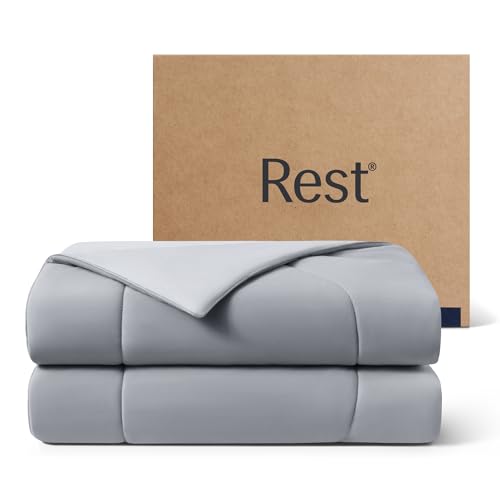
REST Evercool Cooling Comforter Blanket for Hot Sleepers
Our badge: Best Overall
The REST Evercool Cooling Comforter Blanket for Hot Sleepers leads because its surface answers the two biggest nighttime complaints of sensitive sleepers at once: friction and heat. The Evercool fabric feels silky and cool on contact, glides when you turn instead of dragging, and drapes close without weight. Its smooth face also resists snags and pet hair and washes back to clean without special handling, so the layer touching your skin can stay genuinely fresh.
Strengths
- Silky glide minimizes drag on irritated skin during turns.
- Cool-to-touch comfort counters nighttime overheating.
- Smooth, durable surface washes clean and resists damage.
Trade-offs
- Cooling feel is unwelcome for cold sleepers.
- Smoothness slides on slick sheets without anchoring.
- Synthetic fabric; cotton purists should read on.
| Color | Cool Gray |
| Size | Full / Queen (90″x90″) |
| Dimensions | 90 x 90 x 0.01 inches |
| Weight | 5.5 pounds |
Use it as the skin-side authority: even in winter, many sensitive sleepers place this smooth layer directly over the sheet and add warmth above it, so heat can be tuned without ever changing the surface their skin meets. That separation of jobs — surface below, insulation above — is the single most useful bedding idea in this guide. Wash it on your regular rhythm, dry fully, and inspect the surface seasonally; while it stays silky, it stays in service. Choose REST for glide and cool. Skip it if you sleep cold and hate cool contact.
Best for: Friction- and heat-sensitive sleepers / Not suited for: Cold sleepers
Choose it for the gentlest surface; skip it for warmth. Check on Amazon

Bedsure Cooling Cotton Waffle Blanket for Hot Sleepers
Our badge: Best for Cotton Lovers
The Bedsure Cooling Cotton Waffle Blanket for Hot Sleepers is the natural-fiber answer: cotton and bamboo-derived rayon in a breathable waffle that wicks moisture and lets heat escape, with a soft, familiar hand feel many sensitive sleepers trust instinctively. It covers a queen bed fully and washes on an ordinary cotton rhythm.
Strengths
- Natural-blend breathability limits clammy heat buildup.
- Familiar cotton softness that improves with washing.
- No fill or synthetic sheen at the skin interface.
Trade-offs
- Waffle texture is more tactile than a flat smooth surface.
- Light warmth alone in cold rooms.
- Ivory shows soil and needs timely washing.
| Color | 01 – Ivory |
| Size | Queen (90″ X 90″) |
| Dimensions | 16.535433054 x 12.598425184 x 22.834645646 inches |
| Weight | 3.8 Pounds |
The waffle’s tiny pockets are a fair trade: a little texture in exchange for airflow that flat cotton cannot match, and most sleepers feel the benefit on warm nights immediately. If your skin is in a particularly reactive phase, use the flat sheet as the contact layer and this blanket above it until things calm, then promote it to direct contact — flexibility a layered bed gives you for free. Choose it for natural breathable comfort. Skip it when you need absolute flat smoothness.
Best for: Cotton-first, heat-aware sleepers / Not suited for: Maximum flat smoothness seekers
Choose it for gentle natural airflow; skip it for silkiness. Check on Amazon

Elegear Double-Sided Cooling Blanket for Hot Sleepers
Our badge: Best for Hot Sleepers
The Elegear Double-Sided Cooling Blanket for Hot Sleepers doubles your surface options: an Arc-Chill cooling face for the warmest nights and a one hundred percent Egyptian cotton reverse for nights when natural softness matters more than active cooling. Both faces are smooth and pile-free, and the light build washes and dries fast enough for frequent rotation.
Strengths
- Two smooth faces for different night conditions.
- Fast laundry turnaround for flare-season freshness.
- Light drape that never feels like a heavy cover.
Trade-offs
- Too light and cool for cold sleepers.
- Smooth faces can slide without tucking.
- Cooling side feel is a matter of taste.
| Color | Light Grey |
| Size | Full/Queen (79″ x 86″) |
| Dimensions | 86.61417314 x 78.7401574 x 0.0399999999592 inches |
| Weight | 3.25843223236 pounds |
For sleepers whose discomfort tracks temperature closely, this blanket’s speed is its kindness: wash in the morning, dry by afternoon, sleep on a fresh cool surface that night. Keep the cotton side as your default and the cooling side as your heat-wave tool, and note which your skin prefers across a week before deciding your duplicate purchase. Choose it for adaptable cool comfort. Skip it for winter insulation.
Best for: Temperature-reactive sleepers / Not suited for: Cold rooms
Choose it for two gentle cool options; skip it for heat. Check on Amazon
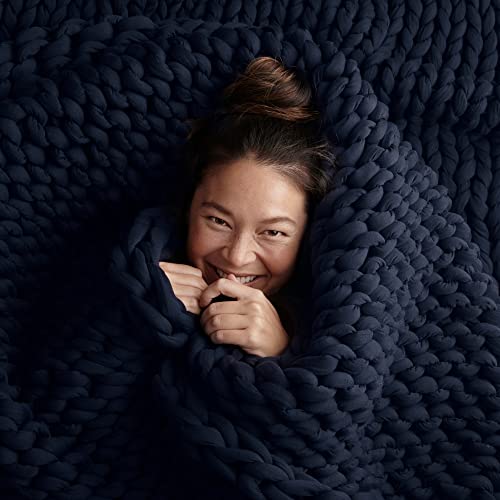
Bearaby Cotton Hand-Knit Weighted Blankets for Adults
Our badge: Best Premium
The Bearaby Cotton Hand-Knit Weighted Blankets for Adults earns its premium place on material simplicity: nothing but cotton yarn, openly knitted, with no fill to shed fibers, no cover seams to rub, and no synthetic sheen. Adults who enjoy weighted comfort as a preference and want the purest skin-adjacent material list in the pool will find it here.
Strengths
- Single-material cotton with certified-standard credentials per its maker.
- Breathable loops prevent sealed, sweaty contact.
- No loose fill or fiber shedding to manage.
Trade-offs
- Knit loops create texture some reactive skin dislikes.
- Heavy to wash; plan capacity and drying.
- Personal size and premium tier.
| Color | Midnight Blue |
| Size | 15 lbs (40”x72”) |
| Dimensions | 71.99999992656 x 39.9999999592 x 0.01181102361 inches |
| Weight | 15 pounds |
Layer it over a smooth sheet or the REST blanket if direct loop contact is ever in doubt, keeping the weight you enjoy and the surface your skin prefers — the layered bed again solving what a single product cannot. Air it between washes and wash on a planned rhythm. Choose it for cotton purity with weight. Skip it if texture itself is your trigger.
Best for: Cotton purists who like weighted comfort / Not suited for: Texture-triggered skin
Choose it for simple materials; skip it for flat smoothness. Check on Amazon
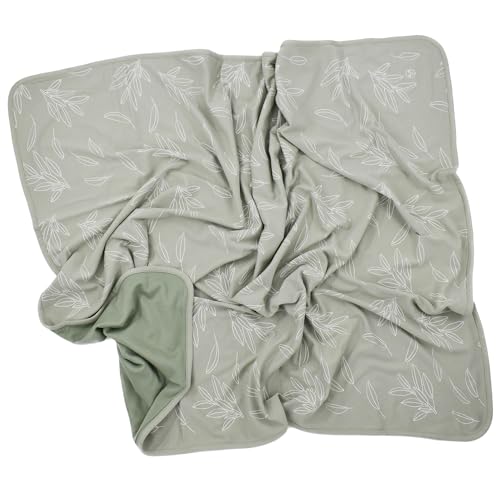
Woolino Toddler Blanket
Our badge: Best for Toddlers
The Woolino Toddler Blanket brings the gentle brief to young children: a GOTS-certified organic cotton outer as the skin-side face, a fine merino wool lining that regulates temperature without prickle, and a simple, silky construction with nothing loose or rough. Parents managing a toddler’s delicate skin with their pediatrician’s guidance will appreciate its material restraint.
Strengths
- Organic cotton face designed for delicate skin contact.
- Merino regulation steadies warmth without overheating.
- Simple, washable, toddler-sized construction.
Trade-offs
- Toddler size only.
- Gentler care than fleece fleets.
- Premium natural-fiber positioning.
| Color | Sage |
| Size | 40 inch |
Wash it before first use and on a gentle, regular rhythm, keep a spare so laundry never forces a substitute texture on a child who has settled with this one, and follow your pediatrician’s advice on all skin and sleep questions — this guide’s role ends at describing the blanket honestly. Choose it for the youngest sensitive sleepers. Skip it for adult beds.
Best for: Toddlers with delicate skin, parent-guided / Not suited for: Adult use
Choose it for gentle toddler materials; skip it for grown-ups. Check on Amazon

Bedsure Fleece Bed Blankets Queen Size Grey
Our badge: Best Budget
The Bedsure Fleece Bed Blankets Queen Size Grey closes the set as the practical standard for the many sensitive sleepers whose skin tolerates smooth fleece perfectly well. Its face is uniform, with no pile variation or rough reverse, it washes and dries fast enough for strict freshness routines, and its accessible tier makes the duplicate system affordable.
Strengths
- Uniform smooth face with predictable feel.
- Fast, complete drying supports frequent washing.
- Duplicate-friendly for an always-fresh rotation.
Trade-offs
- Fleece warmth and static bother some sensitive sleepers.
- Synthetic material instead of cotton.
- Less glide than the silky cooling picks.
| Color | Grey |
| Size | Queen (90″ X 90″) |
| Dimensions | 94.48818888 x 86.61417314 x 0.0399999999592 inches |
| Weight | 3.19 pounds |
Test fleece honestly against your own skin for several nights before building the system on it; tolerance is individual, and this guide’s cooling and cotton picks exist for those who answer no. If fleece passes your test, buy two, wash before use with an extra rinse, and enjoy the easiest freshness routine in the guide — advice that also serves readers of Best Blankets For Diabetics, where gentle surfaces and careful routines matter for different reasons. Choose it for affordable, uniform softness. Skip it if fleece itself irritates you.
Best for: Fleece-tolerant sensitive sleepers on a budget / Not suited for: Fleece-reactive skin
Choose it for tested, easy freshness; skip it on reaction. Check on Amazon
For sensitive skin, read the comparison by body side and wash routine rather than by headline softness. The smooth cooling picks put the gentlest possible surface against you and tolerate the frequent, complete washing this category demands; the cotton knit offers breathable texture for those who find synthetics clammy; the toddler blanket shows what a natural-fiber, simple construction looks like at small scale. The plush end of the table is present honestly — many people love it on good-skin weeks — but on flare-prone skin, smoothness and coolness outrank pile every time.
Travel and overnight stays deserve a portable version of your system, because unfamiliar bedding is a common and predictable disruption for sensitive skin. Pack the smallest version that preserves the essentials: your own smooth pillowcase, and where luggage allows, your own light blanket as the skin-contact layer over whatever the hotel or host provides. That single layer between you and unknown textiles, washed in unknown products, removes most of the variable. On return, everything travels through your own wash before rejoining your bed. For children, the same logic applies to sleepovers and grandparents’ houses, with the addition of a kind word to hosts in advance — most are glad to know which layer matters and will happily put your blanket on top. Planning this once, and keeping the travel layer packed with the suitcase, converts a recurring source of dread into a solved routine.
Keep notes, briefly, when your skin and your bedding disagree. A line in a phone note — date, what changed, how the night went — turns a fog of suspicion into usable evidence across a season: the new detergent, the partner’s new throw, the hotel trip, the blanket that roughened after its twentieth wash. Patterns that are invisible week to week become obvious across three months of notes, and they make any conversation with your clinician sharper and shorter. Change one variable at a time, give each change several nights unless it is clearly intolerable, and let the notes arbitrate. Sensitive skin management rewards this calm empiricism far more than it rewards buying sprees, which is why this guide’s picks emphasize a few smooth, washable, replaceable blankets over any promise of a perfect one.
Comparison Table
| Pick | Size | Weight | Color | Check price on Amazon |
|---|---|---|---|---|
| REST Evercool Cooling Comforter Blanket for Hot Sleepers | Full / Queen (90″x90″) | 5.5 pounds | Cool Gray | Check price on Amazon |
| Bedsure Cooling Cotton Waffle Blanket for Hot Sleepers | Queen (90″ X 90″) | 3.8 Pounds | 01 – Ivory | Check price on Amazon |
| Elegear Double-Sided Cooling Blanket for Hot Sleepers | Full/Queen (79″ x 86″) | 3.25843223236 pounds | Light Grey | Check price on Amazon |
| Bearaby Cotton Hand-Knit Weighted Blankets for Adults | 15 lbs (40”x72”) | 15 pounds | Midnight Blue | Check price on Amazon |
| Woolino Toddler Blanket | 40 inch | — | Sage | Check price on Amazon |
| Bedsure Fleece Bed Blankets Queen Size Grey | Queen (90″ X 90″) | 3.19 pounds | Grey | Check price on Amazon |
How to Choose a Blanket for Sensitive, Eczema-Prone Skin
Separate the surface decision from the warmth decision
Choose the skin-contact layer for smoothness and washability alone, then add warmth above it as seasons demand. This separation means a reactive week never forces you to choose between being warm and being comfortable, and a heat wave never forces you to abandon your gentlest surface.
Control heat before it controls the night
Many sensitive sleepers find warmth itself uncomfortable. Breathable cotton, cooling fabrics, lighter layers, and a cooler bedroom protect sleep better than any single fabric claim. Track what your own skin responds to across a week rather than trusting general advice, and discuss patterns with your clinician.
Make washing gentle and complete
Wash before first use, use detergent quantities that rinse fully, add an extra rinse when residue is a concern, and dry completely. Keep products consistent once you find what your household tolerates, and launder skin-contact layers most frequently in your bedding system.
Avoid friction features
Skip fringe, heavy embroidery at contact zones, rough seams against skin, loose long pile, and embellishments. Smooth hems, flat constructions, and simple materials are the design language of comfort for reactive skin.
Keep a simple flare-night protocol for the bed
On nights when skin is already irritated, decision-making feels harder, so decide the bed in advance. The protocol many sensitive-skin households settle on is deliberately plain: the smoothest, freshly washed blanket you own as the only skin-contact layer, worn sleepwear that covers itchy areas if scratching is a problem for you, the room a little cooler than usual because heat aggravates the urge to scratch for many people, and nothing new — no new detergent, no new fabric, no new product — introduced that night. This is comfort management, not treatment, and it does not replace the plan you have with your clinician; if flares are frequent, spreading, infected-looking, or destroying sleep, that is a medical appointment, not a bedding upgrade. What the protocol buys is predictability: on the worst nights, the bed is the one thing that does not change or surprise your skin.
Choose sleepwear and sheets as one system with the blanket
A perfect blanket over rough sheets, or under a scratchy throw, still leaves skin negotiating friction all night. Judge the whole contact stack together: smooth pillowcase, smooth top sheet if you use one, the blanket’s body side, and your sleepwear’s seams and fabric. Long, soft sleepwear can shield arms and legs from a blanket you otherwise love, which widens your choices; conversely, if you sleep in minimal clothing, the blanket’s surface carries the entire burden and should be the smoothest you can find. When something in the stack changes — new sheets, a partner’s new blanket on a shared bed — change one element at a time and notice, so you learn your own triggers from evidence instead of abandoning whole categories of fabric on suspicion.
How Should You Wash Blankets for Sensitive Skin?
Wash new blankets before first use to remove loose fibers and finishing residues. Wash skin-contact blankets on a regular rhythm — weekly is common — using the gentlest effective cycle for the fabric, measured detergent rather than generous pours, and an extra rinse if your skin dislikes residue. Dry fully on low for synthetics and knits, and store clean blankets in closed, clean storage so they do not collect dust while waiting. Keep a duplicate of your winning blanket so the routine never tempts you to stretch an extra night on a layer that should have been washed.
When you change detergents, fabrics, or routines, change one variable at a time and give it several nights, so you can actually learn what helped. Keep notes if your clinician asks you to track sleep comfort factors. Bedding is one variable among many in sensitive-skin life; treating it methodically keeps it from becoming a source of guesswork and frustration.
Problem: Blanket feels rough after a few washes — Heat and residue are the usual culprits. Rewash with less detergent and an extra rinse, dry low, and if pilling has set in, retire the blanket from skin contact; degraded texture will not recover.
Problem: Too hot under every blanket — Move cooling and cotton layers to the skin, remove insulation above, cool the room, and consider that your sheet and pajama fabrics are part of the same heat system.
Problem: New blanket irritates on night one — Wash and rinse it again before judging; finishing residues are common. If irritation persists after proper washing, the fabric is wrong for you — switch families rather than enduring it.
Problem: Seams and edges bother you — Flip the blanket so seams face away, place it above the top sheet as a buffer, or choose flat-construction designs like the cooling picks whose edges are minimal.
Building a Low-Friction Bedroom
Extend the same thinking across the bed: smooth sheets, pillowcases washed as often as the blanket’s contact layer, pajamas in fabrics your skin likes, and minimal decorative pile on the bed where it migrates into the sleep space. Keep the bedroom cooler than the rest of the house if your skin prefers it, manage dust with the washable-textile discipline from the allergy guides, and let the bed be a controlled, calm textile environment. None of this treats a condition; all of it removes avoidable friction from the hours your skin is in longest contact with fabric.
Sensitive Skin Across Ages and Seasons
Children need the same principles in simpler form: cotton faces, no loose embellishment, duplicates for laundry, and pediatric guidance for everything beyond fabric choice. Adults in reactive phases should temporarily promote their smoothest layer and demote texture, then restore favorites when skin settles — a flexible wardrobe of two or three blankets beats one rigid choice. Seasons shift the balance toward cooling in summer and layered smoothness in winter, but the skin-side layer can stay constant all year, and that constancy itself is comforting. Travelers with sensitive skin will recognize their needs in Best Blankets For Cancer Patients, where gentle surfaces and personal, known textiles are equally central.
Washing for sensitive skin is a discipline of subtraction. Most irritation from laundry comes from what stays in the fabric — excess detergent, scented additives, softener coatings — rather than from what the wash removes. Use the measured dose for the load size, not a hopeful extra scoop; run an extra rinse when blankets feel coated or smell strongly of product after drying; and dry completely, because a blanket put away faintly damp develops the musty burden that triggers another, harsher wash. Keep the routine boring and identical for months at a time. Sensitive skin rewards consistency: the same blanket, washed the same way, in the same products your household already tolerates, changed only one variable at a time when something must change. Novelty is the enemy in this category, however appealing a new miracle fabric sounds at midnight during a flare.
Finally, protect sleep itself while you optimize the bed. It is easy, during a difficult stretch with your skin, to turn bedtime into an inspection — checking seams, adjusting layers, cataloguing sensations — that leaves you more wakeful than any blanket could. Set the bed up by your agreed routine, then stop auditing it. If a blanket passes the honest tests in this guide — smooth body side, cool enough, washed gently and completely, replaced when its surface roughens — it has done everything bedding can do, and remaining problems deserve your clinician’s attention rather than another purchase. Comfortable bedding supports rest and the treatment plan you already have; keeping that boundary clear is what makes the comfort it offers genuinely restful.
Houseguests, partners’ habits, and shared laundry are the three places a careful sensitive-skin system most often springs leaks, so seal them with agreements rather than vigilance. Guests get the freshly washed smooth set and a kind sentence about the house laundry products, which heads off the well-meaning gift of a scented throw joining your bed. A partner who loves plush keeps it zoned to their side, as the FAQ describes, and does their own experimenting with new products on their own textiles first. Shared laundry gets one rule that protects everyone: bedding washes in the agreed, tolerated products, always, and anyone’s novelty detergent experiments happen on clothes and towels, never on the skin-contact layer. These are thirty-second conversations that prevent month-long mysteries, and they keep the bed a place of rest instead of negotiation.
When you find the blanket that works — and most people, applying this guide’s tests honestly, find it within two purchases — buy the duplicate immediately, in the same model, while it exists. Manufacturers revise fabrics silently, and the sensitive sleeper who returns a year later for a second of the perfect blanket may meet a rougher successor wearing the same name. The duplicate is not extravagance in this category; it is continuity insurance for the one textile your skin trusts, bought at the only moment its identity is guaranteed. Store it closed and clean, rotate the pair evenly, and your bed’s most important variable stops being a variable at all.
Heat management at the whole-room level quietly supports everything the blanket does. A bedroom that runs warm forces even the smoothest blanket to feel like an adversary by midnight, while a slightly cool room lets a light, smooth layer do its gentle work and lets you add warmth above it rather than against your skin. Evening showers, heavy exercise, and rich, late meals all carry heat into the bed with you; timing them earlier, where your life allows, is free temperature control that no fabric can match. None of this treats anything — it simply stops the environment from arguing with your skin all night, which for many sensitive sleepers is the difference between a blanket that works and the same blanket blamed unfairly.
Keep a small rescue kit at the bedside for difficult nights so the bed itself stays undisturbed: whatever your clinician has recommended for your skin, a spare smooth pillowcase for a mid-night swap, and a glass of water. The point is psychological as much as practical — a flare night with a prepared kit is an inconvenience, while the same night spent hunting through drawers at two in the morning becomes a story about how nothing helps. Preparation restores a sense of agency, and agency, on the evidence of every sensitive sleeper who has built this system, is itself a form of comfort.
Be skeptical, in this category above all, of bedding that promises transformation. Smoothness, coolness, gentle washing, and consistency are real and purchasable; cures are not sold in blankets, and any product language drifting toward treatment should lower, not raise, your confidence in the seller. The makers of the picks in this guide describe comfort properties, and that restraint is a feature. Your skin’s medical story belongs to you and your clinician; your blanket’s story should be the shorter, duller one of a surface that never surprises you. Dull, in bedding for sensitive skin, is the highest praise available.
Close by giving the system time to prove itself. Skin and sleep both respond slowly and noisily, and a fortnight of the same smooth blanket, washed the same gentle way, in the same cool room teaches you more than five purchases in the same period. Keep the brief notes, change one thing at a time, and let patterns emerge. Most readers who do this end with a bed that has stopped being a nightly variable — which, for sensitive skin, is what a best blanket was always supposed to mean.
Share your findings, when you have them, with the people who share your laundry and your bed — and, where it is welcome, with the wider community of sensitive sleepers whose midnight searches land on guides like this one. The detail that unlocks someone else’s year of bad nights is often embarrassingly small: the extra rinse, the duplicate bought in time, the plush blanket exiled to the sofa. This category advances by such small, honestly reported mercies rather than by breakthroughs, and every household that publishes its five lines — what washes when, in what, with what against the skin — makes the next household’s first month shorter than its own.
Protect the routine during the disruptions that reliably break it — house moves, new babies, renovations, a partner’s new job with new hours — by deciding in advance which elements are load-bearing. For sensitive skin they are three: the smooth contact layer, the gentle identical wash, and the cool-enough room. Everything else can wobble for a month while life rearranges itself, provided those three hold; when they hold, skin rarely notices the chaos around it, and the system can be rebuilt outward at leisure once the boxes are unpacked. Knowing your load-bearing three, by name, before the disruption arrives is the difference between a routine that bends and one that quietly disappears.
Wash it gently, dry it fully, lay it smooth side to your skin, and let the room run cool. Four plain instructions, repeated without variation, are the entire technology of the comfortable sensitive-skin bed — and their power lies precisely in the repetition, night after predictable night.
Your skin keeps the score either way; give it a system worth scoring well, starting with the very next gentle, complete, unhurried, carefully measured wash tonight, and every night after.
Common Buying Mistakes
Buying plush when you need smooth
Pile feels luxurious in the hand and drags on reactive skin at night. Choose glide for the contact layer and save plush for above-sheet, short-contact uses if you enjoy it.
Skipping the pre-wash
Loose fibers and residues on a new blanket are an unfair first test. Wash and rinse before judging any blanket’s gentleness.
Overloading detergent for freshness
More detergent often means more residue, not more clean. Measure modestly, rinse fully, and let complete drying finish the job.
Keeping a blanket past its smooth life
Pilling and matting turn a gentle blanket abrasive gradually enough that you blame your skin. Inspect surfaces seasonally and replace contact layers without guilt.
Expecting bedding to treat a condition
Blankets support comfort and hygiene only. Diagnosis, treatment, and product advice for your skin belong with your dermatologist.
Sensitive Skin in Children: A Gentler Version of the Same System
Many readers of this guide are choosing for a child, and the principles hold with a few sharpened edges. Children’s skin-contact layers should be the smoothest and most frequently washed in the house, full stop, and duplicates matter even more because a child’s blanket cannot wait for laundry day. Keep the child’s wash routine identical and fragrance-light, resist well-meaning gifts of heavily textured or novelty blankets for the sleeping layer — they can live on the sofa — and watch which surfaces the child themselves seeks or avoids, because children vote clearly with behavior long before they can describe friction or heat. For infants, safe-sleep guidance governs: babies sleep on their backs on a firm, flat surface without loose blankets, and any blanket use should follow your pediatrician’s and the relevant authorities’ current recommendations, not a product guide. For older children with eczema, involve them in choosing between two suitable smooth options; a child who picked the blanket defends the bedtime routine that includes it. And keep the same honest boundary as for adults: bedding comfort supports the care plan your clinician sets — it does not replace it, and worsening, weeping, or infected-looking skin needs medical care promptly, not a softer purchase.
Seasons test the system in both directions. Summer brings heat and sweat, the twin aggravators for many people with eczema, and argues for the cooling end of this guide, lighter sleepwear, and a room kept as cool as your household can manage. Winter brings dry indoor air and the temptation of heavy, plush warmth; resist it at the skin layer, and take warmth from room heating, a warm layer above the smooth blanket rather than against you, and the routines your clinician recommends for skin hydration before bed. The blanket that serves both seasons is rarely one product — it is the smooth contact layer that never changes, with warmth added and removed around it. That constancy is the deepest comfort this category offers: skin that cannot predict its bedding cannot relax under it, and a system that stays the same, washed the same way, night after night, gives sensitive skin the one thing novelty never can.
Final Recommendation
Make the REST Evercool Cooling Comforter Blanket for Hot Sleepers your skin-side standard for its silky, cool glide, with the natural cotton runner-up ready when you prefer fiber familiarity — Check on Amazon for the Bedsure Waffle’s current options. Wash before use, layer warmth above the gentle surface, and replace any blanket the moment its smoothness fades.
Frequently Asked Questions
Should I wash a new blanket before first use?
Yes — for sensitive skin this step is close to non-negotiable. New textiles carry finishing residues, loose fibers, and warehouse dust, all of which you would be pressing against irritated skin for eight hours. Wash the blanket exactly as you will wash it routinely, dry it completely, and inspect the body side afterward for loose pile or rough seams before its first night. If a blanket feels wrong after that honest first wash, return it rather than hoping it improves; surfaces rarely get smoother with use, and your skin is the wrong place to run an experiment of endurance.
Can I share a bed comfortably if only one of us has sensitive skin?
Yes, with a zoned approach: the sensitive sleeper gets the smoothest skin-contact layer on their side, the other keeps their preferred blanket, and shared top layers are chosen to the stricter standard since they migrate during the night. Wash shared bedding in the products the sensitive sleeper tolerates — that part is not negotiable by majority vote — and keep the routine identical so reactions, if any, can be traced to a single change. Most couples find the stricter routine is simply a cleaner, calmer bed for both.
What blanket texture is gentlest on sensitive skin?
Smooth, flat surfaces — silky cooling fabrics and smooth cotton — generally create the least drag and friction. Deep pile, coarse wool, and heavily textured weaves bother more people, but individual tolerance rules: test any fabric across several nights.
Should I choose cotton or cooling synthetic?
Choose cotton for natural familiarity and breathability, cooling synthetic for maximum glide and heat relief. Many sensitive sleepers own both and rotate by season and skin phase.
What if my partner’s blanket irritates my skin?
Zone the bed rather than litigating taste: your smooth skin-contact layer stays on your side, their preferred blanket stays on theirs, and any shared top layer meets the stricter standard because it migrates. Wash shared items in the products you tolerate. If irritation persists despite zoning, track what actually changed with brief notes before concluding the blanket is the cause — sheets, sleepwear, and laundry products are equally common culprits, and your clinician can help interpret a pattern that home testing cannot untangle.
How often should I wash the blanket that touches my skin?
Weekly is a common, sustainable rhythm, with an extra rinse and complete drying. During reactive periods or hot weather, more frequent washing of the contact layer helps it stay fresh — duplicates make that practical.
Does detergent choice matter?
Residue matters more than brand debates. Use measured amounts, rinse thoroughly, keep products consistent once tolerated, and follow your clinician’s guidance on products for your skin.
Are weighted blankets suitable for sensitive skin?
Only in simple, smooth or cotton constructions, and only as a comfort preference for those who enjoy them. The one-piece cotton knit here is the gentlest weighted architecture; keep a smooth sheet or layer beneath if loop texture ever bothers you.
When should I replace my blanket?
When its surface pills, roughens, or holds odors despite proper washing. For skin-contact layers, surface condition is the retirement criterion — do not wait for holes or seam failure.


