Disclosure: As an Amazon Associate, dailyhomedecorating.com earns from qualifying purchases. Links to Amazon on this page are affiliate links; they cost you nothing extra. Prices and availability change often, so check the current Amazon listing before you buy.
A blanket on a boat lives a harder life than any blanket ashore. The best blankets for boats must shrug off damp air and the occasional spray, dry quickly in a cramped cabin, resist the mildew that haunts marine textiles, wash easily in a marina laundry or a bucket, and stay compact because every locker on a boat is a negotiation. The best blankets for boats are therefore washable synthetics and breathable blends in throw and twin-friendly sizes, chosen for drying speed and indifference to humidity rather than for heirloom beauty. This guide ranks six pool blankets by genuine marine merit — fleece and smooth synthetics lead, wool appears with its real advantages and real care demands stated honestly, and open-knit cotton is included as a flagged caution rather than a recommendation — so your cabin berths stay warm, dry, and free of the musty smell that ruins more boating weekends than weather does.
Assign every boat blanket a dry locker and a rotation partner, and launder ashore on a schedule. Readers setting up other damp, hard-use textile stations will find parallel logic in Best Blankets For Winter Camping for car-camp duty and Best Outdoor Blankets For Fire Pit for fireside assignments. Cabin comfort ashore can borrow from Black Friday Throw Pillow And Blanket Deals and Best Throw Pillows For Small Rooms Under $40.
Where to Buy
Every pick in this guide is sold on Amazon, where you can check the current size, color, and availability before you buy. Start with the lead pick, the Bedsure Fleece Blanket Queen Blankets for Bed, and use its Check on Amazon listing to confirm the size for your berths. The remaining picks are the Exclusivo Mezcla Soft Large Fleece Throw Blanket for Couch — Check on Amazon; the Bedsure GentleSoft Sherpa Fleece Throw Blanket for Couch — Check on Amazon; the REST Evercool Cooling Comforter Blanket for Hot Sleepers — Check on Amazon; the Pendleton National Park Blanket — Check on Amazon; and the Bedsure Cooling Cotton Waffle Blanket for Hot Sleepers — Check on Amazon. Check price on Amazon for each, and outfit each berth with a working blanket plus a dry spare.
In this guide
Quick Picks
| Pick | Badge | Why it earns its place |
|---|---|---|
| Bedsure Fleece Blanket Queen Blankets for Bed | Best Overall | Washable, quick-drying fleece that covers berths and forgives damp life. |
| Exclusivo Mezcla Soft Large Fleece Throw Blanket for Couch | Best for Cockpit Evenings | Feather-light throw for sunset watches that dries in a breeze. |
| Bedsure GentleSoft Sherpa Fleece Throw Blanket for Couch | Best for Cold Cabins | Two-sided warmth for chilly anchorages and early departures. |
| REST Evercool Cooling Comforter Blanket for Hot Sleepers | Best for Warm Marinas | Smooth, cool layer for southern waters and summer berths. |
| Pendleton National Park Blanket | Best Premium | Wool’s natural humidity indifference for the flagship berth, with care caveats. |
| Bedsure Cooling Cotton Waffle Blanket for Hot Sleepers | Best with Caution | Breathable cotton for dry-climate boating only; slow to dry, mildew-prone if stowed damp. |
Key Takeaways
- Drying speed is the marine specification that matters most; a damp blanket stowed is a mildew farm.
- Fleece is the boat blanket default: warm when damp-ish, quick to dry, cheap to rotate in pairs.
- Never stow any textile damp; air blankets on deck or take them ashore until fully dry.
- Buy in rotating pairs per berth so one set is always dry while the other works or washes.
- Salt is a textile enemy too: rinse or wash salt-exposed blankets before long stowage.
- Compact throws beat bed-sized blankets on small boats; size to the locker, not the brochure.
How These Picks Were Chosen
Candidates were judged on drying behavior, wash practicality in marina facilities, mildew tolerance under good management, warmth in damp air, and stowage footprint. One pick is deliberately included with a caution badge: a breathable cotton waffle that serves dry-climate day boats but dries slowly and mildews if stowed damp — its inclusion teaches the category’s central lesson better than its absence would. Wool is included with honest handling notes. No pool product is a dedicated marine blanket; the guide says so and optimizes within the pool truthfully. Specifications are pool-verified only, with no prices or fixed ratings.
The 6 Best Best Blankets for Boats — Reviewed

Bedsure Fleece Blanket Queen Blankets for Bed
Our badge: Best Overall
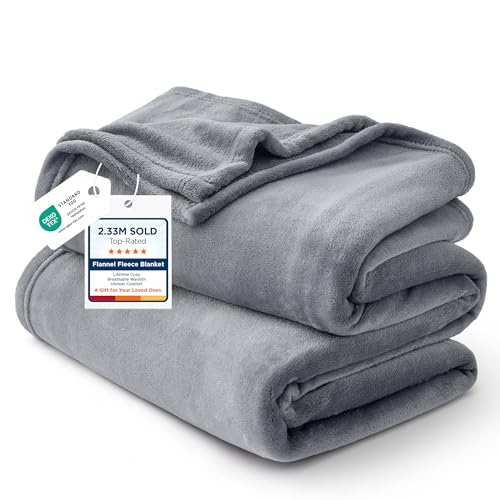
The Bedsure Fleece Blanket Queen Blankets for Bed is the cabin workhorse: microfiber fleece that insulates even in humid air, washes in any marina machine, dries faster than any natural fiber here, and costs little enough — in effort and commitment — to keep in rotating pairs. Its queen size covers most berths and V-berth improvisations, folds into lockers without a fight, and never asks for special handling after a wet weekend.
Strengths
- Fastest practical dry time in the set.
- Indifferent to machine washing, week after week.
- Warmth that persists in damp cabin air.
Trade-offs
- Queen size is generous for the smallest lockers.
- Static in dry winter air ashore.
- Utilitarian looks below deck only.
| Color | 01 – Grey |
| Size | Queen (90″x90″) |
| Dimensions | 94.48818888 x 86.61417314 x 0.0399999999592 inches |
| Weight | 3.19 Pounds |
Run it as a system: two per main berth, one in service and one bagged dry, swapped at every wash. After wet trips, drape it over the boom or a line at the dock before anything gets stowed — ten minutes of breeze prevents the mildew month. Choose it as the fleet standard. Skip the queen only if your lockers truly cannot take it.
Best for: Cabin berths and rotating dry systems / Not suited for: Tiny lockers at queen size
Choose it for marine practicality; skip it for heirloom looks. Check on Amazon

Exclusivo Mezcla Soft Large Fleece Throw Blanket for Couch
Our badge: Best for Cockpit Evenings
The Exclusivo Mezcla Soft Large Fleece Throw Blanket for Couch is the sunset-watch blanket: long enough to wrap legs in the cockpit, light enough to shake out and dry in a breeze, and compact enough to live in the cockpit locker all season. Its Forest Green suits boat interiors, and its feather weight means a spray-soaked one is an inconvenience, never a crisis.
Strengths
- Dries fastest of all as a small, light throw.
- Long wrap for seated evening warmth.
- Stows anywhere, including the cockpit locker.
Trade-offs
- Throw warmth only in real cold.
- Light fabric blows around on deck in wind.
- Single color option.
| Color | Forest Green |
| Size | Throw XL (50″ x 70″) |
| Dimensions | 70 x 50 x 0.04 inches |
| Weight | 1.55 pounds |
Assign one per regular crew member and let them live aboard, washed whenever the boat is. On passage, it is the off-watch sleeper’s extra layer and the night-watch keeper’s companion. Choose it for life on deck. Skip it as a berth’s only blanket in cold waters.
Best for: Cockpit, watch-keeping, and travel between boats / Not suited for: Sole cold-weather berth duty
Choose it for evenings afloat; skip it for deep cold. Check on Amazon

Bedsure GentleSoft Sherpa Fleece Throw Blanket for Couch
Our badge: Best for Cold Cabins
The Bedsure GentleSoft Sherpa Fleece Throw Blanket for Couch brings two-sided fleece warmth to cold cabins and shoulder-season cruising: plush against the sleeper, smooth outside, washable and quick-drying by fleece standards. For the berth that hosts the crew member who is always cold, it is the morale blanket.
Strengths
- Serious throw warmth for cold anchorages.
- Both sides usable; smooth face sheds deck debris better.
- Machine care suits marina laundry routines.
Trade-offs
- Sherpa pile dries slower than flat fleece; air it thoroughly.
- Pile can hold salt and sand until washed.
- Throw size only.
| Color | 01 – Grey |
| Size | Throw (50″ X 60″) |
| Dimensions | 59.05511805 x 51.18110231 x 0.0399999999592 inches |
| Weight | 2.03 pounds |
Keep it below deck rather than in the cockpit — its pile is a magnet for everything a deck carries — and give it the longest drying time of your fleece set before stowing. In cold marinas it earns its locker space every single night. Choose it for cold cabins. Skip it for deck duty.
Best for: Shoulder seasons and cold sleepers aboard / Not suited for: Cockpit use
Choose it for cabin warmth; skip it on deck. Check on Amazon

REST Evercool Cooling Comforter Blanket for Hot Sleepers
Our badge: Best for Warm Marinas
The REST Evercool Cooling Comforter Blanket for Hot Sleepers serves the southern half of the boating map: a smooth, cool-to-touch, breathable layer for berths in warm, humid marinas where fleece is unthinkable. Its slick surface sheds sand and hair with a shake, washes easily, and resists the clammy feel that ruins tropical nights below deck.
Strengths
- Cooling comfort in hot, humid cabins.
- Smooth surface shakes clean of sand and hair.
- Full-bed coverage for master berths.
Trade-offs
- Little insulation for cold waters.
- Slippery drape migrates on narrow berths.
- Full size stows larger than throws.
| Color | Cool Gray |
| Size | Full / Queen (90″x90″) |
| Dimensions | 90 x 90 x 0.01 inches |
| Weight | 5.5 pounds |
Pair it with cabin ventilation discipline — hatches, fans, and shade — and it completes the warm-water sleep system. Northern boats can skip it entirely; southern boats may wonder how they cruised without it. Choose it for warm marinas. Skip it for cold cruising grounds.
Best for: Tropical and summer berths / Not suited for: Cold-water cruising
Choose it for heat afloat; skip it for northern seasons. Check on Amazon

Pendleton National Park Blanket
Our badge: Best Premium
The Pendleton National Park Blanket is the traditionalist’s marine blanket: wool historically went to sea because it insulates while damp, resists odor, and tolerates long intervals between washes — virtues a flagship berth still enjoys. Its National Park striping looks right in a classic yacht interior, and its queen coverage serves the master cabin properly.
Strengths
- Warmth that persists in damp conditions.
- Odor resistance stretches wash intervals.
- Classic marine looks and decades-long service potential.
Trade-offs
- Slow to dry once truly soaked; plan accordingly.
- Gentle care, and salt must be rinsed before long stowage.
- Premium commitment for a working boat textile.
| Color | Grand Canyon Navy |
| Size | Queen (90″ x 90″) |
| Dimensions | 18 x 15 x 6.5 inches |
| Weight | 6.2 pounds |
Keep it in the driest locker, air it on deck in sun and breeze regularly, and bring it ashore for proper care between seasons. Treated as the ship’s good blanket rather than a deck utility, it will outlast several fleece rotations. Choose it for the flagship berth. Skip it for wet, rough, everyday deck life.
Best for: Master berths on well-kept boats / Not suited for: Wet working duty
Choose it for classic marine quality; skip it for rough use. Check on Amazon

Bedsure Cooling Cotton Waffle Blanket for Hot Sleepers
Our badge: Best with Caution
The Bedsure Cooling Cotton Waffle Blanket for Hot Sleepers earns a cautious place for dry-climate day boats and arid-region marinas: breathable cotton comfort that feels wonderful in desert-lake heat. Its caution is absolute, though — cotton dries slowly, and stowed damp in a humid locker it will mildew with enthusiasm. This pick is a lesson with a listing attached.
Strengths
- Natural breathable comfort in dry heat.
- Familiar, pleasant hand feel for guests.
- Full-bed size for larger day-boat cabins.
Trade-offs
- Slowest drying in the set; mildew risk if stowed damp.
- Heavy and clammy when wet.
- Wrong choice for humid cruising grounds.
| Color | 01 – Ivory |
| Size | Queen (90″ X 90″) |
| Dimensions | 16.535433054 x 12.598425184 x 22.834645646 inches |
| Weight | 3.8 Pounds |
If your boating is desert lakes and dry summers, and the blanket goes home or fully airs after every outing, it can serve happily. Everywhere else, let the fleeces work and keep cotton ashore. Choose it only with a drying plan. Skip it — firmly — for humid coasts and liveaboard lockers.
Best for: Dry-climate day boats with disciplined drying / Not suited for: Humid cruising or damp stowage
Choose it only in arid boating; skip it everywhere damp. Check on Amazon
How the Six Picks Behave Across a Boating Season
The lead Bedsure fleece earns its place by surviving the season’s defining cycle: damp night, hurried morning, no proper drying opportunity, repeat. Fleece’s season story is that it tolerates that cycle better than anything else in this roster — it comes off a berth feeling merely cool rather than clammy, dries over a cockpit rail in a single breezy hour, and washes at the marina laundry without asking for a special cycle. By August, a fleece in boat service looks faded and works perfectly, which is the correct aging curve for marine textiles. Its one season discipline is the freshwater rinse rhythm after salt-heavy weeks: salt left in any fabric holds moisture against it, and the fleece that gets rinsed on the same schedule as the boat itself will stay fresh seasons longer than the one washed only when it smells.
The Exclusivo Mezcla is the season’s deck blanket, and its story is movement: it is the layer that goes up on deck for the sunset hour, down below for the night watch’s knees, and into the dinghy as padding under a passenger or a fragile purchase. Light, long, and cheap to replace, it absorbs the losses and stains that are simply the tax on a textile that goes everywhere. Boats should carry it in duplicate for the same reason they carry spare line — the second one is not indulgence, it is the system working. Its season limit is warmth: on a genuinely cold night passage it is a supplement to the berth system, never the system, and skippers should plan the cold-weather berths around the heavier picks below rather than discovering the throw’s ceiling at 3 a.m. offshore.
The Bedsure sherpa’s season is the shoulder months, and in a boat’s cabin that is high praise: April and October berths are where sherpa earns its storage space, turning a cold-soaked cabin into a berth a crew member actually wants to crawl into. Its pile is also the roster’s best sound-and-feel softener against the hull’s nighttime noises and movements — a small, real comfort on anchor watch rotations. The season discipline is moisture honesty: pile that gets damp in a locker stays damp, and sherpa stored aboard through a wet winter will emerge with a smell that washing only partly redeems. The sherpa should be the first textile off the boat at season’s end and the last back on in spring, with its summer spent aired and dry ashore.
The REST Evercool’s season is high summer in warm cruising grounds, where its job inverts every other pick’s: not to warm the berth but to make it sleepable at all. In a cabin that holds the day’s heat past midnight, a smooth, cool, draping layer is the difference between sleeping on top of the bedding in misery and sleeping under something that feels like bedding. Its smooth surface also suits the marine environment in a practical way — it does not hold salt crystals against skin the way pile does, and it shakes clean of the sand and grit that migrate below decks in beach cruising. Its season limit is the calendar: by the first cold snap it is a top sheet with ambitions, and the berth system should rotate it ashore with the swim gear.
The Pendleton’s season is measured in decades, and its boat role is the traditional one: wool was the marine blanket for a century before synthetics, because it insulates when damp, resists the mildew that colonizes cotton aboard, and shrugs off the spark and chafe of working boats. On a modern leisure boat it serves as the cold-weather and emergency layer — the blanket for the unexpected night, the injured or chilled crew member who needs wrapping while the boat makes for harbor, the autumn cruise where the cabin heat is theoretical. That emergency role argues for wool over everything else here: a blanket that must perform after months stored aboard, possibly damp, possibly cold, should be the fiber that tolerates exactly those insults. Store it aired when the boat is laid up, and it will outlast the boat’s electronics by a generation.
The Bedsure waffle’s season is the civilized one: it is the berth blanket for the boat that hosts — the marina-hopping, guest-carrying cruiser where berths are made up like beds and washed like hotel linen. Its cotton-bamboo weave gives a made berth a finished, breathable layer that guests recognize as bedding rather than gear, and it launders hot enough to reset completely between crews. Its honest marine limit is drying: cotton aboard a boat without a dryer is a fair-weather friend, slow to dry in a humid cabin and heavy when wet. Boats that cruise dry climates or marina-hop with laundry access will love it; boats that anchor out for weeks should let the fleeces carry the berths and keep the waffle for the home dock’s guest weekends.
Fresh Water, Salt Water, and Liveaboard: Three Different Blanket Lives
A freshwater lake boat is the gentlest marine environment a blanket will ever meet: no salt loading, shorter seasons, and usually a house or marina laundry nearby. Almost everything in this roster thrives there, and the waffle’s hosting virtues can be enjoyed without its drying penalty, because a cottage or clubhouse dryer is rarely far away. A saltwater cruising boat is the hardest environment — salt in the fabric, humidity in the cabin, laundry as an expedition — and it should weight the roster toward fleece and wool, the two fibers that tolerate the rinse-and-air rhythm indefinitely. The liveaboard is a third case: the boat is a home, the blankets are household bedding, and the deciding factors become the marina’s laundry quality and the boat’s ventilation, which a liveaboard can actually control daily. Liveaboards should simply buy the best home bedding their systems support — and run the airing discipline of people who live inside their textile environment rather than visiting it. Naming which of the three lives your boat leads is the fastest way to shorten this guide’s roster to your two or three real picks.
The Dinghy, the Dock, and the Beach: Blankets Off the Boat
A boat’s blanket system extends past the toe rail. The dinghy ride to a beach picnic, the dock box evening, the marina lawn — each wants a layer, and the layer that serves them should be the boat’s most expendable: the throw that can sit on grass, wrap a wet child, and line a dinghy bench without anyone calculating its replacement cost. Crews who designate that off-boat blanket explicitly keep the berth system clean and complete; crews who borrow from the berths arrive at bedtime one layer short, in a cabin that smells faintly of picnic. Keep the off-boat throw with the shore bag, wash it with the swim towels, and let it age in the sun as the visible record of a season well spent — its fading is a feature, proof that the good blankets were somewhere safe while it worked.
Comparison Table
| Pick | Size | Weight | Color | Check price on Amazon |
|---|---|---|---|---|
| Bedsure Fleece Blanket Queen Blankets for Bed | Queen (90″x90″) | 3.19 Pounds | 01 – Grey | Check price on Amazon |
| Exclusivo Mezcla Soft Large Fleece Throw Blanket for Couch | Throw XL (50″ x 70″) | 1.55 pounds | Forest Green | Check price on Amazon |
| Bedsure GentleSoft Sherpa Fleece Throw Blanket for Couch | Throw (50″ X 60″) | 2.03 pounds | 01 – Grey | Check price on Amazon |
| REST Evercool Cooling Comforter Blanket for Hot Sleepers | Full / Queen (90″x90″) | 5.5 pounds | Cool Gray | Check price on Amazon |
| Pendleton National Park Blanket | Queen (90″ x 90″) | 6.2 pounds | Grand Canyon Navy | Check price on Amazon |
| Bedsure Cooling Cotton Waffle Blanket for Hot Sleepers | Queen (90″ X 90″) | 3.8 Pounds | 01 – Ivory | Check price on Amazon |
How to Choose Blankets for a Boat
Drying speed outranks everything
Ask of every candidate: how fast does it go from damp to locker-dry in real boat conditions? Synthetics win, wool manages with airing, cotton trails dangerously. When in doubt, hold the blanket’s wet weight in your imagination — that is what your locker’s air must handle.
Size to berths and lockers
Measure both. A queen blanket on a boat with twin lockers is a storage argument waiting to happen; throws and twin-friendly sizes often serve small boats better than bed-sized ambitions. V-berths forgive fleece improvisation; dedicated lockers do not forgive bulk.
Build the rotation, not just the blanket
Two sets per berth, a dry storage bag for the spare, and a wash rhythm tied to your cruising calendar. The system — not any single blanket — is what keeps a boat smelling like the sea instead of the locker.
Plan for salt
Salt spray dries hygroscopic and keeps textiles perpetually damp-feeling. Rinse or wash salt-exposed blankets before any long stowage, and keep deck throws separate from berth bedding so the salt stays where it belongs.
How Do You Keep Boat Blankets From Going Musty?
Mustiness is a moisture-management failure, and it is preventable with boring consistency. Air every blanket in sun and breeze after each trip before stowing; if weather forbids it, take them home rather than sealing them in the cabin. Stow only bone-dry textiles, in breathable bags rather than sealed plastic in humid climates. Ventilate lockers whenever the boat is open, and consider moisture absorbers in the off-season. Wash on a schedule rather than on a smell — by the time a locker smells musty, mildew has colonized more than the blanket, and everything textile aboard needs air, sun, and laundering.
At season’s end, bring all blankets ashore, wash and dry them completely, and store them in the house. Boats winter better empty of textiles, and spring commissioning starts fresh instead of musty. The same drying discipline protects the rest of your soft goods, from berth cushions to sail bags.
Problem: Blanket feels perpetually damp in the locker — It was stowed damp or salt-laden. Wash it, dry it fully in sun and wind, rinse salt out first, and only then return it to a ventilated locker.
Problem: Mildew spots on a stored blanket — Wash promptly per the care label, dry in direct sun, and inspect the locker for trapped moisture before restowing. Replace textiles that smell after honest washing.
Problem: Cockpit throw blew overboard — Light throws need a tether habit or a designated below-deck hook in wind. Keep one spare aboard; the sea collects its tax eventually.
Problem: Wool blanket smells after a wet trip — Air it thoroughly before any washing; wool sheds most odors with sun and breeze. Rinse salt gently if it was spray-soaked, then dry fully before stowing.
Textiles Aboard Beyond the Blanket
Apply the boat-blanket rules to everything soft aboard: berth sheets in quick-dry blends, towels in compact microfiber, cushion covers that unzip for washing. A boat whose textiles are chosen as a drying system smells clean, feels welcoming, and avoids the creeping mildew that devalues boats and weekends alike. The galley and head deserve the same discipline — small, fast-drying, rotated in pairs. It is unglamorous seamanship, and guests notice its results instantly.
Guest Berths and Charter-Style Hosting
Guests judge a boat by its berth. Keep a dedicated guest set — fleece blanket, spare throw, fresh after every visit — bagged dry and labeled, so hosting never means lending your own damp working blanket. On return, the guest set goes straight into the wash bag, ashore at the next laundry, and back into its dry bag. That small hospitality system, mirroring the guest logic in Best Throw Blankets For Bed for homes ashore, turns overnight guests from a textile scramble into one of boating’s pleasures.
Ventilation: The Blanket Problem That Is Actually a Boat Problem
Most “musty blanket” complaints aboard are ventilation failures wearing a textile disguise. A closed boat in the sun breathes moisture out of every cushion, locker, and bilge corner, and that moisture condenses on the coolest surfaces at night — which include the berths. The blanket routine that works is therefore partly a boat routine: crack a hatch or run a vent on every visit, air the berths by standing mattresses and blankets in moving air whenever the boat sits unused for more than a few days, and never seal damp textiles in a locker as a storage strategy. Solar vents and simple hatch discipline do more for blanket freshness than any fabric technology in this guide. When the boat will sit for weeks, the blankets’ correct address is ashore, in a dry closet — the rotation logic this guide applies to seasonal layers like Best Light Blankets For Summer applies aboard with double force, because a boat at rest is a humidity machine with a hull.
Salt deserves its own sentence in the ventilation story, because salt is hygroscopic: it pulls moisture from the air and holds it in the fabric. A blanket that feels perpetually damp aboard is often not wet from any single event — it is salted. The fix is embarrassingly simple: a freshwater rinse or wash resets the fabric completely, which is why experienced crews wash boat textiles more often than the same textiles would be washed at home, and why the washable-without-ceremony picks dominate this roster.
Night Watch, Seasickness, and Other Blanket Emergencies
A boat’s blankets have emergency jobs no home blanket faces. The night watch in cold water country needs a dedicated cockpit layer — warm, expendable, and kept where the watch can reach it without going below and waking the off-watch; the Mezcla in duplicate was chosen with exactly this station in mind. The seasick crew member needs a blanket that can be sacrificed without a household meeting: designated, washable, and stored with the bucket and the ginger chews, because a blanket that must be debated is a blanket that arrives too late. And the genuinely chilled or shocked person — after a fall in cold water, say — needs the wool: wrapped, layered over dry clothing changes, while the boat does the serious work of getting to help. None of this is medical advice; it is seamanship’s oldest textile wisdom, which is that the right blanket, in the right locker, is safety equipment. Label the lockers, brief the crew, and let the guest-berth prettiness described under Best Throw Pillows For Modern Homes Under $200 apply to the harbor days, while the working system stays ready underneath.
Lay-Up and Commissioning: The Two Days That Decide the Season
Boat textiles live or die on two days a year. At lay-up, every blanket comes off, gets washed or aired, and goes to dry storage ashore — no exceptions for the one that “seems fine,” because seems-fine in October is a mildew colony by April. Inspect on the way out: seams, edges, and any spot where chafe has thinned the fabric, noted for repair or demotion to deck duty. At commissioning, reverse the flow with the same discipline: inspect again, air everything in sun and breeze before it goes below, and restock the stations — berth sets, cockpit layer, emergency wool, guest spares — as a checklist rather than from memory. Boats whose owners run those two days deliberately rarely have a textile surprise mid-season; boats that improvise them have the same damp, short-handed August every year, and blame the blankets for a calendar problem.
Dogs Aboard, Kids Aboard: The Crew That Tests Textiles Hardest
A boat dog needs its own blanket station for the same reason it needs one at home, doubled: wet paws, salt water swims, and a animal’s genius for choosing the one clean berth. A designated fleece on the dog’s spot — washable weekly, dried over the rail — protects every other textile aboard, and the dog, given a consistent spot with its own smell, will mostly honor the arrangement. Children aboard test textiles differently: they spill, they drag blankets on deck as capes and picnic grounds, and they get cold faster than adults once wet and windblown. The boat with children should carry one more warm layer than its arithmetic suggests, sized to wrap a small person completely, and station it where an adult can reach it in seconds. Both cases argue for the same purchasing rule this guide applies everywhere aboard: duplicates of the washable workhorses, bought before the season, so the crew’s hardest users are covered by the system rather than by improvisation.
Common Buying Mistakes
Bringing the household cotton blanket aboard
It will dry slowly, mildew bravely, and smell by August. Boats need synthetic drying speed or managed wool.
Buying one blanket per berth
Rotation is the system. Single blankets get stowed damp because there is no alternative aboard.
Stowing damp “just for the week”
Mildew needs days, not weeks. Air it, take it home, or hang it — never seal damp textiles in a locker.
Oversizing for small boats
Bed-sized blankets in throw-sized lockers live balled up and damp. Size to the boat you own.
Ignoring salt
Unrinsed salt keeps blankets perpetually clammy. Wash or rinse before stowage, every time spray reaches them.
Buying white bedding for a working boat
Marina grime, sunscreen, rust weep, and mildew freckles will annotate white textiles within a month. Choose mid-tones and patterns aboard, where they hide the season’s evidence between washes — and where a guest berth can look crisp without being one spill away from retirement.
Storing blankets in the bilge-adjacent lockers
The lowest lockers are the dampest air on the boat, and textiles stored there absorb the bilge’s whole biography. Keep blankets in the highest, driest lockers available, in breathable bags, and let the low lockers hold the things that cannot mildew.
Assuming the boat’s blankets can share the home laundry rhythm
Home bedding is washed when it looks tired; boat bedding must be washed when the calendar and the salt say so, which is sooner. Owners who import the home rhythm aboard get the perpetual-damp problem this guide describes, and conclude their blankets are defective. The marine rhythm — rinse after salt, wash on the week’s schedule, air at every opportunity — is the product working as intended; the blanket is only half the system.
Forgetting the car journey at both ends of the trip
Boat blankets travel in cars more than their owners remember — to the marina in spring, home for washing mid-season, off for winter. A set without a designated boat bag migrates piece by piece into the household, and the boat’s system quietly dissolves. One labeled duffel that lives with the boat gear keeps the roster intact across every one of those journeys.
Final Recommendation
Standardize on the Bedsure Fleece Blanket Queen Blankets for Bed in rotating pairs per berth, with the cockpit throw as its underway partner — Check on Amazon to outfit the Exclusivo Mezcla for your crew. Dry everything before it is stowed, respect salt, and your cabin will smell like a boat should: like the sea, not the locker.
Frequently Asked Questions
How do I keep blankets dry on a small boat with no storage?
Reduce the inventory to what the boat can actually keep dry: two fleece berth sets in rotation, one cockpit throw, the wool for cold and emergency, all in breathable bags in the driest locker, with a standing rule that anything damp goes home in the car rather than into a locker. Small boats punish textile ambition; a short roster, rigorously rotated, stays fresh where a large one ferments.
Should boat blankets be a different color from home blankets?
It helps more than it should. A distinct color or pattern for the boat set makes the rotation self-policing — boat blankets that migrate home are spotted instantly, and home blankets do not drift aboard and get salted. Many crews simply buy the boat set in one color family and never think about the boundary again.
Do boat blankets need their own laundry bag?
Yes — a mesh bag that travels between boat and laundry keeps the set together, keeps salt off the car’s interior, and makes the rotation countable at a glance.
What is the best blanket material for a boat?
Fleece and other synthetics lead because they dry fast, wash anywhere, and stay warm in humid air. Wool is the traditional premium option with airing discipline; cotton is the risky one wherever damp stowage is possible.
Should I keep a spare blanket sealed in plastic aboard?
One emergency layer, yes — the wool, cleaned and fully dried before sealing, stored where a crew member can find it in the dark. Sealed storage is for the blanket you hope not to use; the working rotation must live in breathable bags, aired at every visit, or the cure becomes the mildew’s cause.
How do I stop mildew on boat blankets?
Never stow a damp blanket. Air textiles in sun and breeze after trips, wash on schedule, ventilate lockers, rinse out salt, and store off-season textiles ashore. Prevention is entirely a drying habit.
How many blankets does a boat need?
Two per berth in rotation, plus a cockpit throw per regular crew member and a bagged guest set. The spare is not luxury; it is what makes the drying rule possible.
What is the best blanket for a day boat with no cabin?
The cockpit throw, in duplicate: light, synthetic, quick to dry after spray, and cheap enough that a loss overboard is an anecdote rather than an incident. Day boats do not need berth systems — they need one warm layer for the ride home at dusk, stored in the driest locker aboard and washed on the same rhythm as the swim towels.
Can I use a heated blanket on a boat?
Only with great care: marine electrical systems, moisture, and heating appliances demand caution, and most boaters rely on fleece layers and cabin heat instead. Nothing in this guide recommends heated bedding afloat.
How many blankets should a cruising couple carry?
For two people cruising for weeks: two berth sets each in rotation for the main berth — one in use, one in the laundry pipeline — plus the cockpit throw in duplicate, the wool emergency layer, and one guest set if the boat hosts. That sounds like a wardrobe until it is priced as mostly fleece and compared with the cost of one miserable, damp fortnight. Cut the count only by cutting the rotation, and accept the laundry discipline that a shorter rotation demands.
What size blanket fits a V-berth?
Fleece’s drape makes queen and throw sizes workable in triangular berths; measure your locker first, since stowage usually decides. Many owners use two throws rather than one large blanket for flexibility.
What blankets should a charter or rental boat carry?
Operators should choose like hosts with a laundry contract: hard-wearing fleece berth sets in a single color, washed completely between charters, inspected on a schedule, and retired at the first sign of thinning or odor that survives washing. Guests judge a charter by its textiles more than by its varnish, and a blanket inventory treated as a consumable with a replacement rhythm is cheaper than the reputation of tired bedding.
How do I stop blankets sliding off a berth underway?
Mostly, you do not sleep underway in a made berth the way you do at anchor — but the practical tricks are a blanket sized to tuck under the berth cushion on the lee side, a lee cloth or bunk board doing the real work of keeping the sleeper in place, and layers that grip each other rather than slide: fleece over a cotton sheet stays put far better than two slick synthetics. Arrange the berth for the night’s expected heel before dark, not after the first roll.
Should boat blankets come home for winter?
Yes. Wash, dry completely, and store ashore. Boats winter cleaner without textiles, and spring starts fresh instead of musty.


