Best Benchtop Band Saws: How to Choose a Compact Shop Saw
The best benchtop band saws give a small workshop access to curved cuts, resawing within the machine’s capacity, and controlled stock shaping without dedicating floor space to a full-size cabinet. Their compact footprint can suit a garage, basement, or shared workbench, but “benchtop” does not mean light-duty in every case—or effortless to use. The base still needs a rigid support, the blade must be tracked and tensioned correctly, and the table must accommodate the work without crowding the operator.
Before choosing a compact band saw, decide what you want it to cut. A hobbyist making small curves and model parts has different needs from someone trying to resaw boards into thinner stock. Throat width, vertical capacity, blade range, fence, guide adjustments, table size, and stand stability all shape what the saw can realistically do. A benchtop model cannot be judged by a single capacity number, and published maximums do not guarantee that every material or blade will produce a clean, controlled cut.
This guide focuses on footprint, throat, resaw capacity, blade width and tooth spacing, guides, portability, and hobby-shop limits. It distinguishes small vertical benchtop machines from larger floor-standing and horizontal band saws. The comparison method uses official manufacturer documentation and published specifications, not invented hands-on tests or current prices. OSHA’s band saw safety eTool and a manufacturer’s 10-inch band saw operator manual inform the safety and setup discussion; always follow the manual for the exact machine you use.
Affiliate disclosure: DailyHomeDecorating.com may earn a commission from qualifying purchases through links in this article. This does not change the price you pay.
Amazon product examples to compare

ASIN: B0BK2V91VW
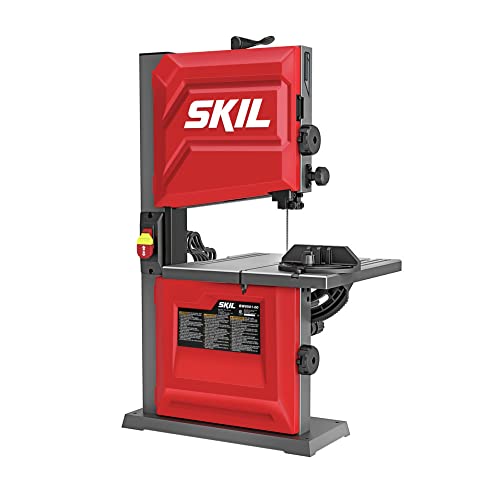
ASIN: B0BFR2BJQP
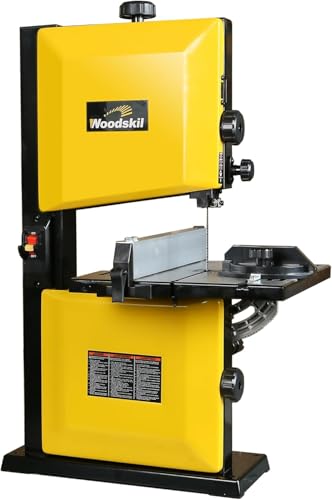
ASIN: B08SK9W4Q5

ASIN: B0HJF6LMWT
Certain content that appears on this site comes from Amazon. This content is provided “as is” and is subject to change or removal at any time. Product examples and images are supplied through Amazon Creators API; confirm specifications and availability on the current listing.
Table of contents
- What a benchtop band saw is for
- Footprint, mounting, and portability
- Throat and resaw capacity
- Blade width, TPI, and compatibility
- Guides, fence, table, and tracking
- Hobby-shop uses and limits
- Setup, safety, and maintenance
- Frequently asked questions
What a benchtop band saw is for
A vertical band saw uses a continuous loop blade that runs around wheels inside the housing and passes through a slot in the table. The operator feeds and turns the workpiece by hand while the moving blade follows a marked line. This layout is useful for curves, irregular profiles, and some straight cuts. With a suitable blade, fence, and stock support, a band saw can also make resaw cuts through boards, although capacity and quality depend on the machine and setup.
A benchtop model places the saw on a bench, cabinet, or dedicated stand rather than on a large floor base. It may have a smaller table, shorter blade, lower vertical capacity, and a more compact motor or frame than a floor-standing model. Those differences make it easier to fit into a small shop but can limit the size and thickness of stock it can handle. The saw should still be mounted on a stable support that can withstand vibration and overhanging workpieces.
Benchtop band saws are vertical machines for guiding stock through a blade. They are different from horizontal metal-cutting band saws, which commonly hold stock in a vise and lower a saw head through the work. A compact woodworking saw is also different from a large floor-standing resaw or production band saw designed for repeated stock reduction. The broad band saw guide discusses the wider category; this article concentrates on benchtop form factor and what it can realistically do in a hobby shop.
A band saw complements rather than replaces other machines. A table saw is usually more convenient for long, straight rips when the stock can be guided safely. A jigsaw may handle a curve in a large panel that cannot be turned on a small band-saw table. A scroll saw can be more suitable for intricate small patterns. See the site’s table saw guide and scroll saw guide for those different setups.
Footprint, mounting, and portability
The footprint on a product sheet does not show the entire space needed to operate the saw. Allow room for the table, workpiece, hands, blade guide adjustments, fence, and material as it moves through the cut. A long board needs support on both sides of the blade. A wide panel needs space to turn without hitting a wall, tool chest, or the operator’s body. Measure the full operating envelope before buying, not only the base dimensions.
Benchtop saws can be lifted or moved more easily than larger floor machines, but the frame, motor, wheels, and table may still make the unit heavy or awkward. Check the listed weight and intended lifting points. Do not carry the saw by a knob, fence, guide post, or other part that is not designed as a handle. If the saw is too heavy for one person, use a helper or a safe lifting method. A portable machine that is dropped can have wheel alignment or table alignment problems even if it still powers on.
Mounting matters. A saw on a flexible bench can vibrate or shift during a cut. Secure it to a rigid, level surface using the manufacturer’s mounting points and approved hardware. If the benchtop will be clamped rather than permanently screwed down, make sure clamps cannot loosen, interfere with the workpiece, or lift the base. A dedicated stand or mobile base may help in a small shop, but verify compatibility and stability.
Consider storage and dust collection. The blade needs a cover or proper tension release procedure for long-term storage, depending on the manual. The saw’s doors, blade guides, fence, and table should remain accessible for setup. Dust ports may require a hose and extractor that take additional room. A compact tool can be easier to tuck away, but do not store it where the frame can be struck or the table used as an unstable shelf.
Understand throat and resaw capacity
Throat capacity is the distance between the blade and the frame behind it. It describes how wide a workpiece can extend from the cut line before contacting the back of the machine. A deeper throat lets you turn broader panels or cut a pattern farther from an edge. It does not indicate the maximum thickness of the stock or guarantee that the table can support a large panel. Both the workpiece and the operator need room to move.
Vertical capacity or resaw height describes the maximum stock height the saw can accept beneath the upper housing or guides. This matters when cutting a board on edge to divide it into thinner boards, or when shaping a thick blank. The usable height depends on the saw’s guide post position and may be lower after a fence or other accessory is installed. Check the manufacturer’s stated capacity and leave room for safe hand placement and a stable feed.
Resaw capacity is not equivalent to resaw performance. A benchtop saw may physically accept a tall board, but the motor, frame, blade width, blade condition, feed rate, and stock stability determine whether the cut is practical. Dense or thick material may cause a small saw to bog or drift. A tall cut also requires the upper guides to be positioned close to the work while leaving the stock a clear path. Do not push a benchtop machine beyond its rated limits because a board fits under the guide.
For hobby use, consider whether you need to resaw occasionally or repeatedly. Occasional resawing may be possible with a suitable blade and patient feed, but frequent production work may justify a larger floor-standing machine designed for that load. A broader saw can accommodate different blade widths and larger stock, but it requires more space and may need a different electrical supply. Compare intended use rather than choosing by the tallest published cut.
Throat depth and curve size
The blade width and material influence how tightly the saw can follow a curve, while throat capacity determines how far the cut can reach across the piece. A large decorative panel may need a deeper throat even if its outline uses broad arcs. A small part may be easier to control on a compact table. Plan how the piece will rotate and whether corners or clamps will interfere with the frame.
Some users confuse throat capacity with the radius of the smallest curve. They are separate limitations: the frame determines the maximum reach from the blade, while the blade’s width, tooth geometry, and stock thickness influence how sharply it can turn. A deep-throat machine does not automatically cut tighter curves, and a narrow blade does not make an oversized panel fit inside a shallow frame.
Table support for tall and wide stock
A small table may not support heavy stock close to the blade or keep a tall board upright during resawing. A fence can help guide a straight cut but cannot compensate for a twisted board or unstable stance. Use auxiliary support only if it is secure, level, and does not steer the work. Check the manual for acceptable fences, jigs, and stock orientation.
When cutting wide or long boards, support the material so its weight does not pull the cut off line. A helper can support the far end only if that person understands the plan and stays clear of the blade. If the stock is too large to handle safely, use a different machine or seek professional help.
Blade width, TPI, and compatibility
Band-saw blades are continuous loops and must match the saw’s required length. They also have a width, thickness, tooth shape, and tooth spacing suited to different work. A narrow blade can follow tighter curves, while a wider blade generally supports straighter cuts and resawing within the machine’s capacity. The saw’s manufacturer usually lists an acceptable blade range; do not install a blade outside the approved range.
TPI means teeth per inch. A higher tooth count may leave a finer edge in suitable thin material, while a lower tooth count can create more space for chips in thicker stock. Blade selection is a balance: if teeth are too fine for the material, chips can pack in the gullets and the cut may overheat or stall; if too coarse, the edge may be rough and the blade may catch on thin stock. Blade geometry and material also matter, so use the blade maker’s chart rather than selecting by TPI alone.
| Blade factor | Effect to consider | Selection check |
|---|---|---|
| Length | Must fit around the wheels and tension mechanism | Use the exact length specified for the saw. |
| Width | Affects curve radius and straight-line stability | Stay within the maker’s allowed range. |
| TPI and tooth pattern | Affects chip clearance and surface quality | Match to thickness and material. |
| Blade material | Influences durability and suitable stock | Check the blade maker’s intended use. |
Blade compatibility also includes thickness and tension capacity. A blade that is too thick or wide for the wheels may not track correctly or may strain the frame. A blade that is too narrow for a given setup may not hold a straight line under feed pressure. Confirm exact specifications in the manual and on the blade package. Do not assume that blades from a similar-looking saw will fit.
Set tension and tracking according to the manual
Blade tension keeps the loop taut around the wheels, while tracking positions it on the wheel tires. Both adjustments affect stability. Too little tension can allow the blade to wander; too much can stress the blade or machine. Incorrect tracking can cause the blade to run off center or rub the guides. Follow the maker’s procedure and do not rely on a generic tension trick when the manual offers a model-specific method.
Some saws have a tension indicator or scale. Treat it as a guide and check that the blade remains positioned correctly after adjustment. The RIKON 10-305 operator manual illustrates model-specific blade installation, tensioning, tracking, and guide adjustment procedures. Those steps are not universal; use the manual for your exact saw and blade.
Blade guides, fence, table, and tracking
Blade guides support the blade near the work. Most vertical bandsaws use upper and lower guide assemblies that need adjustment for the blade and stock. Roller or block guides should be set according to the machine instructions; positioning them too far from the blade can permit deflection, while incorrect contact can wear the blade or generate heat. The upper guide post should be lowered close to the workpiece while leaving enough clearance for the stock to pass beneath it.
A guide system is not a substitute for a sharp, correctly tensioned blade. If the blade deflects or twists, inspect blade condition, tracking, guide alignment, feed pressure, and stock support. The upper guide should move smoothly and lock at the chosen height. Check that its guard covers the unused portion of the blade as the post is adjusted. Do not operate with exposed non-cutting portions or missing wheel covers.
Rip fence and resaw fence
A rip fence can guide straight cuts and help maintain a consistent width, but it must align with the blade and lock securely. A benchtop fence may have less reach or rigidity than a floor saw’s fence. Check whether it can be positioned for the stock dimensions you use and whether its clamp shifts the fence when tightened. Verify alignment with a test cut rather than assuming the scale is exact.
Resaw fences may be taller or shaped to support a board on edge. Some users make drift adjustments or use a point fence to account for a blade’s tendency to track slightly off a straight line. These are advanced setup techniques; follow manufacturer instructions and seek training. A fence cannot correct a twisted board, an incorrectly tensioned blade, or poor blade selection. For small hobby projects, a simple fence and a test strip may be enough.
Table tilt and miter gauge
The table may tilt for angled cuts, but the locking mechanism must hold securely and the scale should be checked. A tilted table changes how the stock rests and how hands approach the blade. Practice on scrap and ensure the work remains flat. If the table or trunnion shifts, stop and correct the issue before cutting.
A miter gauge can guide crosscuts or angled cuts when designed for the saw’s slot. Check fit, travel, and clearance before powering the machine. Do not combine a miter gauge and rip fence in a way that traps the offcut. For repeatable angles, make a test cut and verify it with a square or angle gauge.
Dust collection and lighting
Band saws produce dust and chips that can collect inside the cabinet or obscure a line. A dust port and extractor may help, but compatibility and capture vary by saw and material. Keep the blade path and table visible, use appropriate respiratory and eye protection, and clean the machine according to the manual. Avoid blowing dust into bearings, electrical components, or the room.
Lighting should reveal the blade and pattern without glare. A task light can help on a small bench, but secure it so it cannot fall into the wheels or work area. Keep power cords and extractor hoses away from the blade and operator’s feet. Good visibility is part of setup, not a substitute for guards or safe hand placement.
Benchtop, floor-standing, and horizontal band saws
Benchtop band saws are compact vertical machines that rest on a bench or stand. They can suit small furniture components, hobby shapes, and occasional resawing within their capacity. Floor-standing vertical saws tend to occupy more space and may provide a larger table, greater throat or vertical capacity, and a wider blade range, depending on the model. Those features can make them more suitable for larger stock or more frequent work, but they also add weight, cost, and setup demands.
Horizontal band saws are a different tool category. The workpiece is generally secured in a vise while the saw head moves through the stock, often for repeated metal or stock-length cuts. A small benchtop wood bandsaw is not a substitute for a horizontal metal-cutting saw. Confirm the intended material and machine orientation in the product documentation.
For the broad comparison across band-saw categories, use the live band saw guide. This benchtop guide narrows the decision to footprint, support, blade range, capacity, and hobby-shop limitations. If your work shifts toward repeated precision cuts in panels, the site’s table saw guide covers another stationary approach; for complex decorative curves, see the scroll saw guide.
Realistic hobby-shop uses and limits
A benchtop band saw can be useful for cutting curves in small boards, trimming shapes from blanks, making simple pattern parts, and preparing stock for sanding or hand-tool refinement. It may also resaw relatively modest pieces when the saw’s capacity and blade allow. These are examples of possible uses, not guarantees that every compact saw can handle every stock or blade combination.
For furniture parts, a band saw can rough out a leg curve or bracket shape. Leave a small amount of waste outside the layout line so the final shape can be refined with sanding or a plane. For small craft components, create a template and use safe push aids when the workpiece is small. For a resaw cut, choose stock that is flat, straight, and stable; set the guide post close; and feed slowly enough to avoid forcing the blade.
Do not expect a benchtop saw to resaw large hardwood logs, produce veneer at a production pace, or replace a floor-standing resaw. A small motor, narrow blade, short table, and modest frame can limit the stock and feed rate. If the saw bogs, the blade drifts, or the stock becomes unstable, stop and re-evaluate. The correct response is not always to feed harder or install a wider blade.
Wood condition also matters. Knots, cracks, twists, internal stress, and moisture can change how a board behaves. A blade can bind as tension releases within the stock. Inspect the piece and plan how it will be supported before cutting. If the material is too large, unstable, or valuable to risk, use a machine designed for the job or ask an experienced woodworker for help.
Setup and safe operation
Read the manual before assembly, blade changes, or operation. Secure the saw to a stable bench or stand, verify that the table is level, and confirm that wheel doors and blade guards close correctly. Install the blade in the direction shown by the manual, tension and track it using the specified procedure, then adjust the guides. Disconnect power before making adjustments or reaching inside the cabinet.
OSHA’s band saw safety eTool identifies blade contact as a major hazard and describes guarding the blade except at the point of operation, adjusting the upper guard close to the stock, using appropriate blades, keeping them sharp, and using a jig or push aid for small pieces. These are workplace safety materials; home users should still follow the saw manual and use proper training and protective equipment.
- Set the upper blade guard as close to the workpiece as the manual directs.
- Keep fingers out of the blade path and use a fixture or push aid for small stock.
- Keep hands on both sides of the work where safe and avoid reaching across the blade.
- Do not twist or force stock through a blade that is binding or drifting.
- Wait for the blade to stop before removing cutoffs or measuring near it.
- Wear eye protection and use hearing and dust protection appropriate to the material.
- Keep loose clothing, hair, jewelry, and cords away from wheels and blade.
Band saw blades cannot be fully guarded at the point of operation because the material must contact the blade. That makes hand placement and feed control important. Maintain a stable stance, keep the work flat on the table, and use a fence, miter gauge, or fixture when the operation calls for it. Never cut freehand without a clear plan or hold a small piece in a way that places fingers close to the teeth.
Do not retrieve stock while the blade is coasting. Switch off and wait until the blade has stopped before moving the material or clearing scrap. Do not thrust a piece of wood against the teeth to stop the blade. If a blade breaks, step back, switch off, disconnect power, and allow the wheels to stop before opening the cabinet. Inspect the blade, wheels, guides, and workpiece before returning the saw to service.
For resawing, think through how the board may close or shift as the cut releases internal stress. Keep the blade guard adjusted and use a fence only when it is aligned. Support the outfeed side without pushing the stock sideways. If you cannot control the board’s weight, get help or choose a different machine. A benchtop table should not be overloaded with long or heavy stock.
Research-based comparison method
This guide does not claim to have physically tested or ranked current benchtop models. It compares manufacturer specifications and manuals for throat, vertical capacity, approved blade length and width, table size and tilt, guide-post adjustment, fence, tension and tracking procedures, mounting, dust ports, and included accessories. The focus is how those details affect small-shop setup and realistic use, not on a brand leaderboard.
OSHA’s band saw eTool provides safety context for blade guarding, guide adjustment, blade choice, and small-piece fixtures. The RIKON 10-305 operator manual is a manufacturer example showing blade installation, tracking, tensioning, guide adjustment, fence, and height setup. Grizzly’s benchtop band saw support FAQ illustrates how makers publish blade and capacity details for specific models. These sources are examples, not universal specifications; verify the exact model and current version.
Product bundles and prices can change. A listing may show a stand, fence, or blade that is optional or included only in a particular kit. Confirm the model number, included parts, blade compatibility, warranty, and manual before ordering. If a specification is unclear, ask the manufacturer or authorized dealer rather than inferring it from a similar-looking saw.
Maintenance and storage
Disconnect the saw before cleaning or servicing. Remove dust from the table, wheels, guides, blade area, and cabinet as the manual permits. Inspect wheel tires for damage and keep them clear of packed debris. Check the blade for cracks, missing teeth, rust, or dullness. Replace defective blades promptly and use only the approved length, width, and tooth style.
Check blade tension and tracking as directed, and inspect guides and bearings for wear or looseness. The upper guide post should lock securely at the selected height. Confirm the fence remains aligned and the table angle lock holds. If the saw begins vibrating, tracking poorly, or making unusual noise, stop and investigate. Do not continue cutting with a damaged blade or guard.
Store the saw dry and protected from impact. Follow the manual about releasing blade tension for extended storage; procedures differ. Keep blades labeled and protected from moisture, and store the machine where the frame cannot be bent or the table used as a heavy shelf. If the saw is moved, recheck mounting, blade tracking, and table alignment before precision work.
Frequently asked questions
What is the main advantage of a benchtop band saw?
It provides band-saw functions such as curve cutting and some resawing in a smaller footprint than a floor-standing machine. The tradeoff is that table area, throat, vertical capacity, blade range, and motor capability may be more limited.
What does throat capacity mean?
Throat is the distance from the blade to the frame. It indicates how far a workpiece can extend behind the blade before contacting the machine. It is different from maximum stock height and does not describe the smallest curve the saw can cut.
What does resaw capacity mean?
It generally describes the maximum height of stock that can fit beneath the upper frame or guide. It does not guarantee that the motor, blade, and frame can resaw every material at that height cleanly. Check the manufacturer’s limitations and use a suitable blade and setup.
What blade width should I use?
Use a width within the machine’s approved range and suited to the curve or straight cut. Narrower blades can turn tighter curves; wider blades may track more steadily for straight cuts. Follow the blade maker’s chart for stock thickness and material.
What does TPI mean on a band-saw blade?
TPI means teeth per inch. Tooth spacing influences chip clearance and edge finish. Finer teeth can suit thinner material, while coarser teeth can help with thicker stock, but the right blade also depends on material and blade geometry. Use manufacturer guidance rather than a universal rule.
Can a benchtop band saw resaw hardwood?
It may resaw suitable stock within the saw’s capacity when the blade, tension, guides, fence, and feed are appropriate. Dense or tall stock can challenge a small machine. Stop if the motor bogs or the blade drifts, and never exceed the rated capacity.
Can I cut metal on a woodworking benchtop band saw?
Only if the manufacturer and blade explicitly approve that material and the machine’s speed and setup are suitable. Many woodworking band saws are not intended for metal. A horizontal metal-cutting saw is a different machine category.
How close should the upper guide be to the stock?
Set it as close as practical while allowing the stock to pass, following the manual. This reduces exposed blade and supports the blade near the work. Do not guess or adjust with power connected.
Why does the blade drift?
Possible causes include a dull or unsuitable blade, incorrect tension or tracking, misaligned guides, excessive feed, twisted stock, or an uncalibrated fence. Stop, disconnect power, and check each setup variable. Use scrap to verify adjustments.
Should I buy a benchtop or floor-standing band saw?
Choose benchtop if the compact footprint, stock size, and occasional hobby workload match your needs and you can mount it securely. Consider floor-standing if you regularly cut larger stock, need greater table or vertical capacity, or expect frequent resawing. Measure the shop and review power requirements before deciding.
Conclusion: buy for the stock and space you have
The best benchtop band saws balance compact footprint with adequate throat, vertical capacity, approved blade range, stable mounting, and guides that can be adjusted and locked reliably. Their strength is bringing curved cuts and modest resawing to a small shop. Their limits are equally important: small tables, motor capacity, blade range, and stock support constrain what can be done safely.
Measure the work area, compare manufacturer specifications, and read the manual before buying. Plan for a rigid bench or compatible stand, suitable blades, dust management, and safe support for the stock. Use a floor-standing machine for work beyond the benchtop saw’s capacity and a horizontal band saw for the applications it is designed to handle. A compact saw is most useful when the project fits the machine and the setup remains stable.