Disclosure: As an Amazon Associate, dailyhomedecorating.com earns from qualifying purchases. Links to Amazon on this page are affiliate links; they cost you nothing extra. Prices and availability change often, so check the current Amazon listing before you buy.
The best beach blankets for sand should do three unglamorous things well: give sand nothing to cling to, dry before the drive home, and shake clean in seconds. Honesty first: the verified pool for this guide contains no purpose-built sand-free beach blankets, so this article does two jobs. It reviews the four pool blankets that honestly work as beach-adjacent picnic, park, and shoreline throws — lightweight, washable, and smooth enough to shed most sand — and then profiles the two true beach-blanket styles as prose-only picks with no links, so you can shop for the real thing with clear eyes. If your beach days are really summer-picnic days, start with Best Blankets For Summer; if fabric choice is your main question, compare Best Cotton Blankets For Summer before you buy.
Sand is a materials problem. Deep pile, fleece fuzz, and open loops give grains thousands of tiny shelves to sit on; smooth, tight, synthetic or flat cotton surfaces give them almost none. Weight matters too: a beach blanket gets carried, shaken, folded wet, and stuffed into bags, so every extra pound is a tax you pay in both directions. The rankings below weigh sand-shedding and packability ahead of softness — the reverse of a winter guide — because a blanket that comes home full of beach is a blanket that stops going to the beach.
Where to Buy
The four linked picks are sold on Amazon; check listings for current price and availability. Lead pick: the Exclusivo Mezcla Fleece Throw Blanket — Check on Amazon. The others are the Tache Cotton Patchwork Quilt — Check on Amazon; the Bedsure Cooling Cotton Waffle Blanket — Check on Amazon; and the Elegear Double-Sided Cooling Blanket — Check on Amazon. Two prose-only true beach styles follow without links. For the picnic setup around the blanket, see Best Throw Pillows Under $100.
In this guide
Quick Picks
| Pick | Badge | Why it earns its place |
|---|---|---|
| Exclusivo Mezcla Fleece Throw Blanket for Couch | Best Overall | Lightest linked pick; smooth flannel faces shake cleaner than pile. |
| Tache Cotton Patchwork Quilt Blanket Country Farm Cottage Vintage Antique Ditsy Floral Pai | Best for Picnics | Flat cotton quilt that sits well on grass and looks like summer. |
| Bedsure Cooling Cotton Waffle Blanket for Hot Sleepers | Best Breathable | Cotton waffle for shade breaks and warm evenings after the beach. |
| Elegear Double-Sided Cooling Blanket for Hot Sleepers | Best for Heat | Smooth cooling face sheds sand best of the linked four and cools on contact. |
| Sand-Free Woven Beach Blanket (prose-only) | Best True Beach Pick | The purpose-built style: woven synthetic surface sand falls through or off. |
| Oversized Quick-Dry Nylon Beach Blanket (prose-only) | Best for Groups | Parachute-style nylon coverage for crowds, with corner pockets for sand ballast. |
Key Takeaways
- No pool blanket is a true sand-free beach blanket; the linked four are honest picnic-and-shoreline alternatives, and the prose-only two are the real beach specialists.
- Smooth and tight beats soft and fluffy anywhere sand is involved.
- Lightweight is a beach feature, not a compromise — you carry everything twice.
- A cheap ground barrier under a nice throw gives you beach function without sacrificing the blanket you love.
- Shake, rinse, and dry the same day; sand plus damp plus a closed bag is how blankets die.
How These Picks Were Chosen
Selection started from the pool’s lightest, smoothest, most washable blankets, verified from pool data: the Exclusivo Mezcla throw at 1.55 pounds with flannel faces, the flat-weave Tache cotton quilt, the breathable Bedsure waffle, and the Elegear with its smooth cooling face. Deep-pile sherpa, faux fur, weighted, heated, and wool picks were excluded as sand traps or beach-impractical. Because the pool lacks purpose-built beach blankets entirely, two prose-only styles complete the six per the brief’s pool-gap rule, with no invented specifications and no links. Outdoor layering for the colder end of shoreline trips is covered in Best Blankets For Cold Weather Camping.
The 6 Best Best Beach Blankets for Sand — Reviewed

Exclusivo Mezcla Fleece Throw Blanket for Couch
Our badge: Best Overall
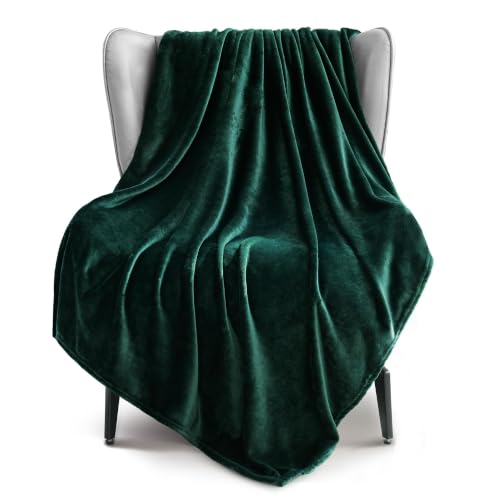
The Exclusivo Mezcla Fleece Throw Blanket for Couch leads the linked picks because it is the pool’s lightest throw (1.55 pounds, extra-large 50 by 70 inches) with smooth flannel-style faces on both sides. Smooth matters: dry sand slides off short, flat fibers far more willingly than off pile, and a vigorous shake at the shoreline removes most of what a day deposits. It will not repel damp sand like a true beach weave, but as a picnic, park, and dry-sand blanket it is the most honest all-rounder here.
Strengths
- Lightest carry in the guide with generous two-person coverage.
- Smooth faces shed dry sand better than any pile blanket.
- Machine washable for the post-beach reset.
Trade-offs
- Fleece still holds damp sand and needs a rinse-and-dry routine.
- No sand pockets, stakes, or waterproof backing.
- Thin ground feel on hard or pebbly surfaces.
| Color | Forest Green |
| Size | Throw XL (50″ X 70″) |
| Weight | 1.55 pounds |
Use it as the top layer over any cheap waterproof barrier and the system outperforms most single beach blankets: barrier handles ground moisture, Mezcla handles comfort, and both shake and wash easily. Forest green hides grass stains gracefully, which picnic veterans will recognize as a feature. Choose the Mezcla as your beach-adjacent default. Skip it as your only layer on wet sand — that job belongs to the prose-only specialists below.
Best for: picnics, parks, and dry-sand days / Not suited for: wet-sand, barrier-free beach setups
Choose the Mezcla for the lightest shoreline carry. Check on Amazon

Tache Cotton Patchwork Quilt Blanket Country Farm Cottage Vintage Antique Ditsy Floral Pai
Our badge: Best for Picnics
The Tache Cotton Patchwork Quilt Blanket Country Farm Cottage Vintage Antique Ditsy Floral Pai is the picnic romantic of the guide: flat cotton patchwork that lies smoothly on grass, photographs like a summer editorial, and gives sand a relatively tight woven surface to slide from. Cotton absorbs splashes rather than shedding water, so this is a fair-weather, grass-and-dry-sand pick — but for the beach day that is really a lawn day near water, nothing linked looks or feels better.
Strengths
- Flat weave lies stable and shakes reasonably clean when dry.
- Cotton comfort for sitting, reading, and napping outdoors.
- Styling that elevates picnics and beach-house porches.
Trade-offs
- Cotton holds water; a soaked quilt is a heavy quilt.
- Delicate wash care versus true beach gear.
- Throw size suits couples, not crowds.
| Color | Burgundy |
| Size | 50×60 |
Pair it with a barrier on damp grass and keep it for the golden-hour half of the beach day — snacks, books, and sunset — while a tougher layer takes the sandy morning shift. Its cotton character is fully explored in Best Cotton Blankets For Summer. Choose Tache when the day is a picnic that happens to be near a beach. Skip it for surf-side, all-day sand duty.
Best for: picnics, lawns, and styled outdoor afternoons / Not suited for: wet sand and rough daily beach use
Choose Tache for picnic-first beach days. Check on Amazon

Bedsure Cooling Cotton Waffle Blanket for Hot Sleepers
Our badge: Best Breathable
The Bedsure Cooling Cotton Waffle Blanket for Hot Sleepers earns its place for the hours around the beach rather than on the sand itself: a breathable cotton-bamboo waffle that works as a shade-break wrap, a post-swim layer when the breeze turns, and the blanket on the beach-house bed that night. Its open waffle texture can catch dry sand, so treat it as the house-and-shade blanket of a beach trip, not the ground layer.
Strengths
- Best breathability here for hot shade breaks and evenings.
- Absorbent cotton blend handles post-swim damp shoulders kindly.
- Bed-sized, so one blanket covers the whole trip’s nights.
Trade-offs
- Waffle pockets trap sand if used as a ground blanket.
- Heavier carry than the throws for a walk to the shore.
- Ivory shows every outdoor stain the day invents.
| Color | 01 – Ivory |
| Size | Queen (90″ X 90″) |
| Weight | 3.8 Pounds |
Beach rentals and house shares are where this pick shines: one breathable blanket for the bed, the porch, and the shade, washed easily between guests. Keep it off the sand line and it will serve for years of summers. Choose the waffle for beach-trip lodging and shade duty. Skip it as a sand layer — that is the one job its texture refuses.
Best for: beach houses, shade breaks, and trip bedding / Not suited for: direct sand contact
Choose the waffle blanket for breathable beach-trip coverage. Check on Amazon

Elegear Double-Sided Cooling Blanket for Hot Sleepers
Our badge: Best for Heat
The Elegear Double-Sided Cooling Blanket for Hot Sleepers has the smoothest surface of the linked four on its Arc-Chill cooling face, and smooth is what sand respects: dry grains slide off the slick side with the least shaking of any pick here. As a bonus, that face feels cool on sun-warmed skin during shade breaks. The cotton reverse is the sand-catching side, so the discipline is simple: cooling face down to the sand, or cooling face up to the skin — never cotton side down on the beach.
Strengths
- Slick cooling face sheds dry sand best among linked picks.
- Cool-touch comfort for hot shade breaks.
- Lightweight and quick to rinse and dry relative to cotton.
Trade-offs
- Not waterproof and not a true sand-free weave.
- Smooth face slides on smooth barriers; pair textures carefully.
- Bed-blanket sizing is bulkier than a dedicated beach mat.
| Color | Light Grey |
| Size | Full/Queen (79″ x 86″) |
| Weight | 3.26 pounds |
For hot-climate readers whose beach problem is heat first and sand second, this is the linked pick that respects both. Rinse it the same evening and it dries fast enough for tomorrow. Choose Elegear for hot beaches and smooth-surface duty. Skip it if you want a natural-fiber-only kit.
Best for: hot beaches and shade-break cooling / Not suited for: waterproof ground protection
Choose Elegear for the smoothest linked surface. Check on Amazon
Sand-Free Woven Beach Blanket (Prose-Only)
Our badge: Best True Beach Pick
The genuine article for this keyword is a purpose-built sand-free woven beach blanket — typically a dual-layer woven synthetic mesh-style construction that lets dry sand fall through or slide off instead of lodging in fibers. No pool product matches it, so it appears here without a link or invented specifications. If your life includes weekly real beach days, this style — not any linked pick — is the correct primary purchase, with the Mezcla or Tache reserved for grass and picnics.
Strengths
- Engineered specifically so dry sand does not accumulate on the surface.
- Dries fast and shrugs off rinsing.
- Usually packs smaller than fabric blankets of equal coverage.
Trade-offs
- Utilitarian feel; nobody naps luxuriously on a beach weave.
- Wet sand still sticks to everything, including this.
- Quality varies widely — weave density and edging are the tells.
Buy it for the sand line, stake or weight its corners, and keep a soft throw on top for sitting comfort if your group lingers for hours — the two-layer system again. Choose the woven specialist for real, repeated beach use. Skip it if your beach days are twice a summer; the linked alternatives plus a barrier will serve.
Best for: frequent beachgoers on dry sand / Not suited for: comfort-first loungers
Choose the sand-free weave for genuine beach duty. No Amazon link is provided for this prose-only pick by design.
Oversized Quick-Dry Nylon Beach Blanket (Prose-Only)
Our badge: Best for Groups
The second true beach style is the oversized parachute-nylon blanket: a sheet of ripstop-style nylon, far larger than any throw, with corner pockets you fill with sand as ballast. It is prose-only here because the pool contains nothing like it. Groups, families, and anyone anchoring an all-day base camp get coverage no 50-by-60 throw can imitate, and the nylon sheds dry sand and dries in minutes.
Strengths
- Group-scale coverage in a pouch-sized pack.
- Sand ballast pockets solve the wind problem elegantly.
- Fastest drying of any style in this guide.
Trade-offs
- Nylon feels like gear, not bedding — comfort is minimal.
- Flaps and rustles in wind until fully ballasted.
- Hot to sit on in direct midday sun.
Spread it as the base camp, layer a Mezcla or Tache on top for the sitting zone, and your group owns both scale and comfort. Choose nylon for crowds and wind. Skip it for couples who value softness over square footage.
Best for: groups, families, and all-day base camps / Not suited for: comfort-first couples
Choose oversized nylon for group beach coverage. No Amazon link is provided for this prose-only pick by design.
Materials at the Beach: Microfiber, Cotton, and the Dedicated Synthetics
Beach blanket materials divide by how they treat sand, water, and sun, and the honest comparison flatters no one completely. Dedicated smooth synthetics — the parachute-style nylons and tight polyesters of purpose-built beach mats — shed dry sand best, dry fastest, and pack smallest; they feel utilitarian against skin, can feel hot in still sun, and rustle in wind, which is why they serve best as the base layer of the two-layer system this guide recommends. Cotton beach blankets feel the most familiar and pleasant, breathe well, and double as household textiles without apology; they hold wet sand until dry, dry slowly, and weigh more wet than any other choice, so they belong on the comfort layer and on picnic lawns more than in the surf’s splash zone. Microfiber constructions sit between: smooth enough to shed respectably, soft enough for skin, quick to dry, and prone to holding fine sand in their nap if the nap is plush rather than flat. Fleece and sherpa, beloved indoors, are beach liabilities as base layers — sand lodges in their pile permanently — and beach assets only as the top comfort layer on cool evenings, kept off the sand itself. Choose the stack by the day’s plan: surf and children argue for synthetic base plus cotton comfort, lawns and shade argue for cotton alone, and the lone reader with a tote argues for whichever packs smallest while still giving them a dry, defined place to land.
Comparison Table
| Pick | Size | Weight | Sand behavior | Check price on Amazon |
|---|---|---|---|---|
| Exclusivo Mezcla | Throw XL 50″ X 70″ | 1.55 pounds | Smooth fleece; shakes mostly clean | Check price on Amazon |
| Tache Quilt | 50×60 | — | Flat cotton; fair when dry | Check price on Amazon |
| Bedsure Waffle | Queen 90″ X 90″ | 3.8 Pounds | Traps sand; keep off ground | Check price on Amazon |
| Elegear Cooling | Full/Queen 79″ x 86″ | 3.26 pounds | Slick face sheds dry sand best | Check price on Amazon |
| Sand-Free Woven (prose) | Varies | Varies | Engineered to shed sand | Check price on Amazon |
| Nylon Oversized (prose) | Varies | Varies | Sheds and dries fastest | Check price on Amazon |
How to Choose the Best Beach Blankets for Sand
Be honest about your beach frequency
Weekly beachgoers should buy a prose-only specialist style and stop asking bedding to do a beach job. Twice-a-summer households are better served by a linked throw plus a cheap barrier, which then works all year at picnics and parks. Frequency, not aspiration, is the correct sizing tool for beach gear.
Prioritize surface over softness
Run a mental hand over any candidate: if your fingers sink in, sand will too. Smooth, tight, and synthetic-leaning surfaces win at the shoreline; pile and plush win everywhere else in life. Own both kinds and stop asking one blanket to be two.
Size for your group plus gear sprawl
People sit smaller than they sprawl. Bags, coolers, books, and sandy feet all claim territory. Couples need throw-XL scale minimum on the sand; groups need the oversized nylon class. Undersized beach blankets cause the towel-territory wars everyone pretends are jokes.
Plan the wind before it plans you
Ballast pockets, corner loops, or simply sitting on the edges — every beach blanket needs a wind answer. Lightweight champions like the Mezcla are carry-friendly and flight-prone in equal measure; a barrier layer or a seated perimeter is part of the system, not an afterthought. Beach-house comfort upgrades continue in Best Throw Pillows For Bedrooms Under $40.
Dogs at the Beach: The Blanket as Neutral Territory
Beach dogs need a defined place more than most beachgoers do, because a dog without a station becomes a visiting delegation to every neighboring blanket. Lay the dog’s zone at the camp’s shady edge, on the base blanket or on the dog’s own washable layer from the household’s pet stock, with water in a bowl weighted against tipping and a clear sightline to its people. A blanket trained as the dog’s place — the same textile, the same corner, every trip — gives the dog a job it can succeed at: stay on the blanket, watch the world, receive visitors there. Shake and rinse the dog’s layer with the day’s full routine, because it collects the beach’s entire inventory plus the dog’s, and store it separately from the household’s clean textiles until washed. Groups camping near dogs they do not know should place their food zone at the blanket’s far side from likely dog traffic, a courtesy to both parties. None of this requires special equipment; it requires the same zoning discipline the children’s section prescribes, applied to the four-legged member of the party, who will reward the clarity by actually using the station you built.
How to Get Sand Out of a Blanket (and Keep It Out of Your Car)
Shake at the shoreline, not the parking lot: hold the blanket by two corners, snap it downwind, and repeat after it dries — dry sand releases, damp sand argues. At home, shake again outside, then wash per label and dry fully before storage. In the car, transport beach textiles in a dedicated bag or bin so the week’s sand does not migrate into upholstery and, eventually, your bed. Rinse smooth synthetics the same day; salt and sunscreen degrade fibers quietly all week if left to sit.
Problem: Sand embedded in fleece after a beach day. — Let it dry completely, shake and beat it outdoors, then wash. Washing damp, sandy fleece just redistributes the grit.
Problem: Blanket keeps blowing away. — Ballast the corners with sand, gear, or cooler weight, and sit the perimeter. Lightweight blankets need anchors by design.
Problem: Damp blanket smells by the drive home. — Drape it over seats or a rack rather than sealing it in a bag; rinse and fully dry the same evening.
Problem: Sand in the bed at the beach house. — Outdoor textiles stay outdoors. Keep a strict line between beach layers and bedding — the waffle pick belongs to the bed, never the sand.
Choosing Size and Shape: The Geometry of a Good Beach Day
Beach blankets fail by geometry more often than by fabric. A blanket sized for two that hosts four becomes a border dispute; a blanket sized for a family that travels with one reader becomes a sail that one person fights all afternoon. Count the party honestly, then add the non-negotiable zones: a dry rest zone, a wet traffic lane from the water’s side, and a bag-and-food zone that sand reaches last. Rectangles serve groups and rows of loungers best; oversized squares serve circles, children, and shifting shade, because the group can rotate its arrangement as the sun moves without re-anchoring the whole camp. Round and novelty shapes photograph charmingly and waste their edges, which is where beach blankets do their anchoring work. Whatever shape you choose, verify the packed size against the bag or tote that will actually carry it — a blanket that only fits the car when folded by its original owner, along its original creases, will be left behind by July. Size, shape, and packed reality: the three measurements that decide whether the best blanket in this guide is the one on your beach or the one in your closet.
Beach Blanket Systems: Barrier, Comfort, Shade
The reliable beach setup is three layers deep: a barrier (waterproof or woven specialist) against the sand, a comfort layer (Mezcla or Tache) where people actually sit, and a shade layer (waffle or Elegear) for wraps and cool-downs. Each layer is cheap to replace, easy to wash, and honest about its job. Single-blanket solutions force one product to be barrier, sofa, and towel simultaneously, and the compromise always bills you in sand. Build the system once and every beach day after is just packing it.
Children at the Beach: Blanket Logistics for Small, Wet, Sandy People
Children convert any beach blanket into infrastructure under maximum load, so family beach systems deserve their own engineering. Establish the blanket as base camp with rules a child can hold: wet and sandy play happens at the blanket’s water-side edge, drying and snacks happen at its dry end, and the middle is the road between them that everyone crosses quickly. Keep one dedicated child towel per child rather than letting towels migrate into the blanket’s dry zone, and park the sunscreen, wipes, and spare clothes in a bag on the blanket’s corner, where the system can find them without excavation. Expect the blanket to be buried at least once by enthusiastic construction nearby; a smooth weave forgives burial with a shake, which is yet another argument for the base layer’s construction. For naps, move the sleeping child onto the comfort layer in the shade, off the traffic lane, with the blanket’s edge folded as a windbreak rather than a cover in hot sun — shade and airflow keep a napping child comfortable, and an adult’s periodic hand-check on temperature does the rest. Families who run this small system return home with a blanket that needs a shake and a wash; families who wing it return with a textile ecosystem. The blanket was never the variable. The zoning was.
Picnics, Parks, and Lawns: Where the Linked Picks Win
Move the venue three hundred yards inland and the rankings invert: on grass, the Tache quilt and Mezcla throw are genuinely excellent — soft, stable, washable, and free of sand’s sabotage. Most “beach” blankets in real households spend ninety percent of their lives on lawns, porches, and park grass. If that is your ratio, buy for the lawn with the linked picks, borrow beach discipline (barriers, shaking, same-day drying) for the shoreline days, and let the specialists go to the households that truly live on sand.
Sand, Honestly: Why It Sticks, and What Actually Releases It
Sand defeats blankets by physics, not by malice, and understanding the physics improves every choice in this guide. Dry sand is a collection of hard, angular grains that lodge in loops, piles, and textured weaves — which is why terry, fleece, and plush beach textiles return home carrying a beach of their own — while smooth, tightly woven surfaces give grains nothing to grip, so a shake sheds them almost completely. Wet sand behaves oppositely: it clumps, adheres by surface tension to almost anything, and defeats even excellent blankets until it dries, which is why the experienced beach routine shakes twice — once roughly at the waterline to remove the loose load, and once again when the blanket has dried, before it enters the car. Static plays a minor role with synthetics in dry wind, and weave plays the major one: the smoother and tighter the surface, the less sand boards for the ride home. This is also why the linked picks in this guide, which serve double duty as household blankets, are recommended with their beach roles stated precisely — excellent as the comfort layer on top of a sand-shedding base, admirable for picnics and lawns, and not to be confused with the dedicated smooth-weave beach mats whose entire design is sand refusal. Layering the two, as the systems section describes, gets both virtues without asking either textile to lie about its nature.
Wind is sand’s delivery system and the blanket’s second opponent. A lightweight beach blanket in a real breeze is a kite with ambitions; size and anchoring decide whether it serves the group or chases it. Corner sand pockets, weights, and stakes each work, with sand pockets the most self-sufficient because their ballast is manufactured by the beach itself on arrival. Spread the blanket with its smooth side up, anchor the windward corners first, and place the group’s heavy items — cooler, bag, shoes in a pile — on the remaining corners as living ballast. In gusty conditions, a slightly smaller, well-anchored blanket serves better than a vast one that must be fought hourly, which is why this guide’s sizing advice weighs your typical beach’s wind alongside your group’s headcount.
Beach Blankets for Groups, Families, and the Lone Reader
Different beach parties need different blankets, and the differences are mostly geometry. A solo reader needs a personal territory: enough blanket to lie on with a bag beside them, a surface that sheds sand when they stand for a swim, and a packed size that disappears into a tote — the compact end of this guide’s range. A couple needs a shared base with room to keep a dry zone between two people and the cooler, because every beach day develops a wet traffic lane and a dry sanctuary, and planning the sanctuary is the difference between a relaxing base camp and a damp negotiation. Families with children need acreage and forgiveness: the largest footprint the adults can carry and anchor, zones enforced by layout — towels and wet play at one end, food and dry rest at the other — and a blanket whose washing instructions welcome the season’s inevitable sunscreen, snack, and saltwater load. Groups of friends need durability and replaceability more than refinement, plus a blanket big enough to serve as the gathering’s address on a crowded beach. In every case, buy the footprint for the party you actually host most often, and let the exceptional gathering borrow a second blanket rather than forcing one blanket to be sized for the reunion and carried by the solo reader.
Common Buying Mistakes
Taking a sherpa or faux fur throw to the beach
Deep pile is a sand archive. One beach day can lodge grit in pile that no washing fully evicts. Pile blankets are winter royalty and beach contraband — keep the kingdoms separate.
Buying white for the beach
Sand stains, sunscreen marks, and picnic spills all sign white textiles permanently. Choose mid-tones and patterns outdoors; save ivory for the bed.
Skipping the barrier to save money
A barrier protects the blanket you actually like from ground moisture and half its sand load. It is the cheapest insurance in the whole beach kit.
Storing the blanket damp “just for tonight”
Mildew books no appointments; it simply arrives. Dry everything the same day, every time, and beach textiles last for years instead of one season.
Care After Salt, Sun, and Sunscreen: Keeping a Beach Blanket Alive
A beach blanket’s three chemical enemies are salt, ultraviolet light, and sunscreen, and its care routine answers each in turn. Salt left in fibers draws moisture from the air and keeps a stored blanket faintly damp and stiff, so rinse or wash after genuinely salty days rather than shaking and shelving by default. Ultraviolet degrades colors first and fibers eventually; dry and store beach textiles out of prolonged direct sun, and accept graceful fading as the season’s patina rather than bleaching it back with harsh treatments that cost the fabric its life. Sunscreen — especially the spray kind that settles over everything downwind — leaves greasy, yellowing marks on light fabrics; treat spots promptly with the detergent your care label allows, before the first full wash sets them. Sand itself is an abrasive in the washing machine, so the double-shake routine from the systems section is also machine care: shake outdoors, then wash, and empty pockets and folds over the trash rather than into the drum. Store the blanket clean, fully dry, and loosely rolled with its stakes or weights, so the first beach day of next season starts with an inspection instead of an archaeology dig. Beach textiles maintained this way last for many summers; the same textiles stored sandy and damp are retired by their second year, and their owners conclude, wrongly, that beach blankets are disposable.
Final Recommendation
For most households, buy the Exclusivo Mezcla Fleece Throw as the beach-adjacent all-rounder and add a simple barrier for sand days — Check on Amazon for the Elegear if heat is your bigger enemy. If you are at the beach weekly, beeline to the prose-only sand-free woven style and let the linked picks rule the lawn.
Beyond the Beach: Lawns, Festivals, Drive-Ins, and the Blanket’s Second Career
The beach blanket’s virtues — a smooth, ground-tolerant surface, generous footprint, compact carry — transfer to every outdoor seat in a household’s life, and planning for the transfer improves the purchase. On lawns and at festivals, the same anchoring discipline applies with stakes replacing sand pockets, and the smooth weave that shed sand also sheds grass clippings and dew better than any household throw. At outdoor movies and drive-ins, the blanket becomes the group’s defined territory and its insulation from ground chill after sunset; pair it with a household layer on top, from the linked picks in this guide, and the arrangement that served the beach serves the evening exactly. For picnics, enforce the beach’s zoning lesson — food on the smooth, washable surface, people lounging at its edges on softer layers — and cleanup stays a shake rather than a laundry event. Even indoors, a retired beach blanket finds work as the floor layer under children’s projects, pet zones, and moving-day protection, because a textile designed to meet ground without complaint never stops being useful at ground level. Buy the beach blanket as outdoor infrastructure rather than as a seasonal accessory, and its cost per use collapses across the whole calendar — which is the final argument for choosing its size, weave, and anchoring features with the care this guide recommends.
Rentals, Resorts, and Borrowed Beaches: When the Blanket Is Not Yours
Travel beaches test the system differently: the blanket may be a rental, a resort provision, or a purchase made in a beach shop under time pressure. Judge any of them by this guide’s three facts in sixty seconds — smooth surface, honest size for your party, and some means of anchoring — and improvise the rest with the zoning and double-shake disciplines, which travel free. A traveler’s own compact blanket, packed from home, outperforms most improvisations and doubles as the flight and picnic layer for the whole trip, which is why frequent beach travelers own one deliberately rather than accumulating shop purchases at every destination. When borrowing a house’s beach stock at a rental, inspect before the beach: shake out last season’s sand outdoors, check anchors and seams, and wash anything whose history you doubt, because a rental’s blanket closet follows the same storage physics as your own. Return it cleaner than you found it, dried and shaken, and the household karma of beach houses — a real system, maintained by strangers — keeps working for the next party. The blanket is small hospitality infrastructure; treat it that way in both directions.
One final beach skill deserves recording, because it decides more days than any purchase: reading the beach before you spread the blanket. Walk the site first. Note where the tide line and the wet sand end, where the wind actually comes from once you are sitting at blanket height rather than standing, where the lifeguard stand and the beach’s traffic lanes run, and where the shade will be in two hours rather than where it is now. Spread the blanket above the wet zone, angled so its long axis works with the wind rather than against it, at a distance from neighbors that respects everyone’s territory, with the dry zone on the camp’s sheltered side. Five minutes of this reconnaissance prevents the midday relocation that every beachgoer has performed — dragging a loaded, sandy blanket across a crowded beach while the group holds coolers and apologies. The best blanket in this guide, placed well, outperforms a superior blanket placed carelessly on every single day of the season, which is the beach version of the lesson every guide in this series teaches in its own vocabulary: systems first, textiles second, and the day rewards the household that respects the order.
Keep a small beach log if your household goes often — nothing elaborate, just a note after each trip of what the blanket faced: wind strength, party size, whether the anchoring held, whether the size sufficed, and what you wished you had brought. Three entries in such a log will tell you more about your next purchase than any review, including this one, because your beach, your wind, and your party are the specifications that actually govern performance. Households that keep the log stop buying beach blankets by hope; they buy by evidence, in the right size, with the right anchors, once — and then they simply go to the beach, season after season, on a blanket that works.
Share the log’s lessons when friends ask for a recommendation, because beach advice, like beach blankets, works best when it is specific: name your beach’s wind, your party’s size, and the anchoring that held, rather than naming only a product. The friend who copies your system onto a different beach will adapt it intelligently; the friend who copies only your purchase may conclude, on a windier shore with a larger group, that the blanket failed, when only the match did. Specific generosity — the kind this guide has tried to practice on every page — is what turns one household’s good beach days into a whole circle’s.
And when the season ends, give the blanket its closing ritual before it goes to the closet: a final wash after the last trip, a full dry in moving air, an inspection of seams, corners, and anchors in honest light, and a note — kept with the blanket — of what the log taught you about size, wind, and your party’s real habits. Next summer then starts from evidence rather than from archaeology, and the first beach day of the year, which sets the tone for all the others, begins with a blanket that is clean, proven, and ready. Small rituals, kept at both ends of the season, are what separate the households whose beach gear simply works from the households that re-buy their summers annually.
Frequently Asked Questions
What makes a blanket sand-free?
Tight, smooth, or purpose-woven synthetic surfaces that give grains no fiber shelves to lodge in — plus quick drying so damp sand never sets. No traditional fabric blanket is fully sand-proof, which is why this guide separates linked alternatives from true beach specialists.
Can I use a regular throw blanket at the beach?
Yes, with discipline: choose smooth lightweight throws like the Mezcla, use a barrier under them, shake dry before washing, and keep pile blankets home. Expect good service on dry sand and picnics, not miracles on wet shorelines.
What size beach blanket do I need?
Couples: throw-XL scale at minimum. Families and groups: oversized nylon-class coverage. Remember gear sprawl claims as much area as people do.
How do I keep a beach blanket from blowing away?
Use corner sand pockets where provided, weight corners with gear, and sit the perimeter. In real wind, the barrier-plus-ballast system beats any single blanket.
Are cotton blankets good for the beach?
For picnics and dry, styled setups, yes — flat cotton quilts are lovely. For wet sand, cotton absorbs water and holds damp sand, so specialists or synthetics serve better. Cotton’s full summer case is in Best Blankets For Summer.
How should I wash a blanket after the beach?
Shake thoroughly outdoors once dry, wash per the label, and dry completely before storage. Same-day care is the difference between a five-year blanket and a one-season smell.


