Best Band Saws Under 500 Dollars
A $500 ceiling can buy a useful band saw for a home shop, but it requires clear expectations. In this range, shoppers are most likely to compare compact benchtop woodworking saws, discounted entry models, and used floor-standing machines. The right choice depends on what you cut, how much capacity you need, whether the tool must fit on a bench, and what setup costs are hidden outside the saw’s purchase price. A low sticker price does not help if the machine lacks a needed fence, stand, blades, or replacement parts.
Band saws are useful for curved cuts, resawing within a machine’s rated capacity, and shaping wood. A smaller saw can work well for scroll-like curves, small parts, and occasional hobby projects, while larger machines offer more throat depth, resaw height, table support, and often a sturdier platform. Under $500, buyers usually make a tradeoff among capacity, rigidity, accessories, and condition. A carefully inspected used saw may provide more frame and table for the money; a new benchtop saw may offer warranty support, a known manual, and predictable condition.
This guide is a budget-focused extension to our broader band saw buying guide and our benchtop band saw guide. It concentrates on how to evaluate a $500 spending limit without relying on stale product prices. It does not claim hands-on testing or guarantee that a named model is currently below a specific price.
Affiliate disclosure: DailyHomeDecorating.com may earn a commission from qualifying purchases made through links. This does not affect the criteria in this article or the price you pay. Retail prices, shipping, availability, and package contents change; verify the exact listing before purchase.
Amazon product examples to compare

ASIN: B0FYJ6T9PH

ASIN: B0HJF6LMWT
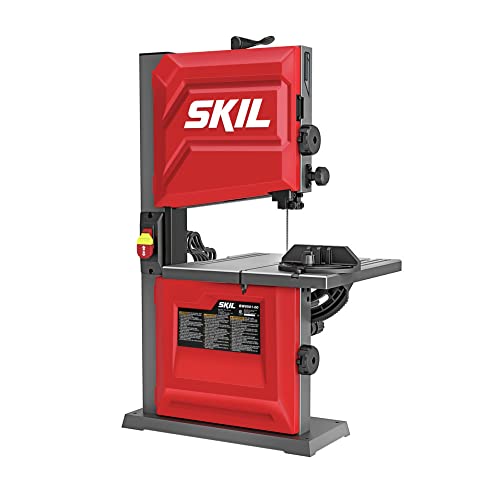
ASIN: B0BFR2BJQP

ASIN: B0BK2V91VW
Certain content that appears on this site comes from Amazon. This content is provided “as is” and is subject to change or removal at any time. Product examples and images are supplied through Amazon Creators API; confirm specifications and availability on the current listing.
Price check note: Amazon Creators API showed available offers below the $500 threshold for the specific product examples linked here when this guide was prepared on November 17, 2026. This is a research snapshot, not a promise of future pricing; check the listing and final checkout total before buying.
Quick answer: how to choose under $500
First decide whether you need a benchtop woodworking saw or whether a used floor-standing saw is realistic for your space and maintenance skills. Then compare actual resaw height, throat depth, table size, blade-length options, fence and miter gauge, frame rigidity, and parts support. For most home users with limited floor space, a new benchtop machine can be the lower-risk choice. For a buyer who needs greater capacity, knows how to inspect machinery, and has room to move and service it, a used floor model may offer more capability—but condition and missing parts can quickly erase the savings.
Treat “under $500” as a current checkout target. Set a price alert or filter, include freight and tax, and confirm that the exact model and package remain below the ceiling at the moment you buy. Do not copy an old sale price from an article or assume a bare tool includes a stand. If the total cost of a new saw, stand, blades, and dust connection exceeds the limit, compare a complete used package, a smaller machine, or waiting for a verified sale rather than ignoring the missing costs.
What $500 can reasonably buy
Band saws span a wide range of sizes and uses. At a modest budget, the most predictable new option is often a compact woodworking band saw with a small table, modest resaw height, and a blade size designed for hobby or light-duty work. It can be useful for curves, small workpieces, and occasional resawing within the manufacturer’s limits. It is not a compact version of a production floor saw in every respect: frame stiffness, table area, guide adjustment, motor capacity, and vibration can differ substantially.
A used floor-standing machine may appear within the same budget, especially if it is older, incomplete, or sold locally. It might offer a larger throat and more vertical capacity, but it can also need new tires, bearings, guides, electrical work, a mobile base, or a blade. Freight can be substantial, and moving a heavy machine requires planning. Used machinery is only a bargain if it can be safely inspected, transported, set up, and maintained.
Benchtop woodworking band saws
Benchtop saws are designed to sit on a workbench or compatible stand. Their smaller footprint can suit garages, craft rooms, and small workshops. A benchtop model may be easier to move or store, though it still needs a stable mounting surface and room for stock. Look for the manufacturer’s listed throat capacity and maximum cutting height rather than relying on the nominal wheel diameter alone. The table and base should remain stable during a cut.
Current manufacturer product pages show that entry-level benchtop band saws exist across several brands, and the live DailyHomeDecorating band saw guide includes Amazon-linked benchtop examples. That confirms there are relevant products sold through Amazon in this category, but it does not establish that each item is currently available below $500. Verify any product card and current price with the authorized Amazon API immediately before publication or purchase.
Used floor-standing saws
A floor model can offer a taller frame, more table support, or more robust construction than a new small benchtop saw. However, a used price is not the same as a ready-to-run price. Ask whether the manual, blade guides, fence, table inserts, guards, wheels, tires, motor cover, and electrical components are present. Test tracking and tension only as the manufacturer permits. Inspect for cracks, corrosion, damaged wiring, wheel wobble, and improvised repairs. If you cannot safely evaluate the machine, bring someone qualified or choose a new tool with known condition.
What this budget is unlikely to provide
A $500 limit is generally not the right target for a new production floor-standing resaw machine, a specialized metal-cutting horizontal band saw with a vise and coolant system, or an industrial panel saw. Those are different machine categories and price levels. Avoid forcing a low-cost woodworking saw into metal work or production cutting; blade speed, frame, guides, guards, vise, and intended material differ. Our portable band saw guide covers handheld metal-cutting saws separately.
New benchtop saw or used floor model?
| Factor | New benchtop model | Used floor-standing model |
|---|---|---|
| Purchase certainty | Known package, current manual, and seller return terms | Depends on inspection, seller information, and completeness |
| Capacity | Usually limited; confirm listed height and throat | May be larger, but verify exact model and condition |
| Setup costs | May require a stand, blades, clamps, and dust collection | May require parts, electrical service, transport, and tuning |
| Space | Smaller footprint but needs a stable bench | More floor area and access for stock and service |
| Risk | Low unknown-condition risk; check warranty and package | Condition, safety parts, and repair risk can be significant |
Choose new if predictable setup and support matter more than maximum capacity. Choose used only if you can inspect the saw, understand its parts and power requirements, and include transport and repair costs in the budget. A large machine that needs several hundred dollars of missing parts is not an under-$500 purchase in practical terms. A small, complete machine that fits the work can be more useful than a larger one that is unsafe or impossible to restore.
Capacity and intended work
Throat capacity
Throat capacity describes the distance from the blade to the frame, which limits how wide a workpiece can be cut from its edge. It is not the same as maximum cutting height. If you plan to cut wider curves or shapes from boards, compare the throat size with the width of your stock and the path you need to follow. A 9-inch throat, for example, does not mean the saw can cut every 9-inch-wide workpiece in every orientation; account for the table, fence, guard, and actual frame geometry.
Resaw height
Resaw height is the maximum vertical stock thickness that can pass between the table and upper blade guides. The manufacturer may publish this as cutting capacity or maximum height. A taller resaw capacity is only useful if the frame, motor, blade, guides, and table can handle the stock. Deep cuts require a suitable blade and a steady, controlled feed; the capacity number by itself does not guarantee a clean resaw.
Do not compare machines by capacity alone. A larger capacity may mean a larger frame and table but still come with a small motor or limited blade options. Check the exact manual for permitted operations and blade ranges. If your work is mostly small curves, prioritize control and table stability rather than maximum height.
Table size and tilt
A table supports the workpiece and helps the operator guide it to the blade. A small or flimsy table can make larger pieces harder to control. Check the table dimensions, surface flatness, tilt range, locking mechanism, and whether the table can hold a reliable square or miter gauge. For angled cuts, a readable scale is helpful but should be verified against a square. A tilt feature is not useful if the table does not lock securely or the workpiece becomes unstable.
Match capacity to the job list
Before shopping, write down the stock size and cut types you actually expect: small curves, bandsaw boxes, toy parts, furniture components, resawing thin veneers, or rough shaping. If the list includes cutting curves in small parts, a benchtop model may be enough. If it includes repeated resawing of thick hardwood, a low-cost compact machine may frustrate you; consider saving for a larger model, using a different process, or buying prepared stock. Choosing according to real work helps avoid paying for capacity you will not use—or buying too little capacity for the main task.
Blade length, width, and choice
Band saws use a loop blade whose length and width must fit the machine. Each saw has a specific blade length and an allowed width range. A narrow blade can turn tighter curves; a wider blade is often more stable for straighter cuts or resawing. Tooth pitch and tooth pattern also affect the cut. Use the manufacturer’s chart to select a blade for the operation and material rather than assuming the included blade suits all work.
Check whether the saw accepts standard blade sizes and whether replacements are easy to obtain. Some small saws have more limited blade lengths or widths. A lower-priced machine can become expensive if compatible blades are rare or if a required size is available only as a custom order. Include one or two appropriate replacement blades in the total budget.
Blade width for curves and straight cuts
The minimum radius a blade can cut depends on its width, thickness, tooth set, and stock. Use a blade-width guide from the saw or blade manufacturer. A wide blade forced around a tight curve may bind or twist; a narrow blade can wander during a long straight cut if not suited to the operation. For complex curves, choose the blade based on the tightest turn and make relief cuts where appropriate. For resawing, use a blade that the maker recommends for that machine and stock.
Teeth per inch and material thickness
Tooth pitch affects how many teeth engage the material and how chips clear. Finer pitch is generally useful on thinner stock, while coarser pitch provides larger gullets for thicker stock. Too few teeth in contact can snag or damage teeth; too many can pack with chips. Consult the blade maker’s chart for stock thickness and material. Do not use a woodworking blade on metal just because it fits the wheels; use a machine designed for that material.
Features and accessories worth the money
Blade guides and thrust bearings
Blade guides support the blade near the work. Guides may use blocks or bearings, and the arrangement is model-specific. Look for adjustment access, readable guidance in the manual, and parts availability. The guides need to be set correctly for the blade and workpiece; poor adjustment can cause wandering, friction, heat, or premature blade wear. Do not assume that a more expensive bearing arrangement automatically makes the saw accurate if the frame, wheels, and table are not aligned.
Fence and miter gauge
A fence can help with straight cuts, and a miter gauge can support crosscuts or angled work. In lower-priced packages, included fences and gauges may be basic. Inspect how they attach, whether they lock firmly, and whether they align with the blade. A fence that flexes or shifts can be less useful than a reliable shop-made guide, but any jig must be designed and clamped safely. Verify included accessories on the exact package listing; a product photo may show optional components.
Stand and base stability
Some saws include a stand, while others are sold as a benchtop unit. A stand saves bench space but adds cost, footprint, and sometimes vibration. If buying separately, confirm that it is designed for the model and rated to support the machine. A mounted saw should not rock or slide during operation. A floor-standing used saw needs a level location and enough room for stock to enter and exit without striking walls or other equipment.
Dust port and collection
Band saws create sawdust, and small machines can distribute it around the bench. Compare dust-port location and diameter, but do not treat a port as proof that a shop vacuum will capture all dust. Use the extraction arrangement recommended by the manufacturer and compatible with your setup. Keep the area around the lower wheel clean; accumulated dust can affect tracking or interfere with guards and moving parts. Dust management is part of the purchase cost, especially for indoor use.
Motor, speed, and electrical requirements
Compare motor information, blade speed, voltage, amperage, and circuit guidance in the manual. Do not rely on horsepower claims alone. The saw’s performance depends on blade sharpness, guide setup, feed rate, stock, and frame stiffness. A model advertised for woodworking should not be converted to metal cutting by changing only the blade; metal saws have different speeds and sometimes different frames, vises, and coolant arrangements.
Calculate total setup cost before purchase
For a real $500 comparison, add more than the machine’s base price. Estimate the following:
- Sales tax and shipping or freight
- Stand, base, or bench reinforcement
- Replacement blades for the cuts you intend to make
- Fence, miter gauge, or compatible guide accessories if not included
- Dust collection hose, fittings, or shop-vac changes
- Clamps, push devices, and work supports recommended for your setup
- Used-machine transport, electrical inspection, replacement tires, bearings, guides, or guards
- Service parts and the cost of a manual if one is unavailable
Leave a reserve for a proper blade and safe setup. If every dollar goes to the saw, you may not be able to use it as intended. For used equipment, ask the seller to identify the model and demonstrate operation only if it can be done safely and by a competent operator. Never test a saw with missing guards or damaged electrical parts just to see whether it runs.
How to verify a current under-$500 price
Price is one of the fastest-changing facts in a buying guide. Use a process that makes the threshold clear without turning a temporary sale into an evergreen claim:
- Set a live ceiling. Decide whether $500 includes tax and shipping. State that definition in your own shopping notes.
- Check exact model and package. Match the model number, voltage, included stand, fence, blade, and accessories. Variants can have different costs.
- Compare new price from more than one seller. Verify the seller, warranty, return policy, and whether the item is new, refurbished, or open-box.
- Include delivery. A large saw may have shipping or freight charges that push the total above the limit.
- Verify Amazon links and availability. If buying from Amazon, confirm the exact ASIN and listing, image, current availability, seller, and checkout price through the authorized Amazon API and live listing.
- Recheck before publishing or buying. Record when a price was verified and remove or update the claim when the price changes.
- Use a fallback rule. If the product rises above $500, either omit it from this price-filtered shortlist or label the price accurately with a verification date. Do not quietly leave a stale “under $500” claim.
Search listings can display a price for the bare tool while a comparable kit includes a stand or extra blade. Compare like with like. If the budget is strict, treat shipping, tax, and required accessories consistently across products. A current list can say “price checked on [date]” after an actual check; this draft intentionally makes no present-tense price claims.
Safety and used-saw inspection
Band saw blades are exposed at the cutting area and can cause serious injury. Read and understand the exact saw manual before use. OSHA’s band saw safety overview discusses blade guarding, tension, guide adjustment, sharp blades, suitable blade selection, and control of small stock. It addresses general and stationary equipment contexts; use the saw’s manual for the particular machine.
Before buying used, inspect the saw while it is unplugged. Check that guards, doors, wheel covers, tension controls, table insert, fence, and switch are present. Look for cracks in the frame or table, damage to the power cord, loose wheels, worn tires, corrosion, and signs of improvised repair. Ask whether the manual and parts list are available. If anything safety-related is missing or damaged, price the repair and confirm parts availability before deciding. Do not operate the machine until it is restored to the manufacturer’s safe configuration.
- Use a blade appropriate to the material and cut; keep it sharp and correctly tensioned.
- Set blade guides and guards as the manual directs, close to the work where applicable.
- Secure small or irregular pieces with a suitable jig or fixture; keep hands away from the blade path.
- Support long stock so it cannot tip or bind.
- Keep loose clothing, jewelry, and hair away from moving parts; wear required eye and hearing protection.
- Disconnect power before blade changes, adjustment, and cleaning.
- Wait for the blade to stop before retrieving stock or offcuts.
- Do not cut metal or other materials unless the machine and blade are specifically approved for them.
Realistic shop workflow under a budget
For a home shop, begin by arranging the saw so the operator has clear access to the table and the stock can move without hitting a wall. Secure the machine to a stable bench or compatible stand. Connect dust collection if specified, keep the floor clear, and leave room to adjust guides and change blades. A compact saw can still need more working space than its footprint suggests because boards extend beyond the table.
Before a cut, select a blade suited to the shape, material, and thickness. Disconnect power while installing it, then tension and track the blade according to the manual. Adjust guides and guards for the workpiece, check the table angle, and verify the fence or jig. Make a test cut in scrap. Feed steadily without twisting the stock or forcing it through a curve. The saw should not be treated as a sanding tool; leave material for finishing where the cut surface matters.
For a beginner using a small saw, a realistic workflow is often to cut small parts and curves, not to resaw wide, thick hardwood every weekend. If the main plan involves resawing, evaluate whether the machine’s capacity, blade support, motor, and frame are appropriate and whether an experienced woodworker can help tune it. A $500 saw can be valuable for the right jobs; it cannot make every demanding operation effortless.
Maintenance and upkeep
Keep the table clean and the wheel areas free of accumulated sawdust. Inspect tires and guides, and follow the manual for lubrication, cleaning, blade tension release, and tracking. Do not leave a blade tensioned for long storage unless the manufacturer recommends it. Replace damaged blades and clean resin or pitch using approved products. Keep the manual, parts list, model label, and replacement blade size available.
For a used saw, establish a maintenance baseline before relying on it: inspect the cord and switch, confirm guards are present, verify wheel condition, and check whether the blade tracks as expected. If the machine vibrates, makes unusual noise, or cannot maintain tension, stop and have it serviced. Low purchase cost does not justify operating a machine with unknown faults.
How this guide was prepared
This is a research-based guide, not a hands-on test or a current-price ranking. Selection criteria are based on manufacturer product documentation and manuals, including the WEN BA3959 benchtop band saw page and RYOBI BS904G band saw page, plus OSHA’s general band-saw safety guidance. Those official materials help establish how to compare capacity, blade compatibility, included accessories, intended materials, maintenance, and safety procedures.
The $500 figure is treated as a buyer’s current budget filter, not a lasting price claim. Current price and availability must be verified against the exact model, package, seller, and total delivered cost. Existing Amazon product cards on the live band saw guide show that relevant band saw products are offered through Amazon, but each ASIN, current price, image, seller, and availability must be rechecked before being included in a budget-filtered article. This draft therefore contains no product-specific price or Amazon product claim.
Frequently asked questions
Can I get a good band saw for under $500?
Yes, depending on what “good” means for your work. A compact benchtop woodworking saw may suit curves, small parts, and occasional light-duty projects. A used floor model may offer more capacity but can require transport, parts, service, or setup. Define your work and budget the total system rather than the sticker price.
Should I buy a new benchtop saw or a used floor saw?
Buy new if you value predictable condition, current documentation, and seller support. Consider used if you can inspect the machine, verify parts and electrical condition, and include repair and transport costs. A used saw with missing guards or an unknown electrical modification is not a safe bargain.
Does under $500 include a stand?
Not necessarily. Check the exact package description. Some saws are sold as benchtop tools, while a stand is optional or included only in a different kit. Add the stand and delivery cost if your setup requires one.
Can a budget woodworking band saw cut metal?
Do not assume so. Woodworking and metal-cutting saws can differ in blade speed, blade type, frame, workholding, and coolant arrangements. Use a machine only for materials and operations approved by its manufacturer.
What matters more: throat capacity or resaw height?
It depends on the work. Throat capacity limits the width of a piece that can be cut from the edge; resaw height limits the thickness that can pass between table and guides. Match both numbers to your actual stock, and also consider frame rigidity, blade support, table size, and motor.
Are small benchtop band saws accurate?
They can make useful cuts when correctly set up, with a suitable blade and stable support. Accuracy depends on the frame, table, blade, guides, tension, feed, and operator technique. Make test cuts and verify alignment rather than assuming the machine is square out of the box.
How can I avoid stale “under $500” recommendations?
Verify the exact model and package price immediately before publishing or buying, include shipping and tax according to the budget definition, and date-stamp any price claim. If it exceeds the cap, remove it from the filtered list or accurately describe the current exception.
Are band saws under $500 available on Amazon?
Amazon-linked benchtop band saw examples appear in the site’s live band saw guide, so the category has relevant products on Amazon. Individual ASINs and prices can change; confirm the exact listing, image, seller, availability, and checkout price through the authorized Amazon API before adding a product card.
What should I inspect on a used band saw?
Check the frame, table, guards, doors, wheels, tires, bearings, guides, tension system, switch, cord, fence, and manual. Confirm that replacement parts are available and that the saw can be safely set up. Do not operate it if safety parts are missing or electrical condition is uncertain.
Final reminder: a $500 band saw is a budget category, not a promise that every capable model will always meet the cap. Set your requirements first, compare the complete setup cost, and verify current listings before buying. A smaller new saw or a carefully inspected used model can both make sense when the capacity and condition match your work.