Where to buy
Shopping for the best baby security camera for small homes under $500? Check the latest price, availability and delivery options on Amazon before you buy — prices and stock in this category move often, and orders are placed on Amazon. One honest note before the list: the under $500 figure in this guide is a ceiling, not a target. No single baby camera below needs the whole amount, so treat the headroom as your budget for a second camera, an add-on, a memory card or a funded subscription year, and check the current price of each pick on Amazon rather than assuming the most expensive option is the right one.
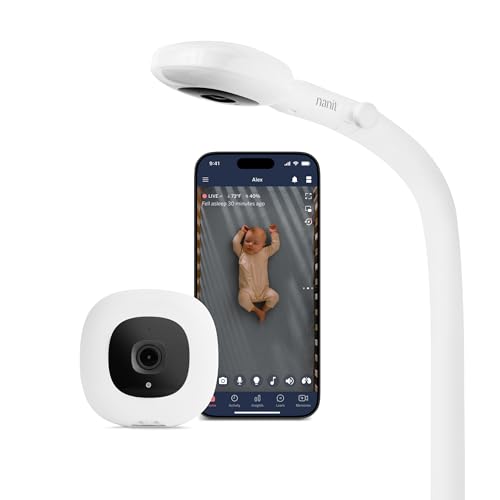
- Best one-camera system: Nanit Pro Smart Baby Monitor — Camera & Floor Stand — Check on Amazon
- eufy Baby Monitor E21 — 4K Camera with 5-Inch Display — Check on Amazon
- CuboAi Smart Baby Monitor 3 — Floor Stand Set — Check on Amazon
- Owlet Cam 2 (Gen 2) — Check on Amazon
- Lollipop Baby Monitor (Cotton Candy) — Check on Amazon
- Infant Optics DXR-8 PRO — Check on Amazon
Read the full guide ↓
Disclosure: As an Amazon Associate, dailyhomedecorating.com earns from qualifying purchases. Links to Amazon on this page are affiliate links; they cost you nothing extra. Listing details such as price and availability change often, so check the current Amazon listing before you buy.
The search for the best baby security camera for small homes under $500 begins with a liberating piece of arithmetic: in a small home, this budget is enormous. It is a ceiling, not a target — no single baby camera needs anything near the whole amount — and small homes need less hardware than any other kind, because one well-placed camera covers the nursery, the same system stretches to the playroom corner, and the parents are never more than a room or two away. What a small home actually spends this budget on is quality and completeness: the flagship camera instead of the compromise, the stand instead of the wall damage, the second camera for the toddler room, the subscription year funded in advance. The guide below is built around spending it that way.
Small homes change which features matter. Range figures that headline big-house reviews are irrelevant when the furthest listener is thirty feet away; what matters instead is a wide lens that covers a crib from close quarters, a stand footprint that does not fight the dresser for floor space, audio that behaves in a home where the nursery is the room next to the television, and a camera that can move — to the travel crib, the grandparents’ flat, the playroom shelf — because in a small home every device eventually serves three rooms. The picks below were chosen for exactly those virtues, in sizes and shapes that respect tight floor plans.
One honesty note, held across this whole guide: these are video monitors with smart alerts, not medical devices. Breathing-motion, covered-face and sleep features are maker-described estimates on a camera feed — prompts to go and look, which in a small home is a mercifully short trip — and they never replace a bare crib, back-sleeping, or your own checks. Subscriptions are named wherever they hide, storage is explained in plain terms, and cord safety gets its full weight, because in a small home the crib sits close to everything, including the things a standing baby can grab.
In this guide
Quick picks
| Pick | Best for | Key spec |
|---|---|---|
| Nanit Pro Smart Baby Monitor — Camera & Floor Stand | Best one-camera system | 1080p Wi-Fi, floor stand, app, temp and humidity |
| eufy Baby Monitor E21 — 4K Camera with 5-Inch Display | Best nursery-plus-playroom set | 4K camera, 5-inch display, hybrid Wi-Fi/no-Wi-Fi, pan-tilt, local recording |
| CuboAi Smart Baby Monitor 3 — Floor Stand Set | Best alerts for nearby parents | 2.5K QHD Wi-Fi, floor stand, maker AI alerts, humidity sensor |
| Owlet Cam 2 (Gen 2) | Best compact corner camera | 1080p Wi-Fi app camera, 130-degree view, temp and humidity, cry notifications |
| Lollipop Baby Monitor (Cotton Candy) | Best for rooms with no shelf | 1080p Wi-Fi, flexible wrap mount, crying detection, lullabies |
| Infant Optics DXR-8 PRO | Best second-home screen | 720p, 5-inch display, no Wi-Fi, interchangeable lenses, pairs up to 4 cameras |
How we chose
The first criterion for this lens was fit: physical size, stand footprint and lens width, judged for rooms where the crib may be an arm’s length from the only wall. Wide-angle cameras that frame a whole mattress from close range scored above long-zoom models designed for distant dressers, and mounts that need no floor space at all — the Lollipop’s wrap, the Owlet’s shelf footprint — earned their places beside the flagships. Anything that demanded a large home’s geometry to make sense was cut.
Second, we weighted one-system completeness. A small home rarely wants two ecosystems; it wants one camera family that starts at the crib and later covers the toddler room and playroom. Split-screen and multi-camera support (the eufy’s add-on camera, the Nanit’s app split view, the Infant Optics’ four-camera pairing) therefore counted heavily, because the cheapest second room is the one that joins the system you already own.
Third, audio behaviour in shared acoustic space. In a small home the monitor’s speaker lives near the television, the conversation and the sleeping parent, so sound-activated screens, background-audio options and noise reduction — the features that keep a monitor from becoming the loudest appliance in the flat — were scored as primary features, not footnotes. A monitor you mute out of irritation is a monitor that has failed, however sharp its picture.
Finally, the guide-wide checks: total cost stated plainly, including any subscription and what it unlocks; storage location and privacy posture in plain language; verified US listings only; and cord safety reviewed against small-room reality, where the shortest cable run is always the tempting one and is usually the wrong one. Maker health claims are framed as maker claims throughout — detection features that prompt a check, never medical monitoring.
The picks in detail
Nanit Pro Smart Baby Monitor — Camera & Floor Stand
Key spec: 1080p Wi-Fi camera, ASTM-certified floor stand included, app viewing, two-way audio, temperature and humidity sensing, split-screen for a second camera.
The Nanit Pro with the floor stand is the flagship configuration this tier is built around, and it exists to solve the one problem the wall-mount version creates: not every nursery wall can or should be drilled. The stand is a tall, weighted ASTM-certified frame that positions the 1080p camera directly above the crib for the true overhead view Nanit’s software is designed around, then the feed runs over Wi-Fi to the Nanit app with two-way audio, background audio, a built-in nightlight and white-noise sounds, and live temperature and humidity readouts. There is no dedicated parent screen in the box — your phone or tablet is the monitor — and the app supports a split-screen view if you add a second Nanit camera later, which is exactly where a budget this size starts to make sense.
The money conversation with Nanit is never just the hardware. Live video, sound, motion and cry notifications, two-way talk and the maker’s breathing-motion monitoring (which works with Nanit’s Breathing Wear garments, sold separately) run without a paid plan. Sleep analytics, saved video history and clips, milestone tracking and the deeper smart alerts sit behind the Nanit Insights subscription, billed annually; a trial of the entry plan is included with a new camera and renews automatically unless you cancel. So the honest way to price this pick is hardware plus at least a year of the plan if the sleep diary is why you are buying it. Nanit also states plainly that the camera is not a medical device: breathing-motion monitoring is a maker-described awareness feature, not a health or life-safety guarantee, and it never replaces safe-sleep practice or checking on your baby in person.
Living with the floor stand version is mostly about placement discipline. The stand’s base must sit where it cannot be tipped or pulled toward the crib, and the power cord has to be routed down the stand and completely out of the crib and out of reach — a loose cable anywhere near a crib is a genuine strangulation hazard, and Nanit’s own mounting guidance treats cord management as part of the installation, not an afterthought. The overhead angle is not optional decoration, either: the sleep and breathing-motion features are calibrated for that top-down view, so a Nanit parked at an angle on a dresser will not deliver the analytics the price promises. Video is cloud-assisted through the app rather than stored on a local card, so your Wi-Fi quality and your comfort with a cloud account are part of the purchase.
- True overhead crib view with no drilling, thanks to the included floor stand
- Deepest sleep-tracking ecosystem here when paired with an Insights plan
- Split-screen support makes a second camera a clean upgrade path
- Background audio, nightlight and white noise built in
Honest limitation: The features most buyers want most — sleep analytics and video history — need the paid Insights plan after the trial ends.
Choose the floor-stand Nanit if you want the full data-driven flagship and a no-drill install, and you accept an annual plan as part of the real cost. Skip it if you refuse subscriptions, if a stand behind the crib does not fit your room, or if you want a screen that is not your phone.
eufy Baby Monitor E21 — 4K Camera with 5-Inch Display
Key spec: 4K UHD camera, 5-inch 720p parent display, hybrid Wi-Fi and no-Wi-Fi modes, pan-tilt, 8x zoom, local recording, built-in camera battery.
The eufy E21 is the pick for parents who want flagship picture quality without handing the nursery to a subscription. The camera shoots 4K UHD and pans and tilts under remote control with up to 8x zoom, while the box includes a proper 5-inch parent display — so the monitor keeps working on its own screen even if you never connect it to Wi-Fi at all. That hybrid design is the E21’s signature: run it as a closed local system on the included display, or link it to the eufy app for phone viewing and round-the-clock recording in the app when you want remote access. Active noise reduction keeps nursery sound from turning into a hiss of white noise on the parent unit, and the camera itself carries a built-in battery, so it can ride out a short outage or work for naps in a room with an awkward outlet. eufy also sells an add-on camera for this system, and the display can show two rooms on a split screen — the cleanest two-room path in this guide.
On the money question, the E21 is refreshingly plain: the maker states that all of its features are free to use with no monthly fee, and recording is handled locally rather than sold back to you as a cloud plan. That changes the real cost of ownership across two or three years of use more than any single feature on this page, and it is why this pick anchors the value end of a tier where rivals keep charging rent on their own hardware. The trade-offs are equally plain. The parent display is 720p, so the 4K detail is best appreciated in the app feed and in zoomed views rather than on the handheld screen, and families who want sleep analytics, cry diaries or milestone tracking will find none of that here — eufy sells you an excellent camera and screen, not a data service. eufy is also explicit that this is a video and audio monitor: it does not measure breathing, heart rate or oxygen, and nothing it shows should be treated as a health reading.
In daily use the E21 behaves like the grown-up security-camera brand it comes from: motion and sound alerts, two-way talk, temperature awareness and straightforward pan-tilt controls. The camera needs a stable perch or mount with its power cable dressed safely away from the crib — the battery is a bridge for outages and travel, not a way to leave a camera loose within reach, and a camera within grabbing range of a standing baby will eventually be grabbed. For twins or a nursery-plus-playroom setup, the add-on camera route means the second room costs a camera, not a second full system, which is precisely how a generous budget should be spent. If your shortlist question is which of these will still be fully yours in three years with no monthly bill, the E21 is the answer in this tier.
- Best-in-guide camera resolution with pan, tilt and 8x zoom
- Included 5-inch display works with Wi-Fi switched off entirely
- No subscription needed for core monitoring or local recording
- Add-on camera and split-screen viewing for a second room
Honest limitation: No sleep analytics or smart diary features, and the parent screen is 720p despite the 4K sensor.
Choose the E21 if you want premium hardware, a real parent screen and zero ongoing fees, and you do not care about sleep data. Skip it if nightly sleep reports are the whole point of spending at this tier.
CuboAi Smart Baby Monitor 3 — Floor Stand Set
Key spec: 2.5K QHD Wi-Fi camera, floor stand included, covered-face and rollover alerts (maker AI), cry detection, humidity sensor, multi-day playback.
The CuboAi Smart Baby Monitor 3 is the challenger built around one idea: proactive alerts. Its 2.5K QHD camera watches the crib and, per the maker, uses AI detection to flag a covered face or a rollover onto the stomach, to distinguish a true cry from background noise, and to warn you if your baby enters a danger zone you draw in the app once they start standing and roaming. This floor-stand set puts the camera on a tall stand behind the crib for the overhead angle those alerts are designed around, with no drilling and nothing attached to the crib itself. Two-way audio, lullabies, night vision with no visible red glow, a room humidity sensor and multi-day video playback round out a nursery package that is deliberately the least clinical-looking device in this guide.
The honest framing for those headline alerts matters more at this price than anywhere else: they are manufacturer-described detection features, not medical monitoring. A covered-face alert is a prompt to go and look — it is not a guarantee of detection in every bedding arrangement, lighting condition or network state, and CuboAi does not sell this camera as a medical device. Treat the AI as an extra set of eyes that sometimes blinks, keep the crib bare following safe-sleep guidance, and never let an app notification substitute for your own checks. On ownership cost, CuboAi has historically kept its core alerts and a rolling multi-day playback window usable without a mandatory paid tier, with an optional premium plan adding longer history and extras; published reviews note advanced features can move behind that plan after an included first period, so check the current plan page before you buy, because app packaging in this category changes often. Video runs through CuboAi’s cloud app — there is no local memory-card recording and no dedicated parent unit.
Setup is genuinely renter- and grandparent-friendly: assemble the stand, place it so its base cannot be pulled into the crib, route the cable down the stand and away from small hands, and keep the whole assembly far enough back that a standing toddler cannot grab the camera or the cord. The floor stand also makes the CuboAi easy to move between rooms or take to a caregiver’s house, though the overhead alerts are calibrated for the stand’s crib view and will not perform the same way aimed across a playroom. Picture quality from the QHD sensor is a real step up from 1080p when you pinch-zoom on a phone screen, which is how most parents actually check whether eyes are open or closed — and at this budget, that sharpness is one of the few upgrades you can genuinely see.
- Covered-face and rollover alerts are the headline act (maker AI claims)
- Floor stand included — overhead view with no drilling
- 2.5K QHD picture is visibly sharper when zooming on a phone
- Multi-day playback has historically been included without a mandatory plan (verify current terms)
Honest limitation: No local storage and no parent screen: if your Wi-Fi or CuboAi’s cloud stumbles, so does your monitor.
Choose the CuboAi 3 if proactive crib alerts matter more to you than sleep diaries, and you want the overhead view without touching a wall. Skip it if you want recordings kept inside your home, or a screen that works when the internet does not.
Owlet Cam 2 (Gen 2)
Key spec: 1080p Wi-Fi camera, 4x zoom, 130-degree wide-angle view, two-way talk, sound/motion/cry notifications, temperature and humidity sensor, cable guards included.
The Owlet Cam 2 is the compact, good-looking Wi-Fi camera in this tier — a small 1080p unit with a 130-degree wide-angle lens, 4x digital zoom, night vision, two-way talk and sound, motion and cry notifications through the Owlet Dream app, with temperature and humidity sensing built in. In a guide about a generous ceiling, its role is the second-camera and travel role: it is the camera you add for the playroom, the grandparents’ house or the bassinet by your bed while the flagship covers the nursery, or the single camera for families who would rather bank most of this budget than spend it. It is the camera-only member of a family whose famous sibling is a wearable sock, sold separately and not part of this pick; judged purely as a camera, its appeal is a clean picture, a tidy magnetic-base design that sits neatly on a shelf or wall mount, and an app built for exhausted one-handed use at 3 a.m. The box includes cable guards — a small, telling detail, because the maker expects the cord to be covered and routed away from the crib as part of a safe install.
Cost honesty for the Owlet: live viewing and basic alerts in the Dream app are the free foundation, and the maker offers an optional paid tier (Owlet360) that extends how long event video clips are stored — a short window of clip storage is included, longer history is the upgrade. Check the current app plan page before you buy and confirm which features are free today, because packaging in this category shifts. Also be clear-eyed about what a camera can and cannot tell you: cry and motion notifications are convenience alerts, and any breathing or wellness language around the wider Owlet ecosystem refers to separate wearable products with their own instructions and limitations — the Cam 2 on its own is a video monitor, not a health device, and nothing it shows replaces safe-sleep practice or your own checks. Video is encrypted in transit per the maker, and there is no parent screen and no local memory-card slot, so the Cam 2 is a cloud-app monitor through and through.
Living with the Cam 2 is easy in the ways that matter nightly: background audio options, quick talk-back, and a picture that holds up well in a dark room. Its weaknesses are the category’s usual ones — total dependence on your Wi-Fi and phone, no offline fallback screen for a sitter who does not have the app, and no sleep analytics depth to rival the Nanit if data is your thing. Mount it or place it with the cable routed down, covered by the included guards, and away from the crib, never draped where a standing child can reach it. As a first smart camera for parents who want the nursery on their phones and nothing more complicated — or as the affordable second eye in a two-camera home — it earns its place here on simplicity.
- Clean 1080p picture with a genuinely useful wide-angle lens
- Temperature and humidity sensing plus cry notifications in one tidy unit
- Cable guards included in the box for a safer install
- Small, neat design that disappears on a shelf
Honest limitation: App-only viewing: no parent screen, no local recording, and longer clip history sits in the optional paid tier.
Choose the Cam 2 if you want a straightforward phone-based monitor, or an affordable second camera alongside a flagship. Skip it if you want recordings stored at home or a screen a babysitter can use without your phone.
Lollipop Baby Monitor (Cotton Candy)
Key spec: 1080p Wi-Fi camera, flexible wrap-around mount, true crying detection (maker), two-way audio, infrared night vision, in-app plan extras.
The Lollipop is the design object of the group: a 1080p Wi-Fi camera on a flexible, bendable stem that wraps around a shelf edge, a floor lamp or a stand, or stands on a surface with its tail as a tripod. That mount is not a gimmick — it solves the most common nursery problem, which is that the perfect camera position is rarely where a shelf happens to be. The maker’s headline software feature is true crying detection, designed to distinguish an actual cry from a barking dog or a door slam before it pings your phone, alongside two-way audio, infrared night vision, lullabies and white-noise playback, and event clips in the app. There is no parent unit; like the Nanit and Owlet, your phone is the screen. In this tier it plays the flexible-second-camera role: the one that travels, covers the playroom, and goes where the fixed mounts cannot.
Two honesty notes belong with the Lollipop. First, the app sells an optional paid plan that unlocks extras such as the maker’s breathing-monitoring and sleep-tracking features — maker-described, camera-based estimates, not medical measurements, and no substitute for safe sleep or in-person checks; the camera’s core live view and crying detection are the free foundation, but confirm the current plan split on the maker’s page before purchase, because the line between free and paid has moved before. Second, the wrap mount tempts people to attach the camera directly to the crib rail with its cable nearby — resist sloppy versions of this. The camera body may grip a rail or shelf, but the power cable must still be routed away from the crib interior and out of reach, and once your baby can stand and grab, a rail-mounted camera is within range of determined hands; move it further back and re-check the view. Cloud dependence applies here too: no local card recording, so the app and your Wi-Fi are the whole system.
Where the Lollipop shines is flexibility across the first two years: crib-side now, playroom shelf later, wrapped around a travel crib at a relative’s house in between. Its picture and night vision are solid rather than class-leading, and data people will find its sleep features thinner than Nanit’s. But as the one camera in this guide that can perch almost anywhere without a stand, a shelf or a drill, it solves real rooms that defeat fixed-mount rivals — which is why it closes out this pool. Bought as a second camera beside a flagship, it turns the leftover budget into coverage of the room the flagship cannot see, and that is a better use of the money than a marginally fancier single camera.
- Flexible stem mounts almost anywhere — no shelf, stand or drilling needed
- True crying detection aims to cut false alerts (maker feature)
- Doubles as a travel and playroom camera as your child grows
- Lullabies and white noise built in
Honest limitation: Best extras sit in a paid in-app plan, and there is no local recording or parent screen.
Choose the Lollipop if your rooms defeat fixed mounts and you need the mount itself to be the solution — especially as a flexible second camera. Skip it if you want deep sleep analytics or an offline fallback screen.
Infant Optics DXR-8 PRO
Key spec: 720p camera with dedicated 5-inch display, no Wi-Fi, Active Noise Reduction, pan-tilt-zoom, interchangeable lenses, pairs up to four cameras.
The DXR-8 PRO is the veteran of this roundup and, in a guide about a very generous budget, its role is specific: it is the offline half of a two-system strategy. There is no Wi-Fi, no app, no account and no subscription — the camera talks directly to its dedicated 5-inch parent display over a closed second-generation FHSS wireless link, and that is the entire system. Resolution is 720p, which sounds modest next to 4K badges, but the PRO’s party trick is Active Noise Reduction, which filters the hiss, hum and static that make most audio monitors fatiguing to listen to all night. Interchangeable lenses — a standard lens in the box, with optical zoom and wide-angle lenses available from the maker — let you tune the view to a small nursery or a wide toddler room, the camera pans, tilts and zooms from the parent unit, and one display can pair with up to four cameras.
Why does a 720p offline monitor belong in an under-$500 guide at all? Because at this budget the smart move is often two monitors, not one: a connected flagship for your phone, plus this as the always-works screen for the nightstand, the babysitter and the grandparents’ house. It removes every recurring complaint about smart cameras — nothing to reach through the home network, nothing that stops when the internet drops, no plan quietly renewing, no firmware update changing the app the week the baby arrives — and a screen that is always a screen, never a phone you also need for everything else. The honest limitations are the mirror image of those strengths: you cannot check in from work or the driveway, there are no cry-detection smarts, no sleep data, no recordings to review, and the picture will not reward pinch-zooming the way the eufy or CuboAi will. Range is also a physical fact: thick walls and distance between nursery and parent unit matter in a way they do not for Wi-Fi systems.
Setup is the simplest here: place the camera where it sees the crib, keep it and its cord well out of reach — the same cord discipline applies, out of the crib, secured, at least a full arm’s length plus growing margin from small hands — pair nothing, create no account, and you are monitoring in minutes. Battery life on the parent unit, the second-camera pairing for siblings, and the lens options are the three things to verify on the listing for your household’s layout. Bought alone it leaves much of this budget unspent, and that is fine: the leftover buys the add-on camera, the wide-angle lens and years of zero running costs. As the second monitor in a house that already owns a smart camera, it has no real rival in this guide.
- Completely offline: no Wi-Fi, no app, no account, no subscription, ever
- Active Noise Reduction makes overnight audio far less fatiguing
- One display pairs with up to four cameras for multi-room coverage
- Interchangeable lenses adapt it from crib close-up to whole-room view
Honest limitation: 720p picture, no remote viewing, no recordings and no smart alerts of any kind.
Choose the DXR-8 PRO if privacy, simplicity and zero running costs outrank apps and analytics — especially as the dedicated-screen half of a two-system home. Skip it as your only monitor if you need to see the nursery from outside the home or want any form of sleep tracking.
Side-by-side comparison
| Pick | Viewing | Storage | Subscription | Best for |
|---|---|---|---|---|
| Nanit Pro Smart Baby Monitor — Camera & Floor Stand | Phone/tablet app | Cloud app history (plan tiers) | Insights plan unlocks sleep analytics and video history after the included trial | Best one-camera system |
| eufy Baby Monitor E21 — 4K Camera with 5-Inch Display | 5-inch display + app | Local recording | No subscription — all features included, local recording | Best nursery-plus-playroom set |
| CuboAi Smart Baby Monitor 3 — Floor Stand Set | Phone/tablet app | Cloud app, multi-day playback | Core alerts and multi-day playback included; optional premium tier for extended history | Best alerts for nearby parents |
| Owlet Cam 2 (Gen 2) | Phone app | App event clips (short window included) | Optional paid tier extends clip storage; live view and alerts included | Best compact corner camera |
| Lollipop Baby Monitor (Cotton Candy) | Phone app | App event clips | Optional in-app plan unlocks breathing/sleep extras; live view and cry detection included | Best for rooms with no shelf |
| Infant Optics DXR-8 PRO | 5-inch dedicated display | None — live only | No subscription, no account, no recording — live view only | Best second-home screen |
How to choose the best baby security camera for small homes under $500
Start by walking the rooms with the camera’s eye. Where will it sit for the crib — a stand behind it, a shelf beside it, a wrap on the lamp? Measure the stand footprint against the floor you actually have, check whether the lens can see the whole mattress from that close (wide angles — the Owlet’s 130 degrees, the CuboAi’s wide view — are built for exactly this), and confirm the outlet situation, remembering the eufy camera’s battery can bridge a room whose only socket is in the wrong corner. In small homes the mount decision is the purchase; the electronics are the easy part.
Next, pick the philosophy your household will still enjoy in year two. If a sleep diary sounds like comfort, the Nanit Pro floor stand is the flagship, with its Insights plan budgeted as part of the price — this ceiling covers camera and plan together with room to spare. If you want to be summoned only when needed, the CuboAi 3’s alerts fit nearby parents perfectly, since the response is a few steps. If you want a screen on the kitchen counter and footage that stays in the house, the eufy E21 is the small home’s natural centre: nursery now, split-screen second room later, no plan ever.
Then plan the second room before buying the first camera. The toddler room and the playroom are coming, and the cheapest coverage is an add-on inside your chosen system — eufy’s second camera on the same display, a second Nanit in the same app, or the Owlet and Lollipop as flexible extra eyes where a full camera is overkill. If grandparents’ houses and travel feature in your life, the Infant Optics as the portable, account-free screen is the classic small-home companion purchase, and this budget holds both it and a flagship without strain.
Last, do the small-room safety pass with extra care, because proximity is the defining fact of your floor plan. The crib is close to the stand, the shelf and the cord, so route every cable completely out of the sleep space and out of reach — down the stand, inside guards where provided, flat to the wall, slack removed — place stands where a tip cannot fall toward the crib, and repeat the entire inspection the week your baby pulls to standing, when a small room becomes a very small room indeed. The consolation is real: every alert these systems send is answered in seconds in a home this size, which is the response time no specification can buy.
One camera, three rooms: how small homes actually use these systems
The lifecycle of a nursery camera in a small home rarely ends at the nursery door. It begins over the crib, migrates to the toddler’s room when the crib becomes a bed, spends weekends watching a travel crib at a relative’s house, and retires to the playroom shelf, where its job is settling disputes about whose turn it was. Picks differ enormously in how gracefully they make those moves. Floor stands disassemble and reassemble without tools or wall repair; the Lollipop simply unwraps and re-wraps; the eufy’s camera battery lets it spend a nap anywhere before returning to its perch. Wall-fixed installs, by contrast, tend to stay where they were screwed — one more reason this guide’s flagships are the stand versions.
That lifecycle is also the small home’s budget argument. A flagship that serves four roles across five years costs less per year than a cheap camera replaced at every stage, and the leftover ceiling funds the transitions: the add-on camera when the second room appears, the wide-angle lens when the Infant Optics moves to the playroom, the extra Breathing Wear size when the Nanit’s baby outgrows the first. Buying for the lifecycle, rather than for the newborn photos, is how a generous budget in a small home converts into a decade of not thinking about cameras.
There is a small-home discipline to keep alongside the optimism: one system, learned well. Two rival apps means two alert sounds to distinguish at 3 a.m. and two subscriptions quietly renewing. The households that fare best pick their flagship’s philosophy once — Nanit’s diary, CuboAi’s alerts, eufy’s screen-and-local-recording — and let every later camera join it, with the single deliberate exception of an offline screen like the Infant Optics for sitters and travel. Consistency is a feature; in a small home, where the same two adults hear every beep, it may be the feature that matters most.
Common mistakes
Buying for range in a home that needs width. Maker range figures measure open fields. A small home needs a wide lens that frames the crib from three feet away, not a radio that reaches the end of a street it will never see.
Letting the stand eat the room. A floor stand has a real footprint, and in a tight nursery it competes with the chair you feed in at 3 a.m. Measure before ordering; if the footprint fails, the wrap-mount and shelf picks in this guide exist for your floor plan.
Running two rival apps. In a small home both adults hear every alert from every system. One ecosystem, learned well, beats two flagships arguing — the exception being a deliberately silent offline screen for sitters.
Taking the short cord route. Small rooms make the dangerous cable run the convenient one: straight past the crib to the nearest socket. Route the long way, guard it, remove the slack, and re-check at standing age.
Forgetting the camera’s second and third jobs. The playroom, the toddler room and the grandparents’ flat are all in this camera’s future. A mount that moves and a system that expands will out-serve a fixed install with marginally better specifications.
Treating alerts as distance tools. Detection features are maker-described prompts, and in a small home the prompt’s whole value is your fast arrival. Keep the crib bare, keep the checks personal, and let the camera do the one job it is good at: shortening the seconds before you look.
Final recommendation
For the small home that wants one excellent system and no recurring bills, the eufy E21 is our centre of gravity: a flagship camera with a screen that works anywhere in the house, local recording, a battery that frees it from awkward outlets, and an add-on path that turns it into two-room coverage when the toddler era arrives. It spends this budget on hardware you keep, in a size your rooms can hold, and it asks nothing of you monthly, ever.
If the sleep diary is the dream, take the Nanit Pro floor stand instead — no drilling, the full overhead view, and a budget that covers the camera plus its plan’s first stretch in one decision. Add the CuboAi if alerts are your language, the Lollipop when a room defeats every mount, and the Infant Optics when a sitter or a grandparent needs a screen with no account attached. In a small home the winning system is the one that fits the floor plan, moves when life moves, and keeps its promises small and kept — and at this ceiling, you can afford exactly that.
Check the Nanit Pro Smart Baby Monitor — Camera & Floor Stand on Amazon · Check the eufy Baby Monitor E21 — 4K Camera with 5-Inch Display on Amazon · Check the CuboAi Smart Baby Monitor 3 — Floor Stand Set on Amazon
Frequently asked questions
Do I really need to spend anywhere near this much in a small home?
No — and this guide treats the figure as a ceiling throughout. A small home typically needs one flagship camera, possibly a second camera later, and perhaps a funded subscription year. That combination lands well under the ceiling for most households. Spend on the mount, the lens width and the system you will keep, not on reaching a number.
Which lens suits a crib that sits close to the camera?
Wide ones. The Owlet Cam 2’s 130-degree view and the CuboAi 3’s wide-angle lens are designed to frame a full mattress from close range, and overhead stand systems (Nanit, CuboAi) sidestep the problem entirely by looking straight down. Long zoom ranges matter in large nurseries; in small rooms they mostly crop the picture you actually need.
Can one system cover the nursery and later the playroom?
Yes, if you choose the expansion path now. The eufy E21 accepts an add-on camera shown on the same display in split screen, the Nanit app splits its view across two Nanit cameras, and the Infant Optics display pairs with up to four cameras. Flexible cameras like the Owlet and Lollipop also make easy second-room additions, though they live in their own apps.
Which picks charge a subscription?
The Nanit Pro’s sleep analytics, video history and milestones sit behind its annual Insights plan after a trial; live viewing is free. CuboAi has historically included core alerts and multi-day playback, with an optional premium tier. Owlet’s optional tier extends clip storage. The eufy E21 and Infant Optics charge nothing ongoing. Verify current plan pages before buying, as packaging changes.
Are the breathing and safety alerts dependable in a small home?
They are maker-described detection on a video feed — prompts to check, not medical monitoring, and no camera here is a medical device. The small-home advantage is response: the check they prompt takes seconds. Keep the crib bare, follow safe-sleep guidance, and never let an app stand in for your own eyes.
How do I keep cords safe when everything is close together?
Route the cable completely out of the crib and out of reach — down the back of the stand, inside cable guards where the maker provides them, or flat and secured against the wall — with no slack loops. Place stands so they cannot tip toward the crib, keep the camera beyond grabbing distance, and repeat the inspection when your baby starts pulling up, because small rooms shrink fastest.


