Best Aluminum Cutting Saws
The best aluminum cutting saw is a saw system that its manufacturer approves for the exact aluminum stock, paired with a blade specified for nonferrous metal and a secure way to hold the work. That can mean a dedicated nonferrous chop saw for repeatable crosscuts in extrusion, a metal-cutting circular saw for portable straight cuts, or a miter saw whose manual expressly permits aluminum with the proper blade. The tool name alone does not establish that it is safe for aluminum: many wood saws must not cut metal, even if a blade can physically fit.
Start by identifying the shape and size of the material: thin-wall extrusion, solid bar, angle, channel, sheet, plate, or a mixed bundle. Then compare the saw’s approved material range, maximum cut dimensions at the required angle, spindle speed and blade compatibility, workholding, chip containment, and available support. A saw designed for aluminum profiles is a different purchase from a wood miter saw that allows occasional nonferrous cuts. This guide explains those differences without claiming hands-on testing or ranking current prices.
For broader tool context, read our best circular saws guide, best miter saws guide, and best chop saws guide. For blade-specific considerations, see our miter-saw blade guide. If your project involves tile instead of metal, our tile saw guide covers a separate tool category.
Affiliate disclosure: DailyHomeDecorating.com may earn a commission if you buy through affiliate links, at no extra cost to you. We base this guide on manufacturer documentation and safety guidance; it does not report product testing.
Amazon product examples to compare

ASIN: B07Z9KL7CD

ASIN: B00004YOLV
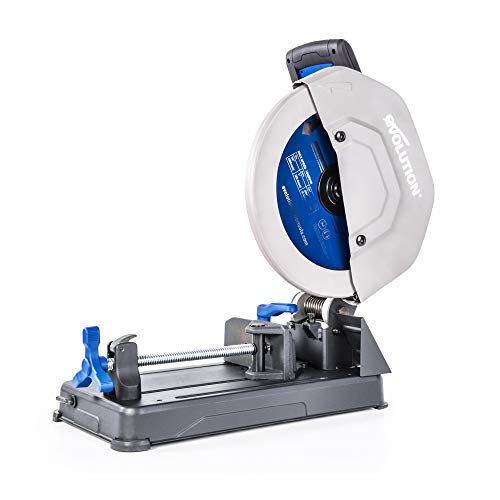
ASIN: B083Y544ZX

ASIN: B001QF7SS0
Certain content that appears on this site comes from Amazon. This content is provided “as is” and is subject to change or removal at any time. Product examples and images are supplied through Amazon Creators API; confirm specifications and availability on the current listing.
Quick answer: choose a complete cutting system, not a bare saw
For repeated, square or angled cuts in aluminum tube and extrusion, a dedicated nonferrous-metal saw with a vise, angle adjustment, and chip management is often the most straightforward category to investigate. For long straight cuts on sheet or plate, a metal-rated portable circular saw and a clamped guide may be a better fit. A miter saw can be suitable for some aluminum cuts only when that exact saw’s manual allows nonferrous metal and specifies a compatible blade. If a manual says not to cut metal, do not treat a special blade as permission to override it.
Before comparing models, write down five facts: alloy and temper if known; cross-section and dimensions; whether the cut is a crosscut, rip, or angle; how many cuts you make per session; and whether the work occurs at a bench, jobsite, or production station. Those answers narrow the choice more reliably than horsepower or an advertised cut depth considered alone.
Types of saws for aluminum
Dedicated nonferrous chop or up-cut saws
These machines are purpose-built to cut aluminum, brass, and other nonferrous materials within the capacity and material range named by the manufacturer. Many use a circular carbide blade, a guarded cutting head, a vise or clamp, an adjustable fence, and a chip tray or collection area. Some are manual, some use a controlled feed, and industrial models may include powered clamping or indexing. Their central advantage is system design: workholding, blade speed, guarding, and chip direction are considered together for metal profiles.
Such a saw can be a strong candidate when the work consists of repeated crosscuts in extrusion, bar, or tube and the shop has room for the machine and its infeed/outfeed supports. Compare the maximum rectangular and round capacities, not just the nominal blade diameter. Check whether capacity changes at a miter angle and whether the vise can hold the shape without crushing thin walls. A machine described for nonferrous aluminum is not automatically rated for steel or every aluminum alloy and profile.
Metal-cutting circular saws
Portable metal-cutting circular saws can serve for straight cuts in sheet, plate, or profile when the tool and blade are rated for the material and cut direction. The base plate can ride against a straightedge or track, while the operator advances the saw through supported stock. This approach is useful when moving a long or heavy panel to a stationary saw is awkward. Look for the manufacturer’s approved material list, compatible blade diameter and arbor, cutting depth at 90 and bevel settings, guard design, chip collection, and required clamping.
Do not assume every handheld circular saw becomes metal-safe with a carbide blade. RPM, guard clearance, blade geometry, braking, chip ejection, and the saw’s instructions all matter. A wood saw may eject metal chips into areas not designed to contain them, or may be expressly prohibited for metal. Follow the model-specific manual and keep the saw’s shoe fully supported throughout the cut.
Miter saws approved for nonferrous metal
Some miter saw manuals permit nonferrous metals when used with a blade designed for that purpose. For example, DEWALT’s DW716 and DWS780 instruction manuals specify TCG (triple-chip-grind) tooth blades for nonferrous metal and separately prohibit materials such as ferrous metal. That permission applies to those saws as described by those manuals; it should not be generalized to other miter saws. Check the exact model manual, blade diameter, arbor, maximum RPM, guard clearance, and clamping procedure.
A standard woodworking miter saw might have a wide crosscut range and convenient miter/bevel adjustments, but it may not provide the same vise, chip containment, or production durability as a dedicated aluminum saw. Consider a miter saw for occasional approved cuts only when the material is held securely and the machine’s documentation permits the operation. For repeated extrusion production, compare dedicated nonferrous machines first.
Band saws and other alternatives
Band saws can be appropriate for particular aluminum shapes, larger sections, or contour work when the machine, blade, speed, and workholding are specified for nonferrous metal. A woodworking band saw should not be presumed suitable: aluminum chips, blade pitch, feed, and machine design differ from wood service. Use the manufacturer’s guidance for the exact machine and blade. For one-off work, a metal fabrication shop may be safer and more economical than buying a machine outside your experience or space.
Abrasive chop saws are generally associated with ferrous metal and can generate heat, sparks, abrasive debris, and rougher edges. They are not interchangeable with carbide nonferrous saws. Never use an abrasive wheel on aluminum unless the saw and wheel manufacturers explicitly approve that material and application. Do not improvise by reversing a blade, modifying a guard, bypassing an interlock, or adapting an arbor.
Match the saw to the aluminum stock
Aluminum is a broad material category. Thin-wall tube, thick extrusion, flat bar, solid rod, sheet, and plate place different demands on the blade and workholding. A blade that cuts one profile cleanly may bind or chatter in another. Stock dimensions also determine whether the saw can capture the piece between its fence, vise, and guard without distortion.
Extrusion, tube, angle, and channel
Profiles often have hollow sections and thin walls. If the clamp pushes at one small point, the stock can deform; if it is not held, it can twist or shift as teeth engage. A suitable vise or clamping system should secure the profile close to the cut while supporting it along its length. Consider paired supports and a stop for repeat lengths, but do not let a stop trap the offcut between the blade and fence. The saw’s manual should explain safe placement and clamping.
Bar and solid stock
Solid bar uses more of the blade in the cut and can create a heavier chip load than a thin profile. Confirm the maximum solid-material capacity separately from hollow-section capacity when the maker lists both. Blade selection, feed rate, and lubrication requirements must come from the saw and blade documentation. A machine’s ability to cut a wide hollow extrusion does not necessarily mean it can cut a solid bar of the same width.
Sheet and plate
Large sheet may be better supported on a stable bench and cut with a rated portable saw and guide, if approved by the tool maker. Support the sheet on both sides of the kerf so it cannot sag, pinch the blade, or drop as the cut finishes. Account for the blade and shoe path, edge overhang, and where the offcut will land. Thin sheet may vibrate or flutter; secure it with enough properly placed clamps while keeping clamps clear of the saw base and blade path.
For plate that exceeds the saw’s capacity or requires a tight tolerance, consider a metalworking shop, waterjet, or other process suited to the material. Choosing a bigger saw does not fix an inadequate support plan. Large pieces can be heavy, sharp-edged, and difficult for one operator to control through a cut.
Blade type, tooth geometry, and speed
For aluminum, the saw and blade must be compatible as a system. Read both manuals and the blade label. Check diameter, arbor or mounting pattern, maximum RPM, kerf, tooth style, material range, and whether the blade is intended for the saw’s feed direction. A blade that fits the arbor but exceeds the saw’s RPM rating is not compatible. The manufacturer’s instructions take precedence over generic advice or a retailer’s broad description.
Tooth geometry and chip clearance
Nonferrous blades commonly use carbide teeth with geometry intended to shear softer metals and clear chips. DEWALT’s cited miter-saw manuals name TCG teeth for nonferrous metal. This is a model-specific instruction, not a universal recommendation for every machine. Blade makers may specify alternate tooth forms, hook angles, tooth counts, or rake for particular thicknesses and alloys. Match the blade maker’s stated use to your stock and saw.
Tooth count alone is not enough to choose. A higher count may produce a different finish, but tooth spacing must still permit chip formation and evacuation for the material thickness. Consult a blade chart or technical support from the saw/blade manufacturer. Do not assume a wood blade with many teeth will leave a better aluminum edge; it may be unsuitable or unsafe for the task.
RPM, feed, and lubricant
Manufacturers specify speed and feed practices for their machines and blades. If the tool uses a fixed speed, make sure the blade is intended for that speed and aluminum application. If it offers variable speed, use the recommended setting. A blade that gums with material, chatters, overheats, or leaves a poor cut may be dull, incompatible, incorrectly installed, or used outside the approved feed conditions. Stop and diagnose rather than forcing the cut.
Some metal-cutting operations call for a lubricant or cutting fluid, while others are designed for dry cutting. Follow both manuals. Do not apply oil, wax, or coolant to a saw unless it is allowed by the manufacturer and compatible with the motor, electrical components, and chip collection. Fluids can create slip and cleanup hazards; residue can also make chips adhere to surfaces or affect downstream finishing.
Capacity, angles, and accuracy
Compare actual cut dimensions at the angles you need. Catalogs may state capacity for a square cut, a miter cut, or a particular profile shape. A 45-degree cut often reduces the maximum section a saw can accommodate. Measure the complete profile, including projections, rather than relying on a nominal blade size.
For a crosscut saw, inspect the fence’s support width, angle scale, detents, bevel range, and repeatability features described by the maker. A stop system can help with batches but should not create a pinch trap. For a track saw, consider the rail length, shoe compatibility, track clamping, and the ability to support the work throughout the stroke. For any setup, the blade must clear the fence, clamps, table, and support fixtures through the full motion.
Aluminum can reveal setup errors through burrs, rough edges, or angular mismatch. Check squareness with a trusted square and verify the cut angle using a sample piece before production. A laser or digital readout can aid alignment, but it does not compensate for a loose fence, poor clamping, a damaged blade, or inaccurate material support. If the part has a critical tolerance, use measurement and process-control methods appropriate to the work.
Clamping and work support
Secure workholding is one of the most important selection criteria for aluminum cutting. The profile should resist sliding, rotation, lift, and vibration. A built-in vise can improve control, but its jaw shape and opening must fit the stock. For hollow or thin-wall shapes, use approved backing or shaped supports only if the machine maker allows them. Keep hands away from the cutting area; do not hold a short piece by hand near the blade.
Long stock needs stable infeed and outfeed support set level with the saw table. Support should carry the work without steering it sideways or lifting it into the blade. If a helper is involved, agree on who controls the saw and where the helper stands; the person supporting long stock should not pull or twist during the cut. Use an appropriate stop block for repeat lengths only when the manufacturer’s guidance confirms the arrangement will not trap the cutoff.
For a portable saw, clamp the guide and material to a rigid surface, keep the base plate flat, and ensure the clamps do not obstruct the guard or shoe. Large sheets need support that prevents both halves from pinching the blade as the kerf opens or closes. Plan where the finished piece and offcut will go before starting.
Chip control and workspace
Aluminum chips are sharp and can be hot. The saw’s guard, chip tray, collection port, and exhaust direction affect whether debris reaches the operator or nearby equipment. Check whether the machine includes chip containment and whether a compatible collector is recommended. A wood-dust extractor may not be appropriate for metal chips or hot debris; verify collector compatibility with its manufacturer.
Set the saw so chips discharge away from people, combustible materials, cords, and finished surfaces. Clear flammable materials from the immediate area and follow the saw’s instructions for combustible metal risks. Keep the floor free of chips because small fragments can create a slip hazard. Use a brush or tool after the machine is stopped and isolated; do not sweep chips with bare hands or reach into a chip tray while the blade is moving.
Eye protection is essential, and face protection, hearing protection, and other PPE should follow the machine manual and the risk assessment for the operation. Gloves can catch on rotating equipment; use them only when the manufacturer’s instructions and workplace rules permit, and never approach a moving blade. Aluminum dust from sanding or grinding presents different hazards than larger chips and requires suitable ventilation and controls.
Buying framework: compare the complete setup
- Confirm material authorization. Find an explicit statement in the exact saw manual that permits the aluminum or nonferrous stock you plan to cut. If unclear, ask the manufacturer in writing.
- Define your stock envelope. Record profile dimensions, wall thickness, solid vs hollow shapes, and the largest angle cut. Compare capacity at that angle.
- Choose the machine format. Dedicated chop saws suit repeat profile crosscuts; rated portable circular saws suit guided straight cuts; approved miter saws can suit occasional crosscuts. Consider band or shop processes only when properly rated.
- Verify the blade package. Check blade type, diameter, arbor, maximum RPM, tooth geometry, included accessories, and whether the exact blade is approved for the exact saw and material.
- Inspect workholding. Evaluate the vise, fence, clamps, support tables, stops, and ability to secure thin-wall or irregular stock without crushing it.
- Plan chip and dust control. Confirm guard coverage, chip tray, discharge direction, collection compatibility, and required cleanup procedure.
- Check power, footprint, and support. Verify the electrical supply, machine mounting, floor or bench area, infeed/outfeed length, and safe access for heavy stock.
- Account for ownership. Ask about blade availability, replacement guards, vise components, service, setup calibration, and the manufacturer’s support terms.
- Run a controlled sample cut. After reading the manual and setting up safely, use a representative scrap piece to verify fit and cut quality. Stop if the machine binds, vibrates unusually, or throws chips outside its intended containment.
Research method and manufacturer sources
This guide compares machine categories using current manufacturer pages, manuals, and safety guidance. It does not claim that we tested tools, measured cut speed, compared finish quality in a lab, or verified prices and stock. Product cards should be added only after checking an exact current product and its compatible blade through authorized product data. The manufacturer’s instructions for each specific machine and blade take priority over general category discussion.
DEWALT’s official support article on cutting aluminum sheet says to check the saw’s manual and use a blade specifically designed for nonferrous metal where the saw permits aluminum. The DW716 instruction manual and DWS780 instruction manual specify TCG blades for nonferrous metal in their relevant sections. These examples illustrate why the exact tool manual matters; they do not authorize cutting aluminum on a different model.
Makita’s LS0816F product page describes a slide miter saw and its base and guard features, but buyers still need that model’s operating instructions to determine the permitted materials and setup. OSHA’s table-saw machine-guarding guidance covers safe machine guarding and material support in a workplace context. The Power Tool Institute safety guide provides additional general power-tool safety guidance. Read the exact manual and local workplace rules before operating any saw.
Safe setup and cutting workflow
- Read the exact manual. Confirm aluminum is an approved material, identify the approved blade, and follow required guards, clamping, speed, and feed instructions.
- Inspect the machine. With power disconnected where applicable, examine blade condition and installation, guards, fence, vise, table, and collection parts. Do not operate with a damaged or missing guard.
- Prepare the stock. Remove packaging, loose labels, and debris. Check for embedded fasteners or incompatible coatings, and identify the offcut and blade path.
- Support and clamp. Secure the work against the fence or guide using the specified clamp. Add level support for long pieces and ensure the setup cannot shift or tip.
- Set the cut before starting. Confirm the miter/bevel position, depth, blade clearance, and that the clamp is outside the blade path. Keep hands away from the cut line.
- Wear appropriate protection. Follow the manufacturer’s PPE instructions. Keep bystanders clear of the chip discharge area and use hearing and eye protection as required.
- Make the cut without forcing. Use the feed method specified by the maker. If the blade slows, binds, chatters, or the stock moves, stop safely and diagnose the cause instead of increasing pressure.
- Wait and inspect. Let the blade stop fully before lifting, unclamping, or clearing chips. Check the cut only after the machine is safe and isolated as instructed.
Never reach across a moving blade, cut unsupported stock, defeat an interlock, remove a guard to gain capacity, or use an accessory that the saw maker does not approve. Do not cut unknown scrap that may contain steel fasteners or hazardous coatings. For unfamiliar alloys, complex profiles, tight tolerances, or production work, ask the manufacturer or a qualified metalworking professional to recommend a process.
Maintenance and ownership
Keep the saw clean according to its manual. Remove aluminum chips from accessible areas only after the machine is stopped and power is isolated as directed. Chips can accumulate around the guard, table, vise, or collector and interfere with movement. Avoid compressed air if it can drive chips into bearings, guards, eyes, or electrical parts; use only the cleaning method specified by the manufacturer.
Inspect carbide teeth for chipping, buildup, or wear, and replace or professionally sharpen the blade according to its maker’s instructions. A dull or contaminated blade can increase heat and cutting force. Store blades dry and protected so teeth do not strike hard surfaces. Keep blade labels and documentation with the blade to avoid mixing wood and metal accessories.
Check fence alignment, vise operation, fasteners, table inserts, electrical cords, switches, guards, and chip-collection attachments on the schedule in the manual. Recalibrate angle scales after moving or servicing the saw. Log the blade and material combination used if repeatability matters. If the machine shows abnormal noise, vibration, heat, or a guard fault, stop operation and obtain qualified service.
Frequently asked questions
Can I cut aluminum with a regular miter saw?
Only if the exact saw’s manual permits nonferrous metal and gives an approved blade and setup. Some DEWALT miter-saw manuals, for example, specify TCG blades for nonferrous metal; that guidance is model-specific. If the manual prohibits metal or says nothing and the manufacturer cannot confirm, do not proceed on assumption.
What type of saw is best for aluminum extrusion?
For repeated crosscuts, compare dedicated nonferrous chop saws with a vise and capacity suited to the profile. For occasional cuts, a miter saw may be considered only if its manual approves the operation. Compare the profile capacity at the required miter angle, clamp contact, support length, blade specification, and chip containment before selecting a model.
What blade should I use for aluminum?
Use only a blade designated for aluminum or nonferrous metal and approved for the saw’s diameter, arbor, and maximum RPM. Tooth geometry and count vary by stock thickness and blade maker. Follow the exact saw and blade manuals; a general-purpose wood blade is not a substitute.
Can I use a wood table saw to cut aluminum?
Do not assume so. Some table-saw manuals explicitly prohibit metal. Cutting metal can change chip behavior and machine hazards, and the guard, riving knife, insert, and dust collection may not be intended for it. Proceed only with explicit manufacturer approval for the exact saw, material, blade, and setup.
Are abrasive chop saws appropriate for aluminum?
Many abrasive chop saws are designed for ferrous metals and are not intended for aluminum. Check both the saw and wheel documentation. Do not infer that a wheel’s diameter fit means it is compatible with aluminum or the machine.
Does a higher tooth count always make a cleaner aluminum cut?
No single tooth-count rule applies across every saw, blade, and aluminum section. Tooth spacing must clear chips and match the material thickness, while the saw’s RPM and feed also matter. Use the blade maker’s recommendation for the exact profile and machine.
Should I use lubricant when cutting aluminum?
Some systems specify dry cutting; others may require or permit a lubricant. Follow the saw and blade manuals. Do not add fluid unless the manufacturer allows it and the machine is designed for that application.
How do I keep aluminum from moving during a cut?
Use the machine’s vise or approved clamp, support long stock level, and position the work against the fence as directed. Thin-wall profiles may need suitable support to resist crushing, but improvised blocks or stops must not create a pinch trap. If the stock cannot be secured reliably, choose another process.
Is a metal-cutting circular saw the same as a woodworking circular saw?
No. A metal-rated circular saw may have different guards, chip collection, speed, blade, and operating instructions. A wood circular saw is not automatically suitable for metal when fitted with another blade. Verify the exact tool and blade compatibility.
When should I use a fabrication shop instead?
Use a qualified shop when the material exceeds your saw’s capacity, the cut tolerance is critical, the profile is difficult to clamp, you need production consistency, or you cannot confirm a safe tool setup. Outsourcing a few precise cuts may cost less than buying a specialized machine and accessories.
Choose the saw around the actual aluminum stock and cut workflow. Verify permission in the exact manual, pair the tool with a compatible blade, and make secure workholding and chip control part of the purchase decision. A well-matched, manufacturer-approved system gives a more defensible basis for accurate work than selecting a saw by name or blade diameter alone.