Disclosure: As an Amazon Associate, reviewstook.com earns from qualifying purchases. Links to Amazon on this page are affiliate links; they cost you nothing extra. Listing details such as price and availability change often, so check the current Amazon listing before you buy.
Apartment living comes with its own set of limits. You may not control the heating system, the floor area is modest, the walls are shared and the lease might say something about what you can attach to them. Those facts shape what makes a good purifier, which is why the best air purifiers for apartments are usually compact towers or slim panels rather than large floor-standing machines.
This guide looks at five models that suit studios, one-bedroom homes and other small living spaces: the Blueair Blue Pure 211+, the Honeywell HPA100, the Levoit Core 400S, the Dyson Purifier Cool TP07 and the Rabbit Air MinusA2 SPA-780N. We explain what each maker lists, who each one fits and where it falls short. We make no claims about air quality, because that depends on your building and habits. Read the live listing for coverage guidance and filter details before you order.
Quick Comparison
| Product | Best for | Main point | Link |
|---|---|---|---|
| Blueair Blue Pure 211+ | Open studios | Large cylinder with washable cover | Check on Amazon |
| Honeywell HPA100 | Small bedrooms | Compact True HEPA tower | Check on Amazon |
| Levoit Core 400S | One-bedroom living rooms | Auto mode and app control | Check on Amazon |
| Dyson Purifier Cool TP07 | Renters who want one appliance | Air purifier and fan combined | Check on Amazon |
| Rabbit Air MinusA2 SPA-780N | Floor-space savers | Slim panel that can be wall mounted | Check on Amazon |
In this guide
How These Options Were Chosen
We worked from maker listings and published specifications, and we looked for products that make sense in a rented or compact home: a manageable footprint, simple setup and parts that are easy to replace. We have not used these units in our own flats, so this is a feature-based comparison. We also left out anything that needs fixed installation. For details such as coverage and noise, we ask you to read each current listing.
The Best Air Purifiers for Apartments and Small Homes
Blueair Blue Pure 211+ Air Purifier
The 211+ is a big cylinder that looks like a design piece, and its washable fabric cover comes in different colours. The maker positions it for larger rooms, which makes it a fit for an open studio where the living and sleeping zones share one space.
The listing describes a filter with a particle layer and carbon. Controls are a basic dial, with no app, so the machine is simple to run.
The trade-off is its height and width, which are noticeable in a small flat. Skip it if floor space is tight or if you want sensor-driven automation.
Honeywell HPA100 True HEPA Air Purifier
The HPA100 is the small member of Honeywell’s tower family, and it is the kind of unit you can slide beside a bed or sofa without rearranging furniture. It uses a True HEPA filter and a simple speed selector.
It suits a bedroom in a one-bedroom apartment, where the machine will run on a low setting and stay out of sight. There is no app to set up, which suits renters who prefer to keep things simple.
The limit is room size, so read the coverage guidance on the listing. Skip it if the main room is large or if you want sensors and a screen.
Levoit Core 400S Smart True HEPA Air Purifier
The Core 400S is a mid-large smart tower, and the maker lists an air quality sensor, an auto mode and app control. It is intended for living rooms, so it is a sensible choice for a one-bedroom flat with a combined lounge.
The app allows scheduling, which is handy for a working tenant who wants the machine to run before they return. The filter is a model-specific replacement.
The trade-offs are size and the need for the app. Skip it if your living area is small or if you dislike creating accounts.

Dyson Purifier Cool TP07
The TP07 appeals to a tenant who wants to avoid owning separate appliances. It is a bladeless fan and a filter in the same tall body, so it can stand in for a small fan in summer.
It suits a small living room or bedroom, with app and remote control. The look is tidy, and the machine stands out less than a large box.
The downside is cost relative to ordinary towers. There is no heater on this model, and the replacement filter is a specific part. Skip it if function matters more than design.
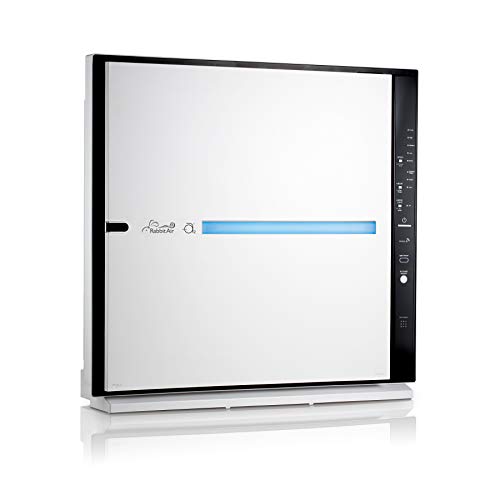
Rabbit Air MinusA2 SPA-780N
The MinusA2 is a flat panel that the maker says can stand on a floor or be hung on a wall. For an apartment where floor space is scarce, the wall option can be very useful.
The listing describes a multi-stage filter and a range of filter options. It suits a finished living area where design and noise matter to the household.
The trade-off is a high cost and the question of mounting. Check your lease before drilling, and use a professional for solid walls. Skip it if you rent and cannot make holes, since it still works on the floor but loses its main advantage.
Best for Studio Apartments
The Blue Pure 211+ is built for larger spaces, so it handles a studio that combines sleeping, cooking and living. If it feels too big, consider the Levoit Core 400S.
Best for a One-Bedroom Apartment
A pair works well here: the Levoit Core 400S for the living room and the Honeywell HPA100 for the bedroom. Alternatively, choose one unit for the room where you spend most time.
Best for Renters Who Cannot Drill
The Dyson TP07 and the Honeywell HPA100 both stand on the floor without fixing. They suit leases that forbid wall mounting.
Best for Saving Floor Space
The Rabbit Air MinusA2 is slim and can be hung, which frees up the floor. Check the lease and the wall type before you decide.
Small Apartment Air Purifier Placement
In a small space, where the unit goes matters as much as which unit you buy. A common mistake is pushing the machine flat against a wall or tucking it behind a sofa. Pull it a short distance from the wall, as the manual advises, so the intake can draw air freely.
In a studio, place it between the sleeping area and the kitchen if you can, so it faces the part of the room you use most. In a one-bedroom, decide whether to leave it in the living room and close the bedroom door, or move it at night.
Keep it away from radiators, windows with direct sun and the entry door, where gusts of outside air change the airflow. If neighbours are close, a low setting at night helps, and a machine with a dimmable light avoids disturbing a shared bedroom.
Living With Shared Walls and Shared Air
Apartments share more than walls. Cooking from the next unit, a hallway door that opens onto a shared corridor and a building ventilation system you do not control can all change what reaches your living space. A purifier cannot rewrite those conditions, and none of the makers here claim it can. What it can do is filter the air that passes through it inside your own rooms.
That is why the practical choices matter more than any single feature. A unit that runs quietly at night, fits beside the bed and has a filter you can buy in a few clicks is more useful than a powerful machine you switch off because it is too loud. Think about which hours you will actually run the machine, and pick for those hours.
It also helps to talk to the building management if you have questions about ventilation, filters in the heating system or any shared equipment. Those are the landlord’s responsibility, and a portable purifier should not replace asking for repairs.
How to Choose an Apartment Purifier
Begin with the room that matters most. Many people spend most of their time in a living area and a bedroom, so pick the machine for the larger of the two and decide whether you want a second, smaller unit.
Check dimensions. Apartment hallways and shelves are tight, and a tall cylinder might not fit where you imagined. Compare the listing’s height and footprint against your space.
Think about noise and neighbours. Thin walls carry sound, so look for a quiet setting and read how the maker describes its sound. A sleep mode with a dim light is useful in a studio.
Look at filters and running costs. Renters move, and a purifier should still make sense in the next home. Pick a model with replacement filters that are widely available.
Consider the lease and the building. Some leases limit wall fixings or electrical add-ons. Ask your landlord before drilling, and use only what the manual approves.
Moving is the last factor to consider. Apartment dwellers change homes more often than owners, so a purifier that suits only one particular layout is a risk. A mid-size tower such as the Levoit Core 400S or a flexible panel such as the Rabbit Air usually adapts to a new floor plan more easily than a very small desktop machine or a very large one. Keep the original box if you can, since the foam and cartons make the next move easier.
Finally, think about how much you want to spend over time. The machine is a one-time cost, but filters come back every few months or years, depending on the model. Add the filter cost to the purchase when you compare two units, and the option that costs less up front may not cost less overall.
- Open studio: Blue Pure 211+
- Small bedroom: Honeywell HPA100
- Smart living room: Levoit Core 400S
- Fan and filter: Dyson TP07
- Wall option: Rabbit Air MinusA2
Setup, Safety and Placement
Follow the manual for assembly and filter installation, and plug the unit into a working wall outlet. Avoid overloading a power strip in an older building, and ask a licensed electrician or your landlord to handle any outlet concerns. Do not run cords under rugs or across doorways.
For wall-mounted models, follow the maker’s hardware instructions and your lease terms. Never improvise with mounting.
Care and Troubleshooting
Follow the maker’s schedule for filters, and clean the pre-filter where the manual allows.
| Issue | What to check |
|---|---|
| Neighbours hear a hum | Use a lower speed and place the unit on a mat that the manual allows |
| Weak airflow | Look for filter wrap and a blocked intake |
| Wi-Fi trouble | Check the router band and distance |
| Dust on the cover | Wipe it or wash it as the maker describes |
Understanding CADR and Room Size in a Small Space
The most useful number on any purifier is its clean air delivery rate, or CADR. It measures how much filtered air the unit produces per minute for particular pollutants, usually smoke, dust, and pollen. A higher CADR means the unit can clean a bigger volume of air faster. Manufacturers also publish a recommended room size, which is generally based on the smoke CADR and assumes the air is exchanged a certain number of times per hour.
Apartments are an interesting case, because rooms are small but ceilings, open layouts, and shared hallways complicate the math. A studio’s living and sleeping areas are one volume of air, so you should size the purifier to the whole space rather than the corner where you put it. A one-bedroom with a closed door can be treated as two separate zones if you plan to move the unit.
A useful rule is the idea of air changes per hour. Bedrooms and living rooms benefit from four or more air changes an hour if you are bothered by allergens or smoke, so a unit rated for a larger room than yours will clean faster and can run on a quieter low setting. Choosing a model rated for the room size with some headroom is usually better than choosing one at the exact limit.
A quick sizing method
- Multiply floor length by width by ceiling height to get cubic feet.
- Compare that against the manufacturer’s stated coverage.
- If the apartment has an open plan, add the connected rooms together.
- Round up rather than down when you live near a busy street or have pets.
Noise Levels, Night Use and Light
In a small home, a purifier is never far from your ears. A unit that is fine on a living room floor can be unbearable next to a bed. Noise depends on fan speed, so look for a published decibel range at low and high settings, and pay particular attention to the lowest. A good bedroom model has a quiet low setting and a sleep mode that dims the lights.
Indicator lights are the other night-time nuisance. Some purifiers have bright air-quality rings that glow across a bedroom. Look for a way to turn the display off or dim it, which some models offer through a button or app control. If a model does not mention this, assume the lights will stay on.
Apartment dwellers also have to think about neighbors. A steady low hum is easy to ignore; a rattling fan on a hard floor is not. Placing the unit on a rug, or on a small piece of furniture with a soft pad underneath, can cut vibration noise that carries through floors.
Running Costs and Filter Replacement
The purchase price is only part of the cost. A purifier runs for many hours a day, and its filters wear out.
- Electricity: most small purifiers draw a modest amount of power, similar to a light bulb or small fan, but check the wattage on the spec sheet and compare.
- HEPA filter life: typically somewhere between six months and a year or more, depending on use and air quality.
- Carbon pre-filters: these absorb odors and often wear out sooner than the main filter, so check how they are replaced.
- Washable pre-filters: a mesh pre-filter that you rinse or vacuum can extend the life of the main filter.
- Availability: confirm that replacement filters for your exact model are sold and that they are genuine, since cheap lookalikes may not seal properly.
Over three to five years, filters can cost more than the unit itself, so compare replacement prices as well as the sticker price. A model with a pricier, longer-lasting filter may cost less per year than a cheap one that needs frequent swaps.
What a Purifier Cannot Do
An honest guide should set expectations. A purifier filters particles and, with carbon, some odors, but it does not remove everything. It will not eliminate carbon monoxide, radon, or most gases without special media, and it will not replace a smoke or carbon monoxide alarm. It cannot clean a damp, moldy wall; the source has to be fixed. It also works best with closed doors and windows, so running one while a window is open to a busy street reduces the benefit.
The most effective strategy combines a purifier with source control: keep up with vacuuming using a sealed or HEPA vacuum, use the kitchen fan when cooking, wash bedding regularly, and avoid burning candles or incense where you sleep. If you have asthma or serious allergies, talk with a doctor about what measures are most useful for you.
A last practical note for renters: keep the manual and the original filter packaging details somewhere handy, since you will need the model number when it is time to reorder. Consider a power strip with a switch so you can shut the unit off completely when you travel, and wipe the intake grille with a dry cloth every few weeks, because a dusty grille reduces airflow long before the filter is spent.
Running One Purifier Across a Whole Small Home
Most apartment owners buy one machine and ask it to serve several spaces, so the skill that matters is rotation. A purifier cleans the air around itself, and in a small flat the honest strategy is to give each room its turn. Keep the unit in the bedroom overnight, where you spend the longest unbroken stretch breathing, then move it to the living area for the daytime hours. The picks in this guide suit that life to different degrees: the Levoit Core 400S and the Honeywell HPA100 are easy to carry by a handle or by their compact bodies, while the Blueair Blue Pure 211+ is a bigger commitment to move and works better as a fixed living-room anchor with a smaller bedroom companion, if budget ever stretches that far.
Rotation works because small homes share air slowly. Cooking in a kitchenette raises particles across a studio within minutes, and a purifier parked by the bed will eventually process that air — eventually being the word to plan around. If you cook often, give the machine the half hour after cooking, near the kitchen end of the space, and let the bedroom have it back by bedtime. A simple mental timetable beats a second purchase for most renters, and it costs nothing but the habit.
Doorways, Hallways and the Myth of Whole-Flat Coverage
Manufacturers’ room ratings assume one enclosed space. An open doorway roughly halves the benefit to the next room, and a hallway with two turns reduces it further. That does not make a purifier useless in an open-plan flat — the Rabbit Air MinusA2, which can wall-mount, and the Dyson Purifier Cool TP07, which oscillates, both throw their cleaned air further than a static box — but it does mean you should size and place for the room you are in, not the flat’s total floor area. Stand where you spend time, and ask whether the machine’s output reaches you without crossing a doorway. If it does, you have bought the right coverage whatever the floor plan says.
Being a Good Neighbour With a Machine That Runs All Night
Apartment living adds a social dimension that house owners never think about: your purifier’s hum travels. On hard floors, a unit’s vibration can carry through a joist to the ceiling below, and a machine that sounds modest in a shop can become a neighbour dispute at 1 a.m. The fixes are simple and worth doing on day one. Put a mat, a folded towel or a piece of carpet offcut under the unit. Keep it off shared walls where you can. Run the highest speeds while you are awake and the sleep or low setting overnight, which is also the setting whose sound you tested in the earlier sections.
Filters have a neighbour angle too. A clogged filter makes a machine work harder and louder for less result, so the maintenance schedule in this guide is partly a courtesy schedule. If your building has shared laundry or balcony rules, shake out pre-filters inside your own space rather than creating a dust cloud over a neighbour’s washing. None of this is onerous; it is the small print of running any appliance in a building where other people’s ceilings are your floor.
Renting Rules Beyond Drilling
The earlier sections covered wall-mounting permission. Two more rental realities deserve a mention. First, electricity: a purifier is a modest load, but in older buildings with few sockets it competes with everything else, so avoid long extension leads trailing across walkways and use a properly rated socket near the unit’s spot. Second, the end of the tenancy: keep the box and packaging if you have storage, because a purifier is exactly the kind of appliance that gets damaged in a move, and a crushed filter or cracked housing turns a good machine into a replacement bill at the worst possible moment.
Matching These Five Picks to Apartment Shapes
A studio is one room doing four jobs, so versatility wins: the Dyson TP07 earns its keep by also being a fan in summer, and the Levoit Core 400S suits owners who want app scheduling around work hours. A one-bedroom flat is really two air zones, and the question is which zone gets the fixed machine. Put the stronger unit where the problem is — the Honeywell HPA100 is a sensible bedroom anchor for allergy-led buyers — and let rotation cover the other room. A two-bedroom share house is the hardest case, because doors stay closed for privacy and each closed door defeats a shared machine; there, one mid-sized purifier in the shared living space, plus honest conversation about a second unit later, beats one huge machine nobody’s bedroom benefits from.
The Rabbit Air MinusA2 deserves its own note for renters with almost no floor to spare. Wall-mounted where permission exists, or standing on a sideboard, it returns floor space that in a small flat is worth real money in comfort. Whichever pick you land on, measure the spot before ordering, including the clearance the manual asks for around intakes. Apartment corners are rarely the dimensions the brochure imagined, and a purifier squeezed between a sofa and a wall is a purifier at half strength from the day it arrives.
Small Flats, Big Life Events: When the Air Suddenly Matters More
Apartments are where life changes arrive in small spaces: a baby in the one-bedroom, a partner moving in, a puppy, a new hobby involving solder, resin or frying. Each change rewrites the air. A baby’s arrival usually sends parents shopping for a purifier, and the apartment answer is restraint — the machine you already own, moved to the bedroom, run before bedtime, beats a panic-bought extra unit in a flat with no floor left. A puppy changes the load more honestly: hair and dander in a small volume concentrate fast, and the pre-filter cleaning rhythm from earlier in this guide becomes a weekly reality rather than a suggestion. The Levoit Core 400S and the Honeywell HPA100 both tolerate that rhythm well, which is part of why they suit first-pet flats.
Working from home changed apartment air in a way nobody budgeted for: a room occupied sixteen hours a day needs its air managed like a workplace. The desk corner accumulates dust, the same air is rebreathed all day, and the purifier’s daytime shift, which used to be optional in an empty flat, becomes the main shift. If your flat now contains a full-time worker, size and place for the working room first and the bedroom second — the reverse of the traditional advice — because the worker is awake to notice, and because a machine like the Dyson TP07, which also moves air as a fan, can serve the desk in two ways across a working summer.
Flatshares: Diplomacy With a Plug
In a shared flat the purifier enters politics. Whose room it lives in, who pays for filters, and whether it may run in the hallway are questions to settle in the first conversation, not the first argument. The arrangement that survives is usually personal ownership: one person’s machine, in their room, with the living room benefiting when doors are open, and no shared filter fund to bicker over. If the flat does buy together, write down the filter rota the way you would a cleaning rota. The Rabbit Air MinusA2’s wall-mounted neatness makes it the least territorial machine in this guide for shared spaces, since it occupies nobody’s floor and nobody’s corner — a small thing that matters disproportionately when four adults share one living room.
Energy, Bills and Running a Purifier Without Thinking About It
Apartment dwellers often rent with bills included, or split them, or watch a smart meter with justified anxiety, so running costs deserve the plain treatment this guide gives filter costs. A purifier on a low or medium setting draws roughly the power of a modest light bulb or a laptop charger; run continuously, it is a background cost rather than a headline one, but the highest turbo settings multiply that draw and should be treated as tools for hours, not habits for weeks. The cheapest clean air is timed air: use schedules and the machines’ own timers to run higher speeds when the flat is empty or when cooking and cleaning stir the dust, then coast on low while you are home and asleep. The smart scheduling on the Levoit Core 400S exists for exactly this pattern.
There is one false economy to avoid. Running a purifier only when you remember, in bursts separated by days off, saves a little electricity and loses most of the benefit, because the room’s air reloads with dust between bursts and the machine spends its life clearing backlog instead of holding a clean state. Steady and low beats heroic and occasional, in cost per unit of clean air as much as in results. If bills are truly tight, the honest saving is to run the machine in the one room you occupy most, door closed, rather than weakly serving the whole flat — concentration is both the apartment constraint and the apartment strategy, and the picks in this guide are sized to let you exploit it.
Moving Out, Moving In: The Purifier as Portable Infrastructure
Renters move, and a purifier is one of the few home-health purchases that moves perfectly. Build the habit of a move-day routine: clean or replace the pre-filter before packing, keep the machine upright in its box if you saved it, and run it on high in the new flat’s bedroom for the first day, because a new home’s air carries the previous tenants’ dust, cleaning chemicals and decorating residue at their peak. That first-day run is the single most valuable day of the machine’s year. In the new place, redo the placement thinking from scratch rather than copying the old flat’s layout — room shapes change what works, and the first week in a new home is when you are most willing to experiment. Owners who move with their machines for years describe them the way they describe a good mattress: not exciting, never regretted, always on the truck.
Deposits, Inspections and Leaving the Flat as You Found It
A purifier is one of the few appliances that can actively help a renter at inspection time, and it is worth using deliberately. Months of cooking, candles and city dust leave a flat’s air — and eventually its walls and curtains — carrying the evidence. A purifier run consistently through a tenancy slows that accumulation in the rooms it serves, and a thorough final-week routine, with the machine on high in each room in turn while you clean, leaves the flat smelling neutral in a way that landlords and inventory clerks register even if they never name it. None of this replaces cleaning; it removes the background note that cleaning alone sometimes cannot shift from soft furnishings you do not own.
The same logic applies at the start of a tenancy, in reverse. A flat that has stood empty, or hosted smokers, or been painted between tenants, greets you with its previous chapter’s air. The move-in run described earlier in this guide — a full day on high in the bedroom, then the living space — is the cheapest deep clean you will ever buy, and it doubles as your first placement experiment in the new home. Renters who treat the purifier as part of the moving kit, packed last and unpacked first, start every tenancy from clean air. In a renting life, where so much of the home is not yours to change, that is a disproportionate amount of control for one small machine to give back.
The Purifier and the Open Window: An Apartment Truce
City flats live by their windows, and purifier advice that ignores that fact gets ignored in return. The truce that works is built on timing. Air the flat when the outside air is at its best — early morning before traffic builds, or after rain has washed the street’s dust down — with windows wide for a short, deliberate cross-draught. Then close up and let the purifier hold the standard for the rest of the day. What the truce forbids is the permanent half-open window beside a running purifier, which asks the machine to filter the neighbourhood and guarantees a disappointed owner and a exhausted filter. On high-pollen days or beside a busy road, the truce tightens: windows stay shut, the machine owns the flat, and freshness is taken in walks rather than through the sash.
Balconies soften the truce pleasantly. A flat with a balcony door can air in bursts without surrendering the whole interior, and a purifier placed in the room the balcony serves will clear the imported air within the hour. However you arrange it, the principle is the one running through this whole guide: the purifier is superb at holding a defined volume of air at a chosen standard, and hopeless at processing the outdoors. Give it the defined volume — the closed flat, the closed room — and even a mid-sized pick like the Honeywell HPA100 will feel like a larger machine than the one a draughty palace of open windows defeats daily.
Frequently Asked Questions
How many purifiers does a one-bedroom apartment need?
Many people use one in the main room, but some add a second for the bedroom. Check the coverage guidance on the listings.
Can I use an air purifier in a studio?
Yes, a larger model suits a studio, and you should place it where you spend most time.
Are purifiers noisy for neighbours?
On a low setting they are generally quiet, but read the sound information on the listing.
Do I need permission to mount one on a wall?
Check your lease and ask the landlord before drilling.
Is the Dyson worth it for a small apartment?
It serves as a fan too, which saves space, but it costs more than a plain tower.
Will a purifier fit under furniture?
Check dimensions first, and keep air intake clear.
What should I do with the box if I rent?
Keep it. Moving is easier with the original packaging, and some makers ask for it if you need support.
Is a larger purifier better in a small apartment?
Not necessarily. A big unit can be loud and take up room, so match the machine to your space.
What does CADR mean on an air purifier?
CADR stands for clean air delivery rate, a measure of how much filtered air a purifier delivers per minute for smoke, dust, and pollen. Higher numbers mean faster cleaning. Compare the smoke CADR with your room size, since manufacturers often base coverage claims on it.
How often should I change the filter in an apartment purifier?
It depends on the model and on how dusty or smoky your air is. Many HEPA filters last six to twelve months with typical use. Follow the manufacturer schedule or filter indicator, and replace sooner if you cook often, have pets, or live near heavy traffic.
Should I run an air purifier all day?
Many people run one continuously on a low setting, since the unit needs time to keep cleaning as new particles enter. You can turn it up when cooking, cleaning, or during smoky days. Running it constantly uses modest electricity, but check the wattage if cost matters.
Where should I put an air purifier in a studio apartment?
Place it a few inches to a foot from walls and furniture so air can flow in and out freely. Near the sleeping area is a good spot, but keep it away from corners that block intake. Avoid hiding it behind a couch, which reduces performance.
Can I leave an apartment purifier running while I am on holiday?
You can, and it keeps the flat from smelling closed-up on your return, but a low setting is enough for an empty home. Tell a neighbour or building contact if the machine is audible through walls, and make sure it sits clear of curtains and soft furnishings while nobody is home.
Will a purifier help with smells coming from a neighbour’s flat?
Partly. A model with a decent carbon stage, such as the Honeywell HPA100 or the Levoit Core 400S, can reduce cooking or smoke smells that drift in, but it cannot seal your flat. Weather-stripping the front door and speaking to building management about shared vents often matters as much as the machine.
Where should a purifier go in a studio with a kitchenette?
Between the kitchenette and the sleeping area, closer to the bed, with its intake facing the open room. That position lets it catch cooking particles as they spread while still cleaning the air where you spend the night.
Do I need a purifier in every room of a small apartment?
Rarely at first. One well-placed machine, rotated between bedroom and living space, covers most small flats. Add a second only when a specific room has a specific problem, such as a home office used all day or a nursery.
How do I stop a purifier taking over a small room visually?
Choose the spot before the model, and favour designs that sit quietly: a low unit under a window line, or the wall-mounted Rabbit Air approach. Keeping the machine out of the main sightline from the sofa and bed makes a small room feel far less crowded.
Can I use an apartment purifier in a house-share’s shared kitchen?
Yes, and cooking-heavy shared kitchens benefit, but agree the ground rules first: who cleans the grease-loaded pre-filter, and where the machine sits so it is not in the cooks’ way. A purifier nobody owns gets neglected by everybody.
Will a purifier help with damp smells in a rented flat I cannot renovate?
It can reduce the smell in the air, especially a carbon-equipped model, but it cannot fix the damp itself, and in a rental that is the landlord’s repair duty in most places. Document the damp, report it, and use the purifier as comfort while the real fix is pursued.
What size purifier suits a bedsit where I sleep and cook in one room?
Size for the whole room’s volume, then place the machine nearer the bed than the cooker while keeping its intake clear of cooking grease. A mid-sized pick such as the Honeywell HPA100 handles that dual duty better than a mini desktop unit.
Can a purifier help a flat that allows smoking indoors feel fresher for guests?
It reduces the airborne share noticeably between smokes, especially a carbon-equipped model run in the living room with the door closed for a while. It will not remove what has settled into furnishings over years, so set guests’ expectations kindly and honestly.
Is it worth taking a purifier to a short holiday let?
For a stay of a week or more, allergy sufferers often find it worthwhile if the machine is compact — the flat’s air is unknown territory. For a weekend, open windows and your usual medication are the proportionate answer for most people.
Bottom Line
For a studio, the Blue Pure 211+ is a good match. For a small bedroom, the Honeywell HPA100 is straightforward. The Levoit Core 400S adds smart features, the Dyson TP07 doubles as a fan and the Rabbit Air MinusA2 saves floor space. Confirm details on each listing before you order.