Disclosure: As an Amazon Associate, dailyhomedecorating.com earns from qualifying purchases. Links on this page are affiliate links; they cost you nothing extra. Prices and availability change often, so check the current Amazon listing before you buy.
Finding the best affordable sheets starts with a small act of defiance: ignoring the thread-count contest on the packaging and asking instead how a set behaves on an ordinary Tuesday night in February. Affordable bedding lives a harder life than luxury bedding. It gets washed hotter, dried longer, folded less carefully and replaced more reluctantly, so the sets that earn their place here are the ones built for that reality rather than for a showroom photograph. Five verified sets anchor this guide, and they split cleanly by material and temperament: two brushed microfiber workhorses, one embossed easy-care set, one genuine cotton sateen and one certified organic percale. Between them they cover the renter furnishing a first bedroom, the parent stocking a linen cupboard against midnight accidents, the cotton loyalist who refuses synthetics at any discount, and the warm sleeper who needs air moving through the weave. None of them asks the buyer to pretend that a modest outlay buys heirloom linen. Each one instead does a defined job well, washes without ceremony and stays on the mattress it was bought for, which is the whole contract affordable sheets have to honour.
One more distinction matters before the picks themselves. Cheap and affordable are not synonyms in a linen cupboard. Cheap bedding announces itself within a month, through corners that creep, surfaces that roughen and colours that surrender to the wash. Affordable bedding, chosen with even a little method, simply gets on with the work for years. The method is most of this guide: measure before you shop, match the fibre to the sleeper rather than to the advertisement, and judge every candidate by its tenth wash instead of its first night.
Key Takeaways
- Fit decides everything first: every set below offers a fitted sheet with a pocket of fifteen or sixteen inches, deep enough for most modern mattresses plus a slim topper or protector.
- Microfiber wins on softness straight from the packet, simple laundry and sheer value per set, which is why the Mellanni Iconic and the CGK Unlimited lead the value end of this list.
- Real cotton costs more here but repays it differently: the California Design Den sateen breathes, ages gracefully and feels substantial in a way no synthetic in this guide imitates.
- Certified organic cotton no longer requires boutique money, as the GOTS-certified California Design Den percale demonstrates, though its crisp hand suits a particular sleeper.
- Rotation is the cheapest durability upgrade available: two sets per bed, alternated weekly, will outlast one set washed relentlessly, whatever the fibre.
- Buy the size and colour variant carefully on the listing page, because platform pages gather several configurations under one roof and the wrong one is an easy click away.
In this guide
Quick Picks: Best Affordable Sheets at a Glance
| Pick | Known for |
|---|---|
| Mellanni Iconic Sheet Set | Best overall value |
| CGK Unlimited Sheet Set | Best microfiber alternative |
| Bedsure Queen Sheet Set | Best easy-care embossed set |
| California Design Den Cotton Sateen Sheets | Best affordable true cotton |
| California Design Den Organic Cotton Sheets | Best affordable organic |
The table rewards a second look, because the five badges are really five different definitions of value. For a household outfitting several beds at once, value means a set that can be bought in multiples without a wince and laundered without a strategy meeting, which points at the Mellanni. For a single bed in a warm room, value means a lighter hand and a surface that comes out of the dryer presentable, which points at the CGK. The Bedsure earns its badge by making a plain white bed look deliberately finished, a trick worth money in rentals and guest rooms. The two California Design Den sets redefine value as cost per year rather than cost per purchase: both ask more upfront than the microfiber trio and both answer with natural fibre, certification paperwork and a slower, gentler ageing curve. Reading the badges as answers to different questions, rather than as ranks in a single race, is the fastest route to the right set.
How These Picks Were Chosen
Every candidate for this guide had to clear the same verification gate before any opinion was formed about it. Each set was looked up in the Amazon catalog through the retailer’s own product interface, and only a set with a confirmed listing title and an official product image earned a link below. Anything that could not be confirmed that way would have been discussed in prose without a link, because a buying guide that invents a listing forfeits the reader’s trust in every other sentence. The five survivors were then screened on the unglamorous details that decide whether budget bedding succeeds: pocket depth, because a fitted sheet that strains at the corners fails nightly; the construction of the set as a standard four pieces, so comparisons stay honest; the care burden the fibre imposes on a real household laundry; and the certifications a listing actually claims, which are recorded below exactly as claimed and never upgraded in the retelling.
Order within the guide follows household logic rather than a laboratory ranking. The Mellanni leads because it is the set most readers, in most rooms, will be happiest buying twice. The CGK follows as the credible alternative for anyone who likes the microfiber idea but wants a lighter, tidier finish. The Bedsure occupies the style-conscious middle. Then the guide steps up in fibre honesty: first to conventional cotton done properly in a sateen weave, then to certified organic cotton in percale. A reader who knows their own non-negotiable — lowest outlay, easiest laundry, natural fibre only, certification required — can stop at the matching review and ignore the rest with a clear conscience. A reader still deciding will find the contrasts between neighbouring picks more instructive than any single verdict, because affordable sheets are a category of trade-offs worn nightly, and the trade-offs are spelled out under every name below.
Detailed Reviews

Mellanni Iconic Sheet Set — Best Overall Value
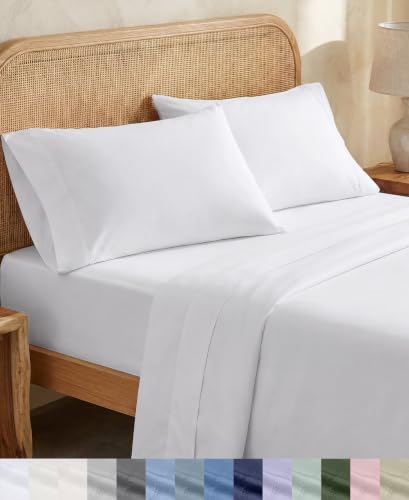
The Mellanni Iconic has become the default answer to a common household question — what do we put on the bed that guests, teenagers and the laundry schedule cannot ruin — and it holds that position by being agreeable about everything. The fabric is brushed microfiber, which means the softness arrives immediately rather than after a season of washing, and it means the set asks almost nothing in return: no special detergent ritual, no dread of the tumble dryer, no ironing penance for the flat sheet. In a first apartment it turns a bare mattress into a bed that feels considered. In a family home it survives the rotation of sick days, spilled drinks and duvet-cover wrestling matches. Its listing describes a sixteen-inch deep pocket, and that dimension is doing quiet heavy lifting, because a generous pocket over a standard mattress leaves slack that keeps corners seated when sleepers toss.
Key facts: microfiber four-piece set; sixteen-inch deep pocket as recorded on the listing; brushed finish responsible for the softness people notice on the first night; sold in the checked listing as a queen set in white, with other sizes and colours gathered on the same product page.
Living with this set is mostly an exercise in not thinking about it, which is high praise for bedding at this level. The surface stays smooth across the middle of the bed where cheaper microfiber sometimes pills early, the white holds up respectably through mixed household washes, and the fitted sheet goes on without the diagonal wrestling that shallower pockets demand. Warm sleepers should read the trade-offs honestly, because brushed microfiber holds heat more than an open cotton weave does, and a bedroom that runs hot in August will notice. Cotton loyalists will also detect the synthetic character — a slight sheen, a smoothness without grain — and no amount of value arithmetic converts a sleeper who simply prefers plant fibre against their skin. For everyone between those poles, the Mellanni is the set to buy in twos, so one is always clean in the drawer.
Strengths
- Deep pocket stays put on topped mattresses
- Soft without any break-in period
- Tough, simple laundry behaviour
Trade-offs
- Microfiber warmth in summer bedrooms
- Synthetic feel will not please cotton purists
- Surface sheen reads inexpensive up close
Best for: the household default sheet, everywhere. Not suited for: hot sleepers or natural-fibre devotees.
One practical note on colour: the checked listing is the white set, and white is the version this guide recommends for a first purchase even to households that usually buy colour. White shows soil honestly, which keeps the washing rhythm truthful, it coordinates with every duvet and blanket a household already owns, and when one piece of a set eventually wears faster than the others, a white replacement blends in without a dye-lot negotiation. Buyers furnishing several rooms can then use the listing’s other colours as a room-coding system, as the mistakes section below suggests, rather than as decoration. The Mellanni’s job in a home is reliability, and its plainest version does that job best.
See the current listing for the Mellanni Iconic Sheet Set at Check price on Amazon, and confirm the size in the cart matches your mattress before ordering, since the page gathers several sizes together.

CGK Unlimited Sheet Set — Best Microfiber Alternative
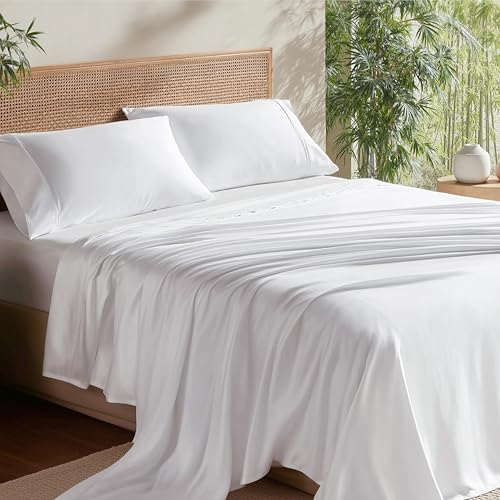
Where the Mellanni leans plush, the CGK Unlimited leans neat. Its microfiber is presented on the listing as breathable and cooling, and in the hand it does feel lighter and less velvety than the Mellanni’s brushed surface, with a smooth, composed finish that suits sleepers who dislike any hint of fuzz against the skin. The set is aimed squarely at the tidy-bed temperament: the listing emphasises easy-fit deep pockets and a wrinkle-free character, and those two promises together describe its real talent, which is emerging from an ordinary wash-and-dry cycle looking like a bed someone made on purpose. Guest rooms benefit disproportionately from that talent, since a guest bed is judged in the thirty seconds after the door opens, and a smooth, unwrinkled surface reads as care regardless of what the set cost.
Key facts: four-piece set; breathable, cooling positioning on the listing; deep pockets with an easy-fit design; wrinkle-free positioning; Oeko-Tex noted on the listing; checked in queen size and white, with further variants on the product page.
The honest caveats begin with the same word as the strengths: microfiber. Beneath the cooling language this remains a synthetic set, and a determined hot sleeper in a humid climate will still sleep warmer in it than in percale cotton. The fabric’s lightness, pleasant in summer, also means a patterned or dark mattress protector can ghost faintly through a white fitted sheet, a cosmetic issue worth knowing before a buyer with a striped mattress pad commits. Under sustained friction — a restless sleeper’s heels are the usual culprit — light microfiber can eventually pill, so rotating this set with a second one is not indulgence but maintenance. None of that displaces it from this guide. Judged as what it is, a light, tidy, forgiving set for budget rooms that still want to look composed, the CGK is the strongest alternative to the Mellanni rather than a runner-up copy of it, and households furnishing a spare room or a first rental could choose it first without apology.
Strengths
- Easy-fit pockets simplify bed-making
- Wrinkle-resistant surface suits busy households
- Light hand sleeps cooler than heavy microfiber
Trade-offs
- Still synthetic beneath the positioning
- Light fabric shows mattress patterns beneath
- Long-term pilling possible under friction
Best for: tidy beds on tight budgets. Not suited for: heirloom-minded cotton shoppers.
A word about who should skip it, since a guide earns trust by narrowing as well as recommending. A buyer furnishing a wedding-registry bed, or anyone whose pleasure in bedding is specifically the weight and grain of natural fibre, will find the CGK perfectly competent and quietly unsatisfying, the way a good rented car is unsatisfying to someone who loves driving. Its talents are logistical — fit, finish, forgiveness — and logistical talents shine brightest in rooms with a job to do: the spare room that hosts monthly, the student flat, the holiday let, the teenager’s bed that must survive a term of laundry done at midnight. Placed in one of those rooms, the set’s lightness stops being a caveat and becomes the point, because a sheet that dries fast, packs small and looks pressed without pressing is exactly the tool those rooms keep asking for.
The CGK Unlimited Sheet Set listing is at Check price on Amazon; check the selected size and colour there, as the page collects multiple configurations.

Bedsure Queen Sheet Set — Best Easy-Care Embossed Set
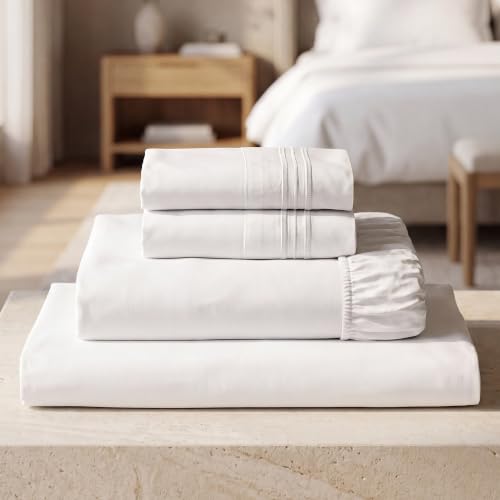
The Bedsure’s distinguishing move is visible rather than tactile: an embossed pattern worked into the fabric, which lifts a plain white set out of the purely utilitarian and gives a made bed a finished, faintly tailored look. In a rental property photograph, in a guest room prepared in ten minutes, in a teenager’s room being presented to visiting grandparents, that surface detail earns its keep. Underneath the embossing sits an easy-care synthetic set positioned on its listing as soft, breathable and cooling, with a deep pocket, fade resistance and shrink resistance all claimed in the listing language — a combination aimed at households whose laundry is a shared machine down the hall rather than a serene domestic ritual. The Bedsure is, in short, the set for people who want the bed to look like a decision.
Key facts: four-piece queen set; embossed design; cooling and breathable positioning; OEKO-TEX noted on the listing; easy-care positioning with fade-resistant and shrink-resistant claims; deep pocket for modern mattresses.
Daily life with the Bedsure is undemanding. It washes without sorting anxiety, dries quickly, and the embossing forgives the slight creasing that would make a plain flat sheet look neglected. Two cautions keep the review honest. First, embossed texture is a surface treatment, and surface treatments soften with repetition; expect the pattern to read more subtly after many washes than it does in the first month, even though the sheet itself remains perfectly serviceable. Second, the synthetic base shares the family trait of sleeping warmer than open-weave cotton, so a hot-climate primary bed may prefer one of the cotton picks below and keep the Bedsure for the guest room, where its looks-to-effort ratio is unbeatable. As a deliberate, presentable, low-maintenance set, though, it occupies a niche neither microfiber neighbour fills: it is the affordable set that photographs like a considered purchase, and for landlords, hosts and sellers staging a bedroom, that is a genuinely practical virtue.
Strengths
- Embossing elevates a plain white bed
- Easy-care fabric suits shared laundry rooms
- Deep pocket fits modern thick mattresses
Trade-offs
- Texture flattens gradually with washing
- Synthetic warmth in hot climates
- Design is subtle rather than luxurious
Best for: making rental bedrooms look deliberate. Not suited for: sleepers wanting a luxury hotel hand.
Find the Bedsure Queen Sheet Set at Check price on Amazon, and match the variant in the cart to the queen set described here before paying.

California Design Den Cotton Sateen Sheets — Best Affordable True Cotton
Somewhere in every bedding search a reader draws a line and says: cotton, actually cotton, nothing spun from a laboratory. This California Design Den set is the answer this guide gives that reader at the top of the affordable band. The fabric is one hundred percent cotton woven as sateen, which produces the smooth, faintly lustrous surface and the slightly weightier drape that distinguishes it the moment it is lifted from the packet. The listing records a four-hundred thread count positioning, a sixteen-inch deep pocket and OEKO-TEX certification, and it carries the Good Housekeeping Seal — signals worth noting precisely because they are verifiable claims on a real listing rather than adjectives in an advertisement. Cotton also ages on a different curve from microfiber: instead of a slow decline from a soft start, a decent cotton set often improves through its first several washes as the fibres settle, then holds a long, even plateau.
Key facts: one hundred percent cotton sateen; four-hundred thread count positioning on the listing; sixteen-inch deep pocket; OEKO-TEX certified per the listing; Good Housekeeping Seal noted on the listing; checked as a queen set in white.
The sateen weave deserves a plain explanation, because it decides who will love this set. Sateen exposes more of each thread’s surface, which is why it feels silky and looks subtly polished, and also why it sleeps a touch warmer than a matte percale and shows creases more readily after washing. A cool sleeper in a temperate bedroom will experience those traits as cosiness and quiet luxury. A hot sleeper in July may experience them as a reason to choose the organic percale reviewed next instead. The price step above the microfiber picks is real, and this guide will not pretend otherwise; what the step purchases is fibre honesty, breathability through the night, and a sheet that can plausibly serve for years of weekly washing without its character thinning. For a primary bed slept in nightly, that arithmetic favours cotton. For a rarely used spare bed, it may not, and the Mellanni exists precisely for that calculation.
Strengths
- True cotton breathes and ages gracefully
- Sateen hand feels quietly luxurious
- Seal-backed quality signals in the listing
Trade-offs
- Costs more than every microfiber rival here
- Sateen warmth in peak summer
- Wrinkles more than easy-care synthetics
Best for: cotton sleepers buying once and well. Not suited for: the strictest budgets in this guide.
Care for this set is cotton’s ordinary care, neither fussy nor careless: wash with similar colours or alone in white, avoid routinely harsh bleaching, and dry it without scorching the fibres that give sateen its surface. Owners who fold it warm from the dryer will find the creasing that the trade-offs mention largely negotiable, and owners who drape it over the bed straight from the basket will find the weave forgiving within a night’s sleep anyway. What the set will not forgive is being bought in the wrong size in a hurry, so let the listing visit below be a measurement check as much as a purchase.
Open the listing for the California Design Den Cotton Sateen Sheets at Check price on Amazon and verify the size and colour selected, since several variants share the page.

California Design Den Organic Cotton Sheets — Best Affordable Organic
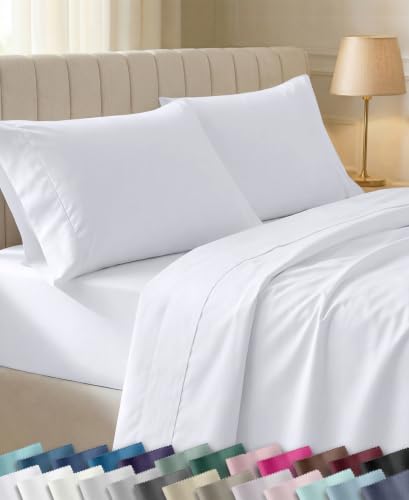
Organic bedding used to be a boutique category with boutique arithmetic, which is why this second California Design Den set matters: it brings certified organic cotton down into the same conversation as ordinary value shopping. The listing describes a four-piece queen set in one hundred percent organic cotton, GOTS certified, woven as percale, with a fifteen-inch deep pocket and elastic running all the way around the fitted sheet. Percale is the weave to understand here. Its plain, one-over-one-under construction gives a matte, crisp, cool-feeling surface — closer to a freshly ironed shirt than to a silk scarf — and the listing’s own language of lightweight, crisp and airy, aimed at hot sleepers, matches exactly what percale does in a warm bedroom. The white is described on the listing as bright white, and the whole set reads as deliberately simple: no embossing, no sheen, no decoration beyond the quality of the cloth itself.
Key facts: one hundred percent organic cotton; GOTS certified per the listing; percale weave; fifteen-inch deep pocket; all-around elastic on the fitted sheet; easy-care positioning on the listing; checked as a four-piece queen set in bright white.
Crispness is this set’s glory and its filter. Sleepers who love the cool side of the pillow, who run warm, who associate luxury with a taut, smooth, rustling-fresh bed, tend to convert to percale permanently. Sleepers who equate softness with a brushed, yielding surface may find the first nights brisk rather than comforting, although washing softens percale gradually without dissolving its character. The weave also wrinkles with genuine enthusiasm, so a household that irons nothing should make peace with a relaxed-looking bed or keep this set under a duvet where only the top sheet’s turn-down shows. The all-around elastic is a small specification with outsized consequences, distributing tension evenly so corners stay seated without one heroic tug at a single corner. Taken together — certification a buyer can check, a weave suited to warm sleep, honest construction — this is the pick for anyone whose budget and whose principles both have a vote.
Strengths
- GOTS certification stated on the listing
- Percale sleeps cool and crisps nicely
- All-around elastic keeps corners honest
Trade-offs
- Crispness is not softness; know your weave
- Percale wrinkles cheerfully
- Colour range in checked listing is restrained
Best for: certified organic comfort at a sane tier. Not suited for: silky-sateen devotees.
Certification language deserves one careful sentence of its own, because it is the easiest claim in bedding to inflate and the hardest for a shopper to test at home. This guide repeats only what the listing itself states — that the cotton is organic and GOTS certified — and treats that statement as the listing’s recorded fact rather than as a promise this page can independently audit. Buyers for whom certification is the deciding factor should read the listing’s own certification details at the link below before ordering, since the certificate belongs to the product as sold there. What can be judged from the cloth itself needs no paperwork at all: the percale hand, the fifteen-inch pocket and the all-around elastic either suit a sleeper’s nights or they do not, and a month of ordinary use settles that question more completely than any label.
The California Design Den Organic Cotton Sheets listing is at Check price on Amazon; confirm the queen set and colour in the cart, as the page holds more than one configuration.
Side-by-Side: What Separates These Choices
| Option | Known for | Best for |
|---|---|---|
| Mellanni Iconic Sheet Set | Best overall value | The household default sheet, everywhere |
| CGK Unlimited Sheet Set | Best microfiber alternative | Tidy beds on tight budgets |
| Bedsure Queen Sheet Set | Best easy-care embossed set | Making rental bedrooms look deliberate |
| California Design Den Cotton Sateen Sheets | Best affordable true cotton | Cotton sleepers buying once and well |
| California Design Den Organic Cotton Sheets | Best affordable organic | Certified organic comfort at a sane tier |
Read across the table and a single dividing line appears: the first three sets compete on convenience, the last two on fibre. Convenience is not a lesser virtue. A household washing bedding for five people needs sheets that forgive the dryer and multiply cheaply, and no sermon about natural fibre changes that arithmetic. Fibre, though, is what touches the sleeper, and anyone buying for one primary bed, slept in three hundred nights a year, should weigh the cotton pair heavily even at the higher outlay. The pocket depths cluster tightly — fifteen inches for the organic percale, sixteen for the Mellanni and the sateen — so fit rarely decides between these five; temperament does. Choose the row that describes your laundry and your thermostat, and the table has done its work.
How to Choose Affordable Sheets Without Regrets
Measure the Bed You Actually Sleep On
Begin with a tape measure, not a fibre preference. Measure the mattress from its base to its sleeping surface, then add the height of anything that lives on it permanently — a topper, a protector, a heated pad — because the fitted sheet must swallow all of it. Compare that total with the pocket depth on the listing and leave a little slack rather than an exact match: a pocket that only just reaches will walk itself off the corners within a week, while a slightly generous pocket tucks its excess underneath and stays calm. Every set in this guide offers fifteen or sixteen inches, which covers most contemporary mattresses with a slim topper, but a deep pillow-top mattress wearing a thick topper can defeat even those numbers. Five minutes with a tape measure prevents the single most common affordable-bedding disappointment, which has nothing to do with fabric and everything to do with geometry.
Pick the Fibre for the Sleeper, Not the Season Ticket
Microfiber and cotton are not rivals so much as answers to different households. Brushed microfiber delivers immediate softness, shrugs off wrinkles, dries fast and multiplies cheaply across several beds; its costs are warmth retention and a synthetic hand some sleepers never stop noticing. Cotton breathes, absorbs a little moisture, feels substantial and improves with early washing; its costs are a higher purchase outlay, more creasing and slower drying. Within cotton, weave refines the choice further: sateen for a smooth, polished, slightly warmer sleep surface, percale for a crisp, matte, cooler one. A useful shortcut is to dress the primary bed for the warmest sleeper who uses it, because a cool sleeper can always add a blanket, while a hot sleeper cannot subtract a sheet’s trapped heat. Households divided on temperature often land happily on percale or a light microfiber for the shared bed, then settle the remaining difference with separate light blankets on each side.
Treat Thread Count as a Footnote
Thread count describes how many threads occupy a square inch of cloth, and within honest limits it tells a buyer something about density. As a headline number, though, it misleads budget shoppers more reliably than any other figure in bedding, because counts can be inflated by counting multi-ply yarns thread by thread, and because a very high count woven from short, weak fibres pills sooner than a modest count woven from longer, stronger ones. Weave, fibre quality and finishing decide how a cotton sheet feels in year two. That is why this guide records the sateen set’s four-hundred thread count positioning as one fact among several rather than as its crown. A buyer comparing two cotton sets should ask about weave first, pocket and elastic second, and let the count break a genuine tie — never lead the decision.
Buy Rotation Before Upgrading
The least glamorous advice in this guide is also the most valuable: own at least two sets per bed and alternate them weekly. A sheet rested between uses and washed half as often keeps its surface, its elastic tension and its colour far longer than a single set in constant service, so two affordable sets routinely outlast one set costing the same total and worked twice as hard. Rotation also abolishes the laundry deadline — the bed can be remade immediately after stripping, at midnight, during a child’s illness, without a dryer vigil. When the budget allows one upgrade, spend it on the second set of a pick already trusted rather than on a fancier stranger, because a known quantity in duplicate is worth more to a household than a gamble in a higher bracket.
Do the Cost-Per-Year Sum Before the Cost-Per-Set Sum
Affordable sheets invite a misleading comparison, because the number on the listing is paid once while the sheet is used hundreds of times. A set that serves three years of weekly rotation has cost its owner a trivial amount per night; a set that pills by spring and is replaced in irritation has cost more, however little it cost. This is why the guide weighs ageing behaviour — cotton’s slow plateau, microfiber’s dependence on gentle friction — as heavily as first-night softness, and why the two California Design Den sets belong in a guide with affordable in its title despite sitting at its upper edge. The same sum explains the guide’s one firm extravagance: a second set for rotation, which lowers the per-year cost of whichever pick a household chooses by extending its working life. Buyers who run this arithmetic once, honestly, rarely return to buying bedding by the smallest number on the page.
Mind the Variant Traps on the Listing Page
Platform listings gather sizes, colours and sometimes entire generations of a product under one page, and the configuration photographed at the top is not automatically the configuration in the cart. Before ordering any pick here, confirm three things on the listing itself: the size word, because a queen fitted sheet on a full mattress is a nightly wrestling match in miniature; the piece count, because this guide’s picks are all four-piece sets and a two-piece variant changes the comparison entirely; and the colour, because whites photograph similarly while arriving differently. The reviews above each name the checked configuration — queen, white, four pieces — precisely so a reader can match the cart against a fixed reference. Ten seconds of that matching prevents the most pointless return in online bedding, the unopened box sent back for a dropdown menu’s default.
Common Mistakes With Budget Bedding
Shopping by the Softness of the First Touch
Almost every new sheet feels pleasant for one night; finishes applied at the factory see to that, and they wash away. The informative moment is the fifth or tenth wash, when a set reveals whether its softness was woven in or sprayed on, whether its corners still grip and whether its surface has begun to roughen where heels and elbows work. Buyers can protect themselves by favouring sets whose appeal rests on construction — fibre, weave, pocket, elastic — rather than on a promise of instant luxury, and by reading the trade-offs in a guide like this one as the actual product description.
Forgetting the Protector in the Fit
A mattress protector changes two things buyers forget: it adds height the pocket must clear, and its surface texture changes how the fitted sheet behaves. A slick, waterproof protector under a smooth sheet can let the whole sleeping surface migrate gradually toward one side, which sleepers misdiagnose as a sheet problem. If corners creep despite adequate pocket depth, check what the sheet is gripping. A protector with a cotton-rich, slightly textured top gives any fitted sheet a calmer foundation, and measuring with the protector already on the bed removes the arithmetic error entirely.
Washing Sheets With Their Enemies
Towels, denim and anything with a zip are abrasive company in a shared drum, and the friction that roughens a towel into absorbency pills a smooth sheet into tiredness. Wash bedding as its own load, turn pillowcases inside out so their seams and surfaces take less punishment, and shake each piece out before drying so creases set less deeply and the dryer works on a shorter cycle. Bleach has its place with sturdy whites in a genuine emergency, but routine bleaching shortens the good years of both cotton and microfiber, and oxygen-based brighteners are the gentler standing habit for white sets like the five listed here.
Buying One Colour for Every Room
White is the rational default — it coordinates with every duvet, shows soil honestly so it gets washed on time, and can be replaced piece by piece without a dye-lot tragedy — yet assigning identical white sets to every bed in a house creates a laundry sorting puzzle at the fitted-sheet stage, where sizes differ by inches and look identical folded. A simple household system solves it: keep white for the primary bed, choose one pale neutral for the guest bed and another for the children, and every set returns to its own mattress without a measuring ceremony. The sets in this guide are all recorded in white in their checked listings, with further colours on their pages for exactly this kind of household coding.
Real Households, Real Rooms
The First-Apartment Bed
A new renter with one bed, one duvet inherited from a relative and a strict furnishing budget faces the classic affordable-bedding decision in its purest form. The sensible build is two Mellanni sets in white: one on the bed, one folded in the only drawer the dresser can spare. The sixteen-inch pocket swallows the inexpensive mattress and its thin protector without argument, the brushed surface makes the bed feel finished even before a proper duvet cover arrives, and the pair costs the household less than a single bout of indecision at a department-store bedding wall. Six months later the same renter reports the only verdict that matters at this level: the sheets stopped being a topic. They wash on laundry day with everything else pale, they dry in the shared machines without shrinking into doll bedding, and the bed looks intentional in photographs sent home. That is the entire promise of the value end of this guide, kept.
The Family Linen Cupboard
A household with three children runs bedding the way a café runs crockery: constantly, at volume, with breakages expected. Here the winning strategy is depth of stock rather than refinement of any single set. Three CGK sets per child’s bed sounds extravagant until the first stomach bug arrives at two in the morning, when the rotation becomes the difference between a five-minute reset and a washing machine vigil in the dark. The easy-fit pockets matter in this house because beds get remade by tired adults one-handed, and the wrinkle-tolerant surface matters because nobody in this story owns an ironing schedule. The Bedsure’s embossed set holds the guest bed, where looks count and laundry is gentle. When a set eventually thins at the heels after years of service, it retires to the camping box without ceremony, which is exactly the lifecycle affordable bedding is designed for.
The Cotton Loyalist’s Primary Bed
One reader profile deserves its own paragraph because no microfiber argument will ever move it: the sleeper who grew up in cotton, tried a synthetic set once in a holiday rental and has narrated the experience at dinners ever since. For that bed, the guide’s answer is the California Design Den sateen, bought once, in the right size, and washed like the long-term textile it is. The first week feels smooth and slightly formal; by the second month the surface has settled into the particular softness cotton develops when it stops performing newness. The household pairs it with the organic percale for high summer, when the bedroom faces west and the sateen’s warmth becomes a liability after sunset. Two cotton sets, two weaves, one bed, every season answered — and the total outlay, spread across the years both sets will serve, undercuts the annual replacement rhythm of the cheapest possible bedding bought without a plan.
Setup and Care: Getting the Most From a Budget Set
The First Wash and the First Fitting
Unpack any set in this guide and wash it before the first night, separately, on a gentle-to-normal cycle with a mild detergent. The first wash removes factory finishing, softens cotton honestly rather than cosmetically and reveals the true size of the fitted sheet before it meets the mattress under time pressure. Fit the sheet starting at the two hardest corners — usually the ones against the wall — pulling each corner fully under the mattress rather than hooking it at the edge, then walk the remaining corners on and smooth the surface from the centre outward. A fitted sheet seated this way on day one tends to stay seated, because elastic that begins evenly distributed does not migrate into one strained corner. Finish with the flat sheet’s wide hem at the head of the bed and pillowcases turned right-side out after drying so their seams sit flat.
A Laundry Rhythm That Doubles Sheet Life
Weekly washing suits most households; fortnightly suits a spare bed. What shortens a sheet’s life is rarely the wash count itself but the company and the chemistry: abrasive loads, excessive detergent that builds into the fibres and leaves them stiff, and a dryer run hotter and longer than the fabric needs. Wash bedding alone or with other smooth textiles, use roughly half the detergent the bottle’s cap suggests for a full load, and dry on a medium setting, removing the set while it is a breath away from bone dry so residual warmth finishes the job without baking the elastic. Fold immediately if wrinkles offend, or accept the relaxed look as the honest uniform of easy-care bedding. Store each set inside one of its own pillowcases, fitted sheet, flat sheet and remaining case nested together, so a bed change never becomes a cupboard excavation and matched pieces age at the same rate.
When to Replace, and What Replacement Teaches
Retire a set when the fitted sheet’s elastic relaxes enough that corners lift despite correct fitting, when the surface pills or thins where heels work, or when white has greyed past what a brightening wash can rescue. Those three signals usually arrive together after a long and honourable service, and they carry information: the sleeper now knows their true pocket depth, their real fibre preference and their actual laundry tolerance, which makes the replacement purchase the most accurate bedding decision the household has ever made. Many readers will simply rebuy the same name from this guide in a second colour. That is not a failure of imagination. In affordable bedding, a repeat purchase is the strongest review a set can earn, and it is why every pick above was chosen for availability as a standard, continuing listing rather than as a fleeting novelty.
Final Recommendation
Start where most households should: the Mellanni Iconic is the safest first purchase in this guide, soft immediately, deep in the pocket, indifferent to rough laundry, and cheap enough in spirit to buy twice for rotation. Choose the CGK Unlimited instead if the bed must look crisp with minimal effort, the Bedsure if presentation in a rental or guest room is the real job, the California Design Den sateen if cotton is non-negotiable and the bed is a primary one, and the same maker’s organic percale if certification matters or the sleeper runs hot. Whichever name wins, apply the two disciplines that protect any budget bedding purchase: measure the mattress with its topper before ordering, and put a second set into rotation within the first month. Affordable sheets reward method far more than money, and a reader who supplies the method can let any of these five sets supply the sleep. Readers still weighing the wider bedding picture may find our overview of best sheets overall a useful next stop before deciding.
Frequently Asked Questions
What fabric are the best affordable sheets made from?
There is no single winning fabric, because the category splits by priority. Microfiber leads on immediate softness, easy care and value across multiple beds. Cotton leads on breathability, substance and graceful ageing. Certified organic cotton adds checked sourcing for buyers who want it. The five picks in this guide cover each of those positions, so the honest answer is to choose the fabric that matches the sleeper and the laundry, not a universal champion.
Do cheap sheets pill?
Some do, and pilling follows friction more than price. Heels dragging nightly, abrasive laundry companions and a single set washed relentlessly all accelerate it, while rotation, separate bedding loads and gentler drying slow it dramatically. Light microfiber under heavy friction is the most vulnerable combination in this guide, which is why the reviews above treat a second set as maintenance rather than indulgence. Cotton woven from decent fibre resists pilling longer, one of the quieter reasons it costs more.
How deep should affordable sheet pockets be?
Deep enough to cover the mattress plus everything permanently on it, with a little slack left over. Most modern beds land between fifteen and sixteen inches of total depth once a protector or slim topper is added, which is why every pick here sits in that range. A pillow-top mattress under a thick topper can exceed it, so the tape measure outranks any general rule. A pocket straining at its limit will never stay tucked, whatever the fabric.
Are microfiber sheets hot to sleep in?
They can sleep warmer than cotton, particularly in heavier brushed weaves, because synthetic fibres absorb little moisture and the brushed surface traps a layer of still air. Lighter microfiber, like the CGK set in this guide, reduces the effect noticeably, and a breathable protector underneath helps further. A genuinely hot sleeper in a warm climate will usually be happier in percale cotton — the organic California Design Den set exists in this guide largely for that reader — while average sleepers in temperate rooms rarely find modern microfiber uncomfortable.
How many affordable sets should one bed have?
Two is the working minimum and three is comfortable. Two sets in weekly rotation halve each set’s washing frequency, extend elastic and surface life, and guarantee a clean set at midnight without a laundry emergency. A third set earns its place in children’s rooms and guest rooms that host back-to-back visitors. Beyond three, extra sets add linen-cupboard bulk faster than they add resilience, unless a household simply enjoys seasonal colours.
Sateen or percale: which cotton weave suits a warm bedroom?
Percale, in most cases. Its plain weave leaves the surface matte and airy, so it feels cool when a sleeper first slides in and stays that way longer. Sateen’s smoother, denser face feels more polished and slightly warmer, which cool sleepers often prefer. Both weaves appear in this guide in cotton from the same maker — the sateen for a luxurious hand, the organic percale for a crisp one — and readers who sleep hot but love cotton can compare them directly, while anyone outfitting a bed for a partner with opposite preferences might start with our guide to cooling sheets.