Where to buy
Check the latest price, availability and delivery on Amazon. Orders are placed on Amazon. We may earn a commission from qualifying purchases.
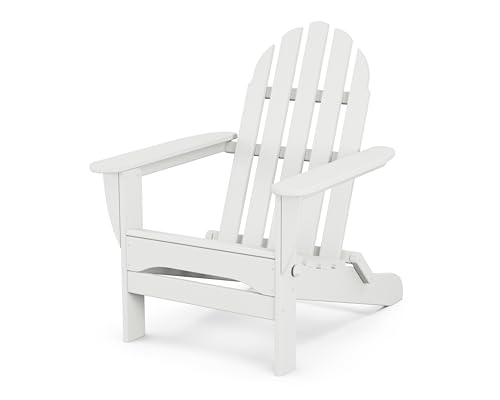
- Best overall for small patios: POLYWOOD Classic Folding Adirondack Chair (AD5030), White — Check on Amazon
- SERWALL HDPE Folding Adirondack Chair with Dual Cup Holder, Black — Check on Amazon
- Keter Alpine Adirondack Chair, Grey — Check on Amazon
- POLYWOOD Modern Adirondack Chair (AD420), White — Check on Amazon
See 2 more Amazon options
- highwood Hamilton Folding and Reclining Adirondack Chair, Weathered Acorn — Check on Amazon
- Flash Furniture Charlestown Poly Resin Adirondack Chairs, Set of 2, Blue — Check on Amazon
Read the full guide ↓
Disclosure: As an Amazon Associate, dailyhomedecorating.com earns from qualifying purchases. Links to Amazon on this page are affiliate links; they cost you nothing extra. Listing details such as price and availability change often, so check the current Amazon listing before you buy.
The best adirondack chair for small patios under $500 is decided by a tape measure before it is decided by taste. An Adirondack is a gloriously space-inefficient object — roughly 30 inches wide and up to 36 inches deep in its reclined glory — and a small patio punishes every wasted inch twice: once when the chair crowds out the table, the planter or the second seat, and again every time you squeeze past it. A $500 budget is ample for one or two excellent chairs at this size, so the question is not how to afford quality but how to spend the patio’s scarcest resource — floor area — on the chairs that give the most sitting per square foot. Every pick below was verified against manufacturer specifications and independent price records during our research, and the shortlist is built from the three strategies that actually work at small scale: chairs that fold away to return the floor, chairs with the shallowest honest footprint, and chairs light enough to move with the sun.
Let us be direct about the strategy that does not work: shrinking the Adirondack. Undersized “patio” versions of this chair exist, and they surrender the low, deep, wrap-around sit that is the entire reason to own one. Every pick in this guide is a full-size Adirondack with its geometry intact. What changes between them is everything around the sit — whether the chair folds flat against a wall when the patio must host something else, how much depth it truly needs, how easily one person can shift it to chase shade, and whether its arms are wide enough or its holders deep enough to abolish the side table, which on a small patio is a second piece of furniture competing for the same floor.
Start with the POLYWOOD Classic Folding if your patio must be a patio in the morning and something else — a yoga slab, a dining spot, a play area — by afternoon. Start with the POLYWOOD Modern if the chair will live in one corner permanently and depth is your binding constraint. The reviews take each strategy in turn, with the measurements that matter stated plainly so you can check them against your own slab before anything ships.
In this guide
Quick picks: the best adirondack chair for small patios under $500
| Pick | Best for | Chairs per order | Material | Folds? | Amazon |
|---|---|---|---|---|---|
| POLYWOOD Classic Folding Adirondack (AD5030) | Best overall — folds to free the floor | 1 | Recycled HDPE lumber | Yes | Check on Amazon |
| SERWALL HDPE Folding Adirondack Chair | Folding value with cup holders | 1 | HDPE composite | Yes | Check on Amazon |
| Keter Alpine Adirondack Chair | Light enough to move with the sun | 1 | Polypropylene resin | No | Check on Amazon |
| POLYWOOD Modern Adirondack (AD420) | Shallowest premium footprint | 1 | Recycled HDPE lumber | No | Check on Amazon |
| highwood Hamilton Folding & Reclining | One chair that adjusts to everything | 1 | Proprietary synthetic wood | Yes | Check on Amazon |
| Flash Furniture Charlestown Set of 2 | A pair — only if the patio passes the width test | 2 | Polystyrene poly resin | No | Check on Amazon |
How the picks were chosen
Small-patio suitability filtered before everything else: each pick had to justify its footprint in at least one of three ways — a folding frame that returns the floor on demand, a published depth at the shallow end of the full-size range, or a weight low enough that repositioning the chair is a one-handed habit rather than a furniture move. On top of that filter we applied our standard verification: a real manufacturer model with published dimensions, an Amazon ASIN confirmed through at least one independent source for every pick, a screen for CPSC recalls (none surfaced for any pick here), and verified price sightings confirming each pick fits under the $500 ceiling as configured. No product prices are printed in this article; the sightings are recorded in our research notes, and each pick says “check price on Amazon.”
We also measured the picks against the side-table test. On a small patio, a chair that needs a companion table to hold a drink effectively occupies the table’s footprint too. Cup holders (SERWALL, Keter) and genuinely wide flat arms (POLYWOOD, Charlestown) were therefore scored as space features, not conveniences — they are how a one-chair patio stays a one-piece-of-furniture patio.
Finally, a deliberate exclusion: we did not include scaled-down or “junior” Adirondacks, stacking metal café chairs dressed as Adirondacks, or any chair whose published dimensions we could not verify. A small patio deserves a real chair that fits, not a small chair that disappoints — and where even a folding full-size chair cannot fit, the how-to-choose section says so honestly and tells you the measurement that decides it.
The six picks in detail
1. POLYWOOD Classic Folding Adirondack Chair (AD5030) — best overall for small patios
Who it suits: Owners of genuinely small patios that must multitask — sitting in the evening, clear for weekend projects, dining, kids or exercise in between — who want one premium chair and their floor back on demand.
The Classic’s small-patio superpower is that it leaves. Open, it is a full-size chair — POLYWOOD’s specification sheet lists 28.75 inches wide, 35.65 inches deep and 36.59 inches high — but the back folds down flat against the seat, and the folded chair leans against a wall, stands in a storage bench or deck box’s shadow, or hangs in the sliver of space beside a door. No other premium chair in this guide returns its footprint so completely. While it is open, it is also the best-built chair here: recycled HDPE lumber, marine-grade stainless hardware, 34.5 pounds of planted solidity, a 20-inch seat about 13.9 inches high, a 300-pound rating and a 20-year residential warranty.
On a hard patio surface the weight is pure virtue — the chair does not creep, rattle or wander — and the wide flat arms hold a mug and a paperback, sparing you the side table. Buy it as the patio’s one permanent-quality seat; add a second later only if the tape measure, not optimism, says it fits.
Pros: Folds flat — the floor comes back; 20-year warranty; premium HDPE build; arms wide enough to skip a side table; made in the USA; large color range for small-space color discipline.
Honest limitation: Folded is not invisible — you need a wall length or storage spot of roughly the chair’s width, and at 34.5 pounds folding and carrying it is a deliberate two-handed job, not a flick. The low seat is the classic Adirondack rise.
Choose it if your patio changes jobs during the week. Skip it if the chair will never move — the Modern below is shallower for a permanent corner. Check on Amazon
2. SERWALL HDPE Folding Adirondack Chair with Dual Cup Holder — folding value, no table needed
Who it suits: Small-patio owners on a mid-range budget, and anyone whose patio fits a chair but not a chair plus a table — the cup holders are the floor plan.
SERWALL’s folding single pairs the two small-space tricks in one chair: it folds for storage, and its dual cup holders abolish the side table entirely — drinks ride in the arms, and the patio’s second furniture slot stays free for a planter, a lantern or nothing at all. The frame is HDPE composite with a wood-grain texture; SERWALL rates its Adirondack line at 380 pounds per chair. As a second chair strategy it is unmatched at this size: one chair lives on the patio, its twin lives folded indoors and deploys when a guest arrives, so a one-chair patio becomes a two-chair patio for exactly the hours it needs to be.
The compromises are the marketplace ones: composite less dense than premium lumber, support and warranty through the seller, and specifications that vary across SERWALL’s many configurations — confirm the fold and the dimensions on the exact listing before ordering, as our research notes flag. For a small patio’s working chair, those are fair trades for the two features that matter most here.
Pros: Folds flat; dual cup holders replace a side table; buy-one-now-one-later guest strategy; weatherproof composite; mid-range price leaves budget for the rest of the patio.
Honest limitation: Thinner long-term backing than the premium makers; folding pivots want an occasional grit brush-out; per-listing spec variance means you must read the exact configuration carefully.
Choose it if budget and the table problem top your list. Skip it if you want the twenty-year chair — that is the POLYWOOD above. Check on Amazon
3. Keter Alpine Adirondack Chair, Grey — the movable chair
Who it suits: Patios whose sun moves — which is to say, most small patios, hemmed in by fences and neighboring houses — and owners who will actually relocate a chair twice a day if relocating is effortless.
The Alpine’s small-patio logic is weight, or the lack of it. Molded polypropylene resin makes it by far the lightest chair in this guide, and on a small patio lightness is a layout strategy: the chair follows the sun patch in the morning, retreats to shade at noon, and tucks into the corner when the patio hosts dinner — all one-handed, all without scraping the pavers. It has a wood-effect texture, an integrated cup holder (the side-table abolition again), and UV protection for the constant sun-edge exposure small patios get. Keter sells it singly and in two-packs.
Resin honesty applies as elsewhere: it does not fold, so its stored form is its full form in a corner; molded resin flexes more and ages faster than lumber; and its lightness is a liability in exposed wind, though small patios are usually the most sheltered outdoor spaces a house has — which is precisely why the trade works here better than anywhere else.
Pros: Lightest pick — repositioning is effortless; cup holder built in; cleans with a cloth or shower; single and two-pack options; ideal first chair for a new patio.
Honest limitation: No folding; shortest expected service life here; confirm single versus two-pack configuration on the listing before ordering.
Choose it if your patio’s sun is a moving target. Skip it if you need the chair to disappear — take a folder. Check on Amazon
4. POLYWOOD Modern Adirondack Chair (AD420) — shallowest premium footprint
Who it suits: Small patios with one permanent seating corner — especially narrow patios where depth, not width, is the constraint — in modern homes where the chair is also a visual anchor.
The AD420’s number is 32.1 inches: its overall depth, the shallowest of any full-size premium chair in this guide, against 35.65 for the Classic and roughly 36 for the Hamilton. On a patio 8 feet deep, those saved inches are the walkway behind the chair; on a 6-foot patio, they are the difference between a chair you can pass and a chair you climb around. The rest is the premium package — recycled HDPE lumber, stainless hardware, 20-year residential warranty, a contoured seat with a waterfall front, 29.3 inches wide and 34.7 inches high, 34 pounds, with a 20.5-inch seat about 13.8 inches high.
Because it never folds, the Modern is a commitment: measure its corner, place it, and let it anchor the patio’s design for years. Its straight, squared lines also occupy visual space more calmly than a fan back — on a small patio, where the chair is a large fraction of everything you see, that calm is a real feature.
Pros: Shallowest depth here; 20-year warranty; modern lines suit small contemporary patios; same HDPE durability as the Classic; made in the USA.
Honest limitation: No folding — if the patio must clear, this chair is the obstacle; 34 pounds is a deliberate move; low seat, as with all the classics.
Choose it if one permanent corner is your plan. Skip it if the patio multitasks — the folding Classic is your chair. Check on Amazon
5. highwood Hamilton Folding and Reclining Adirondack Chair — one chair, every position
Who it suits: The one-chair patio in a traditional or garden setting, where a single seat must serve morning coffee, afternoon reading and evening lounging — and then fold away.
A small patio often fits exactly one good chair, and the Hamilton makes one chair feel like three: it folds flat for storage and its back reclines through multiple positions, so the single seat adjusts instead of the patio rearranging. It is made in the USA from highwood’s proprietary synthetic wood with a convincing grain — against a fence, hedge or brick wall it reads as a wooden garden chair — rated at 400 pounds, with the guide’s highest seat at about 14.7 inches (the easiest daily rise here) and a 12-year residential limited warranty. Open size is roughly 29 inches wide, 36 inches deep and 34 inches high; note that its depth is the largest here, so its small-patio case rests entirely on the fold.
That is a fair summary of the Hamilton bargain: it asks the most floor while open and returns all of it when stored. For a patio that is a chair’s home only during sitting hours, no pick manages space more honestly.
Pros: Folds and reclines; 400-pound rating; highest, easiest-exit seat; wood-grain look suits garden patios; 12-year warranty; made in the USA.
Honest limitation: Deepest open footprint in the guide — measure before you fall for it; mechanisms need seasonal grit checks; Amazon availability by color fluctuates (the linked listing had no-featured-offer periods during research; the brand store is the fallback).
Choose it if one adjustable chair is the whole plan. Skip it if your patio is shallow and the chair must stay open — the Modern is three-plus inches kinder. Check on Amazon
6. Flash Furniture Charlestown Poly Resin Adirondack Chairs, Set of 2 — the pair, with conditions
Who it suits: “Small” patios that are small by house standards but honest by apartment ones — roughly 8 feet or more of usable width — where two people sit out together every evening and a matched pair is the dream.
We include this set of two with its condition printed in the heading: measure first. Two Charlestowns side by side need about five feet of width for the chairs alone — each is 29.5 inches wide, 33.5 inches deep and 35 inches high — plus elbow and passage room. Pass that test and the pair is genuinely attractive on a small patio: extra-wide seats (19.75 inches) at a kinder 14.5-inch height, a 350-pound static rating per chair, polystyrene resin in a wide color range so the pair can be the patio’s one deliberate color, and about 30 pounds per chair — movable by one person when the patio rearranges. Flash Furniture’s commercial distribution means a future third chair or a replacement stays findable.
Fail the width test and this is the wrong purchase no matter the price: two rigid, non-folding chairs will consume a small patio and everything on it. The folding picks above exist to give you the two-chair experience at one-chair storage; the Charlestown pair is for patios that can hold two chairs openly, all the time.
Pros: Two matched wide seats in one order; highest-value color choice; 350-pound static rating; higher seat is easier for daily use; commercial availability.
Honest limitation: No folding — the pair is a permanent floor commitment; resin durability trails HDPE lumber; genuinely too much furniture for patios under the width threshold.
Choose it if your measurements pass and two sit together daily. Skip it if you are guessing about the width — guessers should buy one folding chair. Check on Amazon
Comparison table
| Chair | Chairs | Material | Overall size (W × D × H) | Seat height | Capacity (maker) | Folds | Small-patio strategy |
|---|---|---|---|---|---|---|---|
| POLYWOOD Classic Folding AD5030 | 1 | HDPE lumber | 28.75 × 35.65 × 36.59 in | ~13.9 in | 300 lb | Yes | Returns the whole floor |
| SERWALL Folding Adirondack | 1 | HDPE composite | Full-size; folds slim | Low profile | 380 lb (maker claim) | Yes | Folds + cup holders kill the table |
| Keter Alpine | 1 | Polypropylene resin | Full-size resin | Low profile | Resin-class rating | No | Light enough to chase the sun |
| POLYWOOD Modern AD420 | 1 | HDPE lumber | 29.3 × 32.1 × 34.7 in | ~13.8 in | 300 lb | No | Shallowest permanent footprint |
| highwood Hamilton | 1 | Synthetic wood | ~29 × 36 × 34 in | ~14.7 in | 400 lb | Yes, and reclines | Deep open, zero stored |
| Flash Furniture Charlestown Set of 2 | 2 | Polystyrene resin | 29.5 × 33.5 × 35 in each | 14.5 in | 350 lb static | No | A pair, if width allows |
How to choose an Adirondack chair for a small patio
Do the tape test before anything else. Mark the candidate chair’s footprint on your patio with painter’s tape — width and, critically, depth — then live with the tape for a day. Walk past it, set a drink where the table would go, open the door that swings near it. Tape has no return shipping. The thresholds that matter: under about 6 feet of patio depth, plan on one chair, ideally folding or the shallow Modern; 6 to 8 feet, one chair comfortably or two folding chairs deployed selectively; beyond 8 feet of depth with 8-plus feet of width, the Charlestown pair enters the conversation honestly.
Choose your storage strategy as deliberately as your chair. Folding chairs need a wall length, a storage bench or a deck box’s worth of lean-to space; rigid chairs need a permanent corner. Neither is free — the question is whether your patio pays in floor (rigid corner) or in a daily fold-and-unfold habit. Be honest about the habit: a folding chair you resent folding becomes a rigid chair with worse geometry, which is why the Modern exists in this guide for set-and-forget corners.
Count the furniture the chair replaces. On a small patio, the winning chair is the one that deletes other furniture. Cup holders delete the side table. A reclining back deletes the second “upright” chair. A folding frame deletes the storage box. Score each candidate by total patio footprint — chair plus everything it still requires — and the rankings in this guide largely explain themselves.
Protect your circulation. A patio you cannot cross is a patio you will stop using. Keep a clear path of at least two feet past any placed chair to the door, the grill or the steps. Angling a single chair in a corner — rather than squaring it to the wall — routinely buys back the passage that a squared placement eats, and it aims the sitter at the view instead of the fence.
Let color work small. One chair is a large share of a small patio’s visual field. A single deliberate color reads as design; the premium picks’ ranges let you match the house trim for calm or choose one saturated accent against neutral pavers. What small patios cannot absorb is pattern competition — keep cushions (if any) solid and let the chair be the statement.
Patio surfaces: the floor is part of the furniture
Pavers and concrete are the easy case — every pick sits true, folding mechanisms work at their best, and the only chore is sweeping the grit that otherwise grinds under chair feet. If your chair rocks on pavers, the paver has moved, not the chair; reset the stone once and the problem ends for years.
Wooden and composite decking asks for one courtesy: board-built chairs concentrate 34 pounds plus a sitter on four small feet, and on softwood decks those feet can dent over a season. Flat glides or a thin outdoor mat under the chair spread the load — and the mat doubles as the zone-defining rug this guide recommends elsewhere. Folding chairs earn a second look here too, since a stored chair cannot dent anything.
Gravel and stone-dust patios are increasingly common and genuinely chair-friendly once settled: feet bed into the surface and stop wandering, and the crunch underfoot is the sound of a chair that will not slide. Level the patch under the chair’s footprint when you place it, top up the gravel each spring, and avoid dragging — lift the light chairs, carry the heavy ones the short distance, and the surface stays smooth instead of developing chair-shaped trenches.
Tile and polished stone are the slippery case: hard feet on hard glaze can skate when a sitter pushes back to stand. Rubber glide pads — a trivial accessory — restore grip on any pick here, and they silence the scrape that echoes off hard surfaces in a small enclosed patio. On tile, also favor the chairs whose weight plants them: physics is the anti-slip strategy of first resort.
Common mistakes to avoid
Buying the pair first. The most common small-patio error. Two chairs bought on hope crowd out everything else and one ends up stored indoors forever — an expensive closet ornament. Buy one excellent chair, live with it for a month, and let the patio itself tell you whether a second fits.
Measuring width and forgetting depth. Adirondacks are depth furniture: 32 to 36 inches of it. Shoppers measure the wall the chairs will line and forget the projection into the room. The tape test exists because depth is where small patios fail.
Choosing a rigid chair for a multitasking patio. If the slab hosts anything besides sitting — a grill station, a play mat, a workbench weekend — a chair that cannot leave will be resented weekly. Folding is the multitasker’s non-negotiable.
Adding a side table out of habit. On a small patio the table is a second furniture footprint bought to hold one glass. Cup-holder arms and wide flat arms solve the glass; spend the table’s space and budget on a planter instead.
Ignoring the door swing and the grill. Chairs placed in a door’s arc or a grill’s heat zone get moved in annoyance until they end up in the one bad spot permanently. Map the patio’s moving parts — doors, gates, grill, hose — before the chair claims its corner.
Final recommendation
For most small patios, the POLYWOOD Classic Folding Adirondack (AD5030) is the complete answer — a premium, twenty-year chair that hands you back your floor whenever the patio has other work to do; check the current price on Amazon after the tape test, not before. If the budget is mid-range, the SERWALL folder delivers the same vanishing act with cup holders. If the chair never needs to move, the Modern’s shallow depth is the kindest permanent footprint; if the sun does the moving, the Keter follows it; and if two people truly sit together nightly and the width test passes, the Charlestown pair is the one honest way to seat both. Measure first, buy once, and let the patio stay a patio.
Three small-patio layouts that actually work
The corner lounge. One chair, angled at 45 degrees in the patio’s best corner — aimed at the view, the garden or the sunset rather than at the wall — with a planter filling the dead triangle behind the angled back. This is the default layout for patios under 8 feet deep, and it works because the angle does three things at once: it buys passage room on both sides, it makes the chair feel placed rather than parked, and it turns the awkward corner geometry into the design. The Modern is the natural anchor here if the chair never moves; the Classic if it sometimes must.
The folding pop-up. Zero chairs in residence. One or two folding chairs live flat — against the wall under an eave, in a storage bench, just inside the patio door — and the patio is a clear slab for every other purpose until sitting time, when it becomes a lounge in ninety seconds. This is the layout for the smallest and hardest-working patios, and it is only possible because folding Adirondacks from serious makers (the Classic, the Hamilton, the SERWALL) give up nothing in the sit. Judge this layout by its storage slot: if the folded chairs have a genuine home, the system runs itself; if they lean in a different awkward spot each week, it does not.
The movable sun-chair. One light chair, no fixed position at all: the Keter’s layout. Morning coffee in the east patch, midday in the shade of the fence, evening wherever the light lands last. Small patios hemmed in by buildings and fences often have exactly one good spot at a time, and it moves — a chair light enough to follow it gets three patios’ worth of use out of one slab. The discipline this layout asks is only that the chair returns to a corner at night, so the patio still reads as a room rather than a parking spot.
What the numbers mean on a small patio
Depth is destiny. The spread in this guide — 32.1 inches (Modern) to roughly 36 inches (Hamilton) — looks trivial on a spec sheet and is decisive on a 7-foot patio, where four inches is the difference between a walkway and a sidle. Always shop depth first, width second: width you can see, depth is the dimension that ambushes.
Seat height is a daily-life number. A small-patio chair is rarely a special-occasion chair; it is the morning seat, every morning. The 14.5-to-14.7-inch seats (Charlestown, Hamilton) forgive daily in-and-out in a way the 13.8-inch lounge chairs do not. If the patio chair is your household’s most-used seat, weight this number heavily.
Weight is a strategy, not a spec. Heavy (34 lb) means placed and permanent; light (the resin Keter) means mobile; folding converts heavy into storable. Pick the strategy that matches how the patio actually lives, and the weight follows. The error is buying a heavy rigid chair for a patio that needed a mobile or folding strategy — no quality of chair fixes a wrong strategy.
Capacity ratings still matter at small scale. Small patios host the same range of bodies as big ones. Established makers’ conservative ratings (POLYWOOD 300 lb, highwood 400 lb, Flash Furniture 350 lb static) can be taken at face value; marketplace claims deserve a mental discount. A chair that feels uncertain under a guest makes the whole small space feel uncertain.
Living with one chair: care and seasons on a small patio
A small patio concentrates everything: the chair is a third of the furniture, half the view from the door, and the first thing a guest is offered. That concentration is an argument for buying the best chair the space fits — and for a care routine measured in minutes. HDPE lumber and resin both clean with a bucket and cloth at this scale; there is no fleet to wash, no weekend lost to maintenance. Once a season, check fasteners on the board-built chairs and brush the folding pivots; once a year, look honestly at the placement and ask whether the chair is still in the patio’s best corner, because small patios drift — a new planter, a grill upgrade — and the chair’s corner should be re-earned, not inherited.
Winter divides small patios into two kinds: those attached to houses with storage, where a folding chair disappears indoors and the slab rests; and those without, where the chair overwinters in place. Every pick here tolerates the second life — the warranties on the premium chairs assume it — but a breathable cover on a stored-in-place chair is the one accessory that earns its keep at this size, keeping the seat clean enough that the first spring coffee does not begin with a scrub. What no small patio tolerates is the tarp-and-bungee improvisation: it traps moisture, flaps in wind, and makes the whole space look abandoned. Cover properly or not at all.
Finally, the small patio’s secret advantage: it is finishable. A deck or a yard is never done, but a small patio with one excellent chair, one planter and one light source is a completed room — and a completed room gets used daily in a way that grand unfinished spaces do not. Buy the chair that completes yours, and stop shopping; the remaining budget is better spent on the coffee you will drink in it.
The second-chair decision, revisited
Most small-patio owners eventually face the same question: the first chair is a success — now what? The evidence to gather is behavioral, not spatial. If the chair is fought over, if a partner drags a kitchen chair outside to join it, if guests perch on the planter wall — the patio is asking for a second seat, and the correct second seat is a folding one (a twin of a folding first chair, or the SERWALL strategy) that can live stored and deploy for company without permanently halving the floor. If instead the first chair sits companionably alone and the patio’s other life — grill, plants, a small table for two at dinner — fills the remaining space, the patio is telling you it is complete, and the best second purchase is not a chair at all but the ottoman, rug or light that upgrades the seat you have.
What the evidence never justifies is the preemptive pair: two rigid chairs bought together for a patio untested by even one. Every layout in this guide can grow by a chair later — colors in the lumber lines are stable across seasons, and the value lines are continuously available — so there is no prize for guessing early and a real penalty for guessing wrong. One chair, honestly lived with, is the research; the second chair is the conclusion.
Frequently asked questions
What size patio is too small for an Adirondack chair?
Below roughly 5 feet of usable depth, even one full-size chair leaves no comfortable legroom or passage, and we would steer you to a folding chair used deploy-and-store style — or honestly to a different chair type. From about 6 feet of depth, one full-size Adirondack works well; the tape test in this guide will tell you your patio’s truth in five minutes.
Is one premium chair or two cheaper chairs better for a small patio?
One premium chair, almost always. Small patios are sat in daily by one or two people in one favorite spot; a single excellent chair with a twenty-year warranty serves that life better than two adequate chairs competing for the same floor. The exception is the verified two-person patio — width-tested, sat in together nightly — where the Charlestown pair’s honest math applies.
Do folding Adirondack chairs wobble more than fixed ones?
Quality folders do not. The POLYWOOD Classic and highwood Hamilton fold on engineered pivots and carry the same class of ratings and long warranties as fixed chairs; on a hard, level patio they sit as planted as any chair here. Wobble in cheap folders comes from thin materials and loose tolerances — the reason this guide’s folders are all from verified makers with published specifications.
How do I store a folding chair on the patio itself?
Lean it in the patio’s least-trafficked corner, ideally under an eave or in a storage bench; a breathable cover keeps off dust and bird evidence without trapping moisture. Off-patio options — a hallway closet, under a bed — suit apartment-style patios. Either way, brush grit from the pivots before folding for a long storage stretch and the mechanism will stay smooth for years.
Can I use an Adirondack chair on a small patio with a grill?
Yes, with placement discipline: keep the chair out of the grill’s heat and grease-splatter zone — a few feet to the side, never directly in front — and out of the path between grill and door, which is the patio’s busiest corridor. Synthetic chairs clean easily if splatter happens; the real rule is traffic, not materials.
What if my patio is small but I entertain often?
Then your chair strategy is folding depth: two folding chairs in residence (the SERWALL pair strategy — one out, one stored — or two Classics) give you a two-seat patio daily and a four-seat patio never; for the four-seat nights, add the light Keter as deployable overflow that stores in a corner. What a small patio cannot do is hold four rigid chairs and remain a patio — accept the deploy-and-store rhythm and the space will serve both lives honestly.
Are there plants or accessories that make a small patio feel bigger with one chair?
Yes — vertical ones. A tall narrow planter or a wall-mounted pocket garden behind the chair draws the eye up and costs zero floor, which is the only currency a small patio is short of. A single outdoor rug under the chair defines the sitting zone and makes one chair read as a designed room rather than a leftover corner. Keep both simple and solid-colored; on a small patio, calm reads as spacious.
Should the chair face the view or the house?
Face the best available prospect — garden, sky, street life, even a well-kept fence with plantings — and angle the chair rather than squaring it, which softens the small patio’s box geometry. The exception is the social patio: if the chair’s main job is conversation with someone in a second seat or at a table, face the people. A chair aimed at nothing in particular is the one that stops being sat in; aim it deliberately, and re-aim it when the seasons move the light.
How long will a chair at this budget last on a small patio?
Small patios are kind to chairs — sheltered, close to the house, usually under some eave or fence shadow — so expect the long end of each material’s range: the 20-year-warranty HDPE chairs are decade-plus fixtures, the Hamilton’s 12-year cover fits its mechanisms, and even the composite and resin picks should give many seasons before they tire. The patio’s smallness also means the chair is seen up close every day, which is the final argument for buying the best one the space fits: on a small patio there is nowhere for a disappointing chair to hide.


